Français
 Español
 Deutsch


Content
- 1 Introduction
- 2 What Is a Stainless Steel Self-Tapping Thread Insert?
- 3 Core Construction and Functional Design
- 4 Advantages Over Conventional Threading Methods
- 5 Performance Benefits Compared with Competing Insert Types
- 6 Material Compatibility
- 7 Installation Procedure
- 8 Manufacturing Process and Quality Strengths
- 9 Application Areas
- 10 Design Recommendations for Engineers
- 11 Purchasing and Supplier Evaluation
- 12 Maintenance and Service Considerations
- 13 Q&A
- 13.1 What is the main purpose of a stainless steel self-tapping thread insert?
- 13.2 Does the insert require a pre-tapped hole?
- 13.3 Which materials can accept this insert?
- 13.4 Should I choose 304 or 316 stainless steel?
- 13.5 Can the insert repair a stripped aluminum thread?
- 13.6 Can the insert be used in plastic?
- 13.7 What happens if the pilot hole is too small?
- 13.8 What happens if the pilot hole is too large?
- 13.9 Are installation tools available?
- 13.10 Can custom sizes be produced?
- 13.11 Why is manufacturer process control important?
- 13.12 What industries commonly use these inserts?
- 14 Conclusion
- 15 References
- 16 Product: Stainless Steel Self-Tapping Thread Insert
Introduction
Stainless steel self-tapping thread inserts are engineered fastening components used to create strong, durable internal threads in materials that may not provide sufficient thread strength on their own. They are particularly valuable in aluminum, magnesium alloys, plastics, composites, sheet metal, and other relatively soft or easily damaged base materials. By combining a robust external cutting thread with a precision internal thread, the insert transforms a weak or vulnerable threaded hole into a more reliable connection point.
Unlike ordinary carbon steel inserts or basic threaded bushings, stainless steel self-tapping inserts offer a combination of mechanical strength, corrosion resistance, dimensional stability, and installation efficiency. They are suitable for applications exposed to moisture, salt spray, chemicals, vibration, temperature fluctuations, and repeated maintenance. These characteristics make them useful in automotive manufacturing, aerospace equipment, electronics, industrial machinery, rail vehicles, outdoor structures, marine equipment, and many other fields.
The product discussed in this article is a slotted Type 302 stainless steel self-inserting screw sleeve. Its external thread is designed to cut into the host material during installation, while the internal thread accepts a standard screw or bolt. Because the insert can form its own receiving thread, pre-tapping is generally unnecessary. This reduces the number of machining operations, shortens assembly time, and simplifies thread repair or reinforcement.
In addition to the performance of the insert itself, dependable supply depends on manufacturing capability, process control, inspection, engineering support, and production consistency. A professional manufacturer with dedicated equipment, automated production systems, experienced technical personnel, and a rigorous quality management process can provide more stable dimensions and more predictable installation results than an uncontrolled or purely trading-based source.
What Is a Stainless Steel Self-Tapping Thread Insert?
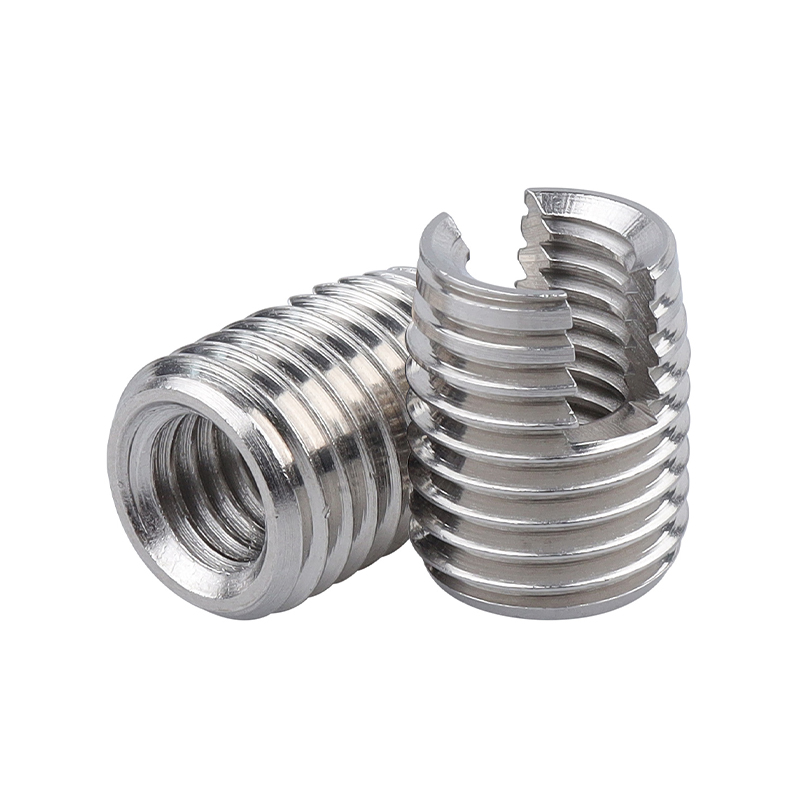
A stainless steel self-tapping thread insert is a cylindrical threaded sleeve manufactured from corrosion-resistant stainless steel. The sleeve has two primary thread systems. The external thread engages directly with the base material, and the internal thread provides a reusable fastening point for a mating screw, stud, or bolt.
The external thread is normally formed with a cutting profile, slot, or other material-removal feature. During installation, the cutting portion penetrates the prepared hole and forms a matching thread in the surrounding material. The insert then becomes mechanically locked inside the component. Depending on the material, installation method, and application design, the insert may be installed by hand tools, powered tools, or dedicated production equipment.
The internal thread is manufactured to a standard metric or inch specification. Once installed, it allows the end user to use a normal fastener rather than relying on the weak original material. If the original thread has been stripped, enlarged, corroded, or otherwise damaged, the self-tapping insert can also provide an efficient repair solution.
Compared with wire thread inserts, self-tapping inserts do not require a specially shaped helical wire to be wound into the hole. Compared with solid inserts that require a pre-tapped external thread, self-tapping inserts can simplify the preparation process. Compared with non-metallic bushings, stainless steel inserts provide greater resistance to heat, impact, wear, and repeated tightening.
Core Construction and Functional Design
Dual-Thread Structure
The defining feature of the insert is its dual-thread structure. The internal thread is compatible with a selected fastening standard, while the external thread is designed specifically for engagement with the host material. These two thread systems must work together without compromising the wall thickness, strength, or installation behavior of the sleeve.
The inner thread must provide accurate pitch, acceptable dimensional tolerance, and sufficient load-bearing surface. The outer thread must generate a secure mechanical grip while minimizing excessive installation torque and the risk of cracking the host component. A well-designed insert balances these requirements across different base materials.
Slotted Type 302 Configuration
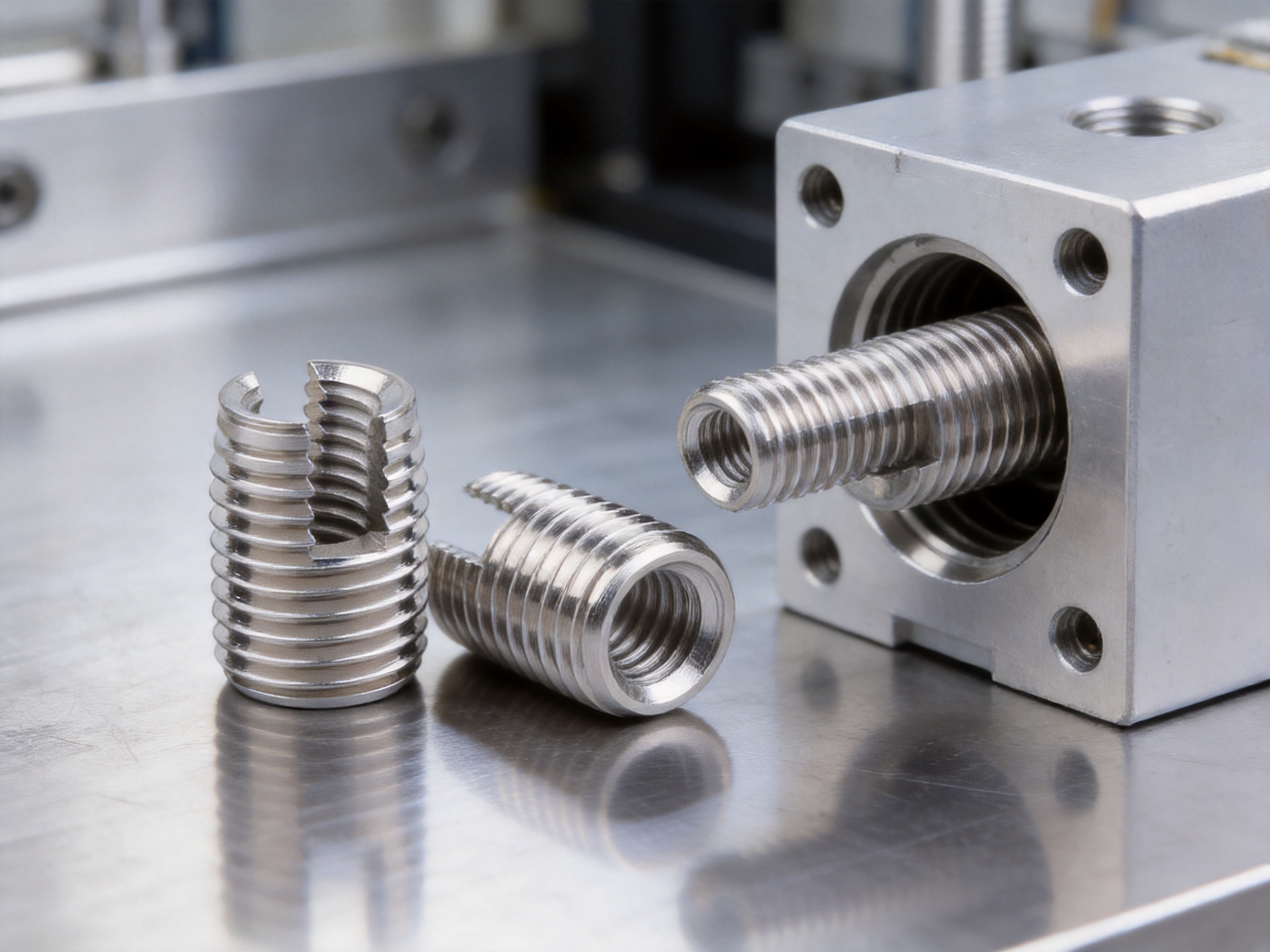
The Type 302 slotted design incorporates a cutting groove near the head or leading portion of the sleeve. This groove helps the insert cut its own external thread as it enters the drilled hole. The cutting geometry reduces the need for a separate tapping operation and supports efficient installation in plastics, aluminum alloys, cast iron, and other engineering materials.
The slot also helps the insert accommodate material displacement during installation. Instead of forcing all displaced material ahead of the insert, the cutting groove provides a path for controlled material removal or flow. This can contribute to lower installation resistance and a more consistent fit when the recommended drilling diameter is used.
Stainless Steel Material Options
The inserts can be produced from stainless steel grades such as 304 or 316, depending on the required corrosion resistance and service environment. Grade 304 stainless steel provides a strong balance of mechanical performance, availability, and general corrosion resistance. It is suitable for many indoor, outdoor, automotive, electrical, and industrial uses.
Grade 316 stainless steel provides enhanced resistance in environments containing chlorides, salt water, and certain chemical contaminants. It is often selected for marine equipment, coastal structures, chemical-processing environments, outdoor assemblies, and other applications where corrosion exposure is severe.
The final material selection should consider the host material, mating fastener, operating temperature, chemical exposure, installation torque, and expected service life. In critical assemblies, the insert material and mating fastener should also be evaluated for galvanic compatibility.
Advantages Over Conventional Threading Methods
Improved Thread Strength in Soft Materials
Soft materials often have insufficient shear area to withstand repeated tightening, vibration, or high clamp loads. An aluminum housing may be lightweight and easy to machine, but its threads can strip when a steel fastener is tightened repeatedly. Plastic components may experience similar damage, especially when screws are removed and reinstalled during servicing.
A stainless steel insert distributes the fastening load over a more durable internal surface. The insert also transfers the load into a larger volume of surrounding base material through its external thread. This improves resistance to thread stripping, pull-out, loosening, and local deformation.
Corrosion Resistance
Corrosion can reduce thread engagement, increase friction, weaken the component, and make future disassembly difficult. Stainless steel provides a protective oxide layer that helps resist rust and many forms of environmental attack. This makes the insert more suitable than ordinary untreated steel in humid, outdoor, marine, and chemically exposed locations.
Corrosion resistance is especially important where the insert is embedded in a material that cannot be easily replaced. A corroded insert inside a machine housing, electrical enclosure, vehicle component, or structural support can be difficult and expensive to repair. Selecting a suitable stainless steel grade at the beginning can reduce maintenance risks over the life of the assembly.
Elimination of Pre-Tapping in Many Applications
Traditional solid threaded bushings often require the host hole to be drilled and tapped before the insert is installed. This means that the production line must perform multiple operations, use additional tooling, remove chips, and control the external thread accurately.
A self-tapping insert combines thread formation and installation in one operation. The base material still requires a properly sized pilot hole, but the separate pre-tapping step can generally be removed. This can reduce cycle time, simplify equipment requirements, and lower labor costs.
Efficient Thread Repair
When a threaded hole is damaged, replacing the entire housing or component may be impractical. A self-tapping insert can often restore the connection by enlarging the damaged hole to a specified diameter and installing a new insert. This approach is useful for repair departments, maintenance teams, automotive service operations, and field applications.
The repair process must account for the remaining wall thickness and the strength of the damaged component. If the enlarged hole leaves insufficient material around the insert, another repair method may be required. Within suitable design limits, however, the insert provides a fast and durable alternative to component replacement.
Resistance to Vibration and Impact
Vibration can cause ordinary fasteners to loosen, especially when the base material is soft or the threaded hole has been damaged. A properly installed insert provides a more stable thread form and improves the consistency of the clamping connection. The stronger internal thread can help maintain the required preload under repeated mechanical loads.
The insert does not replace the need for correct fastener selection, tightening torque, joint design, or secondary locking measures where necessary. However, it provides a stronger foundation for the fastening system than a directly formed thread in a weak material.
High and Low Temperature Capability
Stainless steel retains useful mechanical stability over a broad temperature range. The stated operating range for this product is approximately -40°C to 600°C, subject to application conditions, material grade, load, oxidation exposure, mating components, and installation design. This broad range allows the insert to be considered for engine compartments, industrial machinery, heating equipment, outdoor installations, and cold-region applications.
Temperature performance should always be evaluated together with the host material. A stainless steel insert may remain structurally stable at a high temperature while a plastic component softens or a sealant loses effectiveness. Product selection must therefore consider the complete joint rather than the insert in isolation.
Stainless Steel Self-Tapping Thread Insert
Performance Benefits Compared with Competing Insert Types
Compared with Ordinary Steel Inserts
Ordinary carbon steel inserts may provide adequate strength in dry indoor environments, but they are more vulnerable to rust and surface deterioration. Once corrosion begins, the internal thread can become rough, the installation torque can change, and the fastener may seize during removal.
Stainless steel self-tapping inserts provide a more dependable solution where humidity, condensation, salt, or chemical exposure is expected. Their corrosion resistance can extend service life and reduce maintenance requirements. They also provide a cleaner appearance in visible assemblies.
Compared with Directly Tapped Aluminum or Plastic
Directly tapping soft materials can be economical for low-load, single-use applications. However, the thread may strip during assembly, and repeated disassembly can gradually wear the material. Directly tapped plastic can also experience creep under long-term load or elevated temperature.
A stainless steel insert creates a more durable internal thread and supports repeated service. This is particularly useful for covers, access panels, battery compartments, instrument housings, engine components, and assemblies that require regular inspection.
Compared with Wire Thread Inserts
Wire thread inserts are effective in many applications and can provide excellent thread strength. However, their installation process normally involves a specially tapped hole, an insertion tool, and a tang-removal operation for many blind-hole applications. The process may require more steps and more specialized tooling.
A self-tapping insert can reduce installation complexity because its external cutting thread forms the receiving thread during installation. It is therefore attractive for repair work, low-volume production, field service, and applications where reducing process steps is important.
Compared with Adhesive-Bonded Bushings
Some threaded bushings depend on adhesive to prevent rotation or pull-out. Adhesives can be useful, but their performance depends on surface preparation, curing time, storage conditions, chemical compatibility, and temperature. Incorrect mixing or insufficient curing can reduce joint reliability.
The slotted self-tapping insert relies primarily on mechanical engagement. This reduces dependence on adhesive application and curing. In many production environments, avoiding adhesive also helps keep work areas cleaner and makes quality inspection more straightforward.
Compared with Large External Fasteners
Another method of reinforcing a weak threaded area is to use a larger fastener or redesign the surrounding component. This may require additional space, heavier walls, larger tooling, or a new casting or mold. A compact insert can reinforce the original connection while preserving the overall component design.
This space-saving characteristic is important in automotive, aerospace, electronics, and precision machinery applications, where weight and package dimensions are closely controlled.
Material Compatibility
The insert is suitable for a wide range of base materials when the hole size and installation method are correctly selected. The supplied reference data includes recommended drilling diameters for plastics, aluminum alloys, and cast iron. These values differ because each material responds differently to cutting pressure, thread formation, and elastic recovery.
| Internal Thread Size | Approximate Insert Length | External Thread | Recommended Hole Range for Plastic | Recommended Hole Range for Aluminum Alloy | Recommended Hole Range for Cast Iron | Minimum Drilling Depth |
|---|---|---|---|---|---|---|
| M2-0.4 | 6 mm | M4.5-0.5 | 4.0–4.1 mm | 4.1–4.2 mm | 4.2–4.3 mm | 8 mm |
| M3-0.5 | 6 mm | M5-0.5 | 4.5–4.6 mm | 4.6–4.7 mm | 4.7–4.8 mm | 8 mm |
| M4-0.7 | 8 mm | M6.5-0.75 | 5.8–5.9 mm | 6.0–6.1 mm | 6.1–6.2 mm | 10 mm |
| M5-0.8 | 10 mm | M8-1.0 | 7.1–7.2 mm | 7.3–7.5 mm | 7.5–7.6 mm | 13 mm |
| M6-1.0 | 14 mm | M10-1.5 | 9.0–9.2 mm | 9.2–9.3 mm | 9.3–9.4 mm | 17 mm |
| M8-1.25 | 15 mm | M12-1.5 | 10.6–10.8 mm | 11.0–11.2 mm | 11.2–11.4 mm | 18 mm |
| M10-1.5 | 18 mm | M14-1.5 | 12.6–12.8 mm | 13.0–13.3 mm | 13.2–13.4 mm | 22 mm |
| M12-1.75 | 22 mm | M16-1.5 | 14.6–14.8 mm | 15.0–15.3 mm | 15.2–15.4 mm | 26 mm |
| M16-2.0 | 22 mm | M20-1.5 | 18.6–18.8 mm | 19.0–19.3 mm | 19.2–19.5 mm | 27 mm |
The table presents representative dimensions from the supplied Type 302 product information. Final production drawings should be confirmed before ordering, especially for sizes not shown in the table or for applications with special tolerance, depth, or load requirements.
Plastics
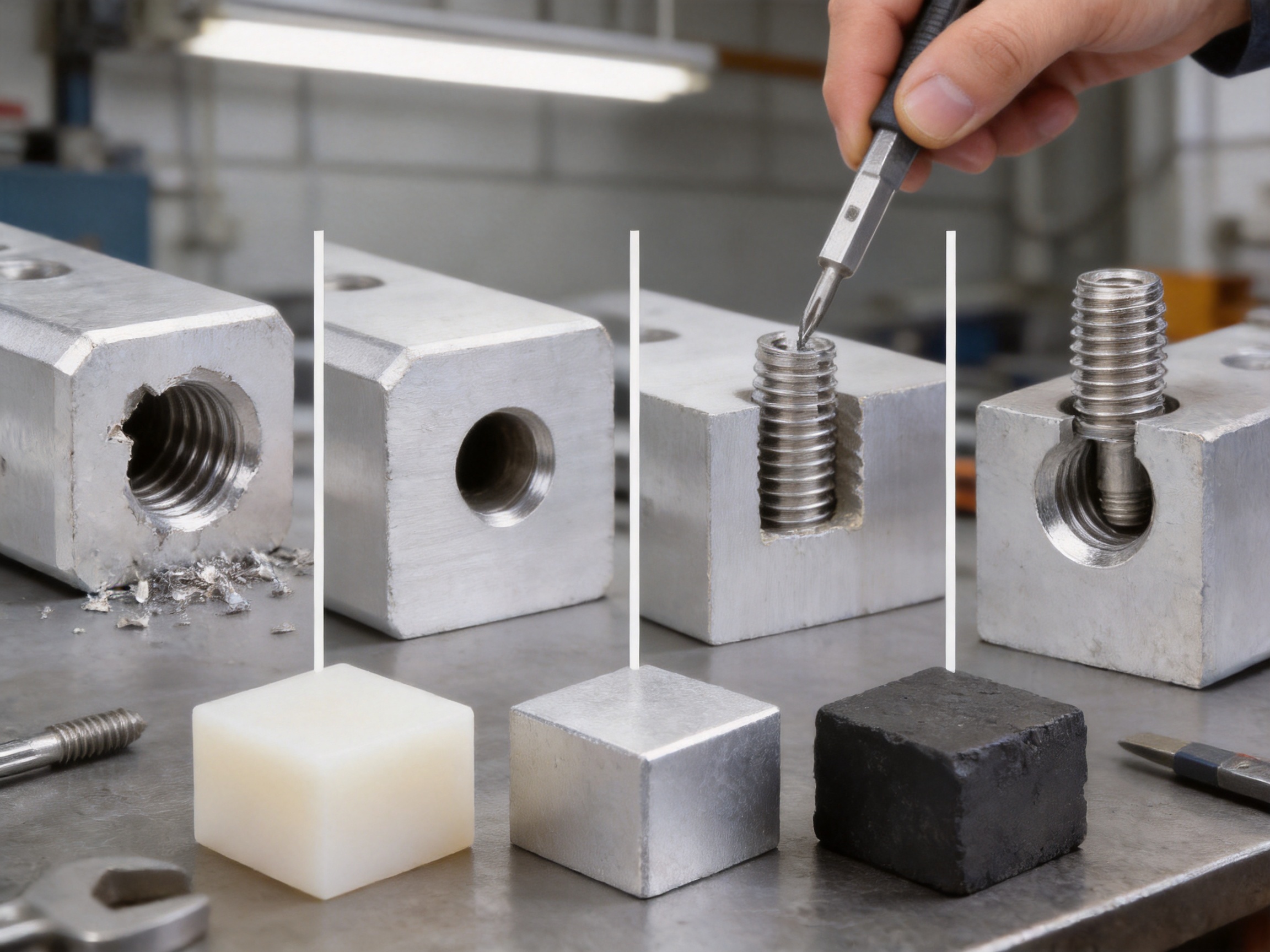
Plastic housings often benefit from inserts because their base threads can wear or deform during assembly. The correct pilot hole is essential. If the hole is too small, installation torque may become excessive and the plastic may crack or bulge. If it is too large, the external thread may not achieve sufficient engagement.
Thermoplastics may also respond differently depending on temperature and molding conditions. A production trial should verify installation torque, pull-out resistance, rotation resistance, and the effect of repeated fastener removal.
Aluminum Alloys
Aluminum is widely used in automotive, aerospace, electronics, and machinery because it is lightweight and easy to machine. Its relatively soft thread surface can be vulnerable to stripping, particularly when steel fasteners are tightened frequently. The stainless steel insert provides a harder and more wear-resistant internal thread.
Aluminum chips should be cleared from the hole before installation. The pilot hole should be made perpendicular to the surface, and excessive cutting force should be avoided. In a blind hole, the specified minimum drilling depth must be maintained to prevent bottoming during installation.
Cast Iron and Other Metals
Cast iron may require a slightly larger reference drilling diameter than plastic or aluminum because of its hardness, structure, and cutting behavior. The installation procedure should be adapted to the specific grade and condition of the material. Other metals, including magnesium alloys and mild steel, should be evaluated through engineering trials before mass production.
Installation Procedure
Step One: Confirm the Design Requirements
Before installation, identify the required internal thread size, insert length, external thread specification, host material, hole type, expected load, and environmental conditions. Select 304 stainless steel for general corrosion-resistant applications or consider 316 stainless steel for marine, coastal, and aggressive chemical environments.
Step Two: Prepare the Hole
Drill the hole to the recommended diameter using a sharp and properly aligned drill. For a blind hole, ensure that the hole is deeper than the insert length by the specified clearance amount. Remove burrs and chips from the entrance and interior of the hole.
The hole should be straight and sufficiently clean. Misalignment can cause the insert to enter at an angle, which may damage the external thread, reduce internal thread accuracy, or place uneven stress on the component.
Step Three: Align the Insert
Place the insert on the installation tool and align it with the prepared hole. The insert should enter the hole perpendicular to the component surface. Do not force a tilted insert into the hole, as this can damage both the component and the insert.
Step Four: Drive the Insert
Turn the installation tool in the correct direction while applying steady axial pressure. The cutting groove should form the external thread progressively. Use a controlled speed and avoid impact loading unless the installation tool and component are designed for that method.
Installation torque should be monitored where production consistency is important. A sudden increase in torque may indicate an undersized hole, insufficient depth, contamination, misalignment, or a damaged insert.
Step Five: Verify the Finished Connection
After installation, inspect the insert position, surface condition, internal thread, and alignment. A suitable gauge or mating fastener can be used to confirm that the internal thread is free of damage. For critical components, verify pull-out strength, torque-out resistance, and dimensional position according to the applicable engineering specification.
Manufacturing Process and Quality Strengths
Product performance begins with raw material control and continues through forming, machining, threading, surface preparation, inspection, packaging, and delivery. A professional production system must control each stage because even a small variation in pitch, diameter, slot geometry, or length can affect installation torque and load capacity.
Material Selection and Traceability
Stainless steel material should be selected according to the required grade and application. Material identification and traceability help ensure that the delivered product matches the approved specification. Controlled material purchasing also reduces the risk of inconsistent chemical composition or mechanical performance between production batches.
Precision Forming and Thread Production
The external and internal threads must be formed with accurate pitch and profile. The cutting groove must be positioned consistently and manufactured with sufficient sharpness to support self-tapping performance. Thread production may involve automated machinery, precision tooling, rolling, cutting, or a combination of processes selected according to product size and material.
Consistent thread geometry is especially important because the insert must perform two different functions. The outer thread must cut and retain material, while the inner thread must accept the mating fastener smoothly. Poor control can result in excessive installation torque, loose fit, incomplete engagement, or fastener binding.
Automated Production Systems
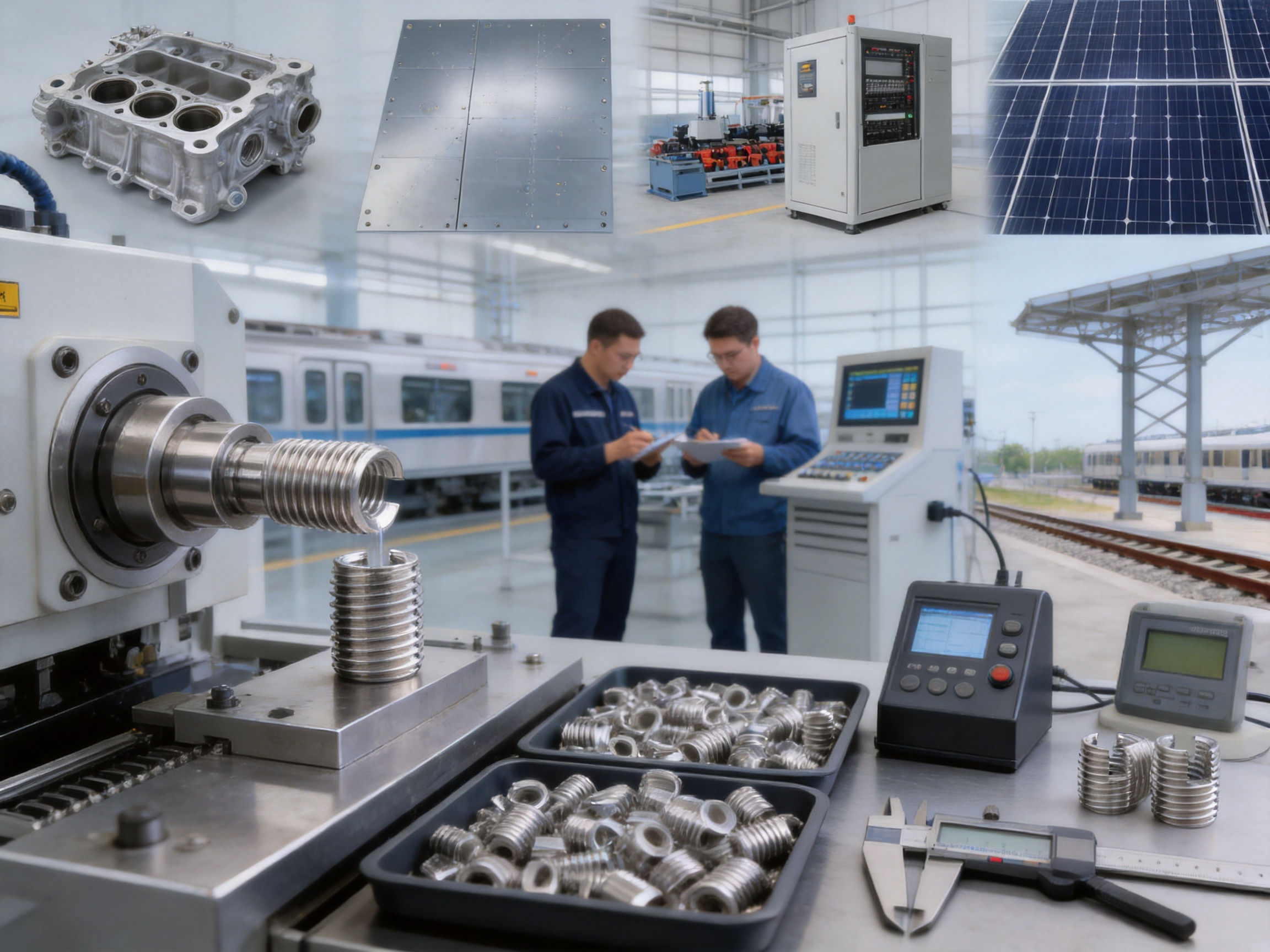
Jinzhize operates an owned manufacturing facility of approximately 10,000 square meters and uses hundreds of machine tools together with automated production systems. This manufacturing scale supports stable output for standard and customized threaded connection products.
Automation can improve repeatability by reducing variation in feeding, machining, inspection, and handling. It can also support larger production volumes while maintaining consistent process parameters. For customers in automotive, aerospace, rail, and industrial sectors, stable supply is often as important as individual product performance.
Inspection and Quality Management
A rigorous quality management system should include incoming material checks, first-piece approval, in-process inspection, final dimensional verification, and batch documentation. Typical inspection points for self-tapping inserts include internal thread size, external thread diameter, pitch, length, slot geometry, burr condition, surface finish, and material identification.
Where required, additional performance testing may include installation torque, pull-out strength, torque-out resistance, corrosion testing, hardness evaluation, and repeated fastening tests. The specific inspection plan should be based on the product drawing and the customer’s application requirements.
Engineering and Customization Capability
Standard sizes cover many applications, but certain assemblies require customized lengths, thread combinations, materials, slot profiles, surface treatments, or packaging. A manufacturer with design and development personnel can evaluate these requirements and convert them into practical production specifications.
Customization should not focus only on changing dimensions. The manufacturer should also assess the relationship between the external thread and host material, the required installation torque, available wall thickness, operating temperature, corrosion exposure, and the expected method of repair or maintenance.
Stable Supply for Global Customers
The company was established in 2015 and has developed an experienced team for product design, development, manufacturing, quality control, and after-sales support. Its product range includes helical wire inserts, self-tapping inserts, key-locking inserts, threaded adapters, oil plugs, installation taps, and related tools.
Its products are used in automotive engines and transmissions, commercial vehicles, aerospace equipment, and rail vehicle manufacturing. The reported annual output value in 2024 was 153 million RMB, reflecting the company’s ability to support large-scale and stable supply.
For international buyers, a vertically coordinated supplier can simplify sourcing by providing related inserts and installation tools from one production organization. This can improve compatibility between the insert and the tool, reduce the number of supplier interfaces, and support more consistent technical communication.
Application Areas
Automotive Manufacturing
Automotive components are exposed to vibration, thermal cycling, oil, moisture, and repeated service operations. Threaded connections may be required in engine housings, transmissions, chassis components, interior structures, brackets, and electronic modules.
In lightweight aluminum components, stainless steel self-tapping inserts can reinforce mounting points without requiring a larger housing or thicker wall. They can also support thread repair during maintenance, helping extend the service life of expensive components.
Aerospace and Rail Vehicles
Aerospace and rail applications place strong emphasis on weight control, traceability, reliability, and repeatable production. A small threaded insert can help preserve a lightweight structural design while providing a durable fastening point.
Because these sectors often use aluminum alloys, composite materials, and specialized housings, the insert design and installation procedure must be validated carefully. Material certificates, batch identification, dimensional inspection, and documented process control may be required for qualified applications.
Electronics and Electrical Equipment
Electronic housings made from plastic or aluminum frequently require removable covers, mounting brackets, grounding points, and service access panels. A self-tapping insert can provide a more durable thread than a directly molded or tapped hole.
Stainless steel is useful where the enclosure may encounter condensation, outdoor exposure, cleaning chemicals, or temperature changes. The insert can also help maintain consistent screw engagement during repeated servicing of communication equipment, instruments, control panels, and power systems.
Outdoor and Photovoltaic Structures
Outdoor assemblies face rain, humidity, ultraviolet exposure, dust, and temperature variation. Photovoltaic supports, railings, equipment cabinets, lighting structures, and monitoring systems can benefit from corrosion-resistant threaded connections.
The use of 304 or 316 stainless steel should be determined by the environment. Coastal or salt-exposed installations may require the additional corrosion resistance of 316 stainless steel, while many general outdoor applications can use 304 stainless steel when the complete joint design is compatible.
Industrial Machinery
Machine housings, pumps, automation equipment, fixtures, and production tools often require threaded holes that can withstand repeated assembly. Inserts are particularly useful when the equipment is manufactured from aluminum, plastic, or another material with limited thread durability.
In maintenance-intensive equipment, a reinforced internal thread can reduce the risk of downtime caused by stripped holes. The insert also allows the damaged hole to be repaired without discarding the entire housing.
Design Recommendations for Engineers
Engineers should consider the insert at the beginning of the component design rather than treating it only as a repair part. Early integration allows the wall thickness, hole depth, boss diameter, fastener length, and installation access to be optimized.
The surrounding material must provide enough radial thickness to resist cracking, splitting, or deformation. For plastic components, the boss should be designed to accommodate the external thread and the forces generated during installation. For metal components, the remaining wall should support the required pull-out and torque-out loads.
The fastener should engage the full usable length of the internal thread without bottoming in a blind hole. Excessive fastener length can create internal pressure at the bottom of the insert, while insufficient engagement can reduce load capacity. Thread engagement should be calculated according to the host material, fastener diameter, load type, and safety factor.
Engineers should also evaluate galvanic corrosion when stainless steel is installed in aluminum or magnesium. Protective coatings, suitable lubricants, isolation layers, drainage, and environmental sealing may be necessary in aggressive conditions.
For high-volume production, conduct a process capability study covering hole diameter, installation torque, insertion depth, internal thread quality, and finished pull-out strength. Establishing an approved installation window helps prevent variation on the assembly line.
Purchasing and Supplier Evaluation
When selecting a supplier, buyers should review more than the unit price. Important factors include material grade, dimensional consistency, production capacity, tooling capability, inspection methods, packaging, traceability, engineering support, and delivery reliability.
A supplier capable of manufacturing multiple threaded connection products may provide a more complete solution than a supplier offering only one insert type. Related products such as wire inserts, key-locking inserts, threaded adapters, oil plugs, taps, and installation tools may be required for the same project.
Customers should request clear technical documentation. This may include product drawings, material information, size charts, recommended drilling diameters, minimum drilling depths, installation instructions, inspection standards, and packaging specifications.
Samples should be tested in the actual host material whenever possible. The customer should verify installation torque, insertion depth, thread fit, pull-out performance, vibration behavior, corrosion resistance, and repeated assembly performance. A product that performs well in a laboratory block may behave differently in a thin-walled housing or molded component.
Maintenance and Service Considerations
After installation, the connection should be protected from contamination and excessive impact. If the component is exposed to dirt, chips, salt, or corrosive chemicals, periodic inspection can help identify problems before they affect the fastener.
During service, use the correct screw size and tightening torque. Cross-threading, over-tightening, and the use of damaged fasteners can harm the internal thread. If a fastener becomes difficult to remove, excessive force should be avoided until the cause is understood.
When repairing an existing hole, remove loose material and confirm that enough surrounding material remains. The repaired area should be checked for cracks, distortion, or previous failed repairs. If the component has experienced severe overload, installing a new insert without addressing the underlying cause may not provide a permanent solution.
Q&A
What is the main purpose of a stainless steel self-tapping thread insert?
Its primary purpose is to create or restore a strong internal thread in a soft, weak, thin, or damaged base material. The stainless steel sleeve provides a durable threaded surface for a standard screw or bolt.
Does the insert require a pre-tapped hole?
Generally, no. The Type 302 slotted insert has an external cutting thread that forms the receiving thread as it is installed. A correctly sized and properly aligned pilot hole is still required.
Which materials can accept this insert?
The product is designed for applications involving materials such as plastics, aluminum alloys, cast iron, and other suitable engineering materials. The correct hole diameter depends on the host material and should be selected from the approved technical data.
Should I choose 304 or 316 stainless steel?
304 stainless steel is suitable for many general industrial, automotive, electrical, and outdoor applications. 316 stainless steel is usually preferred for marine, coastal, salt-exposed, or chemically aggressive environments. Final selection should consider the complete assembly and corrosion conditions.
Can the insert repair a stripped aluminum thread?
Yes, it can often repair a stripped or damaged aluminum thread if sufficient material remains around the enlarged hole. The damaged hole must be prepared to the specified diameter and depth, and the repaired connection should be tested when the application is critical.
Can the insert be used in plastic?
Yes. It is particularly useful in plastic housings that require repeated screw removal or higher thread strength. The hole size, plastic grade, wall thickness, installation torque, and operating temperature must be evaluated together.
What happens if the pilot hole is too small?
A hole that is too small can create excessive installation torque, damage the external thread, distort the component, or cause cracking in brittle materials. It may also prevent the insert from reaching the required depth.
What happens if the pilot hole is too large?
A hole that is too large may reduce external thread engagement and lower resistance to pull-out or rotation. The insert may fit loosely or fail to form a stable mechanical connection.
Are installation tools available?
Related installation tools and taps are part of the manufacturer’s threaded connection product range. The appropriate tool depends on insert size, production volume, access conditions, and the required installation method.
Can custom sizes be produced?
Custom dimensions, materials, thread combinations, and configurations may be possible after technical review. Customers should provide the internal thread, external thread, length, host material, quantity, environmental conditions, and performance requirements.
Why is manufacturer process control important?
Thread accuracy, slot geometry, material grade, length, and surface condition directly affect installation and performance. Controlled production, inspection, traceability, and stable equipment help reduce batch-to-batch variation.
What industries commonly use these inserts?
Common industries include automotive, aerospace, rail transportation, electronics, electrical equipment, industrial machinery, outdoor structures, photovoltaic support systems, marine equipment, and general maintenance.
Conclusion
Stainless steel self-tapping thread inserts provide an efficient method for strengthening, repairing, and creating threaded connections in soft or vulnerable materials. Their corrosion-resistant construction supports demanding environments, while the self-tapping external thread reduces installation steps compared with systems that require a separately tapped hole.
The Type 302 slotted design combines cutting capability, mechanical retention, vibration resistance, and compatibility with standard internal threads. Available in a range of metric and inch-related configurations, these inserts can be adapted to plastic, aluminum alloy, cast iron, and other suitable materials when the recommended hole dimensions and installation procedures are followed.
The principal advantages over conventional alternatives include improved thread durability, reduced risk of stripping, resistance to rust, efficient thread repair, suitability for repeated assembly, and the possibility of lower installation labor. These advantages are particularly valuable in automotive, aerospace, electronics, rail, machinery, and outdoor applications.
Reliable performance also depends on the manufacturer. A supplier with an owned production facility, extensive machine capacity, automated systems, experienced technical personnel, quality management, and related threaded connection products can provide more than a standard component. It can support design evaluation, product customization, process validation, inspection, stable delivery, and after-sales service.
For buyers seeking a dependable threaded connection solution, the correct approach is to match the stainless steel grade, insert geometry, hole specification, installation tooling, and inspection requirements to the actual application. When these factors are properly controlled, stainless steel self-tapping inserts can extend component life, improve assembly consistency, reduce repair costs, and provide a practical foundation for secure long-term fastening.
References
1. Product technical information for Type 302 slotted stainless steel self-tapping thread inserts, including thread sizes, drilling references, minimum drilling depths, and material compatibility.
2. General engineering principles for threaded inserts, mechanical thread reinforcement, hole preparation, and fastener joint design.
3. Stainless steel material selection guidance for 304 and 316 grades in industrial, outdoor, marine, and chemical environments.
4. Manufacturing and quality control practices for threaded connection products, including incoming inspection, process control, dimensional verification, and batch traceability.
5. Application information for threaded inserts in automotive, aerospace, electronics, rail transportation, machinery, and outdoor structural assemblies.