Français
 Español
 Deutsch


Content
- 1 Understanding the Role of a Wire Thread Insert Installation Tool
- 2 Product Design and Operating Principle
- 3 Key Advantages of the Installation Tool
- 4 Comparison with Basic or Low-Quality Installation Methods
- 5 Advanced Manufacturing Strengths
- 6 Manufacturing Process for a Reliable Installation Tool
- 7 Application Areas
- 8 Recommended Installation Practices
- 9 Purchasing and Supplier Evaluation Considerations
- 10 Company Manufacturing and Service Strengths
- 11 Maintenance, Storage, and Service Life
- 12 Frequently Asked Questions
- 12.1 What is a wire thread insert installation tool used for?
- 12.2 Which insert sizes are supported?
- 12.3 Can the tool be used for thread repair?
- 12.4 Why is alignment important during insert installation?
- 12.5 Is the tool appropriate for production lines?
- 12.6 Can it be used for field maintenance?
- 12.7 What material is used to manufacture the tool?
- 12.8 How should the tool be cleaned?
- 12.9 Can a standard tool be used with every wire thread insert?
- 12.10 What should be done if the insert meets abnormal resistance?
- 12.11 Why should customers purchase the tool from a specialized manufacturer?
- 13 Conclusion
- 14 References
- 15 Product: Wire Thread Insert Installation Tool
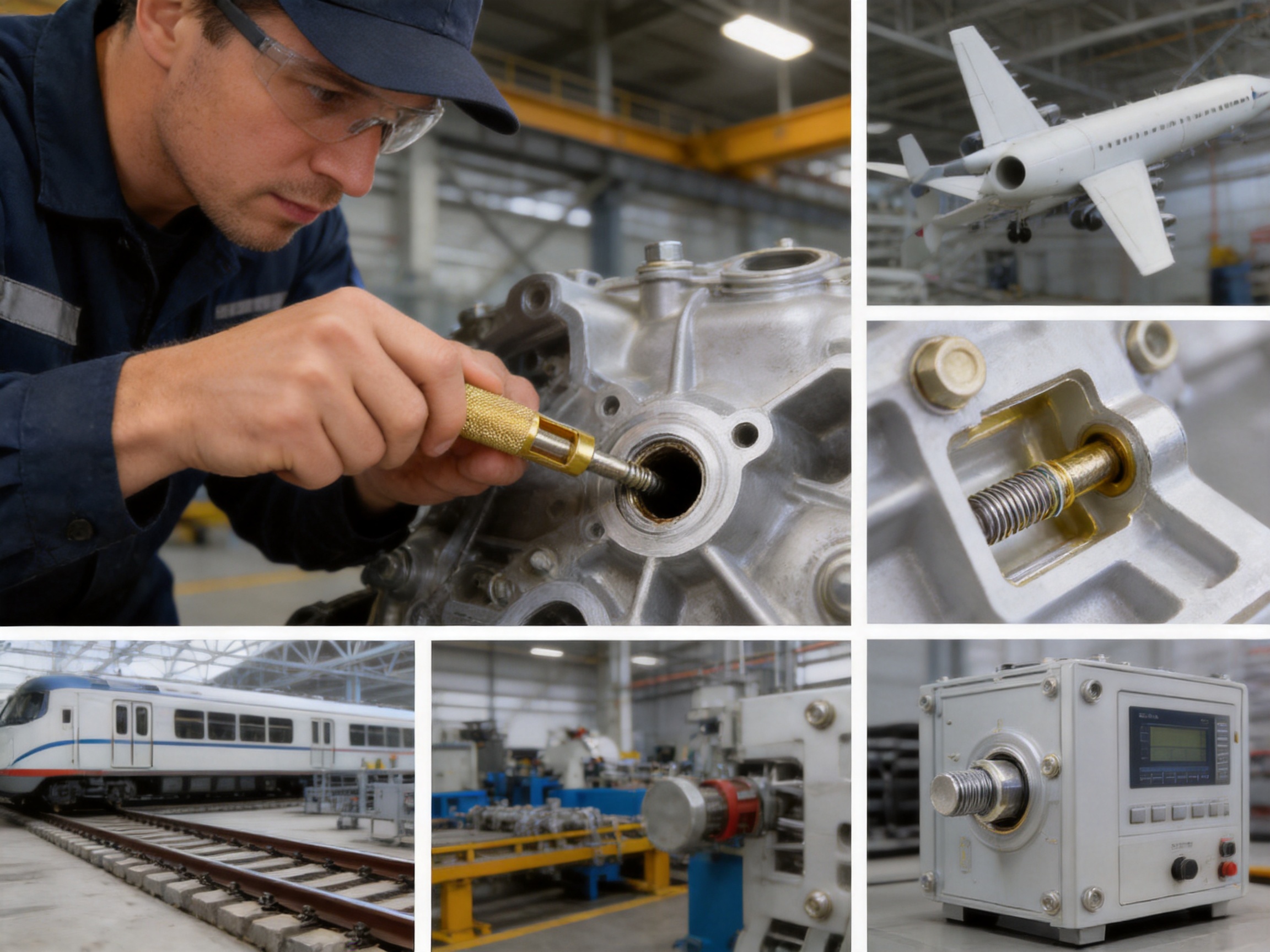
Wire thread inserts are widely used to repair damaged tapped holes, reinforce threads in lightweight materials, and create durable internal threads in high-value components. However, even a high-quality wire thread insert can fail to deliver its full performance if it is installed incorrectly. A distorted insert, poor alignment, uneven insertion depth, or damaged coil can weaken the connection and create difficulties during later assembly or maintenance. The wire thread insert installation tool is therefore an essential part of the complete threaded connection system.
A correctly designed installation tool guides the insert into the prepared hole, controls the insertion process, and helps the operator achieve a consistent result. It transforms a potentially sensitive manual operation into a repeatable assembly procedure suitable for workshops, production lines, maintenance departments, and field service environments. For manufacturers working with automotive, aerospace, rail, machinery, electronics, and precision equipment applications, installation accuracy is directly connected with product reliability and operating safety.
The wire thread insert installation tool described in this article is developed for accurately screwing wire thread inserts into pre-tapped holes. It is designed around standardized transmission and guiding principles, supports multiple insert sizes from M3 to M24, and uses high-hardness alloy steel to withstand repeated industrial use. Its compact form, anti-slip contact design, and smooth operating characteristics make it suitable for both high-volume assembly and thread repair work.
Understanding the Role of a Wire Thread Insert Installation Tool
A wire thread insert is a helically formed coil made from precision wire. Once installed in a tapped hole, the insert provides an internal thread for a bolt or screw. It can restore a worn or stripped thread, improve load distribution, and protect a base material from repeated fastening and removal. Wire inserts are particularly useful in aluminum alloys, magnesium alloys, plastics, and other materials that may not provide sufficient thread strength on their own.
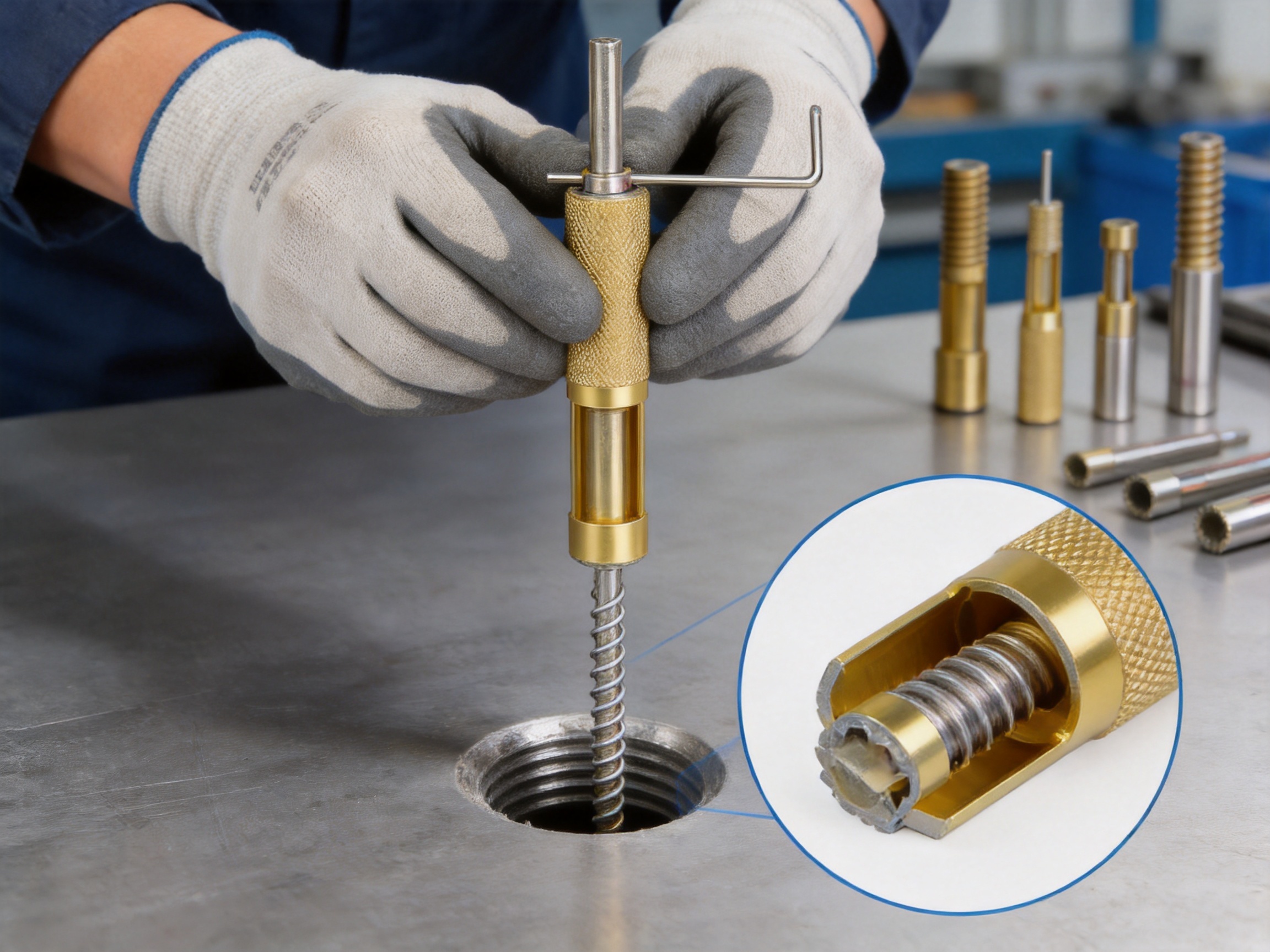
The installation tool is used after the original hole has been drilled or prepared and a special installation tap has formed the receiving thread. The tool engages the driving tang or another designated feature of the insert. It then allows the operator to rotate and advance the insert into the prepared hole while maintaining alignment. In a correctly controlled installation, the coil enters smoothly without crossing, stretching excessively, or becoming trapped at the entrance of the hole.
Although the operation appears simple, several factors can influence the final result. The tool must match the insert size and type. The driving feature must engage securely without damaging the insert. The guiding portion must maintain concentricity with the tapped hole. The transmission mechanism must deliver rotation without excessive backlash or sudden movement. Finally, the operator needs a tool that is comfortable and stable enough to control throughout the installation process.
A well-engineered installation tool addresses these requirements as one integrated system. Instead of relying only on operator experience, it provides mechanical support for the most important installation steps. This reduces variation between operators and improves the consistency of threaded connections across different production batches.
Product Design and Operating Principle
The wire thread insert installation tool uses a guiding and driving structure to control the movement of the insert. The guiding portion helps position the tool along the axis of the prepared hole, while the driving portion transfers rotational force to the insert. When the tool is turned, the insert follows the thread path into the hole in a controlled manner.
The standardized transmission design is important because it helps prevent unstable or interrupted rotation. If the tool slips or transmits force unevenly, the insert may deform or move out of alignment. Smooth transmission allows the operator to feel the resistance of the installation process and respond before excessive force is applied.
The tool accommodates mainstream wire thread insert sizes from M3 to M24. This range covers many common fastening requirements, from relatively small precision assemblies to larger structural and machinery components. Different size configurations can be selected according to the insert specification, pitch, installation depth, and application requirements.
The installation process normally involves several stages:
First, the damaged or undersized hole is prepared according to the insert manufacturer’s requirements. If the hole is being repaired, the damaged thread may need to be drilled out before a suitable installation tap is used.
Second, the hole is tapped with the correct special tap. The receiving thread must be clean, correctly sized, and free from burrs or chips. A poor receiving thread cannot be corrected by the installation tool alone.
Third, the wire insert is placed onto the tool and engaged with the driving feature. The insert should be positioned correctly, without excessive tension or distortion.
Fourth, the tool is aligned with the prepared hole and turned steadily. The guiding structure supports axial alignment as the insert enters the hole.
Finally, the insert is installed to the specified depth. The tool is removed carefully, and the finished internal thread is checked for cleanliness, position, and bolt engagement.
This controlled approach helps create a reliable connection while minimizing the risk of cross-threading, coil damage, and installation inconsistency.
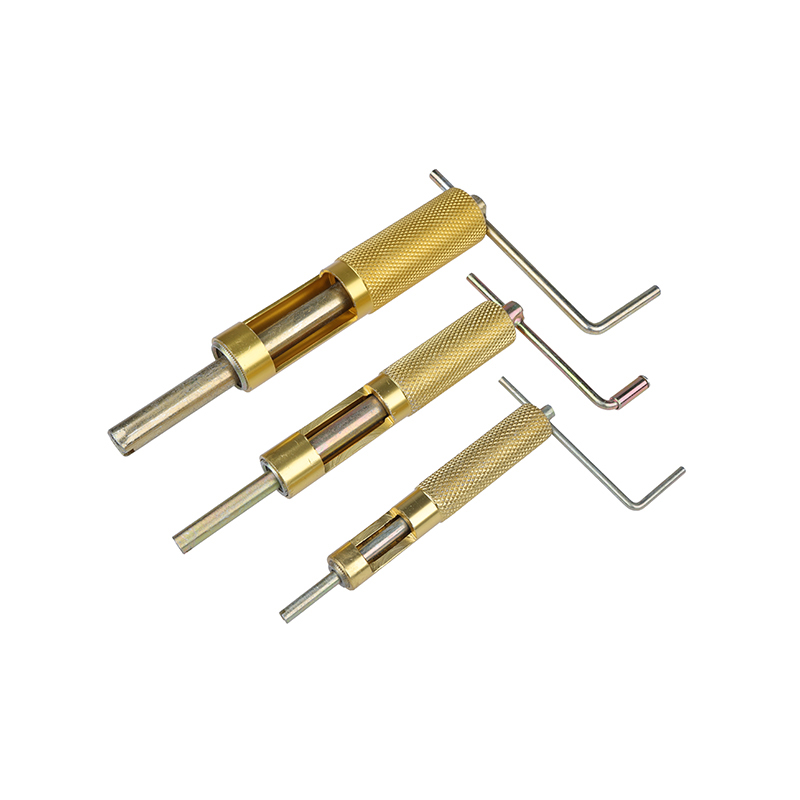
Wire Thread Insert Installation Tool
Key Advantages of the Installation Tool
High Installation Accuracy
Installation accuracy is one of the most important advantages of a dedicated wire thread insert tool. The precision guiding structure helps maintain alignment between the insert and the base hole. This is especially valuable when the insert is used in a deep hole, a small-diameter hole, or a component with limited access.
Misalignment can cause the first coil of the insert to catch on the entrance of the hole. Continued rotation under these conditions may bend the insert, distort the internal thread, or create uneven loading. By supporting the tool along the hole axis, the guiding design reduces the likelihood of these problems.
Consistent alignment also improves the repeatability of the finished thread. In automotive and aerospace production, where numerous identical components may require the same insert size, repeatability is essential. A tool that helps different operators achieve similar results can reduce rework and simplify quality inspection.
Efficient Installation and Reduced Assembly Time
The smooth transmission system allows rapid insertion and positioning of the wire insert. The operator does not need to repeatedly reposition the tool or compensate for excessive tool movement. This shortens the installation cycle and is beneficial in both mass production and maintenance work.
In a production environment, a small reduction in installation time can create a significant improvement when multiplied across hundreds or thousands of components. In repair operations, faster installation can reduce equipment downtime and help maintenance personnel return machines to service more quickly.
Efficiency also depends on avoiding failed installations. A damaged insert may need to be removed and replaced, and the surrounding component may require additional inspection. By helping the operator complete the installation correctly the first time, the tool can improve total process efficiency rather than merely increasing rotational speed.
Protection of the Insert and Base Material
The contact surfaces of the tool feature an anti-slip design intended to improve engagement between the tool and the insert. Secure contact helps prevent uncontrolled movement and reduces the risk of damaging the insert during installation.
Protection is particularly important for fine-pitch inserts and small-diameter inserts. These components have less material available to resist excessive force. If the tool grips poorly, the operator may apply additional pressure, which can deform the coil or damage the driving feature.
A controlled tool also helps protect the base material. Excessive force, tilted insertion, or repeated attempts can damage the receiving thread in the component. Once the base thread is damaged, the repair becomes more complicated and may require a larger insert or a replacement component. Stable engagement therefore supports both insert protection and component preservation.
Multi-Size Compatibility
Support for insert sizes from M3 to M24 gives users access to a broad range of fastening applications. Small M3 and M4 inserts can be used in compact instruments, electronic housings, and small mechanical assemblies. Medium sizes are common in machinery, automotive components, and general industrial equipment. Larger sizes are suitable for heavier assemblies and structural connection points.
Multi-size compatibility can reduce the need to source tools from multiple suppliers. It also makes it easier for maintenance teams to standardize their installation procedures. When the same basic tool design is available across a range of dimensions, training and operating methods can be applied more consistently.
Size selection must still be made carefully. The tool should match the insert’s nominal diameter, pitch, length, and driving configuration. A tool that is too small or too large will not provide the correct engagement and should not be used as a substitute for the specified model.
Durable Alloy Steel Construction
The tool is manufactured from high-hardness alloy steel. This material provides resistance to wear, impact, and repeated mechanical loading. It is suitable for industrial environments where tools may be used frequently and exposed to contact with metal components, chips, lubricants, and workshop handling.
Material hardness is valuable in the driving and guiding areas because these surfaces must retain their shape over time. If the driving feature wears, engagement with the insert may become loose. If the guiding section wears or bends, alignment may gradually deteriorate. Durable alloy steel helps preserve the tool’s functional geometry over a longer service period.
Durability does not eliminate the need for proper care. Tools should be cleaned after use, protected from corrosion, and stored in a way that prevents impacts against other hard tools. Correct maintenance extends service life and helps maintain installation accuracy.
Portable and Easy to Use
The compact and lightweight form of the installation tool supports both workshop and on-site operation. Maintenance personnel can carry the tool to a machine, vehicle, production line, or remote service location without requiring a large installation station.
Portability is particularly useful when the damaged threaded hole is located inside a large assembly that cannot easily be transported. A technician can prepare the hole, install the insert, and restore the connection at the equipment location. This reduces logistical effort and may shorten the overall repair period.
The tool’s straightforward operating principle also minimizes the learning curve. With suitable training and correct preparation of the receiving hole, technicians can perform consistent insert installation without relying on complex powered equipment.
Comparison with Basic or Low-Quality Installation Methods
Some users attempt to install wire thread inserts with improvised rods, unsuitable screwdrivers, pliers, or generic tools. Such methods may appear economical, but they often introduce avoidable risks. The tool may not hold the insert securely, the axis may not remain centered, and the operator may have little control over insertion depth.
A dedicated installation tool provides several advantages over improvised methods. Its contact geometry is designed for the insert, its guiding structure supports alignment, and its transmission system is intended for controlled rotation. These features reduce the dependence on individual operator technique.
Compared with low-cost tools made from softer materials, high-hardness alloy steel offers better resistance to wear and deformation. A low-quality tool may initially perform adequately but gradually develop rounded edges, loose engagement, or surface damage. These changes can increase the frequency of failed installations and create uncertainty in quality control.
Compared with non-guided drivers, a guided tool is better suited to precision components and deeper holes. A non-guided driver may allow the insert to enter at an angle, particularly when the working area is difficult to see. The resulting connection may not meet the intended mechanical or dimensional requirements.
The product also offers an advantage over tools designed for only one narrow application. The M3 to M24 size range gives industrial users greater flexibility. A production plant, repair center, or distributor can build a more practical installation kit around a family of compatible tools rather than purchasing completely unrelated products.
| Evaluation Factor | Dedicated Wire Insert Installation Tool | Improvised or Basic Tool | Production and Maintenance Benefit |
|---|---|---|---|
| Alignment | Guiding structure supports axial positioning | Alignment depends largely on operator skill | Fewer cross-threaded or distorted inserts |
| Transmission | Standardized, smooth rotational transfer | Uneven or unstable force transfer may occur | More consistent installation cycles |
| Insert protection | Anti-slip contact helps reduce damage | Contact may be loose or abrasive | Lower insert replacement and rework costs |
| Size coverage | Configurations available from M3 to M24 | Often limited to one size or improvised fit | Greater application flexibility |
| Material durability | High-hardness alloy steel construction | Material quality may be inconsistent | Longer useful service life |
| Portability | Compact and suitable for field work | May be bulky, inconvenient, or unsuitable | Reduced equipment transport and downtime |
Advanced Manufacturing Strengths
Specialized Threaded Connection Production
Dongtai Jinzhize Metal Products Co., Ltd. is a specialized manufacturer of threaded connection products. Its product range includes helical wire inserts, self-tapping inserts, key-locking inserts, threaded adapters, oil plugs, installation taps, and related tools. This product concentration provides an important technical advantage because installation tools can be developed with a clear understanding of the inserts they are intended to handle.
A manufacturer that produces both inserts and installation-related products can coordinate dimensions, engagement features, material selection, and application requirements more effectively. It can also use customer feedback from insert installation to improve future tool configurations.
The company serves industries in which threaded connections must perform reliably under vibration, repeated loading, temperature changes, and maintenance cycles. Automotive and aerospace applications demand stable dimensions and dependable quality control because a small inconsistency can affect assembly efficiency or component performance.
Owned Manufacturing Facility and Production Capacity
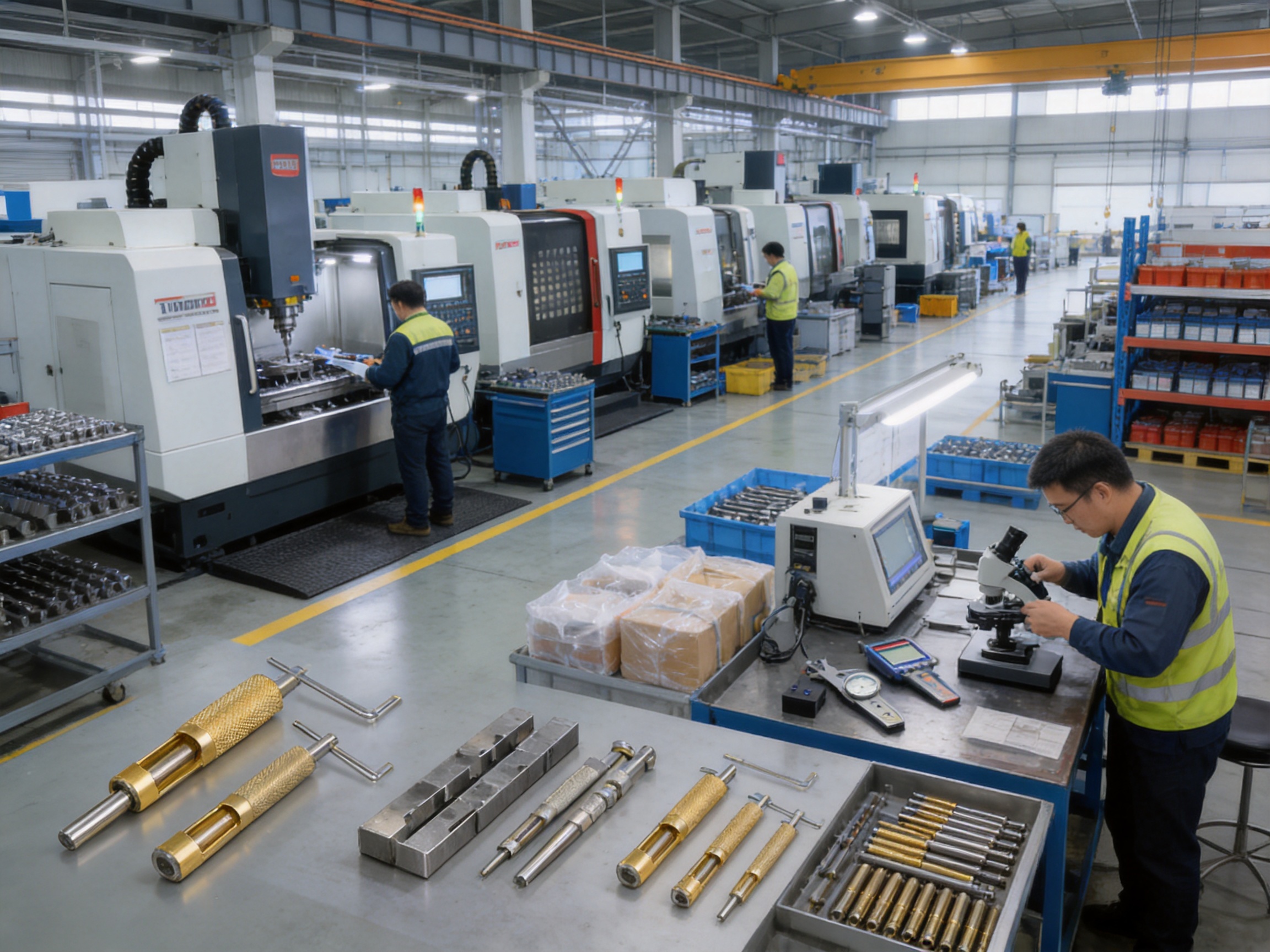
Established in 2015, the company operates a 10,000-square-meter owned manufacturing plant. The facility is equipped with hundreds of machine tools and automated production systems. This combination of factory space, equipment, and automation supports stable production for both standard products and customer-specific requirements.
An owned facility can provide closer control over production scheduling, process management, and equipment maintenance. It also gives the manufacturer greater flexibility when responding to changes in order volume, product specifications, or delivery requirements. For distributors and industrial buyers, stable production capacity is an important consideration because a reliable tool is most valuable when it can be supplied consistently.
Automation contributes to repeatability in machining and forming operations. While different products may require different process routes, automated systems can help control positioning, cycle parameters, and production records. Human expertise remains essential for process design, inspection, maintenance, and final quality judgment, but automation helps reduce unnecessary variation in repetitive work.
Integrated Design, Development, and Production Capability
The company has developed an experienced team covering product design, technical development, and manufacturing. This integrated capability supports continuous improvement in the installation tool’s functional details, including guide geometry, contact surfaces, handling characteristics, and compatibility with insert sizes.
Product development for a threaded connection tool requires more than simply machining a metal rod. Engineers must consider the shape and elasticity of the insert, the form of the receiving thread, the expected insertion force, operator handling, and the service conditions of the finished product. Production engineers must then convert the design into repeatable processes that can be inspected efficiently.
When design and manufacturing teams work closely together, problems identified during production or customer use can be transferred more quickly into engineering improvements. This shortens the feedback cycle and supports more responsive customization for industrial buyers.
Quality Management and Traceability
A rigorous quality management system is essential for threaded connection products. Quality control may include raw material verification, dimensional inspection, hardness testing, surface inspection, functional checks, and final packaging review. The specific inspection plan depends on the tool design and customer requirements.
Traceability is equally important. Records relating to materials, production batches, inspection results, and shipment information help manufacturers and customers investigate any quality concern. For automotive and aerospace supply chains, traceability can support process audits, corrective actions, and long-term supplier evaluation.
Consistent traceability also benefits distributors and maintenance organizations. If a tool is used across multiple production areas, documented product information helps confirm the correct size and application. It can also assist with replenishment planning and replacement selection.
Experience in Demanding Industrial Applications
The company’s products are used in automotive engines, transmissions, commercial vehicles, aerospace equipment, rail vehicles, machinery, and precision instruments. These applications require reliable threaded connections because assemblies may experience vibration, mechanical shock, thermal cycling, and frequent service operations.
Experience in demanding sectors strengthens the manufacturer’s understanding of practical installation requirements. A tool must not only perform well in controlled laboratory conditions; it must also remain useful when the operator is working within a restricted space, handling different component materials, or repairing a thread under time pressure.
This application background supports the development of products that balance accuracy, durability, portability, and cost. It also helps the manufacturer communicate more effectively with purchasing departments, maintenance engineers, production managers, and distributors.
Manufacturing Process for a Reliable Installation Tool
Material Selection and Incoming Inspection
The manufacturing process begins with the selection of suitable alloy steel. The material must provide a combination of hardness, toughness, machinability, and dimensional stability. Excessive hardness without sufficient toughness could make a component brittle, while inadequate hardness could lead to rapid wear.
Incoming inspection confirms that the material meets the required specification. Depending on the product and customer requirements, checks may include chemical composition documentation, hardness data, dimensional verification, and visual inspection for surface defects.
Precision Machining
After material preparation, the tool body and functional features are machined according to engineering drawings. The guide section, driving section, handle connection, and other surfaces must be produced within appropriate dimensional tolerances.
Precision machining is important because small deviations can affect insert engagement and alignment. A driving feature that is too loose may slip, while one that is too tight may damage the insert. A guide section with excessive clearance may not provide sufficient support, whereas insufficient clearance may interfere with smooth operation.
Modern machine tools and automated production systems help maintain repeatability across batches. Operators and technicians monitor tool condition, cutting parameters, and workpiece positioning to prevent process drift.
Heat Treatment and Hardness Control
Where required by the design, alloy steel components undergo heat treatment to achieve the intended hardness and mechanical properties. Heat treatment must be controlled carefully because it can influence dimensional stability, toughness, and surface performance.
After treatment, the parts may require additional finishing or correction operations. Hardness inspection helps confirm that the component can withstand repeated contact and torque during service. The final property balance should support long-term use without making the tool unnecessarily fragile.
Surface Finishing
Surface finishing improves the functional and handling characteristics of the tool. Smooth, clean surfaces help reduce friction during operation and make the tool easier to clean after use. Surface treatment may also improve resistance to corrosion, depending on the specified product configuration.
Special attention is given to the contact and guiding areas. Burrs, sharp unintended edges, or rough surfaces can interfere with insert movement and create damage. Finishing operations therefore contribute directly to installation quality rather than serving only an aesthetic purpose.
Assembly and Functional Testing
If the tool includes multiple components, assembly is performed under controlled procedures. Components are checked for correct fit, movement, and engagement. The completed tool is then tested to verify that it can engage the designated insert and transmit rotation smoothly.
Functional testing may include trial installation into representative tapped holes. Inspectors can check whether the insert enters smoothly, whether the tool maintains alignment, and whether the finished internal thread remains usable. Testing with representative components provides a practical confirmation of the design.
Final Inspection and Packaging
Final inspection verifies dimensions, appearance, markings, and product configuration. Packaging is designed to protect the guiding and driving areas from impact during storage and transportation. Correct labeling helps customers identify the tool size and application quickly.
For export orders, packaging and documentation can be adapted to customer requirements. Clear product identification is particularly important when several similar sizes are used in the same workshop or production line.
Application Areas
Automotive Manufacturing and Repair
Automotive engines, transmissions, chassis systems, and accessory assemblies contain numerous threaded connections. Some components are made from aluminum or other lightweight materials in which a wire insert can improve thread durability. The installation tool helps ensure that the insert is correctly positioned before the vehicle or assembly enters service.
During maintenance, a damaged tapped hole does not always require replacement of the entire component. A correctly installed wire insert can restore the fastening function and reduce repair cost. The portable tool is suitable for workshops and service departments where equipment must be repaired efficiently.
Aerospace Components
Aerospace structures and equipment require close control of weight, strength, and reliability. Wire inserts can provide durable threads in lightweight materials and support repeated maintenance access. Installation accuracy is especially important because assembly records and inspection procedures are typically strict.
The tool’s guiding design and repeatable operation can support controlled installation procedures. Aerospace customers may also require product documentation, traceability, and inspection records, making the manufacturer’s quality management capability an important part of supplier selection.
Rail Vehicles and Transportation Equipment
Rail vehicles are exposed to vibration, repeated operating cycles, and demanding maintenance schedules. Threaded connections must remain dependable while also allowing service technicians to remove and reinstall fasteners when necessary.
Using an appropriate wire insert installation tool can help maintenance teams restore worn threads without replacing large assemblies. Its portability is useful when repairs are performed directly on vehicles or in maintenance depots.
Machinery and Industrial Equipment
Industrial machines often include housings, frames, covers, fixtures, and drive components with tapped holes. Repeated fastening can wear these holes over time, especially where operators frequently remove guards or service panels.
A wire insert provides a practical way to restore the connection. The installation tool allows the repair to be performed efficiently and helps standardize work across different maintenance teams. The M3 to M24 size range covers many common machine-building requirements.
Electronic Devices and Precision Instruments
Electronic equipment and precision instruments may use compact threaded holes in housings, brackets, mounting plates, and adjustment mechanisms. Small inserts require careful handling because the coil and receiving hole are relatively delicate.
The tool’s controlled engagement and guiding structure can reduce the risk of damaging small inserts. For precision assemblies, operators should use suitable magnification, clean tools, and carefully controlled torque to maintain the required result.
Recommended Installation Practices
Before installation, confirm the insert size, pitch, length, and material. Select the corresponding installation tool and ensure that the receiving hole has been prepared with the correct tap. The tap, insert, and tool should be treated as a coordinated system.
Clean the hole thoroughly. Chips, dirt, old lubricant, or burrs can interfere with insert entry and prevent the coil from seating correctly. A clean hole also makes it easier to inspect the finished installation.
Check the tool before use. The driving feature should be free from visible damage, and the guide should be straight and clean. Do not use a tool that has been bent, excessively worn, or modified in a way that changes its engagement geometry.
Engage the insert carefully and avoid forcing it onto the tool. The insert should sit correctly and rotate with the tool. If engagement feels loose or uneven, stop and verify that the tool and insert are compatible.
Align the tool with the hole before applying significant rotational force. Begin slowly to confirm that the insert is following the receiving thread. If abnormal resistance occurs immediately, remove the tool and inspect the hole rather than forcing the insert deeper.
Install the insert to the specified depth. Excessive depth or insufficient depth may affect the bolt’s engagement, the function of the driving tang, or the position of the finished thread. Follow the relevant technical instructions for the specific insert type.
After installation, inspect the thread with the appropriate bolt, gauge, or inspection method. The fastener should engage smoothly without abnormal tightness or looseness. If the connection does not meet requirements, investigate the cause before placing the component into service.
Purchasing and Supplier Evaluation Considerations
Industrial buyers should evaluate more than the unit price of an installation tool. Important considerations include material quality, dimensional consistency, size availability, manufacturing capacity, quality documentation, packaging, delivery reliability, and after-sales support.
A low initial purchase price may not represent the lowest total cost if the tool wears quickly or causes failed insert installations. Rework, component damage, production delays, and technician time can exceed the original tool cost. A durable and consistent tool may provide better value over its complete service life.
Buyers should also review whether the supplier can provide matching wire inserts, installation taps, and related fastening products. A coordinated product range can simplify procurement and reduce the possibility of compatibility errors.
For distributors, stable supply and product breadth are especially important. A manufacturer with a broad threaded connection portfolio can support different customer sectors and create a more complete product offering. Technical communication, private labeling, packaging customization, and order flexibility may also be relevant for distribution partnerships.
For original equipment manufacturers, the supplier’s engineering capability should be considered. Custom sizes, special materials, unusual installation environments, and application-specific packaging may require cooperation between the buyer’s engineering team and the manufacturer’s technical staff.
Company Manufacturing and Service Strengths
Dongtai Jinzhize Metal Products Co., Ltd. combines specialized threaded connection production with an owned manufacturing facility, automated production systems, and an experienced technical team. This structure supports both standard supply and application-oriented product development.
The company’s product portfolio includes the wire thread inserts and related tools needed to create a complete repair or reinforcement solution. This product integration can help customers simplify sourcing, improve compatibility, and obtain technical assistance from a supplier familiar with the entire installation process.
With a 10,000-square-meter plant and hundreds of machine tools, the company has the production infrastructure required for stable industrial supply. Its reported annual output value of RMB 153 million in 2024 indicates significant manufacturing activity and market acceptance. Production scale is supported by quality management and after-sales service mechanisms intended to provide consistent customer support.
The company’s experience in automotive, aerospace, and rail vehicle applications also strengthens its ability to understand critical threaded connection requirements. Its stated mission is to provide stable and reliable threaded connection and fastening products for demanding assemblies while helping customers improve consistency and reduce procurement and usage risks.
For customers seeking a long-term manufacturing partner, these capabilities are valuable because product performance depends on more than the design of a single tool. It depends on repeatable processes, appropriate inspection, responsive communication, supply continuity, and the ability to support the product throughout its service life.
Maintenance, Storage, and Service Life
After each use, remove chips and residue from the tool. A soft brush or clean cloth can be used to clean the guide and driving areas. If a lubricant or cleaning agent is applied, ensure that it is compatible with the tool material and does not leave a residue that could contaminate the insert or base hole.
Inspect the contact surfaces regularly. Signs of wear may include rounded driving edges, visible deformation, unusual looseness, or difficulty engaging the insert. Continued use of a damaged tool can reduce installation quality and may damage otherwise acceptable inserts.
Store tools in a dry location and protect them from impacts. Separate storage by size helps prevent accidental use of the wrong tool. For production departments, a labeled tool rack or dedicated installation kit can improve organization and reduce setup time.
Service life depends on insert size, installation frequency, operating force, cleanliness, and maintenance. Using the correct tool for the correct insert is one of the most effective ways to extend service life. Improvised use outside the intended size range should be avoided.
Frequently Asked Questions
What is a wire thread insert installation tool used for?
It is used to screw a wire thread insert into a correctly prepared tapped hole. The tool engages the insert and guides it into position while transmitting rotational force. It is commonly used for thread repair, thread reinforcement, and the creation of durable internal threads in base materials that require additional support.
Which insert sizes are supported?
The product supports mainstream metric insert sizes from M3 to M24, subject to the specific tool configuration. Users should confirm the nominal diameter, pitch, insert length, and driving design before ordering or operating the tool.
Can the tool be used for thread repair?
Yes. It is suitable for installing wire thread inserts in worn or damaged tapped holes after the hole has been correctly prepared. The damaged thread normally needs to be drilled or cleaned as required, followed by tapping with the correct installation tap.
Why is alignment important during insert installation?
Alignment ensures that the insert follows the receiving thread smoothly. Poor alignment can cause cross-threading, coil deformation, uneven insertion depth, or damage to the base hole. The tool’s guiding structure helps reduce these risks and improves repeatability.
Is the tool appropriate for production lines?
Yes. Its smooth transmission, size availability, and repeatable operation make it suitable for production assembly. For high-volume work, companies should establish a standard operating procedure, define inspection requirements, and replace tools when wear affects installation performance.
Can it be used for field maintenance?
Yes. The compact and lightweight design makes it practical for workshops, maintenance departments, and on-site repair operations. Technicians can carry the tool to equipment that cannot easily be moved to a central repair facility.
What material is used to manufacture the tool?
The tool is made from high-hardness alloy steel. This material is selected for resistance to wear and impact, helping the tool maintain its driving and guiding geometry during repeated use.
How should the tool be cleaned?
Remove chips and residue after use with a clean cloth or soft brush. Keep the driving and guiding surfaces free from contamination. Store the tool in a dry, protected location and inspect it regularly for wear or deformation.
Can a standard tool be used with every wire thread insert?
No. The tool must match the insert’s size, pitch, length range, and driving configuration. A tool that is not compatible may fail to engage the insert or may cause damage. Buyers should provide complete insert specifications when requesting a tool.
What should be done if the insert meets abnormal resistance?
Stop turning and inspect the tool, insert, and receiving hole. Possible causes include incorrect size selection, chips in the hole, damaged receiving threads, poor alignment, or excessive insertion force. Forcing the tool may deform the insert or damage the component.
Why should customers purchase the tool from a specialized manufacturer?
A specialized manufacturer understands the relationship between insert geometry, tapping requirements, tool engagement, and finished thread performance. It can provide more consistent products, broader size support, technical guidance, and related threaded connection products than a general tool supplier may be able to offer.
Conclusion
A wire thread insert installation tool is a small component with a significant influence on the quality of a threaded connection. Its guiding structure, smooth transmission, anti-slip contact design, multi-size compatibility, and durable alloy steel construction help operators install wire inserts accurately and efficiently.
Compared with improvised or low-quality alternatives, a dedicated tool reduces dependence on manual judgment and helps control the most common causes of installation failure. It supports thread repair, reinforcement, and new assembly work in automotive, aerospace, rail, machinery, electronics, and precision instrument applications.
The product is supported by the manufacturing strengths of Dongtai Jinzhize Metal Products Co., Ltd., including specialized threaded connection production, a 10,000-square-meter owned facility, automated manufacturing systems, extensive machine resources, experienced design and production personnel, quality management, and after-sales service. The company’s broader range of inserts, taps, adapters, plugs, and fastening products also enables customers to source coordinated solutions from one experienced supplier.
For manufacturers and maintenance organizations, the correct installation tool can improve assembly consistency, reduce rework, protect valuable components, shorten repair time, and extend the useful life of threaded connections. When selected according to the insert specification and used with proper hole preparation, it becomes an important part of a reliable and repeatable fastening process.
References
1. General industrial practices for the installation and inspection of helical wire thread inserts.
2. Principles of threaded hole repair and reinforcement in aluminum alloys and other lightweight engineering materials.
3. Manufacturing considerations for alloy steel hand tools, including machining, heat treatment, hardness control, and surface finishing.
4. Quality management and traceability practices for automotive, aerospace, rail, and precision industrial components.
5. Technical guidance for selecting installation tools according to insert diameter, pitch, length, and driving configuration.