Français
 Español
 Deutsch


Content
- 1 What Is a Carbon Steel Oil Plug?
- 2 Why Oil Plug Performance Matters
- 3 Principal Advantages of Carbon Steel Oil Plugs
- 4 Advantages Over General-Purpose and Low-Cost Alternatives
- 5 Manufacturing Process for Carbon Steel Oil Plugs
- 6 Quality Management and Production Strength
- 7 Applications in the Automotive Industry
- 8 Applications in Machinery and Industrial Systems
- 9 Installation Guidelines
- 10 How to Select the Correct Carbon Steel Oil Plug
- 11 Why Work With a Specialized Manufacturer?
- 12 Cost and Lifecycle Value
- 13 Ordering and Customization Information
- 14 Q&A About Carbon Steel Oil Plugs
- 14.1 What is the main purpose of a carbon steel oil plug?
- 14.2 Why is carbon steel commonly used for oil plugs?
- 14.3 Are carbon steel oil plugs corrosion-resistant?
- 14.4 Can an oil plug be customized?
- 14.5 Can the same oil plug be used for every vehicle or machine?
- 14.6 How can leakage after installation be prevented?
- 14.7 Is a gasket always required?
- 14.8 What information should be supplied when ordering?
- 14.9 What makes a specialized supplier different from a trading company?
- 14.10 Can the manufacturer supply related thread repair products?
- 15 Conclusion
- 16 References
- 17 Product: Carbon Steel Oil Plug
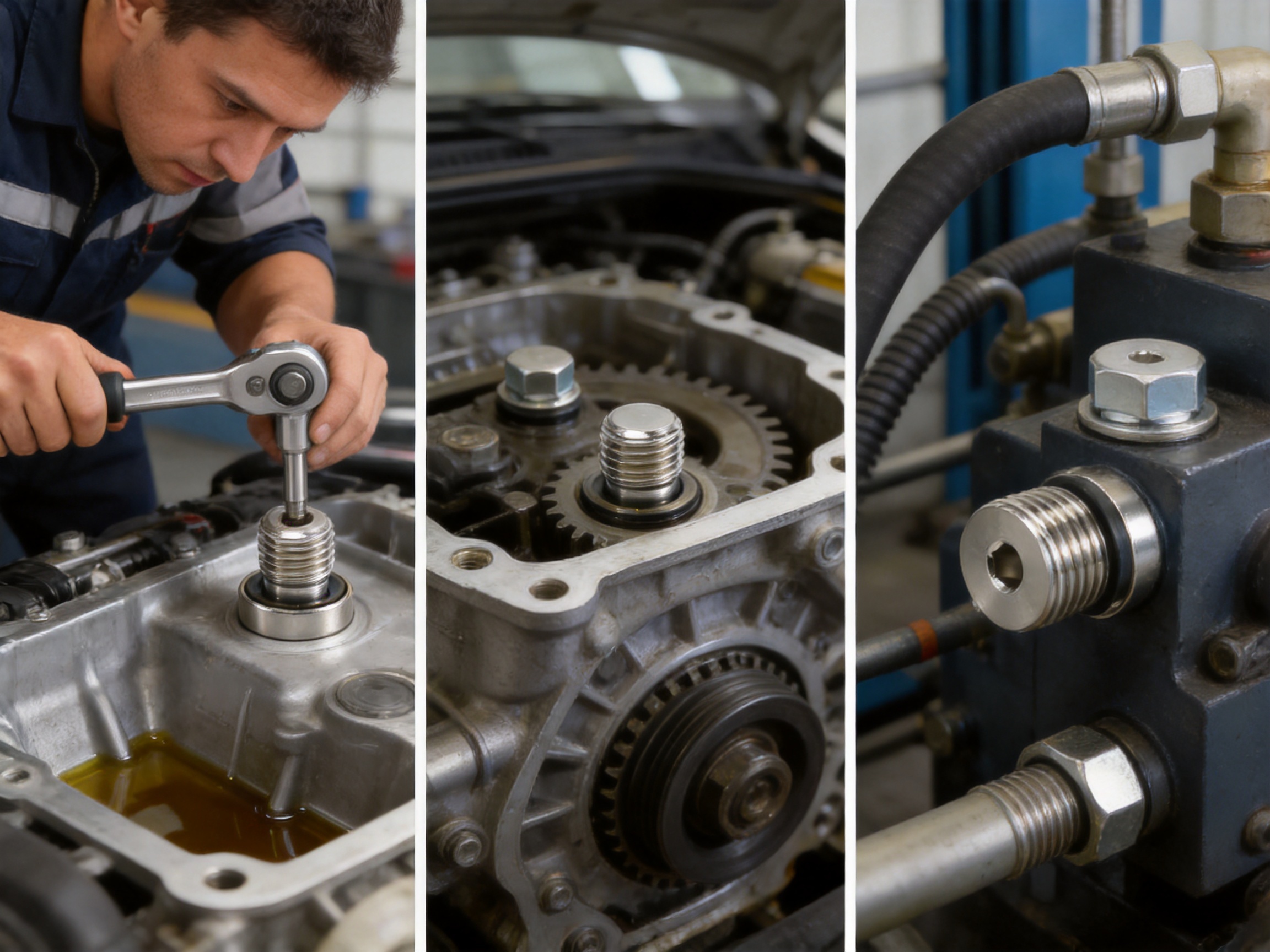
Carbon steel oil plugs are compact but essential components in systems that store, circulate, or control lubricating oil and other fluids. Installed in engines, transmissions, hydraulic assemblies, gearboxes, industrial machinery, and pipeline-related equipment, an oil plug closes a threaded opening while allowing controlled access for draining, filling, inspection, or maintenance. Although the part is simple in appearance, its performance directly influences leakage prevention, equipment cleanliness, service safety, and operating reliability.
A well-designed carbon steel oil plug must withstand pressure, vibration, temperature changes, repeated maintenance operations, and exposure to oils, gases, moisture, and external contaminants. It must also maintain stable thread engagement and create a dependable seal between the plug and the mating component. For these reasons, material selection, dimensional accuracy, thread quality, surface treatment, sealing design, and inspection procedures all contribute to the final performance of the product.
Dongtai Jinzhize Metal Products Co., Ltd. manufactures carbon steel oil plugs and a broad range of threaded connection and fastening products for automotive, aerospace, rail vehicle, machinery, and industrial applications. Its production capabilities include machining, thread processing, surface treatment, inspection, packaging, and support for related threaded products such as helical wire inserts, self-tapping inserts, key-locking inserts, threaded adapters, installation taps, and other tools.
This article examines the structure, advantages, applications, manufacturing process, quality considerations, installation practices, and selection criteria associated with carbon steel oil plugs. It also explains why a specialized manufacturer with an established production system can provide advantages over general-purpose suppliers and low-cost competitors.
What Is a Carbon Steel Oil Plug?
A carbon steel oil plug is a threaded closure component manufactured primarily from carbon steel. It is designed to seal a prepared opening in a component, reservoir, housing, pipe, engine assembly, transmission case, or industrial system. Depending on the application, the plug may be used to retain oil, lubricating fluid, hydraulic medium, gas, or another process fluid.
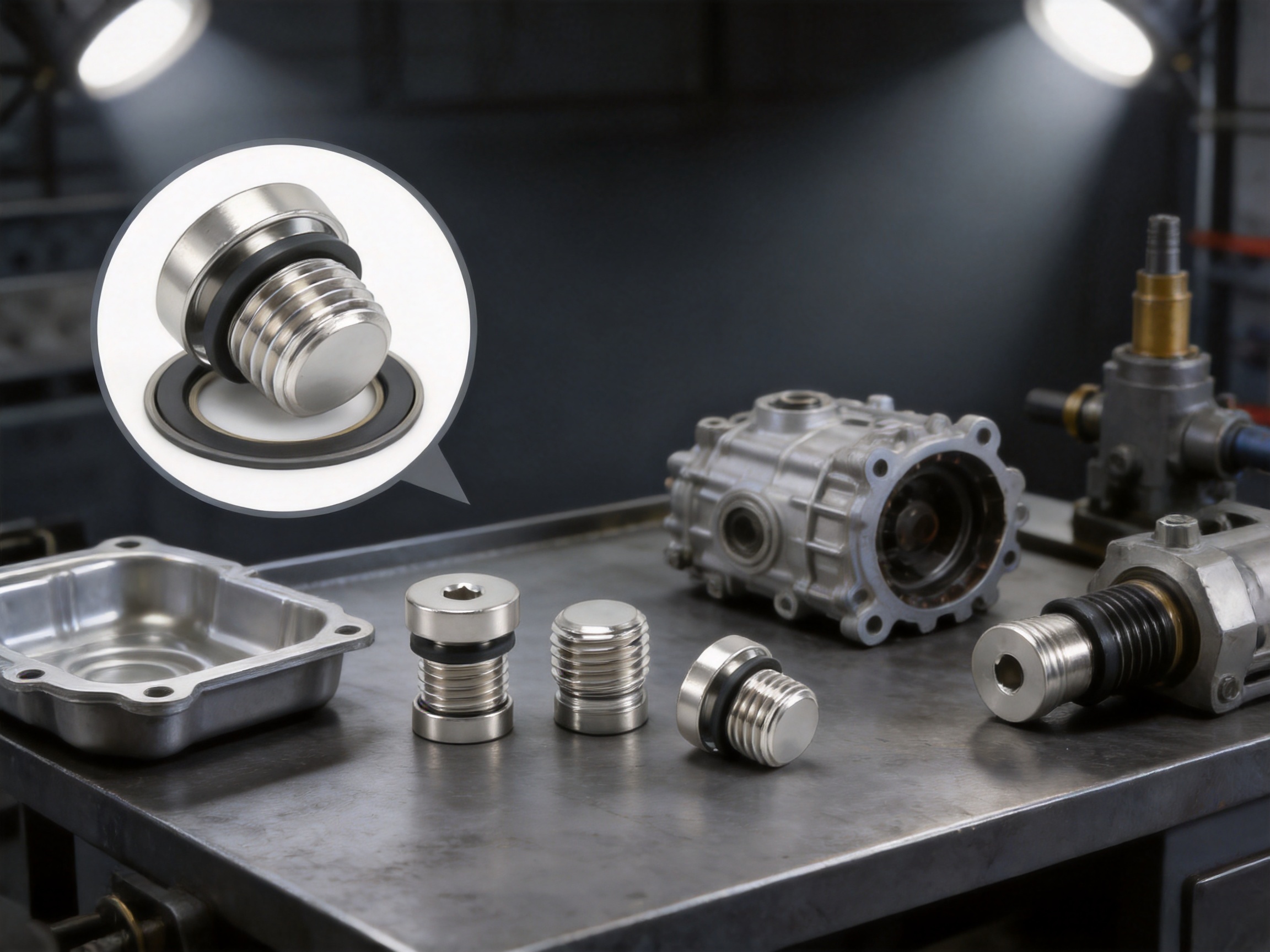
The plug normally consists of a threaded body and a sealing area. The threaded body provides mechanical retention and enables installation or removal with a suitable tool. The sealing area may be formed by a sealing face, shoulder, gasket seat, tapered thread, bonded washer, O-ring arrangement, or another application-specific design. The correct sealing structure depends on the pressure, fluid, temperature, thread standard, housing material, and maintenance requirements of the equipment.
Carbon steel is widely selected because it provides a practical balance of strength, machinability, cost, and availability. Compared with softer materials, carbon steel can offer stronger thread engagement and better resistance to deformation during tightening. It can also be processed efficiently on precision machine tools, making it suitable for standard and customized dimensions.
Because untreated carbon steel can be affected by moisture and corrosive media, oil plugs are commonly supplied with a suitable surface treatment. The treatment helps improve resistance to oils, gases, humidity, handling conditions, and external environmental exposure. The appropriate treatment should be selected according to the actual service environment rather than applied as a one-size-fits-all solution.
Why Oil Plug Performance Matters
In many mechanical systems, a small threaded opening is necessary for draining used oil, replenishing fluid, checking internal conditions, or carrying out scheduled maintenance. If the opening is not sealed correctly, the resulting leakage can reduce lubrication, contaminate surrounding parts, create fire or slip hazards, and increase operating costs.
In an engine or transmission, a leaking oil plug may cause a gradual loss of lubricant. Even a small leak can become serious when the equipment operates continuously or under high load. Insufficient lubrication may increase friction, wear, heat generation, and the risk of component failure. In industrial systems, leakage can also interrupt production and create environmental or workplace safety concerns.
A dependable oil plug helps address these risks by providing controlled closure of the opening. Its effectiveness depends on several elements working together:
• Accurate external dimensions and thread geometry.
• Sufficient material strength for the service load.
• Stable sealing contact with the mating surface.
• Resistance to vibration and loosening.
• Suitable surface protection against corrosion.
• Compatibility with the system fluid and operating temperature.
• Reliable installation and removal during maintenance.
These requirements explain why a professional oil plug should not be evaluated only by its purchase price. The cost of leakage, premature replacement, damaged threads, maintenance delays, and equipment downtime can be much higher than the initial component cost.
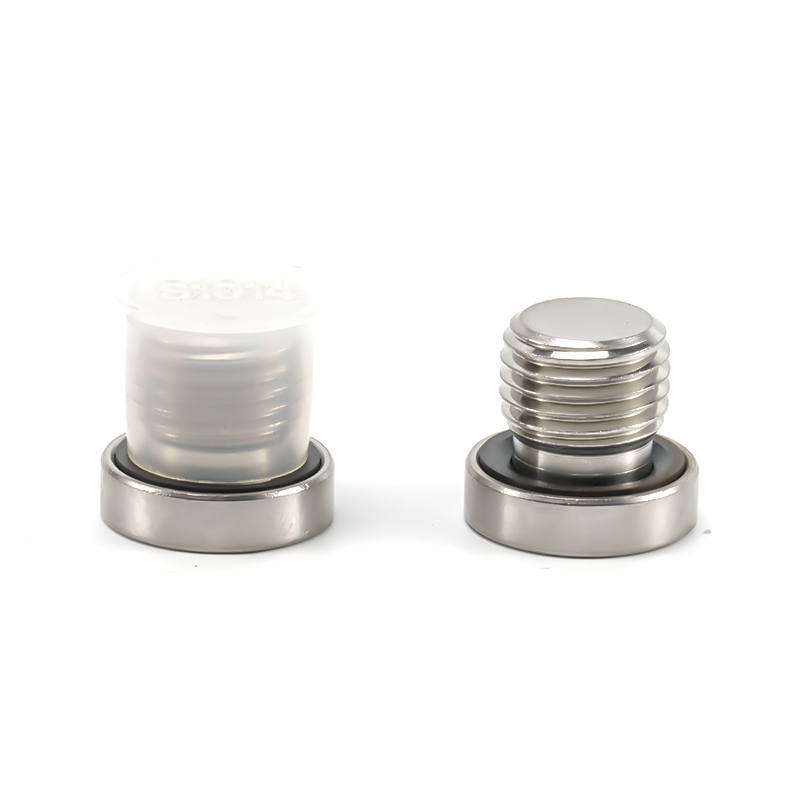
Carbon Steel Oil Plug
Principal Advantages of Carbon Steel Oil Plugs
High Mechanical Strength
Carbon steel provides a strong base material for threaded closures. Its mechanical strength supports reliable thread engagement and helps the plug resist deformation under tightening force and operating pressure. This is particularly important in engine housings, transmission cases, industrial pumps, hydraulic systems, and other assemblies subject to vibration or fluctuating loads.
A plug that is too soft may experience thread damage, head deformation, or sealing-face distortion during installation. A properly manufactured carbon steel plug is better able to maintain its original form when installed with the specified torque. The result is a more stable connection and a lower risk of damage to the plug or the mating component.
Pressure Resistance
Oil plugs are often used in systems where fluid pressure changes during start-up, operation, shutdown, or maintenance. Carbon steel offers the strength required to support the sealing structure under these conditions. The specific pressure capability depends on the plug design, thread type, wall thickness, material grade, sealing method, and housing configuration.
Pressure resistance is not determined by material alone. A high-quality product must combine appropriate geometry with accurate machining and a suitable sealing interface. A specialized manufacturer can review these factors together when producing standard or customized oil plugs.
Good Machinability
Carbon steel can be efficiently processed using turning, drilling, tapping, thread cutting, chamfering, facing, and other machining operations. Good machinability supports stable production and allows manufacturers to achieve consistent thread profiles, sealing faces, wrenching features, and overall dimensions.
Machinability is especially valuable when customers require non-standard sizes, special thread standards, modified head shapes, different sealing arrangements, or application-specific tolerances. A manufacturer with flexible equipment and experienced technicians can adjust production more efficiently than a supplier limited to a small range of catalog items.
Corrosion Protection Through Surface Treatment
Surface treatment improves the service suitability of carbon steel oil plugs. Depending on the required performance, treatment may help protect the component from humidity, oil exposure, handling, storage conditions, and external contaminants. It can also improve surface appearance and support more consistent installation.
The treatment must be compatible with the application. Automotive and industrial customers may have different requirements for corrosion resistance, coating thickness, dimensional influence, appearance, and chemical compatibility. A professional manufacturer should consider these requirements before selecting the finishing process.
Strong Sealing Performance
The main function of an oil plug is to prevent fluid leakage or unwanted ingress. A strong sealing design maintains contact between the plug and the mating surface even when the assembly experiences vibration, pressure variation, and thermal cycling.
Sealing performance depends on the accuracy of the sealing face, the condition of the mating surface, the selected gasket or seal, the tightening method, and the cleanliness of the threads. The plug must be manufactured so that the sealing elements work together rather than relying on thread engagement alone.
Multiple Size and Specification Options
Oil drain openings and service ports vary considerably between vehicles, machines, and industrial assemblies. For that reason, a useful product range should include multiple diameters, lengths, thread specifications, head configurations, and sealing arrangements.
Jinzhize supports the production of oil plugs for different equipment requirements. Standard products can be selected for common applications, while customized solutions may be considered when the customer has specific drawings, dimensions, performance targets, or installation limitations.
Advantages Over General-Purpose and Low-Cost Alternatives
Not all oil plugs provide the same level of reliability. Some low-cost alternatives may appear similar but can differ in material quality, thread accuracy, surface treatment, inspection, or sealing performance. These differences may not be visible during a basic visual check, yet they can become important during installation and long-term operation.
More Consistent Thread Accuracy
Thread accuracy affects both installation and sealing. Incorrect pitch, insufficient profile definition, excessive tolerance variation, or poor concentricity can make the plug difficult to install. It may also damage the mating thread or create uneven contact at the sealing surface.
A specialized threaded-product manufacturer understands the relationship between the plug thread and the customer’s internal thread. Production control can include tooling management, dimensional checks, thread gauges, sampling plans, and process verification. This creates more consistent engagement across production batches.
Better Control of Sealing Surfaces
The sealing face must be properly formed and finished. Surface irregularities, burrs, scratches, or out-of-tolerance geometry can prevent uniform compression of a gasket or washer. A specialized manufacturing process includes facing, chamfering, deburring, and inspection steps intended to support reliable contact.
Competitors that focus mainly on rapid output or minimum unit price may not apply the same level of attention to the sealing interface. For critical applications, consistent sealing quality is usually more valuable than a small difference in purchase price.
Greater Material and Batch Traceability
Stable supply requires control of incoming raw materials, production batches, processing stages, and final inspection. Traceability helps a manufacturer identify the source of a quality issue, confirm the production history of a batch, and support customer audits or corrective actions.
Jinzhize emphasizes consistent and traceable products. Its quality management approach is intended to support stable production for customers that purchase threaded connection components in regular quantities or use them in critical assemblies.
More Flexible Customization
A general distributor may only offer a fixed selection of catalog products. A specialized factory can often provide more practical support for customized dimensions, materials, surface treatments, sealing structures, and packaging requirements. This is important for original equipment manufacturers, maintenance providers, and engineering companies that cannot change the design of their equipment to suit an unsuitable standard part.
Integrated Threaded Product Capability
An oil plug is frequently used together with other threaded components. A damaged housing thread, for example, may require a thread repair insert. A special connection may require a threaded adapter. Installation may require a matching tap or tool. Jinzhize manufactures several related product categories, including self-tapping thread inserts, wire thread inserts, key-locking inserts, threaded adapters, installation tools, and thread taps.
This broader capability can simplify sourcing and technical communication. Customers may be able to coordinate the plug, insert, tap, or related fastening solution through one experienced manufacturer rather than managing several unrelated suppliers.
Improved Technical Communication
Oil plug selection often involves more than identifying a nominal diameter. Questions may arise concerning thread standards, pressure, fluid type, temperature, corrosion conditions, torque, sealing method, and installation tools. A manufacturer experienced in threaded connections can discuss these factors more effectively than a supplier with no production knowledge.
Clear technical communication reduces the risk of ordering a component that appears dimensionally similar but does not match the actual application.
Manufacturing Process for Carbon Steel Oil Plugs
The quality of a finished oil plug is strongly influenced by the stability of its manufacturing process. Although specific equipment and processing parameters vary according to the product design, a typical production route includes material preparation, machining, thread processing, finishing, surface treatment, inspection, and packaging.
1. Engineering Review and Product Confirmation
Before production begins, the product drawing or technical specification should be reviewed. Important information includes the nominal size, thread standard, pitch, overall length, sealing structure, head style, wrenching feature, material requirement, surface treatment, acceptable tolerances, and intended application.
For customized products, the manufacturer may also review the customer’s mating component or application conditions. This helps confirm that the plug can be installed correctly and that the sealing design is appropriate for the equipment.
2. Raw Material Preparation
Carbon steel stock is prepared in a form suitable for machining, such as bar material or pre-cut blanks. Material selection should reflect the required strength, machinability, hardness, surface treatment, and operating environment. Incoming material control helps prevent variation in mechanical and dimensional performance.
Proper storage is also important. Raw material should be protected from excessive moisture, contamination, and mix-ups between different specifications. Clear identification supports production traceability from the beginning of the process.
3. Turning and Forming
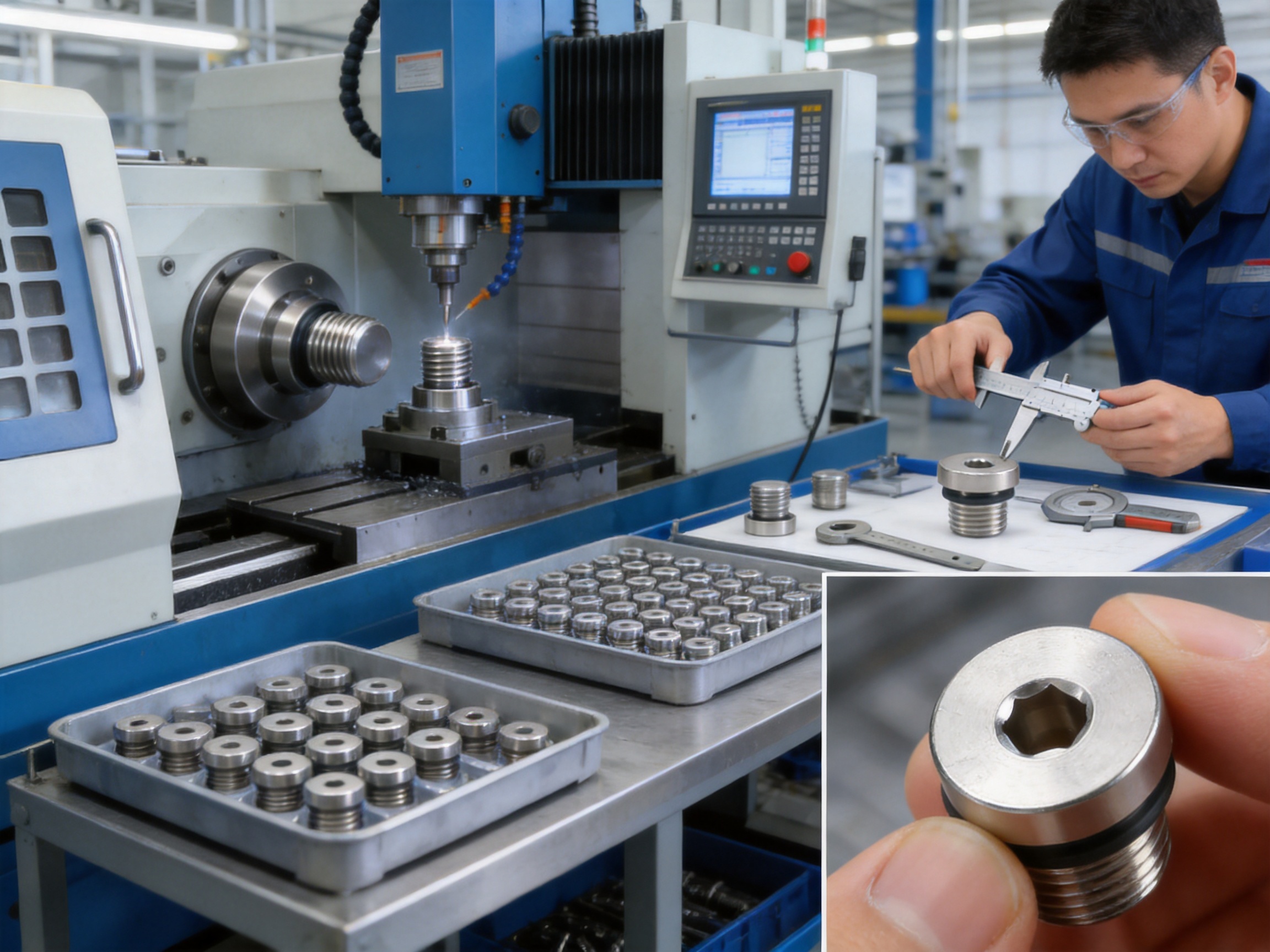
Turning operations establish the outer diameter, length, shoulder, head, sealing area, and other basic features of the plug. CNC lathes or other precision machine tools can produce repeatable dimensions and support efficient batch production.
During this stage, controlling concentricity is important. The thread, sealing face, and external body must be properly aligned. Poor alignment may create uneven loading, installation difficulty, or incomplete sealing.
4. Thread Manufacturing
The external thread is produced using an appropriate cutting, rolling, or forming method, depending on the material, design, thread standard, and production requirements. The process must create the specified pitch, major diameter, minor diameter, flank form, lead, and effective engagement length.
Thread inspection may include gauges and dimensional measurement. A go gauge should enter correctly, while a no-go gauge should confirm that the thread is not excessively loose. More detailed inspection may be used for critical applications or special thread profiles.
5. Sealing Surface Processing
The sealing area is machined or formed to meet the required flatness, angle, diameter, and surface condition. If the plug uses a gasket or sealing washer, the seating area must support uniform compression. If a tapered thread or other thread-based sealing arrangement is used, the thread geometry and surface finish become especially important.
Edges are typically chamfered or deburred to reduce the risk of cutting a gasket, damaging a mating thread, or interfering with installation. Clean, controlled surfaces support better sealing reliability.
6. Cleaning and Deburring
Machining can leave chips, burrs, oil residues, or other contaminants. These must be removed before surface treatment and final packaging. A contaminant trapped between the plug and the mating surface may create a leak path or damage the internal system.
Cleaning is also important for customer assembly. A clean plug is easier to inspect, handle, coat, package, and install consistently.
7. Surface Treatment
Surface treatment is selected according to the required corrosion resistance, appearance, dimensional limitations, and service environment. The treatment should cover the exposed carbon steel surfaces consistently while avoiding unacceptable changes to the thread or sealing area.
Coating thickness and coverage may be checked as part of the quality process. Where necessary, the manufacturer can consider whether the sealing surface should remain untreated, receive a controlled treatment, or use a specified finish compatible with the customer’s assembly requirements.
8. Final Inspection
Final inspection may include visual examination, dimensional verification, thread gauging, sealing-face checks, surface-treatment inspection, and sampling for mechanical or functional requirements. The inspection scope should be appropriate to the product design and the customer’s quality expectations.
Inspection records help confirm that the manufactured batch meets the agreed specification. For customers in automotive, aerospace, or other demanding sectors, documentation and traceability may be important parts of supplier qualification.
9. Packaging and Shipment
Finished oil plugs should be packaged to prevent impact, contamination, corrosion, and mixing of different sizes. Packaging labels should identify the product specification, quantity, batch information, and other agreed details.
Suitable packaging is especially important for threaded components because damaged threads may not be obvious until installation. Protective packaging helps preserve the product condition from the factory to the customer’s warehouse or production line.
Quality Management and Production Strength
Dongtai Jinzhize Metal Products Co., Ltd. was established in 2015 and operates from an owned manufacturing plant of approximately 10,000 square meters. The facility is equipped with hundreds of machine tools and automated production systems. This production foundation supports the manufacture of oil plugs and related threaded connection products for customers in different industries.
Factory ownership and substantial in-house equipment can provide several practical benefits. Production planning is more directly controlled, manufacturing processes can be coordinated internally, and engineering or quality questions can be addressed closer to the production source. This may reduce dependence on multiple subcontracting layers and improve communication during product development or batch production.
The company has developed an experienced team for design, development, and production. Such experience is particularly valuable for threaded products because a small dimensional change can influence installation torque, thread engagement, sealing behavior, and compatibility with the mating component.
Jinzhize also maintains a quality management system and after-sales service mechanism. Quality management is not limited to final inspection; it should include process planning, equipment control, material management, employee training, inspection methods, corrective action, and customer feedback. A complete system helps identify potential problems earlier and supports continuous improvement.
In 2024, the company achieved an annual output value of 153 million RMB. This figure indicates an established manufacturing and supply capability, although customers should always evaluate product quality and capacity according to their own technical and commercial requirements. Stable supply is especially important when oil plugs are used in recurring production, maintenance programs, or large equipment fleets.
Applications in the Automotive Industry
Engine Assemblies
Oil plugs are used in engine-related components to close oil drain openings, service ports, galleries, and other threaded access points. The plug must resist engine vibration, heat cycling, oil exposure, and repeated maintenance operations.
During oil changes, the plug may be removed and reinstalled several times throughout the service life of a vehicle. Thread durability and sealing consistency are therefore important. The correct plug should be installed using the specified method and torque to avoid over-tightening, thread damage, or insufficient sealing.
Transmissions and Gearboxes
Transmissions, reduction gearboxes, and differentials use lubricating oil to reduce friction and control wear. Oil plugs provide access for draining old lubricant, filling new lubricant, or checking the fluid level. They may be exposed to vibration, impact from road conditions, and temperature variations.
A strong carbon steel plug can provide the mechanical stability required for these applications. The surface treatment should be suitable for the external environment, while the sealing configuration must be compatible with the housing design and lubricant.
Commercial Vehicles and Heavy Equipment
Commercial vehicles, construction machinery, agricultural equipment, and other heavy-duty systems often operate under demanding loads and harsh environmental conditions. Their service intervals may also involve frequent oil changes and maintenance.
Oil plugs for these applications should be selected for durability, accessibility, corrosion resistance, and reliable sealing. Where a plug is exposed to dirt, water, road salt, or mechanical impact, material and surface treatment become particularly important.
Applications in Machinery and Industrial Systems
General Machinery
Industrial machinery may contain gear housings, lubrication reservoirs, hydraulic units, compressors, pumps, and other fluid-containing assemblies. Oil plugs help close openings used for drainage, filling, inspection, and maintenance.
Different machines may require different thread standards, head styles, sealing methods, and sizes. A manufacturer capable of producing a broad range of specifications can support more equipment types and reduce the need for improvised substitutions.
Hydraulic and High-Pressure Systems
Hydraulic systems rely on controlled fluid pressure to transmit force. A plug used in a hydraulic assembly must be compatible with the pressure level, fluid type, temperature range, and housing material. The connection must remain stable without leakage during operation.
Product suitability should be confirmed through engineering review. Pressure resistance depends on the complete connection design, including the housing wall, thread engagement, sealing method, and installation conditions. The oil plug should not be treated as an isolated component when evaluating system safety.
Gas and Process Piping
Some industrial systems use threaded plugs in gas pipelines, process equipment, and service ports. In these cases, sealing reliability and material compatibility are essential. The plug design and surface treatment must be selected according to the medium and the applicable safety requirements.
Where the application involves hazardous, high-temperature, or high-pressure media, customers should provide complete operating information and obtain appropriate engineering confirmation before selecting the product.
Rail and Aerospace-Related Equipment
Rail vehicles and aerospace-related manufacturing require consistent, traceable, and carefully controlled components. Threaded connection products used in these sectors may be subject to detailed drawings, inspection documentation, material requirements, and supplier qualification processes.
Jinzhize supplies threaded connection products for automotive and aerospace sectors and has experience supporting applications in rail vehicle manufacturing. The exact suitability of a carbon steel oil plug should always be verified against the customer’s specific engineering and certification requirements.
Installation Guidelines
Verify Compatibility Before Installation
Before installation, confirm the plug’s thread diameter, pitch, thread standard, length, sealing method, head size, and material. The mating opening should be inspected for damage, contamination, cross-threading, or excessive wear.
A plug should never be forced into an opening simply because its diameter appears correct. Different thread pitches can look similar but are not interchangeable. Forced installation may permanently damage the housing and make future repairs more difficult.
Clean the Mating Surfaces
Remove old sealant, metal particles, dirt, carbon deposits, and residual gasket material from the opening and sealing surface. The plug should also be clean and free of loose debris. Contamination can create a leak path or prevent correct seating.
Inspect the Sealing Element
If the design uses a gasket, washer, O-ring, or other separate sealing element, inspect it before installation. A damaged, hardened, deformed, or incorrectly sized seal should be replaced. Reusing a sealing element beyond its intended service life may reduce leak resistance.
Start the Thread by Hand
Where access permits, begin threading the plug by hand. The plug should turn smoothly for several rotations before a wrench is used. If resistance occurs immediately, remove the plug and inspect the thread alignment rather than applying additional force.
Apply the Correct Tightening Torque
Use the torque specified by the equipment manufacturer, product drawing, or engineering instruction. Excessive torque can stretch or deform the plug, damage the housing thread, crush a gasket, or make future removal difficult. Insufficient torque may allow leakage or loosening.
The correct torque depends on thread size, material, lubrication, surface treatment, sealing method, and application requirements. Torque values should not be copied from an unrelated product.
Check for Leakage After Assembly
After installation, inspect the area for leakage during the appropriate operating and testing conditions. If leakage occurs, do not simply continue tightening without identifying the cause. The problem may involve a damaged sealing surface, incorrect gasket, contaminated thread, wrong plug specification, or housing damage.
How to Select the Correct Carbon Steel Oil Plug
Selection should begin with the equipment and operating conditions rather than the product name alone. The following factors should be reviewed.
Thread Standard and Size
Identify whether the application uses a metric, unified, pipe, tapered, or another thread standard. Confirm nominal diameter, pitch, thread length, and tolerance. If the original plug is available, measure it carefully and compare it with the equipment drawing whenever possible.
Pressure and Temperature
Determine the normal and maximum operating pressure, as well as pressure fluctuations during start-up and shutdown. Temperature range should include both continuous operating temperature and temporary peaks. These factors influence material selection and sealing design.
Fluid Compatibility
Specify whether the plug will contact engine oil, gear oil, hydraulic fluid, fuel, gas, coolant, process fluid, or another medium. The fluid may affect the surface treatment, gasket, coating, or auxiliary seal.
Environmental Exposure
Consider humidity, salt spray, outdoor exposure, chemicals, dust, road debris, vibration, and cleaning agents. A plug used inside a protected housing may require a different corrosion strategy from one mounted underneath a vehicle.
Maintenance Frequency
If the plug will be removed frequently, thread durability, wrenching access, sealing-element replacement, and resistance to galling should be considered. A design suitable for one-time installation may not be ideal for repeated service operations.
Required Documentation
For industrial, automotive, aerospace, or rail applications, customers may require material certificates, dimensional reports, inspection records, batch identification, or other quality documentation. These requirements should be agreed before production.
Why Work With a Specialized Manufacturer?
A specialized manufacturer brings more than production capacity. It provides process knowledge related to threaded connections, material behavior, tooling, sealing surfaces, inspection, and application requirements. This knowledge can help customers avoid common mistakes such as selecting an incorrect pitch, overlooking corrosion exposure, or using an unsuitable sealing method.
Jinzhize’s product range covers several complementary categories. These include self-tapping thread inserts, internal-external thread conversion nuts, wire thread inserts, three-hole threaded inserts, oil plugs, installation tools, thread taps, and key-locking inserts. The combination of inserts, adapters, plugs, and tools allows the company to address both new assembly and thread repair requirements.
For manufacturers, this integrated product capability may simplify purchasing and supplier management. For maintenance organizations, it may support a more complete response to damaged or modified threaded holes. For engineering teams, it provides access to a supplier familiar with the interaction between the threaded component and the mating assembly.
The company’s manufacturing plant, automated production systems, experienced personnel, and quality management structure support stable production for domestic and international customers. Its stated mission is to provide reliable threaded connection and fastening products for critical assemblies while helping customers improve assembly consistency and reduce procurement and usage risks.
Cost and Lifecycle Value
The purchase price of an oil plug is only one part of its total cost. A low-priced component may become expensive if it causes leakage, damages a housing thread, requires premature replacement, or creates delays during assembly. Lifecycle value includes product reliability, installation efficiency, service life, maintenance frequency, quality documentation, and supplier responsiveness.
A correctly manufactured carbon steel oil plug can reduce avoidable maintenance problems. Its strong material, accurate thread, suitable surface treatment, and reliable sealing structure help protect the surrounding equipment. When supplied consistently in the required specifications, it can also reduce assembly variation and simplify inventory management.
For high-volume customers, stable batch quality is especially important. A small rate of dimensional or sealing defects can create significant costs when multiplied across thousands of vehicles, machines, or service operations. Supplier qualification and process control are therefore important parts of cost management.
Ordering and Customization Information
When requesting a quotation or technical review, customers should provide as much information as possible. Useful details include drawings, sample parts, thread dimensions, material requirements, surface treatment, sealing method, application photographs, annual demand, packaging needs, and applicable standards.
Customers should also state whether the product is for original equipment production, replacement parts, maintenance, export distribution, or a prototype project. The intended use can influence inspection, packaging, traceability, and production planning.
For customized oil plugs, the manufacturer may review the following items:
• Thread type, diameter, and pitch.
• Plug length and effective thread engagement.
• Head shape and wrenching method.
• Sealing face or gasket arrangement.
• Carbon steel grade or equivalent material requirement.
• Surface treatment and corrosion-resistance target.
• Pressure, temperature, and fluid conditions.
• Inspection, testing, and documentation requirements.
• Packaging, labeling, and delivery schedule.
Clear information at the beginning of the project helps prevent delays and reduces the risk of producing a part that is dimensionally correct but unsuitable for the actual application.
Q&A About Carbon Steel Oil Plugs
What is the main purpose of a carbon steel oil plug?
Its main purpose is to close and seal a threaded opening used for draining, filling, inspecting, or maintaining an oil-containing or fluid-containing system. It helps prevent leakage and protects the opening from unwanted contamination.
Why is carbon steel commonly used for oil plugs?
Carbon steel offers a useful combination of mechanical strength, pressure resistance, machinability, availability, and cost efficiency. It can be precision-machined into accurate threads and sealing features while providing strong resistance to deformation during installation.
Are carbon steel oil plugs corrosion-resistant?
Carbon steel itself requires suitable protection when exposed to moisture or corrosive conditions. Oil plugs are commonly supplied with a surface treatment selected according to the operating environment. The treatment and the application should be reviewed together.
Can an oil plug be customized?
Yes. A manufacturer may be able to customize thread dimensions, length, head configuration, sealing structure, material, surface treatment, packaging, and inspection requirements. Customization should be based on a drawing, sample, or complete technical specification.
Can the same oil plug be used for every vehicle or machine?
No. Oil plugs differ in thread standard, diameter, pitch, length, sealing design, material, and application requirements. The correct product must match the equipment manufacturer’s specifications and operating conditions.
How can leakage after installation be prevented?
Use the correct plug and sealing element, clean the mating surfaces, inspect the housing thread, start the plug by hand, and apply the specified torque. If leakage continues, investigate the cause rather than simply tightening the plug further.
Is a gasket always required?
No. Some designs use a gasket or washer, while others use a tapered thread, a sealing face, an O-ring, or another structure. The sealing method depends on the plug design and the mating component.
What information should be supplied when ordering?
Provide the drawing or sample, thread size and standard, material, surface treatment, sealing method, application fluid, pressure, temperature, quantity, packaging requirements, and any inspection or documentation requirements.
What makes a specialized supplier different from a trading company?
A specialized supplier typically has direct control or strong technical knowledge of machining, thread production, surface treatment, inspection, and product development. This can improve communication, customization, traceability, and batch consistency.
Jinzhize manufactures related products including helical wire inserts, self-tapping inserts, key-locking inserts, threaded adapters, installation tools, and thread taps. These products can support new threaded connections, damaged-thread repair, and specialized assembly requirements.
Conclusion
Carbon steel oil plugs are essential sealing components for automotive, machinery, industrial, rail, and other fluid-handling applications. Their compact size does not reduce their importance. A reliable plug must provide accurate thread engagement, sufficient strength, dependable sealing, appropriate corrosion protection, and stable performance under pressure, vibration, temperature variation, and repeated maintenance.
Compared with general-purpose or poorly controlled alternatives, a professionally manufactured oil plug offers advantages in dimensional consistency, material control, sealing performance, surface treatment, traceability, customization, and technical support. These advantages can reduce leakage risks, improve assembly consistency, protect mating components, and support lower lifecycle costs.
Dongtai Jinzhize Metal Products Co., Ltd. combines experience in threaded connection products with an approximately 10,000-square-meter manufacturing facility, hundreds of machine tools, automated production systems, an experienced engineering and production team, and a quality management structure. Its broader product range also enables customers to source oil plugs alongside inserts, adapters, thread taps, and installation tools.
For the best result, customers should select an oil plug according to the complete application: thread standard, pressure, temperature, fluid, corrosion exposure, maintenance frequency, sealing method, and documentation requirements. With correct technical confirmation and controlled manufacturing, a carbon steel oil plug can provide a durable and economical solution for preventing fluid leakage and maintaining the reliability of critical assemblies.
References
1. General principles of mechanical threaded connections and fastening design.
2. Engineering practices for sealing threaded plugs, gaskets, and fluid service ports.
3. Manufacturing principles for CNC turning, external thread machining, deburring, and surface finishing.
4. Quality control practices for dimensional inspection, thread gauging, material traceability, and batch management.
5. Automotive maintenance principles for engine, transmission, gearbox, and differential oil service.
6. Industrial guidelines for pressure-containing threaded components and fluid leakage prevention.
7. Product and manufacturing information supplied by Dongtai Jinzhize Metal Products Co., Ltd.