Français
 Español
 Deutsch


Content
- 1 Understanding the Slotted Internal-External Thread Conversion Nut
- 2 How the Product Works in an Assembly
- 3 Core Design Features
- 4 Advantages Over Ordinary Thread Adapters
- 5 Manufacturing Strengths and Production Capability
- 6 Typical Applications
- 7 Key Selection Considerations
- 8 Installation Recommendations
- 9 Maintenance and Service Considerations
- 10 Quality and Competitive Value
- 11 Customization and OEM Cooperation
- 12 Why Manufacturing Consistency Matters
- 13 Frequently Asked Questions
- 13.1 What is a slotted internal-external thread conversion nut?
- 13.2 What is the main advantage of the slot?
- 13.3 Can the internal and external threads have different sizes?
- 13.4 What materials are available?
- 13.5 Is the product suitable for outdoor or humid environments?
- 13.6 Can the conversion nut be used in automotive applications?
- 13.7 Can it be used in aerospace or defense equipment?
- 13.8 How should the correct product be selected?
- 13.9 How is the product installed?
- 13.10 Can the product be customized?
- 13.11 Can related threaded products be supplied together?
- 13.12 What should be done if the slot is damaged during installation?
- 14 Conclusion
- 15 References
- 16 Product: Slotted Internal-external Thread Conversion Nut
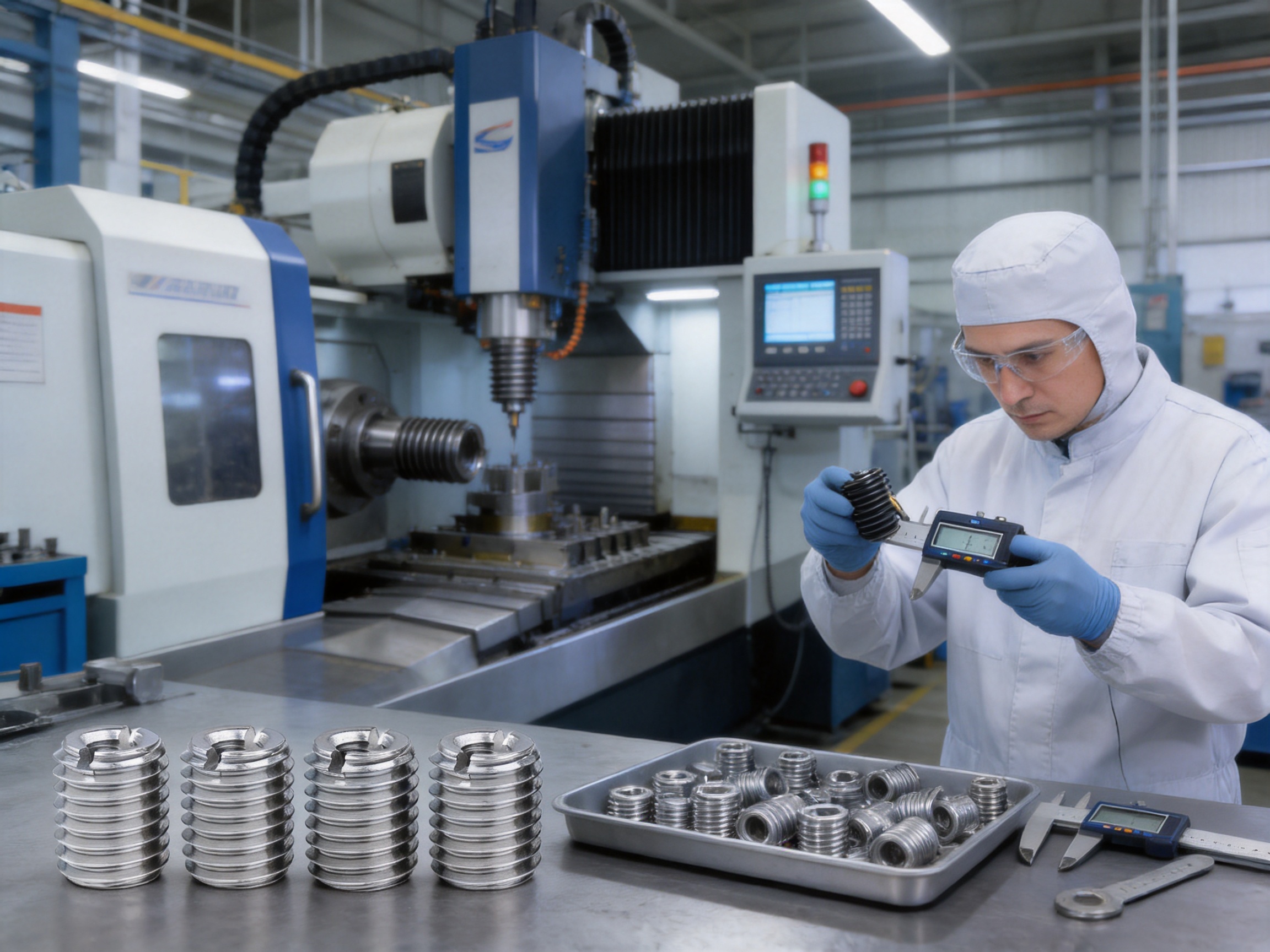
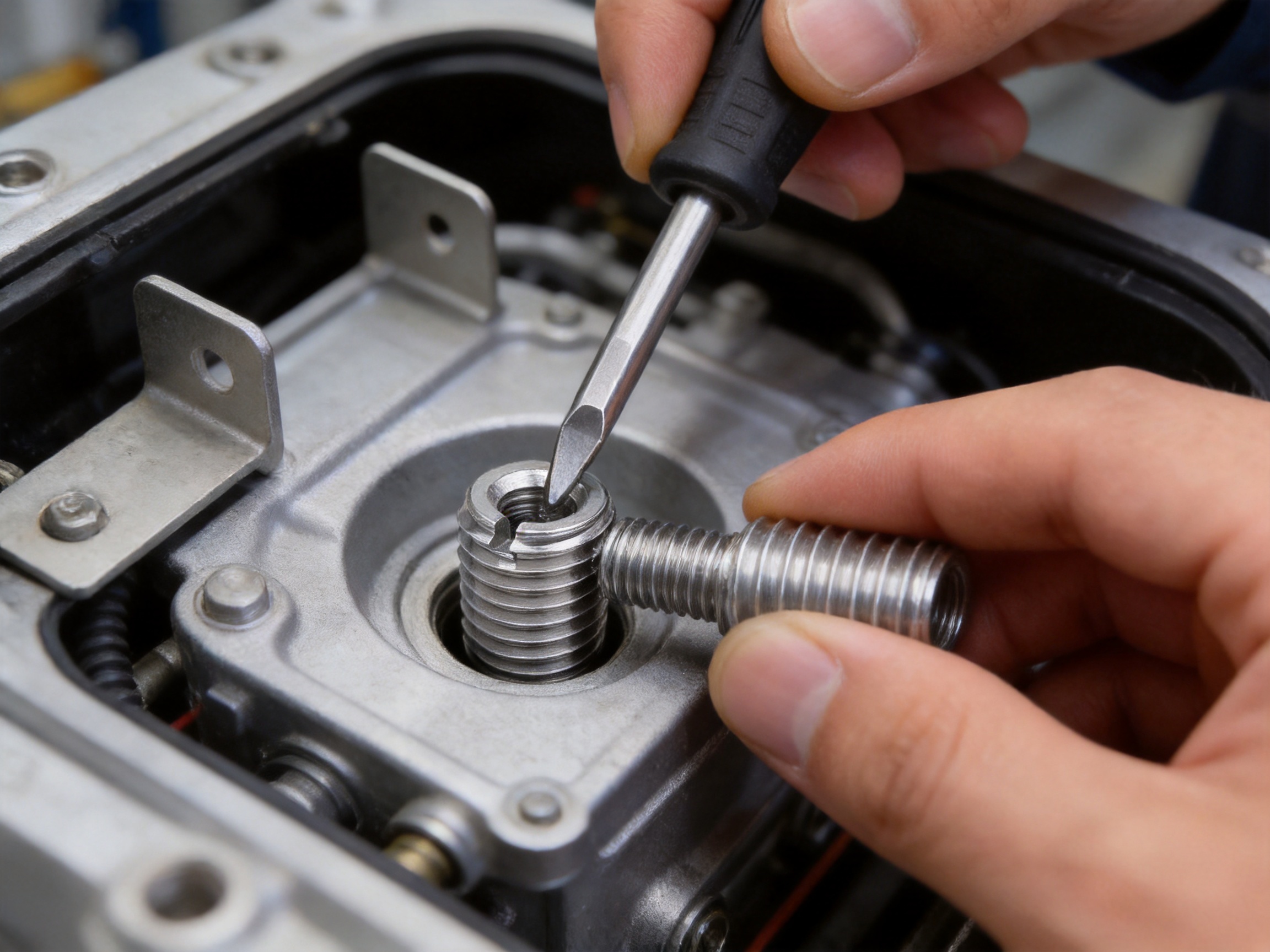
Threaded connections are fundamental to modern mechanical design. They secure components, support serviceable assemblies, and allow machines to be dismantled, repaired, and reassembled without replacing entire structures. However, threaded connection requirements are not always uniform. A component may be designed with one thread size while the mating fastener, replacement part, or auxiliary fitting uses another. In other situations, an assembly may require a change between internal and external threads, a transition between different thread standards, or a compact adapter that can be installed in a restricted space.
A slotted internal-external thread conversion nut provides a practical answer to these challenges. It combines an external male thread and an internal female thread in one compact component, allowing one threaded interface to connect with another. Its slotted design further improves installation and removal by enabling the use of a flathead screwdriver or similar tool. This combination of thread conversion capability, compact structure, and service-friendly installation makes the product useful in industrial equipment, automotive assemblies, construction components, aerospace-related applications, and other fields where dependable fastening is essential.
Produced by Dongtai Jinzhize Metal Products Co., Ltd., the slotted internal-external thread conversion nut belongs to a broader range of threaded connection and fastening products. The company specializes in helical wire inserts, self-tapping thread inserts, key-locking inserts, threaded adapters, oil plugs, installation taps, and related tooling. Its experience across these product categories supports a practical understanding of thread engagement, installation behavior, material selection, dimensional consistency, and application requirements.
This article examines the design, operating principle, manufacturing strengths, application value, selection considerations, and maintenance advantages of the slotted internal-external thread conversion nut. It also explains why a professionally manufactured conversion nut can provide advantages over ordinary improvised adapters, poorly controlled substitutes, or general-purpose fastening components that are not designed for thread conversion.
Understanding the Slotted Internal-External Thread Conversion Nut
A slotted internal-external thread conversion nut is a threaded adapter with two functional thread surfaces. The external surface carries a male thread intended to engage with a tapped hole, threaded housing, or female-threaded component. The internal bore contains a female thread designed to receive a screw, stud, bolt, or other male-threaded fastener. By combining these two thread forms into one part, the component creates a transition between interfaces that would otherwise be incompatible.
The conversion nut can be used when the external mounting thread and the internal fastening thread have different nominal sizes. It can also be used when a design requires a change in thread direction or a change between a component-side connection and a fastener-side connection. Depending on the ordered configuration, the product may support various thread types, pitches, diameters, and dimensional combinations. These details should always be confirmed against the engineering drawing, application requirements, and mating parts before production or installation.
The slot is a defining feature of this product. Positioned on the top or another accessible area of the component, the slot allows a flathead screwdriver to apply installation torque. This eliminates the need for a specialized external wrenching surface in applications where the adapter is small, recessed, or surrounded by nearby components. The same slot can assist with removal during maintenance, replacement, inspection, or assembly correction.
Although the product is compact, it performs several functions at once. It converts a threaded interface, establishes a secure mechanical connection, supports repeated service access, and helps maintain a clean installation profile. This multifunctional structure is particularly valuable where space is limited and where using several separate parts would increase assembly complexity.
How the Product Works in an Assembly
During installation, the external thread of the conversion nut is aligned with the female thread in the host component. A screwdriver is placed into the slot, and controlled torque is applied to drive the nut into position. Once the external thread is fully engaged, the internal thread remains available for the intended screw, stud, or bolt.
The resulting connection has two interfaces. The first is the connection between the conversion nut and the host material. The second is the connection between the internal thread and the inserted fastener. Both interfaces must be properly selected and controlled. The host material should provide adequate thread engagement and structural support, while the internal thread should match the mating fastener in diameter, pitch, direction, and functional tolerance.
In a properly designed assembly, the conversion nut distributes load through its external thread into the surrounding component. The internal thread then transfers clamping force to the attached part. The strength and reliability of the assembly depend on the material of the nut, the strength of the host component, the engagement length, the applied torque, the load direction, and the operating environment.
The slotted structure also contributes to installation efficiency. Operators can install the part using a familiar tool, without waiting for a special driver or accessing a large wrenching surface. When maintenance is required, the same slot can be used to remove the adapter, provided that the installation has not caused damage, seizure, deformation, or contamination.
Core Design Features
Integrated Male and Female Threads
The most important advantage is the integration of external and internal threads in one component. Instead of designing a separate stud, sleeve, nut, or custom spacer, engineers can use one conversion element to bridge two threaded systems. This reduces the number of components in the bill of materials and can simplify assembly planning.
Integrated thread conversion is also useful when a legacy component must be connected to a new design. For example, a machine housing may contain an established thread while a replacement bracket uses another fastener size. A conversion nut can help accommodate the difference without redesigning the entire housing or replacing a larger assembly.
Slotted Installation Structure
The screwdriver slot offers a straightforward installation method. It is especially useful in recessed holes, narrow channels, small mechanical assemblies, and areas where a conventional hexagonal adapter cannot be reached with a wrench. The slot also provides a visible indication of the component’s orientation and installation position.
For production environments, the slot can reduce tooling variety and shorten installation time. Operators can use a standard flathead screwdriver with suitable width and thickness. For maintenance teams, the slot can make the part easier to identify and remove during inspection or repair.
Compact Form Factor
A conversion nut is designed to deliver two threaded functions within a small volume. Its compact structure helps preserve surrounding space for brackets, covers, housings, wiring, seals, and other nearby components. This is important in automotive, aerospace, instrumentation, and compact industrial equipment where every millimeter of installation space may affect the overall design.
The compact form also helps engineers avoid unnecessary protrusions. A properly selected conversion nut can create a cleaner connection than a long external stud combined with a separate coupling component. Reduced projection can lower the risk of interference with moving parts or protective covers.
High-Strength Steel Construction
The product is made from premium steel selected to provide mechanical stability and durability under demanding loading conditions. Steel offers a combination of strength, wear resistance, machinability, and dimensional stability that is well suited to threaded components.
Material selection should correspond to the intended application. Components exposed to repeated tightening, vibration, impact, tensile loads, or fluctuating service conditions require an appropriate material grade and manufacturing process. The actual material designation, heat treatment, surface finish, and mechanical properties should be confirmed through the relevant product specification or technical drawing.
Corrosion-Resistant Surface Treatment
Surface treatment helps protect the conversion nut from humidity, oxidation, handling contamination, and other environmental influences. Corrosion resistance is particularly important in outdoor equipment, automotive systems, industrial machinery, high-humidity facilities, and applications where maintenance access is limited.
A suitable finish can also support smoother installation and improve the product’s appearance. However, surface treatment should be selected with consideration for the operating environment, mating materials, temperature, chemical exposure, and required friction characteristics. Where an exact torque value is specified, the influence of coating or plating on torque-tension behavior should be evaluated.
Advantages Over Ordinary Thread Adapters
More Convenient Installation Than Wrench-Dependent Designs
Many conventional adapters depend on a hexagonal exterior or a special driver. These designs can be effective, but they may be difficult to use in deep holes, narrow spaces, or assemblies with nearby obstructions. The slotted conversion nut can be operated with a flathead screwdriver, offering a convenient alternative for compact installations.
This does not mean that every slotted design is suitable for high-torque installation. The screwdriver slot, tool fit, and component size must be considered carefully. For applications requiring high installation torque, the manufacturer and customer should confirm the appropriate installation method. Within its intended operating range, however, the slot provides a practical balance between accessibility and simplicity.
Lower Part Count
A multi-part connection may require a threaded sleeve, a stud, a locking nut, and additional spacers. Each extra part creates another opportunity for incorrect assembly, loss during maintenance, dimensional variation, or inventory complexity. The integrated conversion nut can combine the primary thread-transition function into one manufactured component.
Reducing part count can improve production control. Fewer pieces must be picked, inspected, stored, and tracked. A simplified assembly may also reduce labor time and make work instructions easier to understand. These benefits are especially valuable for high-volume production and global service networks.
Better Suitability for Restricted Spaces
The compact body and top slot make the product suitable for locations where external tooling clearance is limited. This can help designers place threaded connections closer to walls, ribs, housings, or adjacent components. In automotive and industrial systems, such flexibility can support more efficient packaging.
A smaller connection does not automatically mean lower performance. When the thread dimensions, engagement length, material, and host structure are correctly selected, a compact adapter can provide reliable service. Engineering verification remains essential, especially in safety-critical or highly loaded assemblies.
Improved Maintenance Access
Serviceability is a major advantage of the slotted design. If the internal thread becomes damaged, if a component must be replaced, or if the assembly requires modification, the conversion nut can be removed using a simple tool. This may be faster than replacing a larger housing or machining a new threaded feature in the field.
Maintenance access can also reduce equipment downtime. A readily removable threaded component allows technicians to address localized problems rather than dismantling an entire machine. For industrial customers, this can support more predictable maintenance scheduling and lower lifecycle costs.
Broader Thread Compatibility
The product is available for different thread types and sizes, allowing it to support a range of mechanical connection requirements. This flexibility is useful for original equipment manufacturers, repair organizations, distributors, and engineering departments that manage multiple product families.
Thread compatibility must be treated as a precise engineering requirement. Nominal diameter alone is not enough. Thread pitch, thread angle, direction, tolerance class, effective engagement, and mating material can all affect performance. A professional manufacturer can help confirm the appropriate configuration before production.
Manufacturing Strengths and Production Capability
The performance of a threaded conversion nut depends heavily on manufacturing consistency. A part may have the correct general shape but still fail to perform if its thread profile, concentricity, surface finish, slot geometry, or material properties are poorly controlled. For this reason, the production system behind the component is as important as the design itself.
Dongtai Jinzhize Metal Products Co., Ltd. operates a specialized manufacturing facility dedicated to threaded connection products. Established in 2015, the company has developed production experience in wire thread inserts, self-tapping inserts, key-locking inserts, threaded adapters, oil plugs, installation taps, and related tools. This product range provides a broad foundation in precision threading and fastening applications.
The company operates an owned manufacturing plant covering approximately 10,000 square meters. The facility is equipped with hundreds of machine tools and automated production systems. This combination of equipment and automation supports stable output, repeatable processing, and the ability to manage different product specifications.
Engineering and Product Development
A strong conversion-nut supplier should be able to understand more than a basic dimensional drawing. Product development may involve selecting suitable materials, determining thread proportions, reviewing installation conditions, evaluating surface treatments, and adapting the design to the host component.
Jinzhize maintains an experienced design, development, and production team. This structure supports communication between engineering and manufacturing. When a customer needs a non-standard thread combination, modified slot dimensions, a particular material, or a special surface treatment, coordinated technical review can help turn the application requirement into a manufacturable product.
Machining and Thread Formation
Threaded parts require accurate machining to produce consistent major diameter, minor diameter, pitch, flank geometry, and thread depth. The external and internal threads must also remain properly aligned with one another. Poor concentricity can make installation difficult, increase uneven loading, and reduce the usable engagement of the mating fastener.
Modern machine tools and automated production systems can support repeatable turning, drilling, tapping, threading, slotting, and finishing operations. Process parameters can be defined and monitored to reduce variation between batches. Depending on the product design, additional operations may include deburring, heat treatment, surface preparation, coating, cleaning, and final inspection.
Quality Management and Traceability
Threaded connection components are often installed in assemblies that must perform consistently over long service periods. A rigorous quality management system helps control incoming materials, production processes, inspection procedures, packaging, and customer feedback.
Traceability is particularly valuable for industrial and automotive customers. It can connect finished products with production batches, material records, inspection results, and shipment information. If a question arises during assembly or service, traceable records can help identify the relevant production history and support a faster technical response.
Jinzhize emphasizes highly consistent and traceable products. This focus is important for customers who require repeat orders to match earlier batches. Consistency helps prevent changes in installation behavior, fit, appearance, and performance when products are purchased over an extended project timeline.
Large-Scale and Stable Supply
Production capacity is a key consideration when a conversion nut is used in a high-volume program. A supplier must be able to provide prototypes, initial production quantities, repeat orders, and possible demand increases without sacrificing quality.
The company reported an annual output value of 153 million RMB in 2024. This figure demonstrates a substantial manufacturing and supply capability across its threaded connection product range. Customers can benefit from working with a supplier that has experience supporting stable production rather than relying only on small-batch workshop output.
Stable supply also involves planning, inventory coordination, packaging, export handling, and after-sales support. These areas can be as important as machining capacity when customers operate international production lines or maintain equipment in multiple locations.
Typical Applications
Industrial Machinery
Industrial machinery often contains housings, brackets, frames, covers, guide systems, and service panels with different fastening requirements. A slotted internal-external thread conversion nut can connect components with mismatched thread sizes or provide a replacement threaded interface where the original design is difficult to access.
In machinery repair, the product may help restore a damaged or unsuitable threaded connection without replacing the entire assembly. It can also support design changes when a new sensor, guard, bracket, or auxiliary component must be attached to an existing machine.
Automotive Manufacturing
Automotive systems combine compact packaging, vibration, repeated service operations, and demanding production requirements. Threaded adapters may be used in components related to engines, transmissions, brackets, body structures, fixtures, and auxiliary systems.
The slotted design can be useful where a connection is recessed or where a large wrench cannot reach the installation point. The use of high-strength steel and corrosion-resistant treatment can support long-term durability, subject to the specific material and environmental requirements of the vehicle system.
Jinzhize supplies threaded connection products for automotive applications, including engine and transmission-related assemblies for passenger and commercial vehicles. This industry experience helps the company understand the importance of dimensional consistency, repeatability, batch control, and reliable delivery.
Construction and Building Equipment
Construction equipment and structural assemblies may require robust threaded connections that remain serviceable under vibration, outdoor exposure, and changing loads. A conversion nut can support modular assemblies, mounting systems, repair work, and equipment components where different thread sizes must be connected.
For structural or load-bearing applications, engineers must verify the load path, host material, engagement length, installation torque, and applicable safety requirements. The conversion nut should be selected as part of a complete engineered connection rather than treated as an isolated hardware item.
Aerospace and Defense-Related Equipment
Aerospace and defense equipment generally requires strict control of materials, dimensions, documentation, and production processes. Threaded adapters may be used in compact assemblies where weight, access, maintainability, and connection reliability are all important.
Applications in these sectors require project-specific qualification. The customer should confirm material certifications, inspection documentation, environmental requirements, and any applicable industry or customer standards before placing an order. The manufacturer’s experience in aerospace-related threaded connection products provides a foundation for technical cooperation, but each application remains subject to its own approval requirements.
Rail Vehicles and Transportation Systems
Rail vehicles contain numerous mechanical, electrical, and serviceable subsystems that depend on reliable threaded connections. A compact adapter may help connect brackets, housings, panels, and equipment mounts where access is limited and maintenance intervals are carefully planned.
Corrosion resistance and stable thread engagement are especially important in transportation environments exposed to humidity, vibration, temperature changes, and frequent operational cycles. Proper product selection and installation procedures should be included in the equipment maintenance documentation.
Key Selection Considerations
Choosing the correct slotted internal-external thread conversion nut begins with identifying both mating interfaces. The external thread must match the host component, and the internal thread must match the fastener or component being installed. The following factors should be reviewed before ordering.
| Selection Factor | Why It Matters | Information to Confirm |
|---|---|---|
| External thread | Determines how the conversion nut fits into the host component | Nominal diameter, pitch, thread direction, tolerance, and engagement length |
| Internal thread | Determines compatibility with the mating screw, stud, or bolt | Diameter, pitch, thread form, direction, and required fit |
| Material | Influences strength, wear resistance, and service life | Steel grade, heat treatment, hardness, and application loads |
| Surface treatment | Supports corrosion resistance and affects friction | Coating or finish type, environmental exposure, and torque requirements |
| Slot dimensions | Determines tool access and installation practicality | Slot width, depth, orientation, and screwdriver compatibility |
| Body dimensions | Controls clearance and fit within the assembly | Overall length, outer diameter, internal bore, and available space |
| Operating conditions | Influences material and finish selection | Temperature, humidity, vibration, chemicals, and service frequency |
| Quality documentation | Supports production control and customer approval | Inspection records, material documents, batch traceability, and packing requirements |
Customers should provide a technical drawing whenever possible. A drawing is more reliable than a verbal description because it can define the exact thread combination, dimensions, tolerances, slot shape, surface treatment, and inspection requirements. Samples or photographs may also help clarify the existing application, but they should not replace dimensional confirmation.
Installation Recommendations
Before installation, inspect the host thread and remove chips, dirt, grease residues, corrosion, or other contamination. The external thread of the conversion nut should be clean and free from damage. Confirm that the screwdriver fits the slot properly. A tool that is too narrow, too thin, or excessively worn may slip and damage the slot.
Align the conversion nut carefully with the host thread. Start the part by hand where possible to prevent cross-threading. The component should enter smoothly. If significant resistance is felt at the beginning of installation, stop and check thread compatibility, alignment, contamination, and possible burrs.
Apply installation torque gradually and maintain the screwdriver in line with the axis of the thread. Avoid excessive side loading, sudden impact, or makeshift tools that could deform the slot. If a specific torque value is provided for the application, follow that value and consider the effect of lubrication or surface treatment.
After installation, verify that the conversion nut is seated at the intended depth and that the internal thread remains clean and accessible. Install the mating screw, stud, or bolt using the specified procedure. The fastener should engage smoothly without binding. Inspect the finished assembly for interference, excessive protrusion, inadequate engagement, or damage to the surrounding component.
Maintenance and Service Considerations
During scheduled maintenance, inspect the visible slot, exposed surfaces, and internal thread. Look for corrosion, deformation, cracking, thread wear, contamination, or signs of loosening. In a vibrating environment, the surrounding assembly should also be checked for movement or loss of clamping force.
If the internal thread is damaged, do not force a replacement fastener into it. Continued use of a damaged thread can create unreliable clamping and may transfer damage to the mating fastener. Remove and replace the conversion nut if the component no longer provides proper engagement.
When removal is necessary, clean the slot and select a screwdriver with a close fit. Apply steady torque rather than sudden twisting. If the adapter is seized, the service procedure should account for the host material, surrounding components, corrosion condition, and risk of damage. In critical equipment, replacement should be carried out by trained personnel according to the equipment manufacturer’s instructions.
Keeping spare conversion nuts in controlled inventory can shorten maintenance downtime. Spare parts should be stored in a dry environment and protected from contamination, impact, and mix-ups between similar thread sizes. Labels should include the part number, thread configuration, material, surface treatment, and batch information where applicable.
Quality and Competitive Value
The competitive value of this product comes from more than its basic ability to join two threaded interfaces. Its main advantages are the combination of functional integration, convenient slot-driven installation, compact dimensions, steel construction, corrosion-resistant treatment, and compatibility with varied thread requirements.
Compared with low-cost products manufactured without consistent process control, a professionally produced conversion nut is more likely to provide stable thread fit, reliable dimensions, and repeatable installation behavior. These qualities can reduce assembly interruptions and improve the consistency of finished equipment.
Compared with generic adapters, a product developed specifically for threaded connection applications can offer better attention to slot geometry, internal-external thread alignment, surface finish, and application-oriented customization. Customers can also obtain related inserts, taps, installation tools, and fastening products from a supplier with knowledge across the complete threaded connection process.
Compared with multi-part solutions, the integrated conversion nut can reduce component count and simplify purchasing. This can lower the administrative burden associated with supplier management, incoming inspection, inventory control, and maintenance stocking.
Jinzhize’s manufacturing strengths further support this value proposition. The company combines an owned production facility, extensive machine-tool capacity, automated systems, experienced technical personnel, quality management procedures, traceability, and after-sales service. Its product experience extends across automotive, aerospace, rail, industrial machinery, and other demanding applications.
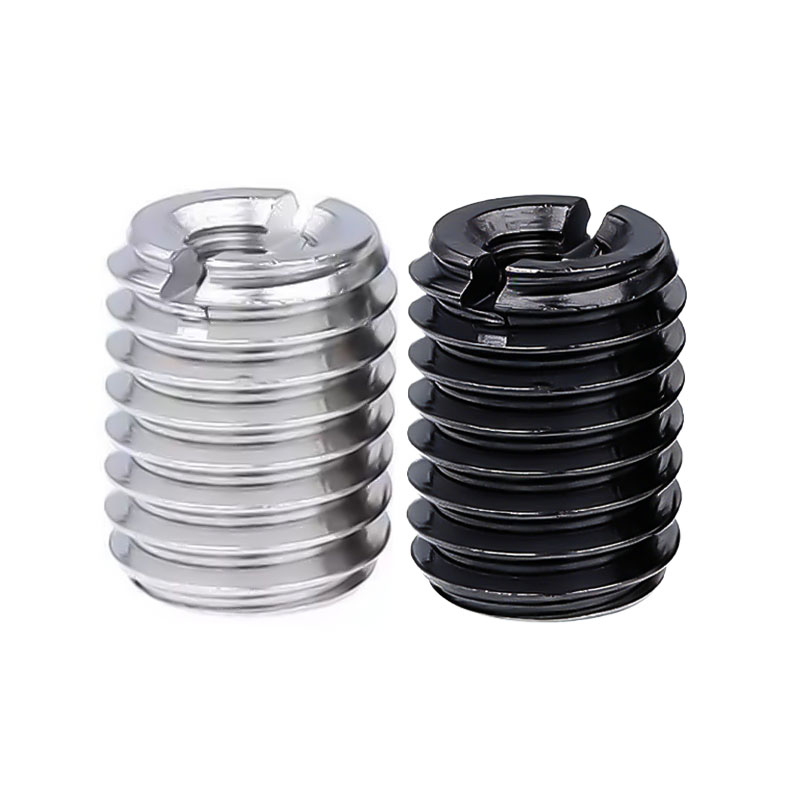
Slotted Internal-external Thread Conversion Nut
Customization and OEM Cooperation
Thread conversion requirements are often application-specific. Standard sizes may not provide the exact external and internal thread combination, overall length, slot configuration, or surface treatment required by a customer. Custom production can address these differences while preserving the basic advantages of the slotted conversion-nut design.
Possible customization areas include external thread size, internal thread size, thread pitch, thread direction, body diameter, overall length, slot width, slot depth, material, hardness, surface finish, packaging, and inspection documentation. Some applications may also require controlled batches, sample approval, first-article inspection, or specific labeling.
A successful customization project normally begins with a drawing or detailed specification. The customer should identify the host material, mating fastener, expected loads, installation method, environmental conditions, and annual demand. The manufacturer can then review manufacturability, tooling, process sequence, inspection points, and expected lead time.
For customers developing a new product, cooperation during the design stage can prevent common problems. These may include insufficient thread engagement, inadequate tool clearance, incompatible surface treatment, excessive slot stress, or a body size that conflicts with surrounding parts. Early review is generally more efficient than correcting these issues after mass production begins.
OEM and contract manufacturing customers may also benefit from coordinated supply across related product categories. A supplier able to provide conversion nuts, wire thread inserts, self-tapping inserts, key-locking inserts, oil plugs, thread taps, and installation tools can help simplify sourcing for complete threaded connection programs.
Why Manufacturing Consistency Matters
Threaded products are precision components even when their external appearance is simple. A small variation in pitch or profile can affect assembly force. An incorrect internal diameter can produce loose fit or excessive interference. An uneven slot can cause tool slippage. A burr can damage the host thread or prevent proper seating.
Consistency is therefore important at every stage. Raw material must be suitable for the specified application. Machines must be correctly set and maintained. Cutting tools must be controlled. Deburring and cleaning must be sufficient. Surface treatment must be applied uniformly. Inspection must verify the features that affect fit and function.
Automation can support repeatability, but automation alone does not guarantee quality. It must be combined with appropriate process planning, trained personnel, measurement systems, maintenance, and corrective action. Jinzhize’s combination of automated production systems, machine-tool resources, technical experience, and quality management provides a framework for stable manufacturing.
For customers, this consistency can reduce rejected parts, line stoppages, installation variation, and field complaints. It can also make future purchasing more predictable because repeat orders are more likely to match the approved sample or original production batch.
Frequently Asked Questions
What is a slotted internal-external thread conversion nut?
It is a compact threaded adapter that contains an external male thread and an internal female thread. It converts one threaded interface into another and includes a slot that allows installation or removal with a flathead screwdriver.
What is the main advantage of the slot?
The slot provides a simple tool-access point. It is useful when the component is recessed, when wrench clearance is limited, or when a compact installation method is preferred. It also supports easier removal during service.
Can the internal and external threads have different sizes?
Yes. Thread conversion nuts are commonly used to connect different nominal thread sizes. The exact combination must be specified and confirmed before production because diameter, pitch, thread form, direction, and tolerance all affect compatibility.
What materials are available?
The described product is made from high-strength steel. Specific material grades, hardness conditions, heat treatments, and alternative materials should be confirmed with the manufacturer according to the application’s mechanical and environmental requirements.
Is the product suitable for outdoor or humid environments?
The product can be supplied with corrosion-resistant surface treatment suitable for many humid or demanding environments. The correct finish depends on exposure to moisture, chemicals, temperature, salt, abrasion, and contact with other materials. Application-specific confirmation is recommended.
Can the conversion nut be used in automotive applications?
Yes. Threaded adapters are used in automotive and mechanical assemblies where space is limited or where different threaded interfaces must be connected. The product should be selected according to the vehicle component’s load, vibration, temperature, corrosion, and documentation requirements.
Can it be used in aerospace or defense equipment?
It may be considered for aerospace and defense-related applications, but each project requires individual qualification. Customers should confirm material certification, inspection documentation, environmental performance, traceability, and any customer-specific or industry-specific approval requirements.
How should the correct product be selected?
Provide the external thread, internal thread, overall dimensions, slot requirements, material, surface finish, installation method, operating environment, and expected loads. A detailed drawing is the preferred reference for quotation and production.
How is the product installed?
Clean and inspect the host thread, align the conversion nut, start it carefully to avoid cross-threading, and use a properly fitting flathead screwdriver in the slot. Apply controlled torque and verify that the adapter is seated correctly. Follow any application-specific torque or locking instructions.
Can the product be customized?
Yes. Customization may include thread sizes, pitches, body dimensions, slot geometry, material, hardness, surface treatment, packaging, and inspection documentation. The manufacturer should review the drawing and application conditions before confirming feasibility.
Yes. The manufacturer also produces helical wire inserts, self-tapping inserts, key-locking inserts, oil plugs, thread taps, installation tools, and other threaded connection products. Coordinated sourcing can simplify procurement for complete fastening programs.
What should be done if the slot is damaged during installation?
Stop installation and inspect the component. A damaged slot may prevent proper torque application and can make future removal difficult. Depending on the assembly condition, the conversion nut may need to be removed and replaced. Using the correct screwdriver size and controlled torque helps prevent slot damage.
Conclusion
The slotted internal-external thread conversion nut is a practical solution for connecting incompatible or differently configured threaded interfaces. Its integrated male and female threads provide conversion in a compact form, while the screwdriver slot improves installation and maintenance access. High-strength steel construction and corrosion-resistant surface treatment support durability across a broad range of industrial environments.
The product is particularly valuable where space is limited, part count must be controlled, or service access is important. It can support machinery, automotive systems, construction equipment, aerospace-related assemblies, defense equipment, rail vehicles, and other engineered products. Proper selection remains essential: thread dimensions, engagement, material, surface treatment, installation torque, environmental exposure, and load conditions must all be considered.
The manufacturing capability behind the product is equally important. Dongtai Jinzhize Metal Products Co., Ltd. provides threaded connection and fastening products from an owned 10,000-square-meter facility equipped with hundreds of machine tools and automated production systems. Since its establishment in 2015, the company has developed experience in precision threaded products, supported by design and development personnel, quality management, traceability, and after-sales service.
For customers seeking reliable threading and fastening solutions, the slotted internal-external thread conversion nut offers a balance of compact design, practical installation, thread compatibility, durability, and customization potential. When supported by disciplined manufacturing and application-focused technical cooperation, it can become a dependable part of both new equipment designs and maintenance programs.
References
1. ISO, ISO 965 Series, ISO General Purpose Metric Screw Threads—Tolerances.
2. ISO, ISO 68-1, ISO General Purpose Screw Threads—Basic Profile—Metric Screw Threads.
3. ASTM International, ASTM A370, Standard Test Methods and Definitions for Mechanical Testing of Steel Products.
4. ASTM International, ASTM B117, Standard Practice for Operating Salt Spray Apparatus.
5. Machinery’s Handbook, Thread Forms, Fastener Design, Machining Practices, and Inspection Principles.
6. Shigley’s Mechanical Engineering Design, Fundamentals of Threaded Fasteners and Mechanical Connections.
7. General engineering practices for threaded connection inspection, installation torque control, corrosion protection, and maintenance planning.
8. Manufacturer product information for slotted internal-external thread conversion nuts and related threaded connection products.
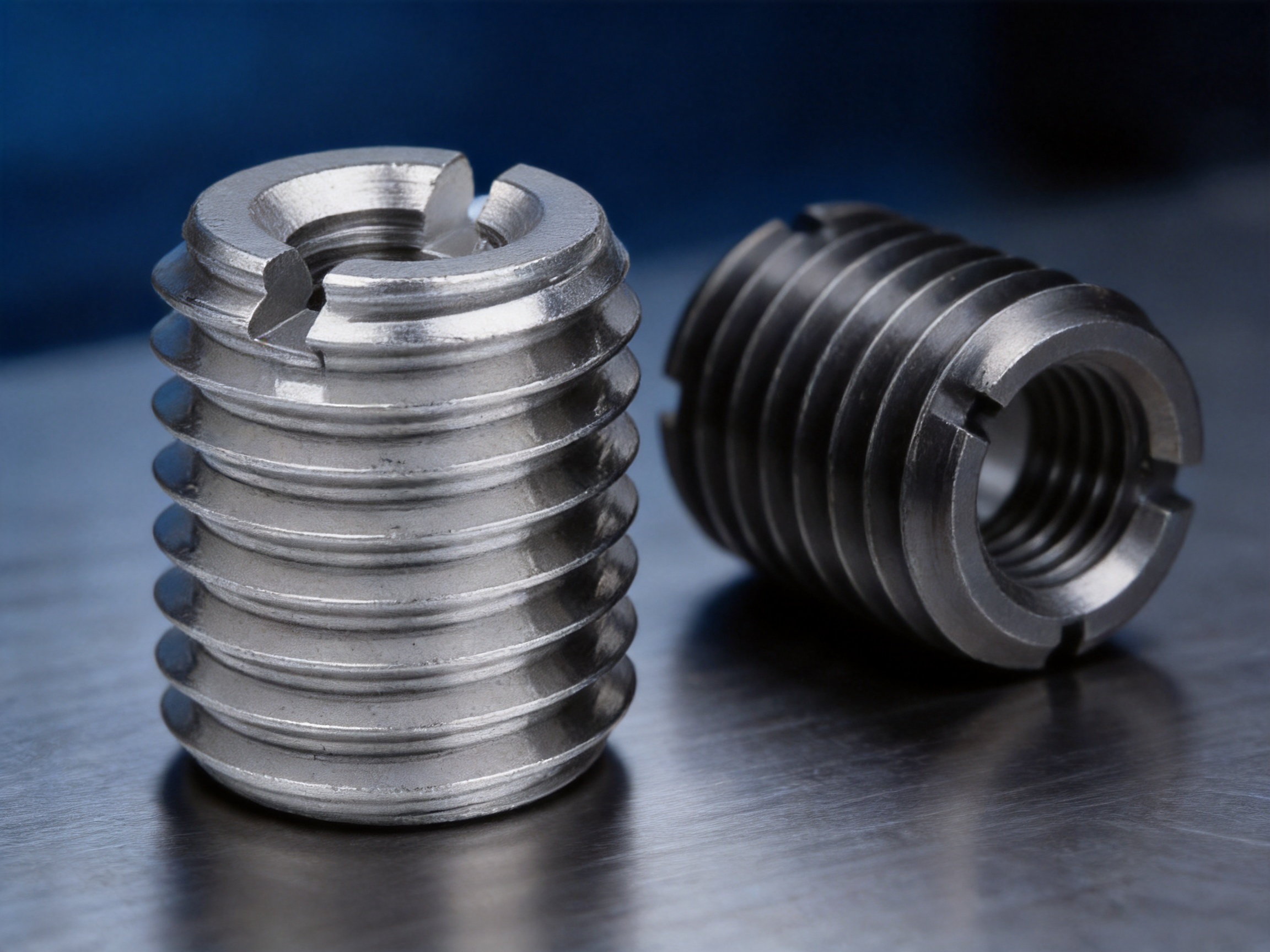
For product drawings, thread combinations, material options, surface treatments, inspection requirements, and customized production inquiries, customers can contact Dongtai Jinzhize Metal Products Co., Ltd. at xzy@jinzhize.com or by telephone at +86-15061682958.