Français
 Español
 Deutsch


Content
- 1 What Is a Carbon Steel Internal-External Thread Conversion Nut?
- 2 Core Product Advantages
- 3 Material Selection: Why Carbon Steel Is Practical
- 4 Manufacturing Process and Technical Control
- 5 Advantages Compared with Alternative Thread-Conversion Methods
- 6 Application Areas
- 7 Design and Selection Considerations
- 8 Manufacturing Strengths of Dongtai Jinzhize Metal Products Co., Ltd.
- 9 How the Product Helps Reduce Procurement Risk
- 10 Packaging, Storage, and Handling
- 11 Quality Checklist for Buyers
- 12 Recommended Customer Information for a Quotation
- 13 Frequently Asked Questions
- 13.1 What is the main function of an internal-external thread conversion nut?
- 13.2 Why is carbon steel used for this product?
- 13.3 Can the internal and external threads use different standards?
- 13.4 Can the adapter be customized?
- 13.5 How can I confirm that the thread is correct?
- 13.6 Is carbon steel suitable for outdoor use?
- 13.7 Can the conversion nut be used in high-vibration equipment?
- 13.8 What quality inspections are normally performed?
- 13.9 What is the benefit of buying from a specialized threaded-product manufacturer?
- 13.10 What information should be included in an order?
- 14 Conclusion
- 15 References
- 16 Product: Carbon Steel Internal-external Thread Conversion Nut
Thread compatibility is a fundamental requirement in modern manufacturing. Machinery, vehicles, construction systems, energy equipment, and maintenance assemblies frequently combine components produced to different design standards. When an existing internal thread must connect with a different external thread, or when a fastener arrangement must be converted without replacing an entire component, a reliable adapter can provide a practical and economical solution. The carbon steel internal-external thread conversion nut is designed for this purpose, combining male and female threads in one compact component.
This type of conversion nut provides a stable transition between different thread sizes, thread standards, and assembly requirements. Its integrated external and internal threads allow it to connect a threaded hole, stud, bolt, or other threaded component while maintaining a secure mechanical connection. Manufactured from carbon steel, it offers a useful balance of strength, wear resistance, manufacturability, and cost efficiency. These characteristics make it suitable for high-volume industrial production as well as maintenance, repair, and custom engineering applications.
Dongtai Jinzhize Metal Products Co., Ltd. produces threaded connection and fastening products for customers in the automotive, aerospace, rail transportation, machinery, construction, and energy sectors. Its product range includes wire thread inserts, self-tapping inserts, key-locking inserts, threaded adapters, oil plugs, thread taps, and installation tools. Within this portfolio, the carbon steel internal-external thread conversion nut serves as an important transitional component for applications requiring dependable thread conversion.
The purpose of this article is to explain the construction, performance, advantages, applications, manufacturing process, quality considerations, and selection factors associated with carbon steel internal-external thread conversion nuts. It also examines why an experienced manufacturer, supported by automated production equipment, process control, and traceable quality management, can provide greater value than a supplier focused only on basic machining.
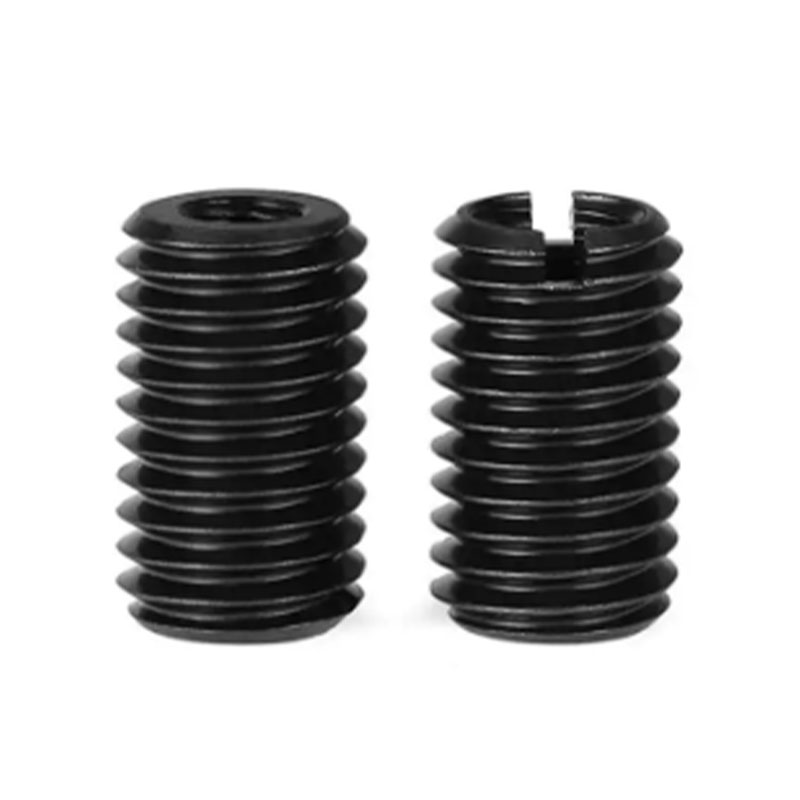
Carbon Steel Internal-external Thread Conversion Nut
What Is a Carbon Steel Internal-External Thread Conversion Nut?
A carbon steel internal-external thread conversion nut is a threaded adapter with two functional thread surfaces. The outer surface contains a male thread, while the inner bore contains a female thread. Because the two threads can be designed with different dimensions or standards, the component can connect parts that would otherwise be incompatible.
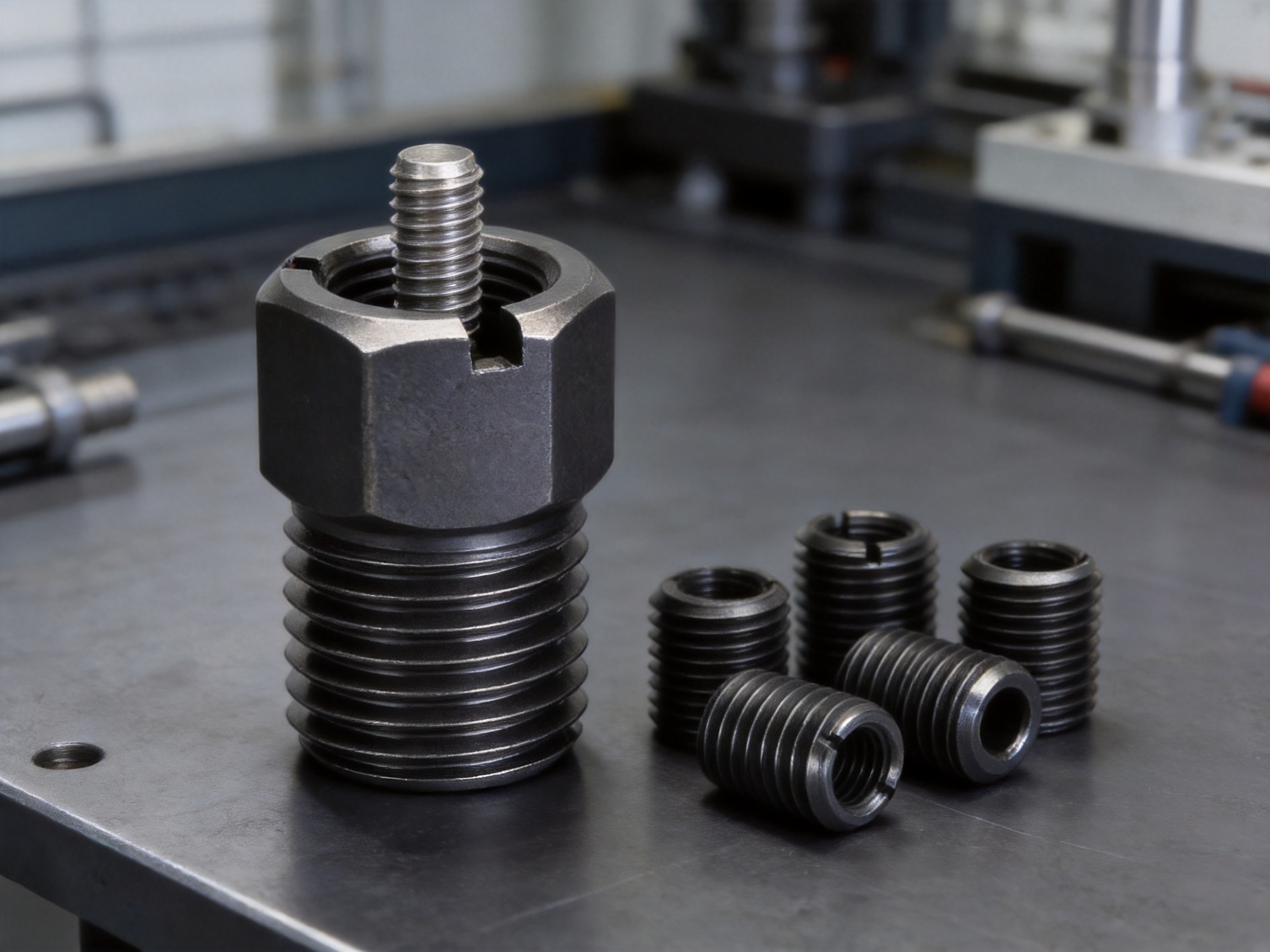
In a typical installation, the external thread is screwed into a tapped hole, threaded body, or female component. The internal thread then accepts a bolt, stud, fitting, screw, or other male-threaded component. This arrangement transforms the original thread interface into a new thread size or standard without requiring the base component to be redesigned.
The adapter may be used to convert between metric and imperial thread systems, connect different nominal diameters, accommodate different thread pitches, or provide a controlled transition between components. Depending on the engineering specification, the internal and external threads may use standard metric, Unified, or other commonly used thread forms. Custom dimensions and tolerances may also be manufactured for specialized applications.
Carbon steel is selected because it provides reliable mechanical performance at a competitive cost. Compared with softer materials, carbon steel can provide better resistance to thread deformation, stripping, wear, and damage during repeated assembly. Compared with certain high-alloy or specialty materials, it can reduce material and production costs, which is particularly valuable for large-volume orders.
The conversion nut is generally produced as a compact cylindrical or hexagonal component, depending on installation requirements. A hexagonal exterior may allow the adapter to be tightened with a standard wrench, while a round exterior may be preferred for space-limited or integrated designs. The final configuration depends on the customer’s drawings, required torque, installation method, clearance limitations, and intended operating environment.
Core Product Advantages
Integrated Male and Female Threads
The most important advantage of the product is the integration of male and female threads into one component. Instead of using several separate parts, the conversion nut performs the thread-transition function directly. This can simplify assembly, reduce the number of components in a bill of materials, and decrease the possibility of selecting an incorrect intermediate fitting.
An integrated design can also improve dimensional consistency. When separate adapters or combinations of nuts and fittings are used, each additional interface introduces another tolerance relationship. A single conversion nut allows the manufacturer to control the internal and external thread relationship during one coordinated production process. This can support more predictable assembly and reduce unnecessary variation between connected parts.
Strength Suitable for Industrial Assembly
Carbon steel provides a strong foundation for threaded connections. The material can withstand the clamping forces generated during tightening and can resist mechanical stress transmitted through the threaded interface. When the material grade, heat treatment, hardness, surface condition, and thread geometry are correctly controlled, the adapter can provide stable service in demanding industrial assemblies.
The strength of a conversion nut is influenced by more than material selection. The length of engagement, thread profile, root geometry, wall thickness, concentricity, and surface finish all affect performance. A capable manufacturer evaluates these factors together rather than treating the product as a simple turned part. This integrated approach helps reduce the risk of thread distortion, premature wear, and connection instability.
Cost Efficiency for High-Volume Production
One of the primary reasons to select carbon steel is its favorable cost-to-performance ratio. Many industrial applications require thousands or millions of threaded components. In these situations, using an expensive specialty alloy for every adapter may increase procurement costs without providing a corresponding functional benefit.
Carbon steel is widely available, machinable, and compatible with efficient production methods. These characteristics allow manufacturers to establish stable machining programs, optimize tooling, reduce cycle time, and maintain consistent output. The resulting product can provide the mechanical properties needed by the application while remaining suitable for cost-sensitive production programs.
Cost efficiency also extends beyond the purchase price. A properly manufactured conversion nut can help reduce assembly labor, prevent mismatched thread combinations, simplify spare-parts management, and support repairs that would otherwise require replacement of a larger component. In this way, the adapter can contribute to lower total ownership cost.
Wear Resistance and Long-Term Service
Threaded connections are exposed to friction during installation and removal. Repeated tightening, vibration, adjustment, and maintenance can gradually damage thread flanks if the material is too soft or if the thread surface is poorly finished. Carbon steel offers useful resistance to mechanical wear, particularly when supported by appropriate heat treatment or surface treatment.
Wear resistance is especially valuable in machinery, automotive service components, production fixtures, and equipment that is periodically disassembled. The adapter must maintain sufficient thread definition after repeated use so that the connected component can be installed with the intended fit and torque. Depending on the environment, coatings or treatments may also be selected to improve corrosion resistance and surface durability.
Broad Thread Compatibility
Internal-external thread conversion nuts can be designed for standard metric, imperial, and Unified thread systems. This broad compatibility allows manufacturers and maintenance teams to solve connection problems across international supply chains. It is particularly useful when imported equipment, locally manufactured replacement parts, and legacy components must operate together.
Thread compatibility must be considered carefully. Nominal diameter alone does not determine whether two components can be connected. Thread pitch, flank angle, tolerance class, thread direction, engagement length, and applicable standard must also be confirmed. A professional supplier can manufacture the internal and external threads according to the customer’s technical drawing or specification instead of relying on approximate dimensional matching.
Material Selection: Why Carbon Steel Is Practical
Carbon steel contains iron and carbon, with the precise composition depending on the selected grade. Different grades can provide different combinations of machinability, tensile strength, hardness, toughness, and heat-treatment response. The correct grade should be selected according to the expected load, operating temperature, corrosion exposure, assembly frequency, and applicable industry requirements.
For general industrial conversion applications, carbon steel can provide the strength required for secure fastening without the cost associated with high-alloy materials. It can be machined efficiently on turning and thread-processing equipment, allowing production teams to maintain high throughput. Its availability also supports stable purchasing and predictable material planning.
Carbon steel is not automatically suitable for every environment. Continuous exposure to moisture, salt spray, chemicals, or corrosive process media may require plating, coating, oil protection, or an alternative material. The conversion nut should therefore be specified with the actual operating conditions in mind. Surface treatment can be selected to improve corrosion resistance while preserving thread fit and dimensional accuracy.
Heat treatment may be used when the application requires improved hardness, strength, or resistance to deformation. However, heat treatment must be controlled carefully because excessive hardness can affect toughness, and thermal processing can introduce dimensional changes. Post-treatment inspection and, where necessary, finish machining help ensure that the internal and external threads remain within specification.
Manufacturing Process and Technical Control
Engineering Review and Specification Confirmation
Manufacturing begins with the clarification of technical requirements. The supplier reviews the drawing, material grade, nominal diameters, thread standards, pitches, tolerance classes, thread lengths, overall dimensions, surface treatment, packaging, and inspection requirements. Any ambiguity in the drawing should be resolved before production begins.
For conversion nuts, the relationship between the inner and outer threads is especially important. The wall thickness between the two thread forms must be sufficient to maintain structural integrity. The manufacturer also evaluates whether the selected thread combination can be produced without excessive tool interference or distortion. This engineering review helps prevent avoidable problems during machining and assembly.
Where customers do not have a complete drawing, the manufacturer can support specification development by reviewing samples, application information, existing mating parts, or required conversion functions. Measurements should be verified using calibrated instruments and confirmed against the actual assembly environment before mass production.
Raw Material Control
Raw material quality directly influences the performance of the finished adapter. Material is normally received with identification information and relevant certification according to the customer’s requirements. The manufacturing team checks dimensions, appearance, material designation, and batch traceability before the material enters production.
Traceability makes it possible to connect finished products with their raw material batch, production route, inspection records, and packaging information. This is valuable for automotive, aerospace, rail, energy, and other industries where customers require consistent documentation and controlled supplier processes.
Material preparation may include cutting bar stock or preparing other forms suitable for turning and forming. The cutting process must minimize excessive burrs, deformation, and material waste. Stable preparation supports consistent positioning in subsequent machining operations.
Precision Turning and Forming
The basic body of the conversion nut is produced through controlled turning, forming, or a combination of machining processes. External diameters, shoulders, chamfers, wrenching surfaces, and overall lengths are created according to the drawing. The selected equipment depends on product geometry, batch size, dimensional tolerance, and required production efficiency.
Automated and semi-automated machine tools can improve repeatability by controlling feed rates, cutting conditions, tool movement, and part positioning. Automation also helps reduce variation caused by manual handling. For high-volume orders, optimized production programs can provide stable cycle times and consistent output.
Chamfers at the entrances of internal and external threads can support easier assembly and reduce the risk of cross-threading. However, chamfer dimensions must be controlled because an excessive chamfer can reduce effective thread engagement. The correct design balances assembly convenience with the need for sufficient load-bearing thread length.
Internal Thread Machining
The internal thread is produced by tapping, thread milling, or another suitable thread-forming process. The selected process depends on thread size, pitch, material, production quantity, blind or through-hole geometry, tolerance requirements, and equipment capability.
Internal thread quality is affected by the pilot hole diameter, tool geometry, cutting speed, lubrication, chip evacuation, alignment, and tool condition. A hole that is too small may increase cutting load and risk tool failure, while a hole that is too large may reduce thread engagement and connection strength. Controlled process parameters are therefore essential.
For blind holes, chip removal and bottom clearance require particular attention. The thread must reach the specified depth without creating an obstruction that prevents full engagement of the mating component. For through holes, burr control at both entrances is important to ensure smooth assembly and accurate inspection.
External Thread Machining
The external thread is formed by die threading, thread turning, thread rolling, or another approved method. Thread rolling can provide strong thread surfaces and efficient production for suitable materials and geometries, while cutting methods may be preferred for certain sizes, custom profiles, or low-volume requirements.
External thread control includes major diameter, pitch diameter, minor diameter, pitch, flank angle, thread length, runout, and surface condition. These features influence how the adapter fits into the receiving component. Excessive material on the thread crest may cause interference, while insufficient material can result in looseness or reduced load capacity.
When both internal and external threads are present in the same part, machining sequence and clamping strategy must be carefully selected. The part must remain sufficiently rigid during processing, and reference surfaces must be maintained to preserve concentricity. A controlled sequence reduces the possibility that one thread operation will damage or distort the other.
Deburring, Cleaning, and Surface Treatment
After machining, the conversion nut is deburred to remove sharp edges and loose material. Burrs can interfere with assembly, damage mating threads, affect dimensional inspection, or create safety hazards for operators. Deburring methods may include manual finishing, brushing, tumbling, vibratory processing, or controlled machining, depending on the part design.
Cleaning removes chips, cutting fluid, abrasive residue, and other contaminants. Cleanliness is important because trapped particles can affect thread engagement and produce false indications during inspection. It also supports reliable surface treatment and improves the condition of products during storage and shipment.
Surface treatment is selected according to the intended application. Options may include oil protection, blackening, plating, or other corrosion-control treatments. The treatment must be compatible with the specified thread tolerances. Coating thickness on internal and external threads can alter fit, so the manufacturer should account for the treatment during machining or apply appropriate post-treatment verification.
For applications exposed to moisture or corrosive atmospheres, the customer should specify the expected environmental conditions. Indoor machinery, outdoor construction equipment, automotive assemblies, and oil and gas systems may require different levels of protection. The correct treatment improves service reliability without unnecessarily increasing cost.
Inspection and Quality Assurance
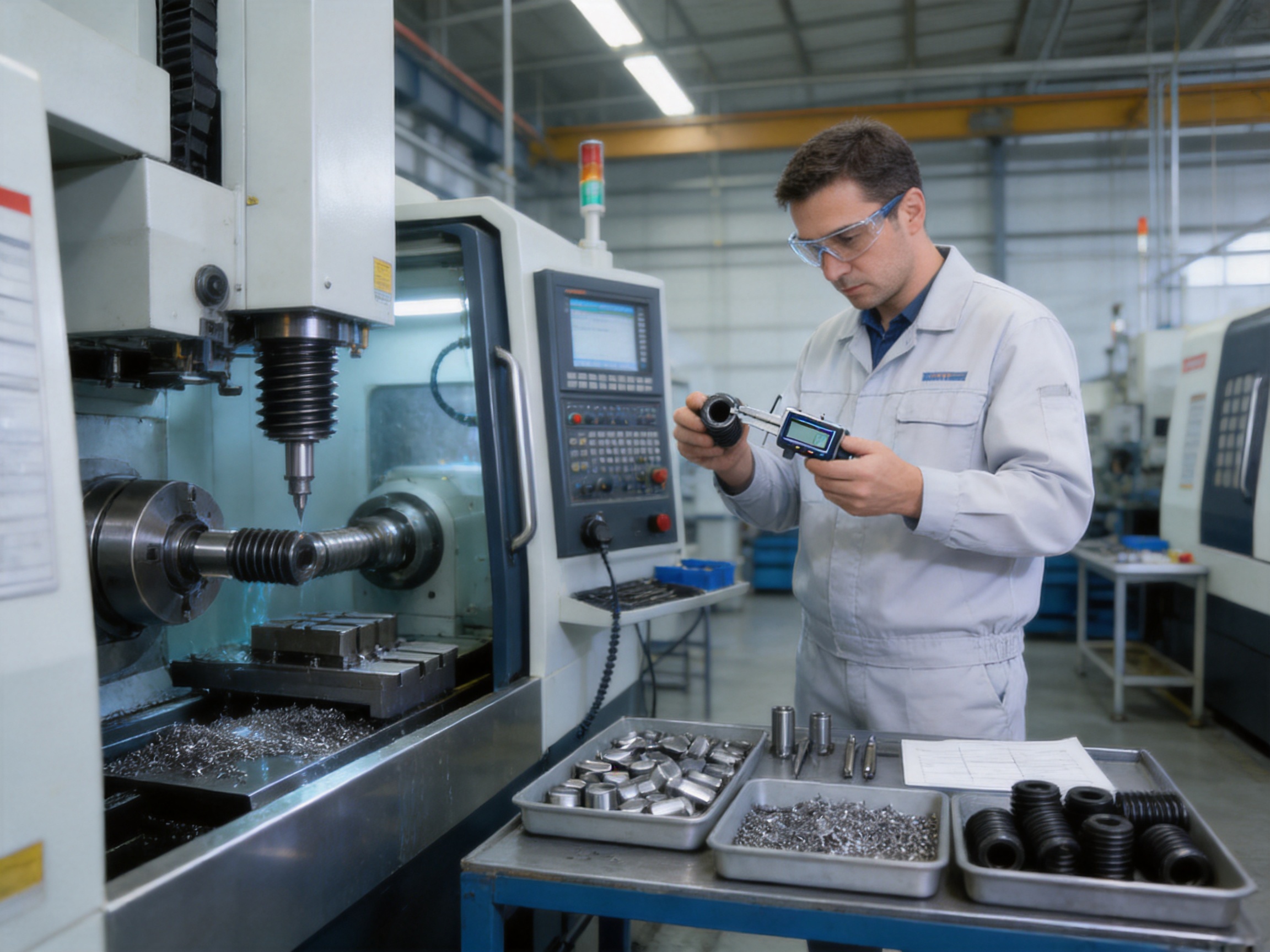
Inspection is performed throughout production rather than only at the end. First-piece inspection confirms that the machine setup, tools, program, and material are correct. In-process inspection monitors critical dimensions during the run and helps identify tool wear or process drift before a large quantity of nonconforming parts is produced.
Typical dimensional checks include external diameter, internal diameter, overall length, thread length, wrenching dimensions, concentricity, and chamfer dimensions. Thread gauges are used to verify the functional fit of internal and external threads. Depending on customer requirements, additional instruments may be used to measure pitch diameter, surface roughness, hardness, or coating thickness.
Functional gauging is particularly important for a conversion nut because the product must work with two different mating interfaces. A qualified GO gauge should enter or pass as required, while a NO-GO gauge should not exceed the permitted limit. Gauging verifies practical compatibility, while dimensional measurement provides detailed process information.
Quality records can include inspection results, material information, production batch numbers, equipment records, operator information, and packaging identification. This documentation supports traceability and allows the manufacturer and customer to investigate any issue efficiently. A rigorous quality system is a significant advantage over suppliers that provide only visually inspected components.
Advantages Compared with Alternative Thread-Conversion Methods
Compared with Replacing the Original Component
Replacing an entire housing, bracket, manifold, frame, or machine component can be expensive and time-consuming. It may require redesign, new tooling, additional testing, equipment downtime, and changes to adjacent components. A conversion nut offers a more focused solution when the original part remains structurally sound but its thread interface is no longer suitable.
This approach can be especially useful for equipment upgrades, imported machinery, prototype development, maintenance, and discontinued parts. Instead of discarding a functional component, the user can adapt its connection to accept a new fastener or fitting.
Compared with Multiple Loose Adapters
Using several separate adapters can create more joints, more opportunities for misalignment, and more assembly steps. Each additional interface may increase the overall stack height and introduce another potential leakage or loosening point. A single internal-external conversion nut can reduce the number of parts and simplify installation.
Fewer components can also make inventory management easier. Purchasing departments need to identify and stock one defined component rather than several related pieces. Assembly operators can follow a simpler work instruction, and maintenance personnel can replace a standardized adapter more quickly.
Compared with Low-Grade or Poorly Controlled Products
Low-cost thread adapters may appear attractive, but inconsistent material, poor thread geometry, inadequate deburring, and uncontrolled surface treatment can create hidden costs. Problems may include cross-threading, loose fit, seizure, premature wear, difficult installation, or failure under load.
The value of a professionally manufactured carbon steel conversion nut lies in controlled consistency. Reliable material sourcing, stable machine settings, calibrated inspection tools, traceability, and appropriate packaging help ensure that the product performs as expected from one batch to the next. This consistency is particularly important for production lines where one defective component can interrupt assembly or create downstream quality problems.
Application Areas
Machinery Manufacturing
Machinery manufacturers use threaded adapters to connect housings, covers, shafts, fixtures, hydraulic components, pneumatic components, sensors, and maintenance fittings. A conversion nut can help integrate components supplied by different vendors or designed under different standards.
In machine tools and production equipment, space is often limited and access for modification may be difficult. A compact adapter can allow a new component to be installed without extensive redesign. The carbon steel construction provides suitable strength for many general-purpose mechanical connections.
Automotive Manufacturing and Repair
Automotive production involves strict requirements for repeatability, dimensional control, and assembly efficiency. Thread conversion components may be used in fixtures, tooling, engine-related assemblies, transmission systems, brackets, test equipment, and service parts.
In repair applications, a conversion nut can help connect replacement components when the thread standard or size differs from the original arrangement. The product must be selected according to load, vibration, temperature, corrosion exposure, and available installation space. For critical vehicle assemblies, customer engineering approval and application testing should be completed before release.
Construction Equipment
Construction machinery operates under vibration, impact, dust, moisture, and variable loading. Threaded adapters can support the installation of fittings, guards, brackets, hydraulic accessories, and replacement components. Carbon steel provides a practical option for many structural and mechanical connections when suitable corrosion protection is applied.
Because construction equipment may be exposed to outdoor conditions, surface treatment and maintenance practices are important. The adapter should be protected during storage and installed with the specified tightening method. Damaged or contaminated threads should be cleaned or replaced rather than forced together.
Oil and Gas Equipment
Oil and gas systems often require dependable threaded interfaces for equipment installation, maintenance, and transitional connections. A conversion nut may be used in auxiliary equipment, tooling, instrumentation support, maintenance assemblies, and other applications where thread compatibility is required.
Applications in oil and gas environments can involve pressure, vibration, temperature changes, chemicals, and corrosion. The product specification must therefore reflect the actual service conditions. Where the adapter is part of a pressure-containing or safety-critical assembly, the design, material, treatment, inspection, and qualification requirements must be reviewed by the responsible engineering team.
Aerospace and Rail Applications
Aerospace and rail manufacturing rely on highly controlled components and documented production processes. Threaded adapters may be used in fixtures, ground-support equipment, cabin systems, test assemblies, maintenance tools, and selected non-structural or approved applications.
These industries generally require strict control of material identity, dimensional accuracy, process records, and supplier performance. A manufacturer with experience in traceable threaded products can better support documentation and repeat orders. The exact material and qualification requirements must always follow the customer’s engineering standards and regulatory obligations.
General Maintenance and Engineering Projects
Maintenance departments often encounter equipment with obsolete, imported, or nonstandard threaded components. A conversion nut can provide an efficient way to restore service without waiting for a complete replacement assembly. It can also support prototype projects where designers need to connect components from different systems during development.
For small quantities, customers may provide a sample or drawing for review. For large quantities, the supplier can establish dedicated tooling, inspection plans, production schedules, and packaging requirements. This flexibility makes the product useful across both standard and customized procurement programs.
Design and Selection Considerations
Thread Standard and Size
The first selection step is to identify both mating threads accurately. The specification should state whether the internal and external threads are metric, Unified, imperial, or another recognized system. Nominal diameter and pitch should be recorded separately for each thread.
When a customer is uncertain about a thread, sample components can be inspected using gauges and precision measurement equipment. Visual comparison alone is not reliable because threads with similar diameters may have different pitches or flank angles. Forced assembly should be avoided because it can damage both the adapter and the mating component.
Thread Engagement
Thread engagement length determines how much load can be transferred through the connection. Insufficient engagement can reduce stripping resistance, while excessive length may create interference with internal features or increase manufacturing cost. The appropriate engagement depends on material strength, load type, thread diameter, and application requirements.
For connections exposed to vibration or repeated loading, the designer should also consider locking methods, preload, joint stiffness, and the possibility of loosening. The conversion nut itself may not replace a dedicated locking device where the application requires one.
Wall Thickness and Overall Geometry
The wall between the internal and external threads must be adequate to withstand installation torque and service loading. A very thin wall can deform, split, or lose thread integrity. The outer shape should also provide sufficient access for installation tools.
Hexagonal wrenching surfaces may be selected when the adapter must be tightened directly. Round bodies may be preferred where radial clearance is limited or where the component is installed using a socket, pin, or specialized tool. Shoulder dimensions and end clearances should be checked against the surrounding assembly.
Operating Environment
Temperature, humidity, chemicals, vibration, pressure, and frequency of maintenance all affect product selection. Carbon steel with basic protection may be suitable for a clean indoor machine, while outdoor or corrosive environments may require a more durable treatment.
Customers should also consider galvanic interaction when the carbon steel adapter is installed with components made from stainless steel, aluminum, or other dissimilar materials. Appropriate coatings, insulation, lubrication, or material selection may be needed to limit corrosion and prevent seizure.
Installation Torque and Tools
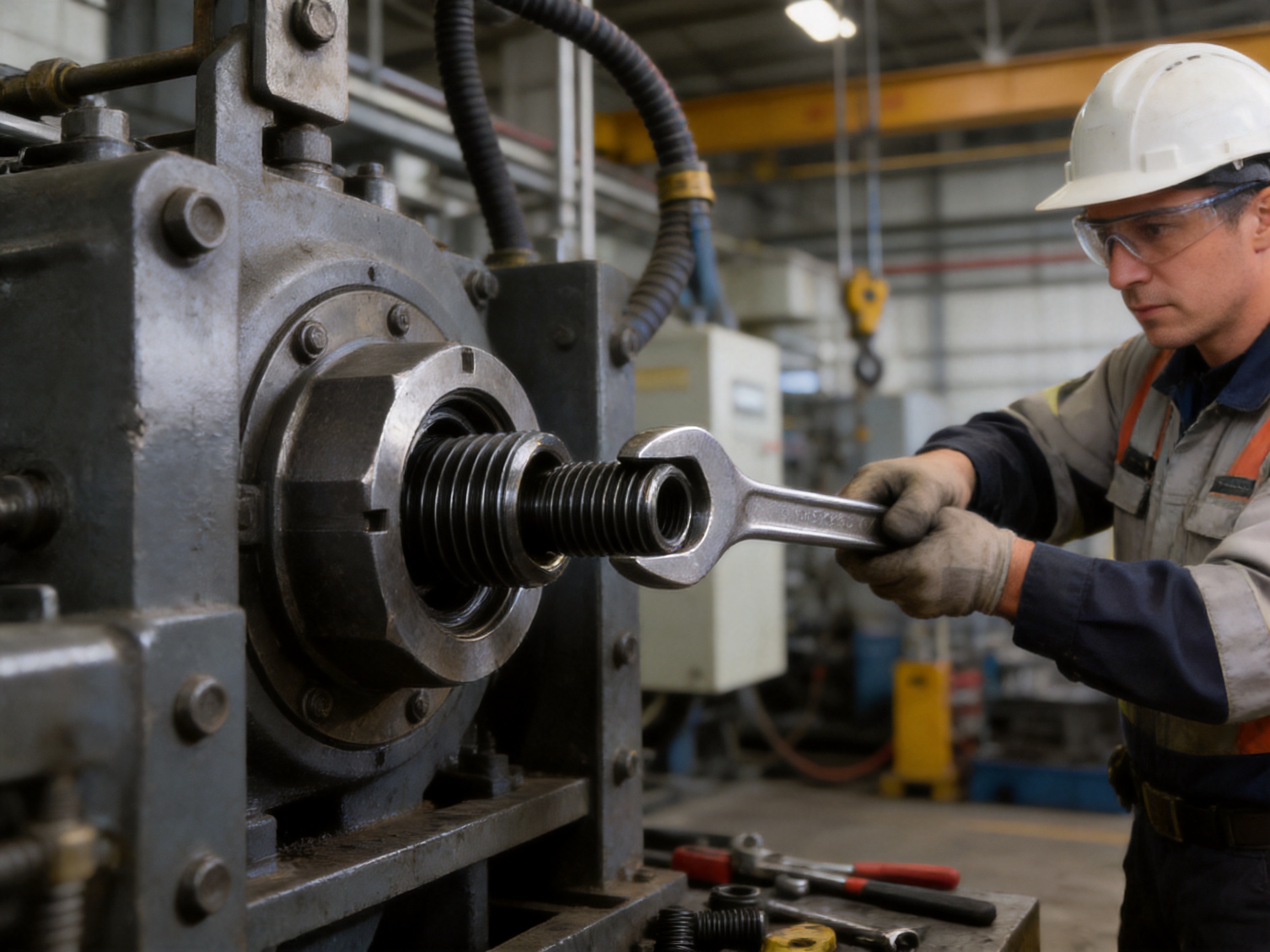
The adapter should be installed using a suitable tool and the recommended torque range. Excessive torque can stretch, deform, or damage the thread, while insufficient torque may permit movement or loosening. The installation method should avoid striking the adapter in a way that damages the thread entrance.
Where the product includes a hexagonal body, a properly sized wrench or socket should be used. Adjustable tools that slip across the flats can damage the surface and make future removal difficult. Thread lubricant or anti-seize compound may be appropriate in certain applications, but compatibility with the operating environment and surface treatment should be confirmed.
Manufacturing Strengths of Dongtai Jinzhize Metal Products Co., Ltd.
Dongtai Jinzhize Metal Products Co., Ltd. was established in 2015 and operates from an owned manufacturing facility of approximately 10,000 square meters. The company has developed its production capabilities around threaded connection products, including helical wire inserts, self-tapping inserts, key-locking inserts, threaded adapters, oil plugs, thread taps, and related installation tools.
The company’s focused product scope is an advantage for customers seeking a specialized threaded-component supplier. Rather than treating threaded adapters as an occasional machining project, Jinzhize builds its manufacturing experience around thread geometry, insertion systems, fastening behavior, and application requirements. This concentration supports more informed process planning and technical communication.
The facility is equipped with hundreds of machine tools and automated production systems. A broad equipment base allows production to be organized according to part geometry, batch size, material, tolerance, and delivery requirements. Automated systems can support repeatable processing, reduce manual variation, and improve production efficiency for high-volume orders.
Manufacturing capability is supported by an experienced design, development, and production team. Engineering personnel can review customer drawings, evaluate thread combinations, support sample development, and help identify practical production routes. This is particularly valuable for internal-external adapters because the two thread systems must be coordinated within one compact component.
The company also emphasizes rigorous quality management and a comprehensive after-sales service mechanism. For industrial customers, service does not end when the parts are shipped. Technical clarification, batch traceability, quality feedback, replacement support, and communication during repeat orders all contribute to supply reliability.
Jinzhize reports an annual output value of 153 million RMB in 2024, demonstrating the ability to support substantial production volume. Large-scale output can provide customers with greater confidence in capacity planning, provided that production scheduling, inspection, and traceability remain controlled as order volume increases.
| Capability Area | Customer Value | Relevance to Conversion Nuts |
| Specialized threaded-product manufacturing | More focused technical experience | Supports accurate internal and external thread design |
| 10,000-square-meter owned facility | Stable production organization | Supports repeat orders and capacity planning |
| Hundreds of machine tools | Flexible production allocation | Accommodates different sizes, materials, and batch quantities |
| Automated production systems | Improved repeatability and efficiency | Helps maintain consistent dimensions and thread quality |
| Quality management and traceability | Reduced procurement and application risk | Provides controlled inspection and batch identification |
| Design and development team | Support for customized requirements | Helps convert drawings or samples into producible specifications |
| After-sales service mechanism | Faster response to technical issues | Supports long-term industrial cooperation |
How the Product Helps Reduce Procurement Risk
Procurement risk is not limited to late delivery. It also includes dimensional inconsistency, incorrect thread standards, uncertain material, inadequate corrosion protection, poor packaging, and limited technical support. A conversion nut may be small, but a defect can interrupt an assembly line or damage a costly mating component.
Working with a specialized manufacturer can reduce these risks through clear specification review, controlled production, inspection documentation, and repeatable packaging. The customer should provide complete technical information whenever possible, including drawings, samples, annual demand, application conditions, required certifications, and acceptance criteria.
For initial orders, sample approval or first-article inspection can establish a reference standard. The approved sample can then be retained for comparison with future production. This process is useful for custom dimensions or thread combinations that are not covered by a common catalog standard.
Long-term supply relationships can further improve consistency. Once the material, tooling, inspection plan, packaging, and production route have been validated, repeat orders can be manufactured using established parameters. Changes should be communicated and approved before implementation, especially where thread fit or material performance may be affected.
Packaging, Storage, and Handling
Threaded components should be packaged to prevent impact, contamination, corrosion, and mixing of different specifications. Internal and external threads can be damaged if parts are allowed to contact each other without protection during transportation. Dividers, bags, trays, boxes, or other suitable packaging may be selected according to part size and quantity.
Each package should identify the part number, thread specification, quantity, batch information, and other customer-required details. Clear labeling reduces the possibility of mixing similar-looking adapters with different pitches or thread standards.
Storage should take place in a clean, dry environment. Carbon steel products should be protected from moisture and corrosive materials. If the product is supplied with an oil film or temporary rust-preventive treatment, the protection should be maintained until installation. Before use, the threads should be checked for contamination, impact damage, or visible corrosion.
During handling, operators should avoid dropping the parts or placing heavy objects on them. Even small dents at the thread entrance can cause cross-threading. If an adapter does not start smoothly by hand, the mating threads should be inspected rather than forcing the connection with a wrench.
Quality Checklist for Buyers
Buyers can use a structured checklist when evaluating a carbon steel internal-external thread conversion nut supplier. The first question is whether the supplier can clearly identify the material grade and provide appropriate documentation. The second is whether the supplier understands both internal and external thread standards and can verify them with functional gauges.
Buyers should also ask how the manufacturer controls raw material batches, cutting tools, machine settings, deburring, cleaning, surface treatment, and final inspection. For critical applications, it may be appropriate to request dimensional reports, hardness results, coating information, or first-article documentation.
Production capacity is another consideration. A supplier may be able to produce samples but lack the equipment or organization to maintain stable high-volume output. The presence of an established facility, multiple machine tools, automated systems, and a documented quality process can provide a stronger basis for long-term supply.
Communication is equally important. The supplier should be able to confirm unclear dimensions, identify potential design conflicts, discuss achievable tolerances, and recommend a suitable manufacturing route. Clear communication before production is usually more efficient than correcting an unsuitable part after delivery.
Recommended Customer Information for a Quotation
To receive an accurate quotation, customers should provide the internal thread size and standard, external thread size and standard, pitch, thread direction, thread lengths, overall dimensions, material requirements, surface treatment, quantity, packaging needs, and intended application.
A technical drawing is preferred, but a sample or detailed dimensional description may be sufficient for an initial review. Photos can help explain the installation environment, although photographs should not replace measured specifications. If the component is used in a safety-critical, pressure-related, high-temperature, or highly corrosive application, this information should be disclosed at the quotation stage.
Customers should also state whether the product is for prototype development, maintenance, aftermarket supply, or mass production. Different applications may require different inspection documentation, packaging methods, production schedules, and approval procedures.
Frequently Asked Questions
What is the main function of an internal-external thread conversion nut?
Its main function is to connect two components with different thread sizes or standards. The outer male thread engages with a female thread, while the inner female thread accepts a male-threaded component. This provides a compact and practical transition between incompatible thread interfaces.
Why is carbon steel used for this product?
Carbon steel provides a useful combination of mechanical strength, wear resistance, machinability, availability, and cost efficiency. It is suitable for many industrial applications and can be processed efficiently for both standard and high-volume production.
Can the internal and external threads use different standards?
Yes. The product can be designed with different thread sizes, pitches, or standards on the inside and outside, subject to engineering feasibility and the customer’s specification. Metric-to-imperial and other thread conversions should be confirmed using accurate measurements and recognized thread standards.
Can the adapter be customized?
Yes. Customization may include thread dimensions, thread lengths, body diameter, wrenching features, overall length, material grade, heat treatment, surface treatment, packaging, and inspection requirements. A drawing or sample is recommended for custom development.
How can I confirm that the thread is correct?
Thread size should be confirmed by measuring nominal diameter and pitch and by identifying the applicable thread standard and tolerance. Functional GO and NO-GO gauges provide practical verification. Similar-looking metric and imperial threads should never be assumed interchangeable.
Is carbon steel suitable for outdoor use?
Carbon steel can be used outdoors when an appropriate corrosion-protection method is selected and maintained. The required treatment depends on humidity, salt exposure, chemicals, temperature, and service life. Customers should describe the environment so the manufacturer can recommend a suitable finish.
Can the conversion nut be used in high-vibration equipment?
It can be used in suitable high-vibration applications when the design, thread engagement, tightening torque, material, and locking method are correctly selected. The adapter should not be considered a complete anti-loosening solution by itself. The full joint design must be evaluated by the responsible engineer.
What quality inspections are normally performed?
Typical inspections include visual checks, dimensional measurement, thread gauging, burr inspection, surface-treatment verification, and packaging confirmation. Depending on the application, material certification, hardness testing, surface roughness measurement, coating-thickness testing, or additional customer-specific inspections may be required.
What is the benefit of buying from a specialized threaded-product manufacturer?
A specialized manufacturer is more likely to understand thread geometry, functional gauging, tooling, assembly behavior, and common failure risks. This can improve technical communication, product consistency, customization support, and long-term supply reliability compared with a supplier that treats the adapter as a general-purpose machining item.
What information should be included in an order?
An order should include the approved part number or drawing, internal and external thread specifications, material, finish, quantity, inspection requirements, packaging, delivery expectations, and any application-specific standards. Clear information reduces the risk of producing a visually similar but functionally incorrect component.
Conclusion
The carbon steel internal-external thread conversion nut is a compact component with an important role in industrial connection systems. By integrating male and female threads, it enables different components to be connected without replacing a complete housing, bracket, fitting, or machine assembly. Its combination of strength, wear resistance, broad thread compatibility, and cost efficiency makes it suitable for machinery, automotive manufacturing, construction equipment, oil and gas support systems, rail applications, aerospace-related equipment, and general maintenance.
The performance of the product depends on more than the choice of carbon steel. Thread geometry, wall thickness, concentricity, engagement length, machining sequence, deburring, surface treatment, inspection, packaging, and installation all influence service reliability. A manufacturer that controls these factors as part of an integrated process can provide greater value than one that focuses only on basic dimensional production.
Dongtai Jinzhize Metal Products Co., Ltd. combines specialized threaded-product experience with a 10,000-square-meter manufacturing facility, hundreds of machine tools, automated production systems, engineering capability, quality management, and after-sales support. These strengths support both customized development and stable volume production. For customers seeking a dependable thread-conversion solution, a carefully specified and professionally manufactured carbon steel adapter can reduce assembly complexity, improve compatibility, and contribute to more reliable industrial operations.
References
1. ISO 965, ISO Metric Screw Threads—Tolerances.
2. ISO 68-1, ISO General Purpose Screw Threads—Basic Profile.
3. ISO 1502, ISO General-Purpose Metric Screw Threads—Gauges and Gauging.
4. ASME B1.1, Unified Inch Screw Threads.
5. ASME B1.13M, Metric Screw Threads—M Profile.
6. ASTM A29/A29M, General Requirements for Steel Bars, Carbon and Alloy, Hot-Wrought.
7. ASTM A370, Standard Test Methods and Definitions for Mechanical Testing of Steel Products.
8. Machinery’s Handbook, Thread Design, Measurement, and Manufacturing Principles.
9. General industrial practices for threaded-component inspection, corrosion protection, assembly torque control, and batch traceability.