Français
 Español
 Deutsch

Content
- 1 Why Reliable Insert Removal Matters
- 2 Product Overview
- 3 Key Advantages Over General-Purpose Removal Methods
- 4 Technical Features and Functional Benefits
- 5 Recommended Applications
- 6 Correct Operating Method
- 7 Manufacturing Strengths Behind the Product
- 8 Supply Capability and Customer Value
- 9 Comparison with Common Alternatives
- 10 Maintenance and Storage
- 11 How to Select the Appropriate Tool
- 12 Role in a Complete Thread Repair System
- 13 Why Choose a Specialized Manufacturer
- 14 Frequently Asked Questions
- 14.1 What is an insert removal tool used for?
- 14.2 Can the tool remove wire thread inserts?
- 14.3 What thread sizes are supported?
- 14.4 Will the tool damage the base threads?
- 14.5 What material is the tool made from?
- 14.6 Can it be used for inserts other than helical wire inserts?
- 14.7 Is the tool suitable for field maintenance?
- 14.8 What should be done if the insert will not move?
- 14.9 How can the tool’s service life be extended?
- 14.10 Can the manufacturer support other threaded connection products?
- 15 Conclusion
- 16 References
- 17 Product: Insert Removal Tool
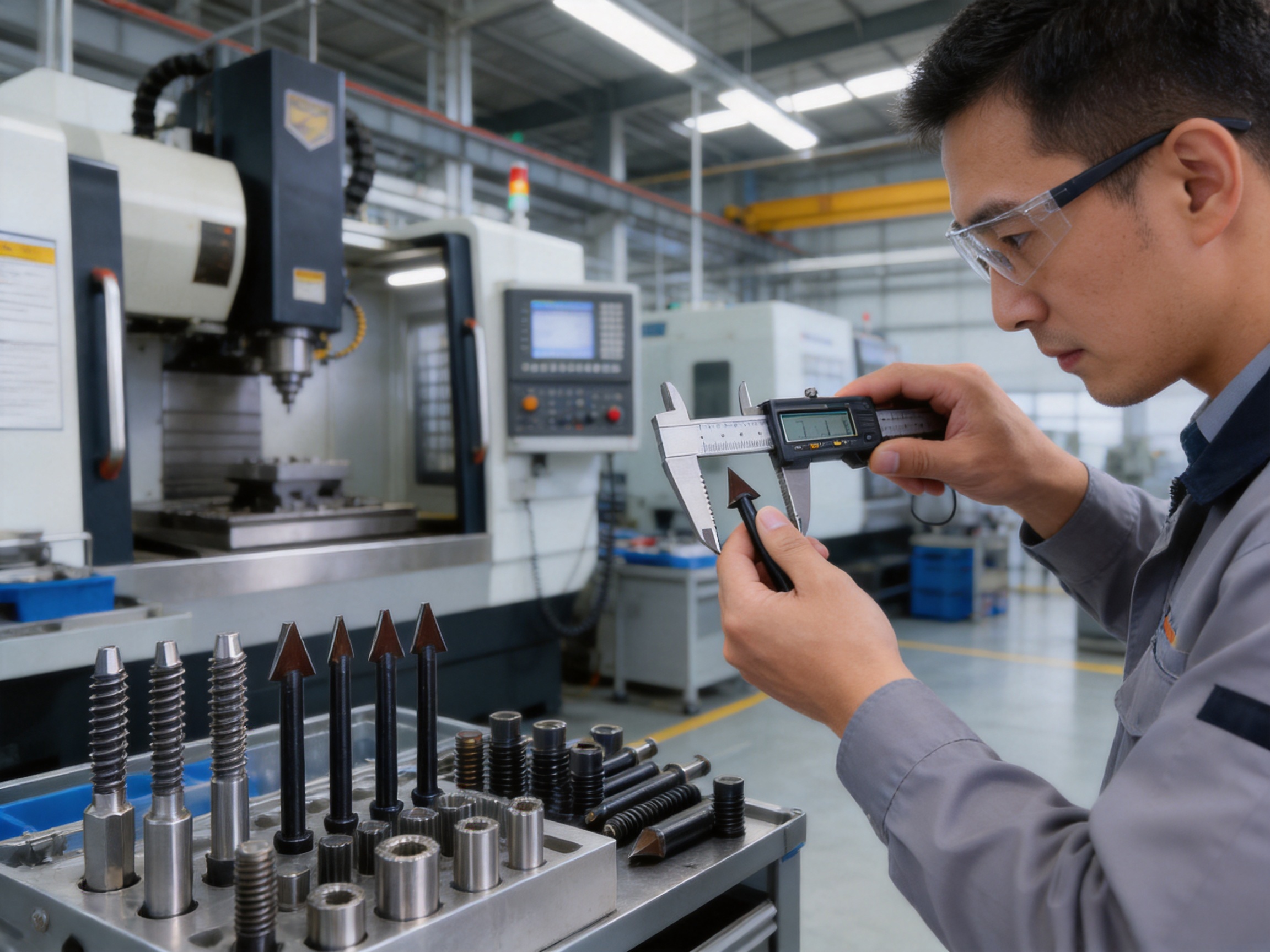
Threaded inserts are widely used to restore, reinforce, and improve threaded holes in metal components. They provide durable internal threads in materials that may otherwise be too soft, too lightweight, or too vulnerable to repeated assembly and disassembly. However, even a well-designed insert can become incorrectly installed, damaged during assembly, worn after extended service, or firmly stuck because of corrosion, contamination, deformation, or excessive tightening. When this occurs, removing the insert without damaging the original base hole becomes a critical maintenance task.
An insert removal tool is specifically designed for this purpose. Unlike improvised drills, pliers, punches, or general-purpose gripping tools, a dedicated extractor engages the damaged or incorrectly positioned insert in a controlled manner. It applies force to the insert rather than unnecessarily enlarging, scoring, or distorting the base material. This makes the tool especially valuable in precision manufacturing, automotive repair, aerospace maintenance, industrial equipment servicing, electronics production, and other applications where the original component must be preserved.
The insert removal tool produced by Dongtai Jinzhize Metal Products Co., Ltd. is developed for the practical demands of professional thread repair. It is intended to remove incorrectly installed, damaged, or stuck wire thread inserts while protecting the original threads in the base hole. Its firm-bite structure, high-hardness alloy steel construction, controlled force distribution, compact design, and compatibility with M3–M16 thread inserts make it suitable for a broad range of maintenance and production environments.
Why Reliable Insert Removal Matters
Removing a damaged insert is often more complicated than installing a new one. During installation, the insert is guided into a prepared hole using a tap, installation mandrel, or other specialized equipment. During removal, the insert may be deformed, partially collapsed, contaminated with thread-locking compound, or tightly wedged against the internal thread. The technician must therefore generate enough gripping force to extract the insert while avoiding damage to the workpiece.
Damage to the base hole can create several problems. If the internal threads are scratched or enlarged, the replacement insert may not fit correctly. If the hole is distorted, the new insert may sit at an angle, protrude above the surface, or fail to provide sufficient engagement. In high-load assemblies, even a small installation error can affect clamping force, vibration resistance, sealing performance, and service life.
In many industries, replacing the entire component is not an economical or practical option. Automotive engine housings, transmission cases, aerospace structures, rail components, industrial machinery, and precision electronic assemblies can be expensive, difficult to remove, or subject to strict maintenance procedures. A suitable removal tool helps technicians correct the threaded connection while preserving the value of the original part.
A professional extractor also reduces the risk of secondary damage. An uncontrolled tool can slip and scratch a sealing surface, break adjacent components, or leave metal fragments in the assembly. A purpose-built insert removal tool concentrates its gripping action on the insert and allows the operator to work through a repeatable process.
Product Overview
The insert removal tool is a specialized hand-operated solution for extracting helical wire inserts and related thread inserts. It is designed to engage the insert securely, distribute removal force along the engaged section, and pull or unwind the insert from the base hole with improved control.
The tool is suitable for correcting installation errors, replacing worn inserts, removing damaged inserts, and servicing threaded components during equipment maintenance. Its multi-size compatibility supports M3 through M16 thread inserts, allowing maintenance teams to use one product family across different component sizes and applications.
The tool’s working edges are designed to match the geometry of the insert thread. This close engagement helps prevent the tool from sliding across the insert surface. A firm bite is particularly important when the insert has been flattened, broken, contaminated, or partially stripped. By holding the insert more reliably, the tool helps reduce repeated attempts and limits unnecessary contact with the base material.
Manufactured from high-hardness alloy steel, the tool is designed to withstand the impact, pressure, and wear associated with repeated insert removal. Alloy steel provides a strong foundation for maintaining the shape of the gripping edges and working surfaces. This is important because a worn or rounded extractor can lose its ability to bite into an insert, increasing the likelihood of slippage and workpiece damage.
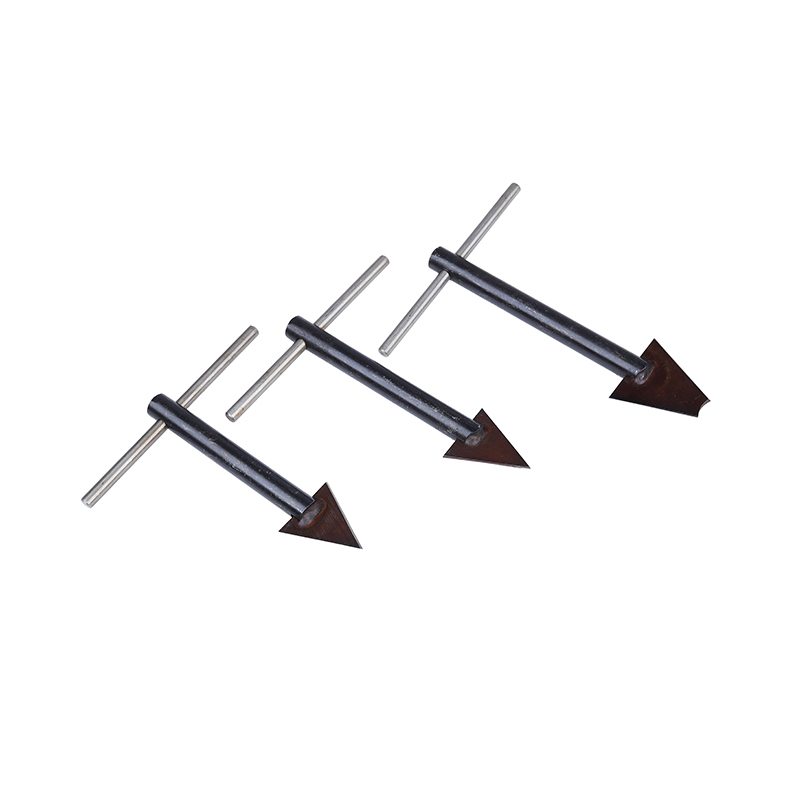
Insert Removal Tool
Key Advantages Over General-Purpose Removal Methods
Controlled Force Instead of Unpredictable Force
General-purpose tools often apply force in a way that is difficult to control. Pliers may crush the insert without removing it. Screwdrivers can damage the surrounding base threads. Punches may deform the insert deeper into the hole. Drills can remove the insert but may also remove or enlarge the original thread. These methods sometimes work in low-value applications, but they introduce unnecessary risk in precision assemblies.
The insert removal tool is designed around the geometry of the threaded insert. Its gripping structure allows the operator to apply force directly to the insert, helping create a more predictable extraction path. This controlled force distribution supports safer repair and reduces the probability of damaging the original hole.
Firm Engagement and Reduced Slippage
Slippage is one of the most common causes of failed insert removal. When the tool loses contact, the gripping edge may scrape across the insert or surrounding material. The operator may then apply additional force, increasing the chance of distortion or damage.
The firm-bite design of this removal tool uses cutting edges that closely match the insert threads. This structure improves contact between the tool and insert and helps maintain engagement during extraction. The result is more stable operation, especially when the insert is stuck or its surface has been damaged.
Protection of the Base Threads
The base hole is usually more valuable than the insert being removed. A replacement insert can be installed if the original hole remains accurate. If the base hole is damaged, however, the component may require additional machining, an oversized repair, or complete replacement.
By focusing its working action on the insert, the removal tool helps protect the internal threads of the base material. This is particularly important for aluminum housings, magnesium components, precision steel parts, and other materials that may be more vulnerable to scoring or deformation than the hardened insert itself.
Multi-Size Application
Maintenance departments often work with different thread sizes across multiple machines and product lines. A tool limited to one insert size can increase inventory requirements and slow repair work. The M3–M16 range supported by this product provides flexibility for small, medium, and larger threaded connections.
This range is useful for electronic housings, instrumentation, automotive components, industrial machinery, fixtures, and structural assemblies. The exact tool selection should match the insert size and design, but the broad size range makes the product suitable for general professional maintenance programs.
Compact and Portable Structure
Repair work does not always occur in a fully equipped workshop. Technicians may need to service a vehicle, machine, production line, or field installation where space is limited. A compact removal tool is easy to store in a maintenance case, carry to the work area, and use in confined locations.
Its compact structure also simplifies tool organization. A technician can keep the removal tool together with thread taps, installation tools, self-tapping inserts, wire inserts, and replacement hardware as part of a complete thread repair kit.
Improved Maintenance Efficiency
A damaged insert can interrupt a production line or delay the return of a vehicle or machine to service. Improvised removal methods require repeated adjustments and may result in several unsuccessful attempts. A dedicated extractor streamlines the procedure by providing a suitable gripping interface from the beginning.
Faster removal does not mean applying excessive force. It means reducing trial and error, limiting rework, and using a tool that is matched to the problem. This can shorten maintenance time, reduce labor consumption, and improve the overall efficiency of threaded connection repair.
Technical Features and Functional Benefits
| Feature | Functional Benefit | Typical Value in Maintenance |
|---|---|---|
| High-hardness alloy steel construction | Resists wear, impact, and deformation | Supports repeated professional use |
| Firm-bite gripping edges | Improves contact with insert threads | Reduces slippage during extraction |
| Controlled force distribution | Directs removal force toward the insert | Helps protect the base hole |
| M3–M16 compatibility | Supports multiple insert sizes | Reduces the need for separate tool categories |
| Compact structure | Easy to carry and organize | Suitable for workshop and field repairs |
| Simple operating procedure | Reduces setup and replacement time | Improves maintenance productivity |
High-Hardness Alloy Steel
The working area of an insert extractor must withstand concentrated contact pressure. When a damaged insert is stuck in a base hole, the tool may experience high localized loads as it bites into the insert. High-hardness alloy steel is used to provide a suitable balance of strength, wear resistance, and impact resistance.
Material selection is only one part of tool performance. The geometry of the working edges, the accuracy of machining, and the consistency of heat treatment also affect the final result. A properly manufactured alloy steel tool maintains its functional profile for longer and offers more stable engagement over repeated operations.
Precision Gripping Geometry
An insert removal tool must grip an insert without creating excessive deformation. If the working edges are too blunt, the tool may slip. If they are too aggressive or inaccurately formed, they may damage the insert unpredictably or interfere with the original thread.
Precision gripping geometry allows the tool to engage the insert at appropriate contact points. This improves force transfer and provides the operator with better feedback during removal. The technician can recognize whether the insert is beginning to move and adjust the operation accordingly.
Force Distribution
Concentrated force is useful when it is applied at the correct location, but uncontrolled point loading can cause breakage. The product’s force distribution design helps spread the working load across the engaged section of the insert. This reduces the likelihood of sudden tool release and supports a more gradual extraction process.
Controlled force distribution is especially helpful for inserts that are partially damaged. Instead of relying on one small contact point, the tool can maintain engagement across a greater portion of the insert. This helps the operator remove the insert with fewer interruptions.
Recommended Applications
Mechanical Manufacturing
In mechanical manufacturing, threaded inserts are commonly used in castings, machined housings, fixtures, tooling, and structural components. An insert may need to be removed when it has been installed at the wrong depth, placed at an incorrect angle, or damaged during torque testing.
The removal tool allows production personnel to correct the threaded hole without discarding the component. This can be valuable for prototypes, small-batch products, expensive machined parts, and components with long lead times.
Automotive Repair and Production
Automotive engines, transmissions, suspension components, brackets, and other assemblies often combine different materials and require durable threaded connections. Aluminum housings, in particular, may use steel wire inserts to improve thread strength and resistance to repeated service.
When an insert becomes damaged during assembly or maintenance, the repair must be completed carefully. The removal tool supports the replacement of the damaged insert while helping preserve the original hole. This can reduce downtime and avoid replacement of an otherwise serviceable housing or component.
Industrial Equipment Maintenance
Industrial machinery may operate under vibration, temperature changes, impact, and repeated maintenance cycles. Threaded inserts can eventually wear or become damaged during servicing. A portable extractor gives maintenance teams a practical way to repair threaded holes on-site or in a maintenance workshop.
Because the product is compact and compatible with several sizes, it can be included in preventive maintenance kits. Technicians can use it together with installation taps, insertion tools, locking inserts, self-tapping inserts, and replacement wire inserts.
Electronics Manufacturing
Electronic equipment often uses threaded inserts in metal frames, housings, control cabinets, heat-management structures, and precision mounting points. These parts may be relatively thin or closely surrounded by sensitive components, making uncontrolled removal methods unsuitable.
A compact tool with controlled engagement can help remove an incorrectly installed insert while limiting disturbance to the surrounding structure. Technicians should always disconnect power, remove sensitive components where necessary, and prevent metal particles from entering the electronic assembly.
Aerospace and Rail Applications
Aerospace and rail vehicles rely on traceable maintenance procedures and consistent component performance. Threaded connections in these sectors may be exposed to vibration, temperature variation, and demanding service conditions. Repair work must therefore protect the integrity of the original component.
Jinzhize Metal Products focuses on threaded connection products for automotive and aerospace sectors, including helical wire inserts, self-tapping inserts, key-locking inserts, threaded adapters, oil plugs, installation taps, and related tools. The insert removal tool complements this product range by supporting the corrective and maintenance stage of the threaded connection lifecycle.
Correct Operating Method
Before beginning removal, the technician should confirm the insert type, nominal thread size, material of the base component, and condition of the surrounding area. The workpiece should be securely supported so that it cannot rotate or move during extraction. Movement of the workpiece can reduce control and place additional stress on the tool.
The damaged insert should be cleaned as much as possible. Oil, chips, corrosion products, thread-locking compounds, and other contaminants can interfere with engagement. Cleaning should be performed using a method suitable for the component and its material.
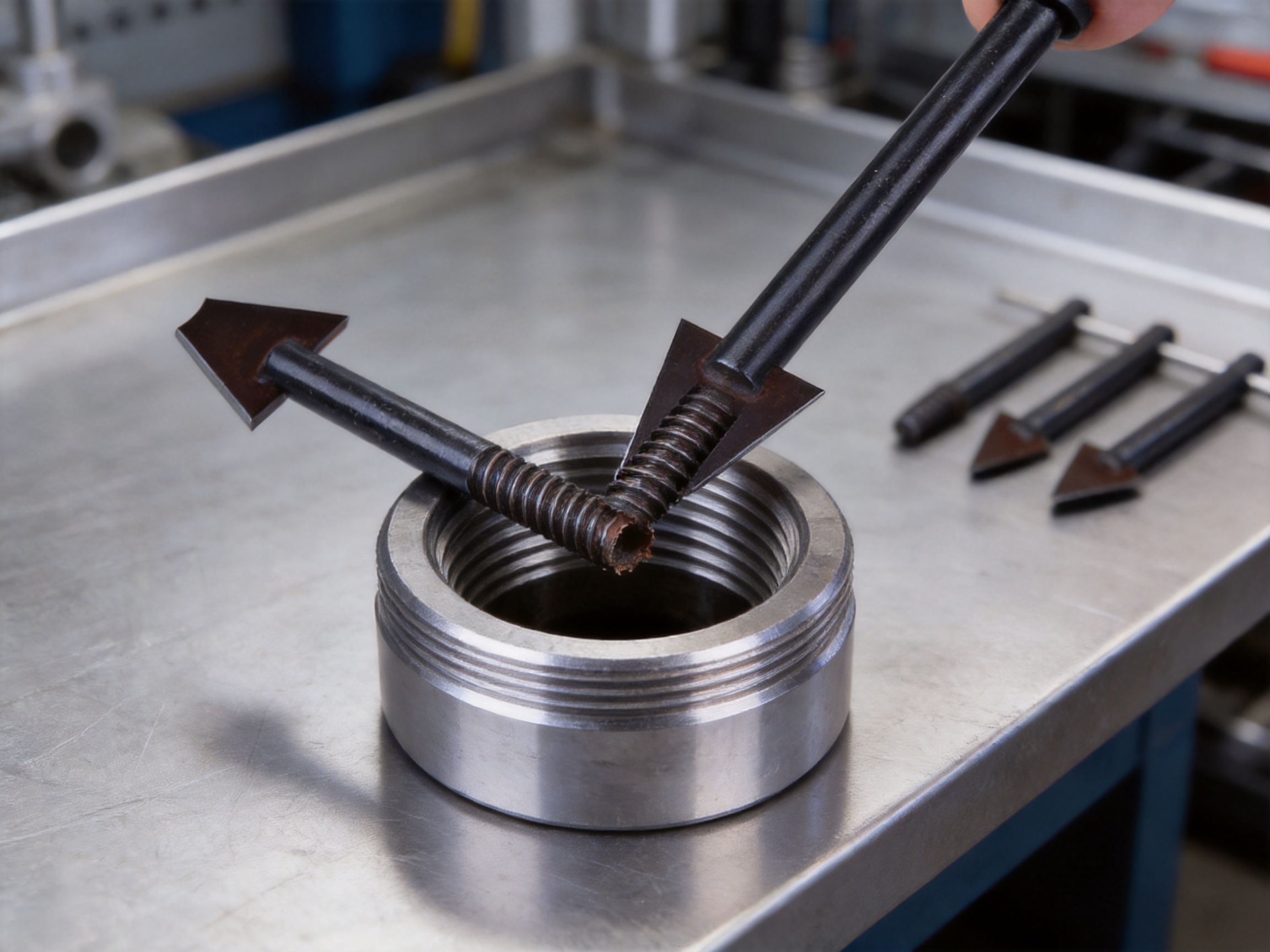
The operator should select the removal tool corresponding to the insert size. The gripping edges should be aligned with the insert rather than forced into the surrounding base threads. Gentle initial engagement is recommended. Once the tool has established a firm bite, force should be applied gradually and in a controlled direction.
If the insert does not move, the operator should stop and inspect the engagement instead of immediately increasing force. The insert may be excessively deformed, bonded with compound, or damaged in a way that prevents normal extraction. In such cases, additional preparation or a different repair procedure may be required.
After removing the insert, the base hole should be inspected for chips, deformation, corrosion, or thread damage. The hole should be cleaned before installing a replacement insert. If the original threads remain within acceptable condition, a new insert can generally be installed using the appropriate tap and installation tool.
Important Handling Considerations
The extractor should be used only for the insert size and application for which it is intended. Excessive force, lateral bending, impact beyond the tool’s design, or use on incompatible insert types may damage the tool or workpiece.
Operators should wear suitable eye protection because damaged inserts and small metal fragments may break free during extraction. Gloves may be used where appropriate, but they should not reduce the operator’s ability to control the tool. The work area should be kept clean, and removed metal particles should be collected before the repaired component returns to service.
Manufacturing Strengths Behind the Product
Product performance depends on more than the design shown in a catalog. It is also influenced by the manufacturer’s ability to control raw materials, machining, heat treatment, inspection, packaging, and customer support. Dongtai Jinzhize Metal Products Co., Ltd. was established in 2015 and operates from an owned manufacturing plant of approximately 10,000 square meters.
The facility is equipped with hundreds of machine tools and automated production systems. This production foundation supports the manufacture of threaded connection components and related tools in a structured, repeatable manner. Automated and semi-automated processes can improve consistency between batches while allowing the company to manage multiple product families.
Product Design and Development
The company has an experienced team for design, development, and production. This is important for insert removal tools because the product must combine practical ergonomics with accurate working geometry. Design decisions affect gripping stability, tool durability, operator control, and compatibility with different insert sizes.
Experience across the wider threaded connection product range also provides useful technical knowledge. The company manufactures helical wire inserts, self-tapping inserts, key-locking inserts, threaded adapters, oil plugs, installation taps, and related products. Understanding how inserts are formed, installed, loaded, and serviced helps inform the development of a removal tool intended to work with them.
Machining and Dimensional Control
Accurate machining is essential for the working edges of an extractor. Small deviations in the gripping profile can affect whether the tool bites securely or slips across the insert. Production equipment and process control help maintain the dimensions and geometry required for reliable engagement.
Dimensional control also supports compatibility across the M3–M16 range. Each size must be produced with an appropriate relationship between the working profile, insert geometry, and operating clearance. Consistent machining reduces variation and improves the likelihood that the tool will perform as expected in the field.
Material and Heat Treatment Management
High-hardness alloy steel must be processed carefully. Insufficient hardness can lead to premature wear, while excessive hardness without adequate toughness may increase the risk of chipping or breakage under impact. A balanced material and heat-treatment process helps provide the combination of wear resistance and durability required for insert removal.
Material traceability and process records are also valuable for professional customers. They support quality review, batch management, and ongoing product improvement. For applications involving critical assemblies, consistent manufacturing information helps customers establish reliable maintenance procedures.
Automated Production Systems
Automated production systems can improve repeatability in repetitive operations and help reduce variation caused by manual handling. Automation may support machining, positioning, inspection, sorting, or packaging activities. When combined with experienced personnel, it allows the manufacturer to maintain production efficiency without losing process oversight.
The result is a manufacturing structure capable of supporting both standard products and customer-specific requirements. Buyers can benefit from stable supply, consistent product quality, and a more organized response to technical or delivery needs.
Quality Management and Inspection
Jinzhize operates with a rigorous quality management system and a comprehensive after-sales service mechanism. For a professional tool, quality management should cover incoming materials, production processes, finished dimensions, surface condition, functional performance, and packaging protection.
Inspection is especially important for the gripping edges and working surfaces. A tool may appear visually acceptable while still having a profile that affects engagement. Functional checks and dimensional inspection help identify these issues before shipment.
Quality management also contributes to product consistency over time. Customers that purchase replacement tools or maintain several production lines can benefit when the performance of different batches remains stable. Consistency simplifies operator training and reduces the need for repeated process adjustments.
Supply Capability and Customer Value
For industrial buyers, product quality is only one part of the purchasing decision. Supply stability, technical communication, packaging, delivery coordination, and after-sales support also affect the total value of a supplier relationship. Jinzhize’s owned factory, production equipment, and experienced manufacturing team provide a foundation for serving customers that require regular and reliable supply.
In 2024, the company achieved an annual output value of 153 million RMB. This figure reflects the scale of its manufacturing activity and its ability to support larger-volume production. A supplier with established production capacity can be better positioned to manage repeat orders, multiple specifications, and project-based demand.
The company’s product portfolio provides an additional advantage for buyers seeking integrated sourcing. Instead of purchasing only an extractor from one supplier and inserts, taps, and installation tools from several others, customers can evaluate a broader threaded connection product range through one manufacturing partner.
This integrated approach can simplify communication and improve compatibility between products. For example, the supplier can provide wire inserts, installation tools, thread taps, and removal tools that are considered together as part of a complete maintenance and installation process.
Comparison with Common Alternatives
| Removal Method | Advantages | Limitations Compared with a Dedicated Extractor |
|---|---|---|
| Pliers or locking pliers | Widely available and simple to use | May crush the insert, slip, or damage the base threads |
| Screwdriver or punch | Low initial cost and accessible | Provides limited control and may deform the hole |
| Drilling | Can remove severely damaged material | Risk of enlarging or damaging the original threaded hole |
| Heat or chemical treatment | May help release bonded or corroded inserts | Not suitable for every base material or assembly environment |
| Dedicated insert removal tool | Designed for insert engagement and controlled extraction | Requires correct size selection and proper operation |
A dedicated extractor does not eliminate the need for technician judgment. Some inserts may be too severely damaged for conventional removal, and some components may require machining or specialized repair. However, the purpose-built tool provides a safer first-line method than improvised alternatives in a wide range of routine repair situations.
Its main competitive advantage is specialization. The tool is not merely a general gripping device; it is designed around the shape, installation condition, and removal behavior of thread inserts. This specialization supports better engagement, more controlled force, reduced risk to the base hole, and faster work completion.
Maintenance and Storage
Proper care can extend the service life of the insert removal tool. After use, the working edges should be cleaned of metal particles, oil, and other contaminants. A light protective coating may be applied when the tool will be stored for an extended period, especially in humid environments.
The tool should be stored in a dry location away from loose components that could damage its gripping edges. It should not be thrown into a toolbox where it may strike hardened tools or sharp objects. A small compartment, protective sleeve, or organized maintenance case can help preserve the working profile.
Before each use, the operator should inspect the tool for cracks, chipped edges, deformation, corrosion, or excessive wear. A damaged extractor should not be forced into service. Replacing a worn tool is generally less costly than repairing a damaged base component or dealing with an unsuccessful extraction.
How to Select the Appropriate Tool
The first consideration is the nominal thread size. The removal tool must correspond to the insert being extracted, and the M3–M16 compatibility range should be understood as a product range rather than an instruction to use one tool for every size.
The second consideration is insert type. Helical wire inserts, self-tapping inserts, key-locking inserts, and other threaded inserts may have different geometries and removal requirements. Customers should confirm compatibility with the supplier when working with unusual insert designs or specialized locking features.
The third consideration is the condition of the insert. A lightly misaligned insert may be easier to remove than one that has been crushed, corroded, bonded, or partially broken. The tool should be selected together with an appropriate repair procedure based on the condition of the assembly.
The fourth consideration is the base material and component value. The more expensive, delicate, or difficult to replace the component, the more important it is to use a controlled removal method. This is where a dedicated extractor offers clear value over improvised tools.
Role in a Complete Thread Repair System
Insert removal is one stage in the lifecycle of a threaded connection. A complete repair system may include inspection equipment, cleaning tools, thread taps, installation mandrels, replacement inserts, locking compounds, gauges, and torque-control equipment. The removal tool connects the corrective stage with the replacement stage.
After extraction, the technician may need to clean the hole, verify the original thread, repair or chase the thread with a suitable tap, and install a new insert. The replacement insert should then be checked for depth, orientation, projection, and engagement. A reliable removal process makes these later steps easier because it leaves the base hole in better condition.
For production environments, standardizing the complete process can improve quality. Work instructions can identify the appropriate removal tool, insert size, cleaning method, installation tool, and inspection criteria. This reduces variation between operators and supports more consistent repair results.
Why Choose a Specialized Manufacturer
A specialized manufacturer understands that a threaded connection product must perform as part of an assembly rather than as an isolated item. The insert, tap, installation tool, locking component, and removal tool all influence the final result. Technical knowledge across these products helps the supplier address compatibility and process questions more effectively.
Dongtai Jinzhize Metal Products Co., Ltd. has focused on threaded connection products since its establishment in 2015. Its manufacturing scope includes helical wire inserts, self-tapping inserts, key-locking inserts, threaded adapters, oil plugs, installation taps, and related tools. This specialization allows the company to serve customers in automotive, aerospace, rail, industrial equipment, and other demanding sectors.
The company’s mission is to provide stable and reliable threaded connection and fastening products for critical assemblies. In the case of an insert removal tool, this mission is reflected in the emphasis on controlled removal, protection of the base threads, reliable gripping, and practical serviceability.
The company also emphasizes consistent, traceable products and reliable service support. These qualities are important for distributors, maintenance departments, original equipment manufacturers, and engineering teams that need dependable sourcing over the long term.
Frequently Asked Questions
What is an insert removal tool used for?
An insert removal tool is used to extract incorrectly installed, damaged, worn, or stuck thread inserts from a base hole. It is designed to grip the insert and remove it with controlled force while helping protect the original internal threads.
Can the tool remove wire thread inserts?
Yes. The product is intended for wire thread insert removal and is marketed as a wire insert removal tool. The correct tool size should be selected according to the nominal thread size and insert specification.
What thread sizes are supported?
The product is suitable for multiple insert sizes from M3 through M16. Specific selection should be based on the insert’s nominal size, geometry, and application.
Will the tool damage the base threads?
The tool is designed to reduce the risk of damage by concentrating its gripping action on the insert and distributing removal force in a controlled manner. However, results depend on insert condition, operator technique, alignment, and the material of the base component. Proper cleaning, alignment, and gradual force application remain important.
What material is the tool made from?
The tool is manufactured from high-hardness alloy steel. This material is selected for resistance to wear, impact, and deformation during insert extraction.
Can it be used for inserts other than helical wire inserts?
The primary application is removal of thread inserts, especially wire inserts. Other insert designs may require different engagement geometry. Customers should confirm the application before using the tool on self-tapping, key-locking, or specialized inserts.
Is the tool suitable for field maintenance?
Yes. Its compact structure makes it easy to carry and store, which is useful for vehicle repair, industrial equipment servicing, production-line maintenance, and other on-site applications.
What should be done if the insert will not move?
Stop and inspect the tool engagement, insert condition, and base component. Clean away contamination and verify that the selected tool matches the insert size. Do not apply uncontrolled force. If the insert is severely deformed or bonded, a specialized machining or repair procedure may be necessary.
How can the tool’s service life be extended?
Clean the working edges after use, keep the tool dry, protect it from impact with other tools, and inspect it regularly for wear or damage. Avoid using it on incompatible sizes or applying force outside its intended operating direction.
Can the manufacturer support other threaded connection products?
Yes. Dongtai Jinzhize Metal Products Co., Ltd. manufactures helical wire inserts, self-tapping inserts, key-locking inserts, threaded adapters, oil plugs, installation taps, and related tools. This allows customers to source products for installation, repair, and fastening applications from a specialized supplier.
Conclusion
A damaged or incorrectly installed thread insert does not always require replacement of the entire component. With the correct removal tool, technicians can often extract the insert, preserve the original base hole, and restore the threaded connection efficiently. The insert removal tool described here is designed for this specific challenge, offering high-hardness alloy steel construction, firm-bite engagement, controlled force distribution, multi-size compatibility from M3 to M16, and a compact structure for workshop or field use.
Compared with pliers, punches, screwdrivers, or drilling methods, a dedicated extractor provides a more specialized and controlled approach. Its value is particularly clear when repairing expensive, delicate, or difficult-to-replace components. Correct use can reduce slippage, limit secondary damage, shorten repair time, and improve the consistency of insert replacement.
Behind the product is a manufacturer with a focused threaded connection portfolio, an approximately 10,000-square-meter owned facility, hundreds of machine tools, automated production systems, experienced design and production personnel, and a rigorous quality management approach. Dongtai Jinzhize Metal Products Co., Ltd. combines product specialization with manufacturing capacity to support customers in automotive, aerospace, rail, industrial, electronics, and general mechanical applications.
For companies seeking reliable thread repair and fastening products, an insert removal tool is a practical addition to the maintenance process. When combined with suitable thread taps, replacement inserts, installation tools, and inspection procedures, it becomes part of a complete system for maintaining strong, accurate, and dependable threaded connections.
References
1. General principles of threaded insert installation, inspection, and removal in mechanical maintenance.
2. Alloy steel selection and heat-treatment considerations for wear-resistant hand tools.
3. Industrial practices for repairing threaded holes in aluminum, steel, and other metal components.
4. Automotive and aerospace maintenance principles for traceable threaded connection repair.
5. Manufacturer product information for insert removal tools, helical wire inserts, self-tapping inserts, key-locking inserts, thread taps, and installation tools.