Français
 Español
 Deutsch

Content
- 1 1. Understanding the Internal-External Thread Conversion Nut
- 2 2. Why Carbon Steel Is a Practical Material Choice
- 3 3. Key Advantages Compared with Alternative Thread Adapters
- 4 4. Manufacturing Process for Carbon Steel Thread Conversion Nuts
- 5 5. Quality Control and Product Consistency
- 6 6. Manufacturing Strengths of a Specialized Supplier
- 7 7. Application Areas
- 8 8. Product Selection Guide
- 9 9. Installation Best Practices
- 10 10. Customization and OEM Support
- 11 11. Total Cost and Procurement Benefits
- 12 12. Common Problems and How to Avoid Them
- 13 13. Environmental and Operational Considerations
- 14 14. Why Choose a Dedicated Threaded Connection Manufacturer
- 15 15. Frequently Asked Questions
- 15.1 Q1: What is a carbon steel internal-external thread conversion nut?
- 15.2 Q2: What industries use this type of adapter?
- 15.3 Q3: Can the internal and external threads use different standards?
- 15.4 Q4: Is carbon steel better than stainless steel?
- 15.5 Q5: Does carbon steel require surface treatment?
- 15.6 Q6: Can the adapter be customized?
- 15.7 Q7: How should the correct size be selected?
- 15.8 Q8: Can a conversion nut be used in a pressure-containing system?
- 15.9 Q9: What inspection information can a customer request?
- 15.10 Q10: How does a specialized manufacturer improve supply reliability?
- 15.11 Q11: What information should be included in an inquiry?
- 15.12 Q12: Can the product be used for repair and maintenance?
- 16 16. Conclusion
- 17 References
- 18 Product: Carbon Steel Internal-external Thread Conversion Nut
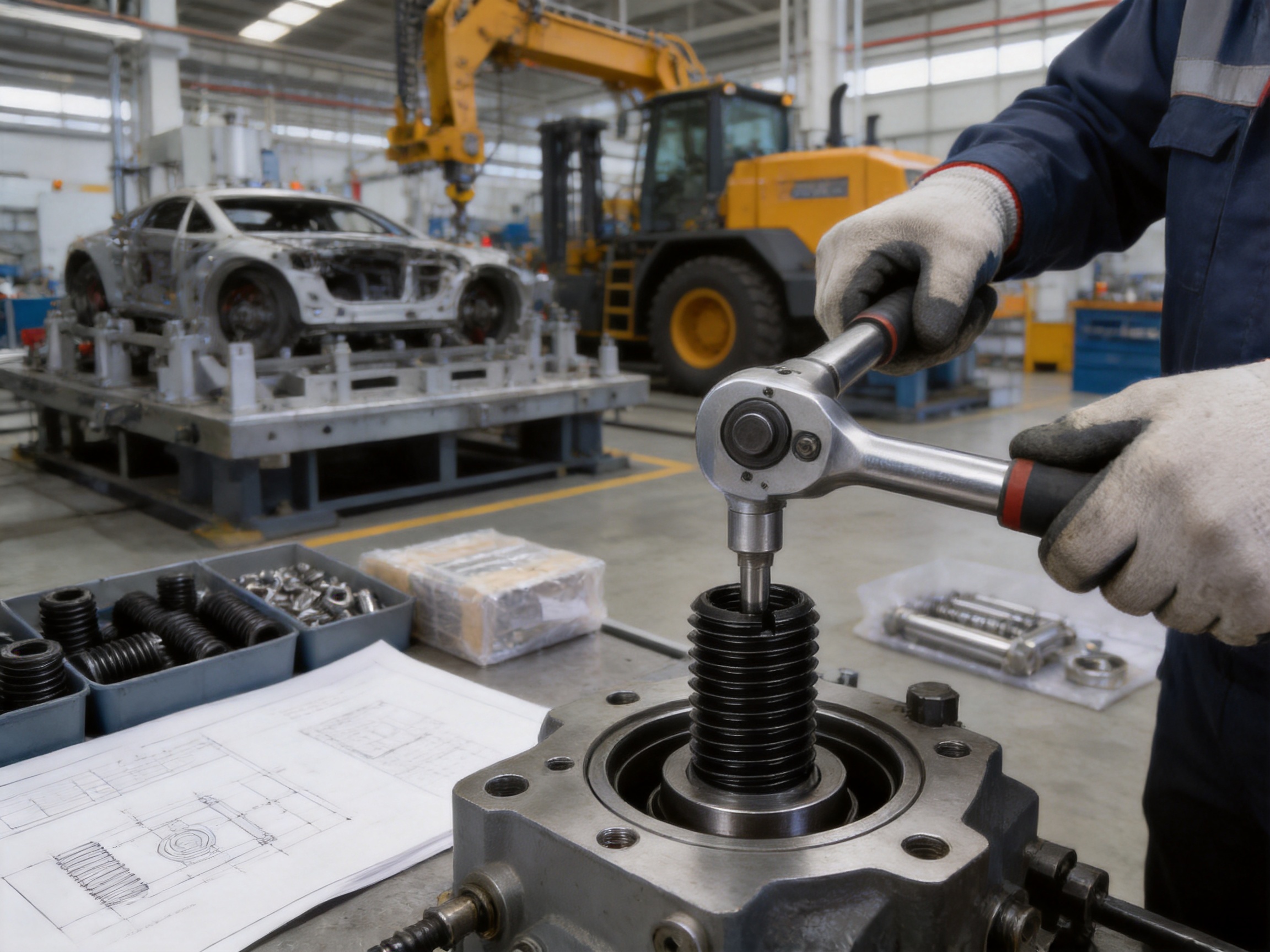
Modern machinery frequently combines components designed to different thread standards, thread sizes, or assembly systems. When these components must be connected without redesigning the entire assembly, an internal-external thread conversion nut provides a practical and dependable solution. The carbon steel internal-external thread conversion nut is designed with a male thread on the outside and a female thread on the inside, allowing it to function as an adapter between two threaded components.
This product is particularly valuable in machinery manufacturing, automotive production, construction equipment, oil and gas systems, maintenance operations, and other industrial applications where secure threaded connections are essential. It helps engineers and maintenance teams solve thread compatibility problems while avoiding unnecessary machining, component replacement, or costly design changes.
Manufactured from carbon steel, the internal-external thread conversion nut balances mechanical strength, wear resistance, production efficiency, and cost control. Compared with many premium alloy alternatives, carbon steel can provide a more economical option for high-volume production while still delivering the performance required for demanding mechanical assemblies. Its integrated male and female thread design also reduces the number of separate components required in an installation.
This article explains the construction, operating principles, material advantages, manufacturing process, quality controls, application fields, customization options, and selection considerations associated with carbon steel internal-external thread conversion nuts. It also examines how a specialized manufacturer can support stable supply, consistent quality, traceability, and customized threading solutions for global industrial customers.
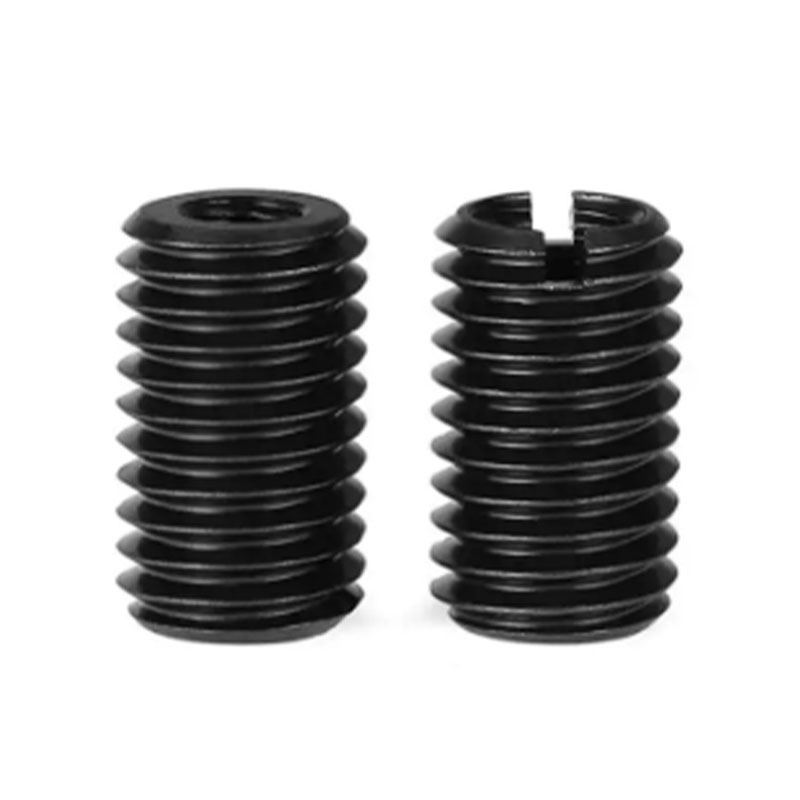
Carbon Steel Internal-external Thread Conversion Nut
1. Understanding the Internal-External Thread Conversion Nut
An internal-external thread conversion nut is a compact threaded adapter with two different thread interfaces. The external surface contains a male thread, while the internal bore contains a female thread. Depending on the design, the two thread systems may differ in nominal diameter, pitch, thread form, or standard.
For example, the outside thread may be designed to screw into a threaded hole in a machine body, while the internal thread may accept a bolt, stud, pipe fitting, or threaded shaft. This arrangement makes it possible to connect parts that would otherwise be incompatible.
The product is sometimes described as a male-to-female thread adapter, internal-external threaded bushing, thread conversion bushing, or thread adapter nut. Although terminology varies between industries and regions, the basic function remains the same: to provide a strong, compact, and repeatable transition between two threaded connections.
1.1 Basic Construction
The main body is usually cylindrical or hexagonal, depending on the installation method and application requirements. The outer surface carries the external thread, and the central bore carries the internal thread. Some designs include a flange, shoulder, hexagonal driving section, slot, or other feature to assist installation and removal.
The geometry must be carefully balanced. The wall thickness between the internal and external threads must be sufficient to resist deformation, stripping, cracking, and excessive expansion during tightening. At the same time, the adapter should remain compact enough for use in restricted spaces.
Thread entrances may include chamfers to support smooth engagement and reduce the risk of cross-threading. The ends may also be deburred, faced, or formed with a specific shoulder dimension so that the adapter seats correctly against the mating component.
1.2 How the Adapter Works
During installation, the external male thread is engaged with a female threaded hole or fitting. Once the adapter has reached the specified seating position, a bolt, stud, or other male-threaded component is inserted into the internal female thread.
The conversion nut therefore creates a new threaded interface inside an existing threaded opening. It can also connect two components with different thread specifications. The resulting assembly can provide axial clamping, positioning, structural attachment, or fluid-system connection, depending on the product design and application.
Correct engagement is essential. The mating parts should have compatible thread profiles, suitable tolerances, adequate engagement length, and appropriate tightening conditions. Where the connection is exposed to vibration, thermal cycling, pressure, or chemical contamination, engineers may also specify a locking method, sealant, coating, or secondary retention feature.
2. Why Carbon Steel Is a Practical Material Choice
Carbon steel is widely used for threaded components because it offers a useful combination of strength, machinability, availability, and cost efficiency. For internal-external thread conversion nuts, these characteristics are especially important because the product must withstand repeated mechanical forces concentrated around the thread flanks and root areas.
2.1 Mechanical Strength
A properly selected carbon steel grade can provide strong resistance to tensile loads, shear loads, compressive forces, and localized contact stress. The material supports reliable load transfer between the internal and external threads, reducing the likelihood of premature deformation during assembly.
Strength is influenced not only by chemical composition but also by heat treatment, forming method, thread dimensions, surface condition, and manufacturing accuracy. A specialized manufacturer can select material and processing parameters according to the intended application rather than treating all conversion nuts as identical products.
2.2 Wear Resistance
Threaded adapters may be installed, removed, adjusted, or exposed to vibration over long service periods. Carbon steel provides a durable base material that can resist wear on the thread flanks when the product is correctly designed and used.
Wear resistance is especially important in industrial maintenance, automotive fixtures, machine tools, and equipment exposed to repeated service operations. Surface treatment can further improve resistance to friction, oxidation, and environmental exposure where required.
2.3 Cost Efficiency
One of the most important advantages of carbon steel is its favorable cost-to-performance ratio. Compared with more expensive stainless steel, specialty alloys, or highly engineered materials, carbon steel can reduce unit cost while maintaining suitable mechanical performance for many standard industrial applications.
This benefit becomes more significant in large production programs. Automotive manufacturing, machinery production, construction equipment, and industrial assemblies may require thousands or millions of threaded components. A cost-effective carbon steel adapter can support competitive product pricing without unnecessarily increasing material expenditure.
2.4 Machinability and Production Flexibility
Carbon steel can be processed through turning, drilling, tapping, threading, forming, heat treatment, and surface finishing operations. Its broad manufacturing compatibility allows suppliers to produce standard and customized designs with efficient cycle times.
Production flexibility is valuable when customers require different external and internal thread combinations, special lengths, non-standard shoulders, modified tolerances, or application-specific surface finishes. A capable factory can adapt tooling, machining programs, inspection plans, and packaging specifications to meet these requirements.
2.5 Corrosion Considerations
Carbon steel is not inherently as corrosion-resistant as stainless steel. However, suitable surface treatments, protective oils, plating, coating, packaging, and storage practices can improve its resistance to rust and environmental deterioration.
The appropriate protection depends on the operating environment. Indoor machinery, dry industrial equipment, outdoor construction machinery, automotive assemblies, and oil and gas applications may require different levels of protection. Product specifications should therefore identify the required finish and environmental conditions before production begins.
3. Key Advantages Compared with Alternative Thread Adapters
The carbon steel internal-external thread conversion nut competes with several alternative solutions, including machined solid adapters, welded fittings, redesigned components, stainless steel adapters, and generic low-cost threaded bushings. Its principal advantage is that it provides a compact and standardized way to solve thread compatibility problems without major changes to the surrounding assembly.
3.1 Reduced Assembly Complexity
Because the male and female threads are integrated into one component, the adapter can replace multiple separate pieces. Fewer parts generally mean fewer assembly steps, fewer interfaces to inspect, and fewer potential points of loosening or leakage.
A compact integrated design can also simplify inventory management. Instead of stocking several specialized transition parts, a manufacturer may use selected conversion nuts that accommodate common thread combinations.
3.2 Lower Modification Cost
Replacing an entire housing, bracket, fitting, or machine component to accommodate a different thread standard can be expensive. It may require new tooling, engineering validation, inventory changes, and production-line adjustments.
A thread conversion nut often solves the problem at the connection point. This can extend the useful life of existing components and reduce the need for extensive redesign. The approach is particularly useful when legacy equipment must be connected to newer components or when imported and locally manufactured parts use different thread standards.
3.3 Stronger and More Stable Than Improvised Solutions
Improvised solutions such as loose spacers, poorly matched nuts, excessive sealant, or manually modified fittings may create unreliable connections. A purpose-designed conversion nut provides controlled thread geometry, defined dimensions, repeatable engagement, and a more predictable load path.
When produced under a controlled quality system, the adapter offers better consistency from one batch to another. This is important for production assemblies where interchangeability and repeatable tightening are required.
3.4 Better Value Than Premium Materials in Suitable Environments
Stainless steel or specialty alloy adapters may be necessary in highly corrosive, high-temperature, or chemically aggressive environments. However, they may be unnecessary for standard machinery, indoor industrial equipment, automotive production fixtures, and many general-purpose applications.
Where carbon steel provides adequate strength and the surface protection is appropriate, it can deliver a lower total procurement cost. The material choice should be based on actual load, temperature, chemical exposure, and service-life requirements rather than on material prestige alone.
3.5 Compatibility with Multiple Thread Systems
Thread conversion products can be manufactured for metric, imperial, unified, and other recognized thread systems. This gives buyers flexibility when sourcing components from different markets or maintaining equipment with mixed standards.
Compatibility should never be assumed solely from nominal diameter. Pitch, thread angle, tolerance class, right-hand or left-hand direction, sealing requirements, and thread form must all be confirmed. A professional supplier can help identify the correct combination before production.
4. Manufacturing Process for Carbon Steel Thread Conversion Nuts
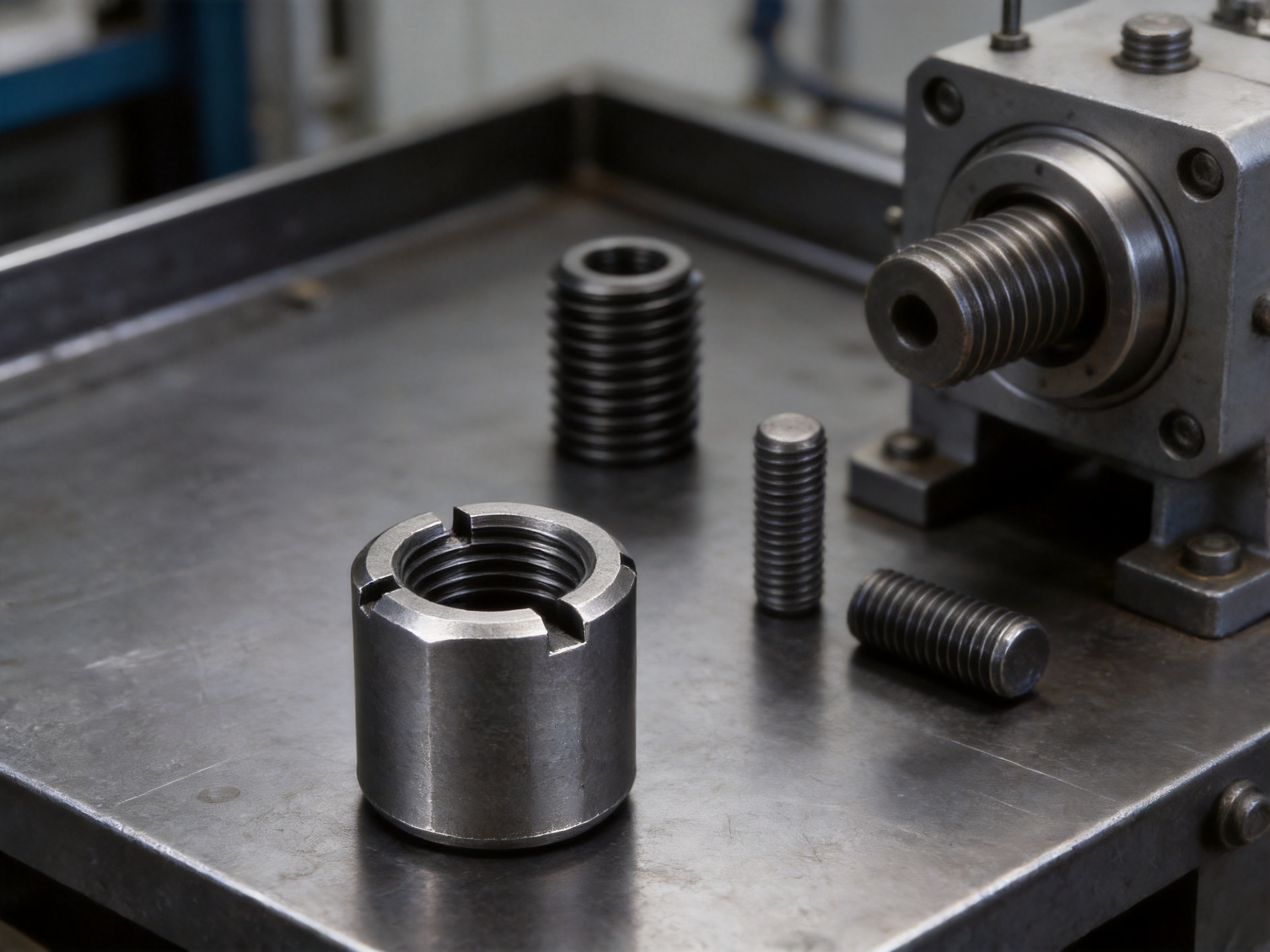
Product performance depends heavily on manufacturing discipline. A conversion nut may appear simple, but the relationship between its internal and external threads requires precise control. Errors in concentricity, pitch, thread depth, wall thickness, or surface finish can affect installation, load capacity, and service life.
4.1 Material Preparation
Production begins with the selection and preparation of carbon steel bar, tube, or other suitable raw material. Material certificates may be reviewed to verify grade, chemical composition, mechanical properties, and heat number information.
The raw material is cut to an appropriate blank length. Depending on the design and production volume, blanks may be prepared for CNC turning, automatic lathe processing, cold forming, hot forging, or a combination of methods.
Material traceability is important for industrial customers. Marking systems, batch records, and production documentation can help connect finished parts with their original material source and manufacturing process.
4.2 Precision Turning and Forming
The outer diameter, shoulder, flange, chamfer, and end faces are produced using controlled machining or forming operations. CNC equipment can maintain repeatable dimensions across large production quantities while allowing efficient changes between product specifications.
For high-volume products, automated production systems can improve throughput and reduce variation caused by manual handling. For specialized or lower-volume products, flexible CNC machining can support customized dimensions without requiring extensive dedicated tooling.
The selected process depends on the component size, material grade, required tolerance, production quantity, and geometry. A strong manufacturer evaluates these factors together to achieve the best balance between quality, productivity, and cost.
4.3 Internal Hole and Female Thread Production
The internal bore is drilled, bored, or formed to the required preliminary dimension. The female thread may then be produced by tapping, thread milling, forming, or another suitable method.
Internal threading requires attention to entry chamfer, effective thread length, minor diameter, thread crest condition, and chip evacuation. Poor chip control can damage the thread surface or create dimensional variation. Appropriate cutting tools, lubrication, spindle control, and inspection procedures are therefore essential.
4.4 External Thread Production
The external male thread is typically produced by thread cutting, thread rolling, or precision turning. Thread rolling can improve surface integrity and productivity in suitable materials and geometries, while cutting may provide greater flexibility for special sizes and low-volume orders.
The external thread must be concentric with the internal thread. If the two thread axes are misaligned, the adapter may be difficult to install, may produce uneven contact, or may transfer load improperly. Precision equipment and in-process verification help control this relationship.
4.5 Deburring and Cleaning
After machining, burrs may remain at thread entrances, shoulders, or through-hole intersections. These burrs can interfere with assembly, produce inaccurate seating, or create loose particles in sensitive equipment.
Deburring may be performed manually, mechanically, through brushing, tumbling, or other controlled methods. Parts are then cleaned to remove chips, cutting fluid, dust, and other contaminants before inspection or surface treatment.
4.6 Heat Treatment When Required
Some applications require additional hardness, strength, or fatigue resistance. Depending on the carbon steel grade and performance target, heat treatment may be applied to the complete part or to selected production stages.
Heat treatment must be controlled carefully because excessive distortion can affect thread accuracy. After treatment, parts may require corrective processing, dimensional verification, or additional surface finishing.
4.7 Surface Treatment and Protection
Surface treatment is selected according to the expected environment and customer requirements. Options may include protective oil, black oxide, zinc-based plating, phosphate treatment, coating, or other corrosion-control methods.
Surface treatment can also influence friction, tightening torque, appearance, storage stability, and compatibility with lubricants or sealants. The treatment should therefore be considered as part of the complete engineering specification rather than an isolated cosmetic operation.
4.8 Final Inspection and Packing
Finished adapters are inspected for dimensions, thread quality, visual defects, surface condition, and functional performance. Parts that pass inspection are packed in a manner that prevents impact, contamination, moisture exposure, and mixing between different specifications.
Correct labeling is essential for products with similar appearances but different thread combinations. Packaging may identify part number, material, thread specification, batch number, quantity, surface finish, and inspection status.
5. Quality Control and Product Consistency
Threaded products must be manufactured consistently because even small dimensional differences can affect assembly. A reliable quality system begins with incoming material control and continues through production, inspection, storage, and shipment.
5.1 Dimensional Inspection
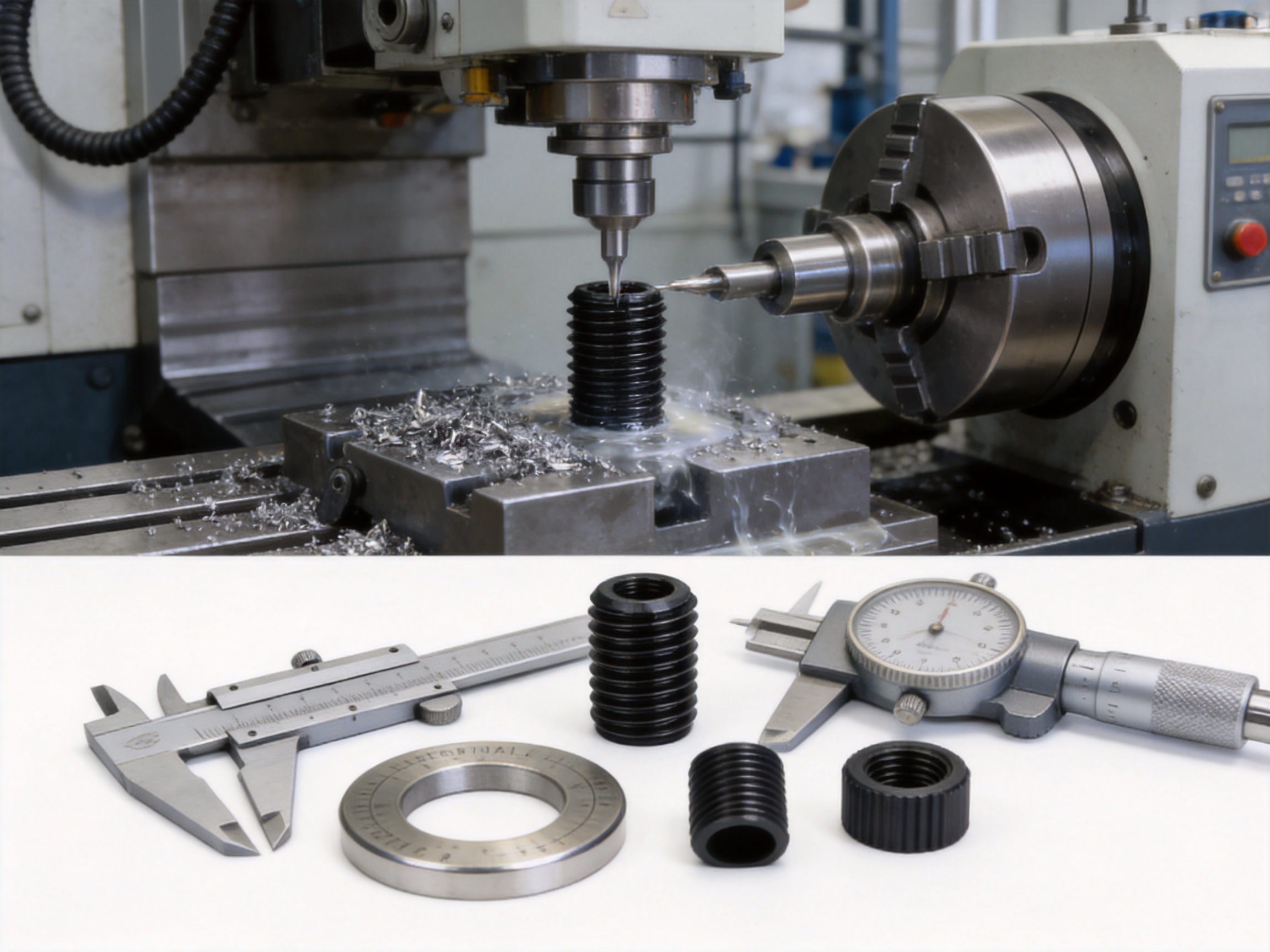
Key dimensions may include overall length, external diameter, internal diameter, shoulder dimensions, chamfer size, wall thickness, and thread engagement length. Depending on the product specification, inspection equipment may include calipers, micrometers, gauges, coordinate measuring equipment, optical instruments, and specialized thread measuring tools.
Thread plug gauges and ring gauges are commonly used to verify functional fit. These gauges evaluate whether the thread can accept the mating component within the specified tolerance range.
5.2 Concentricity and Alignment
Concentricity between the inner and outer thread axes is a critical characteristic. Excessive runout may cause uneven contact, difficult installation, or reduced load-carrying performance.
Inspection methods should be selected according to the tolerance requirement and product geometry. Process controls, fixture accuracy, tool condition, and machine maintenance all contribute to alignment consistency.
5.3 Surface and Visual Inspection
Visual inspection can identify cracks, burrs, dents, tool marks, rust, coating irregularities, and other visible defects. Surface quality is particularly important at thread entrances and seating faces because these areas directly influence assembly.
For applications with demanding reliability requirements, additional inspection methods may be specified. The appropriate level of inspection should be agreed upon between the customer and manufacturer before mass production.
5.4 Mechanical and Functional Verification
Where required, samples may be tested for hardness, tensile performance, torque resistance, stripping resistance, or other application-specific properties. Functional assembly tests can confirm that the adapter installs correctly with representative mating parts.
Testing should reflect real operating conditions as closely as practical. For example, a vibration-sensitive application may require evaluation of loosening resistance, while a pressure-related connection may require sealing or pressure testing using a complete assembly configuration.
5.5 Traceability and Corrective Action
Batch identification allows production records, inspection results, material information, and shipment data to be connected. This improves customer confidence and supports efficient investigation if a quality issue occurs.
A mature manufacturer should also maintain a corrective-action process. When variation is detected, the cause may be traced to raw material, tooling, machine settings, operator handling, heat treatment, surface treatment, packaging, or transportation. Corrective action should address the underlying cause rather than only sorting defective parts.
6. Manufacturing Strengths of a Specialized Supplier
A specialized threading and fastening manufacturer offers more value than a simple catalog reseller. The ability to design, produce, inspect, and support threaded products within one manufacturing organization can shorten communication paths and improve technical coordination.
Dongtai Jinzhize Metal Products Co., Ltd. is a specialized manufacturer focused on threaded connection products for automotive, aerospace, rail vehicle, machinery, and related industrial applications. Its product range includes helical wire inserts, self-tapping inserts, key-locking inserts, threaded adapters, oil plugs, installation taps, and associated tools.
Established in 2015, the company operates a 10,000-square-meter owned manufacturing plant equipped with hundreds of machine tools and automated production systems. This facility structure supports both standard production and customized threaded component development.
6.1 Integrated Product Capability
The company’s product portfolio covers several stages of threaded connection work. It can provide thread inserts for reinforcement or repair, conversion nuts for thread adaptation, oil plugs for controlled fluid access, taps for installation preparation, and tools for assembly operations.
This broader capability can simplify sourcing for customers who require multiple related products. It also allows technical teams to consider the compatibility of the insert, adapter, tap, installation tool, and mating component as one complete system.
6.2 Automated and Flexible Production
Automated production systems support stable cycle times and repeatable processing. At the same time, a large collection of machine tools provides flexibility for different dimensions, thread combinations, materials, and production volumes.
This combination is particularly beneficial for customers who need both repeatability and customization. Standard products can be manufactured efficiently, while special products can be developed through adjusted programs, tooling, and inspection plans.
6.3 Engineering and Development Experience
Threaded adapters often require more than a simple diameter change. A suitable design may need to account for wall thickness, thread engagement, installation access, sealing, tightening torque, clearance, material strength, and service temperature.
An experienced design and development team can review drawings, samples, technical specifications, and application information to help identify practical solutions. Early engineering communication can prevent common problems such as insufficient thread engagement, incompatible standards, excessive adapter length, or inadequate clearance.
6.4 Quality Management and After-Sales Support
Consistent quality requires procedures that extend beyond machining. A comprehensive quality management system can coordinate material control, process inspection, final inspection, documentation, packaging, and customer feedback.
After-sales support is also important for industrial products. If a customer experiences an installation issue, dimensional concern, packaging problem, or application change, responsive technical communication can help determine the appropriate corrective or replacement action.
6.5 Stable Large-Scale Supply
The company reported an annual output value of RMB 153 million in 2024. This indicates experience in managing substantial production activity and supporting stable supply for industrial customers.
Supply capability involves more than machine capacity. It also requires production planning, material purchasing, process scheduling, inspection resources, packaging control, and shipment coordination. These factors become increasingly important for automotive and other industries that depend on predictable delivery.
7. Application Areas
7.1 Machinery Manufacturing
Machinery manufacturers use internal-external thread conversion nuts to connect housings, brackets, shafts, fittings, covers, and other threaded parts. The adapters are useful when machines contain components sourced from different suppliers or when a common machine platform must support multiple connection standards.
They may also be used during equipment upgrades. A conversion nut can allow a replacement component to fit an existing machine without modifying the complete housing or frame.
7.2 Automotive Manufacturing
Automotive production requires repeatable, durable, and cost-controlled threaded connections. Conversion nuts may be used in manufacturing fixtures, engine-related assemblies, transmission equipment, brackets, tooling, service equipment, and specialized vehicle components.
Automotive applications may involve vibration, thermal cycling, oil exposure, repeated maintenance, and strict dimensional requirements. The selected adapter must therefore be matched to the specific location, load, temperature, and environmental conditions.
In production tooling, the adapter can also help standardize connection points across different fixtures. This may shorten setup time and allow one tool system to accommodate multiple models or component variations.
7.3 Construction and Building Equipment
Construction machinery and building systems often combine structural components, hydraulic accessories, brackets, fasteners, and replacement parts from different sources. Thread conversion nuts can help resolve differences between existing threaded openings and replacement components.
Outdoor construction equipment may be exposed to moisture, dust, vibration, impact, and temperature changes. In these cases, surface protection, installation torque, thread engagement, and inspection frequency should be carefully considered.
7.4 Oil and Gas Equipment
Oil and gas systems use a wide range of threaded components for equipment, maintenance, instrumentation, auxiliary assemblies, and transportation-related systems. A thread adapter may provide a practical connection between components manufactured to different specifications.
However, critical pressure-containing or safety-related applications require detailed engineering validation. The adapter must be evaluated for pressure, temperature, chemical compatibility, sealing method, material requirements, and applicable industry standards. A general-purpose conversion nut should not be used in a critical system without confirming its suitability.
7.5 Aerospace and Rail Vehicles
Aerospace and rail vehicle manufacturing place strong emphasis on reliability, traceability, dimensional control, and weight-conscious design. Threaded connection products may be used in tooling, fixtures, equipment, maintenance assemblies, and selected vehicle components.
For these sectors, procurement specifications may include additional requirements for material certification, special process control, testing, documentation, and change management. The manufacturer and customer should define these requirements before production approval.
7.6 Maintenance and Repair
Maintenance teams frequently encounter damaged threads, obsolete components, mixed standards, or replacement parts that do not directly match existing equipment. A conversion nut can provide a controlled method for adapting a connection while minimizing downtime.
Before installation, technicians should inspect the original threaded hole, remove debris, confirm thread compatibility, and verify that sufficient material remains around the opening. The adapter should be installed using the correct tool and torque method.
8. Product Selection Guide
Selecting the correct internal-external thread conversion nut requires more than matching nominal diameter. The product should be specified according to the entire connection system.
| Selection Factor | Information to Confirm | Why It Matters |
|---|---|---|
| External thread | Standard, nominal diameter, pitch, tolerance, direction, effective length | Determines whether the adapter can engage correctly with the receiving component |
| Internal thread | Standard, nominal diameter, pitch, tolerance, direction, effective length | Determines compatibility with the bolt, stud, shaft, or fitting |
| Material | Carbon steel grade and required mechanical properties | Influences strength, machinability, hardness, and service performance |
| Surface treatment | Oil, plating, oxide, phosphate, coating, or other protection | Controls corrosion resistance, friction, appearance, and storage stability |
| Overall geometry | Length, shoulder, flange, hex section, chamfer, clearance | Ensures correct seating and installation access |
| Operating environment | Load, vibration, temperature, moisture, chemicals, pressure | Defines the required material, finish, and validation level |
| Quantity | Prototype, small batch, recurring order, or mass production | Influences tooling, process selection, lead time, and unit cost |
| Documentation | Inspection report, material certificate, batch information, packaging label | Supports quality assurance and traceability |
8.1 Thread Standard
Metric, Unified, American National, British, and other thread systems should not be mixed without verification. Similar nominal sizes may have different pitches or thread angles. A bolt may appear to fit initially but fail to achieve correct engagement or damage the adapter during tightening.
Customers should provide complete thread callouts whenever possible. If the requirement is uncertain, drawings, samples, photographs, mating components, or equipment information can help the supplier identify the correct design.
8.2 Engagement Length
Thread engagement length affects load capacity and resistance to stripping. The correct length depends on material strength, thread diameter, load type, and application requirements.
Longer engagement is not always better. Excessive length may interfere with internal components, reduce clearance, or create installation problems. The design should provide enough engagement for the expected load while remaining compatible with the available space.
8.3 Wall Thickness
The wall between the internal and external threads must remain strong enough to resist expansion, collapse, and thread deformation. A small adapter with a large internal thread and a relatively small external thread may have limited wall thickness, making material selection and heat treatment particularly important.
Designers should evaluate the minimum wall section, stress concentration, assembly torque, and expected load. A qualified manufacturer can review the geometry and recommend changes when the proposed dimensions create a performance risk.
8.4 Installation Method
Some conversion nuts can be installed using a wrench, hex key, screwdriver slot, internal drive feature, or specialized tool. The preferred method depends on accessibility, required torque, production volume, and whether the adapter must later be removed.
The product may also be installed with thread-locking compound, sealant, adhesive, or mechanical locking features. These should be selected according to the service temperature, chemical environment, maintenance requirements, and manufacturer instructions.
9. Installation Best Practices
Correct installation is necessary to obtain the designed performance of a carbon steel internal-external thread conversion nut. The following practices help reduce common assembly problems.
9.1 Inspect Mating Threads
Before installation, inspect both the receiving female thread and the component that will enter the adapter. Remove dirt, chips, old sealant, rust, and damaged material. A damaged receiving thread may prevent correct seating or cause the adapter to tilt.
9.2 Verify Thread Compatibility
Confirm the thread standard, diameter, pitch, and direction. Do not force a component into an adapter merely because the first few turns appear to engage. Forced assembly can create galling, cross-threading, cracks, or permanent dimensional damage.
9.3 Use Proper Alignment
Keep the adapter and mating component aligned with the thread axis during starting. Begin engagement by hand where access permits. The adapter should rotate smoothly for the initial turns before a tool is applied.
9.4 Apply Appropriate Torque
Over-tightening may strip the internal or external thread, deform the adapter, damage the receiving component, or produce excessive stress. Under-tightening may allow movement, loosening, leakage, or loss of clamping force.
Torque values depend on thread size, material, surface treatment, lubrication, tolerance, and application. Where a controlled torque specification is available, it should be followed. For critical assemblies, torque verification or an approved installation procedure may be required.
9.5 Consider Thread Locking and Sealing
Vibration-sensitive connections may require a suitable thread-locking compound or mechanical retention method. Fluid connections may require a sealant or sealing washer, depending on the design.
Thread-locking and sealing products can change torque behavior. Therefore, the assembly procedure should define whether threads are dry, lubricated, coated, or sealed and should provide corresponding torque guidance.
9.6 Protect Installed Components
After installation, protect exposed carbon steel surfaces from moisture and contamination. If the adapter is used in an outdoor or corrosive environment, confirm that the surface treatment remains intact and inspect the connection periodically.
10. Customization and OEM Support
Industrial customers often need more than a standard thread adapter. Custom requirements may include unique internal and external thread combinations, special lengths, reduced or increased wall thickness, flange dimensions, shoulder positions, drive features, left-hand threads, special tolerances, or customized packaging.
10.1 Drawing-Based Production
Customers can provide two-dimensional drawings, three-dimensional models, technical specifications, or physical samples. The manufacturer can review the information and convert it into a production plan that covers material, machining, threading, surface treatment, inspection, and packaging.
Drawing review is an important opportunity to identify possible conflicts before manufacturing begins. These may include insufficient clearance, incomplete thread callouts, undefined tolerances, unclear surface treatment, or incompatible mating dimensions.
10.2 Sample Development
For new applications, prototype or sample production can help verify fit and function. Customers may test the sample in the actual housing, fixture, vehicle component, or equipment before approving mass production.
Feedback from sample assembly can be used to refine thread engagement, external dimensions, installation features, surface finish, or packaging. This development process can reduce risk when the product will be installed in a high-value or difficult-to-access assembly.
10.3 Production Scaling
After approval, production can be scaled according to forecast demand. A supplier with flexible machining capability can support small initial orders, recurring batches, and larger production programs.
Production planning should account for material availability, tooling life, inspection capacity, surface treatment schedules, and delivery requirements. Clear communication of forecasts and order changes helps maintain stable supply.
10.4 Packaging and Identification
Customized packaging may be necessary when several similar adapters are used on the same production line. Labels, bags, boxes, trays, separators, batch codes, and barcode systems can reduce the risk of part mixing.
Packaging should also protect thread surfaces. Internal and external threads may be vulnerable to impact, contamination, and corrosion during transportation. Appropriate protection helps ensure that parts arrive ready for installation.
11. Total Cost and Procurement Benefits
Unit price is only one part of the cost of a threaded adapter. A product that is inexpensive but inconsistent may create higher costs through assembly delays, rework, line stoppages, field failures, and emergency replacement orders.
A properly manufactured carbon steel conversion nut can reduce total cost through several mechanisms. Its material cost is generally competitive, its geometry can reduce the number of components, and its standardized interfaces can simplify procurement and maintenance.
Consistent dimensions also support faster assembly. When operators can install parts without repeated adjustment or sorting, labor efficiency improves. Clear packaging and traceability further reduce the chance of incorrect part selection.
For equipment manufacturers, the adapter can also reduce engineering and redesign expenses. Rather than changing an established component to accommodate a new thread, the company may retain the existing design and introduce a controlled conversion interface.
12. Common Problems and How to Avoid Them
12.1 Choosing by Diameter Alone
A common mistake is selecting an adapter based only on nominal diameter. Two threads with the same nominal diameter may have different pitches, thread angles, or tolerances. Complete thread identification is essential.
12.2 Insufficient Thread Engagement
Insufficient engagement can reduce load capacity and increase the risk of stripping. The required engagement should be evaluated using the strength of the adapter, the mating component, and the expected loading conditions.
12.3 Excessive Tightening
High torque does not automatically produce a stronger connection. Excessive torque can damage threads and create permanent deformation. Controlled installation procedures are especially important when carbon steel parts are used with softer materials such as aluminum.
12.4 Ignoring Corrosion Protection
Unprotected carbon steel may develop rust during storage or service. Product finish, packaging, warehouse conditions, and application environment should be considered together.
12.5 Using a General Product in a Critical Application
Pressure-containing, safety-critical, high-temperature, or highly corrosive applications may require special materials, testing, certification, and engineering approval. A standard adapter should not be assumed suitable without application review.
12.6 Poor Communication of Requirements
Many production problems result from incomplete specifications. Customers should provide thread standards, dimensions, material requirements, surface finish, quantity, inspection expectations, and application conditions as early as possible.
13. Environmental and Operational Considerations
Although carbon steel is selected primarily for strength and cost efficiency, responsible product selection should also consider service life and resource use. A durable adapter that performs reliably for a long period can reduce replacement frequency and associated material consumption.
Efficient manufacturing can further reduce waste through optimized cutting plans, automated production, tool management, and process control. Scrap material should be handled according to appropriate recycling and industrial waste procedures.
Product packaging can be optimized to protect the threads while avoiding unnecessary materials. For export shipments or long-term storage, moisture barriers and corrosion protection may be necessary. Packaging design should balance protection, cost, handling efficiency, and environmental considerations.
14. Why Choose a Dedicated Threaded Connection Manufacturer
A dedicated manufacturer understands that threaded products function as part of an assembly rather than as isolated pieces of metal. This perspective supports better technical communication and more effective product development.
Dongtai Jinzhize Metal Products Co., Ltd. focuses specifically on threaded connection and fastening products. Its manufacturing scope includes self-tapping thread inserts, wire thread inserts, key-locking inserts, three-hole threaded inserts, internal-external thread conversion nuts, oil plugs, installation tools, and thread taps.
This specialization provides several practical benefits. Customers can communicate with a supplier familiar with thread standards, insert installation, repair applications, tooling, and fastening requirements. Related components can be evaluated together, improving system compatibility.
The company’s owned manufacturing plant, extensive machine-tool resources, automated production systems, experienced technical team, quality management structure, and after-sales service mechanism support customers requiring stable and repeatable supply.
Its product experience in automotive engines, transmissions, passenger vehicles, commercial vehicles, aerospace, and rail vehicle manufacturing also reflects familiarity with industries that demand reliable threaded connections. While every application still requires individual validation, this industrial background can support more informed product development and production planning.
15. Frequently Asked Questions
Q1: What is a carbon steel internal-external thread conversion nut?
It is a threaded adapter manufactured from carbon steel with an external male thread and an internal female thread. It allows two components with different thread interfaces to be connected through one integrated part.
Q2: What industries use this type of adapter?
Common application areas include machinery manufacturing, automotive production, construction equipment, building systems, oil and gas equipment, aerospace-related manufacturing, rail vehicles, maintenance, and industrial tooling.
Q3: Can the internal and external threads use different standards?
Yes. The internal and external threads can be specified with different diameters, pitches, or recognized thread standards, provided the adapter geometry is properly designed and manufactured. The complete thread specifications must be confirmed before production.
Q4: Is carbon steel better than stainless steel?
Neither material is universally better. Carbon steel is often more cost-effective and provides strong mechanical performance for general industrial applications. Stainless steel may be more appropriate where corrosion resistance is the primary requirement. The choice depends on load, environment, temperature, service life, and budget.
Q5: Does carbon steel require surface treatment?
Surface treatment is not always required, but it is often recommended when the product will be exposed to moisture, humidity, outdoor conditions, or long storage periods. Options may include protective oil, plating, oxide, phosphate, or coating.
Q6: Can the adapter be customized?
Yes. Customization may include thread combinations, lengths, shoulders, flanges, drive features, tolerances, surface treatments, packaging, and inspection requirements. Drawings, samples, or complete technical specifications can support the quotation and development process.
Q7: How should the correct size be selected?
Confirm the external thread and internal thread separately, including standard, diameter, pitch, tolerance, direction, and engagement length. Also review wall thickness, overall length, operating load, temperature, corrosion exposure, and installation access.
Q8: Can a conversion nut be used in a pressure-containing system?
It may be used only when the specific design, material, sealing method, pressure rating, temperature range, and applicable requirements have been evaluated and approved. A general-purpose adapter should not be used in a critical pressure system without engineering validation.
Q9: What inspection information can a customer request?
Depending on the application, customers may request dimensional inspection results, thread gauge verification, material certificates, hardness data, surface-treatment information, batch traceability, visual inspection records, or functional test results.
Q10: How does a specialized manufacturer improve supply reliability?
A specialized manufacturer can coordinate material purchasing, machining, threading, inspection, surface treatment, packaging, and technical support within an organized production system. Manufacturing capacity, automated equipment, production planning, and traceability procedures help support stable recurring supply.
Q11: What information should be included in an inquiry?
An inquiry should include drawings or samples when available, internal and external thread specifications, material, surface treatment, dimensions, quantity, application environment, required inspection documents, packaging requirements, and expected delivery schedule.
Q12: Can the product be used for repair and maintenance?
Yes. It can be useful when an existing threaded connection must be adapted to a replacement component or when equipment contains mixed thread standards. The original thread condition and surrounding material should be inspected before installation.
16. Conclusion
The carbon steel internal-external thread conversion nut is a practical solution for adapting incompatible threaded components while maintaining a compact and dependable connection. Its integrated male and female thread design reduces assembly complexity, supports mixed thread standards, and can help avoid expensive redesign or component replacement.
Carbon steel provides an attractive balance of mechanical performance, wear resistance, machinability, availability, and cost efficiency. With suitable surface treatment and correct application review, it can serve a broad range of industrial environments. The product is especially valuable in high-volume machinery, automotive, construction, maintenance, and equipment manufacturing programs where reliable supply and competitive cost are essential.
Performance depends on more than material selection. Accurate thread production, concentricity, wall thickness, dimensional control, surface protection, inspection, packaging, and installation all contribute to the final result. For demanding applications, customers should work with a manufacturer capable of engineering review, customized production, quality documentation, and after-sales technical support.
Dongtai Jinzhize Metal Products Co., Ltd. combines specialized threaded-product experience with an owned manufacturing facility, extensive machine-tool resources, automated production systems, experienced development personnel, quality management, and service support. This capability enables the company to supply carbon steel internal-external thread conversion nuts and related threaded connection products for customers seeking consistent quality, dependable delivery, and customized fastening solutions.
For a quotation or technical evaluation, customers should prepare complete information about the two thread interfaces, material, geometry, operating environment, order quantity, inspection requirements, and packaging needs. Clear specifications at the beginning of the project help ensure that the finished adapter provides the required fit, strength, service life, and procurement value.
References
1. General engineering principles for ISO metric and unified threaded connections.
2. Technical references on carbon steel mechanical properties, machinability, and surface protection.
3. Industrial guidance for thread gauges, dimensional inspection, and functional fit verification.
4. Manufacturing references covering CNC turning, tapping, thread cutting, thread rolling, deburring, and heat treatment.
5. General fastening engineering practices for torque control, thread engagement, locking, and sealing.
6. Industrial quality management principles for material control, process inspection, traceability, corrective action, and final product release.
7. Application engineering considerations for automotive, machinery, construction, aerospace, rail vehicle, and oil and gas threaded connections.
8. Product and manufacturing information supplied for carbon steel internal-external thread conversion nuts and related threaded connection products.