Français
 Español
 Deutsch

Content
- 1 What Is a Fine Pitch Wire Thread Insert?
- 2 Why Fine Pitch Geometry Matters
- 3 Core Construction and Materials
- 4 Advantages Compared with Conventional Thread Repairs
- 5 Advantages over Generic or Poorly Controlled Inserts
- 6 Manufacturing Process of Fine Pitch Wire Thread Inserts
- 7 Available Metric and Unified Thread Sizes
- 8 Installation Considerations
- 9 Application in Precision Instruments
- 10 Application in Hydraulic and Pneumatic Systems
- 11 Application in Aerospace Components
- 12 Application in Automotive Manufacturing
- 13 Application in Rail Vehicles and Industrial Machinery
- 14 Choosing the Correct Insert Length
- 15 Fine Pitch versus Coarse Pitch Inserts
- 16 Quality Management and Supply Capability
- 17 Customization and Engineering Support
- 18 Common Causes of Installation Failure
- 19 Maintenance and Repair Benefits
- 20 How to Specify a Fine Pitch Wire Thread Insert
- 21 Why Work with a Specialized Manufacturer?
- 22 Frequently Asked Questions
- 22.1 What is the main benefit of a fine pitch wire thread insert?
- 22.2 Can a fine pitch insert repair a stripped aluminum thread?
- 22.3 Are fine pitch inserts suitable for plastic components?
- 22.4 Are metric and unified inserts interchangeable?
- 22.5 What insert lengths are available?
- 22.6 Does a fine pitch insert eliminate the need for a locking device?
- 22.7 How is the correct drill diameter selected?
- 22.8 What tools are required for installation?
- 22.9 Can the inserts be used in hydraulic applications?
- 22.10 What information should be provided for a quotation?
- 22.11 Why is stainless steel used for the insert?
- 22.12 Can Jinzhize supply installation tools with the inserts?
- 23 Conclusion
- 24 References
- 25 Product: Fine Pitch Wire Thread Insert
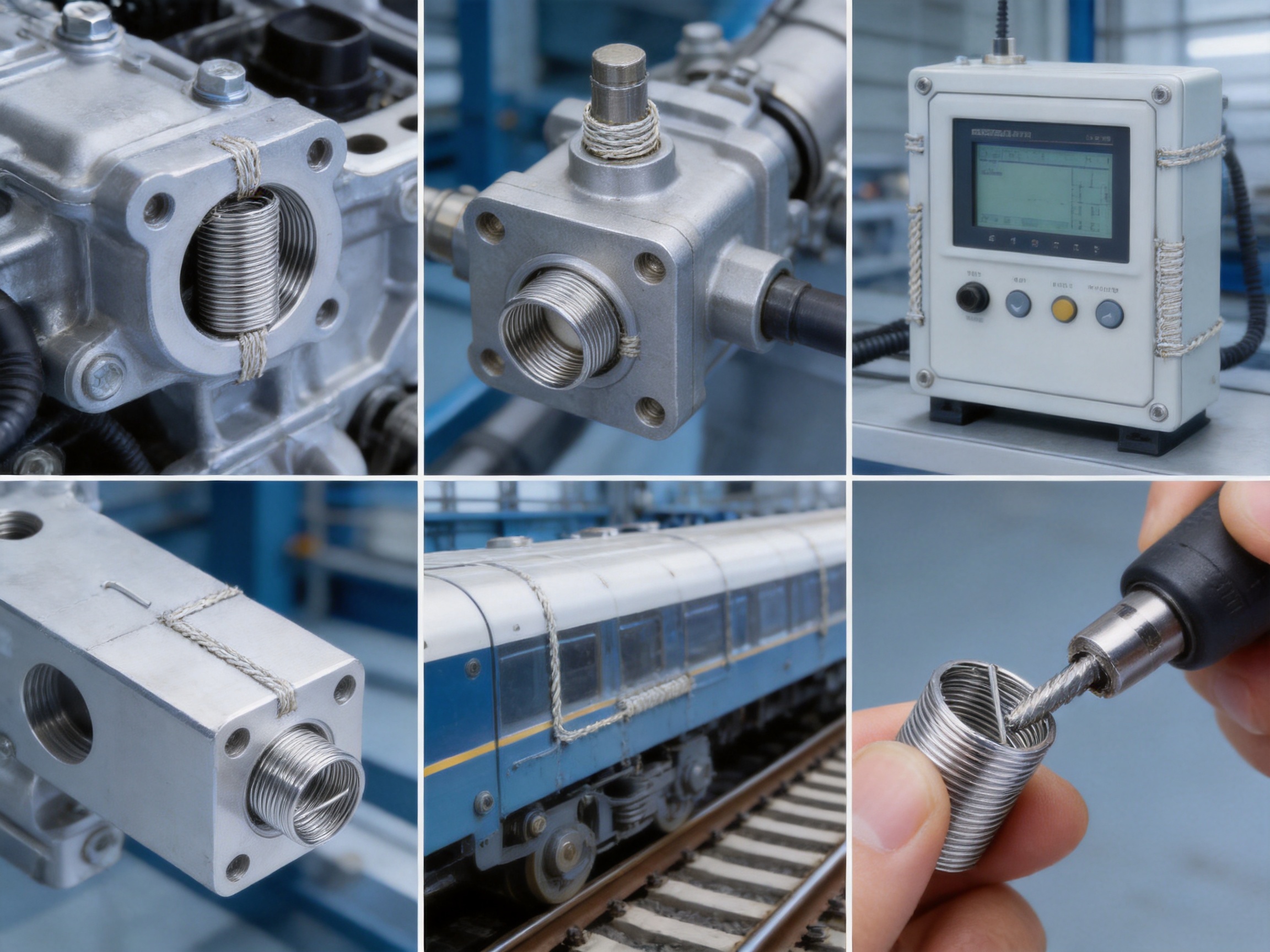
Fine pitch wire thread inserts are engineered thread-reinforcement components designed to create durable, accurate, and wear-resistant internal threads in materials that are otherwise unsuitable for repeated fastening. Their most important characteristic is a smaller thread pitch than that of a comparable coarse-pitch insert. This compact thread geometry creates more engagement teeth within the same nominal diameter, distributing load across a greater number of contact points and improving connection stability.
For manufacturers working with aluminum alloys, magnesium alloys, plastics, composite materials, and other relatively soft substrates, a fine pitch wire thread insert can provide a practical solution to thread stripping, accelerated wear, corrosion damage, and repeated assembly failure. It can also repair a damaged threaded hole without replacing the complete parent component. These capabilities make fine pitch inserts valuable in precision instruments, hydraulic and pneumatic equipment, automotive assemblies, aerospace structures, rail vehicles, and other products in which thread reliability is directly related to safety and operating performance.
Dongtai Jinzhize Metal Products Co., Ltd. specializes in threaded connection and fastening products, including helical wire inserts, self-tapping inserts, key-locking inserts, threaded adapters, oil plugs, installation taps, and related tools. Its manufacturing experience, automated production systems, extensive machine-tool resources, and quality management procedures support the production of consistent wire thread inserts for demanding industrial applications.
What Is a Fine Pitch Wire Thread Insert?
A fine pitch wire thread insert is a helically wound metal sleeve made from precision-formed diamond-shaped stainless steel wire. The insert is installed into a tapped receiving hole and provides a new internal thread for a screw or bolt. At the same time, the external shape of the insert engages with the internal thread cut into the parent material.
The insert therefore creates a reinforced interface between the fastener and the base material. The bolt loads the internal thread of the insert, while the insert transfers that load into the surrounding parent material through its external coils. Because the insert is made from high-strength stainless steel and has an accurately formed internal thread, it can significantly improve the service life of a connection compared with a directly tapped hole in a soft or easily damaged material.
Fine pitch designs use a reduced distance between adjacent thread crests. Within a given nominal diameter and engagement length, the connection contains more thread turns than an equivalent coarse-pitch design. This increases the number of engaged surfaces and helps distribute tensile, shear, and torsional forces more evenly.
The term “fine pitch” does not mean that the insert is fragile or intended only for small fasteners. It refers primarily to the thread spacing. Fine pitch inserts can be manufactured in a range of metric and unified thread sizes, with different nominal lengths such as 1d, 1.5d, 2d, and 2.5d. In this designation, “d” generally refers to the nominal diameter of the screw or insert.
Why Fine Pitch Geometry Matters
Thread geometry determines how a fastening system carries load. In a conventional tapped hole, the first engaged threads often carry a significant proportion of the load. If the parent material is soft, thin, porous, or prone to deformation, these threads may wear or deform under repeated tightening. A precision wire insert changes the load path by introducing a hard, resilient, and accurately shaped internal thread.
Fine pitch geometry adds another level of control. Since the pitch is smaller, more thread turns can participate over the same length. The resulting engagement can reduce local stress concentration, improve load sharing, and support more consistent clamping performance. This is especially useful where the available thread depth is limited but reliable fastening is still required.
A fine pitch connection can also offer improved resistance to loosening caused by vibration. No threaded insert can eliminate the need for correct bolt selection, tightening torque, joint design, or locking measures. However, the increased number of engagement teeth can help stabilize the threaded interface when the assembly is exposed to repeated mechanical vibration.
The smaller thread spacing may also improve sealing behavior in applications where a fine thread is selected for its greater contact area and shallower lead. Hydraulic valves, pneumatic cylinders, manifolds, pressure housings, and fluid-control components can benefit from a carefully designed fine-thread connection. Sealing performance still depends on the complete joint design, including the fastener, sealing element, surface finish, installation depth, and tightening method.
Core Construction and Materials
Precision-Wound Stainless Steel Wire
The insert is formed from stainless steel wire with a diamond-shaped cross-section. This shape is important because it allows the wire to create a functional external thread and an accurate internal thread at the same time. The wire is wound into a helical coil with controlled diameter, pitch, and length.
Precision winding helps maintain dimensional consistency from one insert to the next. Consistent dimensions are essential for installation quality because the insert must enter the prepared hole smoothly, expand or settle correctly, and produce the intended internal thread after installation. Variations in coil diameter or pitch can affect insertion force, final thread fit, and the alignment of the installed fastener.
Stainless Steel Performance
Stainless steel provides a combination of strength, wear resistance, and corrosion resistance that is well suited to thread reinforcement. It can protect the internal fastening interface from many of the problems associated with direct threading in aluminum, plastic, or other less durable materials.
In humid environments, stainless steel can help extend the useful life of the threaded connection. It is also appropriate for many industrial environments involving oils, cleaning agents, process fluids, or moderate chemical exposure. Material compatibility must always be reviewed for the specific operating environment, particularly when the assembly is exposed to high temperatures, aggressive chemicals, salt spray, or galvanic couples.
Elastic Recovery and Thread Stability
A helical wire insert has a degree of elastic flexibility that helps it conform to the prepared internal thread. This characteristic supports secure seating and allows the insert to maintain contact with the parent material during service. The combination of elastic recovery and stainless-steel strength contributes to stable fastener engagement.
Unlike a rigid, thick-walled bushing, a wire insert does not require as much parent-material removal for many applications. This can be advantageous when the original component has limited wall thickness or when weight reduction is important. The correct hole diameter, tapping specification, installation depth, and insert length remain essential to achieving the expected result.
Advantages Compared with Conventional Thread Repairs
More Reliable Than Direct Tapping in Soft Materials
Directly tapping aluminum, magnesium, plastic, or similar materials can produce threads that are adequate for light-duty use but vulnerable to stripping under high tightening torque or repeated assembly. A stainless-steel wire insert provides a stronger internal thread and reduces the dependence on the mechanical strength of the parent material alone.
This advantage is particularly important for components that must be assembled and disassembled during maintenance. A direct thread may deteriorate after repeated service operations, while a properly installed insert can preserve the functional thread for a substantially longer period.
Efficient Repair of Damaged Holes
A damaged threaded hole does not always require the replacement of the entire part. A fine pitch wire insert can restore the internal thread after the hole has been cleaned, enlarged, and retapped to the appropriate insert specification. This can reduce repair time, lower maintenance costs, and prevent the scrapping of expensive components.
Thread repair is especially valuable for castings, machined housings, engine components, hydraulic blocks, and aerospace parts in which replacement may involve long procurement cycles or extensive disassembly. The repair process should be performed according to a controlled procedure so that the new hole remains coaxial with the original feature.
Greater Load Distribution than a Comparable Coarse Pitch Insert
Compared with a coarse-pitch insert of the same nominal diameter and similar installed length, a fine pitch insert offers more engagement teeth. The additional engagement can spread load across a greater number of thread surfaces and reduce the load carried by any individual tooth.
This characteristic can be beneficial in thin-wall components, precision assemblies, and locations where the design must balance thread strength with limited available depth. It can also provide smoother torque transmission and more controlled adjustment in applications requiring fine fastener positioning.
Improved Resistance to Vibration-Induced Loosening
Vibration can cause relative movement between the bolt and the threaded component. Over time, this movement may reduce preload and lead to loosening. Fine pitch geometry can increase the number of contact points and reduce the amount of axial movement associated with a given rotational displacement.
For high-vibration applications, the insert should be combined with an appropriate joint design. Depending on the application, this may include a prevailing-torque fastener, thread-locking compound, mechanical locking feature, controlled torque procedure, or specified preload. The insert improves the thread interface, but it does not replace the need for complete vibration-control engineering.
Better Sealing Potential
Fine threads can provide a larger effective contact area and a smaller helix angle than coarse threads. In a properly designed fluid connection, this geometry may contribute to improved sealing and reduced leakage risk. The result depends on the entire assembly rather than the insert alone.
For hydraulic and pneumatic equipment, engineers should confirm thread standards, pressure ratings, surface conditions, seal compatibility, and installation tolerances. A fine pitch insert is most effective when incorporated into a connection that has been designed and tested as a complete system.
Advantages over Generic or Poorly Controlled Inserts
Not all wire thread inserts provide the same performance. Dimensional control, wire-form accuracy, surface condition, material quality, and manufacturing consistency can strongly affect installation and service life. A properly engineered fine pitch insert should maintain a controlled pitch, predictable external diameter, accurate internal thread, and suitable free-state dimensions.
Jinzhize focuses on manufacturing threaded connection products in a dedicated facility rather than treating inserts as an incidental product line. This specialization supports better process familiarity, product development, inspection planning, and customer-service coordination. The company’s product range includes both inserts and the complementary tools required to prepare and install them.
Compared with low-cost products manufactured with inconsistent wire dimensions or inadequate process control, a precision-produced insert can offer more predictable insertion behavior and final thread quality. Consistency is particularly important for automated assembly, production-line repair, and safety-critical components, where variation can create installation delays or hidden quality risks.
The company’s manufacturing operation was established in 2015 and is located in Dongtai City, China. It operates an owned manufacturing plant of approximately 10,000 square meters, equipped with hundreds of machine tools and automated production systems. These resources support stable production capacity across different insert sizes, lengths, thread standards, and related fastening products.
In 2024, the company achieved an annual output value of approximately 153 million RMB. This figure reflects an established production base and the ability to support larger-volume supply requirements. Production scale alone does not determine product quality, but it can provide the equipment, personnel, process organization, and supply stability needed for consistent industrial delivery.
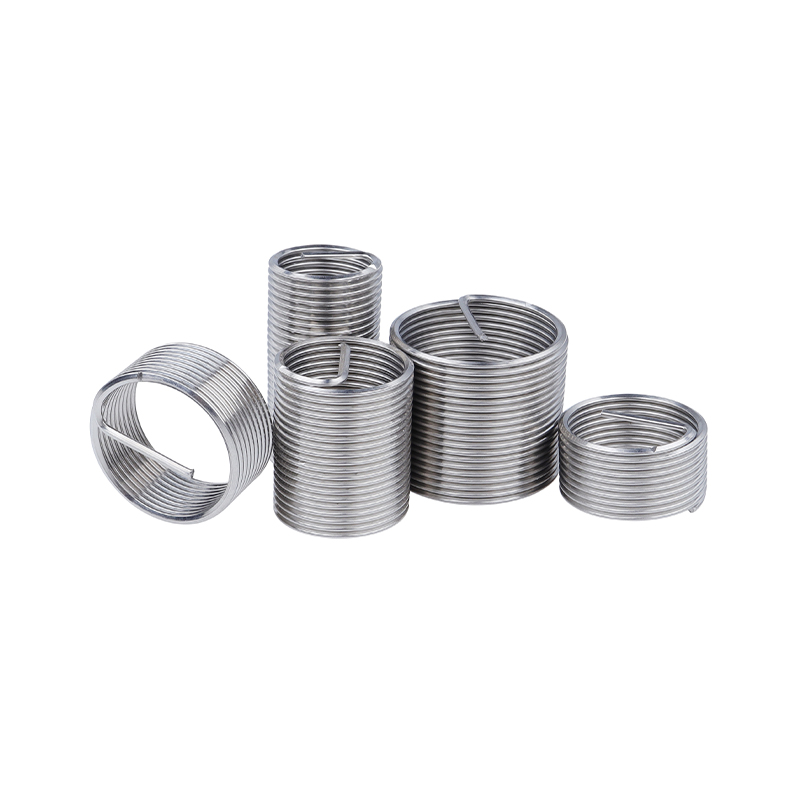
Fine Pitch Wire Thread Insert
Manufacturing Process of Fine Pitch Wire Thread Inserts
Material Selection and Incoming Inspection
Manufacturing begins with the selection of suitable stainless-steel wire. The raw material must meet requirements for chemical composition, mechanical properties, surface condition, diameter, and forming behavior. Wire intended for precision winding must be sufficiently consistent to avoid variation in coil geometry.
Incoming inspection may include dimensional checks, visual inspection, material documentation review, and verification of surface quality. Surface defects can interfere with winding, create stress concentrations, or reduce corrosion resistance. Careful material control is therefore the first stage in producing a dependable insert.
Diamond-Profile Wire Formation
The wire is formed into a diamond-shaped profile suitable for creating the internal and external thread surfaces. This forming operation requires controlled tooling and stable machine settings. The profile must remain consistent along the length of the wire because even small changes may influence the completed insert’s diameter, engagement, and fastener fit.
Precision forming also helps produce a clean and well-defined internal thread. The internal thread is the functional interface for the screw or bolt, so its profile must be compatible with the specified metric, unified, or other thread standard.
Helical Winding
The formed wire is wound into a helical insert with a controlled pitch and free-state diameter. Fine pitch production requires particular attention to winding accuracy because the smaller thread spacing leaves less room for dimensional error. The winding machine must maintain stable tension, alignment, and rotational control throughout the process.
The winding operation also establishes the insert’s nominal length. Common length designations include 1d, 1.5d, 2d, and 2.5d. Longer inserts generally provide more engagement with the parent material, although the correct length must be selected according to available wall thickness, hole depth, expected load, and design requirements.
End Formation and Tang Configuration
Many wire thread inserts are supplied with a driving tang that assists installation. The tang engages with the installation tool and transfers rotational force to the insert. Depending on the installation method and product configuration, the tang may be removed after installation or retained when the application permits.
End formation must be controlled so that the insert enters the prepared hole without damaging the receiving thread. The end shape, coil alignment, and tang position all influence the ease of installation. For production users, a consistent tang configuration can also reduce tool adjustments and operator variation.
Deburring, Cleaning, and Surface Control
After forming and winding, inserts may undergo deburring and cleaning processes to remove unwanted particles or sharp irregularities. Cleanliness is important in hydraulic, pneumatic, medical, aerospace, and precision-machinery applications because loose debris can interfere with moving parts, seals, valves, or sensors.
Surface treatment and passivation requirements depend on the selected stainless steel and the intended environment. The final surface should be compatible with the parent material, installation lubricant, fastener, and service conditions. The manufacturing process should avoid contamination that could reduce corrosion resistance or create an undesirable galvanic reaction.
Dimensional and Functional Inspection
Inspection may cover nominal diameter, pitch, free-state outer diameter, installed length, internal thread accuracy, wire profile, and overall appearance. Functional checks can confirm that the insert accepts the designated fastener and can be installed using the specified tap and installation tool.
For higher-reliability applications, inspection documentation and traceability are important. Lot identification allows manufacturers and customers to connect finished products with raw materials, equipment settings, inspection results, and shipment records. This supports root-cause analysis and helps reduce procurement and usage risks.
Packaging and Shipment Preparation
Fine pitch inserts are small precision components and should be packaged to prevent deformation, contamination, and mixing of different sizes. Clear labeling should identify thread standard, nominal diameter, pitch, length, material, quantity, and batch information.
Correct packaging is particularly important when metric and unified thread products are supplied together. Similar-looking inserts can have different pitches or dimensional requirements. Organized packaging reduces the possibility of selecting the wrong insert during assembly or maintenance.
Available Metric and Unified Thread Sizes
Fine pitch wire thread inserts can be produced for metric and unified thread systems. The supplied dimensional information includes metric nominal diameters from approximately 2 mm to 24 mm, together with unified sizes such as 2-56, 4-40, 6-32, 8-32, 10-32, 1/4-20, 5/16-18, 3/8-16, 7/16-14, 1/2-13, 5/8-11, 3/4-10, and 7/8-9.
The product range includes different insert lengths, commonly expressed as a multiple of nominal diameter. A 1d insert has a nominal length approximately equal to one diameter, while 1.5d, 2d, and 2.5d versions provide progressively greater thread engagement. Actual installed dimensions can vary according to the standard, installation method, and design allowance.
| Thread system | Nominal size examples | Pitch or thread designation examples | Typical insert lengths | Typical application focus |
| Metric | 2 mm, 2.5 mm, 3 mm, 4 mm, 5 mm, 6 mm | 0.4 mm to 1.0 mm, depending on diameter | 1d, 1.5d, 2d, 2.5d | Precision equipment, automotive parts, aluminum housings |
| Metric | 8 mm, 10 mm, 12 mm, 14 mm, 16 mm | Approximately 1.25 mm to 2.0 mm, depending on diameter | 1d, 1.5d, 2d, 2.5d | Hydraulic components, transmission parts, structural assemblies |
| Metric | 20 mm and 24 mm | Approximately 2.5 mm to 3.0 mm | 1d, 1.5d, 2d, 2.5d | Large housings, machinery, heavy-duty threaded joints |
| Unified | 2-56, 4-40, 6-32, 8-32, 10-32 | Unified thread designations | 1d, 1.5d, 2d, 2.5d | Instruments, electronics, compact mechanical assemblies |
| Unified | 1/4-20, 5/16-18, 3/8-16, 7/16-14 | Unified coarse examples included in the supplied range | 1d, 1.5d, 2d, 2.5d | Automotive, machinery, hydraulic equipment |
| Unified | 1/2-13, 5/8-11, 3/4-10, 7/8-9 | Unified thread designations | 1d, 1.5d, 2d, 2.5d | Large industrial and structural connections |
The table is intended as a product-range overview rather than a substitute for a controlled engineering drawing. The supplied dimensional data contains metric and unified size information, including pitch, length, free-state dimensions, outer diameter, and recommended drill diameter. Customers should confirm the exact standard, tolerance class, receiving-hole specification, and installation depth before placing a production order.
Installation Considerations
Assessing the Damaged or New Hole
Before installing a fine pitch insert, the existing hole must be examined for damage, distortion, contamination, and inadequate wall thickness. A damaged hole is normally enlarged to the specified repair diameter and retapped with the correct STI or insert tap. For a new component, the hole should be drilled and tapped according to the insert manufacturer’s requirements.
The hole must remain coaxial with the original fastener axis. Misalignment can create uneven loading, difficult installation, poor bolt engagement, and premature wear. In precision assemblies, the preparation operation should be performed with suitable guides, fixtures, or machining equipment.
Selecting the Correct Drill Diameter
Drill diameter is not selected solely by the nominal bolt diameter. It depends on the insert’s external thread geometry and the required receiving thread. The correct drill diameter provides sufficient material for the insert tap while preserving adequate wall thickness around the completed hole.
Using an oversized drill may weaken the surrounding component and reduce external thread engagement. Using an undersized drill can create excessive tapping torque, distort the receiving thread, or prevent the insert from seating correctly. The recommended drill diameter should therefore be taken from the applicable product specification or approved engineering drawing.
Using the Correct Insert Tap
The insert tap creates the external thread into which the wire insert is installed. It is not necessarily the same as the tap used to create the final bolt thread. The tap must correspond to the insert’s nominal size and thread standard.
Tap condition is important. A worn, damaged, or contaminated tap can produce an inaccurate receiving thread. In production environments, tapping tools should be monitored and replaced according to a defined tool-life program. Cutting fluid, tapping speed, chip evacuation, and hole depth should be selected for the parent material.
Controlling Installation Depth
The insert should be installed below the component surface by the amount specified for the application. Excessive protrusion can interfere with the mating component, while excessive depth can reduce the available thread engagement or cause the insert to enter an internal passage.
Installation depth should be controlled using an adjustable installation tool, a depth stop, or a documented operator procedure. The effective thread length must be sufficient for the bolt to engage the insert without bottoming out. Blind holes require particular attention to the difference between drilling depth, tapping depth, insert length, and bolt penetration.
Removing the Driving Tang
Where the insert uses a driving tang, the tang is generally removed after installation when the application requires unobstructed bolt passage. Tang removal should be carried out with the appropriate tool and in a way that prevents damage to the installed coil or surrounding thread.
For blind holes, the installer should confirm whether tang removal is required and whether the removed tang could remain in a confined cavity. In fluid systems, any loose metal fragment must be prevented from entering valves, pumps, cylinders, or precision passages.
Checking the Finished Thread
After installation, the internal thread should be checked with the specified gauge, bolt, or inspection method. The fastener should turn smoothly without abnormal resistance, cross-threading, or evidence of coil displacement. The insert should remain below the surface and should not rotate with the fastener during normal assembly.
For safety-critical or high-volume production, inspection criteria should include thread position, installation depth, pull-out resistance where applicable, and visual confirmation of the hole condition. Documented inspection helps identify tool wear or process drift before defective assemblies reach the customer.
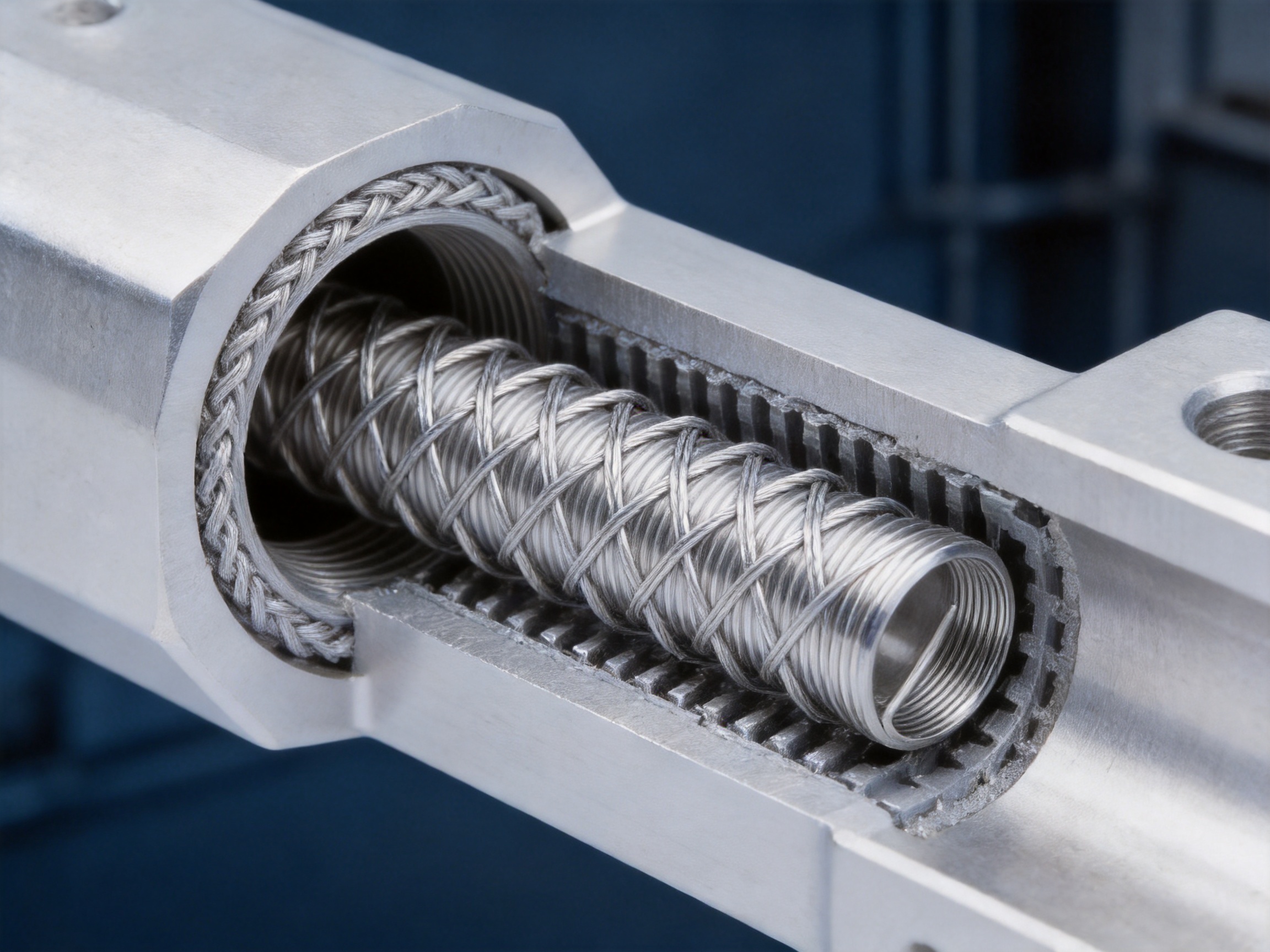
Application in Precision Instruments
Medical devices, measuring instruments, laboratory equipment, optical systems, and other precision products often require compact threaded joints with stable alignment. Fine pitch wire inserts can reinforce threads in lightweight housings while preserving the dimensional accuracy of the assembly.
Instruments may be assembled and serviced multiple times, making resistance to thread wear particularly important. A stainless-steel insert can provide a durable internal thread for covers, adjustment mechanisms, mounting brackets, and critical subassemblies. Fine pitch geometry can also support accurate fastening in locations where small rotational adjustments are required.
Because precision instruments may include delicate components, installation cleanliness and dimensional control are essential. The insert, tap, and installation tool should be free from burrs and contamination. Where the instrument is exposed to sterilization chemicals, humidity, or laboratory fluids, the stainless-steel grade and surface condition should be reviewed for compatibility.
Application in Hydraulic and Pneumatic Systems
Hydraulic valves, cylinders, manifolds, actuator bodies, and pneumatic control components frequently use aluminum or other lightweight materials. These materials reduce overall weight but may not provide sufficient thread durability for repeated fastening, high clamping loads, or service exposure.
A fine pitch insert can provide a stronger internal thread while supporting a compact connection. The fine thread form may also help create a stable interface in leak-sensitive assemblies. However, sealing should not rely on an insert without appropriate system-level design. Engineers must evaluate the sealing method, pressure range, temperature, fluid compatibility, thread tolerances, and surface finish.
During repair, all chips and fragments must be removed from the hydraulic or pneumatic component. Cleaning may require flushing, filtration, compressed air, or specialized procedures. The completed repair should be pressure-tested according to the equipment manufacturer’s requirements.
Application in Aerospace Components
Aerospace components often combine lightweight materials with demanding requirements for fatigue resistance, reliability, traceability, and maintainability. Aluminum-based structures and housings can benefit from stainless-steel wire inserts when a durable internal thread is needed without adding a large heavy bushing.
Fine pitch inserts can be used in mounting points, access panels, equipment brackets, actuator components, and other assemblies where thread quality must remain stable under vibration and repeated maintenance. The insert length should be selected according to the load path, material thickness, edge distance, and structural design.
Aerospace applications require strict compliance with approved specifications and customer documentation. Material certificates, process records, lot traceability, inspection reports, and installation procedures may all be required. The product should be qualified for the specific application rather than selected solely on the basis of nominal size.
Application in Automotive Manufacturing
Automotive engines, transmissions, gearboxes, chassis systems, and vehicle electronics commonly use cast aluminum and other lightweight materials. These components may be exposed to vibration, thermal cycling, oil, coolant, road moisture, and repeated service operations.
Fine pitch wire inserts can reinforce fastening points in engine and transmission housings, covers, brackets, valve bodies, sensor mounts, and other components. Their resistance to wear helps maintain thread integrity during assembly-line production and later maintenance.
For high-volume automotive manufacturing, process repeatability is a major advantage. Insert dimensions, installation torque, tool condition, and depth control should be standardized. Automated or semi-automated equipment can improve consistency and reduce the effect of operator technique. A supplier with a broad product range can also help simplify sourcing across multiple vehicle platforms and thread standards.
Application in Rail Vehicles and Industrial Machinery
Rail vehicles and industrial machines often require durable connections in structures that experience vibration and repeated operating cycles. Wire inserts can reinforce access covers, equipment housings, motor mounts, brackets, and serviceable assemblies.
In industrial machinery, the ability to repair a damaged hole can reduce downtime. A maintenance team may restore a threaded feature without removing and replacing a large casting or machined housing. This is valuable when the equipment is installed in a difficult location or when replacement parts have extended lead times.
For large-diameter fasteners, longer 1.5d, 2d, or 2.5d inserts can provide the additional engagement required by the design. The correct choice depends on material strength, bolt grade, load direction, available depth, and the expected number of service cycles.
Choosing the Correct Insert Length
Insert length is normally selected according to the nominal screw diameter and the required thread engagement. A 1d insert may be sufficient for moderate loads or compact assemblies. A 1.5d or 2d insert may be preferred when the parent material is relatively soft, the joint carries higher loads, or repeated assembly is expected.
A 2.5d insert may be selected for demanding applications with sufficient hole depth. However, longer is not automatically better. Excessive length may complicate installation, interfere with internal features, or exceed the available material thickness.
Engineers should consider the following factors when selecting length:
Parent-material strength and hardness.
Fastener diameter, grade, and preload.
Tension, shear, torsion, and fatigue loads.
Available thread depth and component wall thickness.
Distance from the hole to edges, corners, and internal passages.
Expected assembly and disassembly frequency.
Operating temperature, corrosion exposure, and vibration level.
Applicable customer, industry, or regulatory requirements.
Fine Pitch versus Coarse Pitch Inserts
Coarse pitch inserts have a larger distance between adjacent thread turns. They can be easier to tap and may be suitable for general-purpose fastening, thick materials, and applications where rapid engagement is preferred. Fine pitch inserts, by comparison, provide more engagement turns within the same length and can offer more controlled adjustment and load distribution.
Fine pitch inserts are often selected when the connection requires higher resistance to vibration, improved adjustment precision, or greater contact area. They may also be useful when the design uses a fine-thread bolt and the repaired or reinforced hole must preserve the original thread specification.
The selection should be based on the original fastener and the engineering requirements. A fine pitch insert should not be substituted for a coarse pitch insert merely because it is perceived as stronger. The bolt, nut, insert, tap, gauge, and installation process must all use compatible thread specifications.
| Selection factor | Fine pitch wire insert | Coarse pitch wire insert |
| Thread spacing | Smaller pitch with more engagement teeth in a given length | Larger pitch with fewer engagement teeth in a given length |
| Load distribution | Can distribute load across more thread turns | Suitable for general load distribution and robust general-purpose use |
| Vibration behavior | Often preferred for high-frequency vibration and fine adjustment | Suitable where vibration demands are moderate or coarse threads are specified |
| Sealing potential | Greater contact area may support sealing-focused designs | Depends on the complete joint design and sealing method |
| Adjustment control | Smaller axial movement per revolution | Faster axial movement per revolution |
| Typical use | Precision equipment, hydraulic systems, aerospace, automotive service points | General machinery, structural joints, and applications specified for coarse threads |
| Key requirement | Accurate tapping, gauge control, and careful installation | Correct hole preparation and compatible installation tooling |
Quality Management and Supply Capability
A reliable fine pitch insert supplier must provide more than a nominally correct product. Industrial users need stable dimensions, repeatable supply, responsive technical support, and clear communication about thread standards and installation requirements.
Jinzhize operates with a quality management system and an after-sales service mechanism intended to support product consistency and customer requirements. Its experienced design, development, and production team can help coordinate product selection across wire inserts, self-tapping inserts, key-locking inserts, threaded adapters, oil plugs, taps, and installation tools.
This integrated product capability can simplify procurement. Customers can obtain the insert and the associated tools from a supplier familiar with the complete installation process. It also creates an opportunity to review the entire threaded connection rather than treating the insert as an isolated component.
The company’s owned manufacturing facility and automated production systems support stable output for standard and customized requirements. Hundreds of machine tools provide flexibility for different product sizes and production stages. For overseas customers, supply stability is particularly important because inconsistent availability can interrupt assembly schedules and increase qualification costs.
Traceability is another important strength for critical applications. Consistent identification of raw materials, production batches, inspection results, and shipments can help customers manage quality records. It also assists in investigating any installation or performance issue that may arise during service.
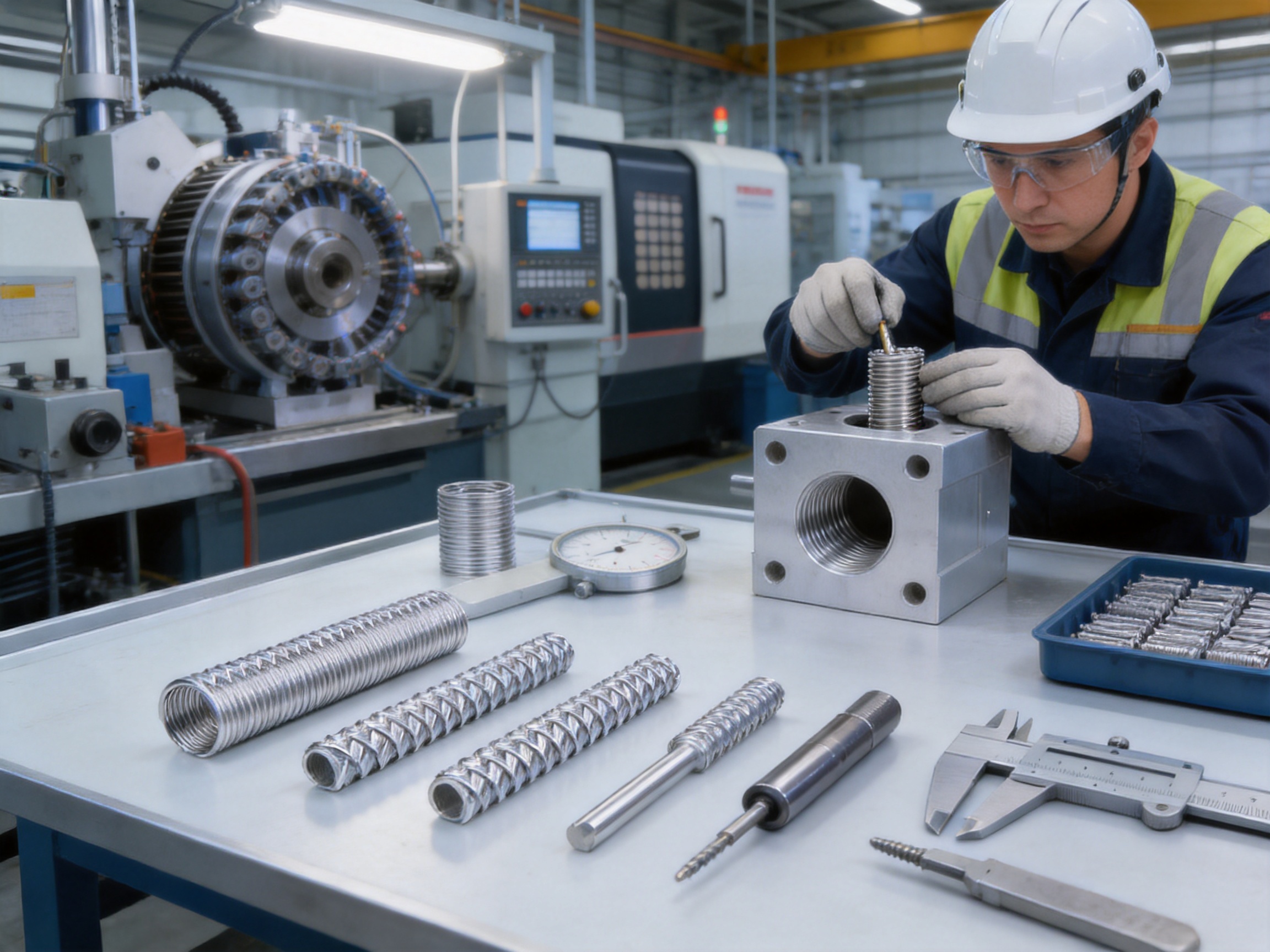
Customization and Engineering Support
Although standard metric and unified sizes cover many applications, some customers require special dimensions, lengths, materials, coatings, packaging, or inspection documentation. Customization may be appropriate for unusual thread standards, restricted installation depths, special corrosion environments, or production programs with dedicated assembly procedures.
Before requesting a custom insert, the customer should prepare detailed technical information. Useful data includes the internal fastener thread, nominal diameter, pitch, thread class, parent-material grade, hole depth, component thickness, expected load, temperature range, corrosion exposure, and annual quantity.
Drawings or samples can help clarify the required geometry. If the insert is used to repair an existing component, photographs and dimensional measurements of the damaged feature may also be helpful. The supplier can then review whether a standard insert is suitable or whether a customized solution is required.
Packaging customization may include individual compartments, barcode labels, lot identification, multilingual instructions, or production-line kits. These options can reduce the risk of mixing thread sizes and improve material handling in automated or semi-automated assembly environments.
Common Causes of Installation Failure
Incorrect Thread Standard
Metric and unified threads can appear similar but are not interchangeable. Even within the same nominal diameter, different pitches can produce an incompatible connection. The insert, insert tap, gauge, and fastener must match.
Improper Receiving-Hole Size
A hole that is too large may provide insufficient external thread engagement. A hole that is too small can damage the insert or cause excessive installation force. The recommended drill diameter and tapping specification should always be followed.
Insufficient Hole Depth
If the blind hole is not deep enough, the insert may bottom out before reaching the required position. The fastener may also bottom against the hole rather than clamp the joint. Drilling and tapping depths should include the necessary allowance for the selected insert length.
Misalignment
An insert installed at an angle can cause bolt cross-threading, uneven contact, and premature failure. Alignment should be controlled with a guide, perpendicular fixture, or suitable machine tool when the application requires high accuracy.
Excessive Installation Force
Excessive force may distort the coil, damage the receiving thread, or create an installation defect. Appropriate lubrication, a correctly maintained installation tool, and the recommended insertion procedure help prevent this problem.
Failure to Inspect the Finished Thread
A visually acceptable insert may still be installed at the wrong depth or may have an internal thread problem. A final inspection with a suitable gauge or fastener provides a simple way to identify defects before assembly continues.
Maintenance and Repair Benefits
Fine pitch wire inserts are especially valuable in maintenance because they restore function without requiring a complete component replacement. A damaged hole can result from over-tightening, cross-threading, corrosion, fatigue, or repeated service operations. Repairing the hole with an insert can return the component to service quickly.
The repair process can also preserve the original fastener size. This avoids redesigning the mating component or replacing a bolt with a larger nonstandard fastener. Preserving the original thread is useful when parts must remain interchangeable across a vehicle, machine, or equipment family.
Maintenance departments should establish approved repair procedures covering damage assessment, hole preparation, cleaning, tapping, insert installation, tang removal, gauging, and final functional testing. Personnel should use the correct tools and follow the product specification rather than relying on improvised methods.
How to Specify a Fine Pitch Wire Thread Insert
A complete product specification should identify the thread system and all critical dimensions. A typical description may include the nominal diameter, pitch or unified thread designation, insert length, material, surface condition, tang configuration, and quantity.
For example, a metric specification could identify a nominal diameter of 6 mm, a 1.0 mm pitch, and a 2d insert length. A unified specification could identify a 1/4-20 internal thread and a selected length of 1d, 1.5d, 2d, or 2.5d. The exact receiving-hole tap and drill requirements should be included in the associated technical documentation.
For a production project, the specification should also state tolerances, inspection requirements, packaging method, lot traceability, and applicable quality standards. This reduces ambiguity and helps the supplier manufacture and inspect the product consistently.
Why Work with a Specialized Manufacturer?
A specialized manufacturer understands that threaded connections involve a complete system of components and processes. The insert must work with the parent material, receiving thread, installation tool, final fastener, and service environment. Experience across these areas improves the supplier’s ability to identify practical solutions.
Jinzhize’s product portfolio covers several related product categories, including self-tapping thread inserts, internal-external thread conversion nuts, wire thread inserts, three-hole threaded inserts, oil plugs, installation tools, thread taps, and key-locking inserts. This range allows customers to compare different reinforcement and connection methods within one supply relationship.
The company’s focus on automotive and aerospace sectors also provides experience with applications that emphasize dimensional consistency, vibration resistance, reliability, and traceability. Its products are used in engines, transmissions, passenger vehicles, commercial vehicles, aerospace equipment, and rail vehicle manufacturing.
For customers purchasing internationally, a stable factory base can reduce sourcing risk. An owned plant, established production team, automated systems, and broad machining capability support the supply of both standard products and project-specific requirements. The company’s mission is to provide stable and reliable threaded connection and fastening products for critical assemblies while helping customers improve assembly consistency.
Frequently Asked Questions
What is the main benefit of a fine pitch wire thread insert?
The main benefit is the creation of a durable, accurate internal thread with more engagement teeth than a comparable coarse-pitch insert of the same nominal diameter and length. This can improve load distribution, vibration resistance, adjustment control, and service life in soft or damaged parent materials.
Can a fine pitch insert repair a stripped aluminum thread?
Yes. A properly selected insert can repair a stripped or worn aluminum thread after the hole is prepared with the correct drill and insert tap. The repair must preserve adequate wall thickness and must be installed at the specified depth.
Are fine pitch inserts suitable for plastic components?
They can be suitable for selected plastic components, particularly where the plastic thread would otherwise wear or strip. The plastic type, operating temperature, load, wall thickness, and installation method should be reviewed before selection.
Are metric and unified inserts interchangeable?
No. Metric and unified thread systems use different dimensional conventions and must not be mixed. The insert, tap, gauge, and fastener must all belong to the same compatible thread system.
What insert lengths are available?
Common lengths include 1d, 1.5d, 2d, and 2.5d, where “d” represents the nominal screw diameter. Other lengths may be available for special applications, subject to production and engineering review.
Does a fine pitch insert eliminate the need for a locking device?
No. Fine pitch geometry can improve resistance to vibration-related loosening, but the complete joint may still require a locking nut, prevailing-torque fastener, adhesive, safety wire, mechanical lock, or another approved method. The correct solution depends on the load and operating environment.
How is the correct drill diameter selected?
The drill diameter is selected from the insert manufacturer’s technical data for the specific nominal size and thread standard. It is based on the external thread geometry of the insert, not simply on the bolt diameter.
What tools are required for installation?
Typical installation requires a suitable drill, an insert tap, a countersink or deburring tool when specified, an installation mandrel or driver, and a tang-break tool when tang removal is required. Gauges or a matching fastener may be used for final inspection.
Can the inserts be used in hydraulic applications?
They can be used in hydraulic and pneumatic components when the thread, material, pressure, temperature, and sealing design are compatible. The completed assembly should be cleaned thoroughly and tested according to the system’s pressure and leakage requirements.
What information should be provided for a quotation?
Customers should provide the thread standard, nominal diameter, pitch or unified designation, insert length, quantity, material requirements, application, parent material, packaging requirements, and any inspection or traceability documentation required.
Why is stainless steel used for the insert?
Stainless steel offers good strength, wear resistance, and corrosion resistance. It creates a more durable internal thread than many soft parent materials and is suitable for numerous humid, industrial, automotive, and precision applications.
Can Jinzhize supply installation tools with the inserts?
Yes. The company produces related installation tools and thread taps in addition to wire thread inserts. Supplying compatible tooling can help customers establish a more consistent installation process.
Conclusion
Fine pitch wire thread inserts provide a practical and technically effective method for reinforcing or repairing internal threads. Their smaller pitch creates more engagement teeth within the same nominal diameter, helping distribute loads more evenly and improving resistance to vibration and wear. Precision-wound diamond-shaped stainless-steel wire provides the strength, dimensional accuracy, and corrosion resistance required for demanding threaded connections.
These inserts are suitable for lightweight aluminum components, plastics, damaged threaded holes, precision instruments, hydraulic and pneumatic equipment, aerospace assemblies, automotive engines and transmissions, rail vehicles, and industrial machinery. Their ability to preserve the original fastener size and repair valuable components can reduce downtime, maintenance expense, and replacement requirements.
The performance of an insert depends on more than the component itself. Correct thread selection, receiving-hole preparation, insert length, installation depth, tool condition, cleanliness, and final inspection are all essential. A specialized manufacturer can support this complete process by supplying compatible inserts, taps, installation tools, documentation, packaging, and technical assistance.
Dongtai Jinzhize Metal Products Co., Ltd. combines a dedicated manufacturing facility, automated production systems, extensive machine-tool resources, experienced personnel, and a broad threaded-product portfolio. Its focus on stable, traceable, and reliable fastening products makes it a suitable manufacturing partner for customers seeking fine pitch wire thread inserts and related connection solutions for global industrial markets.
References
1. General principles of helical wire thread insert design, installation, and thread repair.
2. Manufacturer technical information for metric and unified wire thread insert dimensions.
3. Industrial practice for threaded-hole reinforcement in aluminum, plastic, and other soft materials.
4. Engineering guidance on vibration resistance, preload retention, and threaded-joint design.
5. Material and corrosion-resistance principles for stainless-steel fastening components.
6. Quality-control practices for dimensional inspection, lot traceability, and production tooling management.
7. Product and company information supplied for Dongtai Jinzhize Metal Products Co., Ltd.