Français
 Español
 Deutsch

Content
- 1 1. Understanding the Slotted Internal-External Thread Conversion Nut
- 2 2. Construction and Operating Principle
- 3 3. Main Advantages of the Product
- 4 4. Comparison with Alternative Conversion Methods
- 5 5. Material and Surface Treatment Considerations
- 6 6. Manufacturing Process and Quality Control
- 7 7. Manufacturing Strengths of the Supplier
- 8 8. Application Areas
- 9 9. Selection Guide for Buyers and Engineers
- 10 10. Installation Best Practices
- 11 11. Quality Risks and How to Control Them
- 12 12. Custom Manufacturing and OEM Support
- 13 13. Why Manufacturing Consistency Matters
- 14 14. Sustainability and Lifecycle Value
- 15 15. Recommended Customer Evaluation Process
- 16 16. Frequently Asked Questions
- 16.1 What is a slotted internal-external thread conversion nut?
- 16.2 What is the main purpose of the slot?
- 16.3 Can the internal and external threads have different sizes?
- 16.4 Can the product convert between different thread standards?
- 16.5 Is the conversion nut suitable for high-load applications?
- 16.6 What materials are commonly used?
- 16.7 Does surface treatment affect thread fit?
- 16.8 Where are these products used?
- 16.9 How should the component be installed?
- 16.10 Can the component be removed for maintenance?
- 16.11 Can custom versions be manufactured?
- 16.12 What information should be included in an inquiry?
- 16.13 Why work with a specialized threaded-product manufacturer?
- 17 17. Conclusion
- 18 References
- 19 Product: Slotted Internal-external Thread Conversion Nut
Modern machinery often brings together components designed to different thread standards, thread diameters, thread directions, or installation requirements. When a conventional bolt-and-nut arrangement cannot provide a direct connection, a thread conversion component can simplify the assembly and reduce the need for redesign. A slotted internal-external thread conversion nut is designed for this purpose. It combines an external male thread and an internal female thread in one compact connector, enabling a practical transition between two threaded components.
The slotted design adds another important function. A screwdriver slot allows the component to be installed, adjusted, or removed from the exposed end without requiring a specialized external gripping surface. This makes the nut particularly useful in recessed locations, compact assemblies, maintenance-sensitive equipment, and applications where conventional wrench access is restricted. Instead of treating thread conversion as a complicated modification, engineers can use one integrated part to create a stable and serviceable connection.
Dongtai Jinzhize Metal Products Co., Ltd. manufactures slotted internal-external thread conversion nuts as part of a broader range of threaded connection and fastening products. Its product portfolio includes helical wire inserts, self-tapping thread inserts, key-locking inserts, threaded adapters, oil plugs, installation taps, and related tools. With production experience serving automotive, aerospace, rail vehicle, machinery, and other industrial applications, the company focuses on dimensional consistency, material reliability, production traceability, and dependable customer support.
This article examines the construction, operating principle, advantages, manufacturing considerations, application value, selection criteria, and quality requirements of slotted internal-external thread conversion nuts. It also explains why a carefully engineered conversion nut can offer advantages over less integrated alternatives and how an experienced manufacturer can support stable supply for demanding industrial assemblies.
1. Understanding the Slotted Internal-External Thread Conversion Nut
A slotted internal-external thread conversion nut is a precision-machined threaded connector with two functional thread systems. The external thread is used to engage with a tapped hole, a threaded housing, or another female-threaded component. The internal thread accepts a bolt, screw, stud, or other male-threaded fastener. In this way, the component converts one threaded connection into another while maintaining a compact, mechanically continuous interface.
The internal and external threads may differ in nominal diameter, pitch, thread standard, or, where specified, thread direction. This enables the part to connect components that could not be joined directly. For example, a housing with one internal thread size may be adapted to accept a smaller or differently standardized bolt. The conversion function is contained in a single insert rather than distributed across several loose parts.
The slot is normally positioned on the top face or another accessible end of the component. It is shaped to receive a flathead screwdriver or comparable slotted driving tool. During installation, the tool applies torque to the insert so that the external thread advances into the receiving hole. During removal, the same slot allows reverse rotation. This simple feature is especially useful where the outer surface of the nut is too small, recessed, or inaccessible for pliers or a conventional wrench.
Although the product is compact, its performance depends on several interacting factors. The external thread must provide sufficient engagement with the host material. The internal thread must accurately receive the mating fastener. The slot must withstand installation torque without excessive deformation. The material and surface treatment must be appropriate for the working environment. Finally, the dimensional relationship between the two threads must preserve wall strength so that the part does not crack, collapse, or strip during service.
2. Construction and Operating Principle
2.1 Dual-thread configuration
The principal feature of the product is its dual-thread configuration. The external thread functions as the mounting interface, while the internal thread forms the service connection. These two threads are manufactured as part of one component, allowing the conversion nut to operate as an integrated adapter rather than as a collection of separate pieces.
The external thread is selected according to the receiving hole or housing. Its diameter, pitch, length, and tolerance determine how securely the insert is installed. The internal thread is selected according to the fastener or component that must be connected after installation. The difference between the two thread systems creates the conversion function.
For engineering purposes, the design must also consider the material surrounding the external thread. A steel conversion nut installed in a steel housing may have different requirements from one installed in aluminum, cast material, polymer, or another relatively soft substrate. The external thread profile, engagement length, installation torque, and possible locking method should be matched to the host material and expected load.
2.2 Slotted driving feature
The slot offers a direct and economical method of torque transmission. A flathead screwdriver can engage the slot without needing access around the circumference of the part. This is useful in narrow channels, recessed bores, compact equipment, panels, covers, and assemblies where access is available only from one direction.
Compared with a hexagonal external profile, the slot may require less radial clearance. Compared with an unfeatured adapter, it provides a practical means of removal. The slot also supports maintenance operations because an operator can replace the conversion nut without dismantling a large section of the equipment, provided the surrounding design permits tool access.
The slot must be manufactured with sufficient depth and geometry to resist tool slip. Its edges should be clean, and burrs should be controlled so that the screwdriver seats properly. Excessively shallow slots can make installation difficult, while excessively deep slots can reduce the remaining material at the end of the nut. This balance is one of the important design considerations in production.
2.3 Installation sequence
Installation generally begins with confirming that the receiving hole is clean, correctly sized, and free from damage. The conversion nut is aligned with the external thread, and a flathead screwdriver is inserted into the slot. The nut is then rotated into the host component until it reaches the specified seating position or installation depth.
After the external thread has been installed, the internal thread is ready to receive the mating fastener. Depending on the application, the fastener may be installed directly or combined with a washer, sealing element, locking compound, or other retention method. The final assembly should be tightened according to the applicable engineering specification rather than by excessive force.
Removal follows the reverse process. The internal fastener is removed first, access to the slot is established, and the screwdriver is used to rotate the conversion nut out of the host component. This serviceability is valuable in equipment that requires periodic replacement, inspection, or reconfiguration.
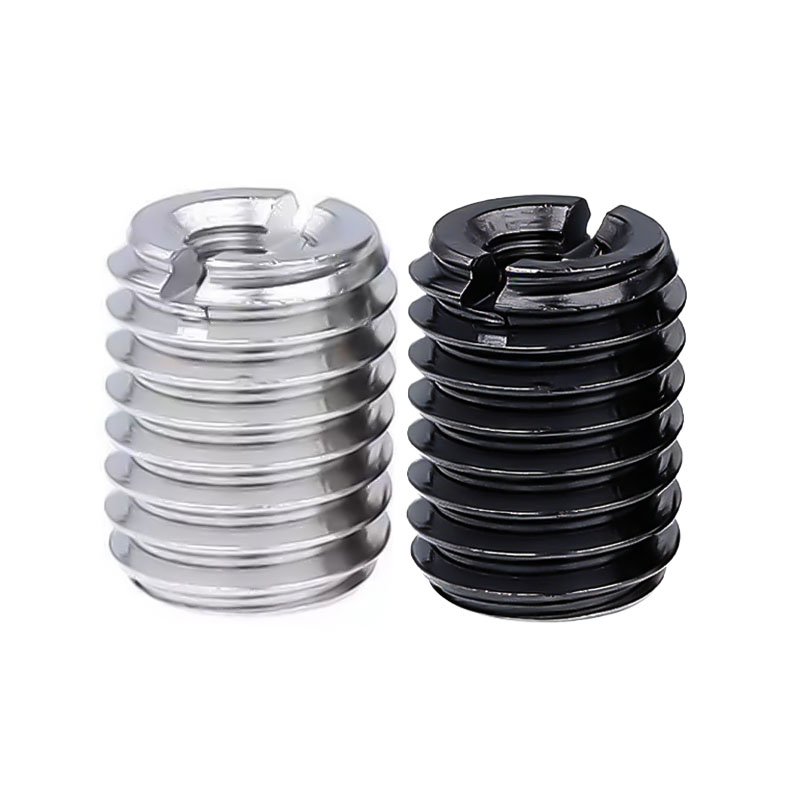
Slotted Internal-external Thread Conversion Nut
3. Main Advantages of the Product
3.1 Efficient thread conversion
The most direct advantage is the ability to convert between two thread interfaces with one compact component. Engineers do not need to redesign the entire housing or replace a large assembly simply because the available fastener has a different thread size. The adapter creates a controlled connection between existing parts.
This can shorten development cycles and reduce the number of modified components. It may also simplify spare-parts management because a standardized conversion component can help accommodate more than one fastener configuration. In repair work, the product can support the adaptation of replacement components when the original thread arrangement is no longer practical or available.
3.2 Compact installation in restricted spaces
Many competing conversion solutions require a large external hexagon, a special wrench, or a multi-piece arrangement. The slotted design can reduce the radial space needed around the component. Installation is performed axially through the slot, making it appropriate for recessed holes and narrow assemblies.
Compactness is particularly important in automotive engines, transmissions, instrument assemblies, machine tools, hydraulic equipment, and aerospace structures. In these systems, available space is often limited by adjacent components, wiring, tubes, covers, or structural walls. A conversion nut that can be driven from the front or top may offer a more practical solution than a larger externally shaped adapter.
3.3 Convenient maintenance and replacement
Maintenance teams benefit from components that can be removed without specialized tooling. The screwdriver slot provides a simple, widely available driving interface. This can reduce time spent preparing equipment for repair and may lower the risk of damaging surrounding surfaces with unsuitable tools.
The removable design also supports modular engineering. If a threaded interface becomes worn, contaminated, or damaged, the conversion nut may be replaced independently of the main housing, subject to the condition of the host material. This can help preserve the value of more expensive castings, housings, panels, or structural parts.
3.4 Strong and stable connection
When manufactured from suitable high-strength steel and produced within controlled dimensional limits, the conversion nut can provide a stable connection under substantial mechanical loads. The strength of the final assembly depends on the insert material, the host material, thread engagement, fastener strength, tightening method, and service conditions. However, an accurately manufactured metal adapter provides a more dependable basis than an improvised or poorly fitted conversion method.
The integrated structure also eliminates unnecessary interfaces between separate adapter pieces. Fewer parts can mean fewer opportunities for looseness, misalignment, fretting, or incorrect installation. This does not remove the need for proper engineering verification, but it can simplify the load path and improve assembly consistency.
3.5 Corrosion resistance and environmental suitability
Surface treatment can improve resistance to moisture, oxidation, and other environmental factors. This is useful in high-humidity areas, outdoor equipment, vehicle assemblies, industrial plants, and applications exposed to handling or storage conditions that may promote corrosion.
Corrosion resistance should be evaluated together with the actual environment. Factors such as temperature, salt exposure, chemicals, galvanic contact, cleaning agents, and cyclic humidity can influence service life. A professional manufacturer can help select an appropriate material and surface treatment rather than relying on a one-size-fits-all assumption.
3.6 Broad compatibility
Thread conversion nuts can be produced for different thread standards, diameters, pitches, lengths, and configurations. This flexibility allows the product to serve a wide range of equipment. It can also support customized requirements for original equipment manufacturers and maintenance suppliers.
Broad compatibility is valuable because industrial customers often operate mixed equipment. Machinery may contain metric threads, unified threads, or other specifications due to imported components, legacy designs, repairs, and supplier changes. A conversion component can bridge these differences while preserving the existing structure.
4. Comparison with Alternative Conversion Methods
Thread conversion can be achieved in several ways, but not every method provides the same balance of strength, compactness, installation convenience, and serviceability. The most suitable choice depends on the load, host material, space, production volume, and maintenance plan.
| Conversion method | Typical characteristics | Potential limitation | Value of a slotted internal-external nut |
|---|---|---|---|
| Slotted internal-external thread conversion nut | Integrated male and female threads with screwdriver installation | Requires correct slot engagement and suitable host-hole design | Compact, removable, easy to install, and suitable for restricted access |
| External hexagonal adapter | Installed with a wrench or socket | Needs radial clearance around the component | Slotted design can reduce surrounding clearance requirements |
| Multi-piece bushing and nut arrangement | Uses separate components to create the conversion | More parts, more assembly steps, and greater risk of mismatch | One-piece construction simplifies purchasing and installation |
| Permanent re-tapping or redesign | Changes the original component directly | May weaken the part, require removal, or increase engineering cost | Provides conversion without changing the main component |
| Adhesive or improvised thread repair | Relies on bonding or non-standard methods | Less predictable under heat, vibration, and high loads | Provides a defined mechanical thread interface |
An externally hexagonal adapter can be highly effective where wrench access is unrestricted. However, its shape may be unsuitable for a recessed bore or a small panel. A slotted nut offers a different access strategy: torque is applied from the end rather than around the circumference. This can make the product advantageous in compact designs.
A multi-piece arrangement may provide flexibility, but every additional component increases the possibility of incorrect assembly, lost parts, tolerance accumulation, or unwanted movement. An integrated conversion nut reduces the number of individual pieces that must be selected and installed.
Redesigning or re-tapping a valuable housing can be expensive and may reduce wall thickness. It can also require new drawings, tooling, validation, and inventory. A conversion nut provides a less disruptive option when the existing structure is otherwise serviceable.
Improvised methods may appear inexpensive during an emergency repair, but they are difficult to validate for vibration, fatigue, temperature, and corrosion. A manufactured threaded adapter provides a defined geometry and a more repeatable basis for inspection and qualification.
5. Material and Surface Treatment Considerations
5.1 High-strength steel construction
The product information identifies premium steel as the primary material direction for high strength and durability. Steel provides a useful combination of tensile strength, hardness, wear resistance, machinability, and dimensional stability. These properties are important because the conversion nut must carry load through both its internal and external threads while retaining the slot shape during installation.
Material selection should reflect the application. A component exposed to vibration may need strong resistance to thread deformation and fatigue. A component used in a humid environment may require a protective finish. A part operating near elevated temperatures may require an appropriate grade and treatment process. The selected material should be confirmed through the technical specification for the particular model.
5.2 Surface protection
Surface treatment is used to improve resistance to environmental exposure and to support longer service life. Depending on the specified product version, treatment may contribute to corrosion resistance, appearance, storage stability, and compatibility with handling processes.
Surface treatment must be controlled carefully on threaded products. Excessive coating thickness can alter thread dimensions, interfere with fit, or change installation torque. A suitable manufacturing process therefore considers both the protective function and the dimensional requirements of the mating threads.
5.3 Cleanliness and burr control
Threaded components should be clean and free from harmful burrs, chips, sharp edges, and loose surface residues. Burrs can prevent full seating, damage the mating thread, increase installation torque, or cause inaccurate alignment. The slot should also be inspected because residual material in the driving recess can prevent full screwdriver engagement.
Controlled deburring and cleaning are particularly important in automotive, aerospace, and precision machinery applications. Small particles can interfere with adjacent moving parts or enter sensitive systems. A manufacturer with a defined inspection and cleaning process can provide more consistent assembly behavior.
6. Manufacturing Process and Quality Control
The performance of a slotted internal-external thread conversion nut begins with process control. Dimensional accuracy is not achieved by machining alone; it depends on material preparation, equipment capability, tool condition, process sequencing, inspection, and traceability. Dongtai Jinzhize Metal Products Co., Ltd. operates a manufacturing facility with a reported area of approximately 10,000 square meters, hundreds of machine tools, and automated production systems.
6.1 Engineering and product definition
Production begins with a clear product definition. This includes the external thread, internal thread, overall length, outside diameter, slot dimensions, end geometry, material, surface treatment, tolerance requirements, and packaging method. For custom products, the manufacturer may review customer drawings, samples, application data, or production requirements before confirming the design.
Engineering review should identify potential conflicts between the two thread systems. For example, the wall between the internal and external threads must remain strong enough for the required load. The slot must be deep enough for tool engagement while leaving sufficient material at the end. The overall length must provide adequate engagement without creating interference inside the host assembly.
6.2 Material preparation
Steel stock is prepared according to the required component size and production method. Material identification and batch control are important for traceability. Consistent raw material supports stable machining, predictable mechanical behavior, and reliable surface treatment.
For customers in critical industries, material documentation may be part of the supply requirement. Depending on the project, documentation can include material certificates, inspection records, batch references, and production traceability information. The exact documentation should be agreed during order review.
6.3 Precision turning and forming
The basic cylindrical form is typically produced through controlled turning or another suitable machining process. The outside diameter, end faces, chamfers, and other external features are formed to the required dimensions. Automated and semi-automated equipment can support repeatability in medium- and high-volume production.
Accurate turning creates the foundation for the two thread systems. If the initial diameter or concentricity is inconsistent, later threading operations may produce uneven wall thickness, poor alignment, or unstable assembly torque. Process monitoring at this stage helps prevent defects from continuing through the production line.
6.4 Thread machining
The internal and external threads are produced using tooling and parameters suited to the specified thread standard and material. Thread machining requires control of pitch, profile, major diameter, minor diameter, flank condition, lead, and concentricity. The two thread systems must remain correctly positioned relative to each other.
Thread gauges and other inspection equipment are used to confirm functional fit. Depending on the production requirement, inspection may include go/no-go gauges, dimensional measurement, optical inspection, and sampling plans. Functional gauging is important because a thread may appear visually acceptable while still failing to engage properly with a mating component.
6.5 Slot machining
The slot is machined after the component geometry is established, using a process appropriate to the slot width, depth, and production volume. The slot must be centered and sufficiently clean to receive the intended screwdriver. Its bottom and side walls should be free from excessive deformation.
Slot quality affects installation reliability. If the tool engagement is poor, the operator may apply torque at an angle, causing local damage or incomplete installation. A consistent slot allows the installer to use a repeatable technique and reduces the possibility of tool slip.
6.6 Deburring, cleaning, and surface treatment
After machining, the component is deburred and cleaned. These steps remove loose chips and sharp edges while preserving the intended thread geometry. Surface treatment is then applied when required. The treated parts may undergo additional cleaning and inspection to confirm that the threads remain functional.
The manufacturing sequence should be selected to prevent damage to the threads and slot. Handling, storage, and packaging are also relevant because even a correctly machined component can be damaged by uncontrolled contact during transport.
6.7 Final inspection and traceability
Final inspection can cover appearance, dimensions, thread gauges, slot geometry, surface condition, and packaging identification. For critical applications, additional tests may be specified, including hardness, coating thickness, torque testing, pull-out testing, or other application-specific evaluations.
A rigorous quality management system supports consistency between production batches. Dongtai Jinzhize Metal Products Co., Ltd. describes its operations as being supported by a comprehensive quality management system and after-sales service mechanism. For industrial buyers, this combination is important: quality control protects the product before delivery, while technical support helps address questions during selection and use.
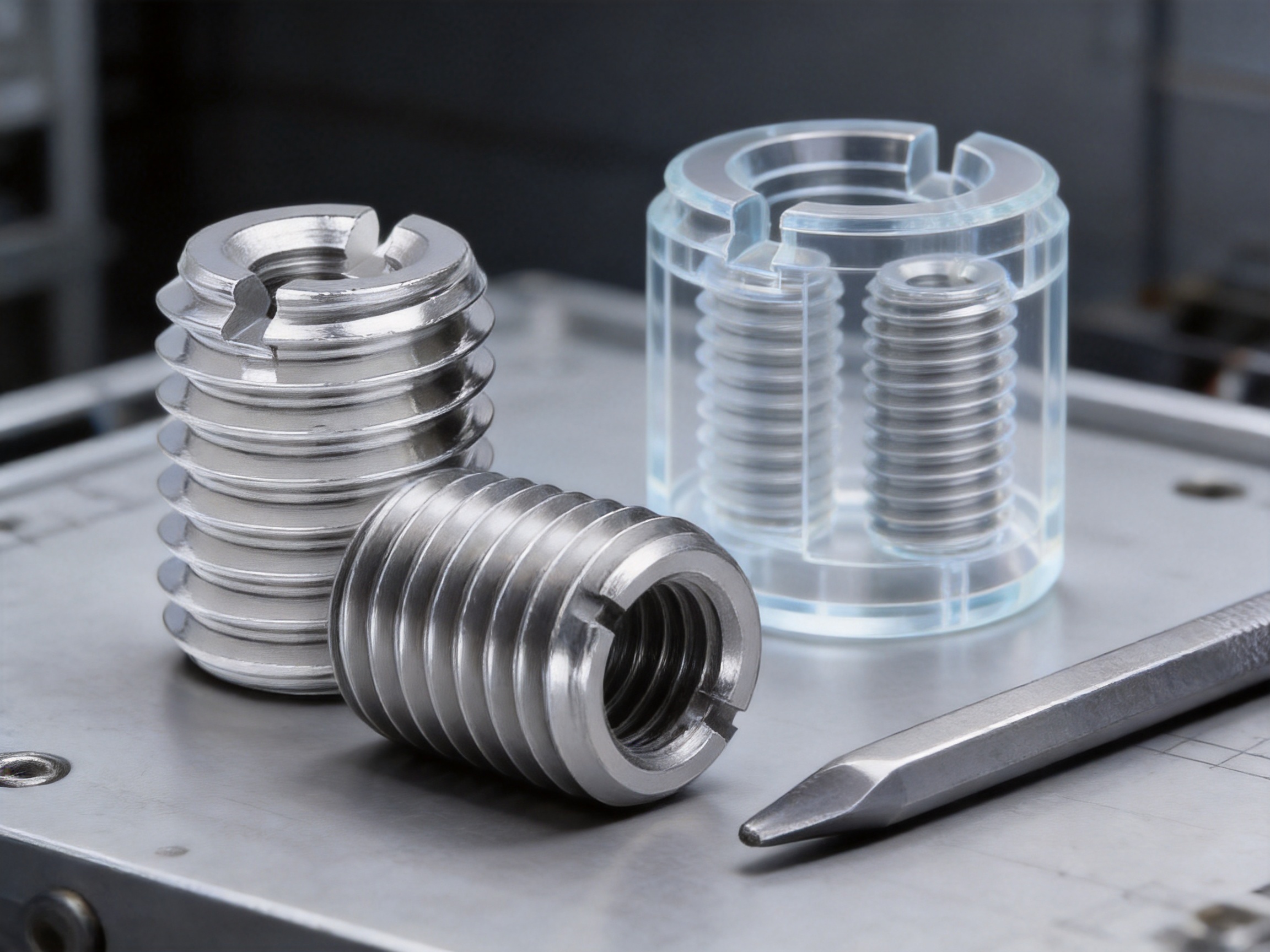
7. Manufacturing Strengths of the Supplier
7.1 Focused product specialization
A supplier dedicated to threaded connection products can build specialized knowledge around thread design, insert installation, material behavior, production tooling, and application requirements. This focus is different from general-purpose hardware production, where threaded components may be only one small part of a broad catalog.
Jinzhize focuses on threaded connection products for automotive and aerospace sectors while also serving machinery, rail vehicles, construction, and other industrial markets. Its product range covers both connection components and the tools needed to install them. This broader technical scope can help customers coordinate inserts, adapters, taps, and installation accessories through one experienced source.
7.2 Production capacity
The company was established in 2015 and operates an owned manufacturing facility of approximately 10,000 square meters. Its reported equipment base includes hundreds of machine tools and automated production systems. These resources support stable production for standard products as well as adaptable manufacturing for customer-specific requirements.
Capacity is more than the number of machines. It also includes process organization, tooling management, inspection capability, production scheduling, and the ability to maintain quality when order volumes change. A structured facility can provide better control over lead times and batch consistency than a fragmented supply arrangement.
7.3 Experience with demanding industries
Automotive and aerospace components must perform consistently across vibration, thermal cycling, repeated assembly, contamination risks, and strict dimensional requirements. Experience in these sectors encourages a disciplined approach to documentation, process control, inspection, and traceability.
The company reports that its products are used in automotive engines and transmissions for passenger and commercial vehicles, as well as aerospace and rail vehicle manufacturing. Such applications require suppliers to understand that a small threaded component can influence the reliability of a larger assembly. The conversion nut therefore needs to be treated as an engineered product rather than a generic accessory.
7.4 Stable supply and customer support
Industrial customers commonly need more than a single sample shipment. They may require repeat orders, consistent dimensions, controlled packaging, technical clarification, and responsive after-sales communication. A manufacturer that combines production resources with an established support process can reduce procurement risk over the full product life cycle.
Jinzhize identifies product consistency, traceability, and service support as key commitments. It reported an annual output value of 153 million RMB in 2024, indicating an established production and supply operation. Customers should still confirm the specific capacity, quality documents, and delivery schedule for each project, but these organizational strengths provide a useful foundation for long-term cooperation.
8. Application Areas
8.1 Mechanical equipment connection
Industrial machinery often contains components from multiple suppliers and design generations. A slotted conversion nut can help adapt a threaded cover, bracket, housing, shaft support, sensor mount, or service panel to a different fastener size. Its compact structure makes it useful where machine geometry limits access.
In maintenance operations, the part can support the replacement of a fastener without modifying the main machine body. It may also help standardize service hardware across different machine modules. Engineers should verify load direction, vibration, engagement length, and locking requirements before using the product in a structural or safety-critical connection.
8.2 Automotive manufacturing and repair
Automotive assemblies use numerous threaded interfaces in engines, transmissions, chassis systems, body structures, brackets, and accessory modules. Packaging constraints are often severe, and technicians may have access to only one side of a component. The slot can support axial installation in a recessed position.
The conversion function can be useful when a design combines components with different thread standards or when a replacement part has a different threaded interface from the original. In production, the component may help reduce the number of housing variants. In repair, it may provide an efficient way to restore a usable threaded connection without replacing a complete casting or assembly.
8.3 Construction and building equipment
Construction machinery, structural equipment, access systems, and building hardware may require strong connections exposed to vibration, dust, moisture, and variable service conditions. A high-strength steel adapter with suitable corrosion protection can support reliable threaded assembly in these environments.
Construction applications often involve field maintenance. The ability to install or remove the part with a common screwdriver can be helpful where specialized tools are not readily available. However, the product should be selected according to the mechanical load and environmental conditions rather than convenience alone.
8.4 Aerospace and defense equipment
Aerospace and defense assemblies place demanding requirements on weight, dimensional consistency, reliability, environmental resistance, and documentation. A compact thread conversion solution can help engineers manage legacy interfaces, equipment upgrades, and confined installation spaces.
Use in these sectors requires strict compliance with the applicable customer specifications and qualification procedures. Material certificates, process records, inspection reports, and special testing may be required. The conversion nut should be evaluated as part of the complete assembly, including vibration, thermal conditions, fatigue, galvanic compatibility, and maintenance procedures.
8.5 Rail vehicles and transportation systems
Rail vehicles combine vibration, repeated service cycles, outdoor exposure, and stringent maintenance requirements. Threaded adapters may be used in equipment enclosures, interior modules, brackets, electrical support systems, and mechanical assemblies where different fastening arrangements must be connected.
The removable slotted interface can simplify inspection and replacement. As with automotive and aerospace applications, the product must be integrated with an appropriate locking strategy when vibration could cause loosening.
9. Selection Guide for Buyers and Engineers
Choosing the correct slotted internal-external thread conversion nut requires more information than identifying an internal and external diameter. A complete selection review should consider the following factors.
9.1 Thread specifications
Confirm the external thread standard, nominal size, pitch, and direction. Then confirm the internal thread standard, nominal size, pitch, and direction. Do not assume that two threads with similar nominal dimensions are interchangeable. Metric and unified threads can differ in pitch and profile, and an incorrect combination may cause cross-threading or inadequate engagement.
Where the application involves left-hand or special-direction threads, the requirement should be clearly stated on drawings and purchase documents. Thread direction is a functional characteristic and must be verified before production.
9.2 Length and engagement
The overall length should provide adequate external engagement in the host component and sufficient internal engagement for the mating fastener. Too little engagement can reduce load capacity, while excessive length may cause interference or prevent full seating.
Engagement requirements depend on the materials and loads involved. A steel insert in a softer host material may require greater external engagement to distribute load. The internal fastener should also engage enough thread to prevent stripping while avoiding bottoming out before the joint is clamped.
9.3 Installation access
Measure the available axial access for the screwdriver and confirm that the slot can be reached after adjacent components are installed. Check the required screwdriver blade width and thickness. If the installation location is extremely deep or contaminated, an alternative driving method may be more suitable.
The surrounding geometry should also allow the conversion nut to be aligned without damaging the external thread. A lead-in chamfer or controlled pilot feature may be useful in some designs.
9.4 Load and service conditions
Review tensile, shear, torsional, vibration, impact, and fatigue loads. Consider whether the connection is static or repeatedly serviced. Temperature, humidity, salt, chemicals, dust, and galvanic contact should be included in the environmental assessment.
For high-load or safety-related applications, testing and engineering validation may be necessary. The product should not be selected only by nominal size. Thread strength, wall thickness, material hardness, installation torque, and host-component strength all contribute to the performance of the final connection.
9.5 Surface treatment and material compatibility
Specify the required material and surface treatment based on the environment. Compatibility with the host material is important because dissimilar metals can create galvanic corrosion under moisture exposure. Coating requirements should be reviewed alongside thread tolerances and assembly torque.
9.6 Quantity and customization
Standard sizes are generally suitable for common requirements, while custom sizes may be needed for original equipment or replacement projects. Customers should provide drawings, samples, thread information, annual demand, packaging expectations, inspection requirements, and target application details when requesting a quotation.
| Selection item | Information to confirm | Reason |
|---|---|---|
| External thread | Standard, diameter, pitch, direction, length | Ensures correct fit in the host component |
| Internal thread | Standard, diameter, pitch, direction, depth | Ensures compatibility with the mating fastener |
| Slot | Width, depth, screwdriver access, driving direction | Supports safe and repeatable installation |
| Material | Steel grade or approved alternative | Determines strength, hardness, and durability |
| Surface treatment | Required corrosion protection and finish | Improves environmental resistance without compromising fit |
| Application loads | Tension, shear, torque, vibration, fatigue | Supports proper performance evaluation |
| Production requirements | Quantity, tolerances, inspection documents, packaging | Helps establish stable supply and acceptance criteria |
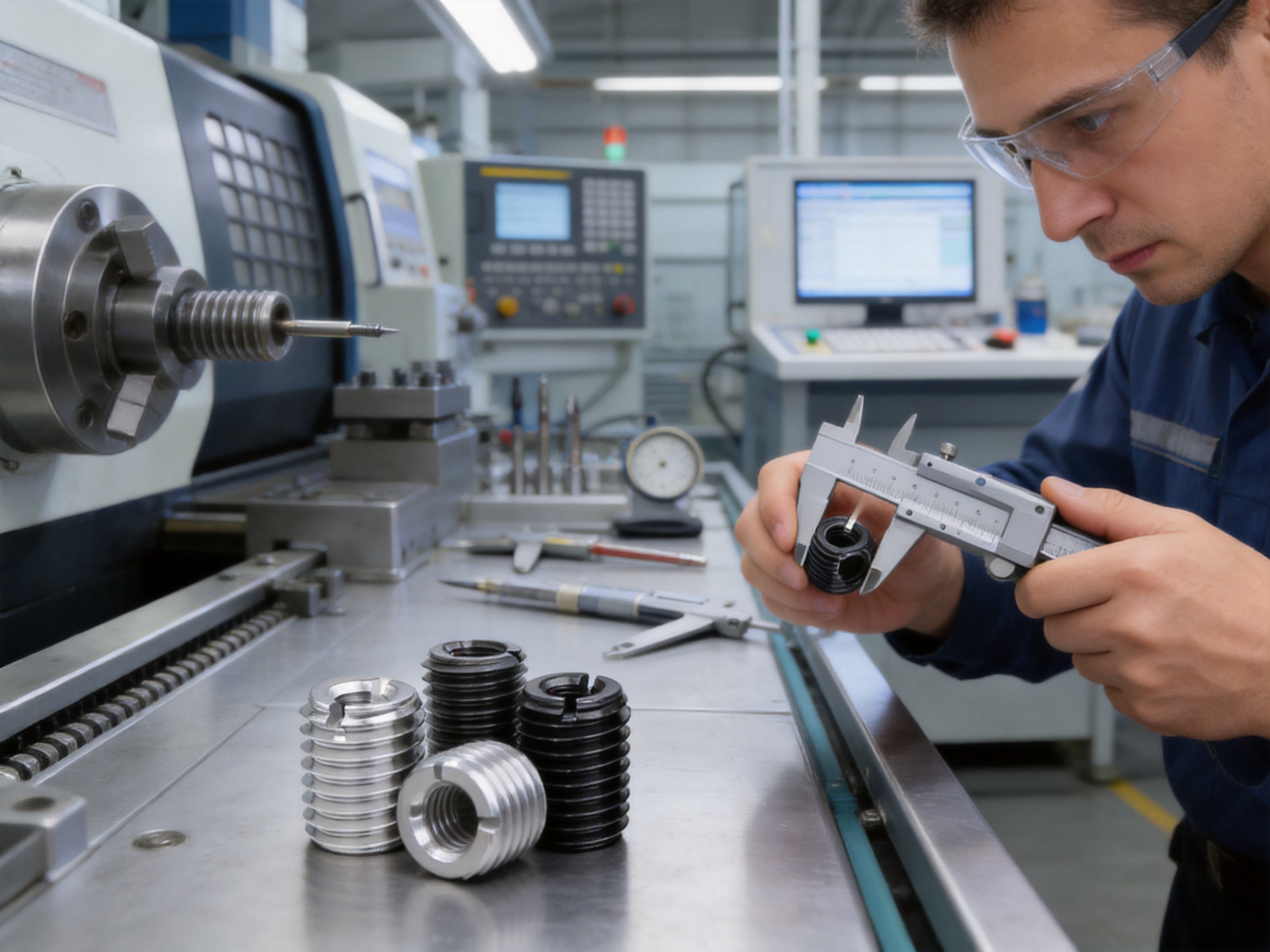
10. Installation Best Practices
Before installation, inspect the receiving hole and remove chips, oil contamination, rust, or other material that could interfere with seating. Confirm that the hole has the specified diameter, thread condition, and depth. If the host thread is damaged, installing a new conversion nut without correcting the underlying problem may not provide a reliable result.
Use a screwdriver that matches the slot. The blade should fully occupy the slot without excessive side clearance. Keep the tool aligned with the component axis during rotation. Angled loading can damage the slot and increase the chance of incomplete installation.
Apply the specified installation torque where one is provided. Excessive torque may deform the slot, damage the external thread, or overstress the host component. Insufficient torque may prevent proper seating or allow movement during service. A torque value should be established through the product specification and application validation.
After installation, verify that the nut is seated at the intended depth and that the internal thread is clean. Install the mating fastener by hand for the initial turns to confirm correct alignment. If resistance is abnormal, stop and inspect for cross-threading, burrs, contamination, or a mismatch in thread specification.
Where vibration or cyclic loading is present, use the approved locking method. Depending on the design, this may involve a locking compound, mechanical locking feature, prevailing-torque fastener, staking, or another validated solution. The locking method must be compatible with the material, surface treatment, temperature, and maintenance requirements.
During removal, remove the internal fastener first and ensure that the slot is accessible. Use steady reverse torque rather than striking the screwdriver or applying an uncontrolled impact. If corrosion or contamination has locked the external thread, a suitable maintenance procedure should be followed to avoid damaging the host component.
11. Quality Risks and How to Control Them
11.1 Thread mismatch
The most basic risk is ordering a product with the wrong thread standard or pitch. This can be prevented by listing complete thread designations on drawings and purchase orders. Samples should be checked using calibrated gauges or verified mating parts before mass production.
11.2 Inadequate wall thickness
Because the component contains two thread systems, the remaining wall between them must be sufficient. If the adapter is too small for the required conversion, the wall may become thin and vulnerable to deformation. Engineering review should confirm that the selected dimensions are appropriate for the intended loads.
11.3 Slot damage
A damaged slot can make a correctly manufactured adapter difficult to install. Slot depth, width, sharpness, concentricity, and burr control should be inspected. Packaging should prevent parts from striking one another during transport.
11.4 Corrosion during storage or service
Even a corrosion-resistant finish cannot compensate for unsuitable storage or severe chemical exposure. Products should be stored in clean, dry conditions and protected from contamination. Application review should consider whether the finish is compatible with coolants, cleaners, road salt, salt spray, or other substances.
11.5 Inconsistent assembly torque
Variation in installation torque can create differences in seating and retention. Standardized work instructions, suitable tools, operator training, and periodic verification can improve consistency. For high-volume production, installation fixtures or controlled torque tools may be appropriate.
12. Custom Manufacturing and OEM Support
Many industrial applications cannot use an off-the-shelf adapter. The required part may have a special thread combination, unusual length, modified slot, non-standard surface treatment, or customer-specific inspection requirement. A capable manufacturer can review these requirements and develop a controlled production plan.
Custom manufacturing normally begins with technical information. A customer may provide a two-dimensional drawing, three-dimensional model, physical sample, mating components, or a written specification. Important details include thread standards, tolerances, material, heat treatment, coating, inspection method, packaging, monthly demand, and intended service environment.
Design communication is especially important for conversion nuts because the internal and external thread relationship affects both fit and strength. The supplier should clarify whether the external thread is intended for a tapped metal hole, a preformed polymer hole, a thin-wall component, or another installation condition. It should also confirm whether the slot is the only installation feature and whether removal is required after service.
Prototype samples can be used to evaluate assembly torque, fit, tool access, seating depth, and interaction with the complete assembly. Once the design is approved, process documentation and inspection standards can support transition to stable batch production.
Dongtai Jinzhize Metal Products Co., Ltd. provides threaded connection products for global industrial customers and maintains product-development, production, and after-sales capabilities. Its specialization in related inserts, adapters, taps, plugs, and tools can be useful for customers seeking a coordinated fastening solution instead of isolated components from multiple suppliers.
13. Why Manufacturing Consistency Matters
A conversion nut may be small, but variation in a small part can create significant assembly problems. A minor difference in thread diameter can change installation torque. A difference in slot depth can affect tool engagement. A coating variation can alter the fit. An inconsistent length can influence seating and fastener engagement.
For high-volume production, these variations may lead to line stoppages, rework, increased inspection, and field-service complications. Consistent machining and inspection reduce these risks. They also make it easier for customers to standardize work instructions and predict assembly behavior.
Traceability adds another layer of control. If a quality issue appears, batch identification can help determine the affected production period, material lot, process route, and inspection records. This supports efficient investigation and limits unnecessary disruption to unaffected inventory.
Reliable supply is therefore a combination of product design, process capability, inspection discipline, production planning, and communication. A manufacturer with a dedicated facility and related product expertise is better positioned to address these factors as one connected system.
14. Sustainability and Lifecycle Value
The use of a removable thread conversion nut can contribute to lifecycle efficiency by extending the service life of a host component. Instead of discarding a housing or structural part because its threaded interface is unsuitable, an engineer may be able to adapt the connection with a replaceable metal component.
The one-piece design can also reduce the number of separate parts required for a conversion. Fewer parts may simplify packaging, inventory, and handling. Maintenance teams can replace the adapter independently when appropriate, potentially reducing downtime and material consumption.
Lifecycle benefits depend on correct application. The part must be properly sized, installed, inspected, and protected from the operating environment. A poorly selected conversion nut can create premature failure, so sustainability should be considered together with mechanical reliability and service requirements.
15. Recommended Customer Evaluation Process
A practical evaluation begins by defining the functional problem. Identify the existing host thread, the required mating fastener, the available space, and the reason direct connection is not possible. Determine whether the conversion must be temporary, serviceable, permanent, or suitable for repeated replacement.
Next, define the mechanical and environmental requirements. Record the expected load, vibration level, temperature range, moisture exposure, chemical contact, and maintenance cycle. These details help establish the material, surface treatment, engagement length, and locking strategy.
Request a technical quotation with a complete drawing or specification. The quotation should identify the thread standards, dimensions, material, finish, tolerance, packaging, minimum order quantity, production lead time, and available inspection documentation. For custom products, confirm the sample and approval process.
Evaluate samples in the actual or representative assembly. Check the external thread fit, internal fastener engagement, slot access, installation torque, seating position, and removal procedure. If the application is critical, conduct appropriate strength, vibration, temperature, or corrosion testing before approval.
After approval, establish incoming inspection criteria. These may include visual inspection, dimensional sampling, thread gauging, surface condition, lot identification, and packaging verification. Clear acceptance criteria help maintain consistency between the supplier and customer.
16. Frequently Asked Questions
What is a slotted internal-external thread conversion nut?
It is a threaded connector that combines an external male thread and an internal female thread in one part. The external thread installs into a threaded hole or housing, while the internal thread accepts a bolt, screw, or stud with a different thread requirement. A slot allows installation and removal with a flathead screwdriver.
What is the main purpose of the slot?
The slot provides a simple driving feature for applying installation or removal torque. It is useful where the component is recessed or where there is not enough radial space for a wrench or socket.
Can the internal and external threads have different sizes?
Yes. Thread-size conversion is one of the primary purposes of the product. The exact thread standards, diameters, pitches, lengths, and directions must be specified and confirmed before production.
Can the product convert between different thread standards?
It can be designed for different thread standards when the dimensions and application requirements are compatible. Metric, unified, and other thread combinations should be clearly identified because similar nominal sizes do not necessarily have compatible pitches or profiles.
Is the conversion nut suitable for high-load applications?
It may be suitable for high-load applications when the material, wall thickness, thread engagement, host component, installation method, and service conditions have been properly evaluated. Critical applications should be validated through engineering calculations and testing.
What materials are commonly used?
High-strength steel is identified as a primary material option because it provides strength, durability, and resistance to thread deformation. The correct material depends on load, temperature, corrosion exposure, host-material compatibility, and customer specifications.
Does surface treatment affect thread fit?
It can. Protective coatings may alter dimensions and installation torque if not controlled. Surface treatment should therefore be selected and applied with the thread tolerances in mind. The finished part should be checked for functional thread fit.
Where are these products used?
Applications include industrial machinery, automotive manufacturing and repair, construction equipment, aerospace and defense assemblies, rail vehicles, and other equipment requiring compact and serviceable thread conversion.
How should the component be installed?
Clean and inspect the receiving hole, align the external thread, engage a correctly sized flathead screwdriver with the slot, and rotate the nut to the specified seating position. Use the recommended installation torque and verify the internal thread before installing the mating fastener.
Can the component be removed for maintenance?
Yes. After removing the internal fastener, the slot can be used to rotate the conversion nut out of the host component. Removal success depends on corrosion, contamination, installation torque, locking methods, and the condition of the surrounding threads.
Can custom versions be manufactured?
Custom versions may be produced with different thread combinations, lengths, slot dimensions, materials, surface treatments, and inspection requirements. Customers should provide a drawing, sample, or detailed specification for technical review.
What information should be included in an inquiry?
Include the external and internal thread designations, dimensions, material, surface treatment, application loads, operating environment, annual quantity, required delivery schedule, packaging requirements, and inspection documentation. A photograph or assembly drawing can also help clarify the installation conditions.
Why work with a specialized threaded-product manufacturer?
A specialized supplier can provide relevant experience in thread design, machining, inspection, tooling, and related fastening systems. This may improve product consistency and make it easier to coordinate conversion nuts with inserts, taps, installation tools, and other threaded connection products.
17. Conclusion
The slotted internal-external thread conversion nut is a practical solution for connecting components with different threaded interfaces. Its integrated male-and-female thread structure provides conversion in a compact form, while the screwdriver slot supports installation and removal in locations where conventional wrench access is difficult.
Its advantages include efficient thread adaptation, reduced assembly complexity, convenient maintenance, broad compatibility, strong steel construction, and the possibility of corrosion-resistant surface treatment. Compared with larger externally gripped adapters, multi-piece arrangements, permanent redesigns, or improvised repair methods, the product can offer a balanced combination of compactness, repeatability, and serviceability.
Product performance depends on correct selection and controlled manufacture. Thread standards, engagement length, wall thickness, material, surface treatment, installation torque, vibration, and environmental conditions must all be considered. For demanding industries, consistent machining, functional thread inspection, slot quality, traceability, and responsive technical support are essential.
Dongtai Jinzhize Metal Products Co., Ltd. combines a focused threaded-product portfolio with an established manufacturing facility, automated production systems, extensive machine-tool resources, quality management, and customer service capabilities. Its experience in automotive, aerospace, rail vehicle, machinery, and related applications positions it as a potential manufacturing partner for standard and customized thread conversion requirements.
For buyers and engineers seeking a reliable connection between different thread systems, the slotted internal-external thread conversion nut provides a straightforward and adaptable option. With accurate specifications, application review, controlled production, and proper installation, this small component can contribute to greater assembly efficiency and more maintainable industrial equipment.
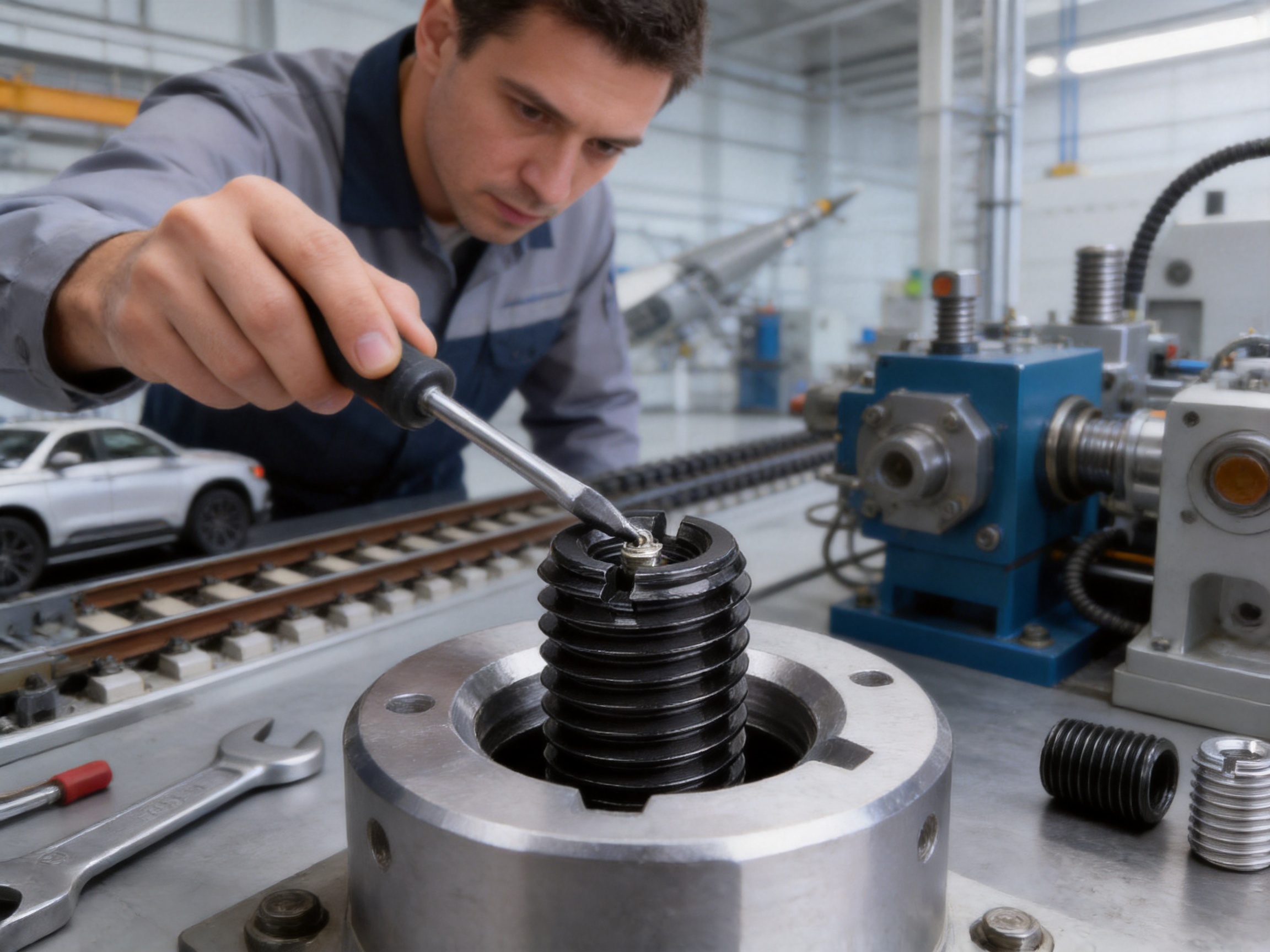
References
1. Product information for slotted internal-external thread conversion nuts, including construction, slotted installation design, material direction, corrosion-resistance features, and application fields.
2. Dongtai Jinzhize Metal Products Co., Ltd. company profile and manufacturing information, including facility scale, production equipment, product portfolio, quality management approach, and industrial-market experience.
3. General engineering principles for threaded fastener selection, thread engagement, installation torque, dimensional inspection, and mechanical connection design.
4. General manufacturing practices for precision turning, internal and external thread machining, deburring, cleaning, surface treatment, functional gauging, and batch traceability.
5. General maintenance practices for removable threaded adapters used in machinery, automotive assemblies, transportation equipment, and industrial connection systems.