

 Français
 Español
 Deutsch

Content
- 1 Understanding the Role of a Wire Thread Insert Installation Tool
- 2 Product Overview
- 3 Precision Guiding for Better Installation Accuracy
- 4 Smooth Transmission and Efficient Assembly
- 5 Protection of Insert Threads and Base Components
- 6 Multi-Size Compatibility from M3 to M24
- 7 Durable Alloy Steel Construction
- 8 Compact Design for Workshop and Field Use
- 9 Applications in Equipment Manufacturing
- 10 Industrial Equipment Maintenance and Thread Repair
- 11 Automotive Manufacturing and Powertrain Applications
- 12 Aerospace and Rail Vehicle Manufacturing
- 13 Precision Instrument and Industrial Device Applications
- 14 Manufacturing Process and Quality Control Strengths
- 15 Advantages Over General-Purpose and Low-Quality Tools
- 16 Recommended Installation Procedure
- 17 Maintenance and Service Recommendations
- 18 Purchasing Considerations for Industrial Buyers
- 19 Company Manufacturing Capacity and Market Service
- 20 Frequently Asked Questions
- 20.1 What is a wire thread insert installation tool used for?
- 20.2 What insert sizes does this tool support?
- 20.3 Why is a special installation tool preferable to a general-purpose driver?
- 20.4 What material is used to manufacture the tool?
- 20.5 Can the tool be used for field repairs?
- 20.6 Which industries commonly use wire thread insert installation tools?
- 20.7 What should be checked before installing an insert?
- 20.8 What should be done if the insert meets excessive resistance?
- 20.9 How can tool service life be extended?
- 20.10 Can the supplier provide related threaded connection products?
- 21 Conclusion
- 22 References
- 23 Product: Wire Thread Insert Installation Tool
Wire thread inserts are widely used to repair damaged threaded holes, reinforce threads in lightweight materials, and create durable internal threads in demanding mechanical assemblies. However, the quality of a wire thread insert connection depends not only on the insert itself. The installation tool plays an equally important role. A properly designed wire thread insert installation tool guides the insert accurately, controls the installation process, protects the insert thread, and helps ensure that the finished connection meets the required dimensional and functional standards.
The Wire Thread Insert Installation Tool supplied by Dongtai Jinzhize Metal Products Co., Ltd. is designed for the accurate installation of helical wire thread inserts into pre-tapped holes. It combines a precision guiding structure, standardized transmission design, anti-slip contact surfaces, durable alloy steel construction, and compatibility with a broad range of insert sizes. These features make it suitable for machinery manufacturing, industrial maintenance, automotive production, aerospace assembly, rail vehicle manufacturing, and precision instrument applications.
Compared with basic or poorly matched installation devices, a professional wire insert installer can significantly improve assembly consistency. It reduces the risk of cross-threading, uneven insertion, thread deformation, and incorrect installation depth. For production environments where hundreds or thousands of inserts may be installed every day, these advantages can directly influence productivity, quality control, component service life, and total operating cost.
Understanding the Role of a Wire Thread Insert Installation Tool
A wire thread insert is a precisely formed coil of diamond-shaped wire. Once installed into a tapped hole, the insert provides a strong internal thread for a bolt or screw. The insert can reinforce threads in softer parent materials such as aluminum, magnesium alloys, plastics, and certain composite materials. It can also restore a damaged threaded hole without replacing the entire component.
Although the insert has a simple appearance, its installation requires controlled handling. The coil must enter the prepared hole at the correct angle. Its leading coil must engage the internal thread without becoming distorted. The insert must be driven to the correct depth, and excessive force must be avoided. If these conditions are not met, the resulting connection may suffer from poor bolt engagement, unstable torque performance, difficult fastener removal, or premature failure.
The installation tool provides the mechanical interface between the operator or assembly equipment and the wire insert. It transfers rotation or driving force to the insert while guiding it through the tapped hole. A reliable tool maintains alignment between the insert and the base hole throughout the installation process. This function is especially important when working with small diameters, deep holes, blind holes, or components with strict positional tolerances.
In manual applications, the tool allows an operator to install inserts with greater control and less physical effort. In production environments, it can also be integrated into repeatable assembly procedures. The standardized transmission and guiding design supports consistent installation performance across different operators, shifts, and production batches.
Product Overview
The Wire Thread Insert Installation Tool is intended for the accurate installation of wire thread inserts in pre-tapped holes. It is available for mainstream insert sizes from M3 to M24, providing a practical range for small precision components, medium-sized machinery, and larger industrial assemblies.
The tool is manufactured from high-hardness alloy steel. This material selection provides resistance to wear, impact, and repeated mechanical loading. Because installation tools are frequently exposed to rotational force, friction, and contact pressure, material durability is essential. A tool that wears rapidly may lose its guiding accuracy or damage the insert during use. High-hardness alloy steel helps preserve dimensional stability over an extended service life.
The tool includes a precision guiding structure that supports accurate alignment between the insert and the base hole. Its transmission system is designed to provide smooth force transfer, allowing the insert to move progressively into the tapped hole. The contact surfaces incorporate an anti-slip design to reduce unwanted movement between the tool and the insert.
Its compact and lightweight format makes it suitable for workshop use as well as on-site repair operations. Maintenance personnel can carry the tool to production lines, vehicle service areas, equipment installation sites, or field repair locations. This mobility is valuable when a damaged thread must be restored without removing the entire assembly from service.
| Product Feature | Practical Benefit | Typical Application Value |
|---|---|---|
| Precision guiding structure | Maintains alignment during insertion | Reduces cross-threading and installation errors |
| Smooth transmission design | Transfers driving force progressively | Improves assembly speed and operator control |
| Anti-slip contact surfaces | Limits movement between tool and insert | Protects insert geometry and thread quality |
| M3 to M24 compatibility | Supports multiple insert sizes | Reduces the number of separate tools required |
| High-hardness alloy steel | Resists wear and impact | Supports repeated use and long service life |
| Compact, lightweight construction | Improves portability and handling | Suitable for workshops and field maintenance |
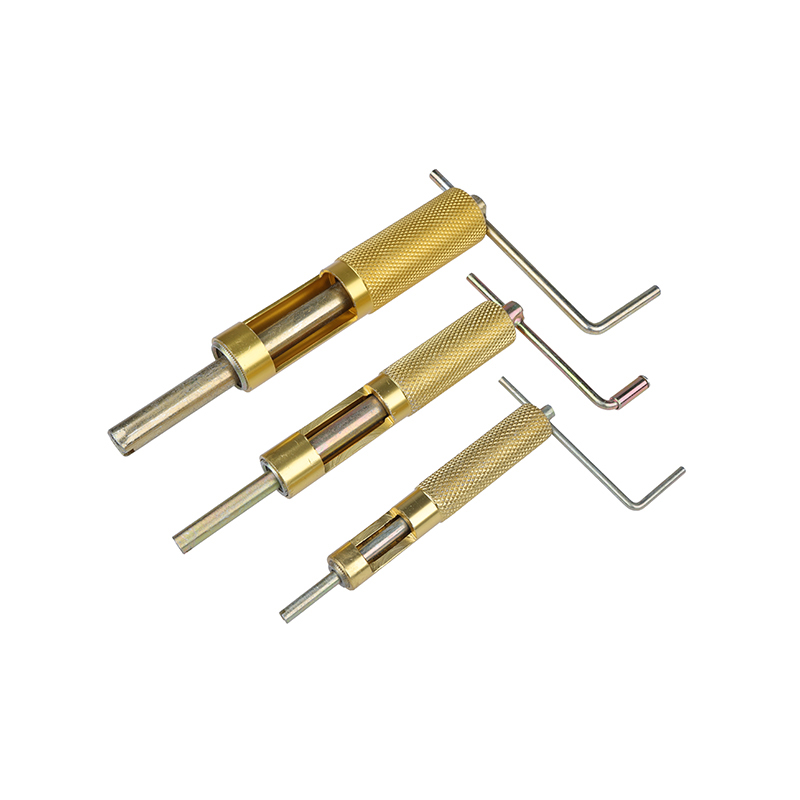
Wire Thread Insert Installation Tool
Precision Guiding for Better Installation Accuracy
Installation accuracy is one of the most important characteristics of a wire insert tool. A helical insert must follow the axis of the tapped hole. If the insert enters at an angle, the coil may deform, bind against the thread, or create uneven contact with the parent material. These problems can make the finished thread difficult to use and may reduce the holding strength of the connection.
The precision guiding structure of this installation tool helps maintain the correct relationship between the insert, the driver, and the base hole. The guide supports the insert as it begins to engage and continues to stabilize it during insertion. This is particularly useful for operators working with small inserts, where visual alignment alone may not be sufficient.
Accurate guidance also helps control installation depth. An insert installed too high may interfere with the mating fastener or prevent full thread engagement. An insert installed too deeply may reduce the usable thread length or make future service more difficult. By improving control over the insertion process, the tool helps operators achieve a more consistent final position.
In production environments, this consistency supports process standardization. Operators can follow the same installation method for every component instead of relying solely on individual experience. This can reduce variation between workstations and simplify quality inspection. It also helps companies establish repeatable work instructions for assembly and repair procedures.
Compared with a makeshift driver, an incorrectly sized tool, or a tool with excessive clearance, the precision-guided design provides a clear competitive advantage. A general-purpose device may transmit force, but it may not properly support the insert. Small alignment errors can become significant when repeated across many assemblies. A purpose-built installer is designed around the geometry and handling requirements of wire thread inserts.
Smooth Transmission and Efficient Assembly
Assembly efficiency depends on how easily and smoothly force can be transferred from the operator to the insert. If the transmission system is rough, unstable, or poorly matched to the insert, the operator may need to apply excessive force. This increases fatigue and may cause sudden movement, insert deformation, or damage to the base thread.
The standardized transmission design of the Wire Thread Insert Installation Tool allows driving force to be applied in a controlled manner. Smooth transmission helps the insert advance gradually through the tapped hole. It also gives the operator better feedback during installation, making it easier to identify unusual resistance or a possible alignment problem before damage occurs.
For high-volume manufacturing, even a small reduction in installation time can create meaningful productivity gains. A tool that supports rapid positioning and smooth insertion can reduce the time required for each assembly. Across a large production run, these savings may improve line capacity without requiring additional labor or equipment.
Efficient installation also contributes to lower rework rates. When an insert is installed incorrectly, the assembly may need to be inspected, repaired, or replaced. Rework interrupts production and consumes additional inserts, fasteners, labor, and inspection resources. A stable installation tool helps reduce the likelihood of such problems at the source.
The tool is suitable for both manual installation and controlled workshop assembly procedures. Its design allows operators to work efficiently while retaining the flexibility needed for different component shapes, access conditions, and maintenance requirements.
Protection of Insert Threads and Base Components
Wire inserts are precision components. Although their wire construction provides flexibility and strength, the coil can be damaged if it is gripped improperly or subjected to excessive localized force. Damage to the insert thread may affect bolt engagement and compromise the final connection.
The contact surfaces of the installation tool feature an anti-slip design. This helps prevent uncontrolled movement between the tool and the insert during driving. By maintaining secure contact, the tool reduces the chance of slipping, scratching, or distorting the insert. The design also assists the operator in maintaining a steady installation path.
Protection is important not only for the insert but also for the tapped hole. A poorly controlled tool may scrape the crest of the base thread or force the insert against one side of the hole. Such damage can reduce the strength and serviceability of the connection. A properly aligned tool distributes installation force more evenly and helps preserve the prepared hole.
Reliable thread protection becomes especially valuable when working with expensive components or difficult-to-replace assemblies. In aerospace structures, automotive powertrain parts, precision machinery, and specialized industrial equipment, the cost of a damaged component can be much greater than the cost of the insert or tool. Controlled installation helps protect the value of the entire assembly.
The anti-slip feature also improves operator confidence. When the tool remains stable, the operator can focus on monitoring insertion depth and resistance rather than constantly correcting tool movement. This supports safer, more comfortable, and more repeatable work.
Multi-Size Compatibility from M3 to M24
Different industries use a wide variety of thread sizes. Small inserts are common in electronic equipment, instruments, sensors, and compact mechanisms. Medium sizes are widely used in machinery, vehicle components, and general industrial products. Larger sizes are often found in heavy equipment, structural assemblies, and high-load mechanical systems.
This installation tool supports mainstream sizes from M3 to M24. The range allows users to address diverse installation requirements while maintaining a consistent tool concept across multiple applications. Depending on the selected specification, the appropriate driver can be matched to the corresponding wire insert size.
Multi-size compatibility can simplify procurement and tool management. Instead of relying on unrelated tools from different sources, a company can establish a coordinated installation system for its maintenance and assembly departments. Standardized tools can make operator training easier and help ensure that the correct equipment is used for each insert.
For distributors and industrial supply companies, a broad size range also makes the product suitable for more customers. It can support repair workshops, automotive suppliers, machine builders, aerospace subcontractors, and equipment maintenance organizations. The range provides flexibility without changing the fundamental operating method.
Users should still select the correct tool specification for each insert. Compatibility does not mean that one tool should be used for every size. The driver, insert, tapped hole, and installation procedure must correspond to the required thread dimensions and application conditions.
Durable Alloy Steel Construction
Tool material directly affects service life, dimensional stability, and resistance to operating stress. Wire insert installation tools may be used repeatedly in manufacturing environments or exposed to demanding conditions during field maintenance. Low-quality materials may wear at the contact surfaces, deform under load, or lose accuracy after extended use.
The Wire Thread Insert Installation Tool is made from high-hardness alloy steel. Alloy steel is suitable for applications requiring strength, wear resistance, and resistance to impact. The material helps the tool maintain its functional geometry when subjected to repeated rotational force and contact with metal inserts.
Durability provides economic benefits beyond simple tool longevity. A tool that maintains its accuracy for a longer period reduces replacement frequency and helps prevent quality problems caused by wear. It can also support more predictable maintenance planning. Users can inspect the tool at scheduled intervals rather than dealing with unexpected failure during production.
Durable construction is especially important for service departments that work on different sites. A field tool may be transported, stored with other equipment, and used in less controlled environments than a dedicated production workstation. Resistance to impact and wear helps it remain dependable in these conditions.
Proper storage and maintenance remain important even when the tool is made from high-hardness alloy steel. The tool should be kept clean, protected from unnecessary moisture, and inspected for damage or excessive wear. Correct handling helps preserve the advantages of the material and the precision of the guiding structure.
Compact Design for Workshop and Field Use
Many thread repair operations take place away from a centralized production line. A vehicle may need to be repaired in a service bay, industrial equipment may require maintenance at the installation site, or a machine may be too large to move to a workshop. In these situations, portability is a practical requirement.
The compact and lightweight design of the tool allows it to be carried with maintenance kits and used in confined working areas. Operators can bring the installer directly to the damaged threaded hole instead of removing a large component. This can reduce downtime and simplify repair planning.
Compact tools are also easier to organize. A maintenance team can store different size drivers in a dedicated case or tool cabinet and retrieve the required specification quickly. Clear organization helps reduce the risk of selecting an unsuitable tool during urgent repair work.
Portability does not eliminate the need for a correct installation procedure. The hole must still be inspected, cleaned, and tapped according to the insert manufacturer’s requirements. However, a portable precision tool makes it easier to perform the procedure consistently wherever the component is located.
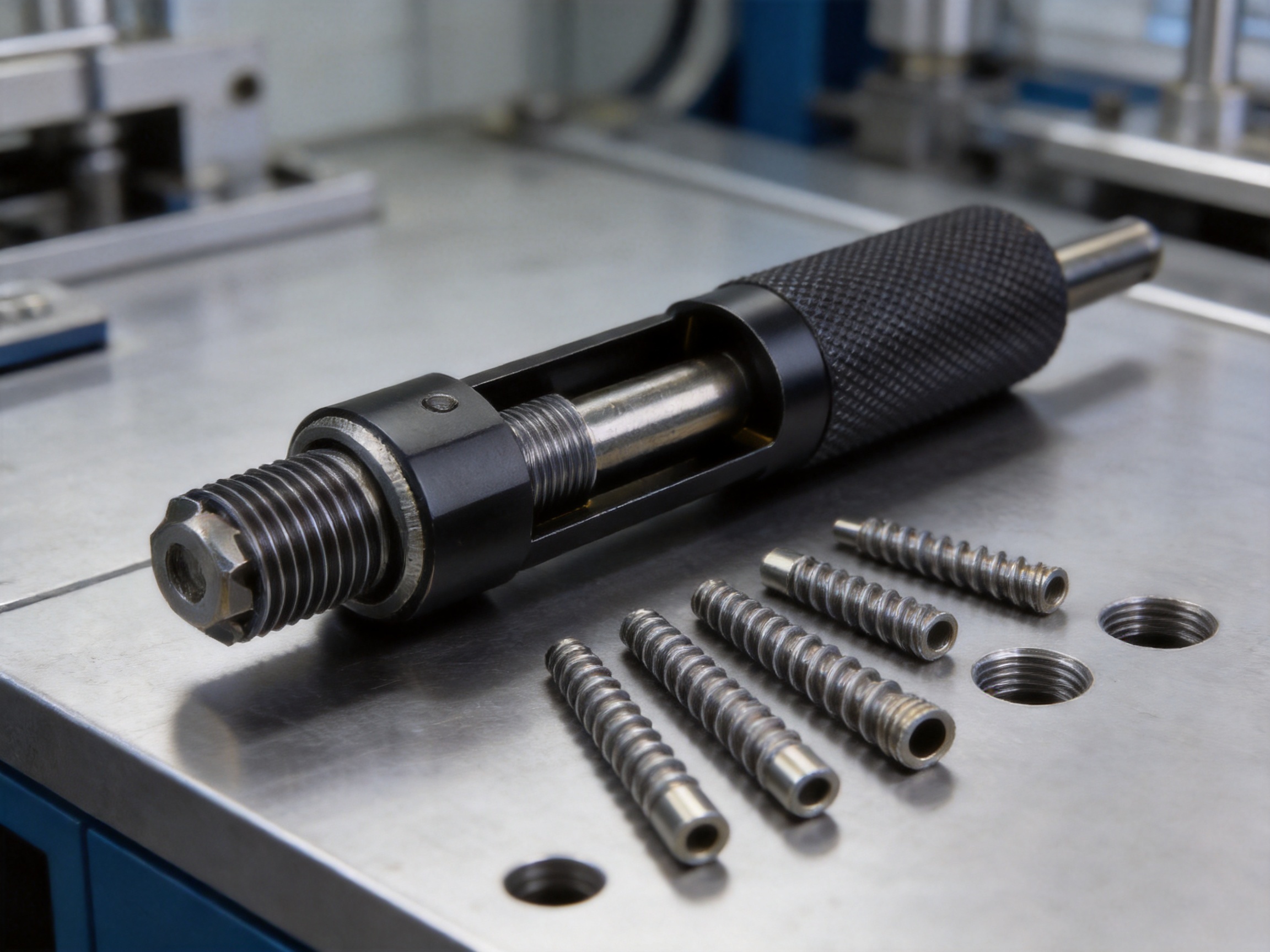
Applications in Equipment Manufacturing
Equipment manufacturers use threaded connections in housings, brackets, covers, frames, actuators, control systems, and structural assemblies. When the parent material is relatively soft or when a thread must withstand repeated fastening and removal, a wire thread insert can improve the performance of the connection.
The installation tool provides a reliable way to place these inserts during production. Its guiding structure supports accurate alignment, while the smooth transmission system enables efficient assembly. This is useful when an equipment manufacturer has many threaded holes to prepare across different components.
In machinery manufacturing, consistent thread installation can improve assembly interchangeability. Fasteners are more likely to engage smoothly when the insert is positioned correctly and remains undamaged. This can reduce delays during final assembly and help technicians complete maintenance work more easily in the future.
In electronic device production, small threaded inserts may be used in housings, mounting frames, and adjustment mechanisms. The M3 to M24 compatibility range covers many of the sizes used in industrial electronic equipment. For small components, accurate guidance is particularly important because the working area may be limited and the insert may be difficult to handle manually.
Industrial Equipment Maintenance and Thread Repair
Thread damage is common in equipment exposed to vibration, repeated service, excessive tightening, corrosion, or improper fastener handling. A damaged threaded hole does not always require component replacement. In many cases, the hole can be restored by drilling or tapping to the specified repair dimensions and installing a wire thread insert.
The installation tool is an important part of this restoration process. Once the damaged hole has been prepared, the insert must be driven into the new internal thread without distortion. The tool helps maintenance personnel complete the repair accurately and return the equipment to service more quickly.
This approach can reduce downtime and lower repair costs. Replacing a large housing, engine component, machine frame, or specialized bracket may require extensive disassembly and procurement time. A properly executed thread repair can preserve the original component and restore its fastening function.
Maintenance teams may also use wire inserts as a preventive measure. If a component will experience repeated service or high fastening loads, an insert can reinforce the thread before damage occurs. The installation tool helps ensure that this reinforcement is carried out consistently.
Automotive Manufacturing and Powertrain Applications
Automotive assemblies contain many threaded connections that must tolerate vibration, temperature changes, repeated maintenance, and mechanical loading. Engines, transmissions, chassis components, brackets, housings, and accessory systems may use inserts to strengthen threads or repair damaged holes.
In engine and transmission manufacturing, the quality of threaded connections can affect assembly accuracy and serviceability. A reliable insert installation method helps create a stable foundation for fasteners used in covers, mounting points, fluid systems, sensors, and structural components.
Automotive suppliers often operate under strict production schedules. They require tools that support fast, repeatable work without sacrificing installation quality. The smooth transmission and multi-size compatibility of this tool can assist manufacturers that use different insert dimensions across a product range.
During vehicle repair, portability is a major advantage. A technician may be able to restore a damaged thread without replacing the entire engine casing or transmission housing. The compact installer can be included in a repair kit and used in a workshop or service facility.
Aerospace and Rail Vehicle Manufacturing
Aerospace and rail vehicle assemblies require dependable fastening systems because many components must maintain structural and functional integrity over long service periods. Threaded inserts may be used in lightweight metal structures, equipment panels, brackets, cabin systems, control assemblies, and maintenance-access components.
In these industries, process consistency and traceability are important. The installation tool supports a controlled procedure that can be incorporated into work instructions and inspection plans. Operators can use the correct tool size, follow defined installation steps, and inspect the final insert position before completing the assembly.
Aerospace components may be manufactured from materials selected for low weight and high performance. These materials do not always provide ideal direct thread strength, particularly when fasteners are removed and installed repeatedly. A wire thread insert can create a more durable internal thread while allowing the original component material to remain lightweight.
Rail vehicle components may also require robust service connections that can withstand vibration and repeated maintenance. A professional installation tool helps reduce the risk of thread damage during assembly and supports the long-term serviceability of the vehicle.
Applications in safety-sensitive industries must follow the customer’s technical standards, approved procedures, and inspection requirements. The tool is an enabling device; final performance depends on correct insert selection, hole preparation, operator training, and quality verification.
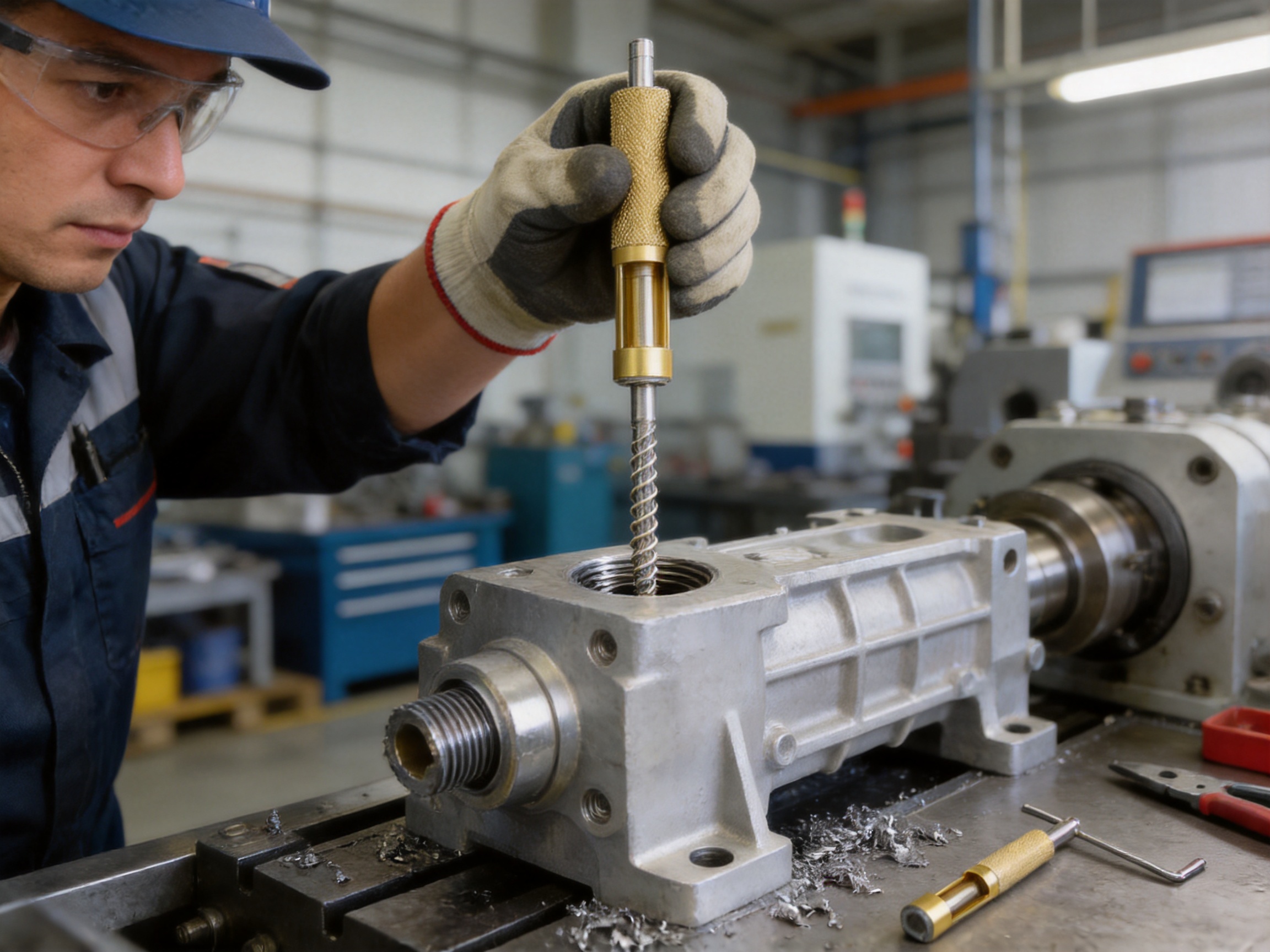
Precision Instrument and Industrial Device Applications
Precision instruments often contain small threaded connections in limited spaces. Components may include measurement systems, optical assemblies, laboratory equipment, control devices, and automated mechanisms. These applications require careful installation because damage to a small thread can affect alignment, enclosure integrity, or component adjustment.
The compact format of the installer supports work in confined areas. Its precision guiding structure helps the operator control small inserts more accurately than a general-purpose driver. This can be important when the surrounding component must be protected from scratches, impact, or accidental contact.
Industrial devices may also need threaded connections that are serviced repeatedly. A reinforced internal thread can extend the useful life of a housing or mounting point. By installing the insert correctly, the manufacturer can create a more reliable connection for future assembly and disassembly cycles.
Manufacturing Process and Quality Control Strengths
Dongtai Jinzhize Metal Products Co., Ltd. operates a specialized manufacturing facility focused on threaded connection products. Its product range includes helical wire inserts, self-tapping inserts, key-locking inserts, threaded adapters, oil plugs, installation taps, and related tools. This product specialization allows the company to develop knowledge across the complete threaded connection process rather than treating the installation tool as an isolated item.
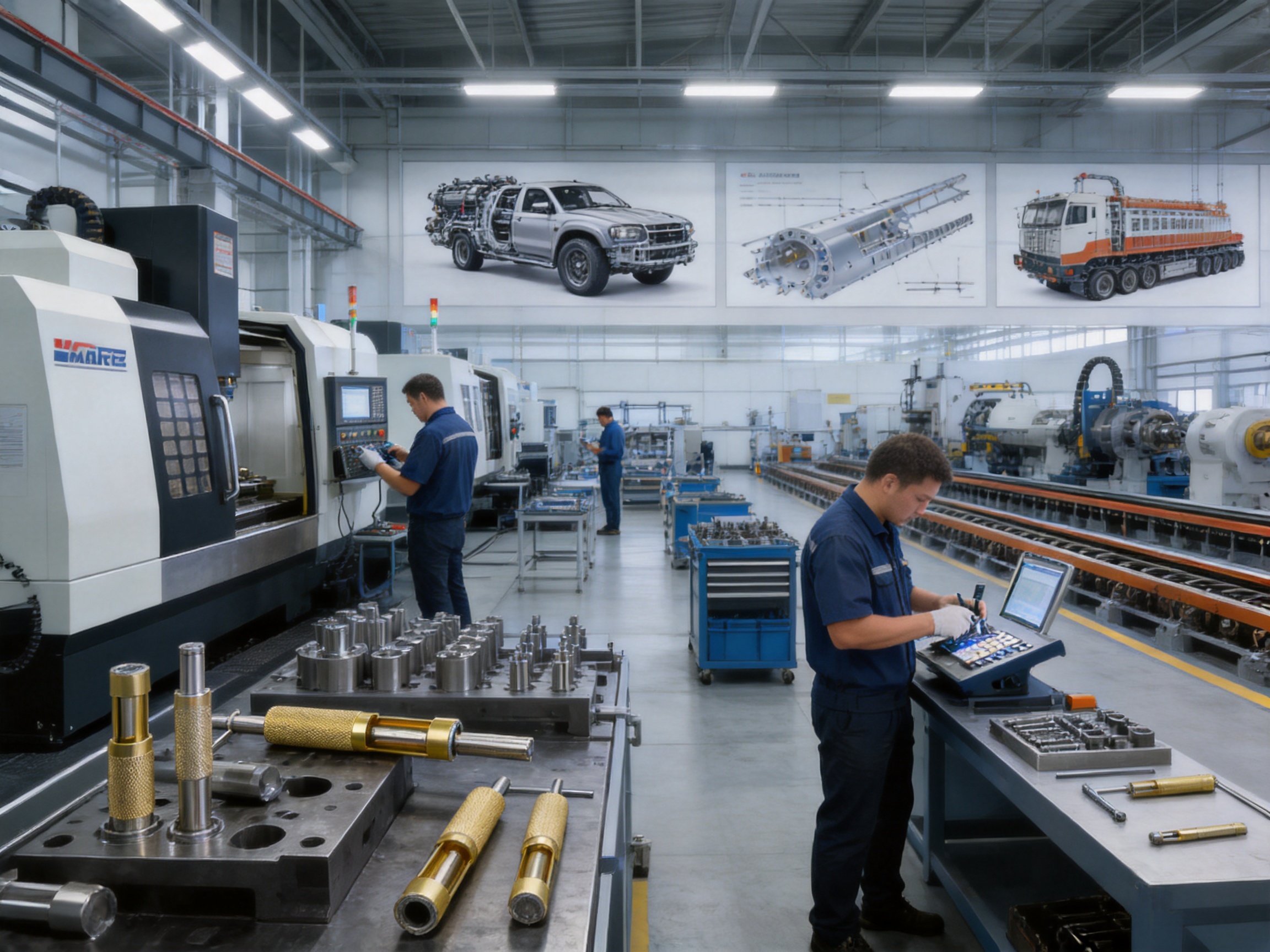
Established in 2015, the company operates a 10,000-square-meter owned manufacturing plant. The facility is equipped with hundreds of machine tools and automated production systems. This combination of equipment and automation supports stable production capacity, repeatable processing, and efficient handling of different product specifications.
For installation tools, manufacturing quality begins with material control. High-hardness alloy steel must be selected and processed according to the required mechanical and dimensional characteristics. Subsequent machining operations must create accurate guiding and transmission features. Any variation in critical dimensions can affect insert alignment or force transfer.
Automated production systems can help reduce variation in repetitive operations. They also support production planning for larger orders and make it easier to maintain consistent processing conditions. Machine capability, tooling management, inspection procedures, and operator experience all contribute to the final quality of the product.
The company has built an experienced team for design, development, and production. This is important because installation tools must balance several requirements at the same time. The tool must be strong enough for repeated use, precise enough to guide the insert, compact enough for practical handling, and compatible with the intended insert sizes.
A rigorous quality management system supports inspection and process control. Quality management may include incoming material verification, dimensional inspection, functional checks, production monitoring, finished product inspection, and packaging control. These activities help ensure that the supplied tools meet defined requirements before shipment.
Traceability is another important strength for industrial customers. Consistent and traceable products are easier to manage in regulated or quality-sensitive supply chains. If a customer needs to review a specification, production batch, or service issue, organized manufacturing records and after-sales support can simplify communication and corrective action.
Advantages Over General-Purpose and Low-Quality Tools
The market includes simple drivers, improvised tools, and low-cost products that may appear similar at first glance. However, appearance alone does not determine installation performance. A tool should be evaluated according to alignment accuracy, transmission stability, insert protection, material durability, size compatibility, and manufacturing consistency.
A general-purpose driver may not be designed around the geometry of a helical insert. It can allow excessive movement, fail to support the leading coil, or apply force unevenly. These issues increase the probability of a poor installation. The purpose-built guiding structure of this product offers a more controlled alternative.
Low-quality tools may also use materials that wear quickly. As contact surfaces wear, the relationship between the tool and the insert can change. The tool may slip more easily or fail to maintain alignment. High-hardness alloy steel provides improved resistance to this type of service degradation.
Another advantage is size coverage. Users working with multiple thread sizes may otherwise need tools from several suppliers with different designs and handling methods. A coordinated range from M3 to M24 supports a more consistent installation program and can simplify training and inventory control.
Efficiency is also a differentiating factor. A tool that transfers force smoothly can help the operator complete installation faster and with less fatigue. Faster work is valuable, but the more important benefit is that speed is achieved through controlled motion rather than through excessive force or reduced inspection.
Finally, a specialized manufacturer can provide more than a standalone product. Jinzhize’s broader product portfolio includes inserts, taps, oil plugs, adapters, and related fastening products. This gives customers the opportunity to source complementary threaded connection products from an experienced supplier and discuss matching requirements more efficiently.
Recommended Installation Procedure
Before using the installation tool, the operator should confirm the insert size, base material, hole condition, and required installation depth. The tapped hole should be produced with the correct tap and cleaned of chips, oil, burrs, and other contaminants. Any damage or obstruction in the prepared hole should be addressed before the insert is installed.
The operator should select the installation tool that matches the wire insert specification. The insert should be positioned carefully on the tool, ensuring that the driving feature engages correctly with the insert. The tool and insert should then be aligned with the axis of the tapped hole.
Insertion should begin with controlled force. The operator should avoid forcing the insert if unusual resistance occurs. Excessive resistance may indicate incorrect hole preparation, a mismatched tool, contamination, damaged threads, or misalignment. Stopping early can prevent damage that would be more difficult to correct later.
The insert should be driven to the specified depth. The final position should be checked visually or with an appropriate gauge, depending on the customer’s quality requirements. The insert should normally be positioned below the surface of the parent material by the amount specified for the application.
If the insert includes a tang, the tang removal procedure should follow the applicable technical instructions. The operator should use the correct removal method and ensure that the finished connection is free from loose fragments or contamination.
After installation, a suitable fastener can be used to verify engagement. The fastener should enter smoothly without abnormal resistance. Where required, the assembly should be inspected for torque performance, depth, alignment, and overall connection quality.
Maintenance and Service Recommendations
Regular inspection helps preserve tool performance. Operators should check the guide, driving area, contact surfaces, and body for wear, cracks, deformation, corrosion, or contamination. Any tool showing significant damage should be removed from service until it has been evaluated.
The tool should be cleaned after use. Metal chips and debris can affect the relationship between the tool and the insert, especially in small-size applications. A clean tool is easier to inspect and less likely to transfer contamination into a prepared threaded hole.
Storage should protect the tool from impact and excessive humidity. If several sizes are used, each tool should be clearly identified and stored in its designated location. Organized storage reduces search time and helps prevent accidental use of the wrong specification.
Lubrication requirements depend on the installation procedure and the material of the component. Users should follow the applicable insert and equipment instructions. Excessive lubricant or unsuitable chemicals may affect handling or contaminate the assembly.
Purchasing Considerations for Industrial Buyers
Industrial buyers should evaluate more than unit price when selecting an installation tool. The key question is whether the tool can deliver consistent installation quality over its expected service life. Product material, manufacturing capability, size availability, dimensional control, application support, and delivery reliability should all be considered.
Buyers should first identify the required insert types and sizes. The M3 to M24 range supports many common applications, but the exact tool specification should be confirmed before ordering. Buyers should also define whether the tool will be used for manual assembly, repair work, or a higher-volume production process.
The operating environment is another consideration. Workshop users may prioritize portability and flexible use, while production lines may prioritize repeatability, cycle time, and integration with standard operating procedures. Aerospace, automotive, and other regulated customers may require additional documentation or inspection records.
Supplier manufacturing capability is also important. A company with its own production facility, automated equipment, experienced technical staff, and quality management system may provide more stable support than a purely trading-based supplier. Direct manufacturing knowledge can help resolve specification questions and improve communication about customized requirements.
After-sales service should not be overlooked. Technical clarification, replacement support, packaging requirements, and response to quality feedback can affect the total value of the purchase. Jinzhize emphasizes consistent products, traceability, and reliable service support for long-term customer cooperation.
Company Manufacturing Capacity and Market Service
Dongtai Jinzhize Metal Products Co., Ltd. is located at No. 94, Shiqin Road East, Tangba Village, Shiyan Town, Dongtai City, China. The company serves customers in the global market with threaded connection and fastening products.
The company’s manufacturing focus covers multiple product categories, including self-tapping thread inserts, internal-external thread conversion nuts, wire thread inserts, three-hole threaded inserts, oil plugs, installation tools, thread taps, and key-locking inserts. This range reflects an integrated understanding of thread reinforcement, repair, conversion, sealing, and installation.
Its products are used in automotive applications such as engines and transmissions for passenger and commercial vehicles. They are also supplied for aerospace and rail vehicle manufacturing, where reliable threaded connections are important to assembly and maintenance operations.
In 2024, the company achieved an annual output value of 153 million RMB. This figure demonstrates its ability to support substantial and stable supply. Production capacity is particularly relevant to customers that require regular replenishment, multiple specifications, or large project orders.
The company’s mission is to provide stable and reliable threaded connection and fastening products for critical assemblies. By improving assembly consistency and reducing procurement and usage risks, the company aims to create practical value for manufacturers and maintenance organizations.
For customers seeking a wire insert installer, the combination of specialized product knowledge, a broad threaded connection portfolio, production resources, and service support provides a strong foundation for cooperation.
Frequently Asked Questions
What is a wire thread insert installation tool used for?
It is used to drive wire thread inserts accurately into pre-tapped holes. The tool guides the insert, transfers installation force, and helps control alignment and depth during assembly or thread repair.
What insert sizes does this tool support?
The product supports mainstream wire thread insert sizes from M3 to M24. The exact tool specification should be matched to the insert and tapped hole dimensions required for the application.
Why is a special installation tool preferable to a general-purpose driver?
A special installation tool is designed to support the geometry of a wire insert. It provides better alignment, more stable force transmission, and improved protection against slipping or thread damage. These features help reduce installation errors and rework.
What material is used to manufacture the tool?
The tool is made from high-hardness alloy steel. This material provides resistance to wear and impact and helps maintain the tool’s functional accuracy during repeated use.
Can the tool be used for field repairs?
Yes. Its compact and lightweight design makes it suitable for workshop operations and on-site maintenance. It can be carried with repair equipment and used to restore damaged threaded holes without necessarily removing the entire component.
Which industries commonly use wire thread insert installation tools?
Common industries include machinery manufacturing, automotive production and repair, aerospace, rail vehicle manufacturing, industrial equipment maintenance, electronic device production, and precision instrument manufacturing.
What should be checked before installing an insert?
The operator should confirm the insert size, tool specification, tapped hole dimensions, hole cleanliness, installation depth, and condition of the base material. The correct tap and preparation procedure should be used before insertion begins.
What should be done if the insert meets excessive resistance?
Installation should be stopped and the cause investigated. Possible causes include misalignment, a damaged or contaminated tapped hole, an incorrect tool, an incorrect insert size, or insufficient hole preparation. Continuing to force the insert may damage the tool, insert, or component.
How can tool service life be extended?
The tool should be cleaned after use, inspected regularly, stored safely, and protected from unnecessary impact and moisture. Worn or damaged tools should be removed from service and evaluated before further use.
Yes. The company manufactures a broader range of products, including helical wire inserts, self-tapping inserts, key-locking inserts, threaded adapters, oil plugs, installation taps, and related fastening products.
Conclusion
A wire thread insert installation tool is a critical component of a reliable threaded connection process. The insert may provide excellent reinforcement and thread restoration, but its performance depends on accurate and controlled installation. A tool with precision guidance, smooth transmission, anti-slip contact surfaces, durable alloy steel construction, broad size compatibility, and portable handling can improve both product quality and operating efficiency.
The Wire Thread Insert Installation Tool from Dongtai Jinzhize Metal Products Co., Ltd. is designed to meet these requirements across a wide range of industrial applications. Its features help protect the insert, preserve the base hole, reduce installation variation, and support efficient assembly. The M3 to M24 size range also gives users flexibility when working with different components and fastening systems.
Behind the product is a specialized manufacturing company with a 10,000-square-meter facility, hundreds of machine tools, automated production systems, experienced technical personnel, and a rigorous quality management system. Its broader product range and focus on traceability and service support further strengthen its position as a supplier of threaded connection and fastening solutions.
For manufacturers, distributors, and maintenance organizations, selecting the correct installation tool is an investment in connection reliability. When matched with the correct insert, tap, hole preparation, and operating procedure, a professional installer can help extend component lifespan, reduce rework, improve assembly consistency, and support dependable performance in demanding mechanical applications.
References
1. Manufacturer-provided product information for Wire Thread Insert Installation Tool.
2. Manufacturer-provided company information for Dongtai Jinzhize Metal Products Co., Ltd.
3. General engineering principles for helical wire thread insert installation and thread repair.
4. General industrial practices for threaded connection inspection, maintenance, and quality control.
5. General manufacturing guidance for alloy steel tooling, precision machining, and assembly process standardization.



