Français
 Español
 Deutsch

Content
- 1 What Is a DIN 7965 Screwed Insert?
- 2 Why Thread Reinforcement Is Necessary
- 3 Core Advantages of DIN 7965 Screwed Inserts
- 4 Comparison with Conventional Directly Tapped Threads
- 5 Applications in Critical Industries
- 6 Engineering Design Considerations
- 7 Manufacturing Process and Quality Control
- 8 Advantages of an Integrated Threaded-Connection Manufacturer
- 9 How DIN 7965 Inserts Compare with Alternative Insert Types
- 10 Production Efficiency and Supply Reliability
- 11 Installation Best Practices
- 12 Quality Risks and How to Reduce Them
- 13 Customization and OEM Support
- 14 Selection Guide for Purchasing Teams
- 15 Frequently Asked Questions
- 15.1 What is the main purpose of a DIN 7965 screwed insert?
- 15.2 Can DIN 7965 inserts be used in aluminum?
- 15.3 Are these inserts suitable for magnesium components?
- 15.4 Do DIN 7965 inserts require a pre-tapped hole?
- 15.5 Can an insert repair a stripped threaded hole?
- 15.6 What materials are available?
- 15.7 How does a DIN 7965 insert differ from a wire thread insert?
- 15.8 What causes insert installation failure?
- 15.9 Can the inserts be used in automated assembly?
- 15.10 What documentation should be requested?
- 15.11 How should the correct insert length be selected?
- 15.12 Why is supplier manufacturing capacity important?
- 16 Conclusion
- 17 References
- 18 Product: DIN 7965 Screwed Insert
Threaded connections are among the most widely used joining methods in industrial equipment, vehicles, aerospace structures, precision instruments, and countless other products. A threaded hole may appear simple, but its performance depends on the strength of the parent material, the accuracy of the thread, the quality of installation, and the operating environment. When a conventional thread is formed directly in a soft material such as aluminum or magnesium alloy, repeated tightening, vibration, shock, or maintenance can cause stripping, deformation, and loss of clamping force. A DIN 7965 screwed insert provides a practical and standardized solution to these challenges.
DIN 7965 screwed inserts are threaded fasteners manufactured to the dimensional and technical requirements associated with the German DIN 7965 standard. The insert creates a durable internal thread in a component and transfers loads through the combined engagement of the insert’s internal and external threads. This design improves resistance to thread damage while supporting reliable assembly and disassembly. It is particularly valuable when a lightweight base material must carry a strong, repeatedly serviced threaded connection.
For buyers, designers, and production engineers, the value of a DIN 7965 insert goes beyond the insert itself. Product consistency, material selection, surface treatment, dimensional control, installation tools, traceability, and technical support all influence the final performance of the connection. A supplier with integrated manufacturing capabilities can help customers reduce sourcing complexity, improve quality stability, and develop suitable threading and fastening solutions for demanding applications.
What Is a DIN 7965 Screwed Insert?
A DIN 7965 screwed insert is a metal threaded insert designed to reinforce or create an internal threaded connection in a base component. The insert typically has an internal thread that accepts a standard screw or bolt and an external thread or specially formed outer profile that engages with the prepared hole in the parent material. Once installed, the insert becomes a durable threaded interface between the fastener and the component.
The insert is especially useful when the parent component is made from a material that does not provide sufficient thread strength on its own. Aluminum alloys, magnesium alloys, certain plastics, and other relatively soft materials can offer excellent weight savings or manufacturing advantages, but their directly tapped threads may have limited resistance to wear and stripping. A steel or stainless steel insert creates a stronger and more wear-resistant thread while preserving the original lightweight component.
Standardization is an important feature of DIN 7965 products. Manufacturing according to a recognized standard establishes defined dimensions, thread relationships, and production requirements. This supports more predictable installation and makes it easier for customers to specify, inspect, replace, and reorder inserts. Standardized dimensions also help reduce compatibility risks when components, tools, and fasteners come from different approved sources.
In practical use, the insert is installed into a prepared hole using a suitable installation method. Depending on the design and application, the hole may be drilled and tapped or otherwise prepared according to the selected insert specification. The installation tool positions and drives the insert into the base material. When correctly installed, the outer portion of the insert engages securely with the component, while the internal thread provides a durable connection for the mating screw or bolt.
Why Thread Reinforcement Is Necessary
Directly tapped threads in soft materials can be adequate for light-duty or rarely serviced applications. However, the performance margin may be insufficient in assemblies exposed to high tightening torque, repeated maintenance, vibration, impact, thermal cycling, or concentrated loads. The first few engaged threads often carry a significant portion of the load. If these threads deform, the connection can lose preload even when the bolt remains intact.
A threaded insert changes the load path. Instead of relying entirely on the parent material, the assembly uses a separate, stronger threaded component. The external thread distributes forces over the surrounding material, while the internal thread provides a durable interface for the fastener. This arrangement can improve pull-out resistance, thread wear resistance, and dimensional stability when the insert and installation process are correctly selected.
Thread reinforcement is also valuable when a product must be serviced throughout its life. Engines, transmissions, machine housings, aerospace structures, automated equipment, and precision instruments may require repeated removal and replacement of fasteners. Each service operation can gradually damage a soft-material thread. With an insert, the more durable internal thread can withstand repeated assembly cycles more effectively, helping reduce repair interruptions and component replacement costs.
Another benefit is repairability. If a directly tapped hole becomes damaged, replacing the entire base component may be expensive or impractical. In many cases, a suitable insert can restore the threaded connection while retaining the original component. This makes threaded inserts useful not only for new production but also for maintenance, refurbishment, and field repair programs.
Core Advantages of DIN 7965 Screwed Inserts
Standardized Dimensions and Interchangeability
DIN 7965 provides a recognized reference for the design and manufacture of screwed inserts. Standardization helps engineers define the required insert with greater clarity and reduces ambiguity during procurement. It also supports consistent inspection because key dimensions can be measured against established requirements rather than relying only on a supplier’s internal drawing.
For manufacturers operating international supply chains, standardization can simplify sourcing. A qualified insert produced to the same applicable standard can be evaluated against common technical requirements, which may support cross-vendor interchangeability. This is particularly important for equipment platforms manufactured in several countries or maintained by multiple service centers.
High Connection Strength in Soft Materials
The principal performance advantage of a DIN 7965 insert is the reinforcement of a weaker base material. The insert’s external engagement increases the effective load-bearing area compared with a simple tapped hole. The internal thread is formed in a material selected for higher strength, wear resistance, or durability than the parent component.
This design can improve resistance to thread stripping and loosening. It is well suited to assemblies where aluminum or magnesium components must support steel fasteners. The solution allows designers to preserve the weight and corrosion characteristics of the base material while improving the reliability of the threaded connection.
Resistance to Vibration and Repeated Loading
Automotive, rail, industrial, and aerospace assemblies often experience vibration, shock, and fluctuating loads. A properly installed insert provides a stable threaded interface and helps maintain the geometry of the connection. The insert itself does not replace a complete joint design, however. Bolt preload, fastener selection, joint stiffness, surface condition, and any required locking method must also be considered.
When the insert is correctly matched to the base material and installation hole, its engagement with the component can help prevent local thread deformation. This is especially useful where the connection is frequently exposed to dynamic loading or requires repeated maintenance.
Improved Serviceability
A reinforced threaded hole is easier to maintain over the product life cycle. Service personnel can remove and reinstall bolts without relying on a soft-material thread that may deteriorate after only a few cycles. If damage does occur, the insert can often be replaced more economically than the entire housing, frame, or structural component.
This serviceability can reduce downtime and improve the availability of equipment. It also supports repair programs in which components are refurbished rather than discarded. For large machinery, commercial vehicles, and production equipment, the resulting savings may extend beyond the price of the insert itself.
Material and Coating Flexibility
DIN 7965 inserts can be manufactured in materials such as carbon steel and stainless steel, with the final selection based on strength, corrosion exposure, temperature, and compatibility with the parent material. Surface treatments or coatings may also be selected for specific operating environments.
Carbon steel can provide a cost-effective solution for general industrial applications where high strength is required and the surrounding environment is controlled. Stainless steel may be preferred when corrosion resistance, chemical exposure, humidity, or long-term durability is more important. Coating decisions should consider not only corrosion resistance but also dimensional impact, friction, installation torque, and galvanic compatibility.
Comparison with Conventional Directly Tapped Threads
A conventional tapped hole is formed directly in the component. This approach is simple and economical when the base material has adequate strength and the connection will not be subjected to excessive loading or repeated servicing. However, the thread capacity is limited by the material properties, available engagement length, and geometry of the component.
A DIN 7965 insert separates the functions of the component and the thread. The component provides structural support, while the insert supplies a more durable internal thread. This can be more effective than increasing the component wall thickness, using a longer bolt, or adding a larger boss, especially when space and weight are limited.
| Performance Factor | Directly Tapped Soft-Material Hole | DIN 7965 Screwed Insert |
|---|---|---|
| Thread strength | Limited by the parent material | Enhanced through a stronger insert material |
| Resistance to stripping | May be limited under high torque or shock | Improved when the insert and hole are correctly designed |
| Repeated assembly | Can cause progressive wear in soft materials | More suitable for repeated service operations |
| Repairability | Damaged threads may require oversized repair or component replacement | Damaged threaded connections may be restored by replacing the insert |
| Weight optimization | May require additional material around the hole | Can reinforce a lightweight component without a large structural boss |
| Procurement consistency | Depends on the component manufacturer’s tapping process | Supported by a defined insert standard and controlled production |
Compared with non-standard threaded bushings or improvised repair parts, a DIN 7965 insert offers clearer dimensional control and a more reliable specification basis. The correct comparison is not simply unit price. Engineers should evaluate total installed cost, failure risk, maintenance frequency, installation time, quality documentation, and product availability.
Applications in Critical Industries
Automotive Manufacturing
Automotive products contain numerous aluminum and magnesium components, including engine-related housings, transmission parts, chassis structures, covers, brackets, and accessory mounting points. These materials contribute to weight reduction, but their threads may require reinforcement when subjected to vibration, thermal changes, torque fluctuations, and repeated service.
DIN 7965 inserts can be used to strengthen mounting points and serviceable connections. Their standardized design supports high-volume production, while controlled dimensions help maintain assembly consistency across engine, transmission, and vehicle platforms. A reliable insert also reduces the possibility of line stoppages caused by stripped threads during final assembly.
In automotive production, process control is especially important. The hole size, tapping quality, insert alignment, installation depth, driving method, and inspection procedure must remain stable from one component to the next. A supplier that understands automotive production requirements can provide more than the insert alone; it can support specification review, production trials, and corrective action when needed.
Aerospace Components
Aerospace structures frequently use lightweight alloys to reduce mass while maintaining adequate structural performance. Threaded connections in these materials may require reinforcement to meet demanding requirements for reliability, serviceability, and dimensional stability. Inserts can be used in panels, housings, brackets, equipment frames, and other lightweight assemblies.
In aerospace applications, material traceability and process documentation are often as important as the physical product. Customers may require lot identification, inspection records, material certificates, and controlled production procedures. A manufacturer with an established quality management system is better positioned to support these requirements.
Selection for aerospace use must be based on the complete design and applicable customer or industry specifications. The insert should be evaluated for strength, corrosion behavior, operating temperature, installation method, and compatibility with the surrounding alloy. Engineering validation remains essential before release to production.
Industrial Equipment and Machine Tools
Machine tools, automation systems, robotics, pumps, compressors, and industrial housings often contain service panels and components that are removed during maintenance. Threaded inserts can reinforce these mounting points and improve the service life of the equipment.
In industrial equipment, the benefits of an insert are often linked to uptime. A stripped thread can delay maintenance, damage an expensive housing, or require an unplanned repair. A reinforced thread helps maintenance personnel complete repeated disassembly and reassembly with lower risk of connection damage.
Rail Vehicles
Rail vehicles operate under continuous vibration, shock, and environmental exposure. Threaded connections may be located in equipment cabinets, passenger systems, underbody structures, braking equipment, and interior assemblies. The appropriate insert material and surface treatment can help address corrosion and long service intervals.
Rail applications also benefit from standardized replacement parts. When a maintenance organization serves a large fleet, consistent insert dimensions and dependable availability can simplify inventory management and repair procedures.
Precision Instruments and Medical Equipment
Precision instruments, laboratory devices, measurement equipment, and medical systems require stable mechanical connections. Small changes in alignment, looseness, or thread condition can affect calibration or operating accuracy. Inserts can provide a repeatable threaded interface in lightweight housings and precision-machined components.
For these applications, cleanliness, dimensional accuracy, burr control, and controlled packaging may be important. The supplier should understand the customer’s handling and assembly requirements and provide products that are consistent with the applicable production environment.
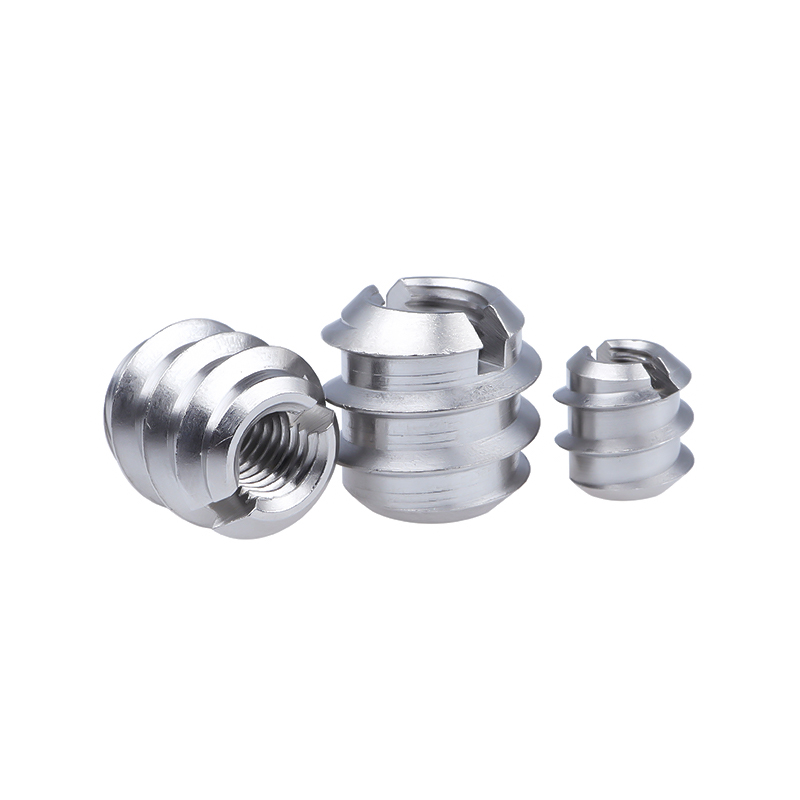
DIN 7965 Screwed Insert
Engineering Design Considerations
Base Material
The first design consideration is the material of the component receiving the insert. Aluminum and magnesium alloys are common examples, but engineering plastics and other soft materials may also require reinforcement. The strength, hardness, ductility, thermal expansion, and corrosion behavior of the parent material should be reviewed before selecting an insert.
The base material determines the appropriate hole design and influences the holding strength of the installed insert. A material that is too weak, too thin, or prone to cracking may not provide sufficient support even when a high-strength insert is used. Engineers should therefore evaluate the complete joint rather than treating the insert as an isolated component.
Thread Size and Engagement
The internal thread must match the mating screw or bolt. Thread size, pitch, tolerance class, engagement length, and fastener grade should be defined together. Insufficient engagement may limit the strength of the connection, while excessive engagement may provide no practical benefit and could increase component size or installation complexity.
For highly loaded connections, engineers should consider the distribution of load across the engaged threads. The insert length should be selected according to the base material, fastener strength, design load, and applicable technical requirements. The manufacturer can assist with selection when the customer provides the component drawing and intended application.
Hole Preparation
Hole preparation has a direct influence on installation quality. The hole diameter, depth, chamfer, thread condition, perpendicularity, and surface cleanliness should be controlled. An incorrect hole may produce insufficient engagement, excessive installation force, poor alignment, or damage to the insert.
Where the design calls for a pre-tapped hole, the tapping operation must produce the specified thread accurately and consistently. Chips, burrs, oil contamination, and surface damage should be removed before installation. Production teams should use calibrated gauges and documented work instructions to reduce variation between operators and production shifts.
Installation Alignment and Depth
The insert should be installed perpendicular to the component surface unless the design specifies another orientation. Misalignment can affect bolt entry, reduce thread engagement, and introduce stress into the assembly. The final installation depth should be controlled so that the insert is neither excessively recessed nor proud of the component surface.
Installation tools should be selected according to the insert geometry and production volume. Manual tools may be suitable for repair work or low-volume assembly. Pneumatic, electric, or automated systems may be preferred for high-volume production because they offer better control of speed, torque, depth, and repeatability.
Corrosion and Environmental Compatibility
Material and coating selection should reflect the environment in which the connection will operate. Humidity, salt spray, chemicals, temperature changes, and contact with dissimilar metals may influence long-term performance. Carbon steel, stainless steel, and coated options offer different combinations of strength, cost, corrosion resistance, and installation behavior.
Galvanic compatibility is important when the insert is installed in aluminum or magnesium. The engineering team should assess the complete material combination, including the bolt, insert, parent component, coating, and any sealing compound. In corrosive environments, additional protective measures may be required.
Manufacturing Process and Quality Control
The reliability of a DIN 7965 screwed insert begins with controlled manufacturing. A professional production process typically includes material verification, forming or machining, thread production, heat treatment where applicable, surface treatment, dimensional inspection, cleaning, packaging, and traceability. Each stage can affect the final performance of the insert.
Raw Material Control
Material selection is based on the required mechanical and environmental performance. Carbon steel and stainless steel may be supplied in different grades depending on strength, corrosion resistance, and customer specifications. Incoming material should be verified against purchasing requirements and associated certificates should be retained where documentation is required.
Material identification helps prevent mixing between different grades or production lots. Traceability from raw material to finished product allows potential quality issues to be investigated more quickly and supports customer documentation requirements.
Precision Forming and Machining
Threaded inserts may be produced through a combination of cold forming, rolling, turning, drilling, tapping, and other precision operations. The preferred process depends on insert geometry, material, size, production volume, and dimensional requirements. Efficient forming can provide high productivity, while precision machining may be used for complex or tightly controlled features.
Modern production equipment helps maintain repeatability in outer diameter, internal thread, external thread, length, driving features, and end geometry. Process parameters should be established and monitored so that the product remains within the applicable dimensional tolerances throughout the production run.
Thread Accuracy
Thread quality is central to insert performance. The internal thread must accept the specified mating fastener smoothly while maintaining the required fit. The external thread must engage the prepared hole correctly and provide stable retention after installation.
Thread gauges, optical inspection equipment, coordinate measuring systems, and other suitable instruments can be used to verify critical features. Inspection frequency may be adjusted according to product risk, production volume, and customer requirements. A robust quality system combines in-process checks with final inspection rather than relying only on end-of-line sorting.
Surface Treatment and Finishing
Surface treatment can improve corrosion resistance, reduce friction, or provide a specified appearance. The selected process should be compatible with the insert material and intended application. Coating thickness must be controlled because excessive coating can affect thread fit and installation force.
After finishing, inserts should be inspected for surface defects, contamination, burrs, and damage. Clean and controlled packaging helps protect the product during storage and transportation. For customers operating automated assembly lines, consistent bulk packaging or customized packaging may also be valuable.
Inspection and Traceability
Quality inspection may include dimensional checks, thread gauging, visual examination, material verification, coating inspection, and functional testing. Depending on the application, customers may also require mechanical testing, torque evaluation, pull-out testing, or installation trials in representative base materials.
Traceability connects the finished insert with its production date, material lot, process records, inspection results, and packaging information. This improves accountability and enables efficient root-cause analysis if a concern arises. For automotive and aerospace customers, traceability is an important part of supply reliability.
Advantages of an Integrated Threaded-Connection Manufacturer
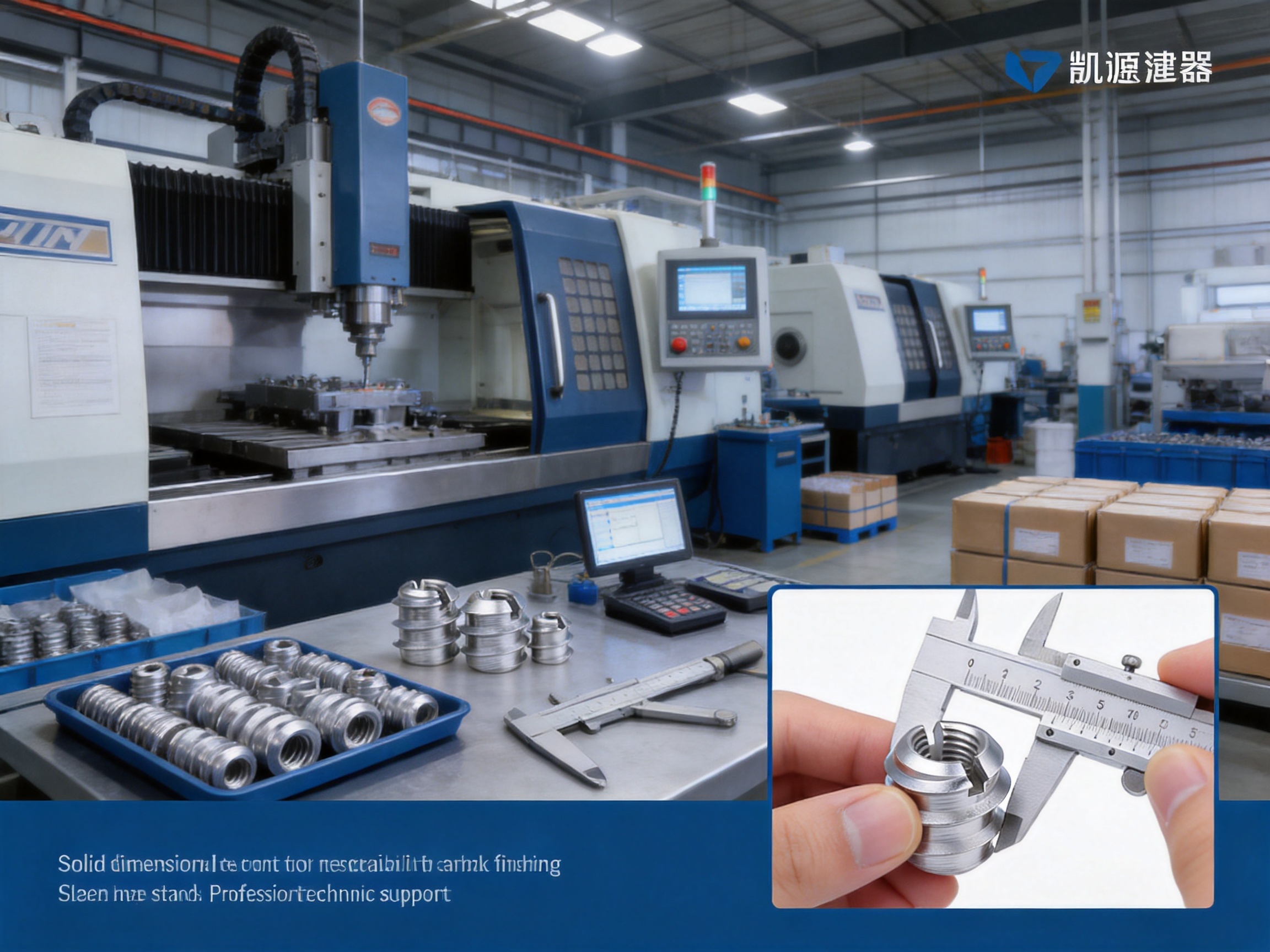
A supplier specializing in threaded connection products can offer broader support than a general fastener distributor. Dongtai Jinzhize Metal Products Co., Ltd. focuses on helical wire inserts, self-tapping inserts, key-locking inserts, threaded adapters, oil plugs, installation taps, and related tools. This product range enables customers to source complementary components from a manufacturer familiar with the interaction between inserts, holes, fasteners, and installation equipment.
The company was established in 2015 and operates from a 10,000-square-meter owned manufacturing facility. Its production base includes hundreds of machine tools and automated production systems. This equipment capacity supports both standardized production and the development of customized threading and fastening solutions.
In-house design, development, and production capabilities can shorten communication channels. Instead of transferring technical questions between unrelated companies, customers can discuss product dimensions, materials, installation requirements, packaging, and application concerns with a supplier focused on threaded connection technology.
The company’s experience in automotive and aerospace-related applications also supports an understanding of critical assembly requirements. These industries place strong emphasis on dimensional consistency, process stability, documentation, and dependable delivery. The same manufacturing discipline can benefit industrial equipment, rail vehicles, precision instruments, and other sectors.
In 2024, the company achieved an annual output value of 153 million RMB. This production scale indicates established manufacturing activity and the ability to support larger, stable supply programs. Capacity is particularly important for customers that need consistent replenishment, platform-wide standardization, or long-term production support.
A rigorous quality management system and an after-sales service mechanism further strengthen the supply relationship. Quality management helps control production variation, while after-sales support assists customers with product selection, installation questions, technical feedback, and corrective action. For a threaded insert, these services can be as important as the initial quotation because installation conditions strongly influence performance.
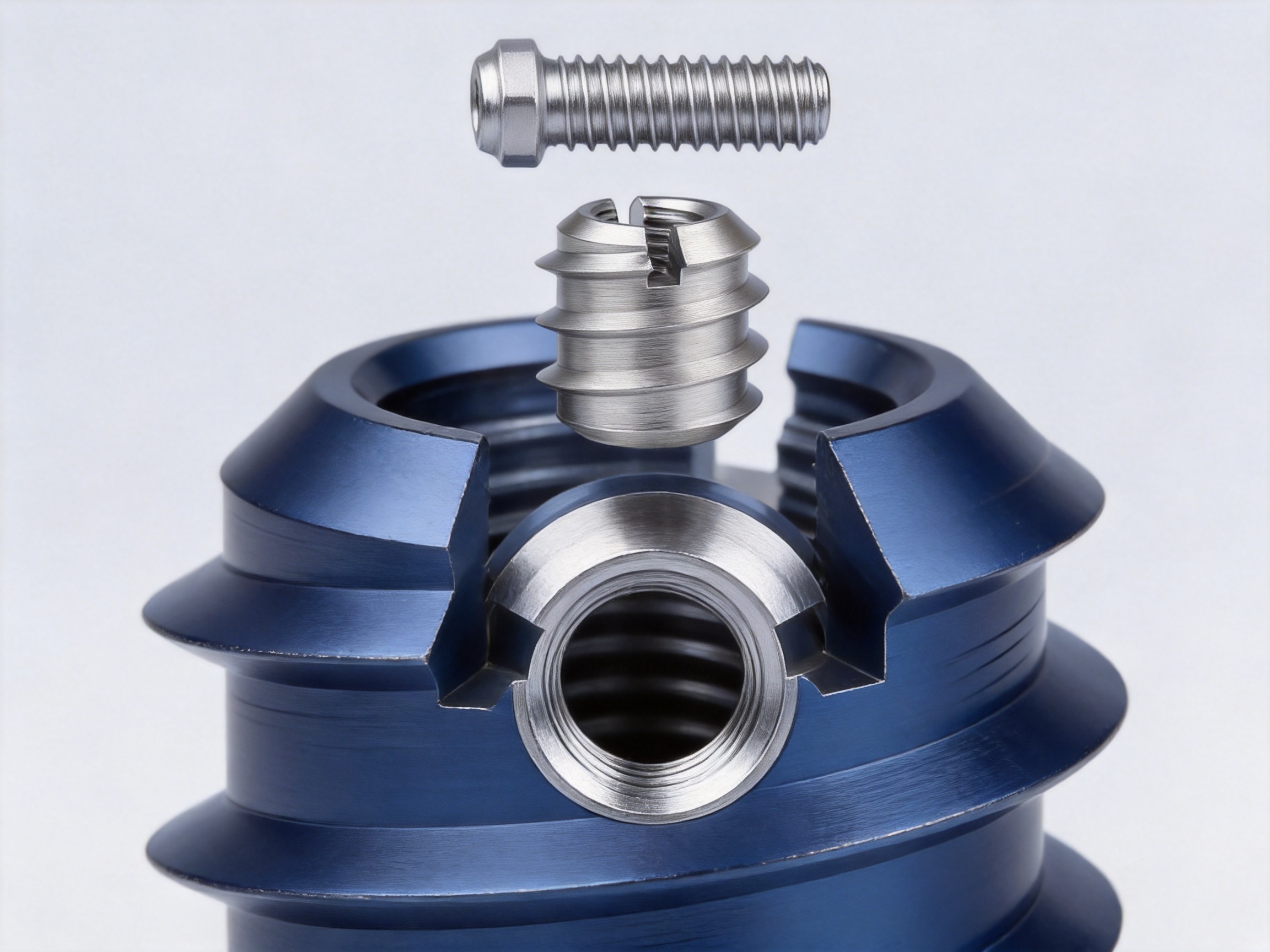
How DIN 7965 Inserts Compare with Alternative Insert Types
Different insert technologies are suitable for different situations. A wire thread insert is often selected when a lightweight, high-strength internal thread is needed, especially in applications requiring repairability or special thread configurations. A key-locking insert may be preferred where high resistance to rotation and pull-out is required. A self-tapping insert may be selected when the installation process and base material support its external cutting or forming action.
A DIN 7965 screwed insert is advantageous when the customer needs a standardized screwed insert with predictable dimensions and a strong internal thread. Its suitability depends on the prepared hole, component geometry, load requirements, and installation process. No single insert type is ideal for every application, which is why a supplier with several insert categories can provide more objective technical guidance.
| Insert Category | Typical Strength | Common Selection Consideration |
|---|---|---|
| DIN 7965 screwed insert | Standardized reinforced internal thread | Applications requiring defined dimensions and durable thread engagement |
| Wire thread insert | Lightweight thread reinforcement and repairability | Space-sensitive assemblies or specialized thread repair |
| Self-tapping insert | Efficient installation in suitable prepared holes | Production processes designed for the specific outer profile |
| Key-locking insert | Strong resistance to rotation and pull-out | High-load or high-vibration connections requiring mechanical locking |
| Threaded adapter | Connection between different thread systems | Thread conversion, spacing, or interface adaptation |
The competitive advantage of a DIN 7965 product should therefore be evaluated in relation to the application. Its strengths include standardization, material flexibility, repairability, and suitability for reinforcing threads in soft components. When supplied with appropriate tools and technical support, it can provide a complete and dependable solution rather than an isolated hardware item.
Production Efficiency and Supply Reliability
Large-scale industrial customers require more than acceptable samples. They need stable production over months or years, consistent packaging, dependable delivery, and rapid response to technical issues. A manufacturer with owned facilities, automated systems, and multiple machine tools can organize production more effectively and reduce dependence on external subcontracting.
Production planning should account for raw material availability, tooling, inspection capacity, surface treatment, packaging, and shipment schedules. Standard DIN 7965 sizes can be planned efficiently when demand is stable, while custom specifications may require engineering review and dedicated production arrangements.
For international customers, clear communication is essential. Technical drawings should specify thread size, length, material, coating, tolerance, quantity, packaging, and inspection requirements. Samples may be used to confirm fit and installation before mass production. A reliable supplier should be able to coordinate these steps and retain relevant records.
Consistent product identification is also important. Labels should clearly indicate the part number, size, material or finish where applicable, production lot, quantity, and customer reference. Good packaging prevents mixing between similar insert sizes and simplifies line-side inventory control.
Installation Best Practices
Before installation, verify the insert specification, hole condition, installation tool, and mating fastener. The operator should confirm that the component is free from chips, burrs, oil contamination, and foreign material. The prepared hole must match the required dimensions and thread condition.
The insert should be started squarely and driven using the correct tool. Excessive speed, uncontrolled torque, or an unsuitable driver may damage the insert or parent material. Automated production lines should establish repeatable settings and use regular checks to confirm installation depth and alignment.
After installation, inspect the insert for correct seating, visible damage, contamination, and thread accessibility. The mating bolt should enter smoothly without cross-threading. If the application requires a specific tightening torque, the torque procedure should be validated with the installed insert and actual component material rather than assumed from a different joint design.
Where the insert is used for repair, the damaged hole may need to be enlarged, reworked, or re-tapped according to a controlled repair instruction. The repair process should restore the required alignment and engagement without weakening the surrounding component. In critical assemblies, repaired parts should receive documented inspection and functional verification.
Quality Risks and How to Reduce Them
One common risk is selecting an insert without considering the parent material. A strong insert cannot compensate for a component wall that is too thin or a material that cannot support the external thread. Application review should include loads, available space, installation direction, service frequency, and environmental conditions.
Another risk is poor hole preparation. Incorrect diameter, damaged threads, inadequate depth, or excessive burrs can reduce retention and create installation defects. Standardized drilling and tapping instructions, calibrated gauges, and operator training help reduce this risk.
Improper installation is also a major source of failure. An insert that is tilted, installed too deeply, or driven with excessive force may not provide the expected performance. A supplier that offers installation taps and tools can help customers establish a more controlled process.
Finally, uncontrolled substitutions can create compatibility problems. Similar-looking inserts may differ in thread form, material, coating, length, or installation method. Procurement teams should use approved part numbers and technical documentation rather than relying solely on appearance or nominal size.
Customization and OEM Support
Although DIN 7965 establishes a standard reference, customers may still require project-specific support. Requirements can include special materials, surface treatments, packaging, inspection documents, thread combinations, quantities, or production schedules. A manufacturer with design and production capabilities can assess whether the requested configuration is technically and economically feasible.
OEM support may begin with drawing review. The supplier can examine the base material, hole dimensions, insert length, installation direction, and environmental conditions. Samples can then be produced or selected for trial installation. Feedback from testing can be used to confirm the final specification before mass production.
Customized support is particularly valuable when the insert will be used in a new product platform. Early consultation may identify potential interference, insufficient wall thickness, difficult tool access, or coating-related fit issues. Solving these problems during design is generally less costly than correcting them after production launch.
For large customers, vendor-managed stock, scheduled releases, customized labels, and dedicated packaging may further improve supply efficiency. These arrangements should be based on forecast accuracy, agreed quality requirements, and clear communication between the manufacturer and customer.
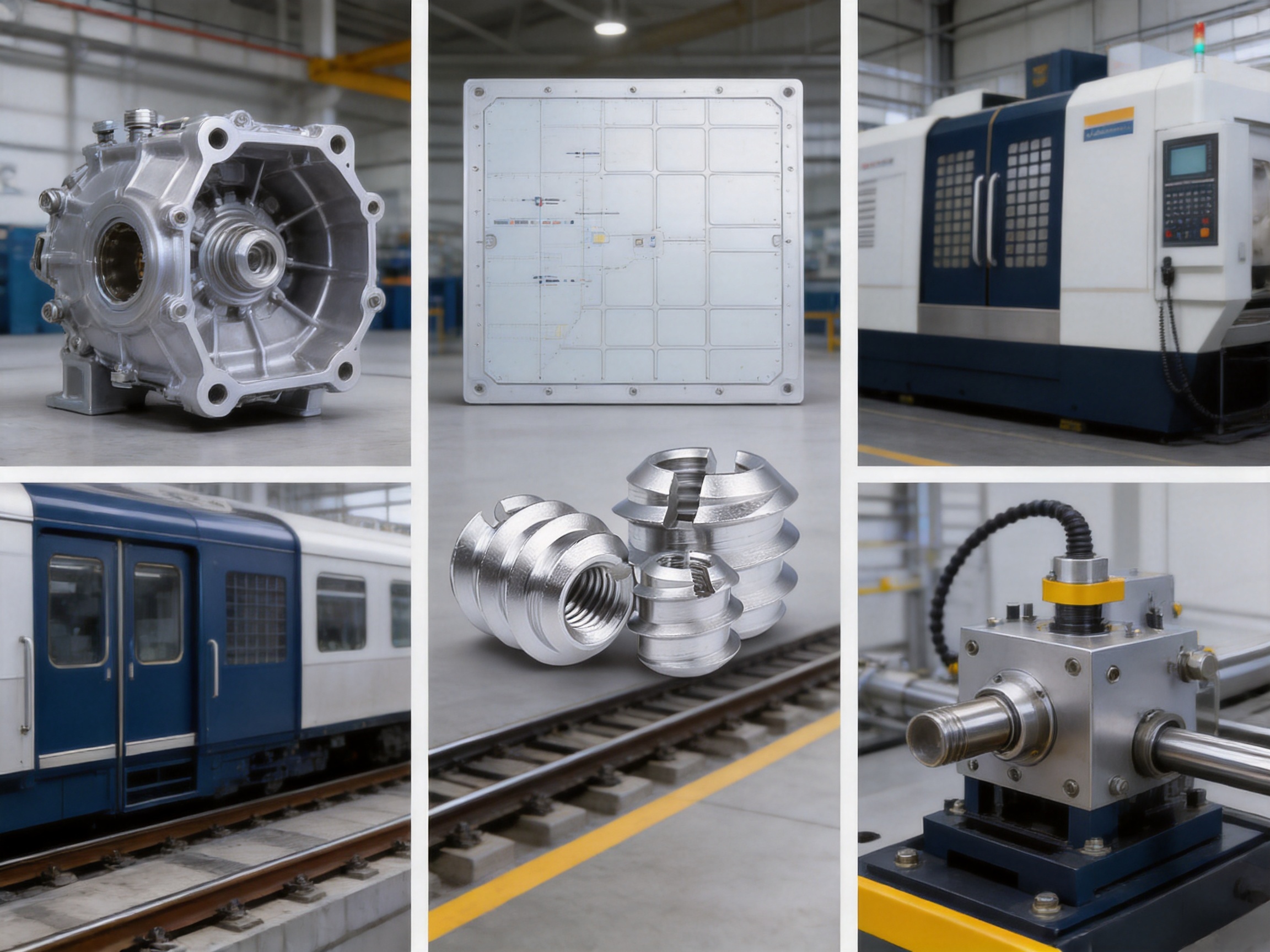
Selection Guide for Purchasing Teams
Purchasing teams should define the application before requesting quotations. The basic information should include the required standard, internal thread size, insert length, material, surface treatment, estimated annual quantity, delivery location, packaging preference, and any inspection or certification requirements.
It is also useful to provide the base component material and a description of the operating environment. Information about vibration, temperature, corrosion, repeated assembly, and service conditions helps the manufacturer recommend a more suitable product. If the insert will be installed in a safety-related or high-value component, the buyer should identify the required validation and traceability level at the beginning of the project.
Supplier evaluation should cover manufacturing capability, quality controls, production capacity, technical support, delivery performance, and after-sales response. A low unit price may not represent the lowest total cost if inconsistent inserts cause assembly stoppages, repairs, or field failures.
Frequently Asked Questions
What is the main purpose of a DIN 7965 screwed insert?
Its main purpose is to provide or reinforce a durable internal thread in a component, especially when the base material is relatively soft or when the connection will be exposed to repeated tightening, vibration, or service operations.
Can DIN 7965 inserts be used in aluminum?
Yes. Aluminum is one of the common materials that may benefit from a reinforced threaded connection. The exact insert material, length, hole design, and installation procedure should be selected according to the aluminum alloy, load, environment, and applicable engineering requirements.
Are these inserts suitable for magnesium components?
They may be suitable for magnesium components when the insert and surface treatment are properly selected. Corrosion compatibility, galvanic effects, wall thickness, and installation conditions should be reviewed before production use.
Do DIN 7965 inserts require a pre-tapped hole?
The supplied product information identifies these screwed inserts for use with pre-tapped holes. The exact hole preparation depends on the insert design and specification. Customers should follow the manufacturer’s technical drawing and installation instructions rather than applying a generic hole procedure.
Can an insert repair a stripped threaded hole?
In many cases, a suitable insert can restore a damaged threaded hole. The damaged area may require controlled reworking before installation. The repair method must be checked for available material, alignment, remaining wall thickness, and required load capacity.
What materials are available?
Common options include carbon steel and stainless steel. Other material or coating requirements may be considered for specific applications. The choice should account for strength, corrosion resistance, temperature, friction, parent-material compatibility, and total cost.
How does a DIN 7965 insert differ from a wire thread insert?
A DIN 7965 screwed insert is a solid threaded insert with an external engagement profile and an internal thread. A wire thread insert is formed from helically wound wire. Both reinforce threads, but their installation methods, dimensional characteristics, locking features, and application advantages differ.
What causes insert installation failure?
Typical causes include incorrect hole dimensions, poor tapping, burrs, contamination, wrong installation tools, misalignment, excessive driving force, incorrect installation depth, or selecting an insert that does not match the parent material and load requirements.
Can the inserts be used in automated assembly?
Yes, they can be considered for automated or semi-automated production when the insert geometry, packaging, installation tool, and process controls are suitable. Automation trials should confirm feeding reliability, alignment, installation force, depth, and inspection requirements.
What documentation should be requested?
Depending on the application, customers may request product drawings, material information, dimensional inspection records, coating details, lot traceability, certificates, installation instructions, and sample validation reports. Critical applications may require additional documentation agreed during project development.
How should the correct insert length be selected?
Length should be based on the required thread engagement, component thickness, load, material strength, installation depth, and available space. The longest possible insert is not automatically the best choice. Engineering review should confirm that the selected length provides sufficient performance without interfering with internal features.
Why is supplier manufacturing capacity important?
Stable capacity helps support consistent quality, larger order volumes, replenishment programs, and predictable delivery. It also gives the customer greater confidence that the approved product can remain available throughout the life of a vehicle, machine, or equipment platform.
Conclusion
DIN 7965 screwed inserts provide a standardized and practical method for creating strong, durable internal threads in soft or lightweight materials. Their advantages include improved thread strength, resistance to stripping, better performance under vibration, suitability for repeated service, repairability, and compatibility with standardized industrial procurement.
The best results depend on more than the insert specification. Base-material selection, hole preparation, thread accuracy, installation alignment, surface treatment, inspection, and traceability must all be controlled. For this reason, customers benefit from working with a specialized threaded-connection manufacturer that can supply inserts, installation taps, tools, complementary fastening products, and technical support.
Dongtai Jinzhize Metal Products Co., Ltd. combines a focused product portfolio with an owned 10,000-square-meter manufacturing facility, hundreds of machine tools, automated production systems, experienced engineering personnel, quality management procedures, and after-sales support. Its experience serving automotive, aerospace, rail, industrial, and precision applications positions it to support both standardized DIN 7965 requirements and broader OEM threading solutions.
For companies seeking reliable thread reinforcement, the purchasing decision should consider the complete life-cycle value of the product. A consistent DIN 7965 insert can reduce assembly risks, extend component service life, simplify maintenance, and improve supply-chain control. When matched with disciplined manufacturing and application-specific support, it becomes an important element in dependable threaded connection design.
References
DIN 7965, Screwed Inserts and Related Dimensional Requirements, German Industrial Standard reference.
ISO 898-1, Mechanical Properties of Fasteners Made of Carbon Steel and Alloy Steel.
ISO 965, ISO General-Purpose Metric Screw Threads: Tolerances and Limits of Size.
ISO 3269, Fasteners: Acceptance Inspection.
ISO 9001, Quality Management Systems: Requirements.
Engineering principles for threaded joints in aluminum and magnesium alloy components.
Manufacturer technical information for DIN 7965 screwed inserts, installation tools, materials, coatings, and related threaded connection products.