Français
 Español
 Deutsch


Content
- 1 Introduction to Straight Thread Plugs
- 2 What Is a Straight Thread Plug?
- 3 Core Performance Characteristics
- 4 Advantages Compared with Conventional Alternatives
- 5 Sealing Design and Installation Considerations
- 6 Industrial Applications
- 7 Manufacturing Strengths and Process Capability
- 8 Quality Control Priorities for Straight Thread Plugs
- 9 Product Selection Guide
- 10 Supply and Customer Support
- 11 Best Practices for Industrial Users
- 12 Frequently Asked Questions
- 12.1 What is the main purpose of a straight thread plug?
- 12.2 How is a straight thread plug installed?
- 12.3 What does the hex socket design offer?
- 12.4 What temperature range is specified for this product?
- 12.5 Can the plug be used in high-pressure systems?
- 12.6 Can it be used with synthetic materials?
- 12.7 Does installation require specialized equipment?
- 12.8 Is a separate sealant always necessary?
- 12.9 Where are straight thread plugs commonly used?
- 12.10 What information should be provided when requesting a quotation?
- 12.11 What manufacturing capabilities support this product?
- 12.12 Can related threaded products be sourced from the same manufacturer?
- 13 Conclusion
- 14 References
- 15 Product: Straight Thread Plug
Introduction to Straight Thread Plugs
A straight thread plug, also known as a hex socket plug, is a compact but essential component used to close, protect, and seal threaded openings in industrial equipment. It is designed for applications where an unused, temporary, or maintenance-related threaded port must be sealed against leakage, contamination, pressure loss, and environmental exposure. Unlike a simple cover or loosely fitted fastener, a properly manufactured straight thread plug creates a controlled threaded connection that supports dependable sealing in piping systems, hydraulic assemblies, pneumatic equipment, reservoirs, valves, machine tools, and other mechanical structures.
The performance of a plug depends on much more than its external appearance. Thread accuracy, material quality, dimensional consistency, surface condition, sealing configuration, and installation efficiency all influence whether the finished connection remains secure during operation. In industrial environments, even a small leakage point can cause pressure loss, fluid contamination, equipment downtime, safety concerns, or expensive maintenance. For that reason, manufacturers and maintenance teams require sealing components that provide consistent performance across repeated production and service conditions.
The straight thread plug described in this article is engineered as a high-performance sealing solution for industrial threaded ports. It combines precision-machined threads, high-strength metallic construction, practical hex-socket installation, and compatibility with optional sealing methods. Its stated operating temperature range of -40°C to 200°C and sealing pressure capability of up to 10 MPa make it suitable for a broad selection of medium- and high-pressure applications.
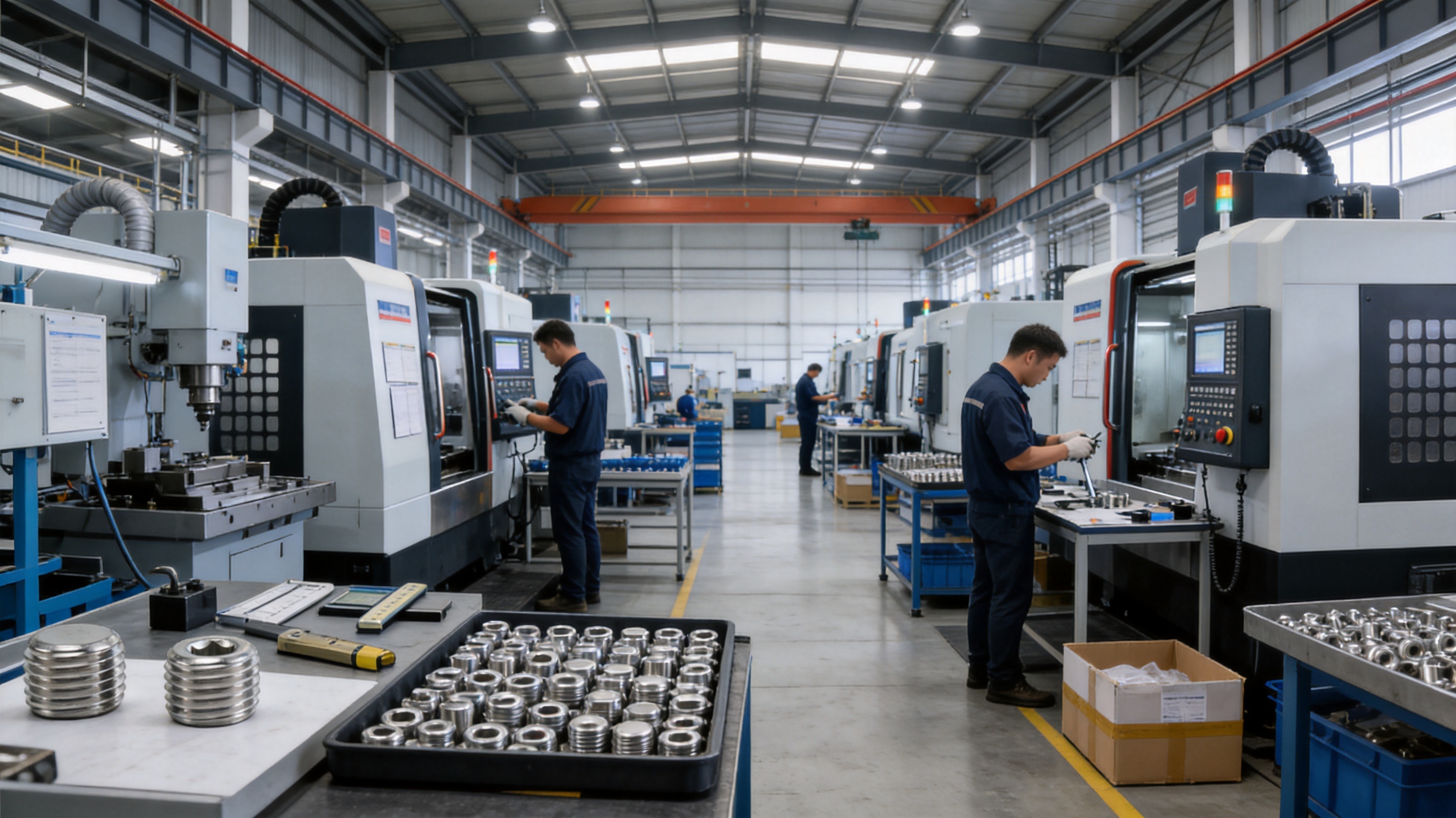
In addition to its functional design, this product benefits from the manufacturing capabilities of Dongtai Jinzhize Metal Products Co., Ltd., a specialized producer of threaded connection and fastening products. The company operates an owned 10,000-square-meter manufacturing facility with hundreds of machine tools and automated production systems. Its experience in producing helical wire inserts, self-tapping inserts, key-locking inserts, threaded adapters, oil plugs, installation taps, and related tools supports a focused understanding of thread geometry, metal forming, machining, inspection, and application requirements.
Straight Thread Plug
What Is a Straight Thread Plug?
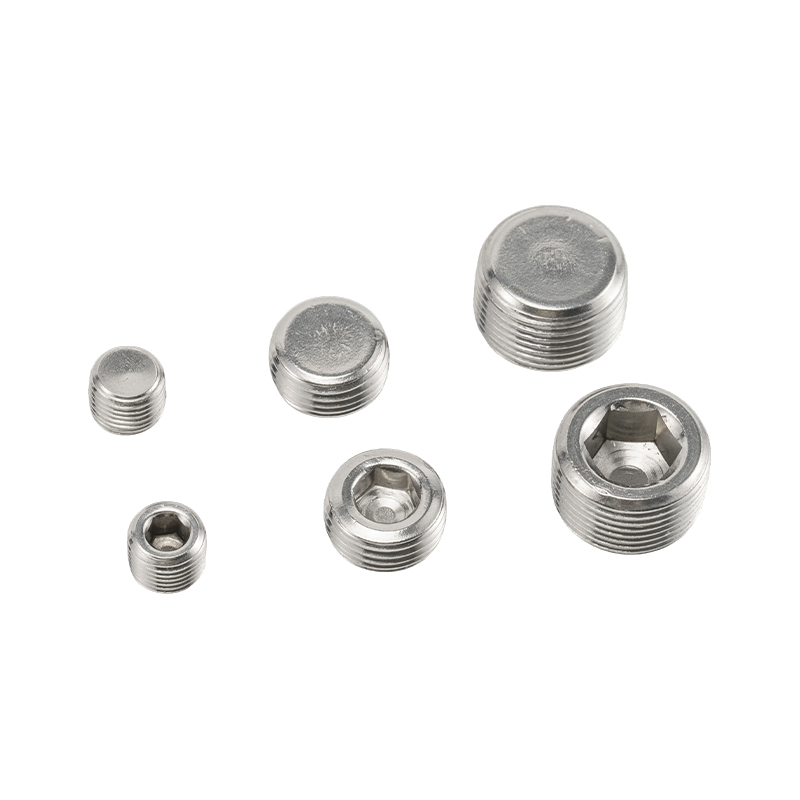
A straight thread plug is a threaded closure used to seal an internally threaded hole or port. The term “straight thread” refers to a thread profile with a constant diameter along the threaded length, unlike a tapered pipe thread that gradually changes diameter. The plug is inserted into a matching internal thread and tightened until the selected sealing method creates a secure barrier between the plug and the mating component.
The hex socket design provides an internal drive feature that can be operated with a standard hex key. Depending on the plug configuration and installation environment, a wrench or other suitable hand tool may also be used. This internal drive arrangement allows the plug to be installed without a large external head, helping preserve clearance around the assembly and providing a clean, compact appearance.
Straight thread plugs may be used with pre-applied sealants, sealing compounds, gaskets, O-rings, specialized seating surfaces, or other application-specific sealing methods. The appropriate solution depends on the port design, fluid or gas being contained, pressure level, operating temperature, required service life, and whether the plug is intended for temporary or permanent use.
The plug serves several functions at the same time. First, it prevents the escape of hydraulic oil, compressed air, water, lubricants, process media, or other contained substances. Second, it prevents dust, moisture, chips, and other foreign matter from entering an open port. Third, it protects internal threads from mechanical damage and corrosion. Finally, it provides a neat and organized finish for redundant or abandoned threaded holes in manufactured equipment.
Core Performance Characteristics
Broad Operating Temperature Range
The straight thread plug is designed for stable performance from -40°C to 200°C. This broad range supports applications exposed to cold outdoor conditions, heated machinery, engine compartments, industrial process equipment, and temperature fluctuations during start-up and shutdown.
Temperature affects both the plug material and the sealing interface. As temperature changes, metals and sealing materials may expand or contract at different rates. A component that performs adequately at room temperature may not maintain the same sealing behavior in a cold or heated environment. By specifying a wider operating range than conventional products commonly limited to approximately 0°C to 120°C, this plug offers greater application flexibility.
The temperature range should always be evaluated together with the selected sealant, gasket, or seating design. The plug body may tolerate a particular temperature, while the complete sealing assembly must be selected to match the actual medium and operating cycle. Proper installation remains essential for maintaining performance at the upper and lower limits of the application.
Pressure Resistance up to 10 MPa
The product is designed to withstand sealing pressures of up to 10 MPa when correctly selected, installed, and used with a suitable mating port and sealing method. This pressure capability makes it suitable for many medium- and high-pressure systems, including hydraulic circuits, pneumatic equipment, industrial manifolds, reservoirs, and machine assemblies.
Pressure performance is determined by the complete connection rather than the plug alone. Important factors include thread engagement length, internal thread quality, plug material, port material, installation torque, sealant selection, temperature, pressure cycling, and the characteristics of the contained medium. A well-machined thread helps distribute the tightening load and supports stable contact between the plug and the port.
For critical systems, users should confirm the required pressure rating, test the completed assembly where appropriate, and follow the equipment manufacturer’s installation instructions. The stated 10 MPa capability should be treated as an application reference, not as a substitute for engineering validation of a specific system.
Precision-Machined Threads
Thread quality is one of the most important factors in plug performance. Threads that are inconsistent, damaged, contaminated, or poorly formed can lead to difficult installation, uneven loading, leakage, or premature wear. Precision machining helps produce a consistent thread profile and controlled dimensional relationship between the plug and its mating port.
A properly formed thread allows the plug to enter smoothly without excessive force. It also helps maintain contact along the intended engagement area, reducing the possibility of cross-threading and localized stress. Consistent thread production is especially important in high-volume manufacturing, where components from different production batches must remain interchangeable.
For customers using threaded components in automotive, aerospace, rail vehicle, hydraulic, and industrial applications, dimensional consistency also supports assembly standardization. Maintenance teams can use consistent tools and procedures, while purchasing departments can reduce the risk associated with mixed-quality components from different sources.
High-Strength Metallic Construction
The plug is manufactured from high-grade metal materials selected for strength, durability, corrosion resistance, and impact resistance. Metallic construction is appropriate for industrial environments in which the component may be exposed to vibration, pressure fluctuations, contact with tools, thermal cycling, lubricants, hydraulic fluids, or accidental mechanical impact.
A strong plug body helps protect the internal drive feature during tightening and removal. This is particularly important when the plug must be installed in a recessed port or removed during maintenance after long service. A robust material and controlled manufacturing process reduce the likelihood of deformation during normal handling.
Material selection should still be matched to the application. Factors such as chemical compatibility, galvanic interaction, ambient humidity, fluid composition, and expected service life should be considered before final specification. The manufacturer can support product selection according to the required thread, size, material, and sealing configuration.
Advantages Compared with Conventional Alternatives
Wider Application Temperature Capability
One of the notable advantages of the straight thread plug is its stated temperature range of -40°C to 200°C. Conventional products may commonly be restricted to a narrower range of approximately 0°C to 120°C. A broader operating range gives engineers more freedom when designing equipment that may operate outdoors, near heat sources, in cold storage environments, or through substantial temperature changes.
This advantage can reduce the need to maintain separate plug specifications for different operating zones. A single product family with broader temperature capability may simplify inventory planning and improve standardization across multiple equipment models. It can also reduce the risk of using a general-purpose plug in an application that experiences temperatures outside the product’s intended range.
Faster Installation and Sealing Stabilization
Many sealing components require extensive preparation before installation. The port may need careful cleaning, multiple sealing layers, curing time, or specialized equipment. A straight thread plug with a suitable pre-applied sealant or specialized seating design can shorten the installation and sealing stabilization process.
The internal hex socket allows the installer to use a standard hex key or suitable wrench. This is beneficial in production lines, service workshops, and confined equipment spaces where heavy or specialized installation machinery is impractical. Faster installation can improve productivity while also reducing the number of steps that must be controlled by the operator.
Shorter stabilization time is especially valuable when equipment must return to service quickly. In maintenance and retrofitting operations, a reliable plug that can be installed with common hand tools may reduce downtime and avoid unnecessary disassembly.
Reduced Workflow Complexity
The product is designed for direct installation without complex pre-treatment in suitable applications. This does not eliminate the need for basic cleaning, thread inspection, or correct installation procedures, but it can simplify the overall workflow compared with sealing solutions that require elaborate preparation.
A simplified process can bring several benefits. It may reduce labor time, limit the number of consumables required at the workstation, lower the risk of inconsistent preparation, and make training easier for assembly and maintenance personnel. These advantages are particularly useful where many threaded ports must be sealed repeatedly across a production line.
Compatibility with Metal and Synthetic Substrates
The straight thread plug is designed for compatibility with metal and various synthetic substrates. This enables use in equipment containing steel, aluminum, alloy components, engineering plastics, and other suitable materials. Compatibility must be verified for the specific substrate and operating environment, but the product’s adaptable design supports a broad range of assemblies.
When a threaded plug is installed into a softer or synthetic port, control of installation force is especially important. Excessive tightening may damage the internal thread or deform the seating area. Precision thread production and proper installation guidance help users establish a secure connection while protecting the mating component.
Compact and Clean Installation
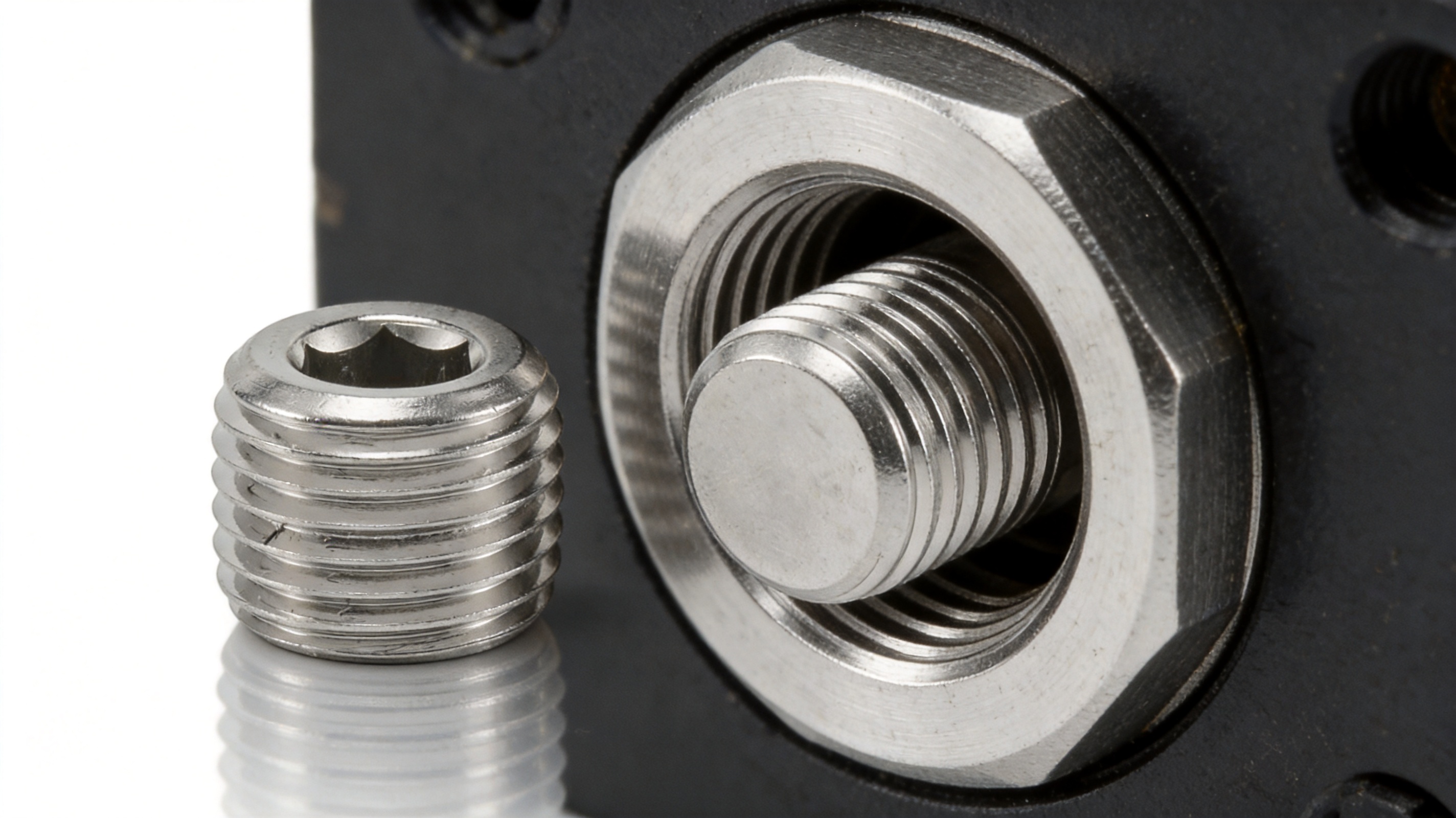
The hex socket format provides a low-profile solution that can be installed into recessed or space-constrained threaded ports. Once installed, the plug creates a tidy surface with fewer projecting features than many externally headed fasteners. This can improve equipment appearance while reducing the possibility of accidental contact with nearby components.
A compact closure is useful in machine tools, valves, engines, transmissions, hydraulic manifolds, and other assemblies where components are placed close together. The internal drive also supports controlled installation in locations where a conventional wrench cannot access an external head.
Sealing Design and Installation Considerations
Preparing the Threaded Port
Before installation, the threaded port should be inspected for chips, dirt, burrs, corrosion, old sealant, and mechanical damage. Contamination between the plug and the port can prevent full thread engagement or create a leakage path. In manufacturing, cleaning procedures should be standardized so that every assembly receives the same level of preparation.
The internal thread should be checked for correct size and form. If the thread is damaged or incorrectly manufactured, forcing a new plug into the opening may worsen the condition and compromise the connection. Where necessary, the port should be repaired or replaced according to the equipment manufacturer’s procedure.
Choosing a Sealing Method
The most suitable sealing method depends on the application. A plug may be supplied with a pre-applied sealant, or it may use a specialized seating design that creates sealing contact as the component is tightened. Other applications may require an external sealing compound, gasket, or elastomeric element.
Selection should consider pressure, temperature, vibration, fluid or gas compatibility, installation frequency, removal requirements, and expected service life. A permanent production closure may use a different sealing approach from a maintenance plug that must be removed regularly.
Users should avoid combining incompatible sealing products. Excessive sealant can enter a hydraulic or pneumatic circuit, while an unsuitable compound may soften, harden, shrink, or react with the contained medium. The manufacturer’s technical guidance and the requirements of the equipment system should be followed.
Using the Hex Socket Correctly
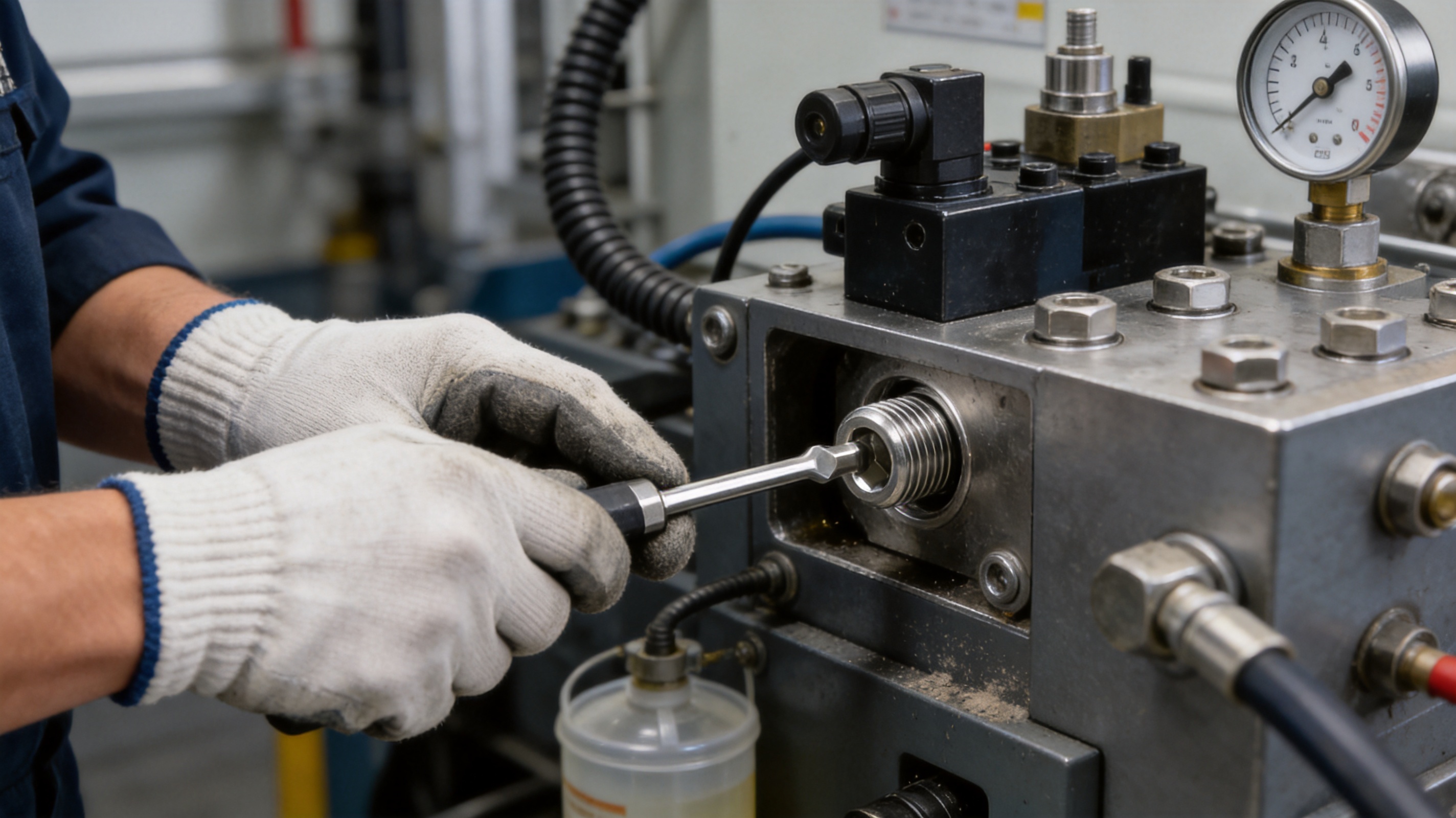
The hex key or wrench should fully engage the internal socket before tightening. A tool that is too small, worn, or inserted at an angle may damage the drive feature. The installer should apply force smoothly and avoid impact loading unless the installation procedure specifically allows it.
Correct tightening torque is important. Insufficient torque may prevent the sealing interface from closing properly, while excessive torque may damage the plug, distort the mating port, or create unnecessary stress. The recommended torque should be determined according to plug size, material, thread specification, sealing method, and substrate.
Checking the Finished Connection
After installation, the plug should be visually inspected to confirm that it is seated correctly, aligned with the port, and free from visible damage. If the assembly is part of a pressure system, an appropriate leak or pressure test should be performed before the equipment is placed into service.
During commissioning, the system should be monitored for leakage, pressure loss, unusual movement, or changes caused by thermal cycling. If a problem occurs, the system must be depressurized safely before the plug is inspected or removed. Maintenance personnel should never loosen a plug in a pressurized system.
Industrial Applications
Hydraulic Systems
Hydraulic equipment contains numerous threaded ports used for pressure lines, test points, service connections, valves, manifolds, and auxiliary circuits. Some ports may remain unused in a particular machine configuration or may be opened temporarily during maintenance. A straight thread plug can seal these locations and help prevent hydraulic oil leakage.
Hydraulic systems often experience pressure pulses, vibration, temperature changes, and contact with oils or additives. A precision-machined plug with a suitable sealing method provides a practical closure for these conditions. Its compact form is also useful in manifolds and compact power units where external clearance is limited.
Pneumatic Equipment
Pneumatic circuits require secure sealing to retain compressed air and maintain system efficiency. An unsealed or poorly sealed port can cause continuous air loss, reduce actuator performance, and increase compressor energy consumption. Straight thread plugs can close redundant ports in valves, air preparation units, cylinders, manifolds, and control assemblies.
Because pneumatic equipment may be assembled in large quantities, rapid installation with standard hand tools can improve productivity. The use of consistent plugs also supports simpler service procedures and replacement planning.
Piping Engineering
Pipeline assemblies frequently include reserved ports, inspection openings, drain points, instrument connections, and temporary construction interfaces. A straight thread plug can close these openings to prevent media leakage and limit the entry of dust, moisture, and construction debris.
In a retrofit project, existing piping may contain interfaces that are no longer required after equipment changes. A suitable plug can provide a clean and durable closure without replacing an entire pipe section. Engineers should verify the thread standard, pressure requirement, fluid compatibility, and applicable safety regulations before installation.
Machine Tools and Valves
Machine tools, valves, pumps, gearboxes, and other mechanical equipment often contain threaded holes that are used during production, testing, lubrication, or optional configuration. Once a port is no longer needed, leaving it open may create contamination, safety, or appearance concerns.
A low-profile hex socket plug can provide a neat finish while protecting the internal cavity. It can also be used as a temporary closure during assembly, allowing access to be restored later when maintenance or configuration changes are required.
Automotive Engines and Transmissions
Automotive engines and transmissions include complex networks of oil passages, service ports, drain points, and threaded interfaces. These assemblies operate under vibration, thermal cycling, fluid exposure, and demanding production schedules. A consistent threaded plug can support secure closure and help protect the integrity of the assembly.
Jinzhize’s experience in threaded connection products for automotive applications contributes to its understanding of the dimensional consistency and traceability required by vehicle component manufacturers. In high-volume production, stable supply and repeatable quality are as important as the basic sealing function.
Aerospace and Rail Vehicle Manufacturing
Aerospace and rail vehicle applications place strong emphasis on reliability, consistency, documentation, and controlled assembly. Threaded plugs may be used in equipment housings, hydraulic assemblies, fluid systems, structural components, and manufacturing fixtures. Each application must be evaluated according to its own design and compliance requirements.
The ability to manufacture related threaded products in one specialized facility may help customers coordinate components, tooling, and technical communication. Products should still be approved according to the customer’s engineering standards and qualification procedures before use in critical assemblies.
Maintenance and Retrofitting
Maintenance teams often encounter abandoned ports, removed instruments, replaced valves, and modified piping. A straight thread plug can provide either a temporary or permanent closure, depending on the maintenance plan. The component helps organize the equipment, protect the opening, and reduce the chance of accidental leakage or contamination.
For temporary use, the plug may be selected for easy removal and repeated service access. For permanent use, the sealing method and material should be chosen for long-term stability. In both cases, the plug should be clearly recorded in maintenance documentation so that future technicians understand the function and specification of the closure.
Manufacturing Strengths and Process Capability
Specialized Focus on Threaded Connection Products
Dongtai Jinzhize Metal Products Co., Ltd. focuses on threaded connection products rather than treating thread components as a minor part of a broad, unrelated product range. Its product categories include self-tapping thread inserts, internal-external thread conversion nuts, wire thread inserts, three-hole threaded inserts, oil plugs, installation tools, thread taps, and key-locking inserts.
This product concentration allows the company to develop practical experience across the complete threaded connection process. Threaded components must work together correctly: a plug must match its port, an insert must match its installation tool, and a tap must produce a suitable internal thread. Knowledge gained from one product category can strengthen quality control and design decisions in another.
10,000-Square-Meter Owned Facility
The company operates from an owned manufacturing plant covering approximately 10,000 square meters. An owned facility provides a stable base for production planning, process organization, equipment deployment, material handling, and quality management.
Facility scale is important for customers seeking a reliable long-term supplier. It can support separate areas for machining, automated production, inspection, storage, packaging, and shipment. It also provides room for process improvement and capacity expansion as customer demand develops.
Hundreds of Machine Tools and Automated Systems
The manufacturing site is equipped with hundreds of machine tools and automated production systems. This equipment base supports repeatable machining and high-volume production of threaded components. Automation can help reduce variation caused by manual operations, improve production rhythm, and support consistent handling of parts between process stages.
Automation does not replace engineering control. It must be supported by suitable tooling, process parameters, equipment maintenance, inspection procedures, and operator supervision. When these elements work together, automated manufacturing can provide a dependable balance of output capacity and dimensional consistency.
Design, Development, and Production Experience
Established in 2015, the company has developed an experienced team covering product design, development, and production. For a component such as a straight thread plug, design and manufacturing experience are closely connected. Product geometry must be practical to machine, compatible with the intended sealing method, and suitable for installation in the target equipment.
Development capability also helps the manufacturer respond to different customer requirements. Customers may need specific thread standards, dimensions, materials, surface treatments, drive sizes, sealing configurations, packaging methods, or inspection records. A supplier with design and production experience is better positioned to evaluate these requirements as a complete system rather than as isolated specifications.
Quality Management and Traceability
The company maintains a rigorous quality management system and a comprehensive after-sales service mechanism. For industrial threaded products, quality management should address incoming materials, machining parameters, thread dimensions, surface condition, sealing features, final inspection, packaging, and shipment control.
Traceability is especially valuable in automotive, aerospace, rail, hydraulic, and other critical applications. Consistent records can help identify production batches, investigate field feedback, manage inventory, and support corrective action if a problem is discovered. Jinzhize emphasizes highly consistent and traceable products as part of its customer service approach.
In 2024, the company achieved an annual output value of 153 million RMB. This figure indicates significant manufacturing activity and demonstrates the company’s ability to support stable supply at scale. Output value alone does not determine product suitability, but combined with specialized equipment, process experience, and quality management, it supports the assessment of the company as an established industrial supplier.
Quality Control Priorities for Straight Thread Plugs
Material Verification
Material verification is an important first step in producing durable plugs. The selected metal must meet the required mechanical and application characteristics. Material identification, supplier control, incoming inspection, and batch records help reduce the risk of variation between production lots.
Thread Inspection
Thread inspection verifies that the plug will mate correctly with the specified internal thread. Inspection may include checks of thread diameter, pitch, profile, engagement length, surface condition, and functional fit. The exact inspection method depends on the thread standard and customer requirement.
Drive Feature Inspection
The hex socket must be formed with sufficient dimensional accuracy and depth for reliable tool engagement. A damaged or undersized socket can make installation difficult and increase the possibility of tool slippage. Inspection of the drive feature is therefore important even though it does not directly contact the sealed medium.
Surface and Sealing Inspection
Surface quality affects corrosion resistance, appearance, and contact with sealing materials. Where a pre-applied sealant or specialized seating design is used, the sealing feature should be controlled for coverage, position, cleanliness, and consistency. Packaging must also protect the plug from contamination and impact before installation.
Product Selection Guide
Customers selecting a straight thread plug should begin by identifying the exact thread specification of the mating port. This includes nominal size, pitch, thread form, tolerance, and, where relevant, the applicable national or international standard. A plug with the wrong thread may appear similar but will not provide a safe or reliable connection.
The required pressure and temperature should then be established. The product’s stated capability of up to 10 MPa and operating range of -40°C to 200°C provide useful reference points, but the full assembly must be reviewed. Pressure spikes, vacuum conditions, thermal cycling, vibration, and exposure to chemicals may influence the final selection.
Material compatibility is another important consideration. The plug must be suitable for the port material and the contained medium. When dissimilar metals are combined, engineers should evaluate the possibility of galvanic corrosion. When synthetic materials are involved, the effect of tightening force and long-term deformation should also be considered.
The required sealing method should be defined before ordering. Customers may require a standard seating design, pre-applied sealant, a particular elastomeric seal, or compatibility with an existing assembly process. Installation space, tool access, removal frequency, and packaging requirements should also be communicated.
| Selection Factor | Key Question | Reason for Evaluation |
|---|---|---|
| Thread specification | What size, pitch, form, and tolerance are required? | Ensures correct mating and prevents cross-threading or leakage. |
| Pressure | What normal, peak, and cycling pressures will occur? | Confirms that the plug and sealing interface are suitable. |
| Temperature | What are the minimum, maximum, and fluctuating temperatures? | Supports selection of a product and sealing method with adequate thermal capability. |
| Material compatibility | What are the port material and contained medium? | Helps prevent corrosion, chemical attack, and substrate damage. |
| Installation method | Will a hex key or wrench provide suitable access? | Ensures efficient and controlled assembly in the available space. |
| Service intention | Is the closure temporary, removable, or permanent? | Influences sealant choice, inspection, and maintenance planning. |
| Quality requirements | Are batch records, inspection reports, or traceability needed? | Supports production control and customer compliance requirements. |
Supply and Customer Support
A dependable threaded component supplier must provide more than a catalog description. Customers often need assistance with thread identification, material selection, sealing configuration, installation tooling, packaging, and replacement planning. A manufacturer that produces plugs alongside thread taps, inserts, and installation tools can provide more coordinated technical support.
Jinzhize’s product range allows customers to source multiple threaded connection products from a specialized supplier. This may simplify purchasing, reduce the number of technical interfaces, and improve communication when an assembly requires both a threaded closure and thread-repair or thread-conversion components.
The company’s after-sales service mechanism is intended to support customers beyond the initial shipment. Service may include product clarification, application communication, issue feedback, and coordination of future supply. For industrial users, this relationship is valuable because threaded components are often part of a larger production or maintenance system.
Stable supply is also important. A product that performs well but cannot be delivered consistently may create production delays or force customers to qualify multiple substitutes. The company’s plant, equipment base, and reported annual output provide a foundation for serving customers requiring repeated and larger-volume deliveries.
Best Practices for Industrial Users
Industrial users should establish a controlled specification for every straight thread plug used in production or maintenance. The specification should identify the thread, material, sealing method, temperature range, pressure requirement, finish, inspection expectations, and packaging condition.
Plugs should be stored in clean, dry conditions and protected from impact, moisture, dust, and chemical contamination. Sealing surfaces and pre-applied sealants should not be handled unnecessarily. Parts that show damaged threads, corrosion, contamination, or deformation should be isolated rather than installed.
Installation personnel should use the correct tool and follow the specified torque or procedure. Training should cover port cleaning, thread alignment, tool engagement, tightening, leak checking, and safe depressurization. These simple controls help ensure that the product’s designed performance is achieved in practice.
Maintenance records should identify when a plug was installed, where it was installed, what sealing method was used, and whether the connection is temporary or permanent. Clear records can prevent accidental removal of a critical closure and help future technicians select the correct replacement.
Frequently Asked Questions
What is the main purpose of a straight thread plug?
The main purpose is to close and seal an internally threaded port. It can prevent leakage of fluids or gases, keep contaminants out, protect unused threads, and provide a clean finish on industrial equipment.
How is a straight thread plug installed?
The plug is aligned with a matching internal thread and tightened using a suitable hex key or wrench. The port should be clean, the threads should be inspected, and the correct sealing method and installation torque should be used.
What does the hex socket design offer?
The internal hex socket provides a compact drive feature that can be used with standard hand tools. It is useful in recessed ports and confined areas where an external head may be difficult to access or may interfere with nearby components.
What temperature range is specified for this product?
The stated operating temperature range is -40°C to 200°C. The complete sealing assembly, including any sealant, gasket, or elastomer, must be evaluated for the actual temperature and operating conditions.
Can the plug be used in high-pressure systems?
The plug is designed for sealing pressures of up to 10 MPa when correctly selected and installed. The complete port, thread engagement, sealing method, material combination, and operating conditions must be verified for each specific application.
Can it be used with synthetic materials?
The product is designed for compatibility with metal and various synthetic substrates. Users should confirm the specific material combination and control tightening force to avoid damaging softer or deformable ports.
Does installation require specialized equipment?
In suitable applications, installation can be completed with a standard hex key or wrench. This reduces the need for heavy or specialized equipment, although proper cleaning, alignment, torque control, and pressure testing may still be required.
Is a separate sealant always necessary?
Not always. The required approach depends on the product configuration and application. Some plugs may use a pre-applied sealant or specialized seating design, while other systems may require a compatible sealing compound, gasket, or elastomeric element.
Where are straight thread plugs commonly used?
Common applications include hydraulic and pneumatic systems, piping, reservoirs, machine tools, valves, automotive engines and transmissions, aerospace equipment, rail vehicles, and maintenance or retrofit projects.
What information should be provided when requesting a quotation?
Customers should provide the required thread specification, quantity, material preference, pressure and temperature conditions, sealing method, installation environment, application medium, packaging needs, and any inspection or traceability requirements.
What manufacturing capabilities support this product?
The manufacturer operates a 10,000-square-meter owned facility equipped with hundreds of machine tools and automated production systems. It also has experience in design, development, production, quality management, and after-sales support for threaded connection products.
Yes. The company also produces helical wire inserts, self-tapping inserts, key-locking inserts, threaded adapters, three-hole threaded inserts, installation taps, and related tools. This product range can support customers with broader threaded connection requirements.
Conclusion
The straight thread plug is a practical and technically important solution for sealing threaded ports in industrial equipment. Its value comes from the combination of precision-machined threads, high-strength metallic construction, compact hex socket installation, broad temperature capability, pressure resistance up to 10 MPa, and compatibility with multiple sealing approaches.
Compared with conventional sealing components that may have narrower temperature limits, longer preparation requirements, or greater installation complexity, this plug is designed to simplify assembly and support more demanding operating conditions. It can be applied in hydraulic and pneumatic systems, piping, machinery, valves, automotive assemblies, aerospace and rail manufacturing, and maintenance or retrofit work.
Product performance depends on correct specification and installation. Thread compatibility, material selection, pressure, temperature, sealing method, torque, and inspection must all be considered. When these factors are controlled, a straight thread plug can provide a dependable barrier against leakage and contamination while improving the appearance and organization of the finished equipment.
The manufacturing strength behind the product is equally important. Dongtai Jinzhize Metal Products Co., Ltd. combines specialized threaded-product experience with an owned 10,000-square-meter facility, hundreds of machine tools, automated production systems, experienced design and production personnel, quality management, and after-sales service. Its focus on consistent and traceable threaded connection products supports customers seeking reliable supply for both standard and demanding industrial applications.
For manufacturers and maintenance organizations, the product offers more than a simple port closure. It represents a standardized, compact, and efficient approach to threaded sealing, supported by specialized manufacturing capability and a wider portfolio of complementary thread connection products.
References
1. Industrial Threaded Connection Design Principles, technical reference for thread engagement, installation, and sealing considerations.
2. General Practices for Hydraulic and Pneumatic Port Sealing, reference material concerning pressure containment, contamination control, and leak prevention.
3. Metal Component Manufacturing and Inspection Fundamentals, reference for machining accuracy, material verification, surface control, and dimensional inspection.
4. Threaded Fastener Installation Practices, reference for tool engagement, tightening control, torque selection, and assembly verification.
5. Manufacturer Product and Company Information Supplied for This Article, including straight thread plug specifications, applications, manufacturing capabilities, and company profile.