Français
 Español
 Deutsch


Content
- 1 Why Thread Reinforcement Is Necessary
- 2 Product Construction and Operating Principle
- 3 Stainless Steel Material Advantages
- 4 Key Advantages Over Basic Thread Repair Products
- 5 307 and 308 Three-Hole Insert Types
- 6 Installation Procedure
- 7 Reference Drilling Considerations
- 8 Manufacturing Process and Quality Strengths
- 9 Application Areas
- 10 Design Guidance for Engineers
- 11 Comparison with Alternative Thread Reinforcement Methods
- 12 Purchasing and Customization Support
- 13 Maintenance and Service Recommendations
- 14 Frequently Asked Questions
- 14.1 What is a stainless steel three-hole thread insert?
- 14.2 What materials can receive this insert?
- 14.3 What is the difference between the 307 and 308 types?
- 14.4 Does the insert require a conventionally tapped hole?
- 14.5 How do the three holes prevent rotation?
- 14.6 Can the insert repair a stripped threaded hole?
- 14.7 What thread sizes are available?
- 14.8 Why is stainless steel useful in this application?
- 14.9 Is a dedicated installation tool necessary?
- 14.10 Can the insert be used in high-vibration equipment?
- 14.11 What should be checked before ordering?
- 15 Conclusion
- 16 References
- 17 Product: Stainless Steel 3-Hole Thread Insert
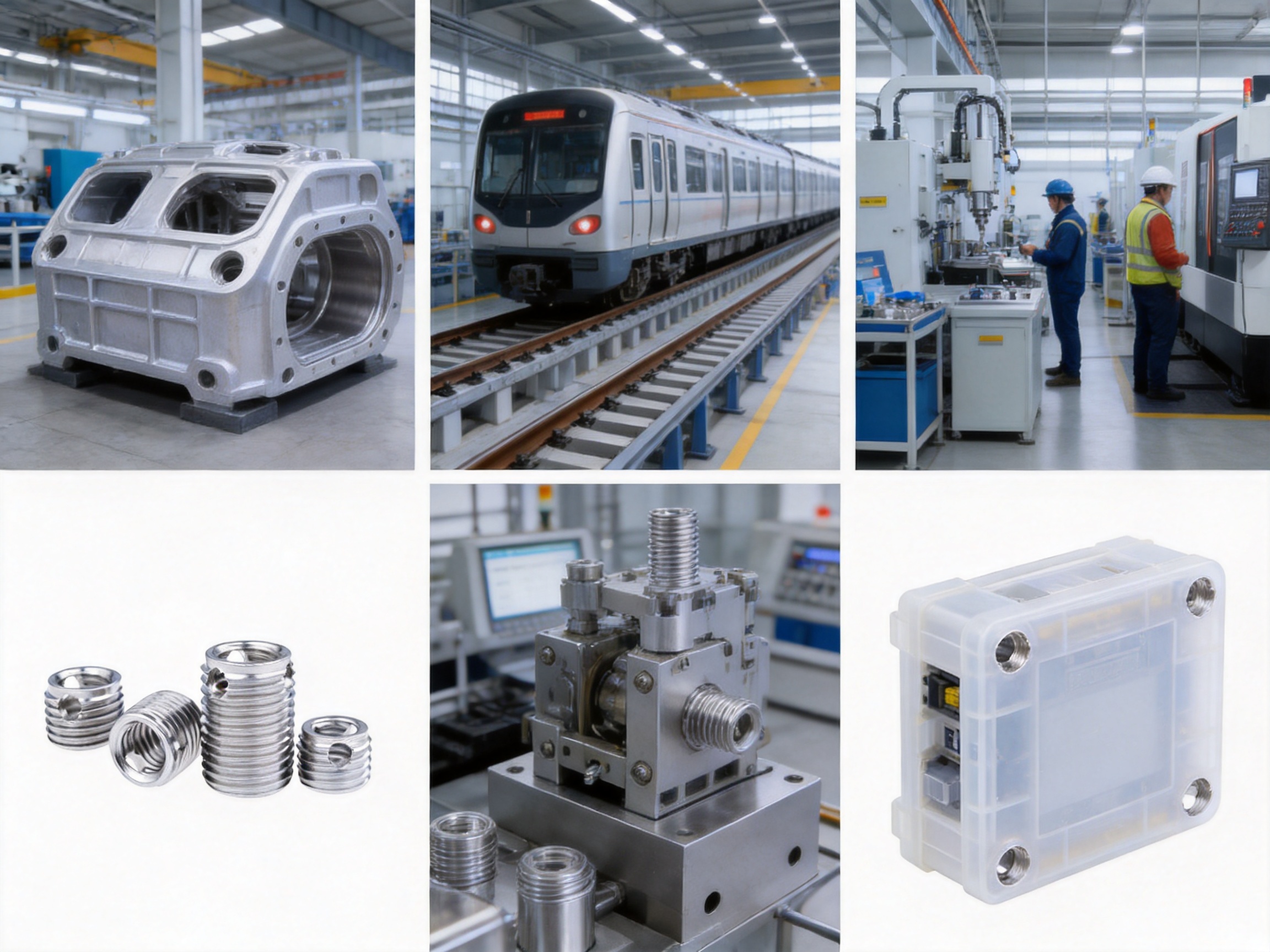
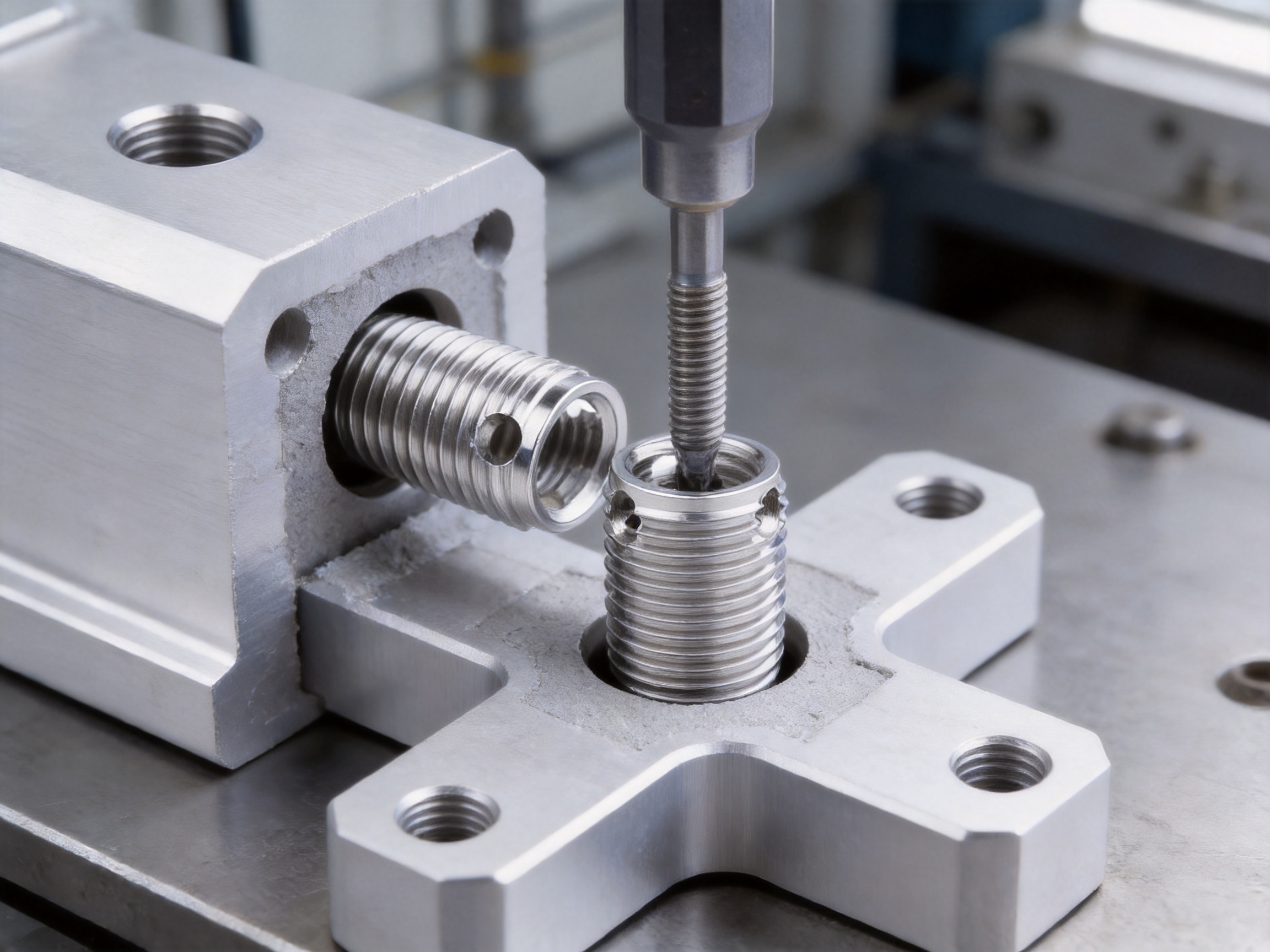
Threaded connections are often only as reliable as the material surrounding the thread. When a bolt is installed directly into aluminum, plastic, wood, cast iron, or another relatively soft substrate, the internal thread may wear, strip, deform, or loosen under repeated loading. Vibration, thermal cycling, moisture, corrosion, and frequent assembly can accelerate this failure. A stainless steel three-hole thread insert provides a practical way to reinforce the connection while improving resistance to pull-out, rotation, and loosening.
This type of insert is designed with an internal thread for the fastener and an external self-tapping thread for installation into a prepared hole. Three evenly distributed positioning holes, arranged at approximately 120-degree intervals, provide an additional mechanical locking function. During installation, the surrounding base material is pressed into these holes by a dedicated installation tool. The result is an interlocking connection between the insert and the substrate rather than a simple friction-fit or adhesive-only installation.
The stainless steel three-hole thread insert is available in 307 and 308 configurations. Both versions use the same general three-hole locking concept, while the 308 type is the reinforced, longer version for applications requiring greater engagement depth and higher resistance to loading. The product range covers common metric and Unified thread sizes, making it suitable for equipment manufacturers, repair operations, and high-volume production environments.
Why Thread Reinforcement Is Necessary
Many engineering materials provide adequate strength for structural components but do not provide sufficient thread durability. Aluminum alloys are lightweight and easy to machine, yet their internal threads can be damaged by overtightening or repeated service. Plastics may creep under long-term bolt tension. Wood and composite materials can lose holding strength when exposed to moisture or repeated fastening. Even cast iron and soft steel may require a reinforced thread when the connection is subjected to high vibration or frequent maintenance.
A direct tapped hole depends on the strength of the base material at the thread flanks. If the material is soft, the load is concentrated in a limited number of thread contacts. Once the thread flanks deform, the bolt may no longer achieve the intended clamping force. In severe cases, the bolt can pull out together with the damaged material.
A thread insert changes the load path. The bolt engages with a high-strength internal thread formed in the stainless steel sleeve. The external thread distributes installation forces over a larger area of the base material, while the three positioning holes create a mechanical lock that helps prevent rotation. This combination increases the service life of the connection and can reduce the need to replace an entire component after thread damage.
For manufacturers, reinforced threads also support design flexibility. A lightweight aluminum housing can be used without sacrificing serviceability. A plastic enclosure can receive a durable metal thread. A damaged threaded hole can be restored without replacing the surrounding part. These benefits are especially important in automotive, aerospace, rail, machinery, electronics, and industrial equipment applications.
Product Construction and Operating Principle
The insert is a cylindrical stainless steel sleeve with two functional thread systems. The internal thread matches the required bolt or screw specification. The external thread is self-tapping and is designed to cut or form its way into a properly prepared hole in the base material.
Three circular positioning holes are distributed evenly around the insert. Their 120-degree spacing provides balanced circumferential positioning. During installation, material from the host component flows or is pressed into the holes. This produces an internal lock that works together with the external thread. The insert is therefore held by both thread engagement and localized mechanical interlocking.
This design differs from a conventional smooth-wall bushing. A smooth bushing may rely primarily on press fit, adhesive, or interference. It can be effective in selected situations but may rotate when exposed to torque or vibration. The three-hole insert adds a positive anti-rotation feature without requiring a separate retaining pin or complicated machining operation.
The design also differs from a basic self-tapping sleeve without positioning holes. A conventional sleeve may offer improved thread strength, but its resistance to rotation depends more heavily on installation torque and substrate friction. The three-hole arrangement provides an additional locking mechanism, which is valuable in connections exposed to repeated cyclic loads.
Internal Thread Function
The internal thread provides the working interface for the bolt. Because the bolt engages with stainless steel rather than directly with a soft substrate, the connection can tolerate repeated tightening and removal more effectively. The reinforced thread also helps maintain consistent load transfer when the base material has limited hardness or wear resistance.
External Self-Tapping Thread Function
The external thread allows the insert to be installed into a prepared hole without first tapping a conventional internal thread in the base material. The hole diameter must be selected according to the substrate, insert type, and specified installation conditions. Correct preparation is essential because an undersized hole may cause excessive insertion force, while an oversized hole may reduce holding strength.
Three-Hole Mechanical Locking Function
The positioning holes are the defining feature of this insert. As the insert is driven into place and pressed with a suitable tool, the base material enters the three holes. Once the installation is complete, the material captured in the holes resists rotation and axial movement. The evenly distributed arrangement helps maintain balanced loading rather than concentrating the locking effect at one point.
Stainless Steel Material Advantages
Stainless steel is selected for applications where corrosion resistance, durability, and dimensional stability are important. Compared with ordinary carbon steel, stainless steel offers better resistance to rust in humid, wet, and mildly corrosive environments. This makes the insert suitable for equipment exposed to condensation, high humidity, salt-containing atmospheres, cleaning processes, and other challenging service conditions.
Corrosion resistance is important not only for appearance. Corrosion on the internal thread can increase friction, interfere with bolt installation, and make future disassembly difficult. Corrosion on the external surface can weaken the interface between the insert and the base material. A stainless steel insert helps preserve the functional condition of the threaded connection over a longer period.
The material is also appropriate for clean manufacturing environments and equipment used in food-related, medical, laboratory, and chemical-support applications, provided that the complete assembly meets the applicable industry and sanitation requirements. The insert itself can provide a corrosion-resistant threaded interface, but users should evaluate the complete system, including the bolt, host material, cleaning agents, temperature, and exposure conditions.
In addition to corrosion resistance, stainless steel provides a durable wear surface for repeated bolt engagement. This is particularly valuable in service panels, fixtures, housings, inspection covers, and assemblies that must be opened and closed during maintenance.
Key Advantages Over Basic Thread Repair Products
The stainless steel three-hole insert combines several functions that are often provided separately by competing products. It reinforces the internal thread, resists rotation, improves vibration performance, and offers corrosion resistance in one compact component.
Improved Resistance to Rotation
Rotation is a common weakness of simple press-fit sleeves and some standard self-tapping inserts. When a bolt is tightened or removed, torque is transferred to the insert. If the insert is not securely locked to the substrate, it may rotate instead of allowing the bolt to turn. The three positioning holes provide an additional mechanical barrier against this behavior.
Better Performance Under Vibration
Vibration can gradually reduce the stability of a threaded joint. The combination of a stainless steel internal thread, external thread engagement, and three-point mechanical locking helps maintain the position of the insert. This makes the design suitable for engine-related assemblies, transmissions, rail vehicles, machinery, vehicle structures, and other applications in which cyclic motion is expected.
Reduced Dependence on Adhesives
Some thread repair methods rely on bonding compounds to retain the insert. Adhesives may be useful in selected applications, but their performance can depend on surface preparation, curing conditions, temperature, chemical exposure, and long-term aging. The three-hole insert creates a mechanical interlock during installation, reducing dependence on adhesive retention.
Simple Installation Process
The insert can be installed after preparing a suitable hole and using the dedicated installation tool. Compared with more complex repair methods, this can reduce the number of operations required. The process is suitable for both new part pre-embedding and repair of damaged threaded holes.
Wide Material Compatibility
The product is suitable for aluminum alloy, cast iron, soft steel, plastic, wood, and other low- or medium-strength materials when the installation parameters are properly selected. The host material determines the recommended hole diameter, installation force, and minimum engagement requirements. This broad compatibility allows one insert concept to serve several industries and product families.
Reliable Thread Reuse
Once installed correctly, the stainless steel internal thread can support repeated bolt removal and reinstallation more effectively than a thread cut directly into a soft material. This helps reduce maintenance damage and supports modular equipment design.
307 and 308 Three-Hole Insert Types
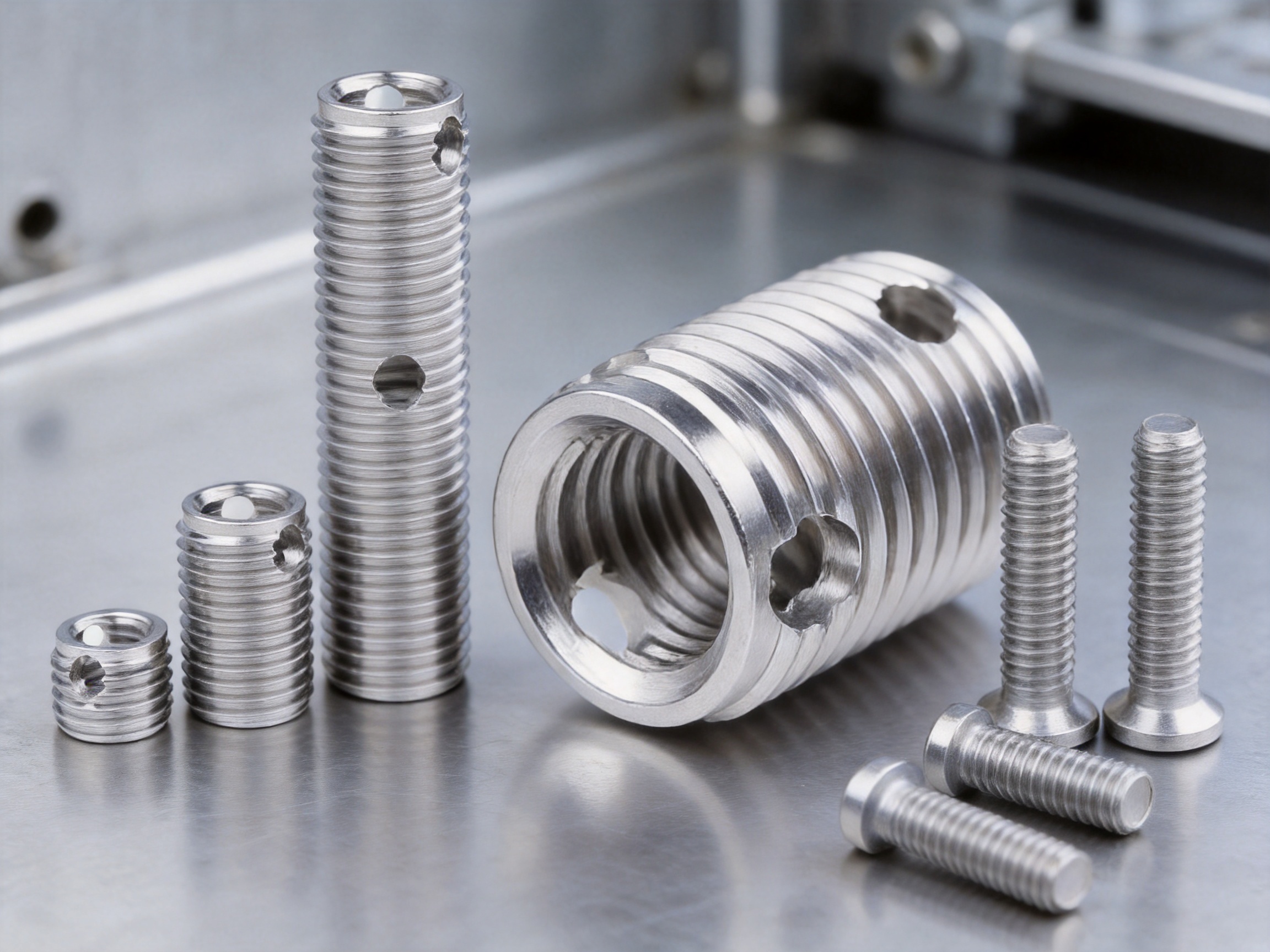
The 307 and 308 types share the same three-hole self-tapping design. The primary difference is length. The 308 type is the reinforced version and is generally longer than the corresponding 307 type. A longer insert provides greater external thread engagement and a larger area through which loads can be transferred to the host material.
The 307 type is useful where installation space is limited or where a moderate engagement length is sufficient. It can be suitable for compact housings, thin sections, and general thread reinforcement. The 308 type is preferred when greater pull-out resistance, deeper engagement, or higher load capacity is required.
Selection should not be based on length alone. Engineers should consider the thickness of the host component, the available drilling depth, the bolt length, the expected tensile and shear loads, the installation side, and the possibility of interference with internal components. The insert should be fully supported by the host material without extending into an area where it could obstruct moving parts or fluid passages.
| Metric internal thread | Common Unified equivalent | 307 length | 308 length | External thread reference |
| M3 × 0.5 | #4-40 | 4 mm | 6 mm | M5 × 0.6 |
| M4 × 0.7 | #8-32 | 6 mm | 8 mm | M6.5 × 0.8 |
| M5 × 0.8 | #10-24 | 7 mm | 10 mm | M8 × 1.0 |
| M6 × 1.0 | 1/4-20 | 8 mm | 12 mm | M10 × 1.25 |
| M8 × 1.25 | 5/16-18 | 9 mm | 14 mm | M12 × 1.5 |
| M10 × 1.5 | 3/8-16 | 10 mm | 18 mm | M14 × 1.5 |
| M12 × 1.75 | 7/16-14 | 12 mm | 22 mm | M16 × 1.75 |
| M14 × 2.0 | 1/2-13 | 14 mm | 24 mm | M18 × 2.0 |
| M16 × 2.0 | 5/8-11 | 14 mm | 24 mm | M20 × 2.0 |
The dimensions above represent the listed product range. Final selection should be confirmed against the current technical drawing, material condition, required drilling diameter, and application load. The Unified thread references are provided for general selection and should be verified before production release.
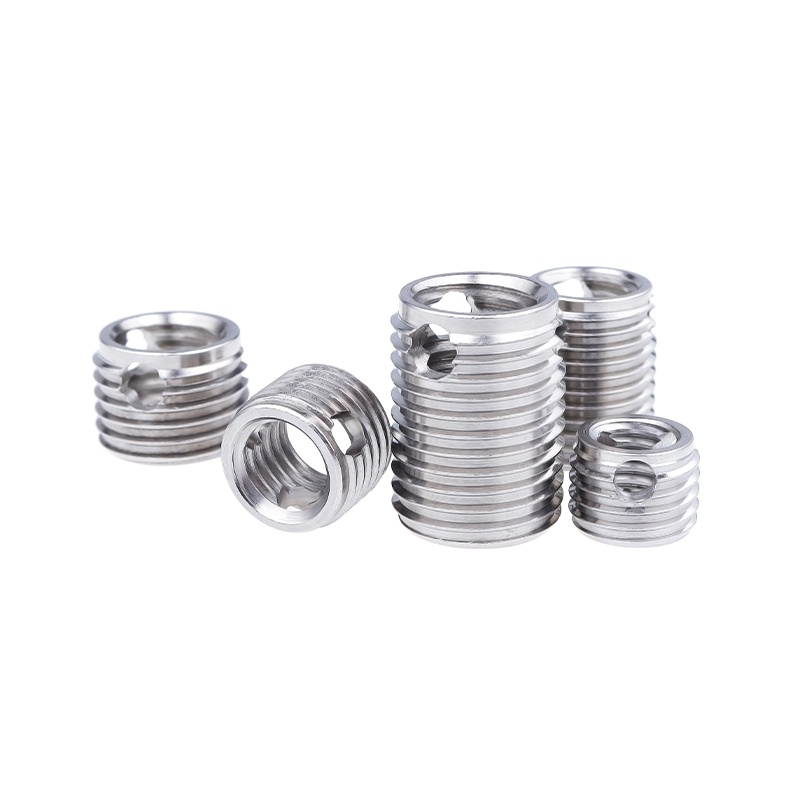
Stainless Steel 3-Hole Thread Insert
Installation Procedure
Correct installation is essential to achieving the intended mechanical locking performance. The process begins with identifying the correct internal thread, insert length, external thread size, and host-material drilling requirement.
1. Inspect the Host Material
Check the thickness, hardness, surface condition, and accessibility of the installation area. Remove loose material, burrs, paint build-up, heavy oxidation, or contamination that could prevent the insert from seating correctly. If the insert is being used to repair a damaged thread, remove the original damaged thread sufficiently to create a clean and correctly sized hole.
2. Prepare the Hole
Drill the hole to the specified reference diameter. The recommended diameter differs according to the host material. For example, aluminum alloy and cast iron may require slightly different hole sizes because their deformation and cutting characteristics are not the same. The listed reference drilling dimensions are approximately 4.6 to 4.7 mm for an M3 insert in aluminum alloy and approximately 4.7 to 4.8 mm in cast iron. Larger sizes follow the same principle and should be selected from the applicable technical data.
Control the hole diameter carefully. A hole that is too small can increase installation torque and may damage the insert or the host component. A hole that is too large can reduce external thread engagement and prevent sufficient material from entering the three positioning holes.
3. Confirm Drilling Depth
The hole must be deep enough for the selected insert. The product data includes minimum drilling depths for 307 and 308 versions. As a general rule, the hole should accommodate the complete insert length while allowing sufficient clearance for the tool and avoiding bottom interference. Blind-hole applications require particular attention because chips, debris, or an insufficient relief area can prevent the insert from reaching its intended position.
4. Align the Installation Tool
Use the dedicated installation tool designed for the selected insert size. The tool should engage the insert properly and maintain alignment with the prepared hole. Misalignment can damage the external thread, cause uneven insertion, or prevent the positioning holes from receiving the surrounding base material evenly.
5. Drive and Seat the Insert
Apply the appropriate installation motion and force until the insert reaches the specified depth. The insert should be seated squarely and should not protrude beyond the intended surface unless the design specifically allows it. During this operation, the host material is pressed into the three holes to produce the mechanical locking effect.
6. Inspect the Finished Connection
After installation, inspect the insert for correct seating, visible damage, and thread cleanliness. Test the internal thread with the corresponding bolt or a suitable thread gauge. The bolt should engage smoothly without excessive binding. If the insert is loose, tilted, cracked, or incompletely installed, it should not be placed into service.
Reference Drilling Considerations
The following values illustrate the approximate reference drilling range supplied for the product family. They are not a substitute for the controlled installation specification associated with a particular material and production process.
| Internal thread | Approximate drilling diameter in aluminum alloy | Approximate drilling diameter in cast iron | Minimum depth for 307 | Minimum depth for 308 |
| M3 × 0.5 | 4.6–4.7 mm | 4.7–4.8 mm | 6 mm | 8 mm |
| M4 × 0.7 | 6.0–6.1 mm | 6.1–6.2 mm | 8 mm | 10 mm |
| M5 × 0.8 | 7.4–7.5 mm | 7.6–7.7 mm | 9 mm | 13 mm |
| M6 × 1.0 | 9.3–9.4 mm | 9.5–9.6 mm | 10 mm | 15 mm |
| M8 × 1.25 | 11.1–11.3 mm | 11.3–11.5 mm | 11 mm | 17 mm |
| M10 × 1.5 | 13.1–13.3 mm | 13.3–13.5 mm | 13 mm | 22 mm |
| M12 × 1.75 | 15.0–16.2 mm | 15.3–15.5 mm | 15 mm | 26 mm |
The dimensional information should be reviewed carefully before machining because material condition, tooling, tolerance, and production method can affect the final hole requirement. For sizes beyond the representative drilling table, users should request the corresponding technical specification.
Manufacturing Process and Quality Strengths
The performance of a threaded insert depends on more than the nominal material and thread dimensions. Consistent external thread geometry, accurate internal thread formation, correctly positioned locking holes, stable length, clean surfaces, and controlled heat and finishing operations are all important. A small variation in any of these characteristics can affect installation torque, seating, thread engagement, or service life.
The manufacturer behind this product specializes in threaded connection products and operates an owned manufacturing facility of approximately 10,000 square meters. The facility is equipped with hundreds of machine tools and automated production systems. This combination of dedicated equipment and automation supports repeatable production across different insert sizes and configurations.
Material Preparation
Stainless steel raw material must be selected and prepared for the intended insert geometry. Material consistency affects cutting behavior, thread quality, dimensional stability, and corrosion performance. Controlled material handling helps reduce variation between production batches and supports traceability from incoming material through finished goods.
Precision Forming and Machining
The cylindrical body, external self-tapping thread, internal thread, and three positioning holes require controlled machining or forming operations. Specialized equipment can maintain the concentric relationship between the two thread systems and the body. This is especially important because an eccentric insert may install unevenly or create nonuniform load distribution.
Automated production systems can improve repeatability in high-volume orders. They also reduce dependence on manual adjustment and help maintain stable process settings. For customers purchasing multiple sizes or repeat batches, process consistency is a major advantage because the installation method can remain standardized across production runs.
Thread Inspection
Thread inspection verifies that the internal thread accepts the intended bolt and that the external thread meets the required dimensional profile. Inspection may include gauges, dimensional measurement, visual examination, and process checks. Accurate thread inspection helps prevent problems such as excessive bolt friction, incomplete engagement, installation failure, or poor load transfer.
Positioning-Hole Control
The three positioning holes must be distributed correctly around the insert. Their location, size, and cleanliness influence how the host material enters the holes during installation. Consistent hole geometry supports balanced locking and reduces the risk of one-sided retention.
Surface and Cleanliness Control
Finished inserts should be free from damaging burrs, loose chips, and contaminants that could interfere with installation. Clean surfaces are particularly important in automotive, aerospace, laboratory, and other controlled applications. Good surface control also improves the reliability of inspection and packaging.
Traceability and Service Support
The manufacturer has developed a quality management system and after-sales service mechanism to support product consistency and customer assistance. Traceability is valuable when customers need to review a batch, investigate an installation issue, or reorder a previously approved specification. Technical communication before production can also reduce the risk of selecting an unsuitable size or drilling condition.
The company has been manufacturing threaded connection products since 2015 and serves customers in automotive, aerospace, rail vehicle, and general industrial sectors. Its product range includes helical wire inserts, self-tapping inserts, key-locking inserts, threaded adapters, oil plugs, installation taps, and related tools. This broader product capability allows customers to source complementary threaded connection components from one specialized supplier.
Production capacity is another important consideration for original equipment manufacturers and distributors. The company reported an annual output value of 153 million RMB in 2024, indicating established production capability and experience with larger-scale supply. Capacity alone does not guarantee product suitability, but it can support stable delivery, repeat orders, and coordinated procurement across multiple product categories.
Application Areas
Automotive Components
Automotive assemblies frequently use aluminum housings, covers, brackets, and structural components. These parts may contain threads for sensors, inspection covers, mounting bolts, drain plugs, and service components. A stainless steel three-hole insert can reinforce such locations and help maintain thread reliability under engine vibration, road shock, temperature changes, and repeated maintenance.
Engines and Transmissions
Engines and transmissions combine vibration, thermal cycling, oil exposure, and frequent service requirements. A damaged threaded hole can delay repair or require replacement of an expensive housing. A properly selected insert can restore the working thread and improve the durability of the repaired location.
Aerospace and Rail Vehicles
Aerospace and rail vehicle structures often prioritize weight reduction, serviceability, and traceable production. Lightweight alloys may require reinforced threads wherever bolts are repeatedly installed or where the connection carries significant load. Stainless steel inserts can provide a durable internal thread while supporting the use of lightweight host materials.
Industrial Machinery
Industrial machinery may operate continuously in dusty, humid, vibrating, or chemically challenging environments. Enclosures, machine frames, tooling plates, guards, and maintenance panels can all benefit from reinforced threaded holes. The three-hole locking design is particularly useful where a loose insert could interrupt operation or create a secondary maintenance problem.
Electrical and Electronic Equipment
Equipment housings made from plastic or aluminum commonly require threaded mounting points. When a panel or bracket must be removed repeatedly, a direct thread in the housing may wear quickly. The insert provides a metal thread that can withstand more service cycles while helping preserve the housing.
Repair and Remanufacturing
The insert is suitable for repair work when a threaded hole has been stripped, enlarged, or otherwise damaged. The damaged area can be machined to the required installation diameter, allowing the original component to be returned to service. This can reduce material waste, repair time, and replacement cost.
Design Guidance for Engineers
Engineers should select the insert based on the complete connection rather than the bolt thread alone. Important factors include substrate material, component thickness, insert length, expected tensile and shear loads, tightening torque, vibration level, temperature, corrosion exposure, installation access, and maintenance frequency.
The insert should be long enough to provide sufficient engagement but short enough to fit within the available material. The 308 type offers increased engagement compared with the 307 type, but it requires greater drilling depth. In thin sections, the 307 type may be more practical. In deeper sections or highly loaded locations, the 308 type may provide a stronger solution.
The bolt length should also be checked. The bolt must engage the internal thread adequately without bottoming out against the blind end of the insert or the base hole. Excessive bolt length can create unexpected stresses or prevent correct clamping. Insufficient bolt engagement can reduce the available thread strength.
Galvanic compatibility should be considered when stainless steel is installed in aluminum or another dissimilar material. The risk depends on humidity, salt exposure, electrical contact, surface condition, and the specific material combination. Appropriate design measures may include protective coatings, sealing, drainage, or compatible fastener selection.
For critical assemblies, prototype testing is recommended. Testing may include installation torque measurement, pull-out testing, rotational resistance testing, vibration testing, corrosion exposure, and repeated bolt installation. The test method should reflect the actual host material and service conditions.
Comparison with Alternative Thread Reinforcement Methods
Several insert technologies are available, and each has a suitable application range. Helical wire inserts are lightweight and can provide strong internal threads, but they generally require a tapped installation hole and a separate locking or driving procedure. Key-locking inserts can provide strong anti-rotation performance, but installation may require a larger counterbore or additional locking keys. Press-fit bushings are simple but may depend heavily on interference and may not provide sufficient rotation resistance.
The three-hole self-tapping insert provides a balanced alternative. It does not require a conventional tapped external thread in the host component, and its positioning holes produce mechanical locking during installation. It also offers the corrosion resistance of stainless steel and a broad range of metric and Unified internal thread options.
| Thread reinforcement method | Primary retention principle | Typical advantage | Potential consideration |
| Stainless steel three-hole insert | External thread plus three-hole mechanical interlock | Anti-rotation performance, corrosion resistance, simple installation | Requires accurate hole preparation and dedicated installation tooling |
| Helical wire insert | Coiled wire expansion in a tapped hole | Lightweight and suitable for many thread repairs | Usually requires tapping the host material and specialized installation steps |
| Key-locking insert | External thread plus driven locking keys | Strong positive anti-rotation retention | May require additional counterbore and key-driving operations |
| Press-fit bushing | Interference fit or adhesive retention | Simple construction and potentially fast installation | Rotation resistance may depend on fit, adhesive, and substrate condition |
| Direct tapped hole | Thread engagement directly in the host material | Lowest component count | Limited durability in soft materials and vulnerable to thread stripping |
The best choice depends on the design priorities. Where the host material is soft, vibration is significant, corrosion resistance is required, and a mechanical anti-rotation feature is desirable, the stainless steel three-hole insert offers a strong combination of benefits.
Purchasing and Customization Support
Industrial buyers should provide the supplier with the internal thread specification, preferred 307 or 308 type, quantity, host material, installation hole information, required length, surface or packaging requirements, and application environment. Providing these details early allows the supplier to confirm compatibility and recommend the appropriate insert and tool.
For recurring production, customers may request controlled product specifications, sample approval, packaging identification, batch traceability, and inspection documentation according to the purchasing agreement. Clear communication of the host material is especially important because drilling recommendations for aluminum alloy, cast iron, and soft steel may differ.
Customized production may be available for special thread combinations, nonstandard lengths, application-specific packaging, or coordinated tooling requirements. Any customized design should be reviewed against the available manufacturing process and validated with samples before mass production.
Maintenance and Service Recommendations
After installation, the internal thread should be kept clean and protected from impact. Bolts should be aligned with the insert and tightened using the specified procedure. Cross-threading can damage even a reinforced thread and may transfer unwanted torque to the insert.
During maintenance, inspect for bolt damage, contamination, corrosion, and abnormal loosening. If a bolt repeatedly loosens, the cause should be investigated rather than simply increasing tightening torque. Possible causes include incorrect bolt length, insufficient clamping force, vibration, damaged threads, poor seating, or movement in the surrounding component.
If an insert shows rotation, axial movement, cracking, or severe thread damage, it should be replaced. Reusing a damaged insert can compromise the entire joint. Repair operations should follow the same hole preparation and installation controls used for original production.
Frequently Asked Questions
What is a stainless steel three-hole thread insert?
It is a stainless steel self-tapping threaded sleeve with an internal working thread, an external installation thread, and three evenly distributed positioning holes. During installation, the base material enters the holes to create a mechanical anti-rotation lock.
What materials can receive this insert?
The insert is intended for materials such as aluminum alloy, cast iron, soft steel, plastic, and wood when the hole size and installation method are correctly selected. Testing is recommended for unusual materials or critical load conditions.
What is the difference between the 307 and 308 types?
The principal difference is length. The 308 type is the reinforced, longer version and provides greater engagement depth. The 307 type is shorter and may be more suitable where installation space or component thickness is limited.
Does the insert require a conventionally tapped hole?
No. It uses a self-tapping external thread and is installed into a properly prepared hole with a dedicated tool. The exact drilling diameter depends on the insert size and host material.
How do the three holes prevent rotation?
During installation, surrounding material is pressed into the three holes. The material captured in these holes forms a mechanical interlock that resists rotational movement and contributes to axial retention.
Can the insert repair a stripped threaded hole?
Yes. A damaged hole can be machined to the required installation diameter, after which the insert can restore a durable internal thread. The repaired part should be inspected and tested before returning to service.
What thread sizes are available?
The listed range includes metric internal threads from M3 to M16, along with common Unified thread equivalents such as #4-40, #8-32, #10-24, 1/4-20, 5/16-18, 3/8-16, 7/16-14, 1/2-13, and 5/8-11. Availability should be confirmed for the required type and length.
Why is stainless steel useful in this application?
Stainless steel provides corrosion resistance, a durable internal thread surface, and improved suitability for humid, wet, high-salt, and clean equipment environments. The entire connection should still be evaluated for material compatibility and chemical exposure.
Is a dedicated installation tool necessary?
A dedicated tool is strongly recommended. It helps maintain alignment, apply the correct installation motion, and seat the insert so that the base material can enter the three positioning holes evenly.
Can the insert be used in high-vibration equipment?
It is designed for applications requiring anti-rotation and anti-loosening performance, including equipment exposed to vibration. The final suitability depends on the load, host material, bolt design, installation quality, and overall joint configuration.
What should be checked before ordering?
Confirm the internal thread, insert type, length, host material, drilling diameter, minimum depth, installation access, corrosion environment, and required quantity. For production applications, request the applicable technical drawing and installation specification.
Conclusion
The stainless steel three-hole thread insert is a practical solution for strengthening threaded connections in low- and medium-strength materials. Its stainless steel construction improves corrosion resistance and thread durability, while the self-tapping external thread simplifies installation. The three evenly distributed positioning holes create a mechanical interlock that improves resistance to rotation and vibration compared with simpler sleeve designs.
The 307 and 308 configurations provide flexibility for different installation depths and load requirements. Metric sizes from M3 to M16 and corresponding Unified thread options support a broad range of applications. With correct hole preparation, suitable tooling, accurate seating, and appropriate inspection, the insert can support original equipment production, thread repair, and long-term maintenance.
Manufacturing capability is an equally important part of product performance. An established facility with extensive machinery, automated production systems, dedicated threaded-connection expertise, quality management, and after-sales support can help customers achieve consistent supply and reliable assembly results. For automotive, aerospace, rail, machinery, electronics, and other demanding industries, the combination of stainless steel material, three-hole locking geometry, and controlled manufacturing provides a dependable foundation for long-lasting threaded connections.
References
1. Product technical information for 307 and 308 three-hole self-tapping thread inserts, including size, length, drilling diameter, and minimum depth data.
2. General engineering practices for threaded-hole repair and reinforcement in aluminum alloy, cast iron, soft steel, plastic, and wood substrates.
3. Principles of mechanical interlocking, anti-rotation retention, and vibration-resistant threaded joint design.
4. Stainless steel material selection guidance for humid, corrosive, high-salt, and clean manufacturing environments.
5. Manufacturer-provided information concerning threaded connection products, production facilities, automated manufacturing systems, quality management, and application support.