Français
 Español
 Deutsch


Content
- 1 Understanding the Hexagon Socket Screw Plug
- 2 Reinforced T-Shaped Construction
- 3 Full-Face Sealing Performance
- 4 Compatibility with Major Flange Standards
- 5 Advantages over Traditional Pipe Caps
- 6 Application in Pipeline Termination
- 7 Application in Pressure Testing
- 8 Application in Maintenance Isolation
- 9 Application as a Future Port Provision
- 10 Compact Installation with Hexagonal Drive Access
- 11 Manufacturing Strengths of the Supplier
- 12 Advanced Production and Process Control
- 13 Quality Management and Customer Support
- 14 Comparison with Alternative Closure Methods
- 15 Installation Recommendations
- 16 Storage, Handling, and Maintenance
- 17 Customization and OEM or ODM Supply
- 18 Why Choose a Specialized Threaded-Product Manufacturer
- 19 Purchasing Checklist
- 20 Q&A
- 20.1 What is a hexagon socket screw plug used for?
- 20.2 Is this product suitable for pipeline pressure testing?
- 20.3 What is the benefit of the T-shaped reinforced design?
- 20.4 Can the plug be removed and reused?
- 20.5 Which flange standards are supported?
- 20.6 Does the plug require a gasket?
- 20.7 How should the plug be installed?
- 20.8 Can the company provide customized plugs?
- 20.9 What industries does the manufacturer serve?
- 20.10 What information is needed for a quotation?
- 21 Conclusion
- 22 References
- 23 Product: Hexagon Socket Screw Plug
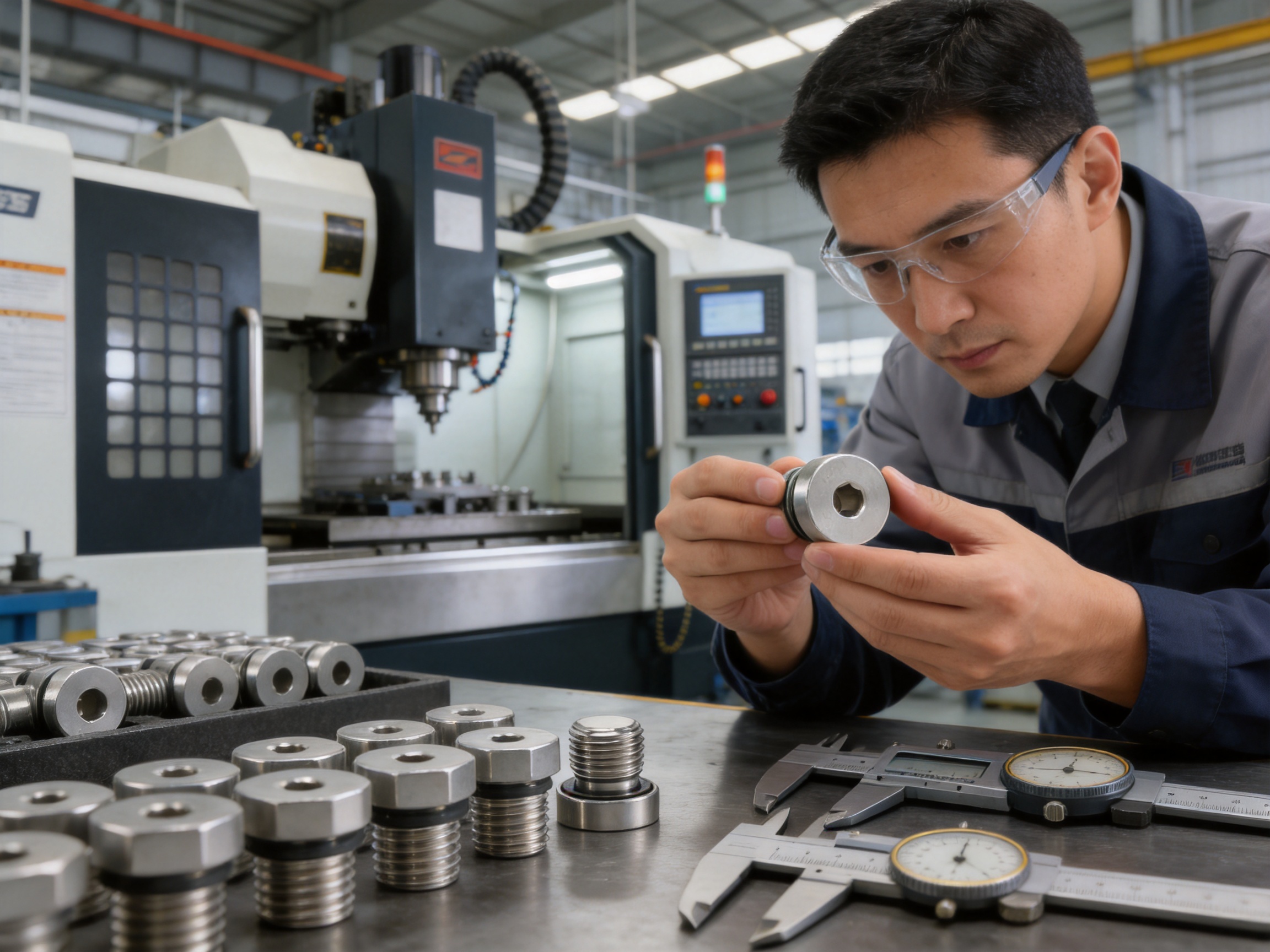
Pipeline systems, pressure vessels, industrial equipment, and process assemblies all require dependable sealing components. A plug may appear to be a simple part, but its performance directly affects leakage control, pressure safety, maintenance efficiency, and the service life of connected equipment. When a pipeline end, inspection port, test interface, or reserved connection must be closed securely, the sealing component must withstand operating pressure while remaining practical to install and remove.
The Hexagon Socket Screw Plug is designed for applications that demand secure closure, controlled installation, and convenient maintenance access. The product information supplied for this component also describes a T-shaped reinforced or flanged configuration. This design combines a strengthened central body with a full-face sealing surface and a flange-compatible profile. Depending on the selected configuration, the plug can be used as a permanent closure, a temporary pressure-test isolation point, a maintenance barrier, or a protective seal for future connection points.
Compared with traditional welded blinds, basic pipe caps, and less rigid threaded closures, the product offers a more flexible approach to pipeline termination and equipment isolation. It can be installed without welding, removed without cutting, and reused when the application and sealing condition permit. These characteristics can reduce maintenance downtime, simplify access to system components, and improve the efficiency of inspection and repair operations.
Manufactured by Dongtai Jinzhize Metal Products Co., Ltd., the plug is part of a broader range of threaded connection and fastening products serving automotive, aerospace, rail vehicle, and industrial applications. The company’s manufacturing base, production equipment, engineering capabilities, quality systems, and experience in threaded products support stable production and customized supply for global customers.
Understanding the Hexagon Socket Screw Plug
A hexagon socket screw plug is a closure component driven by an internal hexagonal socket. The socket allows a suitable hex key or hexagonal driver to apply installation and removal torque while keeping the external profile compact. This is particularly valuable where surrounding space is limited or where a projecting external head would interfere with adjacent components.
The supplied product is categorized as an oil plug and is presented with a reinforced T-shaped or flanged structure. In practical terms, the product combines several functional elements:
• An installation drive that supports controlled tightening and removal.
• A reinforced central body designed to improve rigidity under pressure.
• A machined sealing face that works with a suitable gasket or sealing element.
• A flange-compatible external profile for direct installation against a pipe or equipment flange.
• A structure suitable for repeated maintenance access or long-term closure.
The exact configuration should be selected according to the application’s nominal size, pressure class, temperature range, thread or bolt pattern, gasket design, material requirements, and applicable standard. The product description identifies compatibility with major flange dimensions, including ANSI, DIN, and JIS systems. Before ordering, purchasers should confirm the required standard, nominal diameter, bolt-hole arrangement, sealing surface, and installation method.
The internal hexagonal drive is useful in areas where conventional external hex heads cannot be reached easily. A standard wrench requires clearance around the outside of a fastener, while a socket-drive plug can often be accessed from the top or front using a compact tool. This helps engineers design more compact assemblies and gives maintenance technicians a practical way to remove the plug during inspection or repair.
Reinforced T-Shaped Construction
The defining structural feature described for this product is its T-shaped reinforced design. The raised central section increases the stiffness of the closure and helps it resist deformation when exposed to internal pressure. A flat, thin closure may deflect when pressure is applied, especially if the unsupported area is large. Excessive deflection can reduce gasket compression and create a leakage path.
By increasing the rigidity of the central area, the T-shaped design helps maintain the geometry of the sealing surface. A stable sealing surface is important because a gasket must remain compressed evenly around the entire connection. If the plug bends or distorts, compression may become uneven. Some areas may be over-compressed while others lose contact, increasing the possibility of leakage.
The reinforced center can also help the plug withstand transient loading. Pipeline systems may experience pressure fluctuations, pump starts and stops, valve closures, fluid surges, or water hammer. These events can impose short-duration loads that are more severe than normal steady-state pressure. A stronger body provides an additional structural margin against deformation during such conditions.
The T-shaped geometry also supports more efficient stress distribution. Instead of concentrating pressure loads in a narrow region, the reinforced form helps transfer loads through the plug body and toward the flange or supporting structure. The final performance still depends on material grade, dimensions, bolt preload, gasket selection, pressure class, and installation quality, but the basic geometry is intended to support long-term sealing stability.
For applications involving repeated opening and closing, structural stability is especially important. A component that is removed and reinstalled many times must retain its dimensional accuracy and provide reliable sealing after each maintenance cycle. The reinforced design helps reduce the risk that routine handling or pressure exposure will permanently deform the closure.
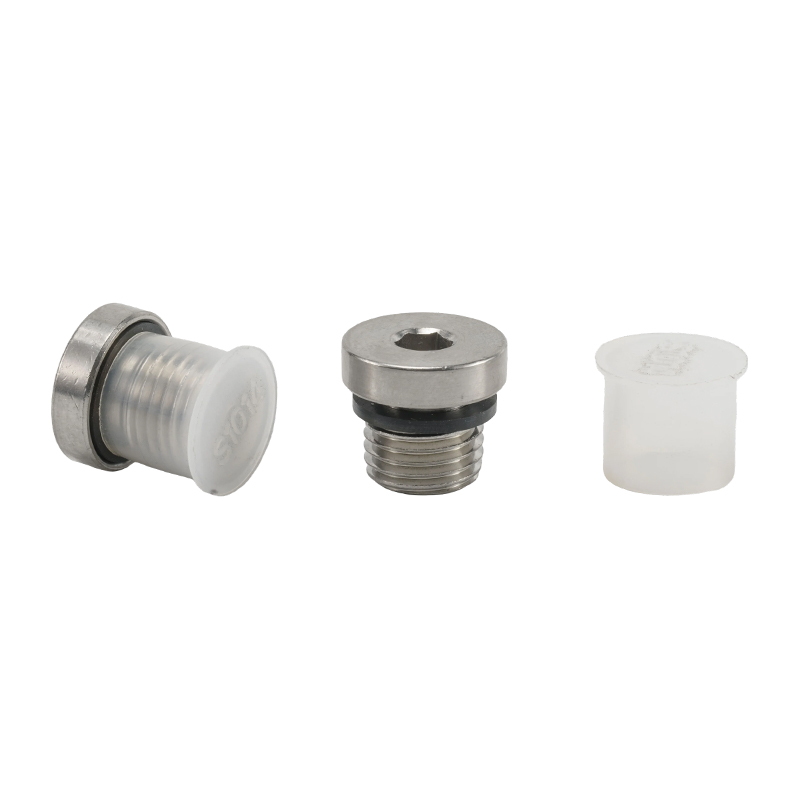
Hexagon Socket Screw Plug
Full-Face Sealing Performance
The sealing surface is one of the most important functional areas of a pipe plug. The supplied information specifies a precision-machined full-face sealing surface designed to work with standard flange gaskets. A full-face arrangement distributes sealing pressure across the intended contact area and helps reduce localized gaps.
Good sealing performance depends on more than the plug itself. The flange faces must be clean, parallel, and free from severe damage. The gasket must match the media, pressure, and temperature requirements. Bolts must be tightened in the correct sequence and to the correct torque. When these conditions are controlled, the machined sealing surface can provide uniform gasket compression and reduce potential leak points.
Compared with an improvised steel plate or a basic cap, a purpose-designed plug provides a more predictable interface. The sealing face is manufactured as part of the component rather than created on site. This supports better repeatability between installations and reduces dependence on field fabrication quality.
The use of a suitable gasket is essential. The gasket should be selected according to the fluid being contained, operating temperature, pressure, flange standard, and surface finish. Common gasket families may include compressed fiber, spiral-wound, metallic, elastomeric, or other engineered designs. No single gasket is appropriate for every service. The plug should therefore be specified as part of a complete sealing system rather than as an isolated component.
Before installation, technicians should inspect the sealing surface for scratches, dents, corrosion, embedded particles, or other defects. A damaged sealing face may prevent a gasket from seating evenly. The flange should also be checked for distortion and bolt-hole alignment. Correct preparation is particularly important when the plug is used for hydrostatic or pneumatic pressure testing.
Compatibility with Major Flange Standards
The product information states that the flanged plug follows major flange profiles such as ANSI, DIN, and JIS. Standardized dimensions support interchangeability and simplify procurement for equipment manufacturers, contractors, and maintenance departments. When the outer diameter, bolt-hole circle, number of holes, hole diameter, and sealing-face arrangement correspond to the selected standard, the plug can be matched to compatible pipeline components.
Standard compatibility offers several advantages. First, it reduces the need for special field adaptations. Second, it makes replacement easier because the maintenance team can identify the required nominal size and flange class. Third, it allows the same type of plug to be considered across different projects or production lines when the applicable standards are known.
Although a product may be described as compatible with a general standard, the purchaser should still verify every critical dimension. Different pressure classes within the same standard may have different thicknesses, bolt patterns, and sealing details. Nominal size alone may not be sufficient to establish compatibility. The operating pressure, flange rating, facing type, gasket style, and material must also be confirmed.
For international projects, the engineering team should identify whether the system uses ANSI-based, DIN-based, JIS-based, or another dimensional system. Mixing components from different standards without detailed dimensional verification can result in bolt-hole mismatch, inadequate gasket coverage, or improper load distribution. Jinzhize can support customers in confirming product requirements for standard and customized orders.
| Selection Item | Why It Matters | Information to Confirm |
|---|---|---|
| Nominal size | Determines the basic connection dimensions and flow-system compatibility. | Pipe size, equipment port size, and required plug diameter. |
| Flange standard | Controls bolt-hole arrangement, outer dimensions, and sealing interface. | ANSI, DIN, JIS, or another specified standard. |
| Pressure class | Influences plug thickness, flange strength, gasket selection, and bolt loading. | Design pressure, test pressure, and applicable rating. |
| Material | Affects strength, corrosion resistance, temperature capability, and media compatibility. | Required alloy, surface treatment, and documentation. |
| Gasket | Creates the primary fluid barrier between mating surfaces. | Gasket type, dimensions, material, and temperature range. |
| Installation drive | Determines tool access and available installation torque. | Hex socket dimensions and suitable driver. |
| Service conditions | Defines the required performance in actual use. | Fluid, temperature, pressure cycles, vibration, and maintenance frequency. |
Advantages over Traditional Pipe Caps
Traditional pipe caps may be suitable for simple, low-demand closures, but they are not always ideal for pressure testing, repeated maintenance, or standardized equipment isolation. A purpose-designed hexagon socket screw plug offers a number of practical advantages.
Faster installation and removal
Welded blinds and welded pipe closures require preparation, welding, inspection, and sometimes post-weld treatment. They may also require cutting and grinding when the line must be reopened. A bolted or mechanically installed plug avoids these operations. Maintenance personnel can remove the closure using standard tools and reinstall it after the work is complete.
Reduced maintenance downtime
When a pipeline section must be isolated for service, every additional operation can extend downtime. A removable plug provides direct access to the connection and can be handled without hot work in many applications. This may shorten the maintenance sequence and reduce the time required to restore the system.
Improved repeatability
A standardized plug offers consistent geometry and a defined sealing interface. Field-fabricated closures can vary in flatness, thickness, weld quality, and alignment. A manufactured component reduces these variables and helps maintenance departments establish repeatable installation procedures.
Better suitability for pressure testing
During hydrostatic or pneumatic testing, reliable isolation is essential. The reinforced body and full-face sealing surface are intended to provide a stable barrier when the test section is pressurized. The plug can be removed after testing without permanently altering the pipeline, provided that the product is selected and installed for the relevant pressure conditions.
Lower long-term labor requirements
Although initial component cost is only one part of a purchasing decision, total cost of ownership is often more important. A removable plug can reduce welding labor, hot-work permits, cutting operations, surface restoration, and replacement work. It may also be reused in suitable applications, further improving maintenance efficiency.
Application in Pipeline Termination
The most direct application is the permanent or temporary termination of a process pipeline, transmission line, utility line, or equipment connection. A pipeline may require closure because a section has been decommissioned, a branch has not yet been connected, or a system is being prepared for future expansion.
For a permanent termination, the plug must be selected for the full operating pressure, temperature, and fluid conditions. The sealing system should be monitored according to the plant’s inspection plan. For a temporary termination, removability becomes a major advantage. The same connection can later be opened to extend the system, connect new equipment, or perform an internal inspection.
In either case, the plug should not be treated as a substitute for an engineered pressure boundary without confirming its rating. The piping design engineer should verify that the plug, flange, bolts, gasket, and connected pipe are suitable for the intended service.
Application in Pressure Testing
Pressure testing is an important stage in the commissioning and maintenance of pipelines and equipment. Hydrostatic testing uses a liquid, commonly water, while pneumatic testing uses a gas. Pneumatic testing generally presents greater stored-energy risk and requires especially strict safety controls.
A flanged or mechanically installed plug can provide a defined isolation point during testing. It closes an open pipe end or separates a test section from other equipment. Once the test is completed and the system has been safely depressurized, the plug can be removed for connection, flushing, inspection, or normal operation.
The reinforced design is valuable in this context because test pressure may be maintained for a specified period, and the closure must remain stable throughout the test. The gasket must be compatible with the test medium and the expected pressure. Bolts should be tightened using a controlled method, and personnel should remain outside hazardous zones during pressurization.
Testing procedures must be established by qualified engineering and safety personnel. The presence of a robust plug does not eliminate the need for pressure relief, calibrated gauges, exclusion zones, inspection, and documented test protocols.
Application in Maintenance Isolation
Industrial equipment often requires periodic servicing. Pumps, valves, heat exchangers, filters, tanks, and process skids may need to be isolated from the rest of the system before technicians begin work. A suitable plug can close a connection after upstream and downstream isolation has been completed.
In maintenance isolation, the plug provides an additional physical barrier. It may be used where a valve alone is not considered sufficient, especially when leakage through a valve could expose workers or contaminate equipment. The plug should be installed only after the line has been depressurized, drained, purged, and made safe according to the site’s lockout and isolation procedure.
The internal hexagonal drive can simplify access in areas where pipes, instruments, guards, or structural members limit wrench clearance. A technician can use a compatible hex key or driver to apply controlled torque without requiring a large external swing radius.
After removal, the plug and sealing components should be inspected. A gasket that has been compressed, damaged, chemically attacked, or thermally degraded should generally be replaced rather than reused. The plug sealing face should be cleaned and checked before reinstallation.
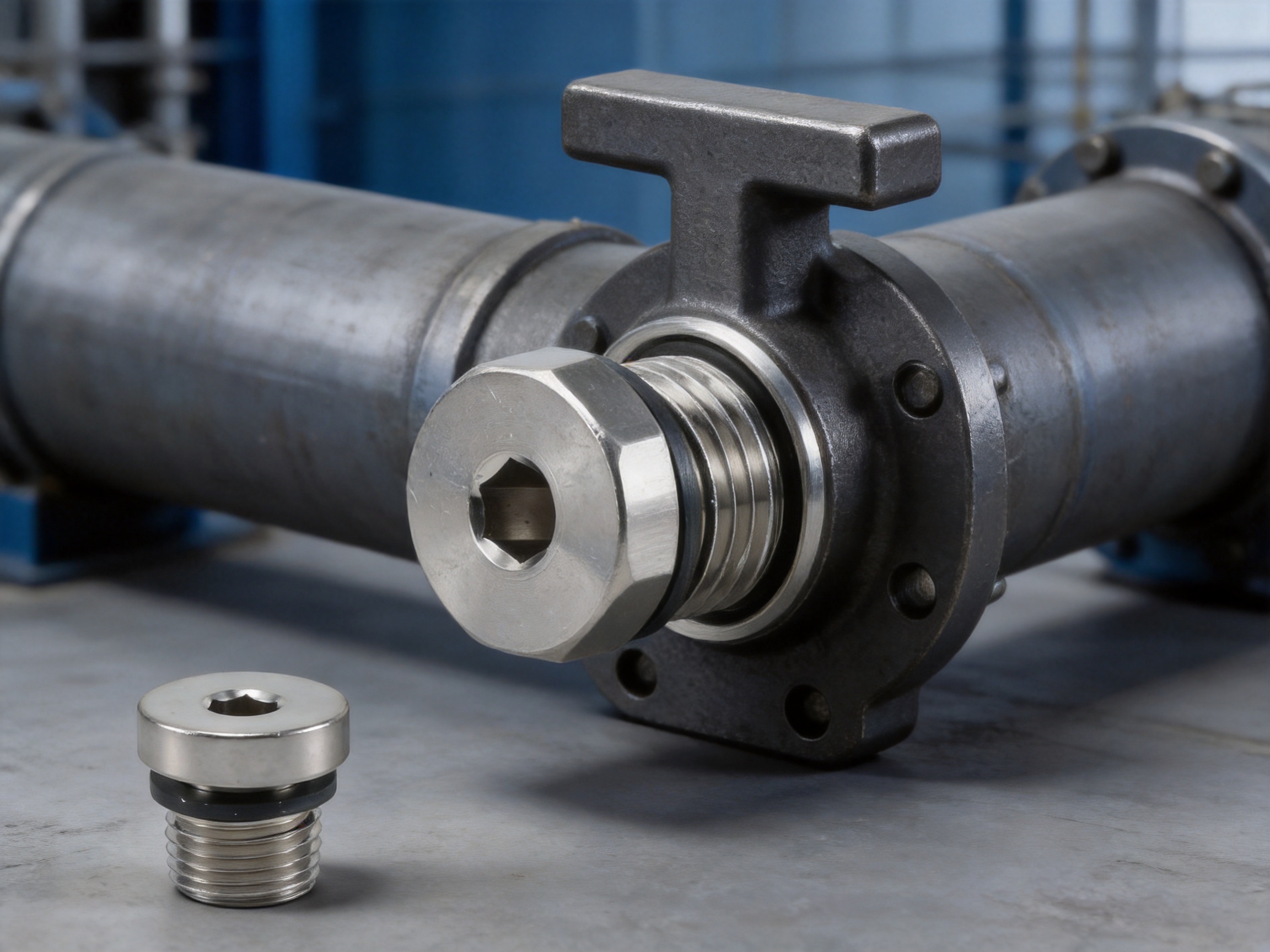
Application as a Future Port Provision
Manufacturers frequently include spare ports or branch connections in a new system to support future capacity increases. Leaving these connections open is not acceptable, so they must be sealed during the initial operating period. A removable plug provides a secure closure while preserving the option to expand the system later.
This approach can reduce future construction work. When expansion is approved, maintenance or installation personnel can remove the plug and connect the new pipe, valve, instrument, or equipment. The original connection remains standardized and accessible rather than being permanently buried under a welded closure or covered by a non-standard fabricated plate.
Future-port applications also benefit from clear identification. The plug location should be documented in the piping and instrumentation diagrams, equipment records, and maintenance database. The record should include size, standard, material, gasket type, installation date, and any pressure or temperature limitations.
Compact Installation with Hexagonal Drive Access
One of the key functional benefits of a hexagon socket drive is efficient use of installation space. An external hex head requires room for a wrench around the component. In contrast, an internal socket can be accessed with a tool inserted into the center of the plug. This can be useful inside housings, manifolds, engine-related assemblies, compact equipment, and pipe arrangements with limited lateral clearance.
The tool must fully engage the socket before torque is applied. Partial engagement can damage the socket corners or cause the tool to slip. The driver size should match the plug specification, and excessive impact loading should be avoided unless specifically permitted by the design.
For high-load applications, installation torque should be controlled. The required torque depends on the thread, material, lubrication condition, gasket, bolt or plug design, and desired sealing load. A torque wrench or approved controlled tightening method is preferable to uncontrolled manual force.
When removing a plug that has been exposed to corrosion, temperature cycling, or chemical deposits, technicians should first verify that the system is completely depressurized. Penetrating agents, suitable tools, or controlled heating may be considered according to the material and site procedure. The plug should never be struck or forced in a way that could damage connected equipment or create a safety hazard.
Manufacturing Strengths of the Supplier
Dongtai Jinzhize Metal Products Co., Ltd. is a specialized manufacturer of threaded connection products and related fastening components. Its product range includes helical wire inserts, self-tapping inserts, key-locking inserts, threaded adapters, oil plugs, installation taps, and supporting tools. This product focus gives the company experience in thread geometry, material behavior, precision machining, installation performance, and quality control.
Established in 2015, the company operates a 10,000-square-meter owned manufacturing plant. The facility is equipped with hundreds of machine tools and automated production systems. This combination of production capacity and automation supports consistent output for standard products while also providing a foundation for customized designs.
The company’s experience in threaded products is particularly relevant to oil plugs and socket-driven closures. Threaded components depend on precise pitch, diameter, flank form, concentricity, surface finish, and dimensional control. Small deviations can influence installation torque, engagement length, sealing behavior, and resistance to loosening. A manufacturer that routinely produces thread-related components is positioned to manage these technical details systematically.
Jinzhize also maintains teams responsible for design, development, and production. This allows the supplier to work with customers on product selection, drawing review, sample development, process confirmation, and production delivery. For OEM and ODM projects, the ability to coordinate engineering and manufacturing under one organization can simplify communication and reduce the risk of specification errors.
The company’s products are used in automotive applications, including engines and transmissions for passenger and commercial vehicles, as well as aerospace and rail vehicle manufacturing. These sectors typically require stable dimensions, traceability, consistent batch quality, and disciplined production control. Experience serving demanding industries supports the company’s ability to provide reliable threaded and fastening products for other industrial applications.
In 2024, the company achieved an annual output value of 153 million RMB. This indicates a substantial production base and reflects the company’s capability to support stable supply at commercial scale. Production capacity is important for customers that need continuity across multiple orders, approved supplier consistency, and predictable delivery planning.
Advanced Production and Process Control
The quality of a hexagon socket screw plug is determined by the complete manufacturing process rather than by one machining operation. A reliable process normally includes material control, forming or machining, thread production, socket machining, sealing-face finishing, dimensional inspection, surface treatment where required, cleaning, marking, packaging, and final release.
Material control
The selected material must match the required strength, corrosion resistance, temperature capability, and fluid compatibility. Material identification and batch control help maintain traceability from incoming stock through finished products. When customers require material certificates or specific grades, these requirements should be agreed before production.
Precision machining
The body, flange, sealing face, and drive socket must be produced within the tolerances required by the design. CNC machining and automated equipment can support repeatable dimensions and reduce variation between batches. The sealing face requires particular attention because surface defects or excessive roughness can affect gasket compression.
Thread production
Thread quality affects both installation and service performance. The thread must provide the intended engagement, fit, and load transfer. Inspection may include diameter checks, pitch verification, gauge testing, visual inspection, and dimensional measurement. For custom designs, thread drawings and inspection criteria should be confirmed before production approval.
Socket accuracy
The hexagonal socket must accept the specified installation tool and transmit torque without premature rounding or deformation. Socket depth, across-flats dimension, corner condition, and concentricity are important. A clean, accurately formed socket also improves technician confidence during repeated maintenance cycles.
Sealing-surface finishing
The sealing surface should be free from burrs, deep scratches, dents, and machining irregularities that could create a leakage path. Surface finish requirements should correspond to the selected gasket and flange standard. Inspection should confirm that the face is flat and properly aligned with the plug body.
Final inspection and traceability
Final inspection helps confirm that the completed product matches the approved drawing and purchase specification. Depending on the order, inspection may cover dimensions, thread fit, socket size, surface condition, material identification, appearance, and packaging. Product markings, batch records, and production documentation support traceability and simplify future quality investigations.
Quality Management and Customer Support
A reliable supplier provides more than a machined component. Customers need assistance in confirming specifications, selecting the correct configuration, reviewing drawings, arranging samples, and managing repeat orders. Jinzhize describes a quality management system and a comprehensive after-sales service mechanism designed to support these requirements.
For a plug used in a pressure boundary, communication before production is essential. Customers should provide the nominal size, flange standard, pressure rating, material requirement, gasket arrangement, operating medium, temperature, quantity, surface treatment, marking, packaging, and inspection documentation. If the application involves vibration, thermal cycling, or frequent disassembly, these factors should also be discussed.
For OEM and ODM orders, the supplier can review customer drawings and identify potential production concerns. These may include insufficient socket depth, inadequate wall thickness, difficult machining access, unsuitable tolerances, or unclear sealing dimensions. Early design review can prevent costly modifications after tooling or mass production has begun.
After-sales support is also important when a plug is installed in a critical assembly. Customers may need clarification regarding installation tools, torque procedures, gasket matching, storage, or replacement parts. A manufacturer with product knowledge can help ensure that the supplied component is used as intended.
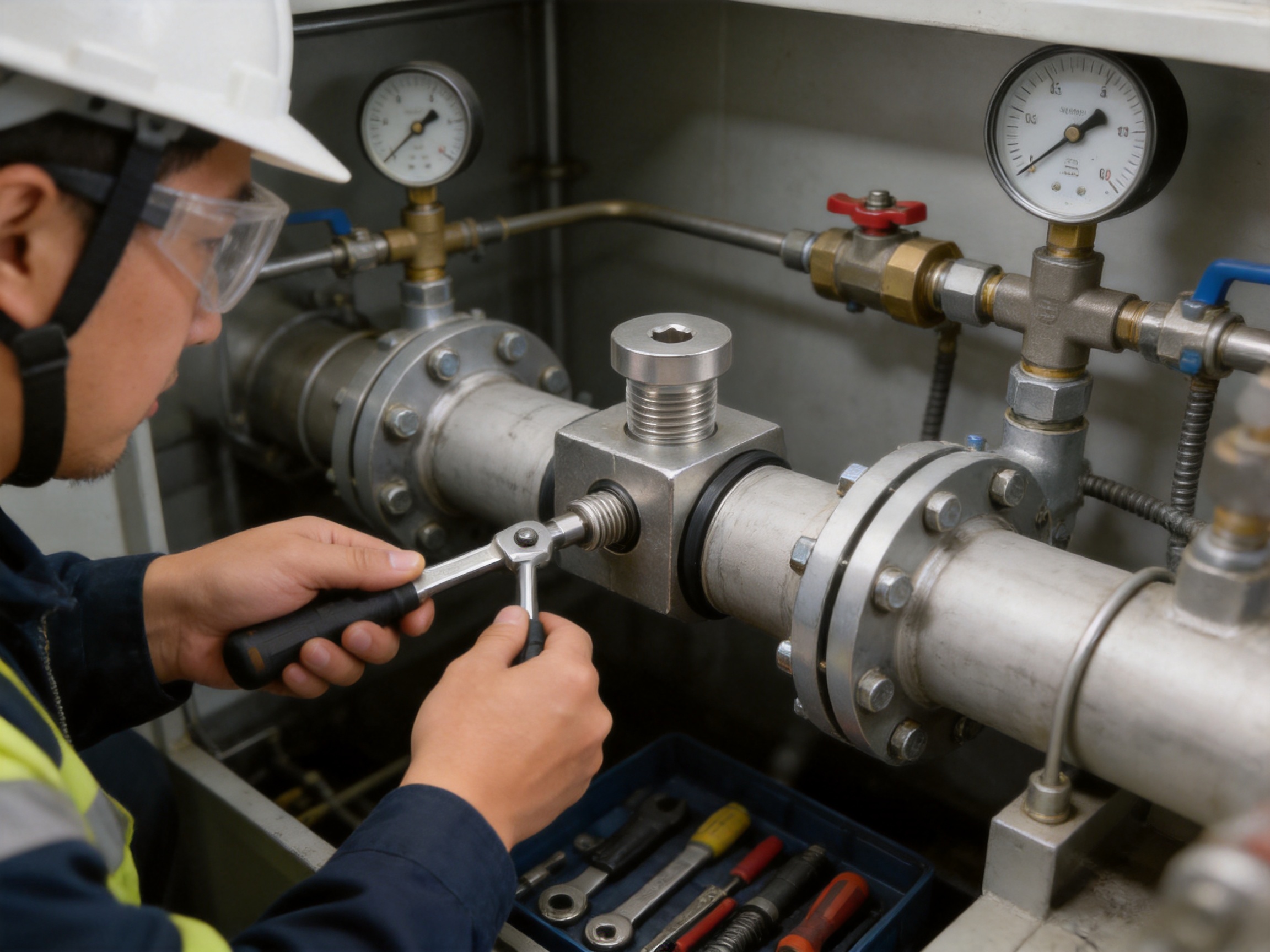
Comparison with Alternative Closure Methods
| Closure Method | Main Strength | Potential Limitation | Typical Suitability |
|---|---|---|---|
| Hexagon socket screw plug | Compact drive access and convenient removal. | Requires correct tool engagement and specification control. | Compact equipment, threaded ports, service access points, and oil systems. |
| T-shaped flanged plug | Reinforced body and full-face gasket sealing. | Requires flange alignment, bolts, and a suitable gasket. | Pipeline termination, pressure testing, and maintenance isolation. |
| Welded blind | Permanent and highly integrated closure. | Requires hot work, inspection, cutting, and later restoration. | Permanent installations where future access is not required. |
| Basic pipe cap | Simple and economical for basic pipe ends. | May provide less controlled sealing and limited maintenance flexibility. | Low-complexity piping and non-critical closures. |
| Fabricated steel plate | Can be made locally for unusual dimensions. | Quality, flatness, alignment, and repeatability may vary. | Temporary or special applications with engineering approval. |
The correct choice depends on the application. A welded blind may be preferred for a permanent closure in a carefully controlled design. A basic pipe cap may be sufficient for a low-pressure utility line. However, when repeatable installation, pressure testing, compact access, and maintenance removal are important, a purpose-designed plug provides a more balanced solution.
Installation Recommendations
Installation should always follow the approved engineering procedure and the applicable safety requirements. The following sequence provides general guidance and does not replace the instructions for a specific system.
First, verify the product identity and dimensions. Confirm the nominal size, flange or thread standard, material, pressure class, gasket specification, and installation tool. Compare the component with the engineering drawing or purchase order before placing it into service.
Second, make the system safe. Isolate the relevant section, depressurize it, drain or vent the contents, and verify that no hazardous pressure remains. For chemical, gas, or high-temperature systems, follow the site’s approved cleaning, purging, and lockout procedures.
Third, inspect the mating surfaces. Remove dirt, rust flakes, old gasket material, oil deposits, and foreign particles. Check for scratches, distortion, corrosion, and bolt-hole damage. The sealing surfaces should be clean and suitable for the selected gasket.
Fourth, install a new, correctly specified gasket where the design requires one. Center the gasket carefully so that it does not protrude into the flow passage or fall outside the sealing area. Do not apply unapproved sealants or lubricants to the gasket.
Fifth, position the plug and install the fasteners by hand. Ensure that the bolt holes align naturally and that the plug is not being forced into position. Cross-threading, uneven contact, or misalignment can damage the connection and compromise sealing.
Sixth, tighten the fasteners in a controlled cross-pattern. Use the torque or tension values specified for the connection. Several progressive passes are often preferable to applying full torque to one fastener at a time. If the product is a threaded socket plug rather than a bolted flange plug, engage the hexagonal tool fully and apply the specified installation torque.
Finally, inspect the completed assembly and conduct the required leak or pressure test. The system should be returned to service only after the connection has passed the applicable inspection criteria.
Storage, Handling, and Maintenance
Proper storage protects the plug before installation. Components should be kept in a clean, dry environment and protected from moisture, corrosive chemicals, impact, and excessive dust. Sealing surfaces should be covered or separated so that they do not contact hard objects that could cause scratches or dents.
During handling, avoid dropping the plug or dragging its sealing face across metal surfaces. Do not use the hexagonal socket as a lifting point unless the component and tool are specifically designed for that purpose. Heavy plugs should be moved with suitable handling equipment.
Installed plugs should be included in the equipment inspection program. The inspection interval depends on service severity, pressure, temperature, vibration, fluid properties, and regulatory requirements. Signs requiring attention may include visible leakage, corrosion, gasket extrusion, bolt loosening, surface damage, or deformation.
When a plug is removed, the component should be cleaned and inspected before being considered for reuse. Reuse may be acceptable only when the plug remains within dimensional and surface-condition requirements and the application permits it. Gaskets are generally treated as consumable sealing elements and should be replaced when necessary.
Customization and OEM or ODM Supply
Not every application uses a standard configuration. Customers may require a special material, non-standard size, modified socket dimension, customized marking, special coating, alternative sealing face, or a design adapted to a particular equipment housing. A manufacturer with in-house engineering and production resources can evaluate these requirements more efficiently than a general trading supplier.
For a custom project, the customer should provide a detailed drawing or application specification. Important information includes dimensional tolerances, thread details, flange standard, pressure conditions, temperature, fluid, material, heat-treatment requirements, surface treatment, inspection requirements, packaging, and annual demand.
The development process may include drawing review, technical clarification, prototype or sample production, dimensional inspection, customer approval, process confirmation, and mass production. Maintaining the approved sample and production records helps preserve consistency in later batches.
Customized supply can be especially valuable for automotive and aerospace assemblies, where the plug may need to fit a restricted housing or integrate with a larger threaded fastening system. It can also support industrial equipment manufacturers that want to standardize their own product family under a controlled specification.
Why Choose a Specialized Threaded-Product Manufacturer
Threaded components require attention to details that are easy to underestimate. A supplier focused on threaded connection products is familiar with thread inspection, installation behavior, torque transmission, sealing interfaces, and the interaction between material and geometry.
Jinzhize’s product range covers several related technologies, including wire thread inserts, self-tapping inserts, key-locking inserts, threaded adapters, oil plugs, taps, and installation tools. This breadth indicates experience with both internal and external thread systems. It also allows customers to consolidate sourcing for related threaded connection products.
The company’s owned manufacturing plant and automated production systems support production stability. Its design, development, and manufacturing teams can coordinate product engineering with production planning. For customers requiring reliable supply over repeated orders, this integrated capability can be an important advantage.
The company’s experience in automotive, aerospace, and rail vehicle applications also supports disciplined production practices. These industries place strong emphasis on repeatability, quality records, and supply continuity. While each application still requires its own technical verification, experience in demanding sectors provides a useful foundation for industrial plug production.
Purchasing Checklist
Before requesting a quotation, purchasers should prepare complete technical information. A clear specification helps the manufacturer quote accurately and reduces the need for later clarification.
• Product name and required configuration.
• Nominal size and quantity.
• Thread or flange standard.
• Pressure rating and test pressure.
• Operating temperature range.
• Fluid or media being contained.
• Material grade and corrosion-resistance requirement.
• Gasket type and sealing-face specification.
• Hex socket dimensions or installation-tool requirements.
• Surface treatment, coating, or passivation requirements.
• Marking, packaging, inspection, and documentation requirements.
• Delivery schedule and expected annual demand.
• Drawing, sample, or reference component if customization is required.
Providing this information allows the supplier to evaluate manufacturability, recommend the appropriate product, and establish a clear quality standard before production begins.
Q&A
What is a hexagon socket screw plug used for?
A hexagon socket screw plug is used to close a threaded opening, oil port, inspection point, or equipment connection. Its internal hexagonal drive allows installation and removal with a suitable hex key or driver, making it useful where external wrench clearance is limited.
Is this product suitable for pipeline pressure testing?
The supplied product information describes a reinforced T-shaped or flanged configuration intended for pressure-test interfaces and pipeline isolation. Suitability depends on the selected size, pressure rating, material, gasket, bolt arrangement, and installation procedure. The complete assembly must be verified by the responsible engineering team before testing.
What is the benefit of the T-shaped reinforced design?
The raised central structure increases rigidity, helps resist deformation, and supports improved stress distribution under pressure. Maintaining the shape of the sealing area helps preserve uniform gasket compression and reduce potential leakage paths.
Can the plug be removed and reused?
The design supports convenient removal for maintenance and repeated access. Reuse depends on the plug’s condition and the application. The sealing face, drive socket, threads, flange, and gasket interface should be inspected after removal. Damaged plugs or degraded gaskets should not be reused.
Which flange standards are supported?
The supplied information identifies compatibility with major standards such as ANSI, DIN, and JIS. The exact standard, nominal size, pressure class, bolt pattern, and sealing-face configuration must be confirmed for each order.
Does the plug require a gasket?
The flanged configuration is described as using a full-face sealing surface with a standard flange gasket. The exact sealing arrangement depends on the product design and application. The gasket should be selected for the contained fluid, pressure, temperature, and flange standard.
How should the plug be installed?
The system must first be isolated and depressurized. Mating surfaces should be cleaned and inspected, the correct gasket should be positioned, and bolts or the hexagonal drive should be tightened using a controlled method. The applicable drawing and site procedure should always take priority over general guidance.
Can the company provide customized plugs?
Dongtai Jinzhize Metal Products Co., Ltd. provides OEM and ODM support for threaded connection and fastening products. Customers can discuss customized dimensions, materials, socket designs, surface treatments, markings, inspection requirements, and packaging with the company’s engineering and production teams.
What industries does the manufacturer serve?
The company’s products are used in automotive applications, including engines and transmissions, as well as aerospace and rail vehicle manufacturing. Its product range also supports industrial equipment, pipeline, maintenance, and related threaded connection applications.
What information is needed for a quotation?
The most useful information includes product configuration, dimensions, standard, material, pressure and temperature, media, gasket requirements, quantity, drawing, surface treatment, inspection documents, packaging, and delivery schedule.
Conclusion
The Hexagon Socket Screw Plug provides a practical and engineered solution for closing pipeline ends, equipment ports, pressure-test interfaces, and maintenance connections. Its compact drive access supports installation in restricted spaces, while the reinforced T-shaped or flanged construction improves structural rigidity and supports stable sealing under pressure. The precision full-face sealing surface, compatibility with major flange standards, and removable design make it more flexible than many traditional closure methods.
For pipeline termination, the plug can provide a standardized permanent or temporary barrier. For pressure testing, it can create a defined isolation point. For maintenance, it can reduce hot work and shorten disassembly time. For future expansion, it can protect reserved ports while preserving later access.
The product’s performance depends on correct specification, material selection, gasket matching, installation torque, pressure control, and inspection. These technical requirements should be confirmed before use, particularly in high-pressure, high-temperature, hazardous, or safety-critical systems.
Dongtai Jinzhize Metal Products Co., Ltd. supports this product with specialized experience in threaded connection manufacturing, a 10,000-square-meter production facility, hundreds of machine tools, automated production systems, engineering resources, and quality management processes. Its experience in automotive, aerospace, rail vehicle, and industrial applications enables it to serve both standard and customized product requirements.
For customers seeking reliable threaded connection and fastening products, the combination of reinforced design, controlled sealing, compact installation, standardized compatibility, and specialized manufacturing capability makes this plug a strong option for demanding maintenance and pipeline applications.
References
1. Product specification and application information supplied for the Hexagon Socket Screw Plug and T-shaped reinforced flanged plug.
2. ANSI flange dimensional and pressure-class principles for industrial piping connections.
3. DIN flange dimensional and sealing-interface principles for pipeline and equipment connections.
4. JIS flange dimensional principles for industrial piping systems.
5. General engineering practices for gasket selection, bolted flange assembly, and pressure-boundary inspection.
6. General maintenance practices for pipeline isolation, hydrostatic testing, pneumatic testing, and equipment access.
7. Manufacturer information concerning Dongtai Jinzhize Metal Products Co., Ltd., its production facility, product range, manufacturing capabilities, and quality-support services.