Français
 Español
 Deutsch


Content
- 1 What Is a Slotted Internal-External Thread Conversion Nut?
- 2 Advantages of the Slotted Configuration
- 3 Performance Advantages Compared with Alternative Thread Adapters
- 4 Materials and Surface Protection
- 5 Precision Manufacturing Process
- 6 Quality Assurance and Inspection
- 7 Applications in Industrial Equipment
- 8 Applications in Automotive Manufacturing
- 9 Applications in Construction and Building Equipment
- 10 Applications in Aerospace and Defense
- 11 Manufacturing Strengths of a Specialized Supplier
- 12 How to Select the Correct Product
- 13 Common Failure Modes and Prevention
- 14 Q&A
- 14.1 What is the main purpose of a slotted internal-external thread conversion nut?
- 14.2 How is the slotted version installed?
- 14.3 Can the adapter be removed?
- 14.4 What materials are commonly used?
- 14.5 Is surface treatment necessary?
- 14.6 Can the internal and external threads have different sizes?
- 14.7 Can it convert between different thread standards?
- 14.8 Is it suitable for high-load applications?
- 14.9 How does it compare with a wire thread insert?
- 14.10 Can custom sizes be produced?
- 14.11 What information should be provided when requesting a quotation?
- 14.12 What should be checked after installation?
- 15 Conclusion
- 16 References
- 17 Product: Slotted Internal-external Thread Conversion Nut
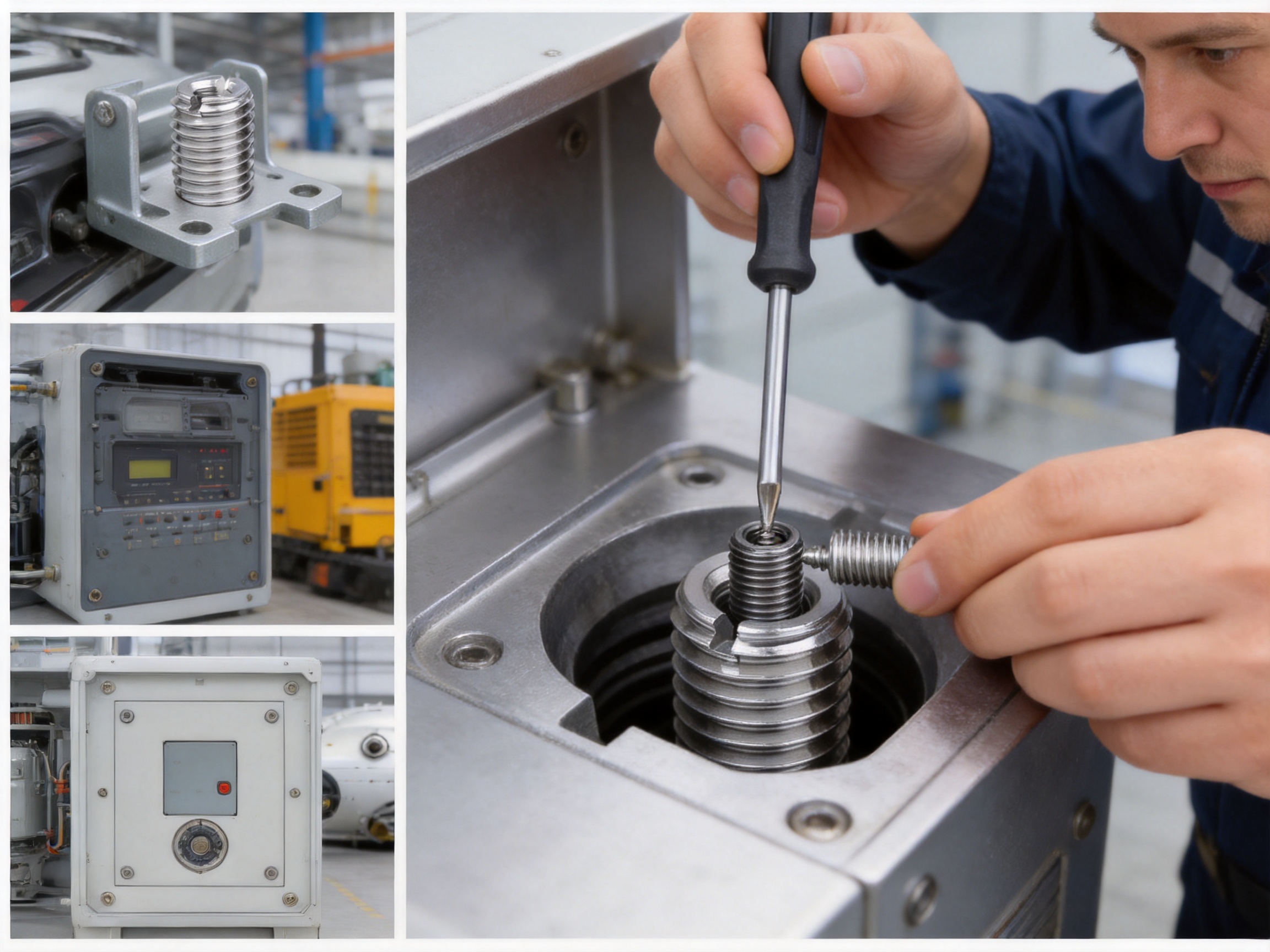
Thread compatibility is a fundamental requirement in mechanical assembly. When two components are designed around different thread standards, diameters, pitches, or thread directions, a reliable conversion element is needed to connect them without redesigning the surrounding structure. A slotted internal-external thread conversion nut provides this function in a compact, serviceable, and versatile form. It combines an external male thread with an internal female thread, allowing one threaded connection to be adapted to another within a single component.
Unlike a conventional nut, which generally provides only an internal thread, an internal-external thread conversion nut can be installed into a threaded hole and then accept a separate screw, stud, bolt, or threaded component. The result is a practical interface between different thread sizes or configurations. The slotted version adds a screwdriver slot to the top or exposed side of the insert. This feature enables straightforward installation and removal with a flathead screwdriver, particularly where wrench access is restricted.
This product is valuable in industrial machinery, automotive assemblies, construction equipment, aerospace systems, defense equipment, and maintenance-intensive products. It is especially useful where space is limited, thread replacement must be efficient, or a damaged threaded hole needs to be restored without replacing the complete base component.
The performance of a slotted internal-external thread conversion nut depends on more than nominal dimensions. Material quality, thread accuracy, surface treatment, slot geometry, concentricity, heat treatment, inspection, and production consistency all affect service life. A professional manufacturer must therefore combine appropriate product design with controlled machining, reliable process management, and traceable quality assurance.
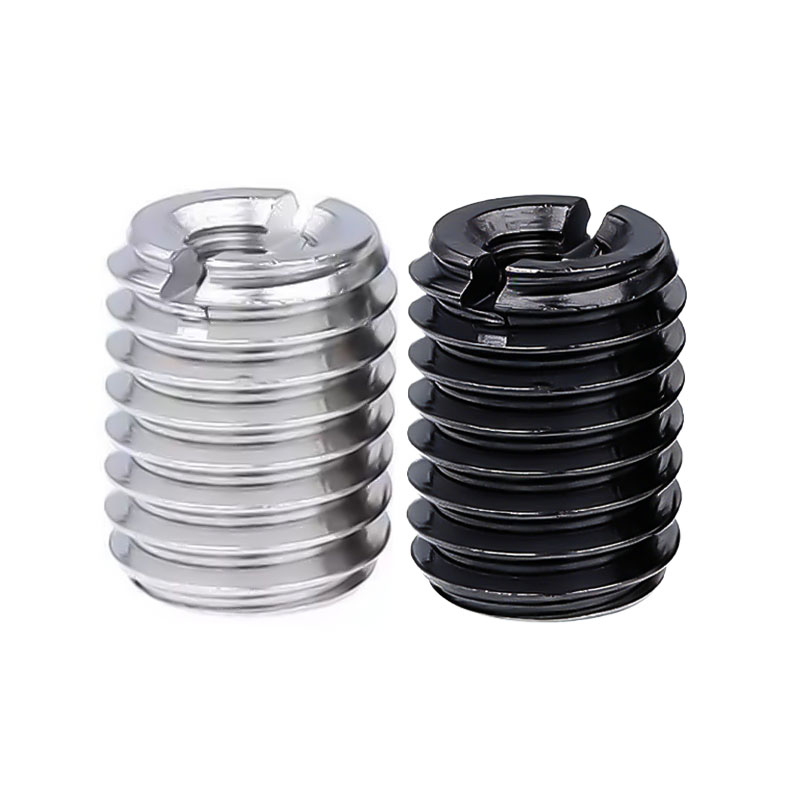
Slotted Internal-external Thread Conversion Nut
What Is a Slotted Internal-External Thread Conversion Nut?
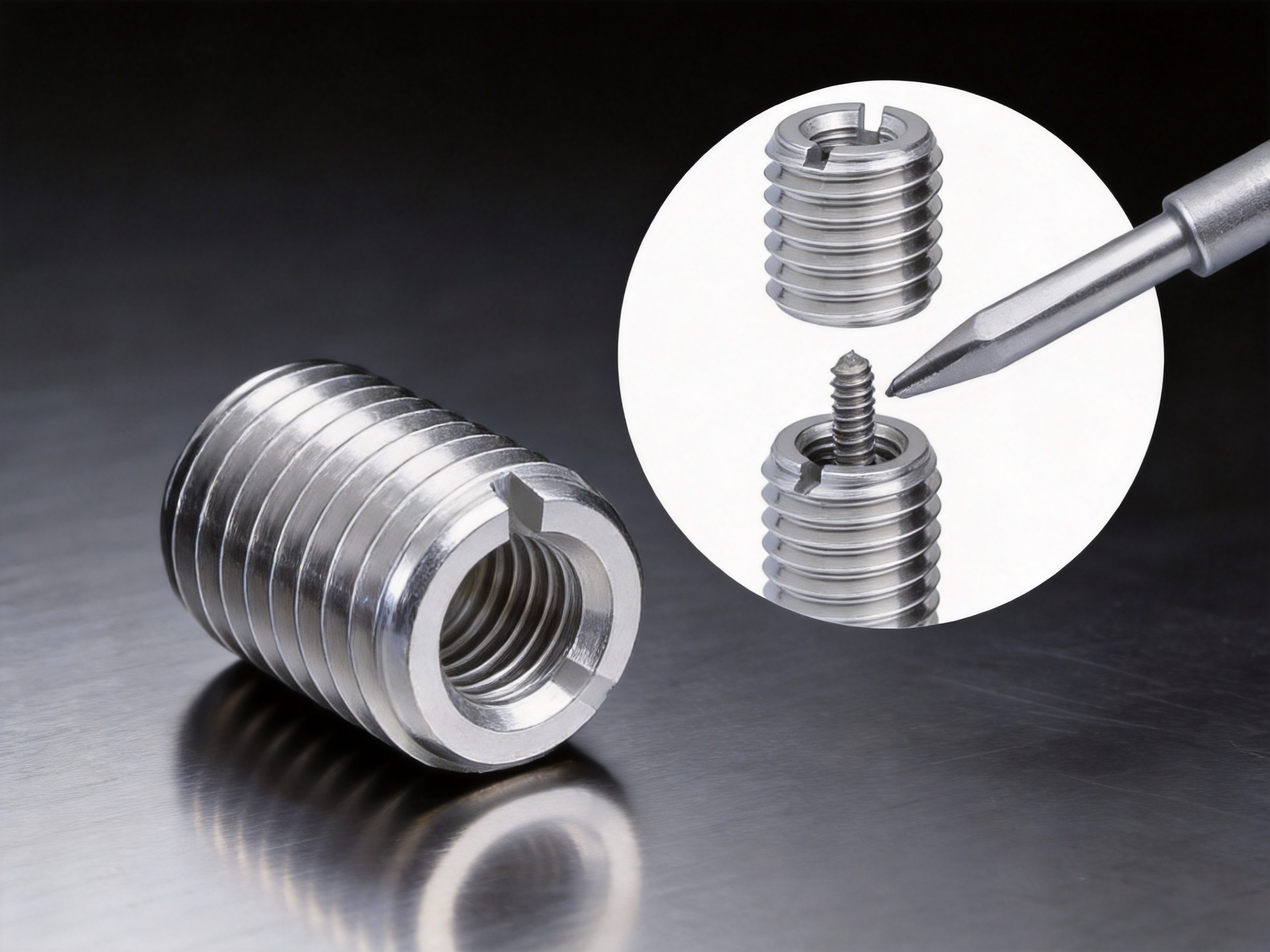
A slotted internal-external thread conversion nut is a threaded adapter with two functional thread surfaces. The outer surface contains a male thread designed to engage with a tapped hole or internal thread in a base component. The inner surface contains a female thread designed to receive a bolt, screw, stud, or other male-threaded part. The two threads may have different nominal diameters, pitches, or thread standards, allowing the adapter to perform a conversion function.
For example, a component with a larger internal thread may receive the external thread of the adapter, while the internal thread of the adapter accepts a smaller screw. This arrangement provides a practical step-down connection. Depending on the design, the adapter may also be used to convert between metric and inch-related thread specifications, accommodate different pitch requirements, or support a change in connection direction.
The slot is normally machined into the top face or another accessible surface. A flathead screwdriver can engage the slot and rotate the insert during installation or removal. This makes the component easier to handle than adapters that require special sockets, external flats, or protruding wrench surfaces. The slotted configuration can be particularly beneficial in recessed locations, narrow housings, instrument panels, and compact mechanical assemblies.
The product is commonly manufactured from steel or another high-strength metallic material. Material selection is based on load requirements, expected operating temperature, exposure to moisture or chemicals, mating component materials, and the desired balance between strength and machinability. Surface treatment may be added to improve corrosion resistance and maintain dimensional stability during storage, transportation, and service.
Core Functional Structure
The external thread provides anchoring. It transfers axial and radial forces between the adapter and the host component. The internal thread creates the new fastening interface. The slot provides a direct installation drive feature. The body between the two thread systems must be sufficiently robust to resist splitting, deformation, stripping, and fatigue under the intended load.
Good design requires careful control of the wall thickness between the internal and external threads. If the wall is too thin, the adapter may deform during tightening or under repeated loading. If it is unnecessarily thick, the product may occupy more space than the application permits. Professional engineering therefore considers thread engagement, stress distribution, installation torque, material strength, and assembly clearance together.
Typical Thread Conversion Functions
A slotted internal-external thread conversion nut may be used for several connection tasks. It can adapt a larger tapped hole to a smaller fastener, provide a new thread in a worn or oversized hole, convert one thread pitch to another, or create a removable threaded interface in a thin-wall component. It may also be used to replace a permanent threaded feature with a serviceable insert-based connection.
Where the internal and external threads differ in direction, the adapter can support specialized assemblies that require a change between right-hand and left-hand thread engagement. Such applications must be designed carefully because installation torque, loosening behavior, and operational rotation can vary according to thread direction.
Advantages of the Slotted Configuration
The slotted design offers several practical benefits compared with plain adapters or externally hexagonal conversion nuts. Its primary advantage is installation access. A flathead screwdriver can be inserted directly into the slot, allowing the part to be rotated without requiring a large wrench clearance around the component.
This low-profile installation method is useful in recessed holes, narrow channels, housings, fixtures, and assemblies where surrounding parts prevent access to the outer circumference. The slot also makes the adapter easy to remove for inspection, replacement, or repair. This is important for equipment designed for routine maintenance or periodic component replacement.
Efficient Installation
Installation efficiency is achieved through a simple tool interface and a compact part profile. Operators can use a standard flathead screwdriver or a compatible slotted driver. This reduces the need for specialized equipment and can simplify field service procedures. In production environments, the simple drive method can also support fast manual or semi-automatic assembly.
When the adapter is correctly aligned with the host thread, the slot enables controlled rotation during the initial engagement and final tightening stages. The operator can maintain axial pressure while turning the component, reducing the risk of cross-threading. In automated or fixture-assisted assembly, the slot can be integrated into a driver tool designed for repeatable installation torque.
Convenient Removal and Maintenance
Some threaded inserts are difficult to remove after installation because they have no dedicated drive feature. The slotted design addresses this issue by providing a visible and accessible removal interface. If a mating fastener or connected subassembly must be replaced, the conversion nut can be removed without damaging the host component, provided that the insert has not been permanently locked by adhesive, staking, or deformation.
This serviceability supports a longer equipment life cycle. Instead of scrapping a housing or replacing a large structural part because of a damaged thread, maintenance personnel may replace the adapter and restore the original connection function. The result can be lower repair cost, shorter downtime, and reduced material waste.
Space-Saving Geometry
A slotted conversion nut generally has a compact cylindrical or near-cylindrical profile. Unlike an adapter with large external flats, it can fit into a smaller surrounding envelope. The product can therefore be integrated into compact mechanical assemblies without creating unnecessary interference with neighboring parts.
The low-profile form is also beneficial when the finished surface must remain relatively flush. In automotive, electronic equipment, machinery, and transportation applications, available space is often restricted by covers, brackets, wiring, fluid lines, and moving components. A compact threaded adapter can provide the necessary connection while preserving the design freedom of the assembly.
Performance Advantages Compared with Alternative Thread Adapters
Many types of thread adapters are available, including hexagonal reducers, un-slotted bushings, press-fit inserts, wire thread inserts, self-tapping inserts, and permanently fixed threaded sleeves. Each type has an appropriate use case. The slotted internal-external thread conversion nut is distinguished by its combination of dual-thread functionality, mechanical strength, removable installation, and low-profile access.
Compared with Conventional Nuts
A conventional nut normally requires a projecting bolt or stud and provides only an internal thread. It cannot directly convert a tapped hole from one thread size to another. The slotted conversion nut, by contrast, installs into the base component through its external thread and creates a new internal thread. It therefore performs both an anchoring and adapting function within one part.
Compared with Plain Threaded Bushings
A plain threaded bushing may provide the same basic conversion function but may lack a practical drive feature. Without a slot, installation may require pliers, a special tool, adhesive, or a pre-machined external feature. The slotted version provides a defined interface for controlled insertion and removal, improving assembly reliability and maintenance convenience.
Compared with Wire Thread Inserts
Wire thread inserts are highly effective for restoring threads and improving wear resistance, especially in lightweight metals. However, they usually require a dedicated installation process involving a special tap, insertion tool, and tang removal procedure. They also do not normally provide a direct conversion between two different external and internal thread systems in the same rigid body.
A slotted internal-external conversion nut may be preferable when a solid adapter is required, when frequent removal is expected, or when the application needs a visible and accessible drive feature. Wire inserts remain valuable for other applications, but the two products solve different connection problems.
Compared with Self-Tapping Inserts
Self-tapping inserts can create their own seating thread in a pre-drilled hole and are useful when the host material does not have a suitable internal thread. However, their installation may require higher insertion torque and careful control of hole size and material condition. A slotted conversion nut is more appropriate when the host component already contains a suitable tapped hole or when a defined external thread is desired.
Compared with Adhesive-Bonded Adapters
Adhesive-bonded adapters depend heavily on surface preparation, curing conditions, adhesive selection, and long-term environmental stability. Mechanical thread engagement provides a more direct load path and allows removal when service conditions require it. In applications exposed to vibration, heat, oil, or moisture, a mechanically installed adapter can offer a more predictable maintenance strategy, subject to correct design and tightening procedures.
| Feature | Slotted Internal-External Conversion Nut | Plain Threaded Bushing | Wire Thread Insert | Self-Tapping Insert |
|---|---|---|---|---|
| External and internal threads | Yes | Usually yes | Normally no external conversion thread | Internal thread after installation |
| Dedicated installation drive | Slotted screwdriver interface | May be absent | Special installation tool normally required | Special driver or installation method may be required |
| Removal convenience | High when properly installed | Depends on design | Requires specific removal practice | Often more difficult after installation |
| Thread-size conversion | Well suited | Well suited | Limited by host and insert configuration | Possible, depending on design |
| Typical application | Compact, serviceable mechanical connections | General thread adaptation | Thread repair and reinforcement | Thread creation in prepared holes |
Materials and Surface Protection
Material selection is central to the reliability of a conversion nut. The material must withstand installation torque, tensile loading, shear forces, vibration, temperature variation, and environmental exposure. It must also retain adequate thread accuracy after machining and finishing.
Steel Construction
High-quality steel is widely used because it offers a strong combination of tensile strength, hardness, fatigue resistance, and cost efficiency. Steel can be machined accurately and treated to improve surface durability. It is suitable for industrial machinery, automotive systems, construction equipment, and many general engineering applications.
The specific steel grade should be selected according to the load and environmental conditions. A product intended for a heavily loaded joint may require a higher-strength grade or controlled heat treatment. A product used in an ordinary indoor assembly may prioritize machinability and economical production. Professional manufacturers evaluate these factors before confirming the production specification.
Heat Treatment
Heat treatment can improve the mechanical properties of the adapter. Depending on the selected material and required performance, processes may include quenching, tempering, stress relief, or other controlled thermal cycles. The purpose is to achieve a suitable balance between hardness and toughness.
Excessive hardness may increase brittleness and make the component more vulnerable to cracking during installation. Insufficient hardness may allow thread deformation or stripping under load. Controlled heat treatment, supported by hardness testing and process records, helps maintain consistent performance across production batches.
Corrosion Resistance
Corrosion can affect thread fit, installation torque, appearance, and long-term load capacity. To reduce this risk, the adapter may receive a protective surface treatment selected according to the service environment. Possible approaches include plating, passivation, black protective treatment, oil preservation, or other compatible coatings.
The correct treatment depends on exposure to humidity, salt spray, chemicals, temperature, and contact with dissimilar metals. Surface treatment must not create excessive coating thickness on the threads. An uncontrolled coating can reduce clearance, increase installation torque, or interfere with the fit of the mating parts.
For demanding applications, corrosion resistance should be evaluated through appropriate testing and by considering the complete assembly. The behavior of the adapter, host material, fastener, lubricant, and surrounding environment should be reviewed together rather than independently.
Precision Manufacturing Process
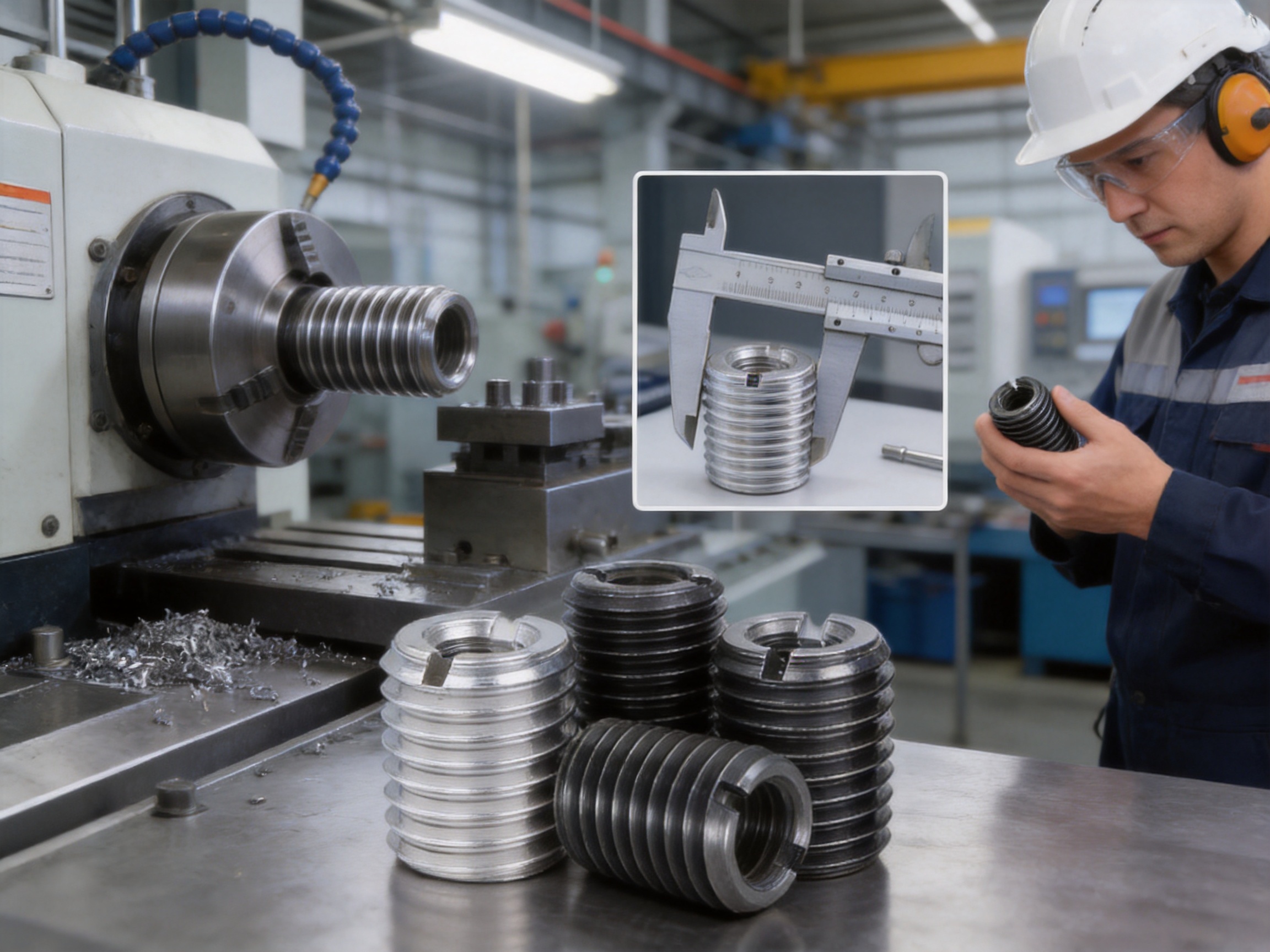
The quality of a slotted internal-external thread conversion nut is determined by the entire manufacturing chain. A reliable production process begins with material verification and continues through forming or machining, thread production, slot machining, surface treatment, inspection, packaging, and traceability.
Engineering and Product Development
Production begins with a technical review of the required dimensions and operating conditions. Engineers assess the external thread, internal thread, overall length, body diameter, slot width, slot depth, end chamfers, tolerances, and installation requirements. The design must also account for the minimum wall thickness between the two thread systems.
Customer drawings, samples, or application requirements can be converted into controlled production documents. Where the product is customized, the manufacturer may review the thread standard, material specification, surface treatment, batch quantity, packaging needs, and inspection requirements before releasing the order for production.
Raw Material Control
Raw material control helps prevent inconsistent mechanical performance. Incoming material may be checked against purchase specifications, certificates, dimensions, surface condition, and chemical composition requirements. Material identification should remain traceable through production so that finished parts can be connected to the relevant raw material batch.
Proper storage is also important. Steel bar or other stock material should be protected from contamination, excessive moisture, and accidental mixing of grades. Organized material management reduces the possibility of using an incorrect material in a technically critical component.
Precision Turning and Forming
The basic body is commonly produced through precision turning, cold forming, or a combination of manufacturing methods. The best process depends on size, geometry, material, production volume, and tolerance requirements.
CNC turning can produce accurate external diameters, internal bores, chamfers, shoulders, and other geometric features. Automated equipment supports repeatability and reduces variation between parts. For high-volume products, forming may improve material utilization and production efficiency, provided that the resulting geometry meets the required accuracy.
During machining, tool condition must be monitored. Worn tools can create poor surface finish, inaccurate diameters, burrs, or inconsistent thread preparation. Coolant control, chip removal, fixture stability, and machine calibration all contribute to dimensional consistency.
Internal and External Thread Production
The internal and external threads may be produced by cutting, rolling, tapping, or other suitable methods. Thread rolling can provide favorable surface properties and efficient production for compatible materials and geometries. Thread cutting and tapping may be selected for specific dimensions, low-volume work, or designs requiring particular tooling flexibility.
Thread quality involves more than checking the nominal diameter. Pitch, flank angle, lead, crest and root form, engagement length, runout, burrs, and surface finish all influence assembly. Both threads must remain concentric with the central axis. Misalignment can cause uneven contact, difficult installation, excessive wear, or reduced load capacity.
Slot Machining
The screwdriver slot must have sufficient width and depth to engage the intended tool without excessive deformation. Its edges should be controlled to reduce sharp burrs that could interfere with assembly or injure operators. Slot geometry also affects the amount of installation torque that can be transmitted.
A slot that is too shallow may allow the driver to slip. A slot that is too narrow may not accept the designated screwdriver. A slot that is too deep may weaken the top section of the adapter. Manufacturing engineers therefore establish slot dimensions in relation to material strength, insert diameter, expected torque, and available installation tools.
Deburring and Cleaning
Machining can leave burrs at thread entrances, slot edges, and end faces. Deburring is necessary to protect operators, prevent cross-threading, and ensure that the adapter seats correctly. Cleaning removes chips, cutting fluid, abrasive residue, and other contaminants that could affect surface treatment or final assembly.
Cleaning procedures should be compatible with the selected material and coating. Parts must be dried properly before packaging, especially when corrosion-sensitive steel is used. Clean handling also reduces the risk of contamination entering precision threaded assemblies.
Surface Treatment and Final Processing
After machining and inspection of the pre-treatment condition, the parts may be sent for surface protection. Treatment parameters should be controlled to avoid excessive buildup on the threads or distortion of the slot. Finished parts may receive additional inspection to confirm coating appearance, thread fit, and corrosion-protection requirements.
Automated and Semi-Automated Production
A modern manufacturing facility may combine automated production systems with skilled operator oversight. Automation improves repeatability for high-volume operations, while experienced technicians remain essential for process setup, tool adjustment, first-piece approval, defect analysis, and non-standard orders.
Production data can be used to monitor output, rejection rates, equipment condition, and process stability. This approach allows manufacturers to identify trends before they become major quality problems. It also supports more accurate delivery planning for recurring orders.
Quality Assurance and Inspection
Threaded components require comprehensive inspection because small dimensional deviations can affect assembly and load transfer. A professional quality system should combine incoming inspection, in-process monitoring, final inspection, and corrective-action procedures.
Dimensional Inspection
Critical dimensions may include external major diameter, internal minor diameter, body length, overall diameter, slot width, slot depth, chamfer dimensions, and concentricity. Measuring equipment should be suitable for the required tolerance and regularly calibrated.
Thread gauges are commonly used to verify functional fit. Go and no-go gauges can identify whether the thread is within an acceptable manufacturing range. Depending on the application, more detailed measurement may be performed using optical equipment, coordinate measuring equipment, or specialized thread inspection instruments.
Visual and Surface Inspection
Visual inspection can identify cracks, dents, burrs, incomplete threads, tool marks, discoloration, coating defects, and contamination. Although visual inspection cannot replace dimensional measurement, it is an important screening step and may reveal process problems quickly.
The slot should be free from distortion and excessive burrs. Thread entrances should be clean and properly chamfered where required. Surface treatment should be uniform and free from peeling, heavy deposits, exposed corrosion, or other defects that could affect service performance.
Mechanical and Functional Testing
Depending on the product specification, mechanical tests may evaluate hardness, torque resistance, pull-out behavior, thread stripping resistance, or dimensional stability. Functional testing with representative mating parts can help verify that the adapter installs smoothly and provides the expected connection.
Testing should reflect the actual application as closely as practical. For example, an adapter used in a vibrating automotive assembly may require a different validation approach from one used in a stationary indoor machine. The required test plan should be agreed upon during the engineering and quotation stage.
Traceability and Documentation
Traceability supports consistent supply and efficient problem resolution. Production records may include material batch information, machine or process identification, inspection results, surface-treatment records, packaging details, and shipment data. If a customer raises a technical question, traceable records help the manufacturer investigate the relevant production lot.
Documentation also supports repeat orders. Once a part number, drawing, inspection plan, and process record are established, future production can be compared against the approved standard. This reduces uncertainty and helps maintain consistent dimensions over time.
Applications in Industrial Equipment
Industrial machinery often contains multiple components produced by different suppliers. Thread standards may vary between legacy parts, imported assemblies, replacement components, and newly designed modules. A conversion nut can bridge these differences without requiring extensive redesign.
In machine frames, housings, brackets, fixtures, and protective covers, the adapter can create a durable threaded mounting point. It may be used for sensors, guards, handles, inspection covers, positioning components, and service panels. The slotted drive is particularly useful when access is available only from one face.
In repair work, the adapter may restore a damaged tapped hole if enough base material remains to support the external thread. The repair method should be evaluated by a qualified technician. Hole size, remaining wall thickness, material condition, thread engagement, and load direction must all be considered before installation.
Applications in Automotive Manufacturing
Automotive assemblies require compact, reliable, and repeatable threaded connections. Engines, transmissions, chassis components, interior structures, brackets, and accessory systems may contain many different thread sizes and limited installation space.
A slotted conversion nut can support thread adaptation in compact parts where a larger wrench interface would interfere with neighboring components. It can also provide a replaceable internal thread in a housing or bracket. This may simplify service procedures and reduce the need to replace an entire component after thread damage.
Automotive applications frequently involve vibration, temperature cycling, oil, moisture, road contaminants, and repeated maintenance. Consequently, the adapter material, surface treatment, installation torque, and locking strategy must be selected for the specific assembly. The conversion nut should not be treated as a universal substitute for an engineered joint; it should be integrated into a verified connection design.
Applications in Construction and Building Equipment
Construction machinery and structural equipment demand reliable connections under vibration, impact, changing loads, and outdoor exposure. Conversion nuts may be used in brackets, access panels, machinery housings, temporary fixtures, equipment frames, and repair assemblies.
In building-related applications, the adapter can accommodate differences between structural components and fastening hardware. Its high-strength steel construction and protective surface treatment can support demanding service conditions when the selected specification is appropriate.
For load-bearing structural joints, the complete joint must be engineered according to applicable regulations and safety requirements. Thread adapters should be selected based on verified load capacity rather than convenience alone. The host material, thread engagement, tightening method, and environmental conditions all influence the final performance.
Applications in Aerospace and Defense
Aerospace and defense assemblies place exceptional demands on weight control, reliability, traceability, vibration resistance, corrosion control, and maintenance access. Thread conversion components may be used in equipment housings, brackets, service panels, instruments, and specialized mechanical systems.
The slotted configuration can be advantageous when access is restricted and maintenance must be performed with controlled tools. A removable adapter can also support modular design and replacement of smaller parts without disturbing an entire subassembly.
However, aerospace and defense use requires strict compliance with customer specifications, approved materials, inspection procedures, and qualification requirements. The product must be evaluated within the complete system, and the manufacturer must provide the documentation required by the applicable project or quality standard.
Manufacturing Strengths of a Specialized Supplier
Dongtai Jinzhize Metal Products Co., Ltd. is a specialized manufacturer of threaded connection and fastening products. Its product range includes helical wire inserts, self-tapping inserts, key-locking inserts, threaded adapters, oil plugs, installation taps, and related tools. This product concentration provides practical knowledge across multiple thread repair, thread conversion, and fastening technologies.
Established in 2015, the company operates an owned manufacturing facility covering approximately 10,000 square meters. The plant is equipped with numerous machine tools and automated production systems. This combination allows the company to support both standard products and customized threaded components while maintaining control over key manufacturing stages.
The company serves automotive and aerospace-related markets as well as rail vehicle manufacturing, industrial equipment, and other mechanical applications. Experience in these sectors encourages a focus on dimensional consistency, production stability, traceability, and responsive technical support.
Integrated Product Capability
A manufacturer that produces multiple categories of threaded inserts and tools can evaluate a customer’s connection problem more broadly. If a slotted conversion nut is not the most suitable solution, an alternative such as a wire insert, self-tapping insert, key-locking insert, or specialized tap may be considered. This product knowledge can help customers select a connection method based on load, space, material, maintenance, and installation requirements.
Production Capacity and Supply Stability
The reported annual output value of 153 million RMB in 2024 demonstrates substantial production activity and market capability. A facility with established equipment, process personnel, and production systems can support stable recurring supply more effectively than a supplier focused only on occasional small-batch work.
Supply stability depends on more than capacity. It also requires material planning, tooling management, production scheduling, inspection resources, packaging control, and communication between engineering and sales teams. These supporting systems help reduce disruptions and make delivery performance more predictable.
Engineering and Customization Support
Thread conversion parts are often customized according to thread standard, diameter, pitch, length, material, slot configuration, surface treatment, and packaging. A capable supplier should be able to review drawings, samples, or technical descriptions and convert them into a controlled production specification.
Customization may include non-standard internal and external thread combinations, special slot dimensions, modified end geometry, particular corrosion protection, or application-specific inspection requirements. Before mass production, prototypes or first articles can be evaluated to confirm fit and function.
Quality Management and After-Sales Service
A rigorous quality management system provides the foundation for consistent production. It should include controlled drawings, documented procedures, calibrated inspection equipment, operator training, nonconforming-product control, corrective action, and production traceability.
After-sales service is also important for threaded components. Customers may need assistance with installation torque, mating fastener selection, thread identification, replacement orders, or analysis of an assembly issue. Responsive technical communication helps prevent improper use and supports long-term cooperation.
How to Select the Correct Product
Selection should begin with the host component rather than the adapter alone. Confirm the existing hole size, thread standard, pitch, thread direction, material, available engagement length, and surrounding clearance. Then define the required internal thread and the fastener that will be used inside the adapter.
Important Selection Questions
What is the external thread specification of the adapter? What is the internal thread specification? Are both threads metric, inch-based, or otherwise defined? Is a right-hand or left-hand thread required? How much thread engagement is available in the host component? Will the joint experience tension, shear, vibration, impact, or repeated removal?
The required body length should provide adequate engagement without bottoming out in a blind hole. The slot must be accessible after installation and compatible with the selected screwdriver or driver bit. If the slot will be covered by another component, an alternative drive configuration may be more suitable.
Environmental factors must also be considered. Outdoor, marine, chemical, high-temperature, and salt-exposed environments may require a different material or protective treatment from a clean indoor application. Compatibility with lubricants, coatings, and dissimilar metals should be reviewed before approval.
Installation Practices
Before installation, clean the host thread and remove chips, corrosion, or damaged material. Confirm that the external thread is correctly aligned. Use a suitable flathead driver that fully engages the slot. Apply steady axial pressure during the first rotations to reduce the risk of cross-threading.
Do not exceed the recommended installation torque. Excessive torque can deform the slot, strip the external thread, or damage the host component. If locking compound is required, select a product compatible with the material, operating temperature, and future maintenance plan.
After installation, verify that the adapter is seated correctly and that the internal thread remains clean and undamaged. Install the mating screw or stud according to the specified tightening procedure. If the assembly is safety-critical, functional testing or torque verification should be completed according to the relevant work instruction.
Common Failure Modes and Prevention
Cross-threading is one of the most common installation problems. It occurs when the adapter or mating fastener enters at an angle or when contamination prevents smooth engagement. Correct alignment, clean threads, and controlled axial pressure are the primary preventive measures.
Thread stripping may result from insufficient engagement, excessive tightening torque, unsuitable material strength, or repeated overload. Designers should provide adequate thread length and ensure that the adapter is appropriate for the expected load.
Slot damage generally occurs when the screwdriver is too small, the tool slips, or excessive torque is applied. A driver with suitable width and thickness should be used. If high installation torque is expected, the slot design should be reviewed during product selection.
Loosening may be caused by vibration, inadequate tightening, thermal cycling, or incorrect locking practice. Depending on the application, a locking compound, mechanical retention method, prevailing torque feature, or other approved measure may be required. The correct solution depends on whether future removal is necessary.
Corrosion can reduce thread clearance and make removal difficult. Protective surface treatment, suitable storage, correct lubrication, and environmental compatibility can reduce this risk. Parts should be inspected before installation if they have been stored for an extended period or exposed to moisture.
Q&A
What is the main purpose of a slotted internal-external thread conversion nut?
Its main purpose is to connect two different threaded systems. The external male thread engages with a tapped hole or internal thread in the host component, while the internal female thread accepts a bolt, screw, or stud. The slot provides a convenient interface for installation and removal.
How is the slotted version installed?
The adapter is normally installed by engaging a suitable flathead screwdriver with the slot and rotating the part into the prepared external or internal thread of the host component. The threads should be clean and correctly aligned before installation.
Can the adapter be removed?
Yes, the slotted drive allows removal when the adapter has not been permanently locked by adhesive, staking, deformation, or severe corrosion. Removal should be performed with a properly fitting screwdriver to prevent slot damage.
What materials are commonly used?
High-strength steel is a common material because it provides good load capacity, durability, and machinability. The exact material should be selected according to the required strength, temperature, corrosion exposure, and customer specification.
Is surface treatment necessary?
Surface treatment is not required for every application, but it is often beneficial. It can improve corrosion resistance and storage durability. The treatment must be compatible with the thread tolerances and the service environment.
Can the internal and external threads have different sizes?
Yes. Different thread sizes are one of the primary reasons for using this product. The adapter can connect a larger host thread with a smaller internal fastener thread, or it can be designed for another specified combination.
Can it convert between different thread standards?
It may be designed to convert between different thread standards, subject to engineering review. The exact thread specifications, pitch, direction, clearance, and application loads must be confirmed before production.
Is it suitable for high-load applications?
It can be suitable for high-load applications when the material, dimensions, thread engagement, installation torque, and host component are properly engineered. The complete joint should be validated rather than relying on the adapter specification alone.
How does it compare with a wire thread insert?
A wire insert is often selected for thread repair and reinforcement, especially in lightweight materials. A slotted internal-external conversion nut is a solid adapter with a dedicated external thread, internal thread, and screwdriver slot. It is especially useful when thread-size conversion and removable installation are required.
Can custom sizes be produced?
Custom sizes may be produced according to drawings, samples, or technical specifications. Customization can include thread combinations, body dimensions, slot geometry, material, surface treatment, and inspection requirements.
What information should be provided when requesting a quotation?
Useful information includes the external thread specification, internal thread specification, thread direction, overall length, material, surface treatment, quantity, application environment, drawing or sample, packaging requirements, and any required inspection documentation.
What should be checked after installation?
Check that the adapter is fully seated, properly aligned, free from visible damage, and able to accept the mating fastener smoothly. Confirm that the installation torque and final fastening torque comply with the approved work instruction.
Conclusion
The slotted internal-external thread conversion nut is a practical solution for adapting threaded connections in compact and serviceable mechanical assemblies. Its combination of male and female threads allows it to connect different thread sizes or configurations, while the slotted drive provides convenient installation and removal with a common flathead screwdriver.
Compared with plain bushings, conventional nuts, and some specialized inserts, the product offers an effective balance of thread conversion, mechanical strength, low-profile geometry, and maintenance access. Its suitability extends across industrial machinery, automotive manufacturing, construction equipment, aerospace, defense, rail vehicles, and other applications where dependable threaded connections are required.
Performance depends on correct engineering and controlled manufacturing. High-quality material, precise turning, accurate internal and external threading, reliable slot machining, suitable heat treatment, corrosion protection, comprehensive inspection, and traceability all contribute to product consistency.
Dongtai Jinzhize Metal Products Co., Ltd. combines specialized threaded-product experience, an established manufacturing facility, automated production systems, engineering support, and quality-control practices to serve global customers. Its broader product range also enables customers to evaluate alternative threaded connection solutions when a particular assembly requires a different insert or installation method.
For the best result, customers should provide complete technical information and evaluate the adapter as part of the entire joint. When correctly specified, manufactured, and installed, a slotted internal-external thread conversion nut can improve assembly flexibility, simplify maintenance, reduce repair time, and provide a reliable connection between otherwise incompatible threaded components.
References
1. General principles of ISO metric screw threads, thread designation, pitch, and tolerance practice.
2. General principles of unified inch screw threads, thread geometry, and functional gauging.
3. Fastener engineering references covering preload, torque control, thread engagement, and joint reliability.
4. Materials engineering references covering steel selection, heat treatment, hardness, toughness, and corrosion protection.
5. Manufacturing engineering references covering CNC turning, thread machining, deburring, surface treatment, and dimensional inspection.
6. Quality management guidance for production traceability, nonconforming-product control, calibration, and corrective action.