Français
 Español
 Deutsch


Content
- 1 Understanding the Screw-Lock Insert
- 2 Why Threaded Connections Need Reinforcement
- 3 Active Anti-Loosening Performance
- 4 Advantages Over Conventional Thread Repair Methods
- 5 Material Selection and Base Material Compatibility
- 6 Manufacturing Process for Reliable Locking Inserts
- 7 Manufacturing Strengths and Production Capability
- 8 Installation Procedure and Process Control
- 9 Application Areas
- 10 Quality Management and Customer Support
- 11 How to Select the Correct Screw-Lock Insert
- 12 Comparison with Other Anti-Loosening Methods
- 13 Design and Installation Limitations
- 14 Why a Specialized Manufacturer Matters
- 15 Q&A
- 15.1 What is a screw-lock insert?
- 15.2 How is it different from a standard wire thread insert?
- 15.3 Does a screw-lock insert replace a lock washer?
- 15.4 Can it repair a stripped aluminum thread?
- 15.5 Can the insert be used in steel?
- 15.6 What materials are available?
- 15.7 Is special installation tooling required?
- 15.8 Can the screw-lock insert be installed in a blind hole?
- 15.9 Can it be removed and replaced?
- 15.10 What causes installation failure?
- 15.11 How should the correct insert length be chosen?
- 15.12 Is the locking function permanent?
- 15.13 What information should be provided when requesting a quotation?
- 16 Conclusion
- 17 References
- 18 Product: Screw-Lock Insert
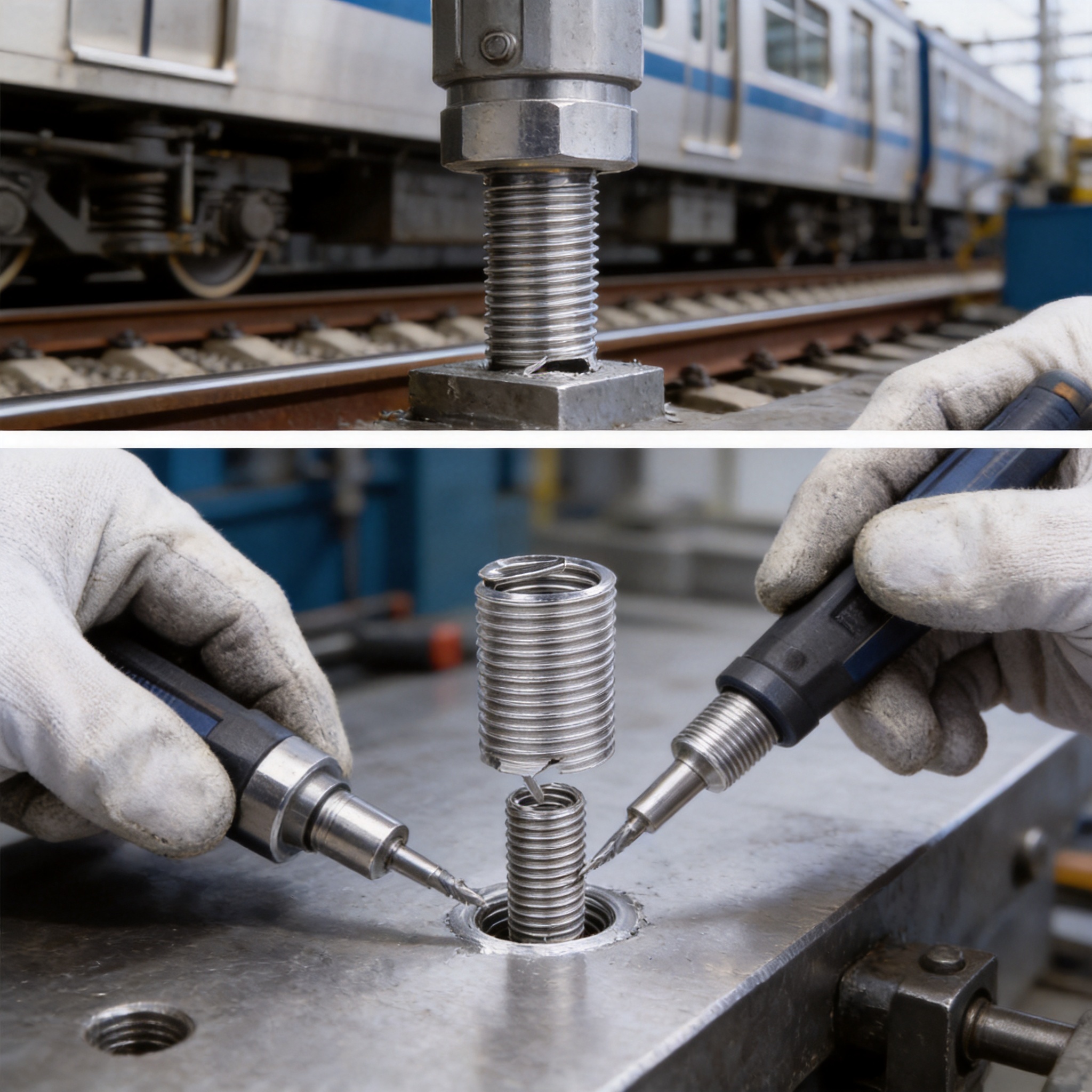
Threaded connections are used throughout automotive systems, aerospace assemblies, rail vehicles, construction machinery, wind power equipment, electronics, and general industrial products. Although a threaded hole may appear simple, its performance depends on the strength of the parent material, the accuracy of the thread profile, the installation process, and the ability of the connection to resist vibration, impact, thermal cycling, and repeated assembly loads. When a standard threaded hole becomes damaged or when a fastening point is created in a relatively soft material, a conventional bolt-and-hole arrangement may not provide sufficient reliability.
A screw-lock insert provides a practical solution for these demanding applications. Also known as a self-locking helical insert or locking wire insert, it combines the thread reinforcement advantages of a wire insert with an integrated anti-loosening function. After installation, the insert creates a strong internal thread while a specialized locking section applies controlled friction to the mating screw. This helps prevent unintentional loosening without requiring a separate lock washer, chemical adhesive, or major redesign of the assembly.
Modern screw-lock inserts are particularly valuable where equipment is exposed to high-frequency vibration, shock loads, repeated maintenance, or limited installation space. They can reinforce new threaded holes, restore damaged threads, and improve connection consistency across different base materials. When manufactured with precise forming, controlled heat treatment, accurate dimensional inspection, and stable surface finishing, these inserts support long-term performance in critical assemblies.
Understanding the Screw-Lock Insert
A screw-lock insert is a helical wire insert with a specially formed locking section. A standard wire thread insert normally consists of a precisely shaped wire wound into a helical coil. Once installed into a tapped hole, the coil forms an internal thread that allows a bolt or screw to be used in the parent material. The insert distributes the load over a larger area and often provides a stronger, more durable thread than the original material could provide on its own.
The screw-lock version adds an anti-loosening feature to this basic structure. One or more coil sections are formed with a controlled geometry that creates increased resistance against the mating fastener. As the screw passes through the insert, the locking section produces local elastic deformation and additional radial pressure. This generates a prevailing torque that helps maintain clamping force when the assembly experiences vibration or impact.
The locking effect is mechanical rather than dependent on a liquid compound. It does not require a separate adhesive application step, and it does not rely on an external locking washer that may increase the overall height of the assembly. This makes the insert suitable for compact designs and production lines where repeatable installation and simplified component management are important.
After installation, the insert has two primary functions. First, it establishes a durable internal thread with a consistent profile. Second, it helps hold the mating screw in position during service. These functions make the product suitable for both new manufacturing and repair work. A damaged threaded hole can often be restored by removing the damaged material, creating the correct insert hole, tapping it with the specified installation tap, and installing a replacement insert.
Why Threaded Connections Need Reinforcement
Many engineering materials are not naturally ideal for direct threading. Aluminum alloys, magnesium alloys, plastics, composites, and certain low-strength steels can have insufficient thread engagement strength when a standard hole is tapped directly. Repeated tightening and loosening may wear the thread. Excessive torque may strip the hole. Vibration may enlarge the thread flank clearance and gradually reduce the clamping force.
A helical insert addresses these problems by introducing a strong, wear-resistant internal thread into the parent material. The load is transferred through the insert into the surrounding material over a larger effective diameter. This can improve resistance to thread stripping, pull-out, and repeated assembly damage. In many designs, the use of an insert permits a lighter or softer base material to perform reliably while preserving a conventional screw size.
Thread damage can also occur during maintenance, collision, over-tightening, corrosion, or incorrect assembly. Replacing an entire housing or structural component may be expensive and may cause long equipment downtime. A screw-lock insert can restore the fastening point while retaining the original screw size and assembly function. This repair capability is especially useful for engines, gearboxes, aircraft equipment, rail vehicles, industrial machines, and serviceable electronic housings.
However, reinforcement alone does not solve every connection problem. A connection may still loosen if the bolt is incorrectly tightened, if the joint lacks adequate clamping force, or if the parent material is cracked or excessively damaged. For this reason, a properly selected screw-lock insert should be used together with suitable bolt grades, torque specifications, hole preparation, and joint design practices.
Active Anti-Loosening Performance
The most important difference between a standard wire insert and a screw-lock insert is the active anti-loosening structure. In a standard insert, the internal thread is generally intended to provide a smooth and accurate mating surface. In a locking insert, a designated section of the coil is formed to create additional resistance against screw rotation.
When the screw enters the locking section, the insert applies controlled pressure to the screw thread. This pressure increases the frictional resistance to rotation caused by vibration. The locking function is integrated into the insert rather than added as a separate component. As a result, the connection can maintain better resistance to self-loosening while preserving the normal fastening process.
This feature is useful in assemblies exposed to continuous or intermittent vibration. Examples include rail bogies, vehicle engines, construction machinery, wind turbine structures, rotating equipment, drone frames, and precision instruments. In these applications, repeated acceleration and deceleration can cause small relative movements between the bolt and the threaded hole. Over time, those movements may reduce preload and lead to loosening. A self-locking insert helps resist this rotational movement.
The anti-loosening effect should not be confused with a substitute for correct joint engineering. The final performance depends on insert size, screw compatibility, installation quality, tightening torque, joint stiffness, temperature, lubrication, and the severity of vibration. The locking section must be matched with the specified screw and installed according to the applicable technical requirements.
Advantages Over Conventional Thread Repair Methods
Higher thread strength in softer materials
Directly tapped threads in soft materials often have limited load-bearing capacity. The relatively small thread engagement area can be damaged by high torque or repeated use. A wire insert provides a hardened or strengthened internal thread with a larger effective load distribution area. This reduces the risk of stripping and improves the service life of the fastening point.
Integrated locking without additional components
Traditional anti-loosening methods may use spring washers, toothed washers, lock nuts, retaining compounds, or mechanical locking plates. Each method can be effective in an appropriate application, but each also adds its own requirements. Additional parts increase inventory, assembly time, and the possibility of incorrect installation. A screw-lock insert integrates the locking function into the threaded insert, allowing the assembly to remain compact and straightforward.
Repair without replacing the parent component
When a threaded hole is damaged, the entire component does not necessarily need to be discarded. A properly installed insert can restore the original thread size and recover the functional connection. This reduces material waste, maintenance expenditure, and equipment downtime. For expensive castings, machined housings, engine parts, or aerospace components, repair through an insert can be significantly more economical than replacement.
Improved repeatability for production assembly
Consistent insert dimensions and controlled locking torque help create a more repeatable fastening process. When each insert is produced with stable wire diameter, coil geometry, internal thread profile, and surface condition, the assembly team can use standardized installation tools and inspection procedures. This is valuable for high-volume manufacturing, where variations in thread quality can lead to rework or field failures.
Compact installation footprint
A screw-lock insert is installed within the existing threaded hole structure and normally does not require the external space occupied by a lock nut or large washer. This supports compact housings, thin-wall components, and assemblies where adjacent parts leave little room for additional hardware. Designers can maintain the original screw head and fastener arrangement while adding thread reinforcement and anti-loosening performance.
Suitability for repeated service
Many maintenance assemblies are opened and closed more than once during their service life. A reinforced internal thread can withstand repeated screw removal and installation more effectively than a directly tapped soft-material thread. The locking performance may depend on the number of reuses and the condition of the mating screw, so service specifications should define when the insert or fastener must be replaced. Nevertheless, the insert provides a durable foundation for serviceable connections.
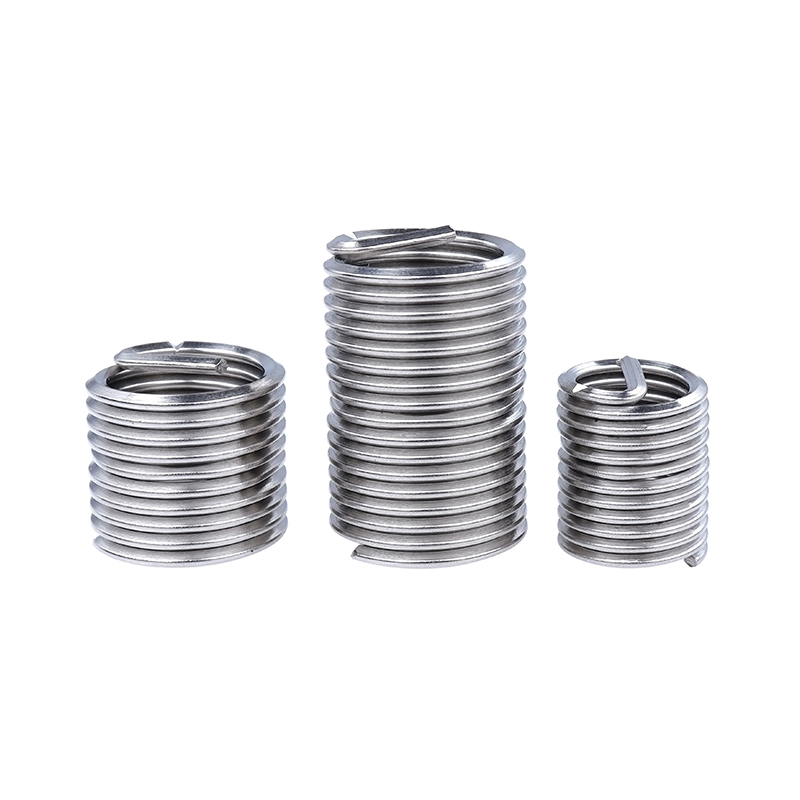
Screw-Lock Insert
Material Selection and Base Material Compatibility
Screw-lock inserts can be manufactured from stainless steel, carbon steel, and other engineered materials selected according to the operating environment. Stainless steel versions are widely used where corrosion resistance, temperature stability, and long-term dimensional consistency are required. Carbon steel versions may be suitable for applications where high strength and cost efficiency are primary considerations and where the surrounding environment is controlled or additional surface protection is available.
The choice of insert material should consider the material of the parent component and the mating screw. Galvanic compatibility is important when dissimilar metals are exposed to moisture or aggressive chemicals. Temperature, humidity, salt spray, industrial fluids, cleaning agents, and outdoor exposure can all influence material selection. In some cases, coatings or surface treatments can improve corrosion resistance, reduce friction, or provide a specified appearance.
For aluminum and magnesium components, the insert should provide sufficient strength and corrosion compatibility without causing excessive damage to the parent material during installation. For steel housings, the insert may be selected to improve thread wear resistance or to provide an anti-loosening function in a high-vibration location. For composite or polymer components, the design must account for local deformation, insert retention, thermal expansion, and the load-bearing capacity of the surrounding material.
Material compatibility also includes the relationship between the insert and the fastener. The screw should have a suitable thread form, pitch, tolerance, and surface condition. A damaged, contaminated, or incorrectly sized screw can reduce the effectiveness of the locking section and may cause installation problems. Product selection should therefore be based on a complete connection specification rather than insert diameter alone.
Manufacturing Process for Reliable Locking Inserts
Engineering design and specification review
Manufacturing begins with a clear definition of the required product specification. Important parameters include nominal thread size, pitch, free-coil diameter, installed diameter, insert length, locking section location, wire cross-section, material grade, surface treatment, and dimensional tolerances. Application information such as vibration level, temperature range, parent material, screw grade, and installation method may also be reviewed.
Engineering teams use these requirements to select the most suitable insert design. The locking section must provide sufficient prevailing torque without making installation excessively difficult. The coil must fit the prepared hole accurately, and the finished internal thread must accept the specified fastener. A stable design balances locking performance, installation force, thread accuracy, durability, and cost.
Precision wire preparation
The wire is prepared to meet the required mechanical and dimensional properties before forming. Wire diameter, roundness, surface condition, tensile strength, and material composition influence the finished insert. Inconsistent wire can lead to variation in coil diameter, thread profile, locking torque, or installation behavior.
Modern production systems use controlled material handling and process inspection to reduce variation. Incoming material checks can include dimensional measurement, visual inspection, chemical verification, and mechanical testing when required by the specification. Maintaining consistent raw material quality is an essential foundation for stable insert performance.
Helical forming
During the forming operation, the wire is wound into a helical coil with a controlled pitch and diameter. The forming equipment must maintain accurate geometry along the entire insert length. The coil cannot be treated as an ordinary spring because it must function as an internal thread with a defined flank profile and controlled dimensional relationship to the mating screw.
The forming process also creates the specialized locking section. This area is shaped to generate the desired interference or friction when the fastener passes through. The transition between the standard thread section and the locking section must be controlled carefully. An overly aggressive locking profile may increase installation torque or cause screw damage, while an insufficient profile may not provide the required anti-loosening effect.
End forming and tang preparation
Depending on the product design, the insert may include an installation tang or another feature used during insertion. The ends of the insert are formed and finished to support reliable handling and installation. The tang must be strong enough to transmit installation force but removable when the final assembly requires a through-hole or uninterrupted screw passage.
End geometry also affects how the insert begins and ends within the tapped hole. Properly formed ends reduce the risk of cross-threading, uneven seating, or local distortion. Production controls should verify end shape, length, orientation, and break-off behavior.
Heat treatment and mechanical stabilization
Some insert materials undergo heat treatment or other mechanical stabilization processes to achieve the required balance of strength, elasticity, hardness, and dimensional stability. The treatment must be carefully controlled because excessive hardness may make the insert brittle, while insufficient strength may reduce its resistance to repeated loading.
After treatment, inspection may include hardness measurement, dimensional verification, visual examination, and sampling tests for mechanical performance. The exact process depends on the material and technical specification. Stable heat treatment is particularly important for the locking section because its elastic response influences prevailing torque and resistance to loosening.
Surface treatment and coating
Surface finishing may be applied to improve corrosion resistance, reduce friction, or support a particular operating environment. Stainless steel inserts may be supplied in a natural or treated condition, while carbon steel products may require protective coatings. The selected finish should be compatible with the parent material, mating screw, temperature range, and assembly lubricant.
Coating thickness must be controlled because excessive coating can affect the insert diameter, locking torque, and installation fit. A suitable surface treatment protects the product without compromising thread accuracy. Coated products should be tested for adhesion, appearance, corrosion performance, and dimensional conformity where applicable.
Inspection, sorting, and traceability
Quality control for screw-lock inserts should cover both dimensional accuracy and functional performance. Common inspection items include wire diameter, coil diameter, pitch, insert length, locking section position, internal thread fit, surface condition, and end geometry. Functional checks may include installation torque, removal torque, prevailing torque, pull-out resistance, and vibration-related performance testing.
Traceability helps connect finished products with the relevant raw material, machine, production batch, inspection record, and packaging information. This is especially important for automotive, aerospace, rail, and other industries where customers require consistent records and controlled change management. A traceable production system also makes it easier to investigate nonconformities and implement corrective actions.
Manufacturing Strengths and Production Capability
Dongtai Jinzhize Metal Products Co., Ltd. is a specialized manufacturer of threaded connection and fastening products. Its product range includes helical wire inserts, self-tapping inserts, key-locking inserts, threaded adapters, oil plugs, installation taps, and related tools. This product coverage allows customers to source the insert, installation tooling, and complementary threaded components from one experienced supplier.
Established in 2015, the company operates an owned manufacturing facility of approximately 10,000 square meters. The plant is equipped with hundreds of machine tools and automated production systems. This combination of equipment capacity and process specialization supports stable production for both standard products and customer-specific requirements.
Manufacturing capability is not defined only by the number of machines. It also depends on process organization, technical personnel, inspection discipline, production planning, and the ability to maintain consistent quality during scale-up. An experienced design, development, and production team can help convert application requirements into appropriate insert specifications, installation methods, and inspection standards.
The company serves automotive, aerospace, rail vehicle, and other industrial applications. These sectors require more than basic thread formation. They demand stable dimensions, controlled materials, reliable batch consistency, and documentation that supports quality management. The company’s quality management approach and after-sales service mechanism are intended to support these requirements from product selection through field use.
In 2024, the company achieved an annual output value of 153 million RMB. This indicates significant production and supply capability, while its owned facility supports control over manufacturing resources and process scheduling. For customers with recurring demand, stable capacity can reduce the risks associated with inconsistent lead times, fragmented sourcing, and unplanned production interruptions.
The company’s focus on threaded connection products also provides a practical technical advantage. A manufacturer that produces inserts, taps, tools, adapters, and related fastening components can better understand the relationship between the product and the installation process. This is important because insert performance depends not only on the insert itself but also on hole preparation, tap accuracy, tool selection, and installation technique.
Installation Procedure and Process Control
1. Inspect the damaged or prepared hole
The hole should be inspected before repair or insert installation. Existing damage, burrs, contamination, cracks, corrosion, and distortion should be evaluated. If the parent material is fractured or excessively thin, an insert alone may not restore the required structural strength. The hole location and surrounding wall thickness should also be checked against the application drawing or technical specification.
2. Drill or prepare the insert hole
For a damaged thread, the hole is usually enlarged to the specified insert hole diameter. For a new design, the hole is created according to the insert manufacturer’s recommended dimensions. The drilling operation must maintain correct alignment, depth, and surface condition. Excessive oversize, taper, or misalignment can reduce insert retention and affect the final screw position.
3. Tap the installation thread
A special installation tap is used to create the external thread that receives the helical insert. This is not always the same as the tap used to create the final internal screw thread. The tap must match the insert specification and should be kept sharp and clean. Cutting fluid may be selected according to the parent material and subsequently removed before installation.
After tapping, chips and debris must be removed. Contamination trapped between the insert and the parent material can prevent proper seating, increase installation force, and interfere with thread engagement. Cleaning may involve brushing, air cleaning, washing, or another method suitable for the component and safety requirements.
4. Install the screw-lock insert
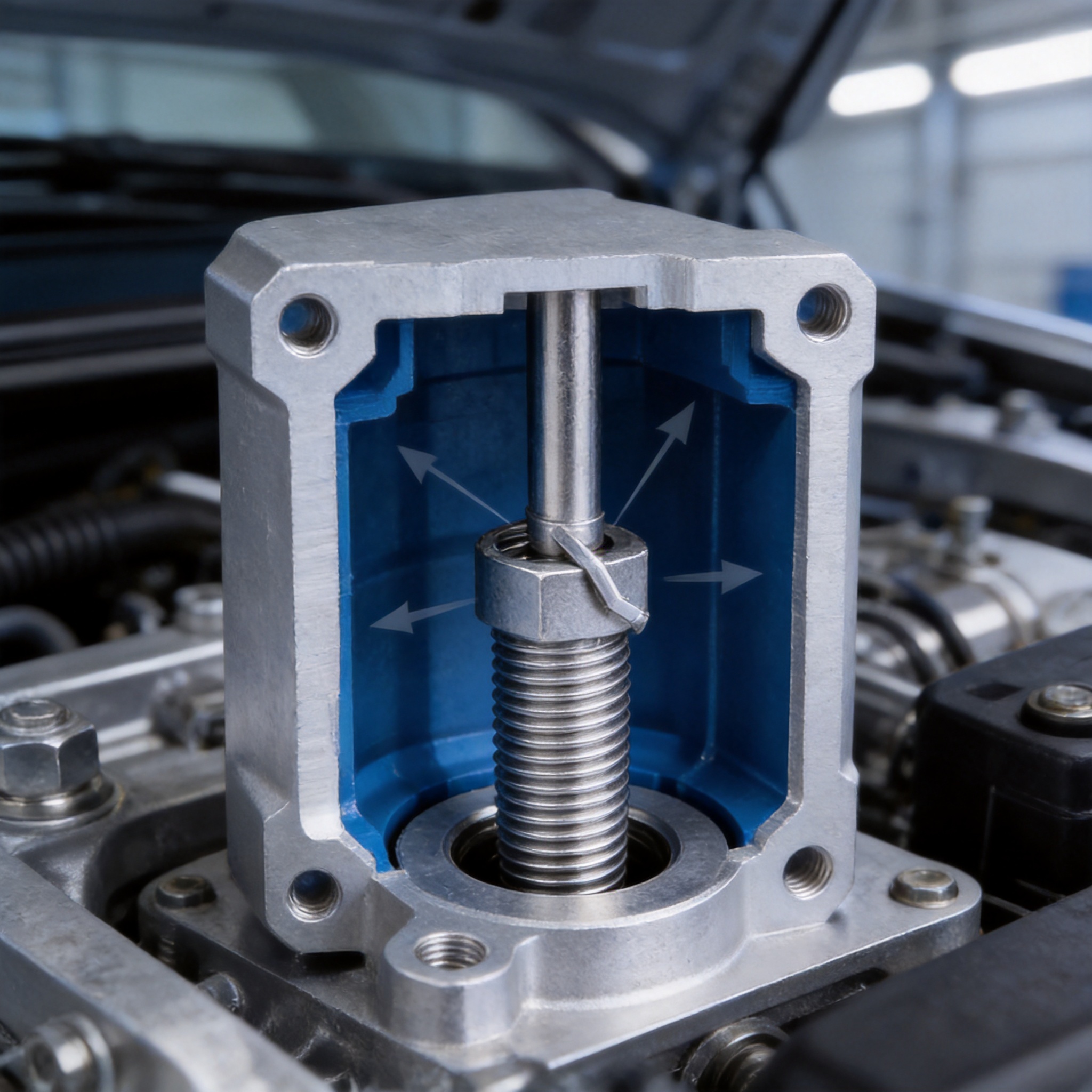
The insert is placed on the installation tool and driven into the prepared hole. The tool should be aligned with the hole to prevent cross-threading. Installation force should be applied gradually and consistently. The insert should be positioned below the surface by the specified amount unless the design calls for another location.
The locking section should be positioned correctly relative to the final screw engagement. Improper orientation or incomplete installation can reduce both thread quality and anti-loosening performance. Installation equipment may be manual, pneumatic, electric, or automated depending on production volume and access conditions.
5. Remove the tang when required
For through-hole applications, the installation tang may need to be removed after the insert is seated. The tang should be broken or removed using an approved method that does not damage the insert or parent material. For blind holes, the insert length and tool design should be selected so that the tang does not interfere with the bottom of the hole.
6. Inspect the finished connection
Inspection may include visual examination, a thread gauge, a test screw, depth measurement, and verification of the locking function. The screw should enter the standard thread smoothly and encounter the expected resistance at the locking section. Excessive torque, binding, incomplete engagement, or abnormal thread damage indicates that the installation process should be investigated.
Application Areas
Rail transit equipment
Rail vehicles contain numerous fastening points exposed to vibration, shock, braking forces, and long service intervals. Screw-lock inserts can be used in carriages, bogies, interior equipment, electrical cabinets, and structural components where stable fastening is required. Their integrated locking function helps reduce the risk of loosening in high-frequency vibration environments.
Construction machinery
Excavators, loaders, cranes, drilling equipment, and agricultural machinery experience repeated impact, changing loads, dirt, moisture, and outdoor exposure. Threaded holes in housings and structural components may require reinforcement to withstand maintenance cycles and operating shocks. A locking wire insert can restore damaged holes and support reliable fastening in confined areas.
Aerospace components
Aerospace assemblies require high consistency, low failure risk, and strict process control. Inserts may be used in engines, aircraft equipment, structural components, avionics housings, and service panels. The selection must account for material compatibility, temperature, vibration, weight, corrosion resistance, and applicable aerospace specifications. Traceability and documented inspection are especially important in this sector.
Automotive engines and transmissions
Engine and transmission components experience thermal cycling, vibration, fluid exposure, and repeated service operations. Inserts can reinforce aluminum housings and other components where direct threads may wear or strip. A screw-lock design can add resistance to loosening in areas where fasteners are exposed to continuous mechanical excitation.
Wind power equipment
Wind turbine towers, hubs, nacelle equipment, and control systems are exposed to strong wind, cyclic loading, and long-term vibration. Fastening points must remain stable while also allowing planned maintenance. Inserts with corrosion-resistant materials or suitable coatings can help protect threaded connections in demanding outdoor environments.
Electronics and precision instruments
Drones, measuring instruments, robotics, industrial controllers, and electronic housings may contain lightweight materials and compact assemblies. A screw-lock insert can provide a reinforced fastening point without requiring a large external locking component. This supports weight-conscious designs and helps protect vibration-sensitive connections.
Quality Management and Customer Support
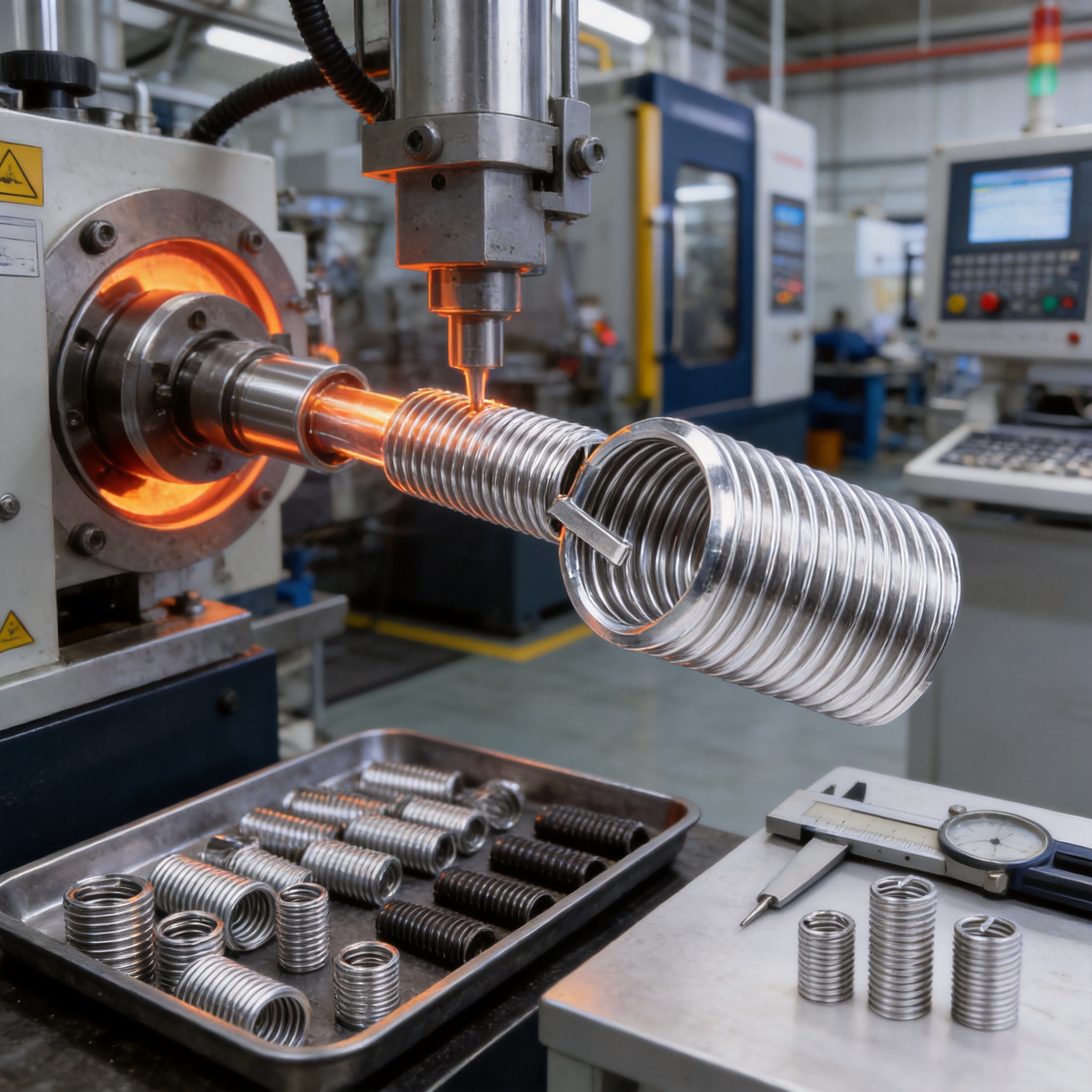
Reliable insert production requires quality management at each stage rather than final inspection alone. Incoming wire and material verification, machine setup control, first-piece approval, in-process measurement, final sorting, packaging inspection, and batch traceability work together to reduce variation. Process records also help identify trends before they become major quality issues.
For customers with special requirements, technical communication should include drawings, sample evaluation, test criteria, packaging standards, and acceptance limits. Important information may include the parent material, screw specification, installation depth, operating temperature, expected vibration, corrosion environment, and service conditions. Sharing these details allows the manufacturer to recommend a suitable product instead of treating every request as a generic thread insert order.
After-sales support is also important because many insert problems are installation-related. A technically capable supplier can help review hole dimensions, tap selection, installation tooling, locking orientation, inspection methods, and repair procedures. This support reduces the risk of incorrect field installation and helps customers achieve the intended product performance.
For global customers, stable packaging and clear product identification are essential. Inserts should be protected from contamination, moisture, deformation, and mixing between sizes. Labels should identify the product type, size, material, batch information, quantity, and other agreed details. Organized packaging improves warehouse control and reduces the possibility of selecting the wrong insert during assembly.
How to Select the Correct Screw-Lock Insert
Selection should begin with the final screw specification. The nominal diameter, thread pitch, screw length, thread tolerance, material, and coating should be identified. The insert must be compatible with the mating fastener and must provide sufficient effective engagement length for the expected load.
The parent material is the next major consideration. Soft metals, hard metals, plastics, and composites behave differently during drilling, tapping, and loading. Wall thickness, boss diameter, blind-hole depth, and access for installation should be reviewed. If the surrounding material is too thin, the insert may not have enough support even when the insert itself is strong.
Operating conditions must also be considered. High vibration favors a self-locking design. Corrosive environments may require stainless steel or a protective coating. High-temperature applications require a material and finish that remain stable at the expected temperature. Repeated maintenance may require a longer insert or a service plan for screws and inserts.
Finally, the installation process should be considered before ordering. The correct installation tap, driver, gauge, tang-removal tool, and cleaning method should be available. For production lines, automation compatibility, cycle time, operator access, and inspection requirements may influence the final product choice.
| Selection Factor | Key Consideration | Effect on Product Choice |
|---|---|---|
| Fastener specification | Diameter, pitch, length, tolerance, and material | Determines the compatible insert thread and engagement length |
| Parent material | Aluminum, steel, plastic, composite, or other material | Influences hole preparation, insert material, and retention requirements |
| Vibration level | Low, intermittent, continuous, or impact vibration | Supports the use of an integrated locking section for higher resistance to loosening |
| Environment | Moisture, chemicals, salt spray, temperature, and outdoor exposure | Guides material and coating selection |
| Maintenance frequency | Single assembly or repeated removal and installation | Influences thread reinforcement and service planning |
| Installation access | Through-hole, blind hole, restricted access, or automated line | Determines insert length, tool type, and installation method |
| Quality requirements | Dimensional control, functional testing, documentation, and traceability | Defines inspection and production record requirements |
Comparison with Other Anti-Loosening Methods
Lock washers are simple and widely available, but they add external hardware and may require sufficient space under the screw head. Their effectiveness depends on joint design, preload, surface condition, and the type of vibration. A screw-lock insert places the anti-loosening function inside the threaded connection and can be preferable where external space is limited.
Thread-locking adhesives can provide strong resistance to loosening, but they require controlled application, curing conditions, surface preparation, and consideration of temperature and chemical compatibility. They may also complicate later disassembly. A screw-lock insert avoids liquid handling and can provide an immediate mechanical locking function after installation.
Lock nuts are effective when a second side of the joint is accessible. They may not be suitable for blind holes, thin housings, or compact equipment. A screw-lock insert is installed within the parent material and maintains the original fastening arrangement.
Key-locking inserts provide strong mechanical retention through external keys and are useful in many high-load applications. However, they may require additional counterbores or installation operations. A screw-lock insert offers a helical internal thread and integrated locking section with a comparatively compact installation process. The best choice depends on load, space, material, service conditions, and customer standards.
Design and Installation Limitations
A screw-lock insert should not be selected solely because it provides a high locking torque. Excessive locking resistance can make assembly difficult, increase the risk of cross-threading, or damage a small fastener. The insert and mating screw must be matched so that the connection provides reliable resistance without exceeding the allowable assembly torque.
Hole preparation is equally important. A hole that is too large, too shallow, misaligned, or contaminated may prevent the insert from achieving the required retention. The installation tap must be correct, and worn taps should be replaced before they produce out-of-tolerance holes. Operators should be trained to recognize incomplete seating and damaged locking sections.
The insert does not repair structural cracks, severely weakened bosses, or insufficient wall thickness. If the surrounding material is fractured or distorted, additional engineering repair may be necessary. Similarly, the insert cannot compensate for a bolt that is too short, incorrectly graded, damaged, or tightened below the required preload.
Product performance should be validated under the actual application conditions whenever the connection is safety-critical. Testing may include torque-tension evaluation, vibration testing, thermal cycling, pull-out testing, corrosion testing, and repeated installation trials. The specific test program should reflect the risk and operating conditions of the equipment.
Why a Specialized Manufacturer Matters
A specialized manufacturer can provide more than a catalog part. It can support product matching, installation design, tooling selection, custom dimensions, material recommendations, packaging, and quality documentation. This integrated approach is valuable when the insert is used in a high-value or high-consequence assembly.
Jinzhize’s focus on threaded connection and fastening products provides a foundation for coordinated supply. Its product range includes the insert itself as well as installation taps, tools, adapters, oil plugs, self-tapping inserts, and key-locking inserts. This allows customers to develop a more complete fastening solution instead of sourcing each component from unrelated suppliers.
The company’s manufacturing facility, automated systems, machine capacity, engineering personnel, and quality management practices support both standard production and application-oriented development. Its experience in automotive, aerospace, and rail-related applications also aligns with industries that require consistent supply and dependable thread performance.
For international customers, the ability to maintain stable production and provide responsive technical service can be as important as the nominal product price. A low-cost insert that causes installation failures, inconsistent locking torque, or repeated field repairs may create greater total cost than a properly controlled product. Supplier capability should therefore be evaluated through quality records, sample performance, process stability, technical support, and delivery reliability.
Q&A
What is a screw-lock insert?
A screw-lock insert is a helical wire thread insert with a specially formed self-locking section. It reinforces a threaded hole and creates additional resistance against rotation of the mating screw under vibration and impact conditions.
How is it different from a standard wire thread insert?
A standard wire insert primarily provides thread reinforcement and a durable internal thread. A screw-lock insert provides the same basic reinforcement while adding a locking section that generates prevailing torque and helps resist unintentional screw loosening.
Does a screw-lock insert replace a lock washer?
In many applications, the integrated locking feature can eliminate the need for a separate lock washer. However, the final decision depends on the joint design, customer specifications, vibration conditions, and applicable industry requirements.
Can it repair a stripped aluminum thread?
Yes, it can often restore a stripped aluminum thread when enough parent material remains and the hole can be correctly prepared. The damaged hole is enlarged and tapped with the specified installation tap before the insert is installed. Severe cracks or insufficient wall thickness may require a different repair method.
Can the insert be used in steel?
Yes. Screw-lock inserts can be used in steel and other materials when the insert material, hole dimensions, and installation procedure are correctly selected. The application should consider corrosion, hardness, thread wear, and the relationship between the insert and the fastener.
What materials are available?
Common choices include stainless steel and carbon steel. Other material or coating options may be considered according to corrosion exposure, temperature, strength, dimensional stability, and customer requirements.
Is special installation tooling required?
Yes. The correct installation tap and insert driver are required to achieve the intended fit. Depending on the design, a tang-removal tool and inspection gauge may also be needed. Using unsuitable tools can damage the insert or produce an incorrectly sized hole.
Can the screw-lock insert be installed in a blind hole?
Yes, provided that the insert length, hole depth, tap design, installation tool, and tang arrangement are suitable. The insert should not bottom out or interfere with the base of the blind hole.
Can it be removed and replaced?
It can generally be removed with an appropriate removal tool and replaced after the hole is inspected. The replacement procedure should ensure that the parent thread has not been excessively damaged and that the new insert is correctly sized.
What causes installation failure?
Common causes include incorrect hole diameter, worn or incorrect installation taps, inadequate cleaning, cross-threaded installation, wrong insert length, excessive force, poor alignment, and use of an incompatible screw. Process control and operator training help prevent these problems.
How should the correct insert length be chosen?
The required length depends on screw diameter, load, parent material, available hole depth, and application standards. Longer engagement generally increases load distribution, but the insert must fit the available space and must not interfere with the bottom of a blind hole or adjacent components.
Is the locking function permanent?
The locking function is designed to provide mechanical resistance during service, but its performance depends on screw condition, installation torque, vibration severity, temperature, lubrication, and repeated reuse. A maintenance specification should define inspection and replacement requirements.
What information should be provided when requesting a quotation?
Useful information includes thread size and pitch, insert length, parent material, mating screw specification, application temperature, vibration level, corrosion environment, installation method, quantity, packaging requirements, and any required test or certification documents.
Conclusion
A screw-lock insert is a compact and effective solution for reinforcing threaded holes while improving resistance to vibration-related loosening. Its integrated self-locking section provides an advantage over ordinary thread inserts when connection stability is a priority. At the same time, its helical structure distributes load through the parent material, supports thread repair, and enables reliable fastening in soft or damaged components.
The product’s performance depends on more than its basic design. Consistent wire quality, precision forming, controlled locking geometry, suitable material selection, stable heat treatment, surface protection, dimensional inspection, and traceability all contribute to a dependable finished insert. Correct hole preparation and installation are equally important.
With a manufacturing base focused on threaded connection products, automated production systems, substantial machine capacity, experienced technical personnel, and application support, Dongtai Jinzhize Metal Products Co., Ltd. is positioned to supply self-locking helical inserts and related fastening products for demanding global industries. Its capability to provide inserts, installation taps, tools, adapters, and other threaded components supports a complete and coordinated approach to fastening design.
For automotive, aerospace, rail, construction machinery, wind power, electronics, and other vibration-sensitive applications, selecting the right screw-lock insert can improve connection security, reduce repair costs, simplify assembly, and increase long-term reliability. A carefully matched insert, supported by controlled manufacturing and disciplined installation, provides a practical foundation for safer and more durable threaded connections.
References
1. General principles of helical wire thread insert design, installation, and thread reinforcement.
2. Standard engineering practices for threaded fastener preload, vibration resistance, and joint integrity.
3. Material selection guidelines for stainless steel and carbon steel threaded connection components.
4. Industrial quality management practices for dimensional inspection, process control, and product traceability.
5. Maintenance engineering methods for restoring damaged threaded holes in metal components.
6. Application engineering guidance for vibration-resistant fasteners in automotive, aerospace, rail, and industrial equipment.
7. Manufacturer technical information for self-locking helical inserts, installation taps, and related fastening tools.