Français
 Español
 Deutsch

Content
- 1 Why Installation Quality Determines Insert Performance
- 2 Product Function and Operating Principle
- 3 Main Advantages of the Wire Thread Insert Installation Tool
- 4 Advantages Compared with General-Purpose or Lower-Quality Tools
- 5 Manufacturing Process and Quality Control
- 6 Company Manufacturing Strengths
- 7 Applications in Different Industries
- 8 Recommended Installation Procedure
- 9 Maintenance and Service Life
- 10 Selection Guide for Buyers
- 11 Why Work with a Specialized Manufacturer
- 12 Common Installation Problems and Corrective Measures
- 13 Q&A
- 13.1 What is a wire thread insert installation tool?
- 13.2 What insert sizes does this tool support?
- 13.3 Can the tool be used for repair work?
- 13.4 Can it be used in production assembly?
- 13.5 Why is a dedicated tool better than a general rod or improvised driver?
- 13.6 What material is used for the tool?
- 13.7 What should be done if the tool meets strong resistance?
- 13.8 Does the tool remove the need for a thread tap?
- 13.9 How should the tool be maintained?
- 13.10 Can Jinzhize supply matching inserts and taps?
- 13.11 What industries use this product?
- 13.12 Can special requirements be discussed with the manufacturer?
- 14 Conclusion
- 15 References
- 16 Product: Wire Thread Insert Installation Tool
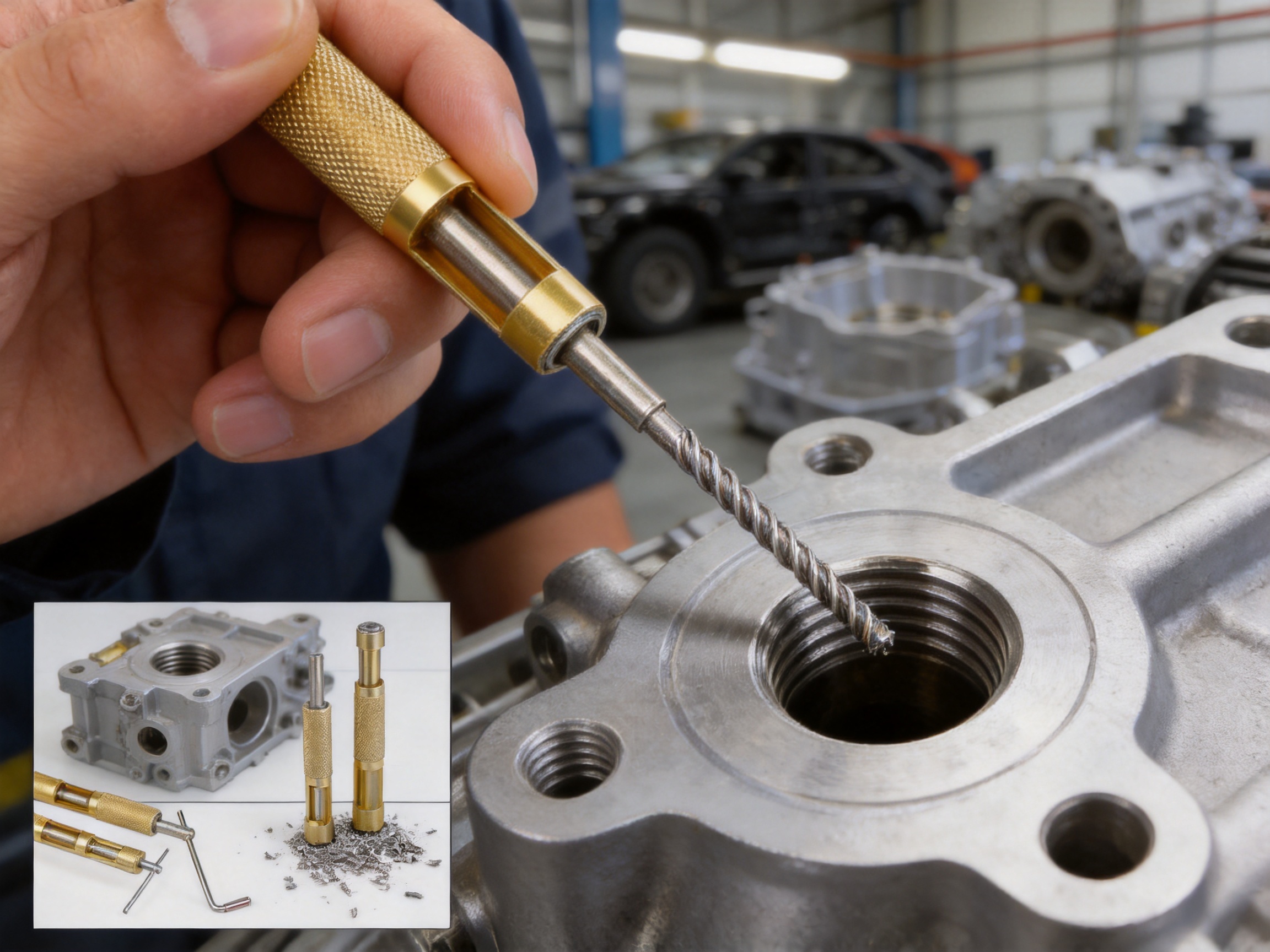
Wire thread inserts are widely used to restore damaged internal threads, reinforce threads in lightweight materials, and create durable fastening points in components exposed to repeated assembly, vibration, temperature changes, or demanding service conditions. However, the performance of an insert depends not only on the insert itself. Installation accuracy is equally important. A correctly manufactured insert can fail to provide its intended service life if it is driven into the base hole at an incorrect angle, positioned too deeply, damaged during insertion, or forced through an unsuitable pre-tapped hole.
The wire thread insert installation tool is designed to address these practical challenges. It enables operators to guide, drive, and position a helical wire insert accurately inside a prepared hole. Through a standardized transmission structure and a guiding design suited to different insert sizes, the tool supports stable installation in machinery manufacturing, equipment maintenance, automotive production, aerospace assembly, rail vehicle manufacturing, and precision instrument production.
Dongtai Jinzhize Metal Products Co., Ltd. manufactures wire thread inserts, related threaded connection products, installation taps, oil plugs, self-tapping inserts, key-locking inserts, threaded adapters, and installation tools. Its product range allows customers to source both the threaded insert and the supporting installation equipment from one specialized supplier. This integrated capability helps improve compatibility, simplify purchasing, and support consistent installation procedures across production lines and maintenance operations.
Why Installation Quality Determines Insert Performance
A wire thread insert is a precision-formed helical coil. After installation, it creates a strong internal thread that can accept a standard bolt or screw. The insert distributes load across a larger area of the parent material than a conventional tapped thread, making it especially valuable in aluminum alloys, magnesium alloys, plastics, composite materials, and other materials that may not provide sufficient thread strength on their own.
The insert must be installed into a correctly prepared hole. The hole normally requires drilling or cleaning, tapping with the specified STI-style tap or equivalent insert tap, removal of chips, and inspection of the thread profile. The installation tool then engages the insert and guides it into the hole. If the tool does not maintain axial alignment, the insert may cross-thread, stretch unevenly, deform, or stop before reaching the required depth.
Installation depth is another important factor. An insert installed too high can interfere with the mating bolt or create an uneven load path. An insert installed too deeply may reduce usable thread engagement or make later removal difficult. A reliable installation tool helps operators position the insert consistently, reducing dependence on individual handling technique.
Damage prevention is also essential. The drive feature of a wire insert is relatively small, and excessive force can damage the insert or its driving tang. A tool with smooth transmission and appropriate contact surfaces allows the operator to apply force progressively rather than abruptly. This protects the insert and supports repeatable assembly quality.
Product Function and Operating Principle
The wire thread insert installation tool is used after the base hole has been prepared and tapped. The operator places the insert onto or into the tool’s driving section, aligns the insert with the tapped hole, and rotates the tool to advance the insert. The tool’s guiding structure helps keep the insert concentric with the hole while the transmission mechanism transfers torque to the insert.
The installation process should be controlled rather than forced. The insert should advance smoothly through the prepared thread without excessive resistance. When the desired depth is reached, the operator stops rotation and removes the tool carefully. If the insert includes a driving tang, a separate tang-breaking step may be required depending on the component design and application.
The tool is suitable for a wide range of common insert sizes from M3 to M24. Size compatibility is valuable for production departments and maintenance teams because it reduces the need to purchase unrelated tools for each individual insert specification. The appropriate tool size should always match the insert dimensions, pitch, and application requirements.
Although the basic operating principle is straightforward, the quality of the tool has a direct effect on assembly results. A tool that has poor dimensional control, rough contact surfaces, weak transmission components, or an unstable guide may cause inconsistent installations. For this reason, material selection, machining accuracy, surface finishing, inspection, and final assembly are all important parts of the manufacturing process.
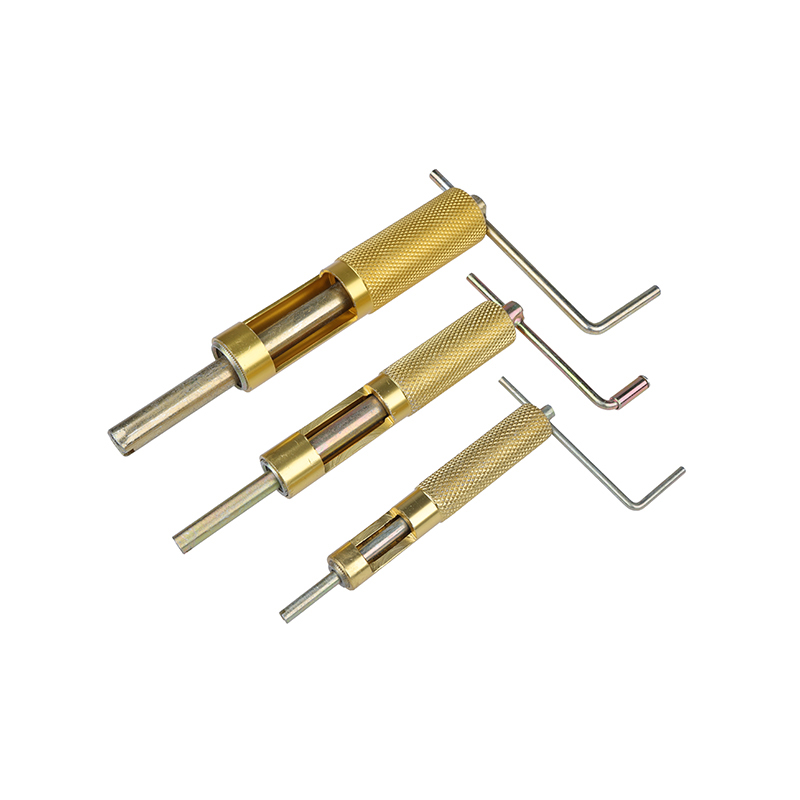
Wire Thread Insert Installation Tool
Main Advantages of the Wire Thread Insert Installation Tool
High Installation Accuracy
The tool uses a precision guiding structure to help maintain alignment between the wire insert and the base hole. This reduces the possibility of angled insertion, uneven coil engagement, or damage caused by misalignment. Accurate guidance is particularly important in deep holes, small-diameter holes, blind holes, and components where access is limited.
Better alignment also improves the consistency of the finished threaded connection. When the insert is installed concentrically, the mating bolt can enter more smoothly and engage the internal thread evenly. This supports more balanced load distribution and reduces the risk of localized stress on the insert or parent material.
Efficient Operation
A smooth transmission structure allows the operator to install an insert with controlled and continuous motion. The tool reduces unnecessary adjustments and helps shorten the time required for each installation. In a production environment, even a small reduction in cycle time can produce meaningful savings when thousands of inserts are installed each month.
Efficiency is also valuable in repair work. When a damaged threaded hole must be restored on a machine, vehicle, or industrial assembly, maintenance personnel often work under time pressure. A compact tool that is easy to position and operate can reduce equipment downtime and help return the component to service more quickly.
Protection for Insert Threads
The tool’s contact surfaces are designed to support stable engagement with the insert while limiting slipping. A suitable contact design helps prevent scratches, distortion, and damage to the wire profile. This is particularly important when installing inserts made from stainless steel or other high-strength wire materials, because damage to the insert can affect the smooth entry of the mating screw.
Controlled contact also reduces the chance that the tool will rotate without advancing the insert correctly. Slippage can create uneven loading on the coil and may deform the driving feature. By improving the transfer of motion, the tool supports better installation quality and lowers the rate of rejected assemblies.
Multi-Size Compatibility
The tool range supports mainstream insert sizes from M3 to M24. This broad size coverage allows manufacturers to establish a consistent installation method across small electronic assemblies, medium-sized machinery, vehicle components, and larger equipment structures.
Multi-size availability also supports centralized procurement. Instead of relying on several unrelated suppliers with different quality standards, a customer can coordinate insert tools and related threaded products through a specialized manufacturer. This can simplify product selection, documentation, replacement planning, and quality management.
Durable Alloy Steel Construction
The tool is manufactured from high-hardness alloy steel selected for resistance to wear and impact. During service, the driving section and guide surfaces may experience repeated contact, torque, and axial loads. A durable material helps preserve dimensional accuracy over a longer operating period.
Durability is especially important for production users. A tool that wears quickly may gradually lose alignment accuracy even if it appears usable from the outside. Wear-resistant construction helps maintain consistent performance and reduces the frequency of tool replacement. It can also lower the total cost of ownership for factories with continuous assembly requirements.
Compact and Portable Design
The compact form of the installation tool makes it suitable for both workshop and field operations. Maintenance technicians can carry the tool with other insert taps, gauges, and repair equipment. Its portable design is useful when a damaged thread must be repaired without removing a large machine component.
Portability does not eliminate the need for correct preparation. The hole must still be cleaned, tapped, and inspected properly. However, a compact tool makes it easier to apply a standardized repair procedure in locations where a large installation machine is unavailable.
Advantages Compared with General-Purpose or Lower-Quality Tools
General-purpose driving tools may appear suitable for wire insert installation, but they are not always designed around the dimensional and functional requirements of helical inserts. A simple rod, improvised mandrel, or poorly matched driver may not maintain the correct axial position. This can increase the risk of cross-threading, insert distortion, and inconsistent depth.
Compared with improvised tools, a dedicated wire thread insert installation tool offers a more controlled interface with the insert. Its guide and transmission features are developed specifically for the insertion operation rather than for general fastening work. This specialization is one of its main competitive advantages.
Compared with low-cost tools produced with limited process control, a precision-manufactured tool can provide more consistent dimensions and smoother operation. Small deviations in the guide, drive section, or threaded interface can affect installation results, especially in small thread sizes. Consistency is therefore more valuable than initial purchase price alone.
The product also offers an advantage over fragmented supply arrangements. Jinzhize manufactures a broader family of threaded connection products, including wire thread inserts and their installation tools. A customer can discuss the insert material, size, pitch, installation method, and tooling requirements with one technical supplier. This reduces the possibility of selecting components that are individually acceptable but poorly matched as a system.
Another advantage is application flexibility. The tool can support both production assembly and maintenance repair. Some competitors focus primarily on workshop kits or a narrow set of sizes, while a supplier with a wider product range can support diverse requirements from M3 small-component repairs through M24 industrial applications.
It is important to recognize that tool performance depends on correct use. No installation tool can compensate for an incorrectly drilled hole, unsuitable tapping procedure, contaminated thread, or incorrect insert specification. The competitive value of the tool is therefore best realized when it is used as part of a complete, controlled installation process.
Manufacturing Process and Quality Control
Material Selection
The manufacturing process begins with material selection. High-hardness alloy steel is used for the main working parts because it offers a balance of strength, wear resistance, toughness, and machinability. The material must withstand repeated torque and contact without rapidly deforming.
Material control includes verification of incoming steel, review of material specifications, and identification of batches for traceability. Consistent raw material is essential because variations in hardness or chemical composition can influence machining behavior, heat treatment results, and service life.
Precision Machining
After material preparation, the tool components are formed and machined using controlled production equipment. Turning, milling, drilling, grinding, and other operations may be applied according to the component design. Working surfaces are produced to the required dimensions so that the guide and drive sections engage properly with the wire insert.
Machining accuracy is particularly important at the points that determine alignment. The guide must be sufficiently concentric with the driving section, and the contact features must be formed without burrs or sharp defects that could damage the insert. Dimensional inspection can be performed during production to identify deviations before final assembly.
Heat Treatment and Surface Performance
Where required by the tool design, heat treatment is used to improve hardness and wear resistance. The treatment must be controlled carefully. Excessive hardness may reduce toughness, while insufficient hardness may cause premature wear. A balanced process helps the tool withstand both repeated contact and operational impact.
Surface finishing may be used to improve smoothness, reduce friction, and remove machining irregularities. A well-finished working surface allows the operator to rotate the tool more smoothly and reduces the likelihood of abrasive damage to the insert.
Assembly and Functional Inspection
After individual parts have been processed, they are assembled and checked for proper movement and engagement. The transmission should operate smoothly without excessive looseness. The guide should remain stable during rotation, and the tool should accept the specified insert size correctly.
Functional inspection may include checking alignment, operating torque, dimensions, surface condition, and compatibility with sample inserts. These checks help verify that the completed tool performs as intended rather than merely meeting an appearance standard.
Traceability and Quality Management
Jinzhize operates a 10,000-square-meter manufacturing plant equipped with hundreds of machine tools and automated production systems. Its production organization is supported by a quality management system and after-sales service mechanism. For customers in automotive, aerospace, rail, and other demanding industries, traceability and consistent documentation are important parts of supplier evaluation.
Traceability enables production information to be connected with material batches, machining operations, inspection records, packaging, and shipment. When a customer raises a technical question, this information can support a more efficient investigation and response.
Quality management is not limited to final inspection. It begins with product design and supplier control, continues through machining and assembly, and extends to packaging and customer support. This process-based approach helps reduce variation and supports stable long-term supply.
Company Manufacturing Strengths
Dongtai Jinzhize Metal Products Co., Ltd. was established in 2015 and specializes in threaded connection products for automotive and aerospace applications. Its product portfolio includes helical wire inserts, self-tapping inserts, key-locking inserts, threaded adapters, oil plugs, installation taps, and related installation tools.
The company’s specialized focus is an important strength. Rather than treating threaded inserts as a minor accessory, Jinzhize organizes its manufacturing capabilities around threaded connection and fastening products. This allows its technical team to develop experience across insert geometry, base materials, installation methods, tapping requirements, and application conditions.
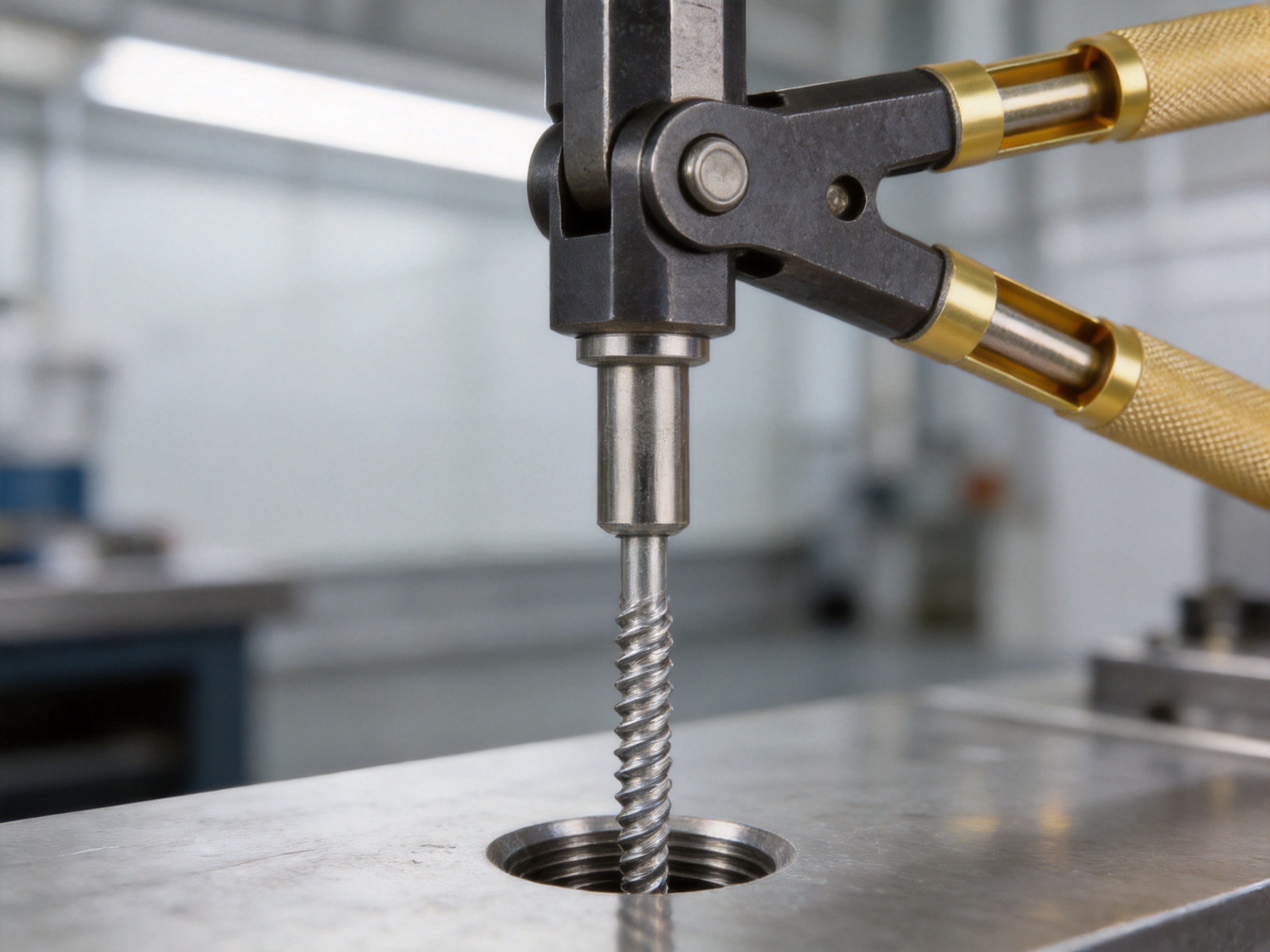
The company’s owned manufacturing facility covers approximately 10,000 square meters. Hundreds of machine tools and automated production systems support production capacity and process consistency. Automation can improve repeatability in suitable operations, while experienced personnel remain important for process development, inspection, tooling maintenance, and customer-specific requirements.
Jinzhize has developed an experienced design, development, and production team. This combination supports more than standard catalog supply. It can also help customers evaluate size selection, installation procedures, packaging requirements, and product matching for particular assemblies.
In 2024, the company achieved an annual output value of 153 million RMB. This figure reflects an established production operation and the ability to support relatively large and stable orders. For international buyers, production scale can be relevant when evaluating supply continuity, capacity planning, and the supplier’s ability to maintain delivery schedules.
The company’s products are used in engines and transmissions for passenger and commercial vehicles, aerospace manufacturing, rail vehicles, machinery, electronic devices, and industrial equipment maintenance. These applications require stable dimensions, dependable performance, and consistent batch quality. Experience in such sectors strengthens the company’s understanding of practical threaded connection requirements.
After-sales service is another manufacturing strength. Installation tools are closely related to the inserts, taps, and base materials being used. When a customer needs support with an installation problem, access to product and application knowledge can be more useful than purchasing an isolated tool from a general hardware distributor.
Applications in Different Industries
Automotive Manufacturing
Automotive components often combine aluminum alloys, cast materials, steel, and engineered plastics. A wire thread insert can reinforce a threaded hole in an area that is repeatedly assembled or exposed to vibration. The installation tool helps production personnel place the insert consistently before a bolt, sensor, cover, bracket, or other component is installed.
In engines and transmissions, threaded connections may be exposed to heat, vibration, oil, and repeated maintenance. A reliable installation method helps reduce the risk of thread damage during assembly and service. For repair operations, the tool can support restoration of worn holes without replacing an entire housing or component, provided the base material and remaining wall thickness are suitable.
Aerospace Manufacturing
Aerospace structures and equipment place strong emphasis on weight reduction, material performance, process control, and traceability. Lightweight alloys may require reinforced threaded connections to withstand repeated fastening loads. A controlled installation tool supports the precise insertion of helical inserts into prepared holes.
Aerospace organizations typically apply detailed procedures and inspection requirements. The tool should therefore be selected as part of an approved process, with attention to insert specification, hole preparation, installation depth, torque control, and inspection records.
Rail Vehicle Manufacturing
Rail vehicles contain numerous access panels, brackets, equipment mounts, interior fittings, and mechanical assemblies. These components may experience vibration over long operating periods. Reinforced threaded holes can improve serviceability and extend the useful life of components made from lighter or less wear-resistant materials.
The portability of the installation tool is useful for rail maintenance teams. Technicians can carry appropriate tools to depots or service locations and complete thread restoration work without transporting large assemblies to a specialized machine shop.
Machinery and Equipment Manufacturing
Machinery manufacturers use threaded inserts to improve the durability of holes in housings, frames, covers, fixtures, and other components. During assembly, the installation tool helps ensure that inserts are installed according to a repeatable work instruction.
For original equipment manufacturers, repeatability can reduce variation between production shifts and operators. It also makes training easier because the installation method is based on a defined tool rather than individual judgment alone.
Industrial Maintenance and Repair
Thread damage is common in equipment that is frequently disassembled or exposed to contamination. Repairing a damaged threaded hole with a wire insert can be faster and more economical than replacing a complete component. The installation tool provides a practical solution for maintenance departments, repair workshops, and field service teams.
Before repair, technicians should confirm that the surrounding material is structurally sound and that sufficient wall thickness remains after drilling and tapping. The correct insert length and tool size should be selected, and chips should be removed thoroughly to avoid contamination of the repaired connection.
Precision Instruments and Electronic Equipment
Small threaded holes in instruments and electronic devices may require careful handling because of limited space and delicate surrounding parts. The availability of small sizes, including M3-range applications, allows the tool to support compact assemblies. A controlled guide can reduce the risk of damaging nearby surfaces or misplacing the insert.
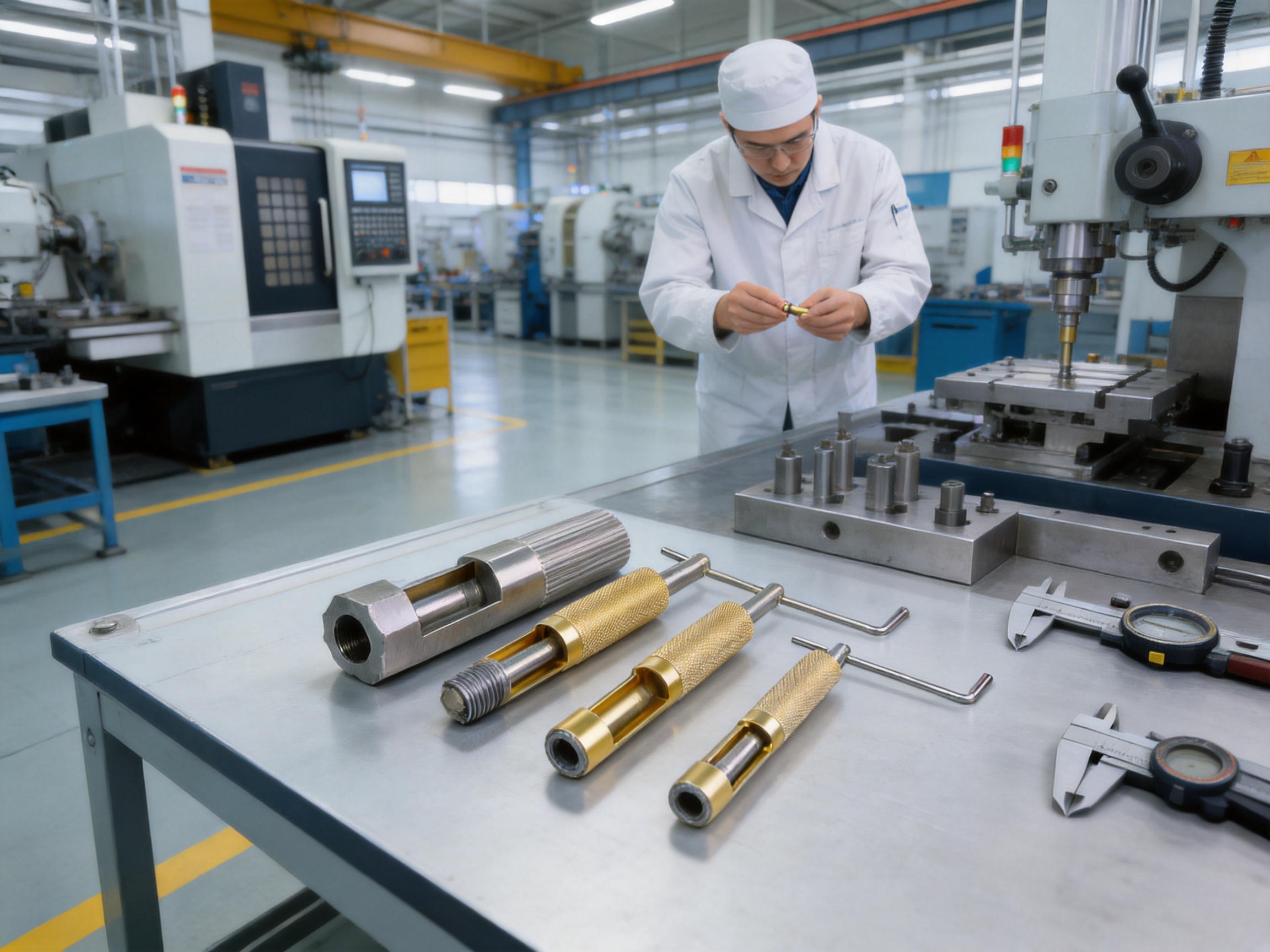
Recommended Installation Procedure
Step One: Confirm the Specification
Before beginning, confirm the insert size, nominal thread, pitch, length, material, and application requirements. Select the matching installation tool and verify that the tool is not worn, bent, contaminated, or damaged.
Step Two: Prepare the Damaged or New Hole
For a repair, remove the damaged thread according to the approved hole preparation procedure. For a new component, drill the hole to the specified size. The hole must provide adequate material around the insert and must not break into an unsuitable cavity unless the design permits it.
Step Three: Tap the Hole
Use the correct insert tap or STI-style tap for the selected wire insert. Keep the tap aligned with the hole axis. Apply suitable cutting lubricant when appropriate for the base material, and remove chips during the operation. A poorly tapped hole can create resistance and misalignment during insert installation.
Step Four: Clean and Inspect
Remove chips, oil residues, and loose debris from the hole. Inspect the tapped thread for damage, incomplete formation, or excessive material deformation. The hole should be clean enough for the insert to advance smoothly.
Step Five: Load the Insert
Place the insert onto the installation tool in the correct orientation. Engage the driving feature without crushing or stretching the coil. Confirm that the insert is held securely but is still able to advance through the tapped hole.
Step Six: Align and Drive
Position the tool along the axis of the hole. Rotate the tool with steady pressure, allowing the insert to follow the prepared thread. Do not force the tool if unusual resistance is encountered. Stop and investigate possible causes such as incorrect tapping, contamination, wrong insert size, or tool damage.
Step Seven: Check Installation Depth
After the insert reaches the specified position, remove the tool carefully. Check that the insert is below the component surface by the required amount and that the internal thread is clear. If the application requires it, remove the driving tang using the approved method.
Step Eight: Verify the Finished Connection
Pass the appropriate bolt or gauge through the installed insert to confirm smooth engagement. Do not use a bolt to force an incorrectly installed insert into position. Where required by the customer’s quality system, record the tool identification, insert batch, operator, inspection result, and repair or assembly reference.
Maintenance and Service Life
Regular cleaning helps preserve tool performance. After use, remove metal chips, cutting fluid, dust, and other contaminants from the guide and drive areas. A clean tool is easier to inspect and less likely to transfer debris into the base hole.
Operators should inspect the tool for worn contact surfaces, rounded driving features, looseness, bending, corrosion, and cracks. A tool can remain visually acceptable while its working dimensions have deteriorated. If installation resistance increases or insert alignment becomes inconsistent, the tool should be checked before further production use.
Storage should protect the tool from impact and moisture. Keeping tools in an organized case or designated rack prevents contact with unrelated equipment and reduces the risk of damage. Tools of different sizes should be clearly identified to avoid accidental use with the wrong insert.
Lubrication requirements depend on the tool design and the installation procedure. If lubrication is recommended, use a suitable product that will not contaminate the finished connection or interfere with subsequent assembly. Excessive lubricant should be removed before the insert is installed.
With proper handling, the alloy steel construction and controlled manufacturing process can provide a long service life. Actual service life depends on insert size, installation volume, operator technique, material condition, maintenance practices, and the severity of the operating environment.
Selection Guide for Buyers
Buyers should begin by identifying the range of insert sizes used in their facility. A maintenance department that handles many thread sizes may benefit from a complete tool range, while a production line may require only one or two dedicated sizes. The M3 to M24 coverage provides flexibility for both situations.
The second consideration is the application environment. Workshop assembly, field repair, automotive production, aerospace manufacturing, and precision instrument work may have different requirements for documentation, inspection, packaging, and operator training. The supplier should understand the intended use before recommending a product configuration.
The third consideration is compatibility. The tool should match the insert design and the prepared hole. Customers should provide the nominal thread size, pitch, insert length, insert material, and preferred installation method when requesting a quotation or technical recommendation.
The fourth consideration is expected workload. High-volume users should evaluate wear resistance, replacement availability, production consistency, and total cost of ownership. A durable precision tool may offer better long-term value than a low-cost product that requires frequent replacement or creates a high rate of installation defects.
The fifth consideration is supplier capability. A manufacturer that produces both inserts and installation tools may provide better technical coordination than a general distributor. Customers should review manufacturing capacity, quality systems, product range, inspection procedures, delivery capability, and after-sales support.
| Selection Factor | What to Confirm | Why It Matters |
|---|---|---|
| Insert size | Nominal thread, pitch, and length | Ensures correct engagement between the tool and insert |
| Application | Production assembly, repair, aerospace, automotive, or machinery | Determines documentation and process requirements |
| Material | Base material and insert material | Influences hole preparation, torque, and installation behavior |
| Tool construction | Alloy steel, hardness, surface condition, and guide design | Supports durability and dimensional stability |
| Quality control | Dimensional inspection, functional testing, and traceability | Reduces variation between batches |
| Supplier support | Technical advice, customization, replacement, and after-sales service | Helps solve application problems and maintain production continuity |
Why Work with a Specialized Manufacturer
A specialized manufacturer understands that a threaded connection is a system rather than a single product. The insert, installation tool, tap, base material, hole geometry, mating fastener, and installation procedure all affect the final result. This broader perspective can help customers avoid compatibility problems.
Jinzhize’s range of wire thread inserts, self-tapping inserts, key-locking inserts, threaded adapters, oil plugs, installation taps, and installation tools provides a foundation for system-level supply. Customers can request matching products for different applications and standardize components across production facilities.
Direct communication with a factory can also improve response speed. Technical questions about insert dimensions, tool selection, packaging, private labeling, production schedules, and inspection requirements can be discussed with personnel familiar with the manufacturing process. This is particularly useful for overseas buyers who require consistent export supply and clear product documentation.
The company’s owned production plant and automated equipment support stable capacity, while its design and development team provides flexibility for product improvement. When customers have a special application, such as a particular size range, packaging configuration, surface requirement, or installation procedure, a factory with in-house production resources is generally better positioned to evaluate the request.
Common Installation Problems and Corrective Measures
The Insert Will Not Start
If the insert does not enter the hole smoothly, check whether the hole has been tapped with the correct insert tap. Verify the insert size and pitch, clean away chips, and inspect the tool for deformation. Do not apply excessive force because this may damage the first coil.
The Insert Installs at an Angle
Angled installation may result from poor tool alignment, an unstable guide, an uneven component surface, or a damaged tapped hole. Hold the tool square to the component and use steady rotation. If the problem continues, stop the operation and inspect the hole and tool.
The Tool Slips on the Insert
Slipping may be caused by incorrect insert loading, worn contact surfaces, contamination, or the use of an incompatible tool. Clean the working area and confirm the tool specification. A worn tool should be replaced rather than forced into service.
The Insert Is Too High or Too Deep
Inconsistent depth can result from improper operator control, incorrect tool length, unsuitable hole depth, or failure to follow the work instruction. Use a clearly defined depth reference and inspect the finished position. For critical applications, a dedicated gauge or documented inspection method should be used.
The Mating Bolt Does Not Engage Smoothly
Check for damaged internal coils, metal chips, incorrect insert pitch, or deformation during installation. The bolt should not be forced into the connection. If the insert is damaged or incorrectly positioned, remove and replace it according to the approved repair procedure.
Q&A
What is a wire thread insert installation tool?
It is a dedicated tool used to drive and guide a helical wire thread insert into a correctly prepared and tapped hole. It supports alignment, controlled rotation, and consistent installation depth.
What insert sizes does this tool support?
The product range supports mainstream insert sizes from M3 to M24. The exact tool must be selected according to the insert’s nominal thread, pitch, and design.
Can the tool be used for repair work?
Yes. Its compact and portable design makes it suitable for restoring worn or damaged threaded holes in machinery, vehicles, industrial equipment, and other assemblies. The repair area must first be evaluated to confirm that sufficient surrounding material remains.
Can it be used in production assembly?
Yes. The guiding and transmission structure supports repeatable installation in manufacturing environments. Production users should establish a documented procedure covering hole preparation, tapping, cleaning, tool use, depth verification, and final inspection.
Why is a dedicated tool better than a general rod or improvised driver?
A dedicated tool is designed to engage the insert correctly and maintain alignment during rotation. Improvised tools may slip, deform the insert, or allow angled installation, which can reduce connection quality and increase rework.
What material is used for the tool?
The tool is made from high-hardness alloy steel selected for wear resistance, impact resistance, and long service life. Actual performance depends on correct operation, maintenance, and application conditions.
What should be done if the tool meets strong resistance?
Stop and investigate. Check the insert size, hole preparation, tap specification, cleanliness, alignment, and tool condition. Excessive force can damage the insert, the tool, or the component.
Does the tool remove the need for a thread tap?
No. The installation tool and the insert tap perform different functions. The tap prepares the internal thread in the base material, while the installation tool drives the wire insert into that prepared thread.
How should the tool be maintained?
Clean it after use, remove chips and contamination, inspect the working surfaces for wear, and store it in a dry protected location. Replace the tool if its guide or driving section becomes damaged or dimensionally worn.
Can Jinzhize supply matching inserts and taps?
Yes. Dongtai Jinzhize Metal Products Co., Ltd. manufactures helical wire inserts, installation taps, and related threaded connection products in addition to installation tools. Customers can request matched specifications for a complete installation solution.
What industries use this product?
Typical industries include automotive, aerospace, rail vehicle manufacturing, machinery production, industrial equipment maintenance, electronic equipment, and precision instrument manufacturing.
Can special requirements be discussed with the manufacturer?
Customers can communicate requirements such as size range, packaging, labeling, application conditions, inspection documents, and supply volume with the manufacturer. The feasibility of customization depends on the specific technical and production requirements.
Conclusion
The wire thread insert installation tool is a small but important component of a reliable threaded connection process. By guiding the insert accurately, transferring motion smoothly, protecting the insert from damage, and supporting multiple sizes, it helps manufacturers and maintenance teams improve assembly consistency and reduce installation-related failures.
Its high-hardness alloy steel construction, compact design, multi-size compatibility, and controlled guiding structure provide practical advantages over general-purpose or improvised tools. These advantages become particularly valuable in high-volume production, field repair, and applications where thread quality affects safety, service life, or maintenance cost.
Dongtai Jinzhize Metal Products Co., Ltd. strengthens this product through specialized manufacturing experience, a 10,000-square-meter production facility, automated production systems, extensive machining resources, experienced technical personnel, quality management, and after-sales support. Its broader range of inserts, taps, adapters, oil plugs, and fastening products allows customers to obtain coordinated threaded connection solutions from one supplier.
For customers seeking a dependable wire insert installer, the most important evaluation criteria are dimensional accuracy, tool durability, insert compatibility, production capacity, quality traceability, and technical support. When these factors are combined with correct hole preparation and controlled installation procedures, the tool can help extend component life, restore damaged threads, and create stronger fastening foundations for demanding industrial applications.
References
1. ISO 898-1, Mechanical Properties of Fasteners Made of Carbon Steel and Alloy Steel.
2. ISO 2320, Prevailing Torque Type Steel Nuts and Related Fastener Performance Considerations.
3. ISO 965, ISO General Purpose Metric Screw Threads: Tolerances and Limits of Size.
4. ASTM A574, Standard Specification for Alloy-Steel Socket-Head Cap Screws.
5. Engineering Practice for Helical Wire Thread Inserts, Thread Preparation, Installation, and Inspection.
6. Industrial Handbook of Threaded Fasteners and Mechanical Connections.
7. Manufacturing Quality Control Principles for Precision Machined Components.
8. General Procedures for Repairing Damaged Internal Threads with Helical Inserts.