Français
 Español
 Deutsch

Content
- 1 Understanding the Spiral Thread Tap
- 2 Why Chip Evacuation Matters
- 3 Main Advantages of Spiral Thread Taps
- 4 Comparison with Conventional Thread Taps
- 5 Product Design Considerations
- 6 Manufacturing Strengths Behind Reliable Taps
- 7 Applications in Critical Industries
- 8 Recommended Operating Practices
- 9 Integration with Threaded Connection Products
- 10 How the Product Compares with Low-Cost Alternatives
- 11 Customization and Technical Support
- 12 Quality, Traceability, and Supply Reliability
- 13 Selection Checklist for Buyers
- 14 Maintenance and Tool-Life Management
- 15 Environmental and Economic Considerations
- 16 Why Choose a Specialized Manufacturer
- 17 Frequently Asked Questions
- 17.1 What is a spiral thread tap used for?
- 17.2 Is a spiral thread tap suitable for blind holes?
- 17.3 What is the difference between a spiral-flute tap and a spiral-point tap?
- 17.4 Can spiral thread taps machine hard metals?
- 17.5 Do spiral thread taps eliminate chip clogging?
- 17.6 How should the pilot hole be prepared?
- 17.7 Can these taps be used in automated machining?
- 17.8 What information should be provided when requesting a quotation?
- 17.9 Does the manufacturer supply other threaded products?
- 17.10 Why is manufacturer support important for tap selection?
- 18 Conclusion
- 19 References
- 20 Product: Spiral Thread Tap

Producing accurate internal threads is essential in automotive, aerospace, rail vehicle, machinery, and general industrial manufacturing. A threaded hole may appear simple, but its performance depends on much more than the nominal thread size. Thread geometry, pitch accuracy, surface finish, chip control, cutting force, tool life, material compatibility, and process stability all influence the quality of the final threaded connection. When a machining operation involves deep holes, difficult-to-machine materials, blind holes, or continuous production, the selection of the tap becomes especially important.
Spiral thread taps are designed to address these demanding requirements. Their helical flutes guide chips away from the cutting zone while the tap advances through the hole. This design can reduce chip packing, lower the risk of tool damage, and improve the consistency of internal threads. Compared with conventional straight-flute taps, spiral thread taps are particularly suitable for deep or long blind holes in which chips cannot easily fall forward or exit through the opposite side of the workpiece.
Dongtai Jinzhize Metal Products Co., Ltd. manufactures threading and fastening products for critical industrial applications. Its product range includes helical wire inserts, self-tapping inserts, key-locking inserts, threaded adapters, oil plugs, installation taps, and related tools. The company’s spiral thread taps are developed for efficient internal thread cutting and are supported by a manufacturing system that combines experienced technical personnel, automated production equipment, quality management procedures, and large-scale supply capability.
This article explains the operating principle, key advantages, application areas, manufacturing considerations, selection factors, and practical use of spiral thread taps. It also examines how a specialized manufacturer can help users achieve stable threading results rather than simply supplying an individual cutting tool.
Understanding the Spiral Thread Tap
A spiral thread tap is a cutting tool used to produce internal threads in a pre-drilled hole. Its defining feature is a helical flute that runs around the tap body. The flute creates a continuous spiral channel for chip movement and also influences how the cutting edges engage with the workpiece.
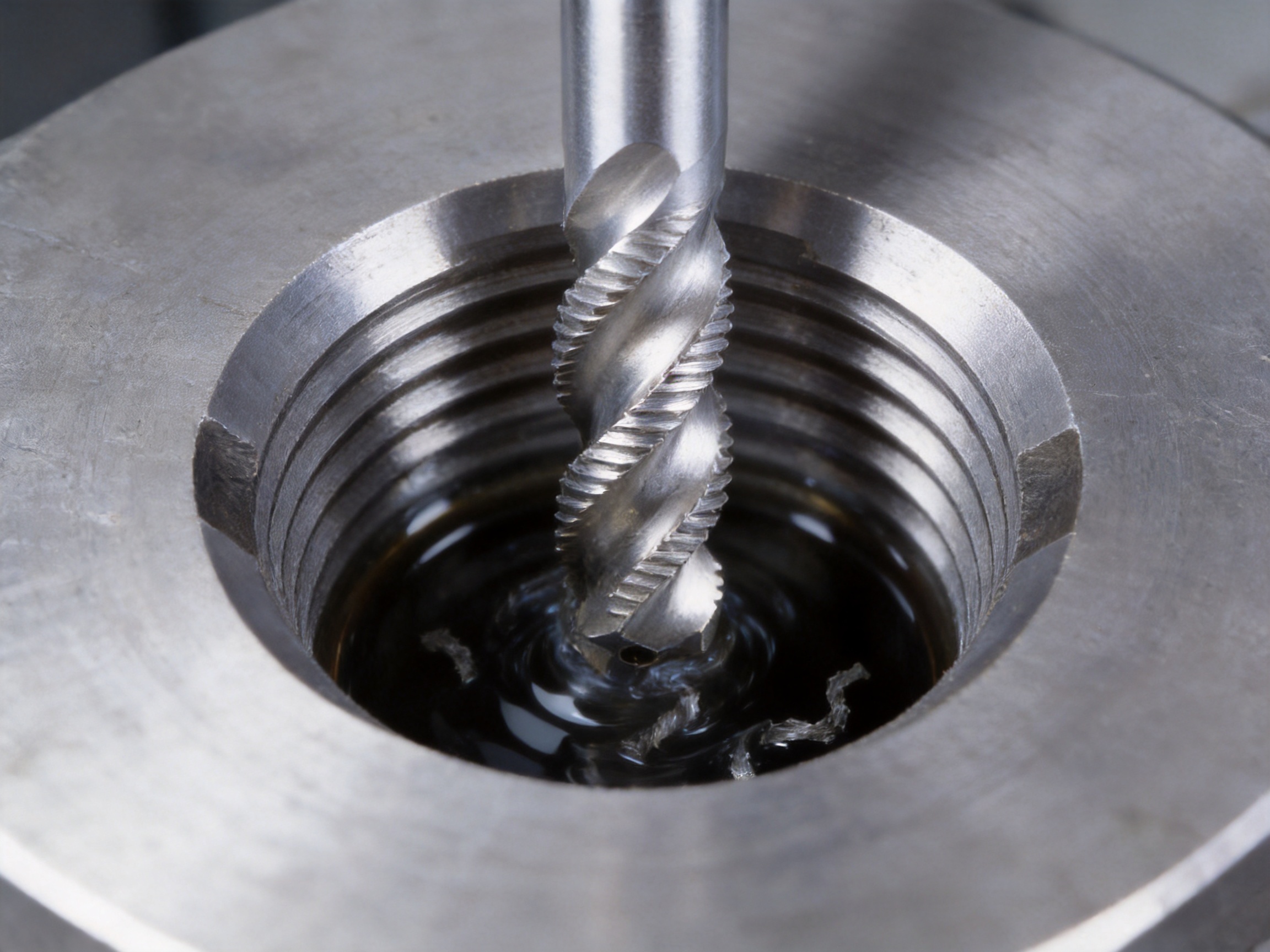
During operation, the tap enters the prepared hole and removes material from the internal wall. As the tool rotates and advances, the cutting edges form the crest, root, flank, and pitch of the required thread. The helical flutes help transport the chips in a controlled direction, reducing the possibility that chips will remain trapped around the cutting area.
This characteristic makes spiral thread taps especially useful for blind-hole threading. In a blind hole, the hole does not pass completely through the workpiece. Chips therefore have limited space to escape, and accumulation can cause increased cutting resistance, poor thread quality, tap breakage, or damage to the bottom of the hole. A correctly selected spiral tap helps move the chips toward the entrance of the hole, where they can be removed by coolant, air, or subsequent cleaning.
Spiral thread taps are not identical to spiral-point taps. A spiral-point tap generally pushes chips forward and is often preferred for through-holes. A spiral-flute or spiral thread tap typically directs chips backward toward the entrance, making it more suitable for blind holes. Understanding this distinction is important because using the wrong flute design can reduce tool life and create avoidable production problems.
Why Chip Evacuation Matters
Chip evacuation is one of the most important factors in tapping performance. When chips are not removed effectively, they may be recut between the cutting edge and the hole wall. This can produce scratches, torn thread surfaces, dimensional variation, excessive torque, and sudden tool failure.
In a straight-flute tap, chip movement depends largely on the available space in the hole, coolant flow, gravity, and the shape of the material being cut. Straight flutes can work well in many through-hole applications and in materials that produce short, easily broken chips. However, they may be less effective when chips are long, flexible, or difficult to clear from a deep blind hole.
The helical flutes of a spiral thread tap create a natural chip path. As the tap rotates, the flute geometry encourages chips to travel along the spiral channel. This movement helps prevent the cutting zone from becoming congested. Reduced congestion can lower the torque required during tapping and can also reduce the likelihood of chipping or breaking the cutting edges.
Improved chip evacuation is particularly valuable when machining aluminum alloys, stainless steels, alloy steels, and other materials that may generate continuous or tenacious chips. It is also important in automated production, where an unstable chip-clearing process can interrupt the machining cycle and create a high volume of defective parts.
Good chip evacuation does not eliminate the need for correct cutting conditions. Tool selection, hole depth, pilot-hole diameter, cutting speed, feed synchronization, lubrication, machine rigidity, and cleaning procedures must all be considered. A spiral tap provides a favorable tool design, but the complete process must still be controlled.
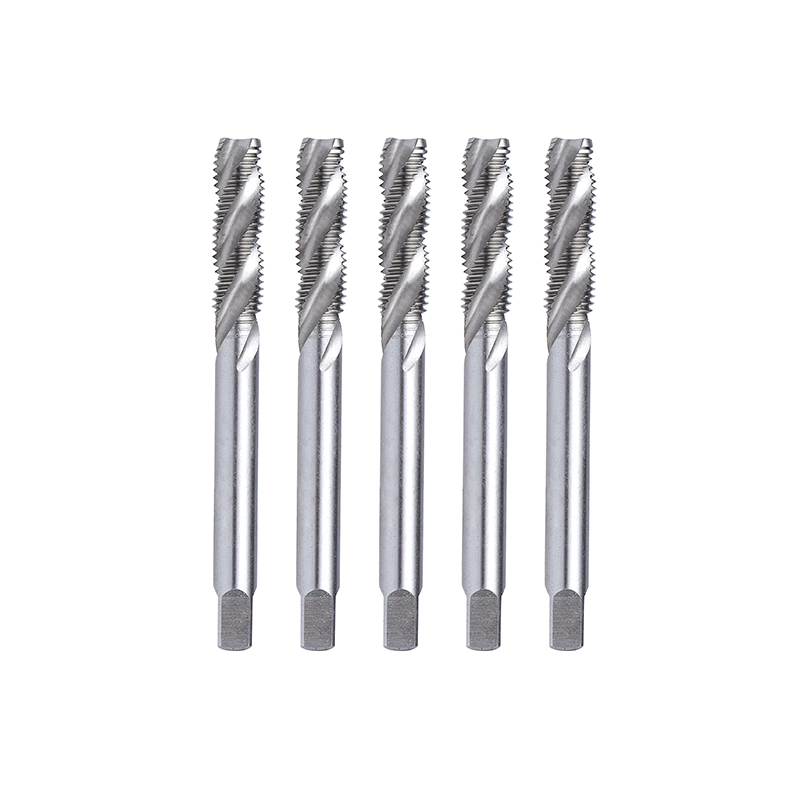
Spiral Thread Tap
Main Advantages of Spiral Thread Taps
Efficient Machining of Deep Holes
Deep-hole threading is one of the primary applications for spiral thread taps. As the thread depth increases, it becomes more difficult for chips to leave the cutting area. The helical flute provides a dedicated evacuation path, helping the tool maintain more stable cutting conditions throughout the hole.
For manufacturers producing engine components, transmission housings, structural parts, hydraulic bodies, and aerospace assemblies, deep threads may be required in compact or complex workpieces. A tool that can maintain chip flow over a longer engagement distance can help improve productivity and reduce the frequency of tool changes.
Lower Risk of Chip Clogging
Chip clogging can increase torque rapidly. If the machine continues feeding while chips are trapped in the flutes, the tap may seize in the hole or fracture before the operator can intervene. Spiral flutes reduce the likelihood of this condition by directing chips away from the active cutting zone.
Lower clogging risk also supports greater process consistency. In a production environment, a tool that performs similarly from one component to the next is more valuable than one that occasionally produces excellent results but is sensitive to small changes in chip formation.
Reduced Cutting Resistance
The helical geometry allows the cutting edges to engage the material progressively rather than presenting the entire cutting profile in the same way as a basic straight-flute design. Depending on the tap geometry, workpiece material, and cutting conditions, this can reduce cutting resistance and help improve machine stability.
Lower resistance may be especially beneficial when the workpiece is made from a high-strength alloy or when the machine has limited torque capacity. It can also help reduce vibration and improve the surface quality of the finished thread.
Improved Thread Accuracy
Thread accuracy depends on the relationship between tool geometry, machine movement, workpiece positioning, and cutting stability. A tap that evacuates chips efficiently and operates with lower resistance is less likely to deflect or experience sudden torque changes.
Stable cutting supports more consistent pitch, flank formation, thread depth, and surface finish. This is important for applications in which a threaded insert, bolt, plug, or mating component must fit reliably without excessive play or interference.
Suitability for Hard and Difficult Materials
High-strength steels, stainless steels, heat-resistant alloys, and other difficult materials can produce substantial cutting loads. They may also generate chips that are hard to break or remove. A spiral thread tap can provide a more suitable chip path and cutting action for these conditions.
Tool life still depends on the correct material grade, surface treatment, cutting speed, coolant, and hole preparation. However, the spiral design gives manufacturers a stronger starting point for demanding internal-threading operations than a basic tap geometry intended for easy materials.
Advantages in Automated and High-Volume Production
In large-scale production, the cost of an internal-threading operation includes more than the purchase price of the tap. It also includes machine time, tool-change time, rejected components, maintenance, operator intervention, and the consequences of a broken tool inside a workpiece.
Spiral thread taps can contribute to lower overall operating costs by supporting faster chip evacuation, longer and more predictable tool usage, and fewer interruptions caused by chip-related problems. Their value is therefore measured by total process performance rather than by the initial price of one tool.
Comparison with Conventional Thread Taps
No single tap design is ideal for every application. The best tool depends on the hole type, material, thread size, depth, machine, coolant method, and production objective. Nevertheless, spiral thread taps offer clear advantages in several situations.
| Comparison Factor | Spiral Thread Tap | Straight-Flute Tap | Typical Production Implication |
|---|---|---|---|
| Flute design | Helical flutes guide chips along the tap | Flutes run substantially parallel to the tool axis | Spiral geometry generally provides better chip movement in deep blind holes |
| Blind-hole performance | Well suited to many blind-hole applications | Suitable when chips are short or easily managed | Spiral taps can reduce chip packing and interruption risk |
| Through-hole performance | Can be used when the application and geometry are appropriate | Often practical for simple through-hole work | Tool selection should match chip direction and hole configuration |
| Cutting resistance | Helical engagement can support smoother cutting | May generate higher resistance in difficult conditions | Spiral taps may improve stability in high-load machining |
| Chip evacuation | Designed for active chip transport | Relies more on hole space, coolant, and chip form | Spiral taps are advantageous for long or continuous chips |
| Automation suitability | Strong choice when chip control is a recurring issue | Effective when the process is simple and stable | Spiral taps can reduce operator intervention in repeat production |
| Application flexibility | Especially useful for deep holes and difficult materials | Broadly useful for general-purpose work | Engineers should select based on process requirements rather than habit |
The comparison shows that spiral thread taps are not intended to replace every other tap. Instead, they provide a specialized solution for conditions in which chip control, deep-hole performance, and process reliability are priorities. In a well-organized tooling program, spiral and straight-flute taps may both be used for different operations.
Product Design Considerations
Flute Geometry
Flute angle and flute depth influence chip evacuation, cutting-edge strength, and the amount of material available behind the cutting edge. A more aggressive helix may improve chip movement, while a less aggressive configuration may provide additional edge support in certain materials. The appropriate balance depends on the workpiece and the intended application.
Thread Profile
The thread profile must match the required standard and mating component. Common considerations include metric or inch dimensions, coarse or fine pitch, tolerance class, thread form, and the required depth of engagement. A tap should not be selected only by nominal diameter; the complete thread specification must be verified.
Cutting Edge Strength
Hard materials and interrupted cutting conditions can place high stress on the cutting edges. The tool must have sufficient edge strength to resist chipping while maintaining the geometry needed to produce a clean thread. This is one reason professional tap production requires controlled grinding, inspection, and material selection.
Shank and Drive Configuration
The shank must be compatible with the machine holder, tapping chuck, collet, or synchronized spindle system. A suitable connection helps maintain concentricity and reduces slippage. In automated machining, the holder and compensation system should also be reviewed because poor alignment can lead to premature wear even when the tap itself is correctly manufactured.
Surface Treatment and Material Selection
Tap performance is affected by the tool substrate and any applied surface treatment. Different materials and coatings may improve wear resistance, reduce friction, or support performance under particular cutting conditions. The best choice depends on the workpiece material, lubrication method, cutting speed, and production volume.
Manufacturers and users should avoid assuming that one coating or material is universally superior. A specialized supplier can help match the tap construction to the actual application instead of recommending a generic solution without considering the machining environment.
Manufacturing Strengths Behind Reliable Taps
The performance of a spiral thread tap begins with its manufacturing process. Accurate helical flutes, precise thread geometry, consistent heat treatment, and controlled inspection are all necessary to produce a tool that behaves predictably in production.
Dongtai Jinzhize Metal Products Co., Ltd. operates a 10,000-square-meter owned manufacturing plant established for threaded connection products and related tools. The facility is equipped with hundreds of machine tools and automated production systems. This scale supports both repeat production and the process discipline needed for consistent product output.
The company was established in 2015 and has developed an experienced team covering product design, technical development, manufacturing, quality control, and customer support. This combination is important because industrial threading products often require more than standard catalog supply. Customers may need assistance with material compatibility, thread specifications, installation conditions, production volume, or the integration of taps with threaded inserts and fastening components.
Engineering and Process Development
A reliable spiral tap begins with engineering review. The intended hole type, thread standard, depth, material, and cutting method should be analyzed before the geometry is finalized. Design considerations may include helix configuration, number of flutes, chamfer form, relief angle, cutting-edge preparation, shank dimensions, and tolerance requirements.
Computer-aided design and controlled process documentation can help ensure that the selected geometry is reproduced accurately. When a product is made for repeated supply, standardized drawings, process instructions, inspection requirements, and traceability records help reduce variation between production batches.
Precision Machining
Producing a helical tap requires accurate machining of the tool body and flutes. The grinding process must control dimensions, concentricity, flute form, and thread profile. Automated and numerically controlled equipment can support repeatability, while experienced technicians remain important for setup verification, process adjustment, and problem solving.
Machining accuracy is especially important for small taps and fine-pitch tools. Minor deviations in the cutting profile can influence the finished thread, cutting torque, and tool life. A manufacturing facility with a broad equipment base can also arrange different process routes for different sizes, materials, and production quantities.
Heat Treatment and Material Stability
Tool hardness and toughness must be balanced. Excessive hardness without sufficient toughness can make a tap vulnerable to chipping, while insufficient hardness may lead to rapid wear. Controlled heat treatment helps establish the mechanical properties required for the intended service conditions.
Stable heat-treatment procedures, batch control, and inspection contribute to predictable performance. These factors are particularly valuable for automotive and aerospace customers, where process changes must be documented and product consistency is closely evaluated.
Inspection and Quality Management
Inspection may include dimensional checks, thread-gauge verification, visual examination, flute-form review, hardness testing, and other controls appropriate to the product. A rigorous quality management system helps ensure that inspection is not treated as an isolated final step but as part of the complete manufacturing process.
Quality control should cover incoming materials, production parameters, in-process dimensions, finished-tool characteristics, packaging, and shipment records. Traceability allows potential issues to be investigated more efficiently and helps customers manage their own quality systems.
Automated Production and Capacity
Automated production systems can improve repeatability and support stable delivery for high-volume customers. Automation is especially beneficial when the same tap specifications must be manufactured repeatedly with consistent process parameters. It can also help reduce manual variation in handling and inspection.
Jinzhize’s manufacturing capacity is supported by hundreds of machine tools and a large-scale production plant. In 2024, the company achieved an annual output value of 153 million RMB. This demonstrates its ability to support substantial supply requirements while continuing to serve customers that need specialized threaded connection products.
Applications in Critical Industries
Automotive Manufacturing
Automotive engines, transmissions, chassis assemblies, and supporting components contain numerous threaded holes. These holes may be located in aluminum housings, alloy-steel parts, cast components, and other materials with different machining characteristics.
Deep and blind holes are common in engine and transmission components. A spiral thread tap can help manage chips in these configurations and support consistent thread formation. Reliable tapping is important because a defective thread can affect the installation of a fastener, threaded insert, sensor, plug, or other component.
Automotive production also emphasizes cycle time and repeatability. A tool that supports stable automated machining can contribute to fewer interruptions and more predictable maintenance planning.
Aerospace Components
Aerospace manufacturing requires careful control of materials, dimensions, traceability, and process performance. Components may be produced from high-strength steels, titanium alloys, nickel-based alloys, aluminum alloys, and other materials that require specialized cutting strategies.
Internal threads in aerospace parts must often meet precise dimensional and functional requirements. Spiral thread taps may be selected for deep holes, difficult materials, or operations in which chip control is a significant concern. The tool itself is only one part of the process, but a suitable tap geometry can help the manufacturer maintain consistent results.
Rail Vehicles and Heavy Equipment
Rail vehicle components, construction machinery, agricultural equipment, and heavy industrial assemblies often use large structural parts and high-strength materials. Threaded connections in these products may be exposed to vibration, load cycles, and demanding service conditions.
Spiral thread taps can support the preparation of reliable internal threads for fasteners, plugs, adapters, and repair inserts. Their chip-evacuation capability is particularly useful when the hole is deep or when the material generates difficult chips.
General Precision Manufacturing
Machine tools, hydraulic systems, pumps, valves, industrial automation equipment, and specialized machinery all rely on threaded connections. The required thread may serve as a fastening point, a fluid-sealing interface, an adjustment mechanism, or a mounting location for another component.
In these applications, the tap should be selected according to the final function of the thread. A sealing thread, precision fastening thread, and insert-receiving thread may require different specifications even if their nominal diameters are similar.
Recommended Operating Practices
Verify the Pre-Drilled Hole
The pilot-hole diameter has a direct effect on tapping torque and thread quality. A hole that is too small removes excessive material and can overload the tap. A hole that is too large may produce insufficient thread engagement. The hole diameter should be selected according to the applicable thread standard, material, tolerance, and required percentage of thread.
Hole depth should also be checked. The drilled hole must provide enough clearance for the intended thread depth and chip accumulation. In a blind hole, the usable thread depth is not always equal to the total drilled depth because the tap chamfer and bottom clearance occupy part of the hole.
Maintain Proper Alignment
The tap should enter the hole concentrically and remain aligned with the spindle or tapping holder. Misalignment can increase flank pressure, produce uneven thread formation, and accelerate wear. Rigid machines, appropriate holders, and controlled workholding can all improve tapping results.
When using automated equipment, synchronization between spindle rotation and axial feed is important. A mismatch can create excessive force and damage the tap or the workpiece.
Use Suitable Lubrication
Lubrication reduces friction and helps carry heat away from the cutting area. It may also assist chip movement, particularly when the coolant is delivered effectively into the hole. The fluid should be compatible with the workpiece material, machine, tooling, and downstream cleaning requirements.
For difficult materials, lubrication may be one of the most important process variables. Dry tapping should be considered only when the tool and material are specifically suited to that method.
Control Speed and Feed
Cutting speed should be selected according to the tap material, workpiece material, thread size, hole depth, machine rigidity, and cooling method. Excessive speed may increase heat and wear, while an overly conservative speed may reduce productivity without necessarily improving quality.
Feed must correspond to the thread pitch. In synchronized tapping, the axial movement should match one pitch per spindle revolution for a standard single-start thread. Feed errors can create abnormal forces and may damage both the tap and the thread.
Clean the Hole and Workpiece
Before tapping, the hole should be free from loose chips, burrs, scale, and contaminants that could interfere with tool entry. After tapping, the workpiece should be cleaned so that remaining chips do not affect assembly or enter a working mechanism.
For deep holes, inspection and cleaning are especially important. Chip remnants may remain in the bottom of the hole or along the thread flanks even when the tap itself has completed the operation.
Integration with Threaded Connection Products
Spiral thread taps are often used alongside other threaded connection products. A customer may require a complete solution that includes a wire thread insert, self-tapping insert, key-locking insert, threaded adapter, oil plug, installation tool, and the tap required to prepare the hole.
When an internal thread is damaged or when a softer base material requires reinforcement, a threaded insert may provide a durable solution. The tap used to prepare the insert-receiving thread must match the insert specification. Using an ordinary tap instead of the correct installation tap can lead to improper fit, insufficient engagement, or installation difficulty.
A supplier with experience in multiple threaded product categories can help customers coordinate the tap, insert, installation tool, and final fastener. This reduces the risk of selecting components independently that do not work together as a complete system.
For production engineers, coordinated sourcing also simplifies quality documentation and purchasing. Rather than evaluating unrelated products from several vendors, the customer can work with one specialized manufacturer that understands the relationship between internal threading and the final fastening assembly.
How the Product Compares with Low-Cost Alternatives
Price is an important purchasing consideration, but a low initial tool price does not always represent the lowest operating cost. An inexpensive tap may create higher expenses if it produces inconsistent threads, breaks frequently, requires repeated adjustments, or causes damage to expensive workpieces.
Professional spiral thread taps are differentiated by the consistency of their geometry, substrate, heat treatment, surface condition, inspection, and batch control. These qualities may not be visible from the outside, but they influence performance during actual production.
Compared with poorly controlled alternatives, a professionally manufactured spiral tap can offer more reliable dimensions, better chip movement, more stable cutting behavior, and improved suitability for automated machining. These advantages are especially meaningful when the workpiece is expensive or when a broken tap is difficult to remove.
Jinzhize combines specialized threaded-product manufacturing with an owned production facility, automated systems, experienced technical staff, quality management procedures, and after-sales support. This structure enables the company to focus on long-term product consistency rather than one-time transactions.
Customization and Technical Support
Many industrial applications require more than a standard product selected from a general catalog. Customers may need a specific thread standard, unusual length, customized shank, special tolerance, particular material, or packaging and labeling requirements for automated production.
Customization should begin with a technical review of the application. Important information includes workpiece material and hardness, hole diameter, thread standard, thread depth, whether the hole is blind or through, machine type, spindle speed, coolant method, production quantity, and the required inspection standard.
A manufacturer can use this information to recommend a more suitable flute design and production specification. It can also help identify whether a spiral thread tap, spiral-point tap, straight-flute tap, or another tool type is appropriate. Honest selection is more valuable than recommending the same design for every customer.
After-sales support is also important. If the customer experiences excessive torque, poor thread finish, short tool life, or chip accumulation, the cause may involve hole preparation, machine alignment, cutting conditions, or material variation. A specialized supplier can help analyze the issue and determine whether a tooling or process adjustment is required.

Quality, Traceability, and Supply Reliability
For customers in automotive, aerospace, and other critical industries, product quality must be supported by reliable documentation and supply management. Traceability helps connect the delivered product to its material source, production batch, inspection records, and shipment information.
Consistent supply is equally important. Production lines may depend on a stable quantity of taps with the same geometry and performance. Sudden changes in tool quality can force engineers to revalidate cutting conditions, adjust machine programs, or repeat process qualification.
Jinzhize’s manufacturing organization is designed to support stable and traceable products for critical assemblies. Its large plant, broad equipment base, automated production systems, and quality management approach provide a foundation for repeat orders and global supply.
The company’s experience in threaded connection products also allows it to understand the practical requirements of customers who use taps together with inserts, adapters, oil plugs, and installation tools. This broader product knowledge can improve communication and reduce procurement risk.
Selection Checklist for Buyers
Before purchasing a spiral thread tap, the buyer should define the complete application rather than providing only the nominal thread diameter. The following questions can help establish the correct specification:
What thread standard is required, and what are the diameter, pitch, and tolerance details?
Is the hole blind or through, and what is the actual usable thread depth?
What material and hardness will be machined?
Does the material generate short, brittle chips or long, continuous chips?
What is the required production volume and expected tool life?
What machine, tapping holder, and spindle control system will be used?
What coolant or cutting lubricant is available?
Are there special requirements for coating, shank size, overall length, or packaging?
Will the tap be used alone, or as part of an insert installation and threaded connection system?
How will the finished thread be inspected?
Providing complete answers allows the manufacturer to make a more accurate recommendation. It also helps prevent problems caused by using a tool that is technically the correct diameter but unsuitable for the material, hole depth, or machine.
Maintenance and Tool-Life Management
Even a high-quality spiral thread tap requires proper handling. Tools should be stored in a clean, dry environment and protected from impact. Cutting edges can be damaged by contact with other tools, improper packaging, or careless loading into a machine holder.
Tool-life management should be based on measurable indicators. These may include the number of holes produced, torque trend, thread-gauge results, visual wear, surface finish, and the occurrence of burrs or damaged threads. Replacing a tap before catastrophic failure is often more economical than waiting for the tool to break in a workpiece.
Used taps should be examined for flank wear, edge chipping, built-up material, abnormal discoloration, and damage to the shank. These signs can provide information about the cutting process. For example, excessive wear may indicate unsuitable speed or insufficient lubrication, while chipping may suggest misalignment, interrupted cutting, or excessive mechanical shock.
Regular review of tool performance can help manufacturers optimize cutting conditions and improve total productivity. It also provides useful feedback to the tap supplier when a customized geometry or application-specific recommendation is being developed.
Environmental and Economic Considerations
Efficient tapping can contribute to more sustainable manufacturing by reducing scrap, tool waste, machine interruptions, and unnecessary energy consumption. A tap that produces acceptable threads consistently can help prevent the material and processing energy invested in a rejected component from being lost.
Longer and more predictable tool life may also reduce the number of tool changes and the amount of packaging consumed over time. In high-volume production, small improvements in cycle stability can produce significant annual benefits.
The most sustainable choice is not always the tool with the lowest purchase price. A more durable and better-matched spiral thread tap may provide a lower cost per acceptable threaded hole. Buyers should therefore evaluate purchase cost, performance, tool life, maintenance, scrap, and production downtime together.
Why Choose a Specialized Manufacturer
A specialized manufacturer understands that a tap is part of a larger fastening and machining process. It can consider the relationship between the internal thread, the mating fastener, the threaded insert, the workpiece material, and the final assembly environment.
Dongtai Jinzhize Metal Products Co., Ltd. focuses on threaded connection products for automotive, aerospace, rail vehicle, and other industrial applications. Its product portfolio covers several related categories, including helical wire inserts, self-tapping inserts, key-locking inserts, threaded adapters, oil plugs, installation tools, and thread taps.
The company’s owned 10,000-square-meter facility, hundreds of machine tools, automated production systems, experienced engineering and production teams, and quality management system support its ability to provide consistent products at scale. Its annual output value of 153 million RMB in 2024 further reflects established production capability.
For international customers, the combination of manufacturing capacity and service support can simplify sourcing. Customers can discuss standard products, customized specifications, production planning, inspection needs, and after-sales questions with a supplier focused on the same technical field.
Frequently Asked Questions
What is a spiral thread tap used for?
A spiral thread tap is used to cut internal threads in a pre-drilled hole. Its helical flutes help guide chips away from the cutting zone, making it especially useful for deep blind holes, difficult materials, precision threading, and automated production.
Is a spiral thread tap suitable for blind holes?
Yes. Spiral-flute taps are commonly selected for blind holes because their flute direction can move chips back toward the hole entrance. The exact tap geometry should still be matched to the hole depth, material, thread specification, and machine conditions.
What is the difference between a spiral-flute tap and a spiral-point tap?
A spiral-flute tap generally carries chips backward toward the entrance and is often used for blind holes. A spiral-point tap generally pushes chips forward and is frequently used for through-holes. The correct choice depends on the hole configuration and chip behavior.
Can spiral thread taps machine hard metals?
They can be suitable for many hard or difficult-to-machine metals when the tool material, geometry, coating, cutting speed, lubrication, and machine rigidity are properly selected. A technical review is recommended for high-strength steels, stainless steels, titanium alloys, and heat-resistant alloys.
Do spiral thread taps eliminate chip clogging?
No tap can eliminate every possible chip problem. Spiral flutes help improve chip evacuation and reduce the risk of clogging, but correct pilot-hole size, coolant, speed, feed, alignment, and hole cleaning remain necessary.
How should the pilot hole be prepared?
The pilot hole should follow the recommended diameter for the specified thread standard and required percentage of thread. It should be straight, sufficiently deep, free from burrs, and properly aligned with the intended tapping axis.
Can these taps be used in automated machining?
Yes. Their chip evacuation and cutting stability make spiral thread taps suitable for many automated and high-volume operations. The machine must provide appropriate spindle synchronization, holder compatibility, coolant delivery, and tool monitoring.
What information should be provided when requesting a quotation?
Useful information includes thread standard, diameter, pitch, tolerance, hole type, thread depth, workpiece material, hardness, machine type, cutting conditions, required quantity, and any special shank, coating, packaging, or inspection requirements.
Does the manufacturer supply other threaded products?
Yes. The product range includes self-tapping thread inserts, internal-external thread conversion nuts, wire thread inserts, three-hole threaded inserts, oil plugs, installation tools, thread taps, and key-locking inserts. These products can support complete threaded connection and fastening applications.
Why is manufacturer support important for tap selection?
Tool performance depends on the interaction between the tap, workpiece, machine, coolant, and production method. A specialized manufacturer can help evaluate these factors and recommend a more suitable solution than a generic tool selection based only on nominal thread size.
Conclusion
Spiral thread taps provide an effective solution for internal-threading operations that demand efficient chip evacuation, reliable deep-hole performance, lower cutting resistance, and stable production results. Their helical flute design makes them particularly valuable for blind holes, difficult materials, precision components, and automated manufacturing.
Compared with basic straight-flute taps, spiral thread taps can offer better chip control and more consistent performance when the machining conditions are demanding. Their advantages are most fully realized when the complete process is properly designed, including pilot-hole preparation, tool alignment, lubrication, speed, feed, inspection, and maintenance.
Dongtai Jinzhize Metal Products Co., Ltd. supports this product with specialized threaded-product expertise, an owned 10,000-square-meter manufacturing plant, hundreds of machine tools, automated production systems, experienced technical personnel, quality management procedures, and after-sales service. Its broader product portfolio allows customers to source taps and related threaded connection products from one experienced supplier.
For manufacturers seeking stable internal threads and dependable supply, the correct spiral thread tap should be evaluated as part of the entire fastening process. When tool geometry, manufacturing quality, and application support work together, spiral thread tapping can improve assembly consistency, reduce production risk, and contribute to a more efficient manufacturing operation.
References
1. International Organization for Standardization. ISO Metric Screw Threads: Basic Dimensions and Tolerances.
2. American Society of Mechanical Engineers. Unified Inch Screw Threads and Threading Practice.
3. Machinery’s Handbook. Cutting Tools, Tapping Practice, Thread Standards, and Machining Data.
4. Tool and Manufacturing Engineers Association. Principles of Precision Machining and Production Tooling.
5. General technical literature on tap geometry, chip evacuation, cutting fluids, and internal-thread manufacturing.
6. Manufacturer-provided product and company information for spiral thread taps and threaded connection products.
Product: Spiral Thread Tap