Français
 Español
 Deutsch


Content
- 1 Understanding the Hexagon Socket Flanged Plug
- 2 Why Reliable Closure Components Matter
- 3 Key Structural Advantages
- 4 Advantages Compared with Conventional Closures
- 5 Applications in Industrial Systems
- 6 Materials and Surface Treatment Considerations
- 7 Manufacturing Process and Quality Control
- 8 Engineering and Installation Guidance
- 9 Customization Capabilities
- 10 Why Choose Dongtai Jinzhize Metal Products Co., Ltd.
- 11 Procurement Checklist for Buyers
- 12 Cost and Lifecycle Benefits
- 13 Safety and Application Limitations
- 14 Q&A
- 14.1 What is a hexagon socket flanged plug used for?
- 14.2 How is this product different from a simple threaded oil plug?
- 14.3 Why does the plug have a T-shaped reinforced design?
- 14.4 Can the plug be used for pressure testing?
- 14.5 Which flange standards can be supported?
- 14.6 Does the hexagon socket make installation easier?
- 14.7 Can the product be customized?
- 14.8 What gasket should be used?
- 14.9 Can the plug be reused?
- 14.10 What information should be included in a quotation request?
- 14.11 What industries can use this product?
- 14.12 Why is manufacturing consistency important for this product?
- 15 Conclusion
- 16 References
- 17 Product: Hexagon Socket Screw Plug
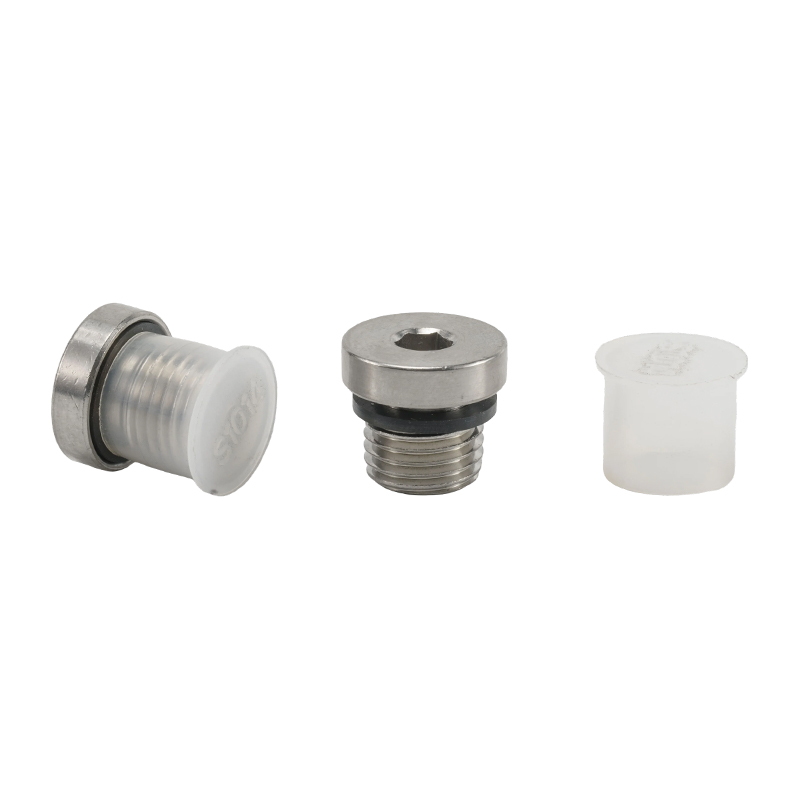
Hexagon Socket Screw Plug
Industrial piping systems, pressure vessels, pumps, valves, heat exchangers, and processing equipment often require dependable closure points. These points may be used for permanent termination, temporary isolation, pressure testing, maintenance access, or future expansion. Although a pipe opening may appear simple to close, the sealing component must withstand pressure, vibration, temperature changes, repeated assembly, and the mechanical loads created by connected equipment. A poorly selected plug can result in leakage, deformation, difficult maintenance, and unplanned downtime.
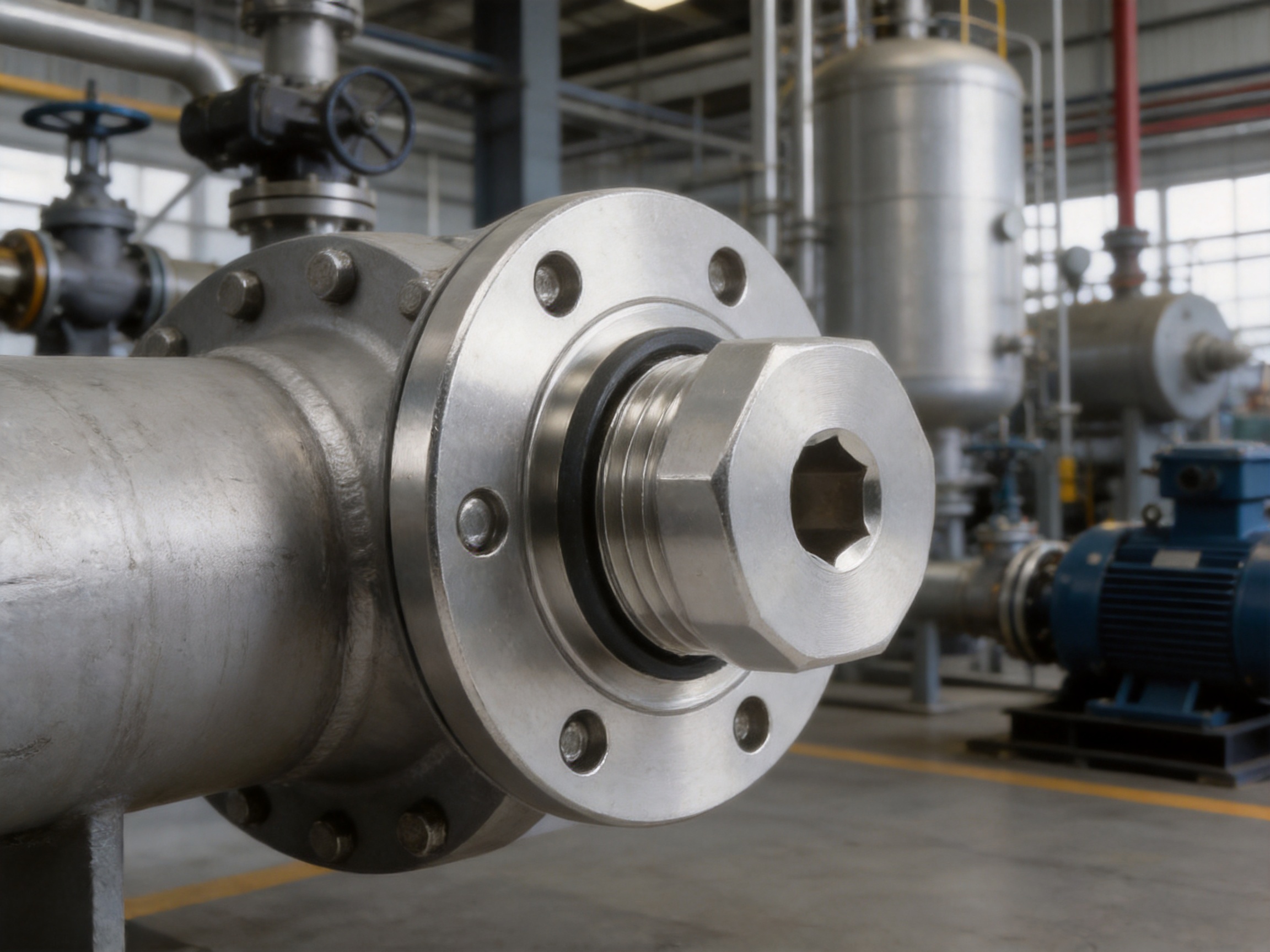
The hexagon socket flanged plug, also known in certain applications as a T-shaped reinforced flanged plug or oil plug, is designed to provide a strong and practical solution for these requirements. Its reinforced center structure improves rigidity, while its full-face sealing surface works with a suitable gasket to create a reliable barrier. The socket-style installation interface allows controlled tightening and removal, particularly when external access is limited or when a traditional wrench cannot be used conveniently.
This product combines the functional advantages of a flanged closure with the installation convenience of a hexagon socket design. It can be bolted directly to a compatible flange, removed efficiently during maintenance, and reused when the sealing surfaces and fasteners remain in suitable condition. For manufacturers and industrial buyers, it offers a balanced combination of structural performance, installation efficiency, compatibility, and manufacturing consistency.
Understanding the Hexagon Socket Flanged Plug
A hexagon socket flanged plug is a closure component used to seal the end of a pipe, port, vessel connection, or equipment opening. The plug generally includes a flange profile with bolt holes, a central reinforced section, and a machined sealing face. Depending on the application, the closure may be installed with a gasket between the plug and the mating flange. The hexagon socket provides an internal driving feature for installation or removal of a related screw-style plug structure, adjustment element, or auxiliary fastening arrangement.
The product supplied for industrial use is commonly associated with a T-shaped design. The central raised section forms the stem of the “T,” while the surrounding flange creates the base. This geometry provides more material around the load-bearing center and helps distribute pressure-related forces through the body of the plug. Instead of relying only on a thin flat plate, the reinforced form resists bending and maintains better contact with the gasket under changing operating conditions.
The term “oil plug” can describe several different styles of sealing products in the industrial market. Some oil plugs are threaded drain plugs, while others are flanged closures for oil circuits, lubrication equipment, hydraulic systems, or process piping. The hexagon socket flanged plug described here is intended for applications that benefit from a bolted flange connection and a reinforced closure profile. Product dimensions, material selection, pressure capability, gasket type, and surface treatment should always be confirmed against the actual design requirements.
Why Reliable Closure Components Matter
A closure is not merely an accessory placed at the end of a pipe. It becomes part of the pressure boundary of the system. When the line is operating, internal pressure acts against the sealing area and the body of the plug. During a pressure test, the load may be higher than the normal operating pressure. During shutdown and startup, thermal expansion, contraction, vibration, and pressure fluctuation can repeatedly challenge the connection.
In systems containing oil, fuel, coolant, water, compressed air, chemicals, or other process media, even a small leak can create operational or safety concerns. Leakage may contaminate surrounding components, reduce system efficiency, damage insulation, create slip hazards, or require frequent maintenance. In automotive and aerospace-related assemblies, where compact packaging and high reliability are important, access for inspection and repair may also be restricted.
A well-designed flanged plug addresses these challenges through several coordinated features. The plug body must be sufficiently rigid. The flange must match the bolt pattern of the mating component. The sealing face must be flat and accurately machined. The gasket must be compressed evenly. The bolts must be tightened in the correct sequence and to a suitable torque. Finally, the product must be manufactured with stable dimensions and controlled surface quality.
Key Structural Advantages
T-Shaped Reinforced Geometry
The raised center of the plug increases the section thickness in the area most exposed to pressure and mechanical stress. This improves resistance to deformation compared with a basic thin plate closure. When internal pressure pushes against the plug, the reinforced section helps transfer the load toward the flange and fasteners instead of allowing the center to flex excessively.
This geometry is particularly useful in systems exposed to pressure pulsation, vibration, or water hammer. Water hammer occurs when fluid movement changes rapidly, producing a transient pressure wave. Similar effects can occur in hydraulic equipment, pump discharge lines, and rapidly actuated valve systems. While the plug must still be selected according to the system pressure rating and applicable engineering standards, its reinforced form provides a stronger structural foundation for reliable service.
Full-Face Sealing Surface
The full-face sealing surface is designed to work with a gasket placed across the mating flange area. A broad and accurately machined surface promotes more uniform gasket compression than a narrow or irregular contact area. Uniform compression helps reduce localized leakage paths and supports consistent sealing during assembly.
Surface finish is important because excessive roughness can damage the gasket or create channels through which the medium may escape. Conversely, an unsuitable finish may prevent the gasket from conforming properly. The correct finish depends on the gasket material, flange standard, medium, pressure, and temperature. Jinzhize can coordinate machining and inspection requirements according to the customer’s application and drawing.
Standard Flange Compatibility
Industrial users frequently need closure components that fit existing equipment without extensive modification. A flanged plug designed around recognized flange dimensions and bolt-hole patterns can be integrated more easily into established systems. Common reference systems include ANSI, ASME, DIN, and JIS standards, although the exact dimensions must be checked because nominal sizes and pressure classes may differ between standards.
Compatibility includes more than the outside diameter. The bolt-hole count, bolt-hole diameter, pitch-circle diameter, facing type, thickness, bore relationship, and gasket dimensions all affect installation. Correct matching reduces fabrication work, shortens procurement cycles, and improves interchangeability during maintenance.
Hexagon Socket Installation Interface
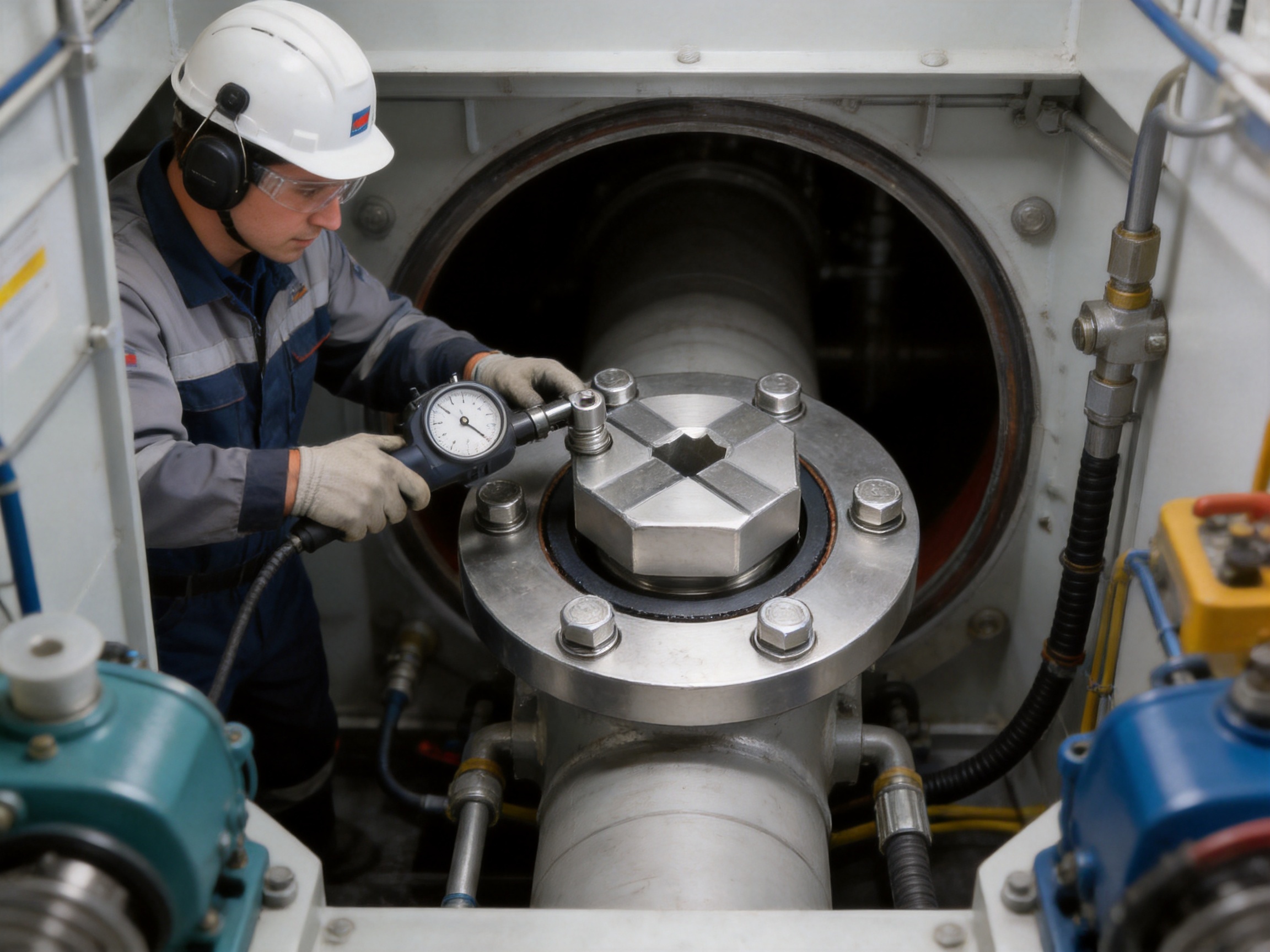
A hexagon socket provides a practical driving interface for controlled installation and removal. An internal socket can be used with a hex key, socket bit, or suitable torque tool, depending on the product configuration. This is valuable in confined spaces where a standard external wrench may not have sufficient clearance.
The socket also supports more controlled torque application. Controlled tightening is essential for preventing under-compression, which may cause leakage, and over-tightening, which may damage threads, distort the plug, or crush the gasket. When the installation procedure specifies a torque range, the operator can use an appropriate calibrated tool to achieve more repeatable results.
Advantages Compared with Conventional Closures
Traditional pipe caps, welded blinds, and basic flat covers remain useful in many applications, but they may not provide the same combination of accessibility, structural reinforcement, and maintenance efficiency. The most suitable closure depends on the system, yet the hexagon socket flanged plug offers several practical advantages.
Compared with Welded Blinds
A welded blind creates a permanent or semi-permanent closure. It may provide excellent strength when correctly designed and welded, but installation requires qualified welding procedures, suitable equipment, surface preparation, inspection, and sometimes post-weld treatment. Welding can also introduce heat into the connected pipe or vessel, which may be undesirable near sensitive coatings, seals, instrumentation, or assembled equipment.
A bolted flanged plug can normally be installed without hot work. This simplifies field installation and reduces the need for welding permits, gas monitoring, and post-weld inspection. It can also be removed later without cutting the pipe. For systems that require periodic inspection or future expansion, this removability can significantly reduce maintenance effort.
Compared with Basic Pipe Caps
A basic cap may be satisfactory for low-demand applications, but it may not provide a broad, stable sealing surface or a reinforced center structure. Some caps also require external access for installation, which can be inconvenient in crowded machinery compartments.
The flanged plug uses a defined bolting pattern and gasketed sealing face. Its reinforced design offers better resistance to pressure-related flexing, while its socket interface supports installation in spaces where access is limited. The result is a closure better suited to engineered piping and equipment assemblies.
Compared with Flat Unreinforced Plates
An unreinforced plate can bend under pressure if its thickness and span are not correctly designed. Bending can reduce gasket compression near certain areas and create uneven stress around the bolt circle. Increasing plate thickness can address the issue, but it may increase weight and material consumption.
The T-shaped profile adds stiffness through geometry rather than relying only on a very thick flat plate. This can provide a favorable balance between strength, material use, and overall package size. Final performance still depends on material, dimensions, pressure class, and engineering verification.
Compared with Poorly Controlled Threaded Plugs
Small threaded plugs are convenient, but a threaded connection may be less suitable when a large opening, high flow area, frequent removal, or broad gasketed face is required. Thread damage, cross-threading, inadequate tightening, and sealant compatibility can create additional risks.
A flanged plug separates the mechanical connection from the sealing function. Bolts provide the clamping force, while the gasket seals the interface. This arrangement can be easier to inspect and maintain, especially on larger pipe sizes or equipment openings.
Applications in Industrial Systems
Pipeline Termination
The plug can provide temporary or permanent termination for process piping, transmission lines, utility piping, and equipment branches. During construction, it can close a line while downstream equipment is being installed. After commissioning, it may remain as a permanent closure or serve as a prepared access point for future modifications.
Pressure Testing
Hydrostatic and pneumatic testing require reliable isolation of selected pipe sections. A flanged plug can be installed at an open end or test boundary and removed after the test is completed. Because the product is bolted rather than welded, it can support repeated use when inspected and maintained correctly.
Pressure testing must always be carried out under an approved procedure that defines the test medium, pressure, duration, exclusion zone, inspection method, and release process. The plug should be selected and installed by qualified personnel, and its pressure suitability must be verified before use.
Maintenance Isolation
During repair of pumps, valves, heat exchangers, filters, and other equipment, a plug can isolate a specific section of the system. It can prevent unwanted fluid movement while technicians work on a component. In critical systems, the plug may be used together with valves, blinds, lockout procedures, and written isolation plans.
Future Expansion Points
Industrial facilities often install branches or ports that are not immediately connected. A flanged plug can protect these prepared openings from contamination, moisture, and accidental discharge. When expansion takes place, the plug can be removed and replaced with the planned piping or equipment.
Automotive and Powertrain Equipment
Oil circuits, lubrication assemblies, transmission housings, test fixtures, and fluid-management components may require compact and dependable closure products. The socket interface is useful where access is constrained by surrounding parts. The product can also be customized in material, dimensions, thread details, and surface treatment to suit the assembly design.
Aerospace and Rail Vehicle Manufacturing
Aerospace and rail applications often emphasize traceability, dimensional consistency, weight control, and reliable performance under vibration. A closure component for these sectors must be produced under controlled procedures and supported by suitable inspection records. Product selection should follow the applicable customer specification and industry requirements.
Materials and Surface Treatment Considerations
Material selection should be based on the fluid, pressure, temperature, corrosion environment, mechanical loading, and compatibility with the mating components. Carbon steel may be appropriate for certain general industrial systems, while stainless steel or other corrosion-resistant alloys may be preferred for moisture, chemicals, food-processing environments, or aggressive media. Alloy selection must be confirmed by engineering review rather than made solely on the basis of appearance or price.
For oil and lubrication systems, the material must be compatible with the oil type, additives, operating temperature, and any cleaning chemicals used during maintenance. For outdoor installations, atmospheric corrosion and coating durability should also be considered.
Surface treatment may include passivation, plating, black oxide, phosphating, protective coating, or another customer-specified finish. The selected treatment should not interfere with dimensional requirements, gasket contact, bolt seating, or fluid cleanliness. Sealing faces may require masking or specialized finishing so that coating thickness does not create uneven gasket compression.
Jinzhize can evaluate material and finishing requirements together with the customer’s drawings or technical specifications. This approach helps avoid a common purchasing problem in which the base material appears correct but the surface treatment, hardness, or dimensional tolerance is unsuitable for the final assembly.
Manufacturing Process and Quality Control
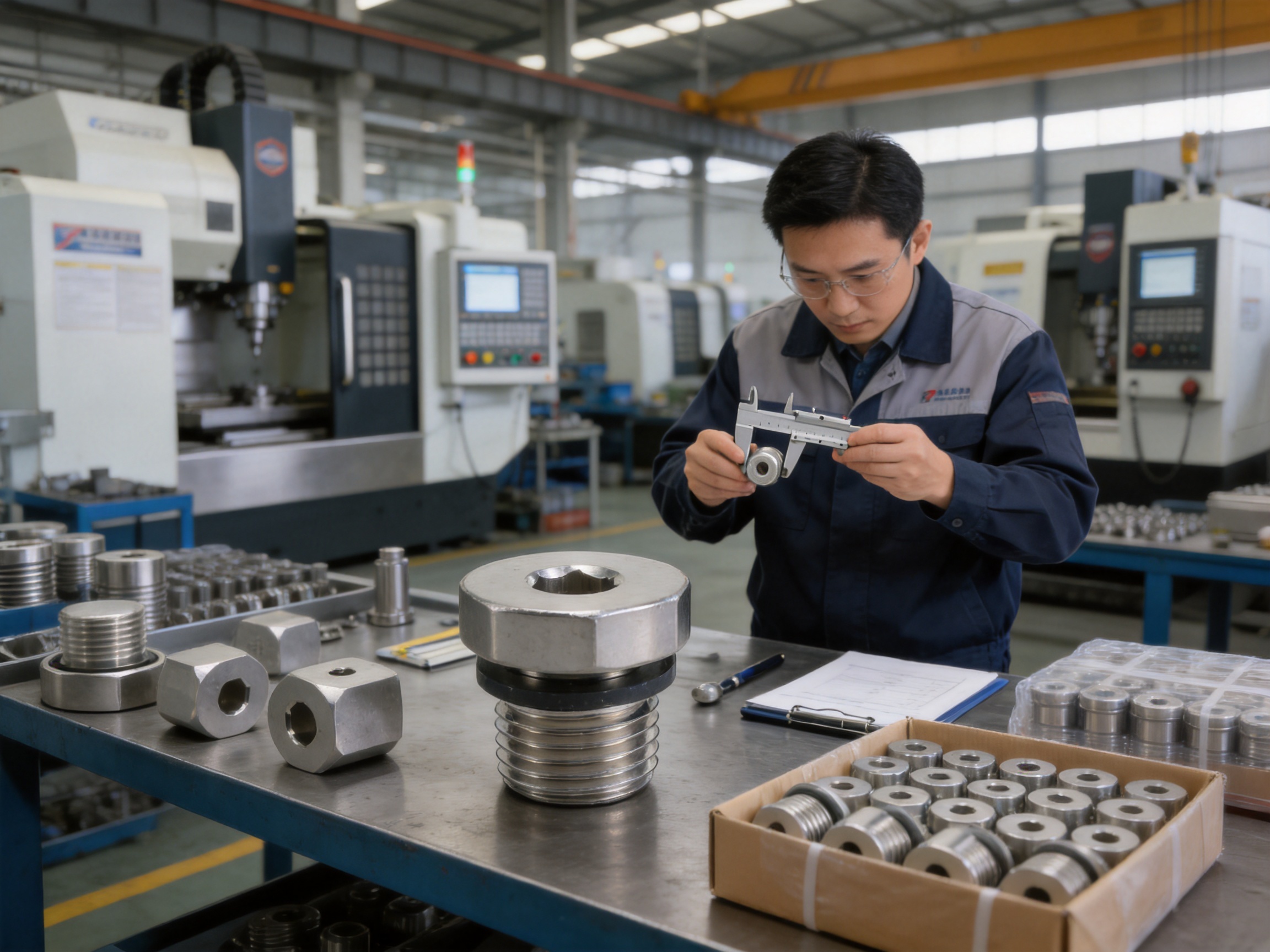
The performance of a flanged plug depends strongly on manufacturing consistency. A sound design can still fail to seal if the flange is distorted, the bolt holes are mislocated, or the sealing face is not sufficiently flat. Dongtai Jinzhize Metal Products Co., Ltd. supports production through an established facility, extensive machining resources, automated production systems, and dedicated personnel for design, development, manufacturing, and quality management.
Technical Review and Drawing Confirmation
Production begins with a review of the customer’s drawing, sample, application, or technical request. Important details include nominal size, flange standard, bolt-hole pattern, pressure requirement, material, sealing face, gasket arrangement, socket dimensions, tolerance, surface treatment, and inspection expectations.
When a customer provides only a sample or a general application description, the manufacturing team can identify the dimensions that must be confirmed before production. This prevents avoidable errors such as selecting the wrong flange standard, using an incorrect bolt circle, or overlooking the required clearance for the installation tool.
Material Preparation
Material is prepared according to the approved product specification. Depending on the production method and volume, the initial blank may be produced through machining, forging, casting, or another suitable process. The choice depends on geometry, mechanical requirements, production quantity, dimensional tolerance, and cost objectives.
Material identification and batch control help support traceability. For customers requiring detailed records, documentation may include material certificates, heat or lot information, inspection results, and production references. Traceability is especially valuable for automotive, aerospace, rail, and other industries where components may need to be tracked through the supply chain.
CNC Turning and Milling
Computer numerical control machining is used to produce accurate diameters, flange surfaces, socket features, and other critical geometries. CNC equipment supports repeatable tool paths and controlled dimensional output. Milling operations can form bolt holes, recesses, flats, or specialized features, while turning operations can produce circular profiles and concentric surfaces.
Machining parameters are selected according to the material and the required surface finish. Tool condition, fixture stability, coolant management, and workpiece positioning all influence the final product. Production personnel monitor these factors to reduce variation between batches.
Socket and Thread Feature Processing
The hexagon socket must be formed with suitable geometry so that the driving tool can engage properly without excessive play or corner damage. If the design includes internal or external threads, thread machining or tapping must be controlled to achieve the required profile, pitch, depth, and fit.
Thread quality is checked using appropriate gauges or measurement methods. A thread that is too tight may be difficult to assemble, while a thread that is too loose may create movement or reduce mechanical security. The correct tolerance class depends on the drawing and the function of the connection.
Sealing Face Machining
The sealing face receives special attention because it directly influences gasket performance. Machining should produce the required flatness, parallelism, concentricity, and surface finish. Burrs and sharp unwanted edges must be removed without damaging the sealing area.
Inspection may involve visual examination, dimensional measurement, flatness checks, surface roughness measurement, and comparison with approved samples or drawings. If the plug is supplied for a critical pressure boundary, the inspection plan should reflect the applicable customer and industry requirements.
Cleaning and Deburring
Machining debris, chips, burrs, and residual cutting fluid can interfere with installation or contaminate the connected system. After machining, parts should be cleaned according to the product requirements. Internal socket areas and bolt holes deserve particular attention because debris can remain trapped in these features.
Deburring improves handling safety and prevents loose particles from entering oil, hydraulic, or process circuits. Cleaning procedures may be adjusted for general industrial use, precision assemblies, or applications requiring controlled cleanliness.
Surface Treatment and Final Protection
When a protective finish is specified, the part is processed through the selected treatment route. The treatment must be controlled so that critical dimensions remain within tolerance. After finishing, the plug is inspected for coating uniformity, damage, discoloration, exposed areas, and contamination.
Finished parts are packaged to protect the sealing face and socket from impact. Separating components where necessary can prevent scratching during transport. Packaging labels may include product code, size, material, batch number, quantity, and customer reference.
Final Inspection and Release
Final inspection verifies that the product corresponds to the approved requirements. Typical checks include overall dimensions, flange thickness, bolt-hole position, socket dimensions, thread fit, sealing-face condition, surface treatment, visual quality, and marking. Depending on the application, additional testing may be arranged.
Quality records support consistent release decisions and help customers investigate any future issue. A structured quality management system also makes it easier to identify the production batch, review inspection data, and implement corrective action when necessary.
| Inspection Item | Purpose | Typical Control Focus |
|---|---|---|
| Material verification | Confirm that the supplied material matches the approved specification | Grade, batch, certificate, and traceability |
| Flange dimensions | Ensure compatibility with the mating flange | Outside diameter, thickness, bolt circle, and hole pattern |
| Sealing face | Support uniform gasket compression | Flatness, surface finish, parallelism, and burr removal |
| Socket feature | Provide reliable tool engagement | Across-flats dimension, depth, alignment, and corner condition |
| Thread quality | Ensure correct assembly and retention where threads are included | Pitch, profile, gauge fit, depth, and damage-free condition |
| Surface treatment | Improve corrosion resistance or meet appearance requirements | Coverage, adhesion, thickness, and protected sealing areas |
| Packaging inspection | Prevent damage before installation | Protection of sealing face, identification, and quantity |
Engineering and Installation Guidance
Confirm the Mating Flange
Before ordering, measure or verify the mating flange standard, nominal size, pressure class, facing type, bolt-hole arrangement, and gasket dimensions. A plug that appears visually similar may still be incompatible if the bolt circle or facing profile differs. The customer should provide a drawing whenever possible.
Select the Correct Gasket
The gasket must be compatible with the medium, pressure, temperature, flange face, and expected service life. Common gasket materials include elastomers, compressed fiber, graphite, PTFE, and metallic designs, but the correct choice depends on the actual application. The gasket should be clean, undamaged, and correctly positioned before tightening.
Prepare the Sealing Surfaces
Remove old gasket material, rust, dirt, oil residue, and foreign particles from both mating surfaces. Do not use tools or methods that could gouge the flange face. Inspect the plug and mating flange for scratches, distortion, corrosion, or burrs. A damaged surface may prevent reliable sealing even when the plug itself is manufactured correctly.
Align the Plug
Position the plug without forcing it against the bolts. The bolt holes should align naturally with the mating flange. Forcing an incorrectly sized plug into position may damage the holes or place unwanted stress on the piping. In larger assemblies, temporary support may be needed to prevent the component from dropping or twisting during installation.
Tighten in a Cross Pattern
Install the bolts and nuts by hand first, ensuring that the threads engage correctly. Tighten gradually in a diagonal or cross pattern so that gasket compression develops evenly across the sealing face. Final torque should follow the approved engineering procedure, considering bolt size, grade, lubrication, gasket type, and pressure requirements.
Over-tightening does not automatically create a better seal. Excessive force can crush a gasket, distort the flange, stretch the bolts, or damage the socket and threads. Under-tightening may leave leak paths. A calibrated torque tool and a documented installation sequence provide better repeatability.
Inspect After Installation
After installation, inspect the joint for uniform seating, visible gaps, damaged hardware, and correct bolt engagement. During commissioning, monitor the connection for leakage, unusual movement, or pressure loss. If the system is pressurized, the inspection must follow the site’s safety procedure and keep personnel outside hazardous zones.
Removal and Reuse
Before removing the plug, isolate and depressurize the system completely. Drain or recover the process medium as required. Remove the bolts gradually and in a controlled sequence. Inspect the plug, gasket, bolts, nuts, and flange faces after removal.
A gasket is generally replaced rather than reused. The plug may be reused if the sealing surface, bolt holes, socket, threads, and body remain within acceptable condition. Any component showing cracks, deep scratches, significant corrosion, deformation, or damaged threads should be evaluated or replaced.
Customization Capabilities
Industrial customers often require more than a standard catalog item. The plug may need to match a nonstandard flange, fit a restricted envelope, use a specific alloy, include a special coating, or meet a customer drawing. Customization can be considered for dimensions, socket size, bolt-hole arrangement, sealing face, marking, packaging, and inspection documentation.
Dongtai Jinzhize Metal Products Co., Ltd. specializes in threaded connection and fastening products, including helical wire inserts, self-tapping inserts, key-locking inserts, threaded adapters, oil plugs, installation taps, and related tools. This product range gives the company practical experience with different thread systems, machining requirements, installation interfaces, and component applications.
For an OEM project, the manufacturer can review the customer’s 2D drawing, 3D model, sample, or performance requirement. The review may identify opportunities to improve manufacturability, reduce unnecessary machining, simplify installation, or increase consistency. Design changes should be approved by the customer before production, particularly when the plug forms part of a pressure boundary.
Small-batch development and high-volume production have different priorities. Prototype work may emphasize rapid dimensional confirmation and sample feedback, while mass production requires stable process parameters, fixture repeatability, efficient inspection, and controlled packaging. A manufacturer with both engineering and production resources can support the product through these stages.
Why Choose Dongtai Jinzhize Metal Products Co., Ltd.
Dongtai Jinzhize Metal Products Co., Ltd. was established in 2015 and operates from an owned manufacturing plant of approximately 10,000 square meters. The facility includes hundreds of machine tools and automated production systems. This infrastructure supports the production of threaded connection and fastening products for customers in automotive, aerospace, rail vehicle, and other industrial sectors.
The company’s capabilities extend beyond individual machining operations. Its strength comes from the combination of product development, manufacturing organization, quality management, and after-sales support. Customers can work with one supplier for design review, prototype development, production, inspection, packaging, and technical communication.
In 2024, the company achieved an annual output value of approximately RMB 153 million. This production scale demonstrates its ability to support stable supply while continuing to manage product variety. For purchasing departments, supply stability is an important factor because unexpected shortages of small sealing or fastening components can delay the assembly of much larger systems.
The company focuses on consistency and traceability. Consistent dimensions help customers maintain assembly settings and avoid repeated adjustments on the production line. Traceability helps identify the relevant material and manufacturing information when a technical question arises. These benefits are particularly important for customers supplying critical assemblies or operating formal quality systems.
Jinzhize also emphasizes reliable service support. Industrial buyers may need assistance with drawings, samples, material alternatives, packaging requirements, production schedules, and inspection documents. Clear communication at the beginning of a project reduces misunderstandings and allows the manufacturer to plan the correct process.
Procurement Checklist for Buyers
When requesting a quotation for a hexagon socket flanged plug, buyers should provide as much technical information as possible. A complete inquiry allows the manufacturer to quote accurately and reduces the risk of later changes.
The required information may include the product name, drawing number, revision level, nominal size, flange standard, bolt-hole pattern, material grade, pressure and temperature conditions, medium, sealing method, gasket information, socket dimensions, thread requirements, surface treatment, quantity, packaging method, and inspection documentation.
Customers should also identify whether the product is for a prototype, replacement part, regular production, pressure testing, or a safety-related application. This information helps the supplier determine whether standard production or additional engineering review is appropriate.
Before approval, request a dimensional drawing or sample for confirmation. Check the bolt-hole pattern, overall height, sealing face, socket access, and clearance around the installed plug. If the plug will be installed in a confined area, provide the available tool space so that the socket design can be verified.
For international procurement, clarify the required standard system and units. A nominal size designation may have different dimensional interpretations in different standards. Confirm whether the customer requires metric or imperial dimensions, particular marking conventions, export packaging, certificates, or pre-shipment inspection.
Cost and Lifecycle Benefits
The purchase price is only one part of the total cost of a closure component. A plug that is easy to install, inspect, remove, and replace can reduce labor and downtime over its service life. The ability to remove a bolted closure without cutting or welding is especially valuable during maintenance and equipment modification.
Standardized flange compatibility can also reduce inventory complexity. If one plug design fits multiple approved locations, the maintenance department may need fewer different closure types. However, interchangeability should never be assumed solely from appearance. Each location must be checked against its applicable standard and pressure requirement.
Reliable machining and inspection can reduce rework, rejected assemblies, and leakage-related service calls. Stable supply from an established factory can further reduce the risk of production interruptions. When a supplier supports both standard products and custom designs, the buyer can maintain a consistent source for related threaded and fastening components.
Cost efficiency should therefore be evaluated across procurement, installation, inspection, maintenance, replacement, and downtime. A slightly more engineered closure may provide better overall value than a low-cost component that requires frequent adjustment or replacement.
Safety and Application Limitations
The hexagon socket flanged plug is a mechanical component, not a substitute for system engineering. Its suitability depends on the material, dimensions, pressure class, temperature, gasket, bolts, installation method, and service conditions. Buyers and engineers must verify the product against the applicable regulations, standards, drawings, and safety procedures.
Never remove a plug from a pressurized or heated system. Confirm isolation, depressurization, drainage, cooling, and lockout requirements before beginning work. When the connected system contains toxic, flammable, corrosive, or environmentally hazardous media, follow the site’s approved handling and protective equipment procedures.
Pneumatic pressure testing can be particularly hazardous because compressed gas stores significant energy. Hydrostatic testing is often preferred where appropriate, but the test procedure must still be professionally planned. The plug and all connected components must be rated for the test condition, not merely the normal operating condition.
Any visible crack, permanent deformation, deep corrosion, damaged socket, distorted flange, or damaged thread should be treated seriously. The component should be removed from service until evaluated by a qualified person. Regular inspection intervals should be established according to operating severity, maintenance experience, and applicable regulations.
Q&A
What is a hexagon socket flanged plug used for?
It is used to close a pipe, equipment opening, oil circuit, test interface, or prepared expansion port. Typical functions include pipeline termination, pressure testing, maintenance isolation, and temporary or permanent sealing.
How is this product different from a simple threaded oil plug?
A simple threaded oil plug usually seals through a thread, washer, or small sealing seat. The hexagon socket flanged plug uses a flange connection and broad gasketed sealing face, while the reinforced center improves structural rigidity. It is generally better suited to larger openings, engineered flange connections, and applications requiring frequent removal.
Why does the plug have a T-shaped reinforced design?
The raised center increases rigidity and helps distribute pressure-related loads through the body and flange. It can reduce deformation compared with an unreinforced flat plate, although final performance must be confirmed through the applicable design and pressure requirements.
Can the plug be used for pressure testing?
It can serve as a pressure test closure when its material, dimensions, gasket, bolts, and pressure rating are suitable for the specified test. The test must be conducted under an approved procedure by qualified personnel.
Which flange standards can be supported?
Products may be designed according to common systems such as ANSI or ASME, DIN, and JIS. The exact standard, nominal size, pressure class, bolt-hole pattern, facing, and gasket dimensions must be confirmed before production.
Does the hexagon socket make installation easier?
Yes. An internal hexagon socket can provide tool access in confined areas where an external wrench is difficult to position. It also supports controlled tightening when used with a suitable torque tool.
Can the product be customized?
Customization may be available for material, dimensions, flange pattern, socket size, thread features, surface treatment, marking, packaging, and inspection documentation. A drawing, sample, or detailed application requirement should be provided for technical review.
What gasket should be used?
The gasket should be selected according to the medium, pressure, temperature, flange face, and service conditions. Possible materials include elastomers, compressed fiber, graphite, PTFE, and metallic designs. The gasket supplier or responsible engineer should confirm the final selection.
Can the plug be reused?
The plug may be reusable after inspection if the sealing face, body, bolt holes, socket, and threads remain in acceptable condition. Gaskets are normally replaced, and any damaged or deformed component should not be reused without qualified evaluation.
What information should be included in a quotation request?
Provide the drawing or sample, flange standard, size, material, pressure and temperature, medium, gasket arrangement, socket details, surface treatment, quantity, tolerances, packaging, and required inspection documents. This information enables a more accurate quotation and production plan.
What industries can use this product?
Applications may include process piping, oil and lubrication systems, hydraulic equipment, automotive powertrain assemblies, aerospace manufacturing, rail vehicles, pumps, valves, heat exchangers, pressure-testing fixtures, and general industrial equipment.
Why is manufacturing consistency important for this product?
The plug must align with the mating flange and compress the gasket evenly. Variations in bolt-hole position, sealing-face flatness, socket dimensions, or overall thickness can cause installation problems or leakage. Controlled machining and inspection help deliver repeatable performance.
Conclusion
The hexagon socket flanged plug is a practical closure solution for industrial piping and equipment that require strength, sealing reliability, and maintenance access. Its T-shaped reinforced design improves rigidity, its full-face sealing surface supports uniform gasket compression, and its standardized flange profile simplifies integration with existing systems. The hexagon socket interface further improves installation convenience, particularly in confined spaces.
Compared with welded blinds, basic pipe caps, unreinforced plates, and unsuitable small threaded plugs, the product can reduce hot work, simplify removal, improve structural support, and lower maintenance effort. Its benefits are most fully realized when the flange, gasket, bolts, material, pressure rating, and installation method are selected as a complete system.
Dongtai Jinzhize Metal Products Co., Ltd. combines product development experience with a substantial manufacturing facility, CNC machining resources, automated production systems, quality control procedures, and technical service support. Its broader expertise in threaded inserts, adapters, oil plugs, taps, and fastening tools provides a useful foundation for customized closure and threaded connection projects.
For buyers seeking dependable supply, application-specific customization, and stable dimensional quality, a detailed drawing and service requirement review is the best starting point. With correct engineering selection and professional installation, the hexagon socket flanged plug can provide an efficient and durable sealing solution for pipeline termination, pressure testing, maintenance isolation, and future system expansion.
References
ASME B16.5, Pipe Flanges and Flanged Fittings: Dimensional and pressure-temperature guidance for commonly used flange connections.
ASME B16.47, Large Diameter Steel Flanges: Reference information for larger-diameter flange applications.
DIN EN 1092, Flanges and Their Joints: General reference for European flange dimensions and facing arrangements.
JIS B 2220, Steel Pipe Flanges: Reference information for Japanese Industrial Standard flange configurations.
ISO 9001, Quality Management Systems: Principles for controlled manufacturing, documentation, process management, and continual improvement.
ISO 2768, General Tolerances: Reference for dimensional tolerances when individual tolerances are not separately specified.
Industrial gasket manufacturer technical manuals: Guidance on gasket material selection, compression, surface finish, and installation practice.
Industrial piping maintenance manuals: General guidance on flange inspection, pressure testing, isolation, torque procedures, and safe component removal.