Français
 Español
 Deutsch

Content
- 1 Understanding the Stainless Steel Internal-External Thread Conversion Nut
- 2 Key Advantages of Stainless Steel Construction
- 3 Advantages Compared with Conventional Thread Adapters
- 4 Material Selection: 303, 304, and 316 Stainless Steel
- 5 Precision Manufacturing Process
- 6 Manufacturing Strengths of Dongtai Jinzhize Metal Products
- 7 Applications Across Multiple Industries
- 8 Design Considerations for Engineers and Buyers
- 9 Customization and Product Development Support
- 10 Quality Assurance from Raw Material to Delivery
- 11 Procurement Benefits for Industrial Customers
- 12 Installation and Maintenance Recommendations
- 13 Why Choose a Specialized Stainless Steel Adapter Manufacturer?
- 14 Frequently Asked Questions
- 14.1 What is a stainless steel internal-external thread conversion nut?
- 14.2 Which stainless steel grade should be selected?
- 14.3 Can the adapter be customized?
- 14.4 Can metric and imperial threads be combined?
- 14.5 Is stainless steel suitable for high-temperature applications?
- 14.6 Can stainless steel prevent all corrosion?
- 14.7 How can cross-threading be avoided?
- 14.8 What information is needed for a quotation?
- 14.9 Can related installation tools be supplied?
- 14.10 What industries use these adapters?
- 15 Conclusion
- 16 References
- 17 Product: Stainless Steel Internal-external Thread Conversion Nut
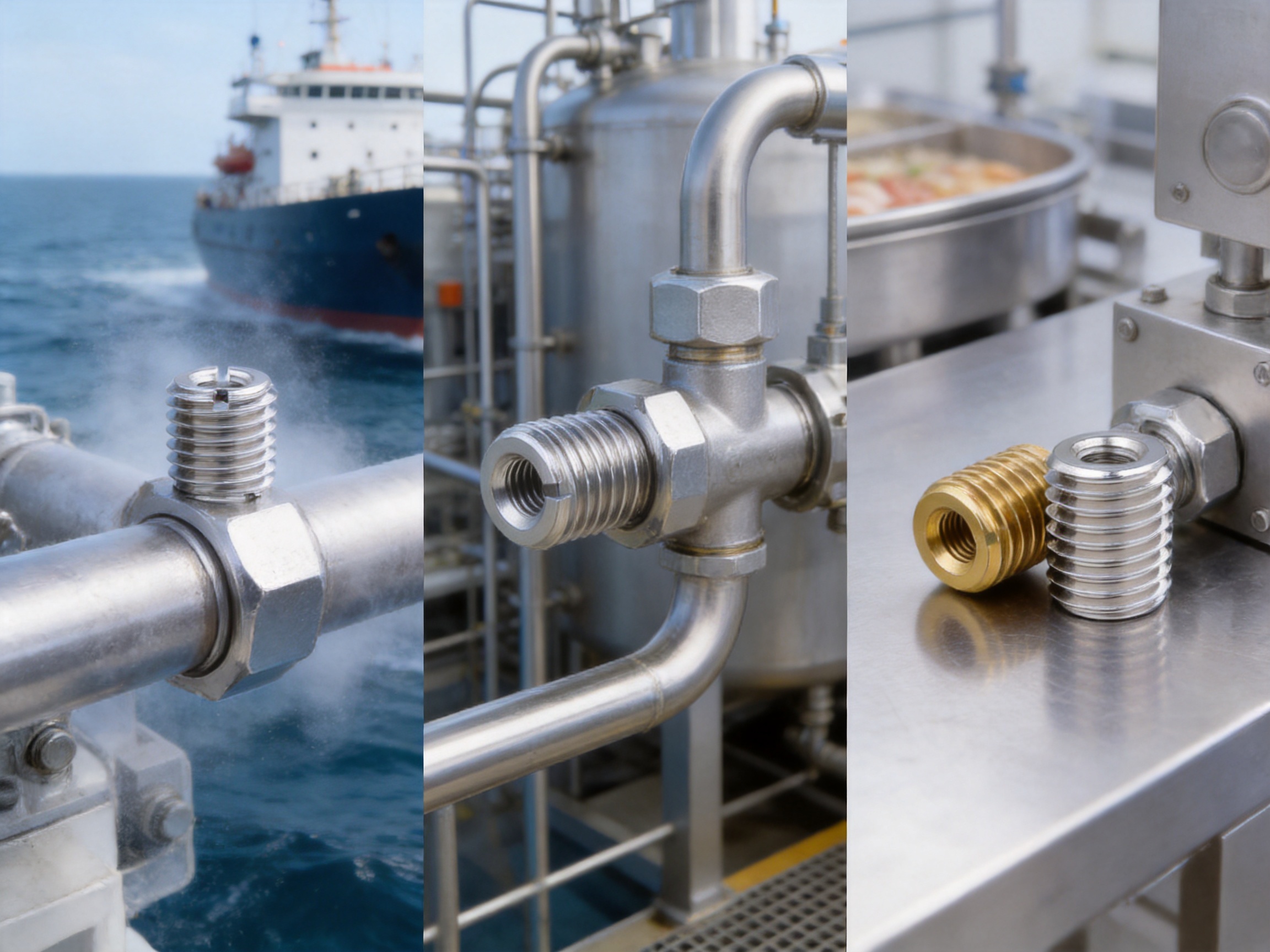
Reliable threaded connections are essential in equipment where components must be assembled securely, serviced efficiently, and protected against vibration, moisture, chemicals, and temperature changes. When an application requires a transition between different thread configurations, a stainless steel internal-external thread conversion nut provides a compact and dependable solution. This component, also known as a stainless steel thread adapter or stainless steel male-to-female thread adapter, is designed to connect an external male thread with an internal female thread while maintaining mechanical stability and resistance to demanding operating conditions.
Unlike ordinary carbon steel adapters or low-grade plated components, a stainless steel internal-external thread conversion nut is developed for environments in which corrosion resistance, dimensional stability, surface quality, and long service life are important. Depending on the working conditions, stainless steel grades such as 303, 304, or 316 can be selected. This range allows the product to serve applications in marine engineering, chemical processing, food machinery, medical equipment, energy systems, automotive assemblies, and other industrial fields.
Dongtai Jinzhize Metal Products Co., Ltd. manufactures threaded connection and fastening products for industrial customers worldwide. Its product portfolio includes helical wire inserts, self-tapping thread inserts, key-locking inserts, threaded adapters, oil plugs, thread taps, installation tools, and related fastening components. With an owned manufacturing plant, automated production systems, experienced technical personnel, and a quality management system, the company is positioned to provide stable and traceable stainless steel thread conversion nuts for both standard and customized applications.
Understanding the Stainless Steel Internal-External Thread Conversion Nut
An internal-external thread conversion nut contains two thread systems in one compact body. The external thread is used to engage with a female threaded hole, fitting, housing, or mounting component. The internal thread receives a male threaded bolt, stud, pipe fitting, screw, or other threaded part. This arrangement makes it possible to connect components that use different thread directions, thread sizes, or interface requirements.
The adapter can simplify equipment design by eliminating the need for a complicated custom housing or a large number of intermediate parts. Instead of redesigning a structure to accommodate a different thread, an engineer can use a conversion nut to create a secure transition between the existing components. This reduces assembly complexity and can also improve maintenance efficiency because the adapter allows a threaded connection to be replaced, converted, or upgraded without changing the entire base component.
Stainless steel is particularly suitable for this type of product because the adapter often serves as the connection point between different materials or between components exposed to the surrounding environment. Moisture, cleaning chemicals, salt spray, process fluids, and elevated temperatures can all affect the performance of a threaded connection. A properly selected stainless steel grade helps preserve the integrity of the threads and reduces the risk of premature failure.
The product can be manufactured in different thread standards, sizes, lengths, and configurations according to the application. Depending on the customer’s requirements, specifications may include metric threads, unified threads, pipe threads, fine or coarse pitches, different tolerance classes, and customized external or internal thread combinations. Material selection, thread geometry, surface treatment, inspection requirements, and packaging can also be adjusted for different industries.
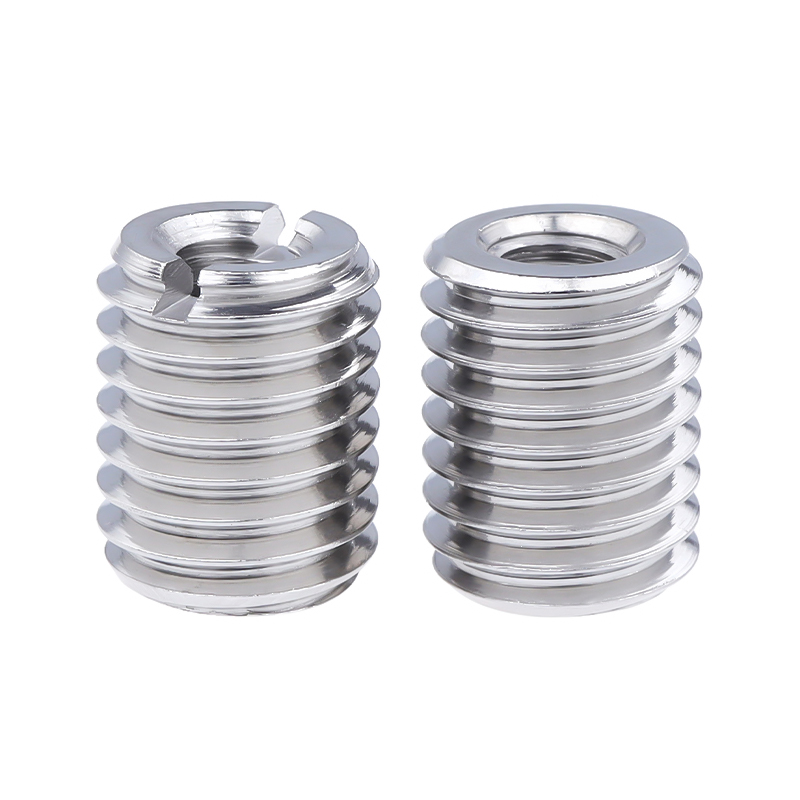
Stainless Steel Internal-external Thread Conversion Nut
Key Advantages of Stainless Steel Construction
High Corrosion Resistance
The most important advantage of a stainless steel internal-external thread conversion nut is its resistance to oxidation and corrosion. Stainless steel forms a passive chromium-rich surface layer that helps protect the underlying metal from many common corrosive conditions. This characteristic is valuable in humid environments, outdoor equipment, marine installations, food-processing lines, chemical machinery, and medical devices.
Corrosion resistance is not only an aesthetic benefit. Corrosion can change thread dimensions, increase friction, cause galling or seizure, reduce load-bearing capability, and make future disassembly difficult. A stainless steel adapter helps reduce these risks when the correct grade is selected and the component is used within its intended operating conditions.
Grade 303 is often considered when improved machinability is required for general industrial applications. Grade 304 provides a broad balance of corrosion resistance, strength, availability, and cost, making it suitable for many indoor, outdoor, food-related, and general manufacturing environments. Grade 316 contains molybdenum and is generally preferred for more aggressive environments, particularly where chloride exposure, salt spray, or chemical resistance is a major concern.
The material should always be selected according to the actual operating environment. Stainless steel does not mean that every grade performs identically in every chemical or marine condition. Jinzhize can support customers in evaluating the required grade according to humidity, temperature, process media, cleaning procedures, and expected service life.
Stable Performance at Elevated Temperatures
Many threaded adapters are installed in systems exposed to heat from engines, transmissions, chemical processes, energy equipment, exhaust assemblies, sterilization processes, or industrial production lines. A stainless steel conversion nut can maintain stable mechanical performance over a wider range of temperatures than many ordinary plated or low-grade steel alternatives.
Thermal changes can cause expansion and contraction between connected components. If the adapter material is poorly matched to the assembly or if the thread geometry is inconsistent, temperature cycling may lead to loosening, distortion, leakage, or reduced clamping force. A correctly designed stainless steel adapter helps maintain a stable threaded interface during repeated heating and cooling cycles.
High-temperature suitability depends on more than the nominal material grade. Thread tolerance, component geometry, installation torque, mating materials, lubrication, load conditions, and exposure time also influence performance. For this reason, a professional manufacturer evaluates the complete connection rather than treating material selection as an isolated decision.
Long-Term Durability
Stainless steel provides a strong foundation for a durable threaded connection. The material resists wear, maintains a clean surface, and can withstand repeated assembly and service conditions when the connection is correctly designed. This is important for equipment that must be inspected, repaired, or reconfigured during its operating life.
A durable adapter reduces the need for frequent replacement and helps limit maintenance interruptions. In production equipment, a small threaded component can affect the availability of an entire machine. If an adapter becomes damaged or seized, operators may need to remove surrounding parts or replace a larger assembly. A stable stainless steel conversion nut can help reduce these risks and support more predictable maintenance planning.
Clean and Professional Surface Appearance
The smooth metallic finish of stainless steel is suitable for applications in which both function and appearance matter. A clean surface can support easier inspection and is compatible with equipment designs that require a professional or hygienic appearance. In food-processing and medical environments, smooth surfaces can also be advantageous because they are easier to clean than rough or heavily corroded surfaces.
Surface finish requirements may vary according to the application. Industrial customers may require a standard machined finish, while high-purity or appearance-sensitive applications may require additional cleaning, polishing, deburring, or packaging procedures. These requirements can be discussed during product development and quotation.
Advantages Compared with Conventional Thread Adapters
Improved Resistance over Ordinary Carbon Steel
Carbon steel adapters can provide good strength at a low initial cost, but they often require plating, coating, painting, or other protective treatment when used in humid or corrosive environments. If the coating is scratched during installation, the exposed area may begin to rust. Rust can spread into the thread profile and compromise future disassembly.
Stainless steel provides corrosion resistance as an inherent material characteristic rather than relying only on an external coating. This can offer a more dependable solution when the connection is exposed to moisture, cleaning, abrasion, or repeated installation. It also avoids the risk that a damaged coating will become the weakest point of the assembly.
More Consistent Than Low-Cost Uncontrolled Imports
Price is important, but the cost of a threaded adapter should be evaluated together with dimensional consistency, traceability, inspection, and service support. Low-cost products with inconsistent thread dimensions can create difficult assembly conditions, excessive installation torque, poor engagement, or premature loosening.
A professionally manufactured stainless steel conversion nut is produced through controlled machining and inspection processes. Consistent thread geometry allows the component to mate more smoothly with the corresponding part. This is particularly important in automated assembly, high-volume production, and safety-critical equipment, where variation can increase rejection rates and assembly risks.
More Flexible Than Single-Purpose Threaded Components
A conventional threaded component is usually designed for one fixed interface. A conversion nut, by contrast, can bridge two different thread requirements in a single part. This flexibility may reduce the number of custom parts required in a project and allow existing equipment to accept replacement or upgraded components.
For engineering teams, this flexibility can shorten development time. Instead of redesigning a panel, bracket, housing, or fitting, the team can evaluate a suitable internal-external adapter. This approach can help simplify prototyping and support modular equipment design.
Better Adaptability for Custom Projects
Different industries often require different combinations of thread size, pitch, length, tolerance, material, and surface finish. A manufacturer with experience across multiple threaded product categories can coordinate these requirements more efficiently than a supplier focused on only one standard item.
Jinzhize supports customized threaded connection products and can evaluate special internal and external thread combinations, non-standard dimensions, material grades, inspection requirements, and packaging specifications. Customization is especially useful when the adapter must fit an existing imported component, a legacy machine, a specialized fluid system, or a newly designed assembly.
Material Selection: 303, 304, and 316 Stainless Steel
| Material Grade | Typical Characteristics | Potential Applications | Selection Considerations |
|---|---|---|---|
| 303 Stainless Steel | Good machinability and suitable corrosion resistance for many general industrial conditions | Machined equipment, general adapters, instrumentation, non-severe indoor applications | Useful when machining efficiency and dimensional productivity are important; evaluate exposure to chlorides and aggressive chemicals carefully |
| 304 Stainless Steel | Balanced corrosion resistance, strength, availability, and cost | Food machinery, general industrial equipment, outdoor assemblies, piping accessories | A practical general-purpose choice for many humid and moderately corrosive environments |
| 316 Stainless Steel | Enhanced resistance in many chloride-containing and chemically demanding environments | Marine equipment, chemical machinery, coastal installations, high-purity equipment | Preferred when salt spray, chloride exposure, or more demanding corrosion conditions are expected |
The choice between 303, 304, and 316 should be based on the actual application rather than on a universal ranking. A component installed in a dry indoor machine may not require the same material as one exposed to seawater or chemical cleaning agents. Other factors, such as mechanical load, temperature, mating materials, installation frequency, and production volume, should also be considered.
Material certificates and traceability may be required for customers in automotive, aerospace, medical, food-processing, and other regulated or quality-sensitive industries. A controlled manufacturing system makes it easier to connect the finished product with its material source, production batch, inspection record, and shipment information.
Precision Manufacturing Process
Engineering Review and Product Definition
Manufacturing begins with a clear definition of the product requirements. This includes the external thread, internal thread, nominal sizes, pitch, length, body diameter, chamfer, end configuration, tolerance, material, surface finish, and intended operating environment. Drawings, samples, technical specifications, or application descriptions can be used to confirm the design.
For a customized adapter, the manufacturer should also review the mating components. The nominal thread size alone may not provide enough information. Thread standard, tolerance class, engagement length, shoulder position, sealing method, installation torque, and available assembly space can all influence the final design.
Material Preparation
Selected stainless steel material is prepared in a form suitable for precision machining. Correct material identification is important because different stainless steel grades have different machinability, corrosion resistance, hardness, and work-hardening characteristics. Material control helps prevent the accidental use of an unsuitable grade in a demanding application.
For production orders, material batches can be managed through internal records. This supports consistent processing and assists with traceability when customers require production documentation. Proper storage also helps protect raw material from contamination and unnecessary surface damage before machining.
Computer-Controlled Machining
The external profile and internal bore of the adapter are formed through controlled machining operations. Depending on the product design and production quantity, CNC turning, automatic lathing, drilling, boring, threading, chamfering, and other operations may be used. Computer-controlled equipment supports repeatable dimensions and efficient production of both standard and custom components.
Stainless steel requires appropriate cutting parameters and tooling because some grades can work-harden during machining. Feed rate, cutting speed, tool condition, coolant management, and chip control all affect the final thread quality. Experienced operators and process engineers are therefore important to achieving clean thread flanks and consistent dimensions.
Thread Formation
The internal and external threads may be produced through different methods according to the size, material, thread standard, and required precision. Thread cutting, thread tapping, thread turning, or other controlled methods can be selected. Each method must be matched to the geometry of the product and the characteristics of the stainless steel grade.
A high-quality thread is not defined only by its visual appearance. The pitch diameter, minor diameter, major diameter, flank angle, thread lead, surface condition, and tolerance must work together to ensure smooth engagement. Gauges and inspection tools are used to confirm that the finished adapter mates correctly with the specified counterpart.
Deburring and Edge Treatment
After machining, burrs and sharp edges are removed from the adapter. This step is important because residual burrs may interfere with assembly, damage mating threads, create contamination, or cause injury during handling. Chamfered thread entrances also help guide the mating component and reduce the risk of cross-threading.
For applications requiring clean assembly, additional washing or surface cleaning can be performed to remove machining residue, chips, oil, and other contaminants. Food, medical, and high-purity applications may require more specific cleaning and packaging controls.
Inspection and Quality Control
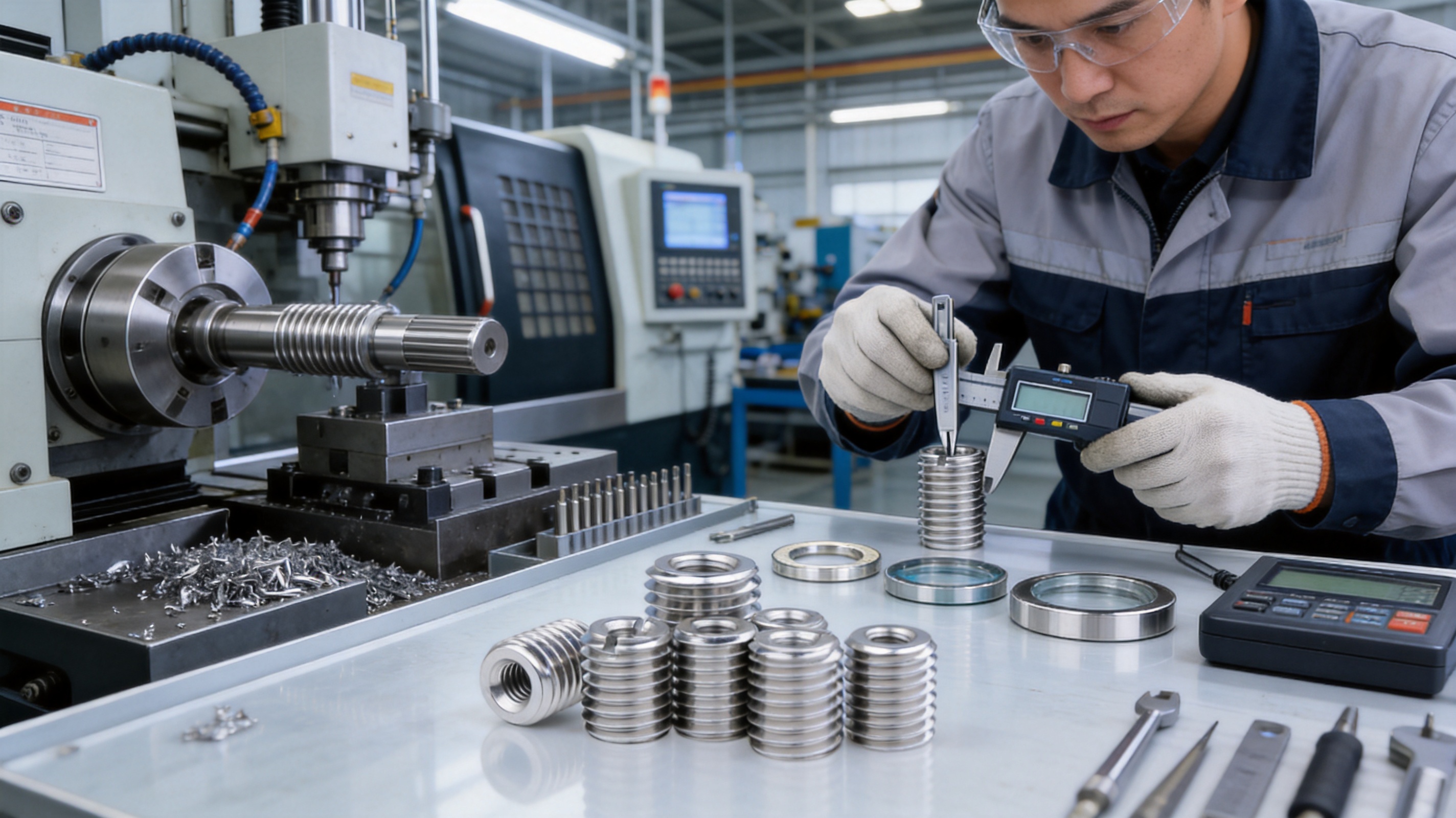
Inspection is carried out at appropriate stages of production. Incoming material may be checked for grade and condition. In-process inspection verifies critical dimensions and machining stability. Final inspection confirms thread fit, appearance, dimensional accuracy, and order requirements before shipment.
Depending on customer requirements, inspection may include thread plug gauges, ring gauges, calipers, micrometers, optical measurement, coordinate measurement, surface inspection, hardness verification, and visual examination. A controlled quality system helps ensure that inspection results are documented and that non-conforming products are identified before delivery.
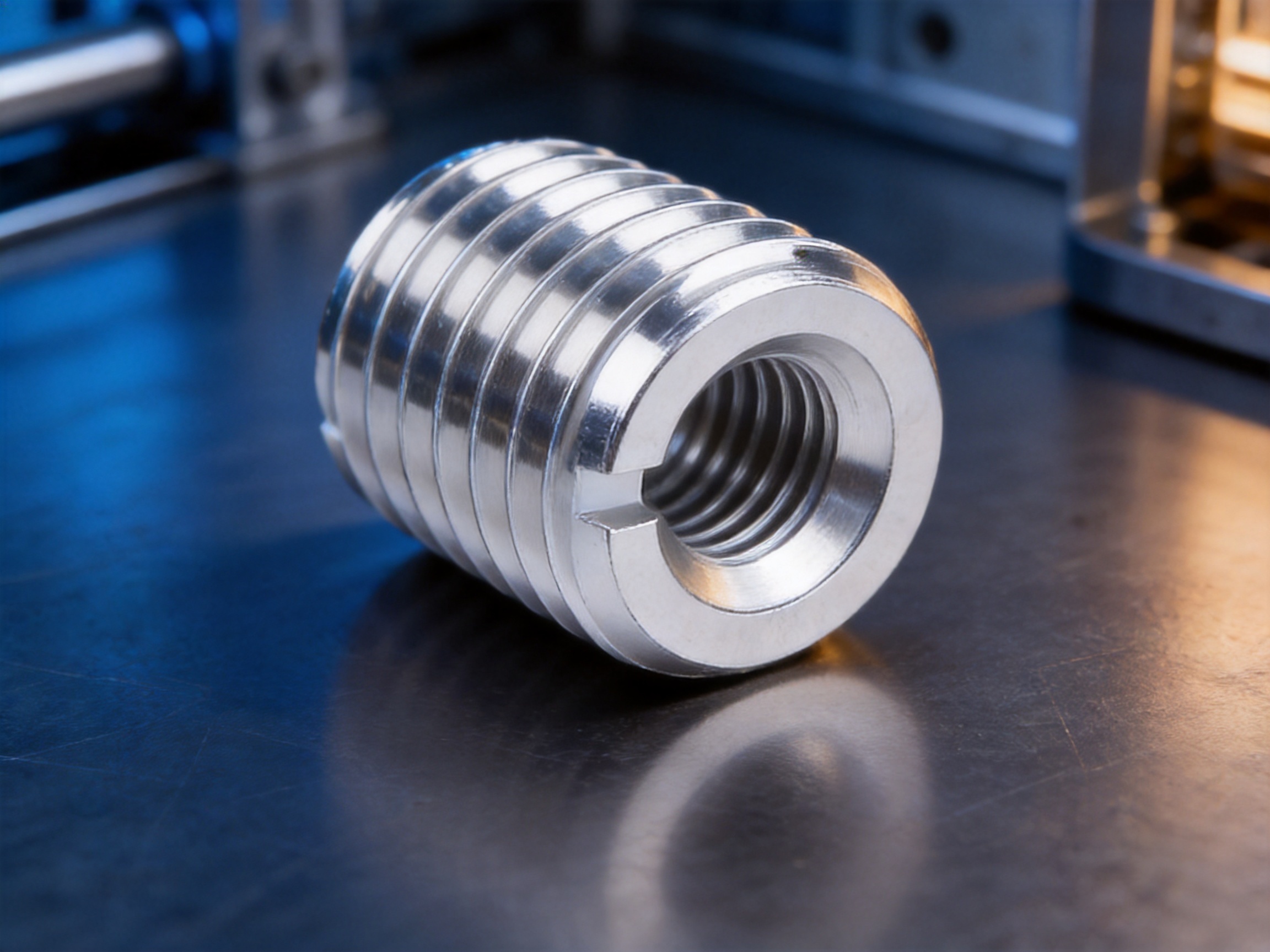
Manufacturing Strengths of Dongtai Jinzhize Metal Products
Dongtai Jinzhize Metal Products Co., Ltd. was established in 2015 and operates from an owned manufacturing plant of approximately 10,000 square meters. The facility is equipped with hundreds of machine tools and automated production systems. This combination of production space, equipment, and technical experience supports stable supply for customers requiring both regular products and customized threaded components.
The company focuses on threaded connection products rather than treating adapters as an unrelated accessory. Its product range includes self-tapping thread inserts, helical wire inserts, key-locking inserts, threaded adapters, oil plugs, installation tools, and thread taps. This product specialization allows customers to source multiple related components from one manufacturing partner.
The company’s experience in different types of threaded products also supports technical coordination. For example, a customer may require a conversion nut together with a matching installation tool, thread tap, wire insert, or locking component. A supplier familiar with the entire threaded connection process can help reduce compatibility problems and simplify purchasing.
Automated and Organized Production
Automated production systems can improve repeatability, reduce manual variation, and support higher production efficiency. Automation does not eliminate the need for skilled personnel; instead, it allows technicians to focus on process control, equipment adjustment, inspection, tooling management, and continuous improvement.
For customers, organized production can provide more predictable delivery and consistent quality between batches. This is especially important for automotive, aerospace, rail, and industrial equipment manufacturers that need stable components over long product cycles.
Experienced Technical Team
Threaded products require knowledge of materials, machining, thread standards, assembly behavior, and application requirements. Jinzhize has developed an experienced team for product design, development, and production. This expertise can support customers during drawing review, material selection, prototype development, process optimization, and mass production.
A technical review before production can identify problems such as insufficient thread engagement, unsuitable tolerance, excessive wall thickness reduction, difficult tool access, or material mismatch. Addressing these issues during the design stage is generally more efficient than correcting them after the product has entered assembly.
Quality Management and Traceability
Consistent threaded products require more than final visual inspection. Process stability, raw material control, equipment maintenance, operator training, and documented inspection procedures all contribute to quality. Jinzhize maintains a rigorous quality management system intended to provide highly consistent and traceable products.
Traceability is valuable when customers need to investigate an assembly issue, verify material information, review a production batch, or manage long-term supply. It also supports confidence in applications where the threaded connection contributes to the safety, reliability, or serviceability of a larger assembly.
Stable Large-Scale Supply
In 2024, the company achieved an annual output value of 153 million RMB. This demonstrates its ability to support large-scale and stable production across its product categories. Capacity is important for customers that require scheduled deliveries, multi-stage projects, replacement parts, or ongoing production support.
Stable supply does not mean that every order must be a high-volume standard product. A capable factory should also be able to evaluate smaller trial orders, prototype quantities, custom specifications, and subsequent production increases. This flexibility helps customers move from product development to regular procurement with fewer supplier changes.
Applications Across Multiple Industries
Marine Engineering
Marine equipment is exposed to humidity, salt spray, condensation, vibration, and temperature changes. These conditions can accelerate corrosion in ordinary steel components. A stainless steel internal-external thread conversion nut, particularly one manufactured from a suitable corrosion-resistant grade, can provide a more durable interface for marine structures, fluid systems, instrumentation, pumps, and equipment housings.
In marine applications, material selection and installation practices are especially important. Galvanic corrosion may occur when dissimilar metals are directly connected in the presence of an electrolyte. Engineers should evaluate the materials of the mating parts, sealing components, washers, and surrounding structure. The adapter’s corrosion resistance should be considered as part of the complete assembly design.
Chemical Processing Equipment
Chemical processing machinery may encounter corrosive liquids, vapors, cleaning agents, and elevated temperatures. Threaded adapters used in such equipment must be selected according to the specific media and operating conditions. Stainless steel can offer a useful combination of corrosion resistance, strength, and machinability, but the exact grade and design must be matched to the chemical environment.
Conversion nuts can be used in equipment housings, instrumentation connections, pipe fittings, process skids, valves, and maintenance assemblies. Their compact form helps connect components with different thread specifications while limiting the need for structural modification.
Food Processing Machinery
Food-processing equipment requires materials and surfaces that support hygiene, cleaning, and corrosion resistance. Stainless steel is widely used in food machinery because of its clean appearance, durability, and resistance to many common cleaning conditions. A stainless steel thread adapter can be used in conveyors, filling equipment, packaging machines, inspection devices, pumps, and processing systems.
The specific application may require attention to surface finish, burr removal, cleaning, packaging, and lubricant control. Customers should communicate whether the part will be exposed to washdown, sanitizing chemicals, high-pressure cleaning, or direct contact with food-processing areas.
Medical Equipment
Medical and laboratory equipment often requires stable, clean, and corrosion-resistant connections. Stainless steel internal-external adapters can support equipment frames, fluid systems, diagnostic devices, instrumentation, and specialized mechanical assemblies. Their compact geometry can be useful where space is limited and where reliable access for maintenance is required.
Medical applications may involve additional requirements for material documentation, surface quality, cleanliness, packaging, and production control. The final specification should be confirmed according to the equipment classification and applicable customer standards.
Automotive and Transmission Systems
Automotive equipment contains many threaded interfaces exposed to vibration, heat, oil, coolant, and repeated service operations. Jinzhize manufactures threaded connection products for automotive applications, including engines and transmissions for passenger and commercial vehicles.
A conversion nut can help connect sensors, brackets, housings, fluid fittings, or service components that use different thread formats. Dimensional consistency is especially important in automotive production because automated assembly lines depend on predictable fit and torque behavior. The adapter must be designed according to load, temperature, vibration, sealing, and service requirements.
Aerospace and Rail Vehicle Manufacturing
Aerospace and rail vehicle assemblies require reliable components, controlled manufacturing, and consistent documentation. Threaded adapters may be used in structural subassemblies, equipment panels, instrumentation, fluid systems, and maintenance-related interfaces.
These applications place emphasis on material identification, process consistency, inspection, and traceability. Jinzhize’s focus on threaded connection products and its manufacturing infrastructure provide a foundation for supplying components used in demanding transportation and industrial sectors.
Design Considerations for Engineers and Buyers
Thread Standard and Compatibility
The first requirement is to identify both the internal and external thread standards. Metric, unified, pipe, and other thread systems should not be mixed without confirmation. Nominal size alone is not enough because different standards may share similar dimensions but use different pitches or profiles.
Customers should provide drawings or complete specifications whenever possible. If a drawing is unavailable, samples, thread gauges, mating parts, photographs, and dimensional information can help the manufacturer identify the required configuration.
Thread Engagement Length
Thread engagement must be sufficient to transfer the required load without damaging the threads. The correct engagement length depends on the material strength, diameter, load direction, vibration, temperature, and mating component. A short adapter may be suitable for a light-duty connection, while a longer body may be required for higher loads or deeper mounting positions.
Excessive engagement can also create problems if the internal component bottoms out before the connection is fully tightened. The adapter should therefore be designed with adequate clearance and suitable end geometry.
Wall Thickness
The wall between the internal and external threads must be strong enough to resist deformation during installation and service. If the external thread is large and the internal thread is close to the same nominal size, the remaining wall may be thin. This can limit load capacity or increase the risk of distortion.
Jinzhize can review the relationship between the two thread sizes, body diameter, material grade, and length to help determine whether the design is practical for machining and use.
Installation Torque and Lubrication
Stainless steel threads can be susceptible to galling under certain conditions, especially when clean, dry stainless steel surfaces are tightened at high pressure or speed. Appropriate installation practices, compatible lubrication, controlled torque, and clean threads can help reduce this risk.
The correct torque should be determined according to the thread size, material, lubrication, engagement, load, and assembly design. Automatic assembly lines may require controlled speed and torque monitoring. For maintenance applications, operators should use suitable tools and avoid forcing a misaligned component into the adapter.
Sealing Requirements
A threaded adapter may provide mechanical connection without providing fluid sealing by itself. If the assembly must prevent leakage, the design may require a sealing washer, O-ring, sealant, tapered pipe thread, shoulder, or other sealing method. The sealing method should be confirmed before production because it can affect thread form, end geometry, surface finish, and dimensional tolerances.
Mating Materials
The mating component may be stainless steel, aluminum, brass, carbon steel, plastic, or another material. The interaction between materials can affect friction, galling, galvanic corrosion, thread wear, and thermal expansion. A complete application review helps avoid selecting an adapter that performs well in isolation but creates problems in the assembled system.
Customization and Product Development Support
Standard conversion nuts are useful for common thread combinations, but many industrial applications require non-standard dimensions. Customization may involve the internal thread size, external thread size, pitch, length, shoulder diameter, body shape, material grade, tolerance, chamfer, groove, slot, hole, marking, or surface finish.
The development process normally begins with customer drawings, specifications, samples, or application details. Jinzhize reviews the requirements and evaluates machinability, material suitability, tooling, inspection methods, and production feasibility. A prototype or sample stage may be used to confirm the fit before mass production.
Customization can be particularly valuable for imported equipment that uses unusual thread standards. Instead of replacing an entire machine component, a tailored stainless steel adapter may allow a local component, replacement part, sensor, fitting, or tool to be installed. This can reduce lead time and simplify spare-parts management.
Customized marking and packaging may also be available. Batch identification, material information, customer part numbers, protective packaging, and quantity control can support warehouse management and traceability. Requirements should be agreed before production begins to ensure that the manufacturing and inspection processes are aligned with the customer’s quality system.
Quality Assurance from Raw Material to Delivery
Quality assurance begins with clear communication. The manufacturer and customer should confirm the drawing revision, material grade, thread standards, tolerance, quantity, inspection requirements, and delivery schedule. This prevents avoidable misunderstandings and ensures that the production team is working from the correct information.
During machining, process control helps maintain repeatability. Machine tools must be properly maintained, cutting tools must be monitored, and critical dimensions must be checked at appropriate intervals. If a production run is large, sampling frequency and inspection records should be defined according to the product risk and customer requirements.
Final inspection focuses on the characteristics that affect assembly and service. These may include thread fit, external diameter, internal diameter, length, concentricity, surface condition, burr removal, cleanliness, and material documentation. Products that do not meet the agreed specification should be isolated and handled through a controlled corrective process.
Packaging is also part of product quality. Threads can be damaged by impact, contamination, or uncontrolled contact during transportation. Protective packaging helps preserve the machined surfaces and supports efficient counting and identification when the products arrive at the customer’s facility.
Jinzhize is committed to supplying highly consistent and traceable products with reliable service support. Its quality management approach is intended to help customers improve assembly consistency and reduce procurement and usage risks throughout the product life cycle.
Procurement Benefits for Industrial Customers
Working with a specialized manufacturer can provide benefits beyond the purchase of one adapter. Customers can obtain technical support for thread selection, coordinate related products, and establish a stable supply relationship. This is useful for original equipment manufacturers, maintenance departments, distributors, engineering contractors, and international importers.
Because Jinzhize manufactures several categories of threaded connection products, customers may be able to consolidate sourcing for adapters, inserts, thread taps, installation tools, and oil plugs. Consolidated sourcing can simplify communication, reduce the number of supplier interfaces, and support more consistent quality documentation.
The company’s production capability also supports different purchasing models. Customers may require a small quantity for testing, a regular batch for production, or a long-term supply program for multiple machine platforms. Requirements for annual demand, delivery frequency, packaging, and inventory planning can be discussed during the quotation process.
Stable supply is especially important when a threaded component is used in a critical assembly. A component that is inexpensive individually can create significant downtime if it becomes unavailable. A manufacturing partner with substantial equipment capacity and an established production system can help reduce this supply risk.
Installation and Maintenance Recommendations
Before installation, verify that the adapter and mating components have the correct thread standard, size, and direction. Inspect the threads for chips, burrs, corrosion, or damage. Ensure that the connection is aligned and that the adapter starts smoothly by hand before applying a wrench or powered tool.
Do not force a component that shows unusual resistance during the first turns. Excessive resistance may indicate cross-threading, contamination, an incorrect thread standard, or damaged threads. Continuing to tighten under these conditions can permanently damage both the adapter and the mating component.
Use the specified lubricant or thread sealant when required. The lubricant should be compatible with the material, process media, operating temperature, and sealing requirements. In applications where contamination is unacceptable, only approved materials and controlled application procedures should be used.
Apply controlled torque according to the assembly specification. Over-tightening may stretch the threads, deform the adapter, damage the mating housing, or reduce future serviceability. Under-tightening may allow loosening under vibration or thermal cycling.
During maintenance, inspect the adapter for thread wear, deformation, corrosion, galling, cracks, or loss of sealing performance. Replace the component if its threads no longer provide reliable engagement. A replacement should match the original material grade, thread configuration, and dimensional requirements unless the assembly has been formally redesigned.
Why Choose a Specialized Stainless Steel Adapter Manufacturer?
A specialized manufacturer understands that a threaded adapter is a functional engineering component rather than a generic piece of hardware. Its performance depends on material, thread accuracy, surface quality, geometry, assembly conditions, and service environment. A manufacturer with dedicated experience can evaluate these factors together.
Jinzhize’s product specialization, manufacturing capacity, automated equipment, technical team, quality management system, and after-sales support provide a complete foundation for industrial supply. The company serves customers in automotive, aerospace, rail vehicle, marine, chemical, food-processing, medical, and general industrial applications.
Its manufacturing facility in Dongtai, China, includes hundreds of machine tools and automated production systems within an approximately 10,000-square-meter owned plant. This infrastructure supports efficient machining, process control, and scalable production. The company’s development since its establishment in 2015 reflects a focus on threaded connection products and long-term customer cooperation.
For customers, the main value is not simply access to stainless steel. It is access to a controlled product development and manufacturing process capable of delivering the correct thread combination, material, tolerance, finish, quantity, and documentation. This reduces the risk of purchasing a component that appears suitable but fails during assembly or service.
Frequently Asked Questions
What is a stainless steel internal-external thread conversion nut?
It is a threaded adapter with an external male thread on the outside and an internal female thread on the inside. It allows a component with a female threaded hole to connect with a separate component that has a male thread, even when the two components require different thread sizes or configurations.
Which stainless steel grade should be selected?
Grade 303 may be suitable for many general industrial applications where machinability is important. Grade 304 is a widely used general-purpose option with balanced corrosion resistance and cost. Grade 316 is often considered for marine, chloride-containing, or more chemically demanding environments. The final selection should be based on the actual media, humidity, temperature, load, and cleaning conditions.
Can the adapter be customized?
Yes. Customization may include internal and external thread standards, sizes, pitches, length, body diameter, shoulder design, material grade, tolerance, surface finish, marking, and packaging. Drawings, samples, or complete application information should be provided for technical review.
Can metric and imperial threads be combined?
In some applications, a conversion nut can be designed with a metric thread on one side and an imperial thread on the other. However, the combination must be clearly specified and checked for correct fit, load capacity, engagement, and assembly requirements. Thread standards should never be assumed from nominal diameter alone.
Is stainless steel suitable for high-temperature applications?
Stainless steel can maintain stable performance in many elevated-temperature applications, but suitability depends on the grade, temperature range, exposure time, load, mating materials, lubrication, and thread design. The operating conditions should be reviewed before the product is approved for a high-temperature assembly.
Can stainless steel prevent all corrosion?
No material is immune to every corrosive environment. Stainless steel offers strong resistance to many forms of oxidation and corrosion, but the correct grade must be selected for the specific chemicals, chlorides, temperatures, and cleaning procedures involved. Galvanic effects and crevice conditions should also be considered.
How can cross-threading be avoided?
Confirm that the thread standards match, clean both components, align the parts carefully, and start the connection by hand. A suitable chamfer at the thread entrance can help guide assembly. If the adapter does not turn smoothly during initial engagement, stop and investigate rather than applying force.
What information is needed for a quotation?
Useful information includes the internal thread, external thread, thread standard, pitch, length, material grade, quantity, application, temperature, corrosion conditions, tolerance, surface finish, inspection requirements, packaging needs, and delivery schedule. A drawing or sample is strongly recommended for non-standard products.
Jinzhize manufactures installation tools, thread taps, oil plugs, wire inserts, self-tapping inserts, and key-locking inserts in addition to threaded adapters. Related products can be evaluated together to improve compatibility and simplify sourcing.
What industries use these adapters?
Typical industries include marine engineering, chemical processing, food machinery, medical equipment, automotive manufacturing, aerospace, rail vehicles, energy equipment, instrumentation, industrial automation, and general machinery production.
Conclusion
A stainless steel internal-external thread conversion nut is a practical solution for connecting components with different threaded interfaces while providing corrosion resistance, durability, dimensional stability, and a clean surface finish. Its compact design can reduce the need for structural modification, simplify maintenance, and support more flexible equipment development.
The choice of stainless steel grade, thread standard, tolerance, geometry, and installation method must be based on the complete application. Grades 303, 304, and 316 provide different balances of machinability, corrosion resistance, availability, and cost. Professional design review is especially important for marine, chemical, high-temperature, food-processing, medical, automotive, aerospace, and rail applications.
Dongtai Jinzhize Metal Products Co., Ltd. combines specialized threaded product knowledge with an owned 10,000-square-meter manufacturing plant, hundreds of machine tools, automated production systems, experienced technical personnel, quality management, and traceable production support. Its capability covers standard and customized adapters as well as complementary threaded connection products and installation tools.
For customers seeking a reliable alternative to ordinary carbon steel adapters, inconsistent low-cost imports, or complicated custom housings, a precisely manufactured stainless steel conversion nut can provide a strong balance of performance, flexibility, and procurement value. With correct material selection, controlled machining, accurate thread inspection, and appropriate installation, the product can contribute to safer, more maintainable, and longer-lasting industrial assemblies.
References
ASTM International. Standard specifications and test methods for stainless steel products and mechanical components.
International Organization for Standardization. ISO standards for metric screw threads, thread tolerances, and dimensional verification.
Society of Automotive Engineers. Engineering guidance for threaded fasteners and mechanical connections in vehicle applications.
American Society of Mechanical Engineers. General principles for threaded connections, mechanical design, and industrial equipment assembly.
International Organization for Standardization. Quality management principles for manufacturing process control and product traceability.
Material supplier technical data for austenitic stainless steel grades 303, 304, and 316.
Dongtai Jinzhize Metal Products Co., Ltd. Product information for stainless steel internal-external thread conversion nuts and related threaded connection products.