

 Français
 Español
 Deutsch

Content
- 1 What Is a Stainless Steel Self-Tapping Thread Insert?
- 2 Why Stainless Steel Is Important in Threaded Connections
- 3 Self-Tapping Design Compared with Conventional Threaded Inserts
- 4 Key Product Advantages
- 5 Slotted Type 302 Self-Inserting Screw Sleeve
- 6 Available Sizes and Installation Dimensions
- 7 Recommended Installation Procedure
- 8 Manufacturing Process and Quality Strengths
- 9 Advantages over Generic or Lower-Specification Alternatives
- 10 Industrial Applications
- 11 Design Considerations for Engineers
- 12 Quality, Service, and Supply Support
- 13 How to Select the Correct Insert
- 14 Maintenance and Inspection Recommendations
- 15 Frequently Asked Questions
- 15.1 What materials can receive a stainless steel self-tapping insert?
- 15.2 Does the base material need to be pre-tapped?
- 15.3 Can the inserts repair damaged threads?
- 15.4 What is the difference between 304 and 316 stainless steel?
- 15.5 Are these inserts suitable for high-temperature applications?
- 15.6 Do self-tapping inserts require adhesive?
- 15.7 Can standard tools be used for installation?
- 15.8 How can installation quality be verified?
- 15.9 Are metric and inch sizes available?
- 15.10 What makes these inserts different from ordinary low-cost inserts?
- 16 Conclusion
- 17 References
- 18 Product: Stainless Steel Self-Tapping Thread Insert
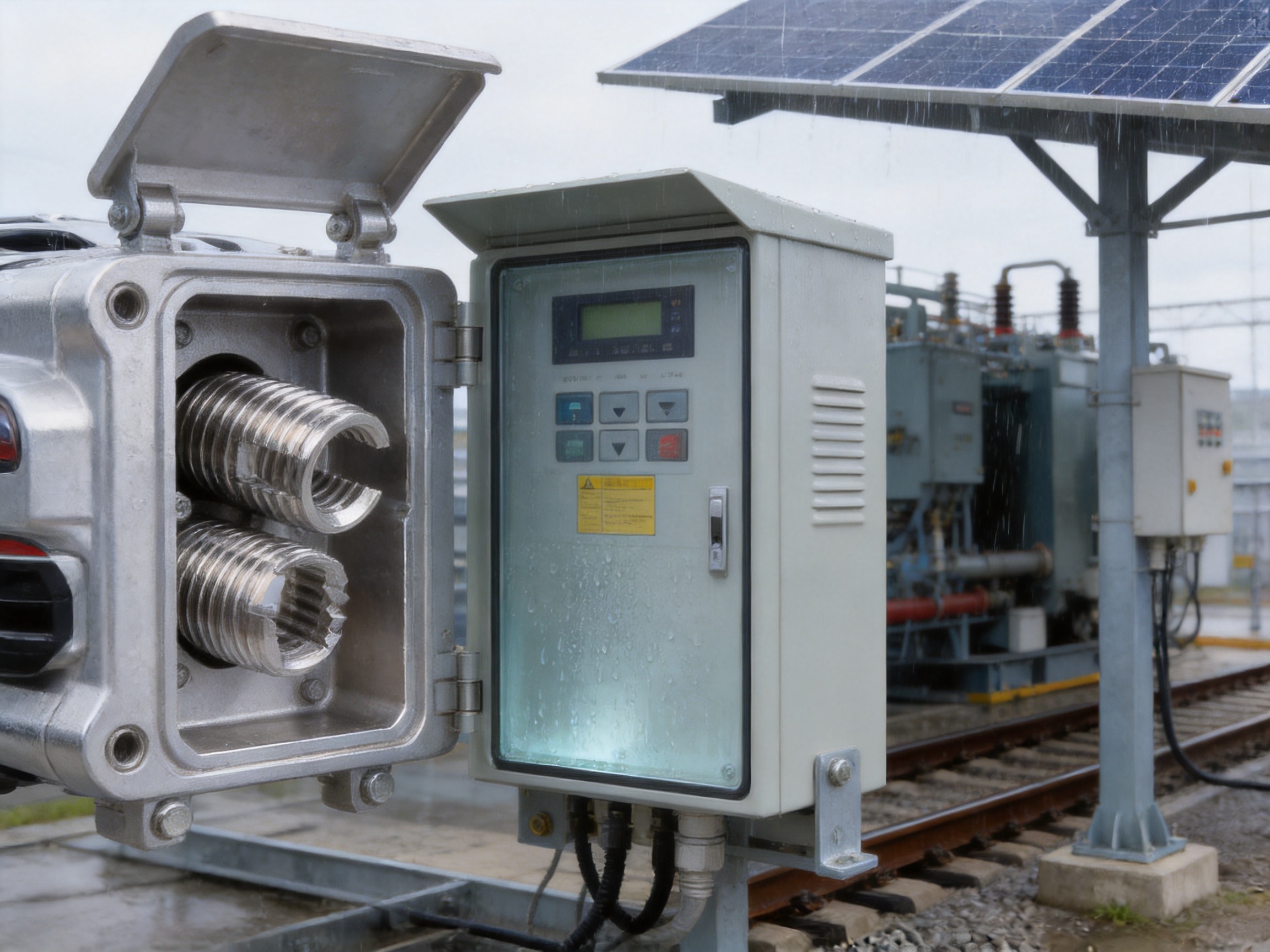
Stainless steel self-tapping thread inserts provide a practical way to create strong, durable internal threads in soft, weak, or damaged base materials. They are designed for applications in which a conventional tapped hole cannot provide sufficient strength, long-term stability, or resistance to wear. By combining a corrosion-resistant stainless steel body with self-tapping external threads, these inserts reinforce the connection while simplifying installation.
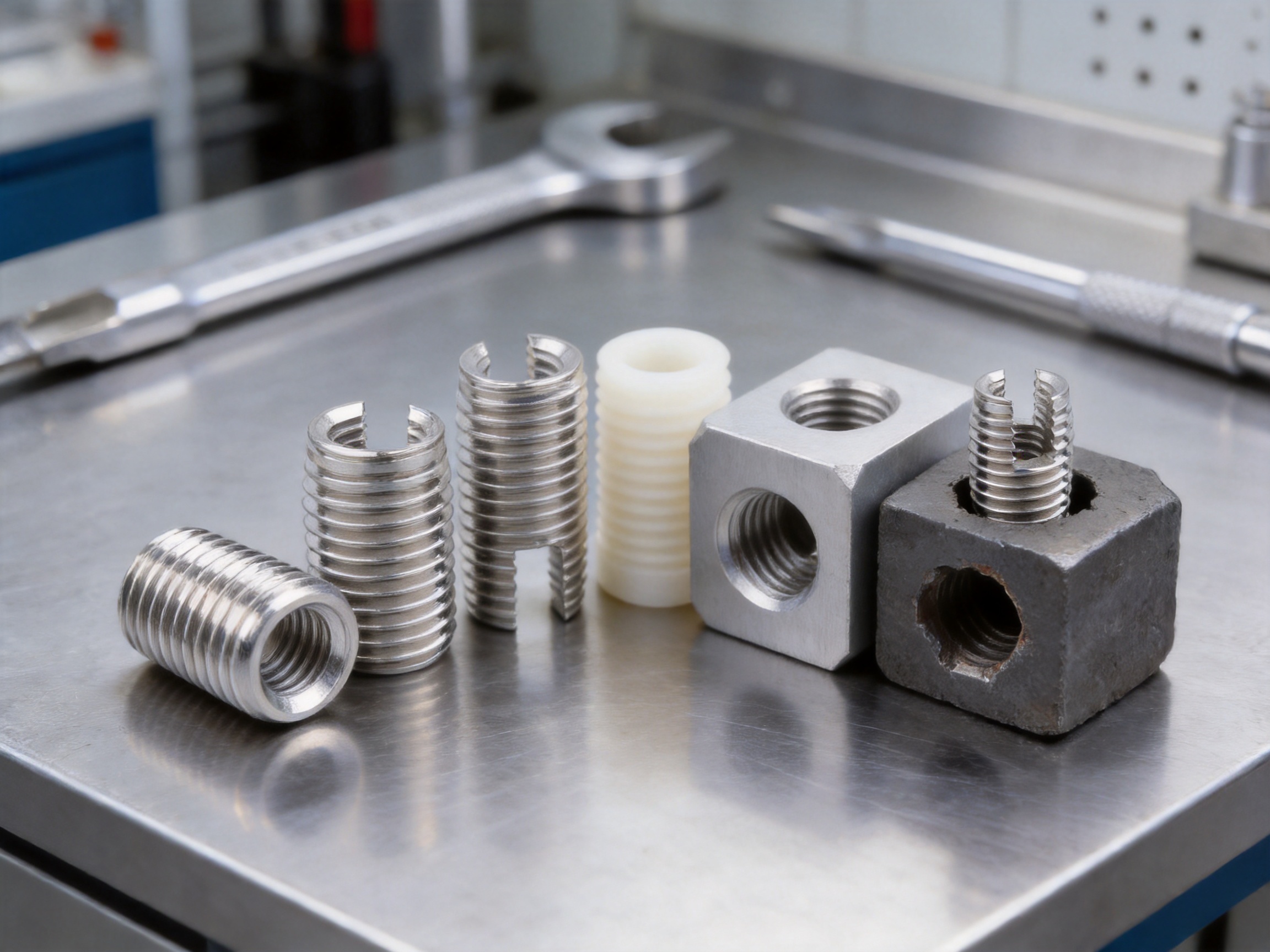
Unlike ordinary threaded bushings that may require a pre-tapped hole, a self-tapping insert cuts into the prepared bore as it is installed. The cutting action forms a secure mechanical engagement with the surrounding material. This reduces the number of machining operations and makes the insert suitable for aluminum alloys, plastics, cast iron, sheet metal, and other materials that may strip, crack, or deform under repeated fastening loads.
The stainless steel self-tapping thread insert described in this article is manufactured for industrial thread reinforcement, thread repair, and new-component assembly. It is available in a range of metric and inch-compatible sizes and can be used in automotive, aerospace-supporting, rail, electronics, machinery, outdoor infrastructure, and general industrial applications.
What Is a Stainless Steel Self-Tapping Thread Insert?
A stainless steel self-tapping thread insert is a cylindrical fastening component with an internal thread and an external cutting thread. The internal thread accepts a standard bolt or screw, while the external thread cuts into the base material during installation. Once fully seated, the insert creates a durable internal thread that is stronger and more wear-resistant than the original material alone.
The insert body is generally produced from stainless steel, including 304 or 316 stainless steel grades. These materials provide a combination of mechanical strength, dimensional stability, and resistance to moisture, oxidation, acids, alkalis, and salt exposure. Grade 304 is widely used for general industrial and outdoor conditions, while grade 316 is preferred where marine, chemical, or high-salinity exposure is expected.
The product uses a slotted self-inserting design. A cutting groove at the end of the insert helps the external thread penetrate the base material. This feature allows the insert to form its own mating thread during installation instead of relying entirely on a previously tapped hole. The result is a faster installation process and a strong connection with good resistance to vibration and loosening.
Self-tapping inserts are particularly valuable when the parent material has limited thread strength. Aluminum, magnesium alloys, plastics, composites, and thin-wall sections can have insufficient material engagement for a standard bolt. Repeated assembly and disassembly may quickly wear the threads. The stainless steel insert provides a harder, more stable threaded surface that protects the component and extends its service life.
Why Stainless Steel Is Important in Threaded Connections
Material selection has a direct effect on the service life of a threaded connection. A carbon steel insert may provide good initial strength, but it can be vulnerable to rust when exposed to water, condensation, salt spray, or industrial chemicals. Corrosion can reduce the thread’s effective dimensions, increase installation torque, and make later removal difficult.
Stainless steel offers a major advantage in these environments. Its corrosion resistance helps maintain the shape of both the external and internal threads over long periods. The insert remains capable of accepting and retaining the mating screw without the rapid deterioration associated with untreated steel.
Stainless steel also provides good wear resistance. In equipment that is serviced regularly, the same threaded point may be opened and closed many times. The parent material may not tolerate this repeated loading, but the stainless steel insert creates a more durable interface. This is especially useful for access panels, inspection covers, electronic housings, engine components, and machine guards.
For outdoor applications, stainless steel reduces maintenance requirements. Railings, photovoltaic supports, outdoor control cabinets, communication equipment, and structural brackets may be exposed to rain, humidity, ultraviolet radiation, and airborne contaminants. A corrosion-resistant insert helps preserve the connection and reduces the risk of premature loosening or thread failure.
In marine and chemical environments, 316 stainless steel may offer an additional level of protection. Its composition is better suited to chloride exposure and many corrosive atmospheres. The correct grade should always be selected according to the actual chemical, temperature, and load conditions of the application.
Self-Tapping Design Compared with Conventional Threaded Inserts
Many conventional threaded inserts require a pre-tapped external thread in the base material. This process normally involves drilling, tapping, cleaning, and then installing the insert. Although pre-tapped designs can be effective, they add machining time and require an additional tap that matches the insert’s external thread.
A self-tapping insert combines the external thread and cutting function in one component. After the correct pilot hole is prepared, the insert is driven into the material using a suitable installation tool. The cutting groove forms the mating thread during installation. This simplifies production and can reduce labor, equipment, and processing time.
The design is especially useful for repair work. A damaged threaded hole can often be enlarged to the recommended drilling diameter and restored with a self-tapping insert. Instead of replacing the entire component, the operator can reinforce or rebuild the threaded point. This approach can reduce downtime and preserve expensive housings, castings, and assemblies.
Compared with adhesive-bonded inserts, the mechanical engagement of a self-tapping insert does not depend on curing time or adhesive compatibility. It can be installed quickly and placed into service without waiting for a bonding agent to set. This is advantageous in production lines and field maintenance situations where immediate assembly is important.
The self-tapping design also offers a clean and repeatable installation method when the pilot hole, tool, and installation torque are properly controlled. A well-designed insert cuts into the material progressively rather than forcing the entire external thread into the hole at once. This helps reduce installation stress and supports consistent engagement.
Key Product Advantages
Corrosion Resistance
The use of 304 or 316 stainless steel provides protection in humid, outdoor, marine, and industrial environments. The insert is less likely to rust or lose its functional dimensions during long-term exposure. This is a significant advantage over ordinary plated or untreated steel inserts in corrosive conditions.
Fast Installation
Built-in cutting threads allow the insert to tap into the base material during installation. No separate external thread tapping process is required. Standard installation equipment can be used, helping reduce assembly time and simplifying production planning.
Thread Reinforcement
Once installed, the insert creates a high-strength internal thread inside the base component. The stainless steel thread supports improved load transfer and provides better resistance to stripping, impact, and repeated fastening than many soft parent materials can provide on their own.
Repair Capability
The inserts can be used to restore damaged or worn threads. This is valuable in maintenance operations, where replacing an entire casting or housing would be costly. The repair process can return the component to service while maintaining a standard internal thread size.
Vibration Resistance
The interaction between the external cutting thread and the surrounding material creates firm mechanical retention. The slotted design and high-strength thread support reliable performance in assemblies exposed to vibration, shock, and cyclic loading. Proper bolt selection and tightening remain essential, but the reinforced thread helps reduce the risk of connection damage.
Wide Material Compatibility
These inserts are suitable for a broad range of materials, including aluminum alloys, plastics, cast iron, and other machinable substrates. The recommended drilling diameter may vary according to the base material, so the installation specification should be selected carefully for each application.
Temperature Performance
The product information identifies a working temperature range from approximately -40°C to 600°C. This broad range supports many low-temperature and elevated-temperature applications. Actual performance depends on the stainless steel grade, base material, bolt material, load, oxidation conditions, and exposure duration. Engineering validation is recommended for extreme-temperature assemblies.
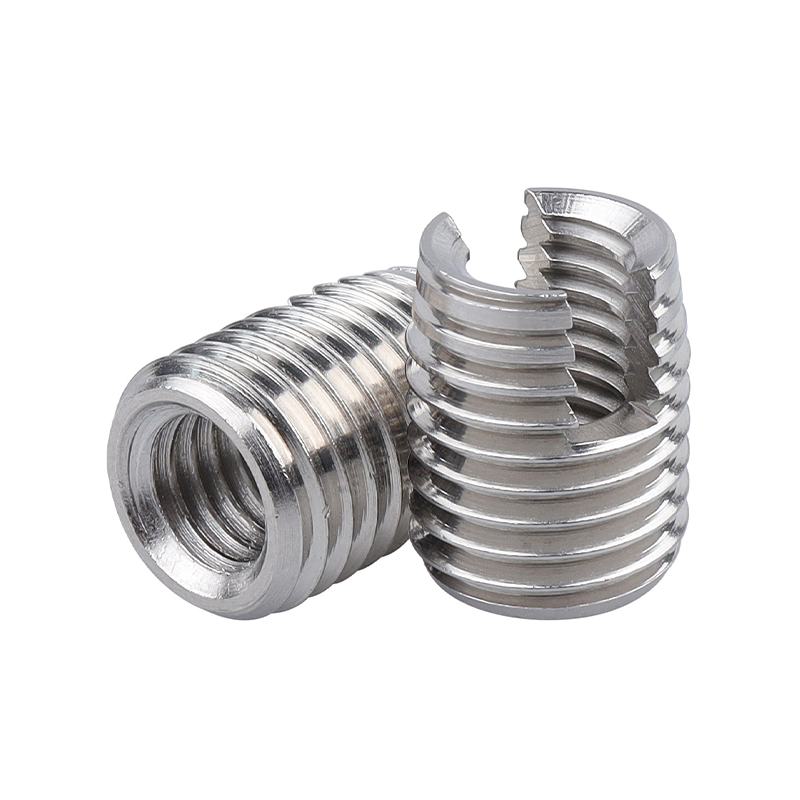
Stainless Steel Self-Tapping Thread Insert
Slotted Type 302 Self-Inserting Screw Sleeve
Type 302, also known as the slotted type, uses a cutting groove at the end of the screw sleeve. This groove supports the self-tapping action and helps the insert enter the prepared hole. The external thread is manufactured to provide strong engagement with the surrounding material, while the internal thread is designed to accept the specified mating fastener.
The cutting groove is one of the defining features of the design. As installation begins, the groove helps remove or displace material and allows the external thread to establish its own path. This is particularly useful in soft metals and engineering plastics, where a conventional thread may not remain stable under repeated loading.
The high-strength thread profile is intended to withstand wear during service. The insert is not merely a sleeve placed inside a hole; it is a structural fastening element that transfers load between the bolt and the parent material. When the pilot hole is correctly prepared, the external thread can provide dependable holding power without requiring a separate adhesive system.
The slotted Type 302 structure is suitable for applications that require efficient installation and a compact threaded reinforcement solution. It can be used in new products during manufacturing or in existing components during repair and refurbishment.
Available Sizes and Installation Dimensions
The following table summarizes the principal metric sizes, corresponding inch references where provided, insert lengths, external thread designations, recommended drilling ranges, and minimum drilling depths. The drilling values are separated according to common base materials because different materials require different levels of cutting engagement and clearance.
| Metric Internal Thread | Approximate Inch Reference | Length | External Thread | Plastic Drill Diameter | Aluminum Alloy Drill Diameter | Cast Iron Drill Diameter | Minimum Drilling Depth |
|---|---|---|---|---|---|---|---|
| M2-0.4 | — | 6 mm | M4.5-0.5 | 4.0–4.1 mm | 4.1–4.2 mm | 4.2–4.3 mm | 8 mm |
| M2.5-0.45 | U #2-56 | 6 mm | M4.5-0.5 | 4.0–4.1 mm | 4.1–4.2 mm | 4.2–4.3 mm | 8 mm |
| M3-0.5 | U #4-40 | 6 mm | M5-0.5 | 4.5–4.6 mm | 4.6–4.7 mm | 4.7–4.8 mm | 8 mm |
| M4-0.7 | U #8-32 | 8 mm | M6.5-0.75 | 5.8–5.9 mm | 6.0–6.1 mm | 6.1–6.2 mm | 10 mm |
| M5-0.8 | U #10-24 | 10 mm | M8-1.0 | 7.1–7.2 mm | 7.3–7.5 mm | 7.5–7.6 mm | 13 mm |
| M6a-1.0 | — | 12 mm | M9-1.0 | 8.1–8.2 mm | 8.3–8.5 mm | 8.5–8.6 mm | 15 mm |
| M6-1.0 | U 1/4-20 | 14 mm | M10-1.5 | 9.0–9.2 mm | 9.2–9.3 mm | 9.3–9.4 mm | 17 mm |
| M8-1.25 | U 5/16-18 | 15 mm | M12-1.5 | 10.6–10.8 mm | 11.0–11.2 mm | 11.2–11.4 mm | 18 mm |
| M10-1.5 | U 3/8-16 | 18 mm | M14-1.5 | 12.6–12.8 mm | 13.0–13.3 mm | 13.2–13.4 mm | 22 mm |
| M12-1.75 | U 7/16-14 | 22 mm | M16-1.5 | 14.6–14.8 mm | 15.0–15.3 mm | 15.2–15.4 mm | 26 mm |
| M14-2.0 | U 1/2-13 | 24 mm | M18-1.5 | 16.6–16.8 mm | 17.0–17.3 mm | 17.2–17.5 mm | 28 mm |
| M16-2.0 | U 5/8-11 | 22 mm | M20-1.5 | 18.6–18.8 mm | 19.0–19.3 mm | 19.2–19.5 mm | 27 mm |
| M18-2.5 | — | 24 mm | M22-1.5 | 20.6–20.8 mm | 21.0–21.3 mm | 21.2–21.5 mm | 29 mm |
| M20-2.5 | — | 27 mm | M26-1.5 | 24.6–24.8 mm | 25.0–25.3 mm | 25.2 mm | 32 mm |
The values in the table are reference dimensions for product selection and process planning. Before mass production, users should confirm the final pilot-hole diameter through testing because the optimum size can be affected by material hardness, wall thickness, material density, hole depth, lubrication, and installation equipment.
Recommended Installation Procedure
Step One: Confirm the Application
Before drilling, identify the internal thread size required by the final bolt or screw. Confirm the base material, wall thickness, available hole depth, expected load, operating temperature, and environmental exposure. These factors determine the correct insert size and stainless steel grade.
Step Two: Prepare the Pilot Hole
Drill the pilot hole according to the recommended diameter for the selected insert and base material. The hole should be straight, clean, and free from burrs. In blind-hole applications, the drilling depth should exceed the minimum required depth so that the insert can be installed fully without bottoming out before the correct seating position is reached.
Step Three: Clean the Hole
Remove chips, dust, oil, and loose particles from the hole. Contamination can affect cutting performance and prevent the insert from seating correctly. For plastic components, remove residual material carefully to avoid deforming the hole. For metal components, deburring should be controlled so that the entrance remains compatible with the insert’s cutting action.
Step Four: Align the Insert
Place the insert squarely over the pilot hole. Misalignment at the beginning of installation can cause cross-threading, uneven cutting, or damage to the surrounding material. A guide, mandrel, screwdriver, or dedicated installation tool may be used depending on the insert size and production requirements.
Step Five: Drive the Insert
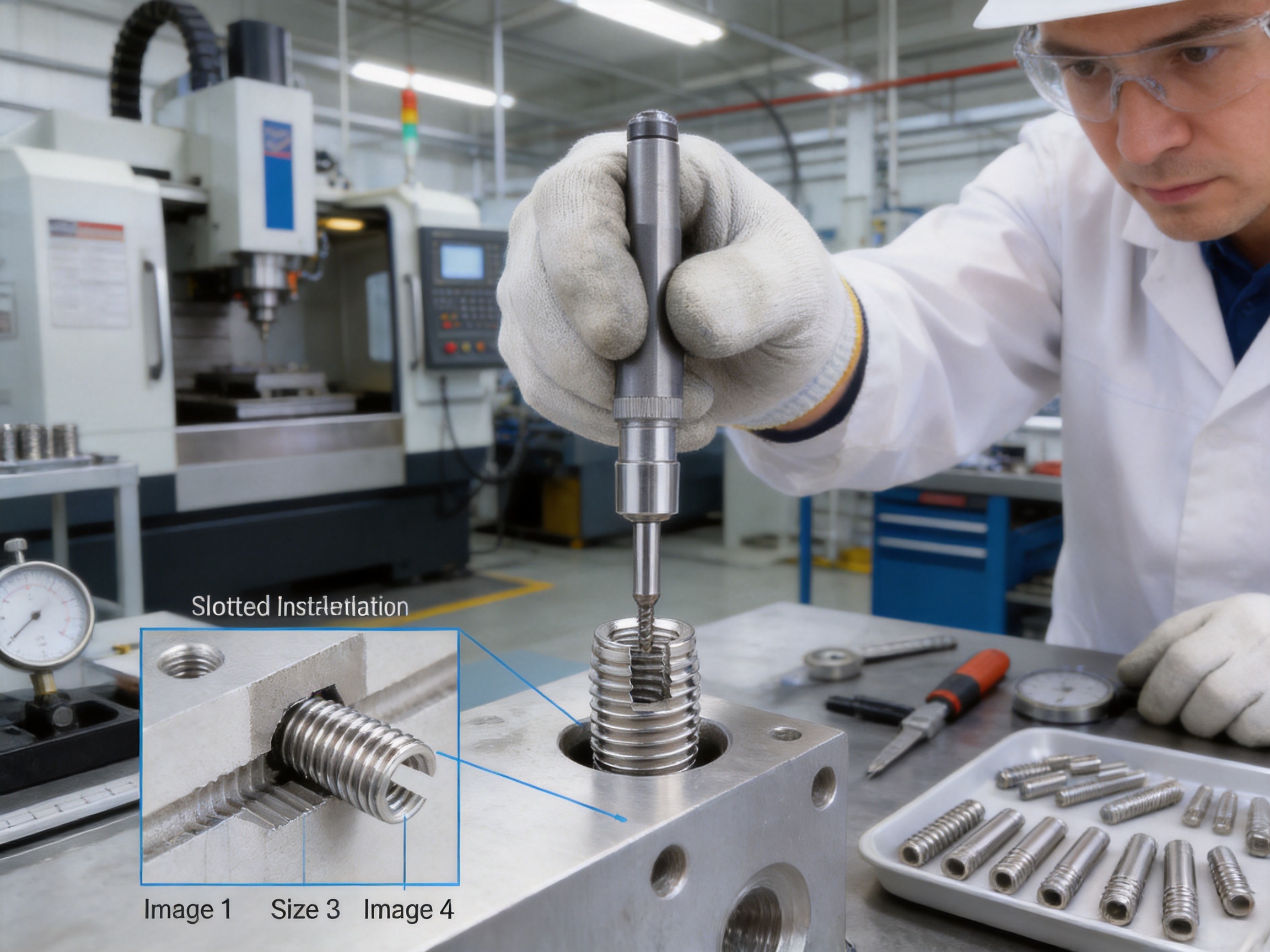
Turn the insert into the pilot hole using a suitable tool. Apply steady axial pressure and maintain alignment. The cutting groove should engage the base material progressively. Excessive speed or force can damage the external thread, especially in thin-wall or brittle components.
Step Six: Check the Installed Thread
After installation, inspect the insert for correct depth, alignment, and seating. Pass a matching bolt or thread gauge through the internal thread to verify smooth engagement. The mating fastener should enter without excessive resistance, binding, or visible thread damage.
Step Seven: Apply the Final Fastener
Install the bolt or screw according to the required torque and assembly specification. The insert is designed to reinforce the thread, but the complete connection still depends on the bolt grade, clamping force, joint design, and tightening procedure. For critical applications, pull-out, torque, vibration, and environmental testing should be performed.
Manufacturing Process and Quality Strengths
Reliable thread inserts require more than basic turning and threading operations. Dimensional accuracy, cutting performance, thread geometry, material quality, and surface condition all influence the final connection. A manufacturer with integrated production capability can control more of these factors from raw material preparation to final inspection.
Dongtai Jinzhize Metal Products Co., Ltd. operates as a specialized manufacturer of threaded connection products. Its product range includes helical wire inserts, self-tapping inserts, key-locking inserts, threaded adapters, oil plugs, installation taps, and related tools. This focused product scope supports practical experience across different thread reinforcement technologies.
Established in 2015, the company operates from an owned manufacturing plant of approximately 10,000 square meters. The facility is equipped with hundreds of machine tools and automated production systems. This combination of production equipment and automation helps support stable batch manufacturing, repeatable dimensions, and controlled delivery schedules.
Automated and semi-automated production systems can improve process consistency by reducing variation in cutting, forming, and inspection operations. For self-tapping inserts, consistent external thread geometry is particularly important because the cutting thread must enter the base material smoothly while maintaining sufficient retention. Consistent internal thread dimensions are equally important because the final bolt must engage correctly across the production batch.
The manufacturing process generally includes material preparation, precision machining, thread formation, slot or cutting-groove production, deburring, surface treatment when required, dimensional inspection, functional testing, and packaging. Each stage contributes to the performance of the finished insert.
Material Control
Starting with verified stainless steel helps maintain consistent corrosion resistance and mechanical properties. Material identification and batch traceability are important for customers serving automotive, aerospace-supporting, rail, and other safety-conscious industries. The use of 304 or 316 stainless steel should be confirmed according to the purchase specification and application requirements.
Precision Machining
Precision machine tools are used to form the cylindrical body, internal thread, external thread, and cutting features. Controlled machining supports uniform dimensions and helps ensure that the insert can be installed using the recommended pilot-hole range.
Thread and Slot Formation
The external thread and cutting slot must work together. If the cutting feature is too aggressive, it may damage the base material or create excessive installation torque. If it is insufficient, the insert may not cut effectively or may fail to achieve the required engagement. Controlled production and inspection help maintain a balanced cutting profile.
Inspection and Quality Management
A rigorous quality management system can include incoming material checks, in-process dimensional inspection, thread gauging, visual examination, sample installation testing, and final batch verification. These controls help detect problems before shipment and support more predictable assembly for customers.
Traceability is also important. Consistent batch records allow production teams to identify the material, equipment, process conditions, inspection results, and packaging details associated with a shipment. This supports quality investigations and gives customers greater confidence in long-term supply.
Production Capacity
The company reported an annual output value of 153 million RMB in 2024. This indicates established manufacturing capability and the ability to support larger supply programs. For buyers, production capacity can be as important as individual product performance because a reliable fastening component must remain available throughout a product’s manufacturing and service life.
Large-scale production capability may also support more competitive purchasing. When machining, inspection, product development, and packaging are coordinated within one manufacturing organization, customers can reduce the complexity of managing multiple suppliers for related thread connection products.
Advantages over Generic or Lower-Specification Alternatives
Generic inserts may appear similar externally, but their performance can differ significantly. Material grade, thread accuracy, cutting geometry, hardness, surface condition, and inspection standards all influence the result. A stainless steel self-tapping insert manufactured with controlled processes can provide several advantages over low-cost alternatives.
First, corrosion resistance is more dependable when the stainless steel grade is specified and controlled. Low-quality substitutes may use lower-grade steel, inconsistent material, or inadequate surface protection. These differences may not be visible at delivery but can become serious after exposure to moisture or salt.
Second, accurate thread geometry improves installation. A poorly formed external thread may require excessive force, damage the parent material, or fail to achieve sufficient engagement. An inaccurate internal thread may cause bolt binding, poor clamping, or premature wear. Controlled machining and inspection help reduce these risks.
Third, consistent cutting slots support predictable installation torque. This is important for automated production lines, where excessive variation can cause tool overload, incomplete seating, or inconsistent cycle times. It is also important for field repair, where installers need a product that performs reliably with standard tools.
Fourth, a broad size range improves design flexibility. The available metric sizes and inch references allow engineers to select a suitable insert for different bolt systems and component dimensions. A supplier offering related tools and thread products can also help simplify procurement and technical coordination.
Finally, manufacturing experience across self-tapping inserts, wire inserts, key-locking inserts, adapters, oil plugs, and installation taps gives the supplier a broader understanding of threaded joint requirements. This can be useful when a customer needs more than one thread reinforcement technology within the same project.
Industrial Applications
Automotive Components
Automotive assemblies frequently use aluminum housings, plastic covers, cast components, and thin-wall sections. These materials help reduce weight and manufacturing cost, but their original threads may be vulnerable to stripping under repeated service or vibration. Stainless steel self-tapping inserts can reinforce mounting points in engines, transmissions, chassis components, interior systems, and equipment brackets.
They are also useful for thread repair during vehicle maintenance. A damaged threaded hole can be restored without replacing an entire housing or bracket. The insert creates a new internal thread and helps return the component to its intended fastening condition.
Aerospace-Supporting Manufacturing
Aerospace-related manufacturing places strong emphasis on weight, traceability, repeatability, and resistance to environmental changes. Although the final component specification must determine the permitted insert type and material, self-tapping inserts can be considered for housings, fixtures, panels, and supporting equipment where a reliable reinforced thread is required.
For critical applications, engineers should evaluate installation torque, pull-out strength, fatigue performance, galvanic compatibility, temperature, and inspection requirements. The supplier’s manufacturing and traceability capabilities can support the documentation needs of demanding customers.
Rail Vehicles
Rail equipment experiences vibration, shock, temperature changes, and outdoor exposure. Reinforced stainless steel threads can support secure connections in control equipment, panels, brackets, housings, and maintenance-access components. Corrosion resistance is especially valuable for equipment operating in wet or coastal environments.
Electronics and Electrical Enclosures
Plastic and aluminum housings used for communication equipment, instruments, control units, and electrical devices often require multiple assembly cycles. A self-tapping insert provides a durable thread for covers, mounting plates, cable-management components, and internal supports.
The insert can be installed during molding or machining operations, or it can be added during repair. Its compact size helps preserve the design advantages of lightweight housings while improving thread durability.
Industrial Machinery
Machine housings and sheet metal parts often require threaded points for guards, inspection covers, sensors, handles, and service panels. When the parent material is too thin or soft to carry repeated bolt loads, a stainless steel insert provides a stronger and more wear-resistant connection.
Machinery used in factories may also be exposed to coolant, lubricants, dust, cleaning chemicals, and humidity. Stainless steel helps maintain the connection under these conditions, provided the selected grade is compatible with the environment.
Outdoor and Renewable Energy Equipment
Outdoor structures such as railings, photovoltaic supports, equipment cabinets, and communication installations require fasteners that can withstand rain, condensation, and airborne contaminants. Stainless steel self-tapping inserts provide a corrosion-resistant internal thread and can contribute to longer maintenance intervals.
In photovoltaic and other renewable-energy systems, serviceability is important because equipment may need inspection or replacement over many years. A reinforced thread reduces the likelihood that repeated maintenance will damage the supporting material.
Design Considerations for Engineers
Successful use of a self-tapping insert begins during component design. The designer should allocate enough surrounding material to support the external thread and should avoid placing the insert too close to an edge unless testing confirms that the remaining wall is sufficient.
Wall thickness is particularly important in plastic and sheet-metal components. If the wall is too thin, the insert may split the material, distort the component, or fail to develop adequate holding strength. A longer insert is not always better; the selected length must match the available depth and the load path.
The pilot-hole diameter should be treated as a controlled production dimension rather than an approximate drilling instruction. A hole that is too small may create excessive insertion torque and damage the material. A hole that is too large may reduce external thread engagement and lower pull-out resistance.
Engineers should also consider the relationship between stainless steel and the base material. In some assemblies, dissimilar metals can create galvanic corrosion under wet or salty conditions. Material selection, coatings, isolation measures, drainage, and environmental testing may be required.
For high-temperature applications, the complete joint must be evaluated rather than the insert alone. The bolt, base material, surrounding structure, and any coating or lubricant may have lower temperature limits. Thermal expansion differences can also affect preload and thread engagement.
Where the joint is exposed to intense vibration, the insert should be combined with an appropriate bolt-locking strategy if required by the application. Thread reinforcement improves the strength of the base material but does not replace the need for correct joint design, bolt preload, and vibration control.
Quality, Service, and Supply Support
Industrial buyers commonly require more than a component drawing. They need stable quality, predictable delivery, technical communication, and after-sales support. A specialized manufacturer can provide assistance with product selection, pilot-hole recommendations, installation methods, packaging, and repeat-order management.
Dongtai Jinzhize Metal Products Co., Ltd. maintains an experienced team for product design, development, and production. Its focus on threaded connection products allows it to support applications involving self-tapping inserts as well as wire inserts, key-locking inserts, threaded adapters, oil plugs, taps, and installation tools.
The company’s stated mission is to provide stable and reliable threaded connection and fastening products for critical assemblies. This approach emphasizes consistency and risk reduction rather than treating the insert as a simple commodity. For customers in automotive, aerospace-supporting, rail, machinery, and electronics industries, consistent fastening performance can influence assembly efficiency and product reliability.
After-sales service is also important when an insert is used in a new or specialized application. Installation problems may result from pilot-hole dimensions, tool alignment, material properties, torque settings, or component geometry. Technical support can help identify the cause and establish a repeatable installation process.
For global customers, clear specifications and traceable production are valuable. Product information should identify the internal thread, external thread, length, material, drilling requirements, and inspection criteria. Packaging should protect the inserts from contamination and mix-ups during transportation and storage.
How to Select the Correct Insert
Begin by identifying the required internal thread. The insert must match the bolt or screw used in the final assembly, including nominal size, pitch, and thread standard. Metric and inch thread systems should not be mixed unless the design specifically allows it.
Next, identify the base material. Plastic, aluminum alloy, and cast iron may require different pilot-hole diameters. The surrounding material’s hardness and strength affect cutting behavior and pull-out resistance.
Then determine the required insert length. The insert should provide enough internal engagement for the expected bolt load but should not extend into an area containing moving parts, electrical components, fluid passages, or other obstructions.
Environmental exposure should be reviewed carefully. For general conditions, 304 stainless steel may be suitable. For marine, chloride-rich, or chemically aggressive conditions, 316 stainless steel may be preferable. The actual grade should be confirmed in the order specification.
Finally, consider production requirements. Manual installation may be suitable for low-volume repair work, while powered or automated tools may be preferred for high-volume assembly. The insert, tool, pilot hole, and torque setting should be tested as one complete process.
Maintenance and Inspection Recommendations
Installed inserts should be inspected as part of normal equipment maintenance. Check for corrosion, looseness, visible displacement, damaged internal threads, or signs of parent-material cracking. Early detection can prevent a small fastening problem from becoming a larger structural or operational issue.
When removing a bolt from an insert, use the correct tool and avoid excessive side loading. Cross-threading during reassembly can damage the internal thread. The bolt should be aligned carefully and started by hand before applying a wrench or powered tool.
If a component is cleaned with chemicals, verify compatibility with the stainless steel grade and any surrounding material. Certain aggressive chemicals can affect stainless steel under specific concentration and temperature conditions. Regular inspection remains important even when the insert is selected for corrosion resistance.
For critical assemblies, maintain records of insert batch, installation method, torque setting, inspection results, and replacement history. This information supports quality control and helps identify trends during long-term operation.
Frequently Asked Questions
What materials can receive a stainless steel self-tapping insert?
These inserts are commonly used in aluminum alloys, plastics, cast iron, sheet metal, and other machinable materials. The correct drilling diameter and installation method depend on the material’s hardness, strength, thickness, and structure.
Does the base material need to be pre-tapped?
No. The external thread and cutting groove are designed to tap into the prepared pilot hole during installation. The hole must still be drilled to the recommended diameter and depth.
Can the inserts repair damaged threads?
Yes. A damaged hole can often be drilled to a suitable size and restored with an insert. The repair method should be checked against the component geometry and required load, especially in safety-critical assemblies.
What is the difference between 304 and 316 stainless steel?
Both grades provide corrosion resistance and are suitable for many industrial applications. Grade 316 generally offers improved resistance in marine, chloride-rich, and some chemical environments. The correct choice depends on the specific exposure conditions.
Are these inserts suitable for high-temperature applications?
The provided product information identifies an operating range from approximately -40°C to 600°C. However, the entire joint must be evaluated, including the bolt, base material, surrounding components, thermal expansion, and environmental conditions.
Do self-tapping inserts require adhesive?
No adhesive is normally required because the external cutting thread provides mechanical engagement with the base material. Adhesive may be considered only when required by a specific engineering design or environmental condition.
Can standard tools be used for installation?
Yes. Suitable manual, powered, or dedicated installation tools may be used according to the insert size and production volume. The tool must maintain alignment and provide controlled rotation without damaging the cutting feature.
How can installation quality be verified?
Inspect the seating depth and alignment, then check the internal thread with a matching bolt or thread gauge. For production applications, installation torque, pull-out testing, and sample inspection can help establish process control.
Are metric and inch sizes available?
The product range includes multiple metric internal thread sizes and selected inch references. Buyers should confirm the exact thread standard, pitch, length, and external thread before ordering.
What makes these inserts different from ordinary low-cost inserts?
The main differences can include stainless steel material, corrosion resistance, controlled cutting geometry, thread accuracy, production consistency, batch traceability, and access to technical support. These factors can be especially important in demanding industrial environments.
Conclusion
Stainless steel self-tapping thread inserts offer an efficient and durable method for reinforcing internal threads in soft, damaged, thin-wall, or corrosion-exposed materials. Their built-in cutting threads simplify installation by eliminating the need for a pre-tapped external thread, while the stainless steel body provides improved resistance to rust, moisture, chemicals, wear, and repeated assembly.
The slotted Type 302 design supports fast self-inserting installation and dependable mechanical engagement. With metric sizes, selected inch references, multiple lengths, and material-specific drilling recommendations, the product can be adapted to a wide variety of component designs.
For industrial customers, product performance is closely connected to manufacturing control. A specialized production facility with extensive machine tools, automated systems, experienced technical personnel, quality management, and traceable processes can provide more consistent results than an uncontrolled generic supply source.
Dongtai Jinzhize Metal Products Co., Ltd. combines focused expertise in threaded connection products with manufacturing capacity, product development experience, and related fastening solutions. Its stainless steel self-tapping thread inserts are positioned for applications requiring reliable thread reinforcement, efficient assembly, corrosion resistance, and long-term supply support.
When properly selected, installed, and inspected, these inserts can help manufacturers improve joint durability, reduce thread failures, simplify repairs, and extend the service life of valuable components.
References
1. Product specification information for Type 302 slotted stainless steel self-tapping thread inserts.
2. Stainless steel material descriptions for 304 and 316 grades and their general corrosion-resistance characteristics.
3. Engineering guidelines for pilot-hole preparation, threaded insert installation, and thread repair.
4. General manufacturing practices for precision machining, thread inspection, batch traceability, and industrial fastening quality control.
5. Application information for reinforced threaded connections in automotive, electronics, machinery, rail, outdoor, and renewable-energy equipment.



