Français
 Español
 Deutsch

Content
- 1 What Is a Stainless Steel Internal-External Thread Conversion Nut?
- 2 Construction and Functional Design
- 3 Material Options: Stainless Steel 303, 304, and 316
- 4 Key Advantages Over Ordinary Thread Adapters
- 5 Applications in Critical Industrial Environments
- 6 Manufacturing Process and Quality Control
- 7 Manufacturing Strengths of the Supplier
- 8 Advantages of Working With a Specialized Manufacturer
- 9 How the Product Compares With Common Alternatives
- 10 Installation Recommendations
- 11 Design Considerations for Engineers
- 12 Quality, Supply, and Procurement Benefits
- 13 Recommended Information for a Product Inquiry
- 14 Why Product Consistency Matters
- 15 Environmental and Lifecycle Considerations
- 16 Application-Based Material Selection Guide
- 17 Q&A: Stainless Steel Internal-External Thread Conversion Nuts
- 17.1 What is the main purpose of this product?
- 17.2 What other names are used for this product?
- 17.3 Which stainless steel grades are available?
- 17.4 Is 316 stainless steel always better than 304?
- 17.5 Can the internal and external threads use different standards?
- 17.6 Can the product be customized?
- 17.7 How can cross-threading be prevented?
- 17.8 Does stainless steel require lubrication during installation?
- 17.9 Can the adapter be used for pressure sealing?
- 17.10 What inspections are normally performed?
- 17.11 What makes a specialized manufacturer advantageous?
- 17.12 What industries does the supplier serve?
- 17.13 What should be included in a quotation request?
- 18 Conclusion
- 19 References
- 20 Product: Stainless Steel Internal-external Thread Conversion Nut
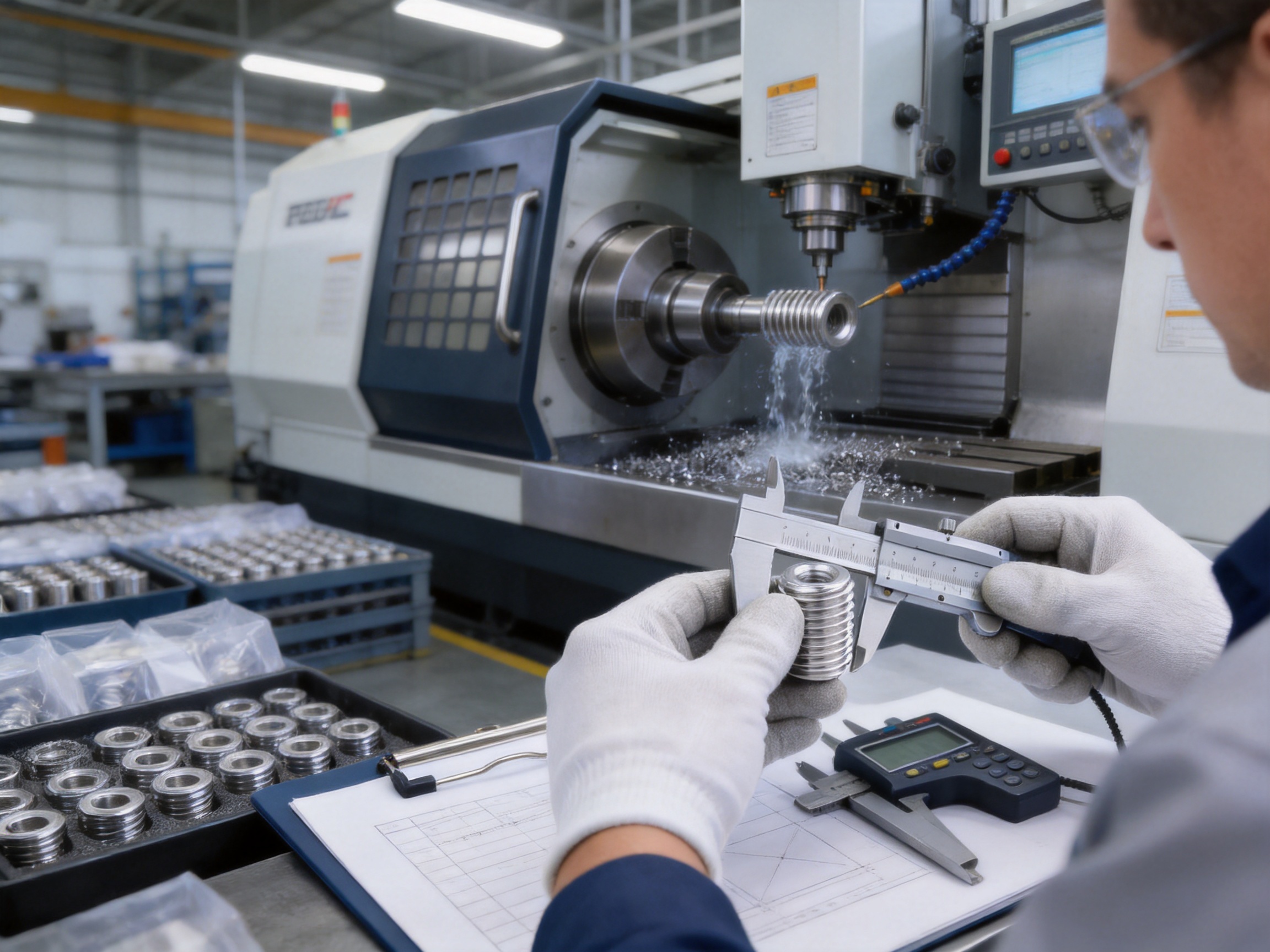
Reliable threaded connections are essential in equipment where different thread standards, sizes, or connection functions must be joined in a compact space. A stainless steel internal-external thread conversion nut provides a practical solution by combining an external male thread and an internal female thread in one precision-manufactured component. This configuration allows an assembly to connect a tapped hole, stud, bolt, pipe fitting, or other threaded element while maintaining a clean, serviceable, and mechanically stable interface.
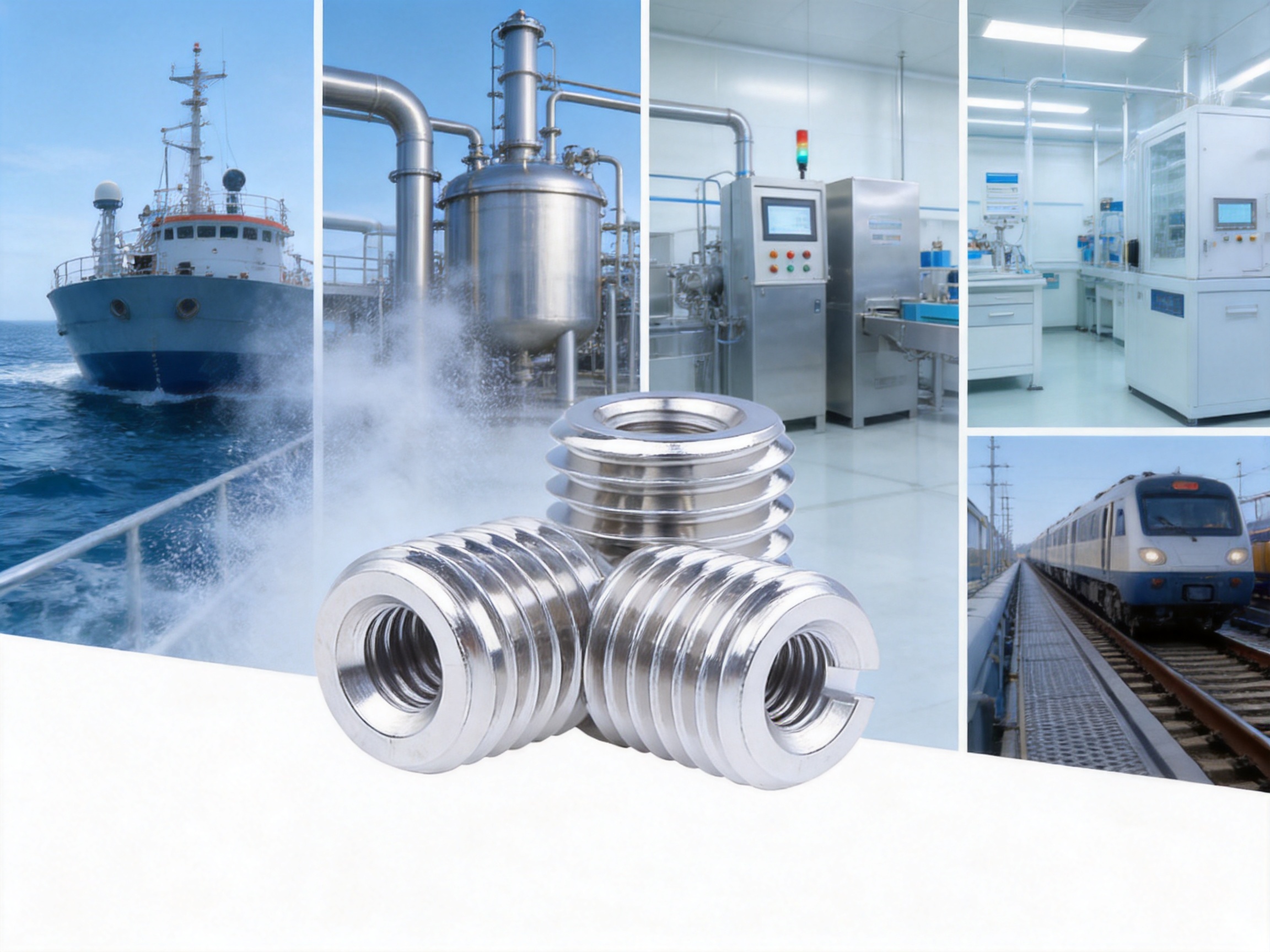
Also known as a stainless steel thread adapter, stainless steel male-to-female adapter, or internal-external thread conversion nut, this product is designed for applications that require corrosion resistance, dimensional stability, durability, and reliable thread engagement. It is particularly valuable in marine engineering, chemical processing, food machinery, medical equipment, energy systems, transportation equipment, and industrial assemblies exposed to humidity, chemicals, elevated temperatures, or strict cleanliness requirements.
Compared with ordinary carbon steel, plated steel, or lower-grade metal adapters, stainless steel provides a stronger defense against oxidation and environmental deterioration. Depending on the working conditions, the product can be manufactured from stainless steel grades such as 303, 304, or 316. This material flexibility allows users to select an appropriate balance of machinability, corrosion resistance, chemical resistance, temperature performance, and cost.
For customers seeking a stable supply of threaded connection products, Dongtai Jinzhize Metal Products Co., Ltd. combines specialized manufacturing experience, automated production systems, extensive machining resources, strict quality management, and application-oriented service. The company focuses on threaded connection products for critical assemblies in automotive, aerospace, rail vehicle, and other industrial sectors. Its manufacturing capabilities support both standard requirements and customized thread conversion solutions.
What Is a Stainless Steel Internal-External Thread Conversion Nut?
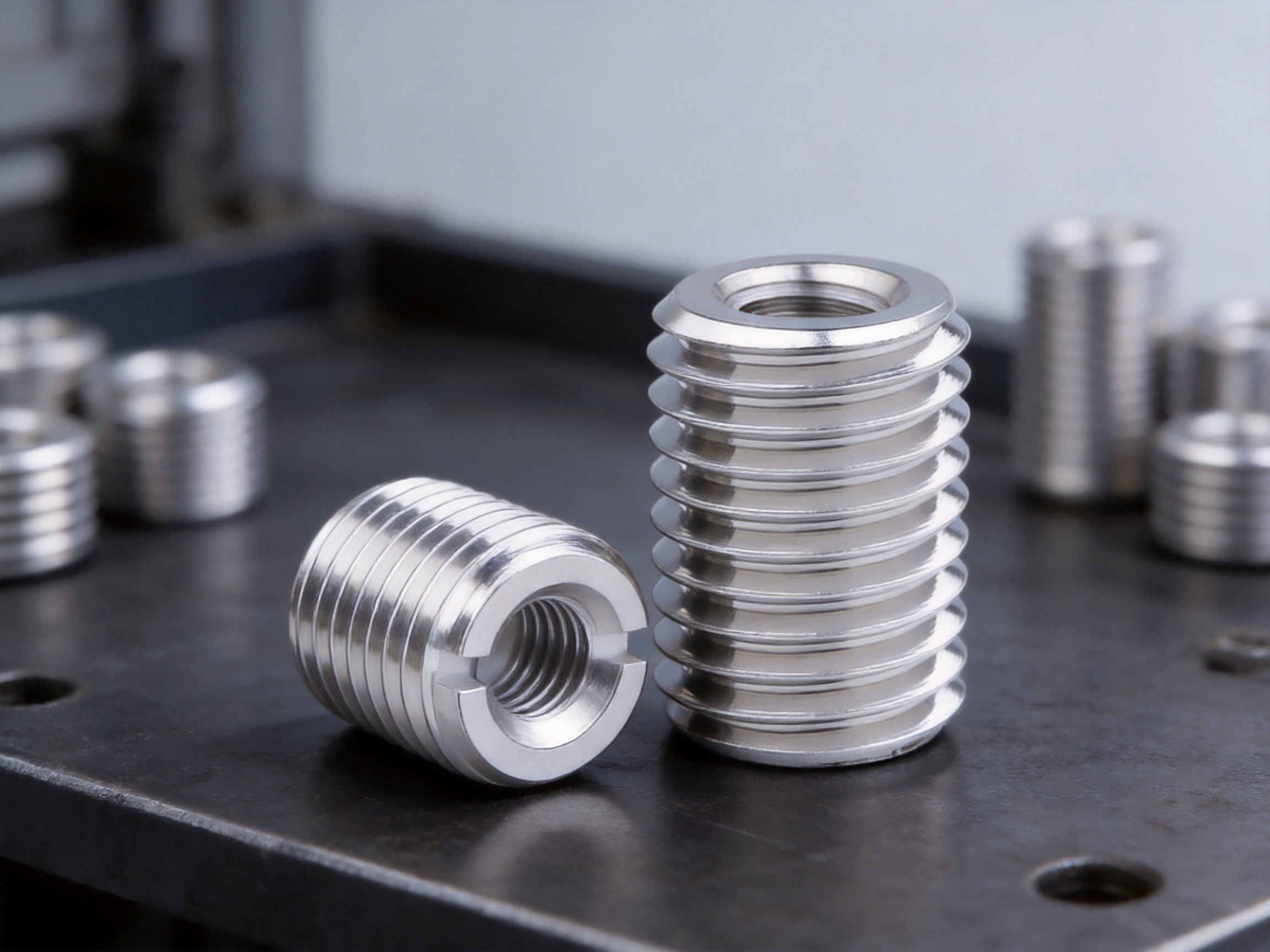
A stainless steel internal-external thread conversion nut is a cylindrical or specially shaped threaded component with two different thread surfaces. The outside of the component carries a male thread, while the inside contains a female thread. The two thread systems may differ in nominal diameter, pitch, thread standard, or functional purpose.
This design enables the component to convert one threaded connection into another. For example, an external metric thread may be combined with an internal imperial thread, or a larger internal thread may be paired with a smaller external thread. The exact configuration depends on the application, equipment design, and customer drawing.
In many assemblies, redesigning a complete housing or replacing an existing threaded component would be expensive and time-consuming. A conversion nut can provide a simpler alternative. It can adapt a connection without requiring major changes to the surrounding structure. This reduces installation complexity and can help extend the service life of existing equipment.
The internal and external threads must be manufactured concentrically and accurately. If the two thread systems are misaligned, the adapter may cause uneven loading, difficult installation, premature wear, or damage to mating components. For this reason, the quality of the raw material, turning process, thread cutting, inspection procedure, and surface finish all influence final performance.
Construction and Functional Design
The basic structure of the product is simple, but its performance depends on precise engineering. The external male thread is designed to engage with an existing female thread, tapped hole, or threaded housing. The internal female thread receives a bolt, screw, stud, nozzle, fitting, or other threaded element. When correctly selected, the conversion nut creates a secure mechanical connection while preserving access for future servicing.
Some versions may include a plain cylindrical body, a hexagonal driving section, a flange, a shoulder, or another external feature. These features can support installation, positioning, torque application, sealing, or retention. The appropriate shape depends on the available installation space and the requirements of the surrounding assembly.
Thread specifications are normally determined by several parameters, including nominal diameter, thread pitch, thread angle, thread tolerance, thread length, engagement depth, and thread direction. Most applications use right-hand threads, but special configurations may be developed where left-hand threads or mixed thread directions are required.
The product may also be designed with different internal and external thread standards. Metric, Unified, and other recognized thread forms may be considered according to the customer’s equipment. Where the adapter is used in pressure, fluid, or gas systems, sealing requirements must be evaluated together with thread dimensions. A threaded connection that is mechanically compatible is not automatically suitable for pressure sealing.
For demanding assemblies, the design may also consider vibration, thermal expansion, repeated installation, galvanic interaction, chemical exposure, and the strength of the surrounding material. These factors influence the recommended stainless steel grade, thread engagement length, tolerance, surface treatment, and installation torque.
Material Options: Stainless Steel 303, 304, and 316
Stainless steel is selected because its chromium content produces a passive oxide layer that helps protect the surface from oxidation. The actual performance of the adapter depends on the grade, environment, manufacturing condition, surface condition, and contact with other materials.
303 Stainless Steel
Grade 303 is known for its improved machinability. It is often considered when a component requires extensive turning, drilling, tapping, or other cutting operations and the working environment is moderately corrosive. Its machinability can support efficient production of complex threaded components and help maintain consistent dimensions during large-volume manufacturing.
303 stainless steel may be suitable for general industrial equipment, indoor machinery, automation systems, and applications where ease of machining is an important factor. However, customers should evaluate the specific chemical and environmental conditions before selecting it for marine or highly corrosive service.
304 Stainless Steel
Grade 304 is a widely used stainless steel for general corrosion-resistant applications. It offers a useful combination of strength, durability, appearance, availability, and corrosion resistance. It is commonly considered for food machinery, general industrial equipment, architectural hardware, process equipment, and assemblies exposed to humidity or occasional contact with corrosive substances.
304 stainless steel is often selected when the application requires a balanced material rather than the maximum possible corrosion resistance. It can provide long service life when used within an appropriate temperature and chemical range and when the finished surface is properly maintained.
316 Stainless Steel
Grade 316 is often selected for more demanding environments because its composition provides enhanced resistance to certain corrosive media, including environments containing chlorides. It is particularly relevant to marine engineering, chemical processing, outdoor equipment, coastal installations, pharmaceutical machinery, and other applications where corrosion resistance is a major design priority.
316 stainless steel may also be considered where cleaning chemicals, saltwater exposure, condensation, or corrosive process atmospheres could affect ordinary stainless steel. The exact grade should be selected after evaluating the concentration, temperature, exposure time, and type of chemical environment.
Material Selection Should Follow the Application
No single stainless steel grade is ideal for every application. A conversion nut used inside a dry machine room may require a different material from one exposed to seawater, acidic cleaning agents, or high-temperature chemical vapors. Selecting a grade only by appearance or initial price can lead to unnecessary replacement costs later.
Important selection factors include environmental humidity, salt exposure, chemical contact, operating temperature, mechanical load, vibration, cleaning method, contact with dissimilar metals, required service life, and applicable hygiene or industry requirements. Jinzhize can support customers in evaluating the product configuration and material option according to the intended working conditions.
Key Advantages Over Ordinary Thread Adapters
High Corrosion Resistance
The primary advantage of a stainless steel internal-external thread conversion nut is its resistance to oxidation and corrosion. This is particularly important when the component is installed in a location that cannot be easily inspected or replaced. A corroded adapter can become difficult to remove, lose dimensional accuracy, or transfer corrosion to neighboring parts.
Stainless steel is suitable for humid workshops, outdoor machinery, marine environments, food production areas, chemical equipment, and many applications where surface deterioration must be minimized. When a suitable grade and finish are selected, the adapter can maintain its appearance and functional dimensions over a long operating period.
Stable Performance at Elevated Temperatures
Stainless steel retains useful mechanical and dimensional performance across a broad range of industrial temperatures. This makes it suitable for certain energy, chemical, automotive, and process equipment applications where ordinary polymer adapters or less durable plated components may lose performance.
Temperature resistance does not mean that every stainless steel adapter is suitable for every high-temperature application. The thread design, load, thermal cycling, surrounding materials, and exact service temperature must be considered. Nevertheless, stainless steel offers a strong foundation for designs requiring a durable threaded interface under changing thermal conditions.
Long-Term Wear Resistance
A conversion nut may be installed and removed repeatedly during maintenance, calibration, replacement, or equipment adjustment. A durable stainless steel component can resist wear and help preserve thread engagement during service operations. Proper lubrication, correct installation torque, and avoidance of cross-threading remain important for achieving the best result.
Compared with soft or poorly finished alternatives, a precision-machined stainless steel adapter is less likely to develop burrs, damaged thread crests, or irregular engagement when manufactured and handled correctly. Consistent surface quality also improves the user’s installation experience.
Compact Connection Conversion
The product combines two thread functions in one compact component. This can save space compared with using several separate fittings, nuts, spacers, or custom-machined parts. A compact adapter is especially helpful in equipment with limited clearance, dense piping, small housings, or closely arranged mechanical components.
Reducing the number of individual parts may also simplify purchasing, inventory control, assembly, and maintenance. Instead of redesigning a complete structure to accommodate a different thread, the user may solve the compatibility problem with a dedicated conversion nut.
Clean and Attractive Surface
Stainless steel provides a smooth, professional appearance that is useful in visible equipment, laboratory devices, food machinery, medical equipment, and architectural or precision assemblies. The surface is also easier to clean than heavily rusted or damaged metal.
Although appearance is not a substitute for engineering performance, a clean surface can support hygiene, inspection, corrosion monitoring, and product presentation. This is one reason stainless steel adapters are frequently preferred in equipment where both function and appearance matter.
Customization Potential
Thread conversion requirements vary widely. Customers may need different internal and external diameters, thread standards, thread lengths, shoulder dimensions, overall heights, drive features, tolerances, or materials. A specialized manufacturer can produce the adapter according to a technical drawing, sample, or application requirement.
Customization can help prevent the compromises associated with generic adapters. It can also ensure that the component fits the available installation space, provides sufficient thread engagement, and matches the mechanical and environmental requirements of the equipment.
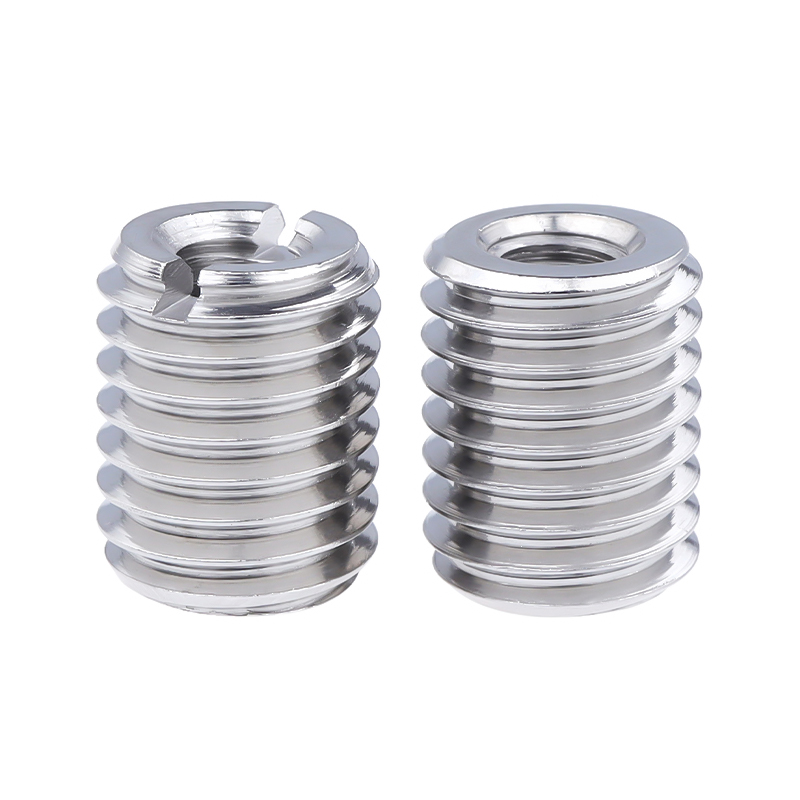
Stainless Steel Internal-external Thread Conversion Nut
Applications in Critical Industrial Environments
Marine Engineering
Marine equipment is exposed to moisture, saltwater, condensation, spray, vibration, and frequent temperature changes. These conditions can accelerate corrosion in ordinary steel components. Stainless steel internal-external thread conversion nuts, especially those produced from an appropriate corrosion-resistant grade, can support reliable connections in marine machinery, deck equipment, water systems, pumps, control units, and structural assemblies.
Marine applications require careful attention to galvanic corrosion. When stainless steel is installed next to aluminum, carbon steel, or other dissimilar metals in the presence of an electrolyte, electrical potential differences may accelerate corrosion. Material pairing, insulation, protective compounds, drainage, and maintenance procedures should therefore be considered during design.
Chemical Processing Equipment
Chemical processing systems may expose threaded components to solvents, acids, alkalis, cleaning agents, vapors, or reactive fluids. A stainless steel adapter can provide a more durable connection than ordinary unprotected steel, but the selected grade must be compatible with the specific chemical medium.
In chemical equipment, dimensional stability and thread reliability are especially important because a damaged connection may cause leakage, downtime, contamination, or safety risks. Customers should provide information about the process medium, concentration, temperature, pressure, and exposure frequency when requesting a customized product.
Food Processing Machinery
Food-processing equipment requires components that support cleanliness, easy inspection, and resistance to frequent washing. Stainless steel is widely used in food machinery because it offers a smooth surface and good resistance to moisture and many cleaning environments.
Internal-external thread conversion nuts can be used in machine frames, guards, processing units, conveyors, filling equipment, pumps, mixing systems, and maintenance assemblies. The design should avoid unnecessary crevices where residue could accumulate, and the final surface should be appropriate for the cleaning and hygiene requirements of the equipment.
Medical Equipment
Medical equipment often requires stable, clean, corrosion-resistant, and precisely manufactured components. Stainless steel adapters may be applied in device housings, mechanical adjustment systems, laboratory equipment, support structures, and non-implantable assemblies.
Medical applications may involve additional requirements relating to material traceability, surface finish, cleaning, sterilization, and documentation. The product specification should be reviewed according to the equipment classification and applicable customer standards. A supplier’s ability to provide consistent production and traceable quality is particularly important in this sector.
Automotive and Transportation Equipment
Automotive equipment contains many threaded interfaces that experience vibration, thermal cycling, oil exposure, coolant contact, and repeated maintenance. Thread conversion components can be used where a design requires adaptation between different thread sizes or where a damaged or modified connection must be restored without replacing a larger assembly.
The company’s product range is used in automotive applications including engines and transmissions for passenger and commercial vehicles. In these environments, dimensional accuracy, stable thread geometry, resistance to wear, and consistent batch quality are important for assembly efficiency and field reliability.
Aerospace and Rail Vehicle Manufacturing
Aerospace and rail vehicle assemblies depend on controlled manufacturing, dependable fastening, and traceability. A small threaded component can influence the alignment, retention, or serviceability of a larger system. Stainless steel conversion nuts may be suitable for selected non-structural or supporting applications where corrosion resistance, compact design, and long service life are required.
Each aerospace or rail application must be evaluated according to its own material standards, inspection requirements, load conditions, and certification procedures. The value of a specialized manufacturer lies in its ability to follow customer drawings, maintain process consistency, and communicate clearly about production and inspection requirements.
Manufacturing Process and Quality Control
The quality of a stainless steel internal-external thread conversion nut is determined by more than the material grade. The manufacturing process must control raw material selection, cutting conditions, thread geometry, concentricity, burr removal, surface finish, inspection, packaging, and traceability.
Engineering Review
Production begins with a review of the customer’s drawing, sample, specification, or application description. The engineering team evaluates the external thread, internal thread, thread relationship, overall dimensions, material, tolerances, drive features, and special requirements.
This review is important because a conversion nut may involve two independent thread systems that must remain accurately aligned. The team may also identify potential issues relating to insufficient wall thickness, inadequate thread engagement, difficult tool access, interference with nearby components, or unsuitable material selection.
For customized products, confirming the technical details before production helps reduce errors and protects the customer from unnecessary sampling or tooling costs. Clear communication about thread standards and measurement methods is especially important when international customers use different drawing conventions.
Raw Material Control
Stainless steel bar or other approved stock material must be selected according to the required grade and size. Material identification and batch control help maintain consistency between production lots. For applications requiring traceability, material information can be connected to the production order and inspection records.
Good raw material control reduces the risk of mixing grades or using material with unsuitable dimensions. It also supports more predictable cutting, threading, surface appearance, and mechanical performance.
Precision Turning
The basic body of the conversion nut is commonly formed through precision turning. The workpiece is held securely while its outer diameter, shoulders, chamfers, and other features are machined. Stable tooling and controlled cutting parameters help produce repeatable dimensions.
Stainless steel can present machining challenges because some grades work-harden or generate heat during cutting. Tool selection, feed rate, cutting speed, coolant management, and chip control must be adapted to the material. These considerations are important for producing clean surfaces and preventing damage to the workpiece.
Internal Thread Production
The internal female thread may be produced by drilling followed by tapping, thread milling, or another suitable process. The preliminary hole must have the correct diameter and depth. If the hole is too small, excessive tool load or damaged threads may result. If it is too large, the thread may not provide sufficient engagement.
Thread tools must be maintained and replaced at appropriate intervals. Worn tools can produce inaccurate pitch, rough thread flanks, damaged crests, or inconsistent dimensions. For high-volume production, monitoring tool life helps maintain stable quality throughout the batch.
External Thread Production
The external male thread may be produced by turning, die threading, thread rolling, or another method appropriate to the material, size, quantity, and precision requirements. Thread cutting provides flexibility for customized dimensions, while other processes may be considered when specific strength or production efficiency requirements apply.
The external thread must be correctly positioned relative to the internal thread. Concentricity and alignment are particularly important when the adapter is used with shafts, fittings, precision housings, or components that cannot tolerate angular misalignment.
Deburring and Surface Finishing
After machining, the component may have sharp edges or small burrs at the thread entrances, shoulders, or transitions. Deburring improves handling safety, installation, and cleanliness. Chamfers at the beginning of the thread can also help guide the mating component and reduce the risk of cross-threading.
Surface finishing may include cleaning, polishing, passivation, or another treatment depending on the customer’s requirements. A clean and uniform surface supports corrosion resistance and improves the visual quality of the finished adapter. The selected treatment should be compatible with the stainless steel grade and intended application.
Inspection and Testing
Inspection may include visual examination, dimensional measurement, thread gauging, concentricity checks, surface inspection, and material verification. Internal threads can be checked using suitable plug gauges, while external threads can be evaluated with ring gauges or other calibrated inspection equipment.
Critical dimensions should be controlled according to the customer’s drawing and accepted tolerance system. Where required, inspection records can support traceability and customer quality review. The exact inspection scope depends on the application, quantity, risk level, and contractual requirements.
Manufacturing Strengths of the Supplier
Dongtai Jinzhize Metal Products Co., Ltd. is a specialized manufacturing facility focused on threaded connection products. Its product range includes helical wire inserts, self-tapping inserts, key-locking inserts, threaded adapters, oil plugs, installation taps, and related tools. This product specialization gives the company practical knowledge of thread forms, fastening interfaces, installation methods, and connection reliability.
Established in 2015, the company operates a 10,000-square-meter owned manufacturing plant. The facility is equipped with hundreds of machine tools and automated production systems. This combination of machining capacity and automation supports stable production for both standard products and customized orders.
Automation can improve repeatability by reducing variation in positioning, cutting cycles, inspection routines, and part handling. At the same time, experienced personnel remain important for process setup, tool selection, technical review, quality analysis, and customer communication. The company’s manufacturing model combines equipment capability with an experienced design, development, and production team.
For customers, production scale is valuable when it is supported by process discipline. A large facility alone does not guarantee quality. The important factors are controlled workflows, appropriate equipment, clear inspection standards, capable technicians, reliable scheduling, and effective corrective action when issues occur.
Jinzhize has developed a rigorous quality management system and a comprehensive after-sales service mechanism. These systems are intended to support product consistency, order coordination, technical communication, and response to customer requirements. For threaded components used in critical assemblies, consistency from batch to batch can reduce assembly problems and procurement risk.
In 2024, the company achieved an annual output value of 153 million RMB. This result demonstrates its ability to support substantial production activity and stable supply. Customers requiring ongoing procurement can benefit from a supplier with established manufacturing resources rather than relying only on small-batch or trading-based channels.
Advantages of Working With a Specialized Manufacturer
Broader Threading Knowledge
A manufacturer focused on threaded connection products is more likely to understand the practical relationship between thread dimensions, installation tools, material behavior, and assembly conditions. This knowledge can be useful when a customer’s initial design requires clarification or when a generic component does not perform as expected.
Because Jinzhize also produces installation taps and related threaded products, it can consider the complete connection process rather than treating the adapter as an isolated part. This broader product experience may help customers evaluate the compatibility between the conversion nut, mating threads, and installation method.
Support for Custom Drawings and Samples
Thread conversion products are often application-specific. A customer may need an uncommon combination of internal and external threads, a special length, a reduced wall thickness, a shoulder, a slot, or a particular surface requirement. A specialized factory can review these details and organize sampling before mass production.
Providing a clear drawing is the best way to begin a custom project. The drawing should identify all thread standards, nominal sizes, pitches, tolerances, thread lengths, material, surface finish, inspection requirements, and packaging expectations. A physical sample or existing part may also help clarify the required geometry.
Stable Production Capacity
Automated production systems and hundreds of machine tools provide the capacity needed for repeat orders and larger-volume programs. Stable capacity can reduce the risk of long delays caused by limited equipment availability. It can also support production planning for automotive, transportation, and industrial customers with ongoing demand.
Traceability and Consistent Quality
Traceable production helps connect the finished product with its material source, manufacturing order, inspection information, and shipment details. This is valuable when customers need to investigate a field issue, compare different batches, or meet internal quality procedures.
Consistent quality is especially important for threaded products because small dimensional deviations can affect installation torque, engagement, alignment, and load distribution. A supplier that treats quality management as a complete process can help reduce the hidden costs associated with rejected parts, assembly stoppages, and emergency replacement.
Direct Communication and After-Sales Support
Direct communication with the manufacturer can shorten the time needed to confirm technical details, revise a drawing, evaluate a sample, or resolve a quality question. Jinzhize maintains an after-sales service mechanism intended to support customers beyond the shipment stage.
Effective support includes confirming the correct specification, responding to installation questions, reviewing feedback, and helping identify whether a problem originates from the adapter, mating component, tool, or assembly procedure. This approach is more useful than simply supplying a generic part without application guidance.
How the Product Compares With Common Alternatives
| Comparison Factor | Stainless Steel Internal-External Conversion Nut | Ordinary Carbon Steel Adapter | Plastic or Low-Strength Adapter | Multiple-Part Conversion Assembly |
|---|---|---|---|---|
| Corrosion resistance | High when the correct stainless steel grade is selected | Usually requires plating or coating and maintenance | May resist some chemicals but can degrade with heat or load | Depends on the weakest individual component |
| Temperature performance | Suitable for many elevated-temperature industrial applications | Generally stable but vulnerable to corrosion if protection fails | Often limited by softening, creep, or thermal aging | Varies among materials and interfaces |
| Compactness | Combines two thread functions in one part | Can be compact but may need additional protection | Compact but may not provide required strength | Usually occupies more space |
| Wear resistance | Good for properly designed and maintained threaded connections | Can be good but may rust after surface damage | Lower in high-load or repeated-installation conditions | More interfaces can create additional wear points |
| Customization | Can be made to specified thread combinations and dimensions | Available in standard sizes; custom quality varies | Often limited by molding or material constraints | May offer flexibility but requires more parts |
| Maintenance | Simple inspection and replacement of one adapter | May require corrosion monitoring and coating repair | May require more frequent replacement in demanding service | More components require more inspection |
The comparison shows why stainless steel conversion nuts are attractive for demanding applications. Their advantages do not come from material alone. They result from the combination of stainless steel, accurate thread geometry, appropriate design, controlled machining, and reliable inspection.
Installation Recommendations
Correct installation is essential for achieving the expected performance of the adapter. Before installation, confirm that the internal and external thread specifications match the mating components. Check the nominal diameter, pitch, thread direction, thread length, and tolerance. Never force a component that does not start smoothly by hand.
Clean both mating threads to remove chips, dust, oil residue, rust, paint, or other contamination. Even small particles can create false tightening, cross-threading, or uneven contact. Inspect the thread entrances for burrs and verify that the surrounding hole or housing is not damaged.
Begin engagement by hand whenever possible. The adapter should rotate smoothly for several turns before a wrench or other tool is used. If resistance occurs immediately, stop and inspect the alignment. Forcing the part can damage both the conversion nut and the mating thread.
Use the recommended installation tool and apply suitable torque. Excessive torque can stretch, deform, gall, or damage the threads. Insufficient torque may allow loosening under vibration or thermal cycling. The correct value depends on the stainless steel grade, thread size, lubrication condition, engagement length, and application requirements.
Stainless steel can be susceptible to galling under certain conditions, particularly when stainless steel threads are tightened dry and under high load. Suitable lubrication, controlled speed, clean threads, and proper torque can help reduce this risk. The lubricant must be compatible with the application, especially in food, medical, oxygen, chemical, or high-temperature environments.
Where vibration is present, the assembly may require an approved locking method. The choice should be based on the design and service conditions. Do not apply an adhesive, locking compound, or mechanical locking feature without confirming chemical compatibility and service temperature.
Design Considerations for Engineers
Thread Engagement
The internal and external thread engagement lengths should be sufficient for the expected load and material combination. Short engagement may reduce strength, while excessive engagement may add unnecessary length and make installation difficult. The strength of the surrounding housing must also be considered.
Wall Thickness
The adapter wall between the internal and external threads must be thick enough to withstand installation torque and service loads. A small outside diameter combined with a large internal thread may leave limited material between the thread forms. In such cases, the design should be evaluated for stripping, splitting, deformation, and fatigue.
Concentricity
Concentricity is critical when the internal and external threads connect components that must remain aligned. Poor concentricity may cause side loading, uneven sealing, shaft misalignment, or difficulty during assembly. Customers should identify concentricity requirements when the adapter is used in precision equipment.
Thermal Expansion
When the adapter connects components made from different metals, differences in thermal expansion can affect preload and thread engagement. Temperature cycling can also influence loosening, sealing, and fatigue. The design should consider the operating temperature range and the relative expansion of all connected parts.
Corrosion and Material Compatibility
Stainless steel should be evaluated together with adjacent materials and process media. A corrosion-resistant adapter can still be affected by crevice conditions, deposits, chloride exposure, galvanic contact, or chemical contamination. Surface cleanliness, drainage, insulation, and maintenance can be as important as the nominal material grade.
Sealing Requirements
Threaded connections may be designed for mechanical retention, fluid conveyance, pressure sealing, or a combination of functions. If sealing is required, the customer should specify the sealing method, pressure, temperature, fluid, and applicable standard. A thread adapter should not be assumed to provide a leak-proof seal without a suitable design and installation procedure.
Quality, Supply, and Procurement Benefits
Purchasing a conversion nut from a specialized factory can simplify the supply chain. Instead of sourcing raw material, machining, threading, finishing, inspection, and packaging from several vendors, customers can coordinate the product through one manufacturing partner.
This can reduce communication gaps and make technical responsibility clearer. It may also improve consistency when the same product is ordered repeatedly. A stable supplier can maintain production records, tooling information, inspection methods, and product history for future orders.
Jinzhize’s product range allows customers to source multiple types of threaded connection products from the same company. In addition to internal-external adapters, its offerings include helical wire inserts, self-tapping inserts, key-locking inserts, oil plugs, installation taps, and other related tools. This broader portfolio can support customers that require complete fastening and thread repair solutions.
For international procurement, important commercial factors include minimum order quantity, sample policy, production lead time, packaging, shipping method, quality documentation, communication efficiency, and after-sales response. These details should be confirmed before order placement and recorded in the purchase specification.
Product packaging should protect the thread surfaces from impact, contamination, and moisture during handling and transportation. Small threaded components can be damaged when they are mixed loosely in heavy containers. Appropriate separation, protective packaging, labeling, and quantity verification help preserve quality until final assembly.
Recommended Information for a Product Inquiry
Customers requesting a quotation or technical evaluation should provide as much information as possible. The following details can help the manufacturer respond accurately:
1. Internal thread standard, nominal diameter, pitch, tolerance, and thread length.
2. External thread standard, nominal diameter, pitch, tolerance, and thread length.
3. Overall length, outside diameter, internal diameter, shoulder dimensions, chamfers, and drive features.
4. Required stainless steel grade, such as 303, 304, or 316.
5. Operating temperature, humidity, chemical exposure, saltwater exposure, and cleaning conditions.
6. Mechanical load, vibration level, installation frequency, and expected service life.
7. Sealing requirements, pressure conditions, and approved lubricants or locking compounds.
8. Required surface finish, passivation, polishing, marking, packaging, and inspection documentation.
9. Annual demand, order quantity, sample quantity, and expected delivery schedule.
10. Technical drawing, three-dimensional model, physical sample, or photographs showing the installation environment.
Providing complete information at the beginning helps avoid misunderstandings and allows the manufacturer to recommend an appropriate material and process. It also improves the likelihood that the first sample will match the final production requirement.
Why Product Consistency Matters
Threaded components are often small, but their dimensional influence can be significant. A minor variation in pitch diameter, thread angle, concentricity, or thread length may affect installation force and final assembly alignment. In high-volume production, inconsistent parts can create repeated stoppages and additional inspection work.
Consistent conversion nuts help assembly workers install components more efficiently. They also make torque results more predictable and reduce the risk of cross-threading or premature wear. For automated or semi-automated assembly, dimensional consistency is even more important because the process may have limited ability to compensate for variation.
In service environments, consistent replacement parts simplify maintenance. Technicians can use the same installation procedure and inspection criteria instead of adapting to unpredictable differences between batches.
Jinzhize emphasizes highly consistent and traceable products as part of its manufacturing mission. This focus is especially relevant for customers using threaded connection products in critical assemblies, where procurement and usage risks must be controlled over the full product life cycle.
Environmental and Lifecycle Considerations
A durable stainless steel adapter can contribute to longer equipment service life by reducing replacement frequency. Longer-lasting components can lower material consumption, maintenance labor, transportation requirements, and downtime. These benefits are most valuable when the adapter is installed in difficult-to-access equipment or remote locations.
Stainless steel also retains value as a recyclable metal. At the end of the equipment life cycle, the component can enter established metal recycling streams when properly separated and processed. Responsible material selection should still include consideration of manufacturing energy, machining waste, packaging, and transportation.
Manufacturing efficiency can improve the environmental profile of the product. Automated systems, optimized cutting processes, controlled material usage, and effective production planning can help reduce unnecessary waste. Accurate production also reduces the number of rejected parts and the resources required to remake them.
Application-Based Material Selection Guide
| Working Environment | Possible Material Direction | Main Selection Priorities |
|---|---|---|
| Dry indoor industrial equipment | 303 or 304 stainless steel may be considered | Machinability, dimensional accuracy, durability, and cost |
| Humid general equipment | 304 stainless steel may be considered | General corrosion resistance, surface condition, and service life |
| Marine or coastal equipment | 316 stainless steel is often evaluated | Chloride exposure, galvanic compatibility, sealing, and maintenance |
| Food-processing machinery | 304 or 316 stainless steel may be considered | Cleanability, surface finish, washing chemicals, and hygiene requirements |
| Chemical processing equipment | 304 or 316 stainless steel depending on the medium | Chemical compatibility, concentration, temperature, pressure, and exposure time |
| High-temperature industrial equipment | Grade selected according to actual temperature and load | Thermal stability, expansion, oxidation, thread preload, and lubrication |
| Medical or laboratory equipment | 304 or 316 stainless steel may be considered | Cleanliness, traceability, surface finish, sterilization, and documentation |
This table is a preliminary guide rather than a substitute for engineering review. The final choice should be based on the complete service environment and the applicable customer or industry requirements.
Q&A: Stainless Steel Internal-External Thread Conversion Nuts
What is the main purpose of this product?
The main purpose is to connect two components with different threaded interfaces. The product has an external male thread and an internal female thread, allowing it to convert one thread size or standard into another without redesigning the entire assembly.
What other names are used for this product?
Common names include stainless steel thread adapter, stainless steel male-to-female adapter, internal-external thread adapter, threaded conversion nut, and male-to-female threaded bushing.
Which stainless steel grades are available?
Common options include 303, 304, and 316 stainless steel. The most suitable grade depends on corrosion exposure, chemical conditions, temperature, machinability requirements, hygiene considerations, and budget.
Is 316 stainless steel always better than 304?
Not necessarily. 316 may provide improved resistance in certain chloride-containing or highly corrosive environments, but 304 may be sufficient for many general industrial, food, and indoor applications. Grade selection should be based on actual conditions rather than choosing the most expensive material automatically.
Can the internal and external threads use different standards?
Yes. A conversion nut can be designed with different internal and external thread sizes or standards when the geometry and wall thickness are suitable. The customer must clearly specify both thread systems, including diameter, pitch, tolerance, and thread length.
Can the product be customized?
Yes. Customized features may include thread combinations, overall dimensions, shoulders, flanges, drive sections, material grade, surface finish, special tolerances, and packaging. A technical drawing, sample, or detailed application description is recommended for custom development.
How can cross-threading be prevented?
Clean the mating threads, check alignment, inspect for burrs, and start the adapter by hand. It should rotate smoothly for several turns before a tool is applied. If immediate resistance occurs, stop and verify the thread specifications and alignment instead of forcing the component.
Does stainless steel require lubrication during installation?
Lubrication may be helpful because stainless steel threads can gall under certain dry, high-load, or high-speed installation conditions. The lubricant must be compatible with the operating environment. Food, medical, chemical, oxygen, and high-temperature applications may require specially approved products.
Can the adapter be used for pressure sealing?
It may be used in a pressure-related assembly when the thread design, sealing method, material, and installation procedure are properly engineered. A threaded connection should not be assumed to be pressure-tight without confirming the applicable design and testing requirements.
What inspections are normally performed?
Typical inspections may include visual examination, dimensional measurement, internal and external thread gauging, surface inspection, material verification, and concentricity checks. The exact inspection plan depends on the customer drawing, application risk, order quantity, and documentation requirements.
What makes a specialized manufacturer advantageous?
A specialized manufacturer understands threaded connection products, related installation tools, material behavior, and production inspection. It can support custom drawings, improve process consistency, coordinate multiple related products, and provide technical communication throughout the order cycle.
What industries does the supplier serve?
The company’s products are used in automotive, aerospace, rail vehicle, marine, chemical, food-processing, medical, and general industrial applications. The final suitability of a particular adapter must be evaluated according to its specific design and service conditions.
What should be included in a quotation request?
A quotation request should include the drawing or sample, internal and external thread specifications, material grade, surface finish, quantity, application environment, inspection requirements, packaging needs, and expected delivery schedule.
Conclusion
The stainless steel internal-external thread conversion nut is a compact and versatile solution for adapting incompatible threaded connections. Its combination of internal and external threads allows equipment designers and maintenance teams to solve thread conversion problems without replacing larger assemblies or using multiple separate components.
Its principal advantages include corrosion resistance, durability, stable performance under many elevated-temperature conditions, clean appearance, compact geometry, and customization potential. Stainless steel grades such as 303, 304, and 316 provide options for different working environments, from general industrial machinery to marine, chemical, food-processing, and medical equipment.
Performance depends on more than material selection. Accurate concentricity, controlled thread geometry, suitable wall thickness, proper surface finishing, reliable inspection, and correct installation are all essential. A conversion nut should be designed according to the actual load, temperature, chemical exposure, sealing requirements, and service conditions.
Dongtai Jinzhize Metal Products Co., Ltd. supports this product through specialized threaded-product manufacturing, a 10,000-square-meter owned facility, hundreds of machine tools, automated production systems, an experienced technical team, quality management procedures, traceable production, and after-sales service. Its broader product portfolio of inserts, adapters, oil plugs, taps, and installation tools also provides customers with a coordinated source for threaded connection and fastening requirements.
For customers requiring dependable thread conversion in demanding assemblies, a precision stainless steel adapter supplied by an experienced manufacturer can improve connection compatibility, simplify procurement, support maintenance, and reduce long-term operational risk.
References
1. ASTM International. Standard Specifications and Practices for Stainless Steel Products and Corrosion-Resistant Alloys.
2. International Organization for Standardization. ISO 68-1, ISO General Purpose Metric Screw Threads: Basic Profile.
3. International Organization for Standardization. ISO 965, ISO General Purpose Metric Screw Threads: Tolerances.
4. American Society of Mechanical Engineers. Unified Inch Screw Threads and Threaded Mechanical Connection Practices.
5. Machinery’s Handbook. Thread Design, Machining, Inspection, and Fastener Engineering Principles.
6. Stainless Steel Information Center. General Guidance on Stainless Steel Grades, Corrosion Resistance, and Application Selection.
7. Manufacturing engineering principles for CNC turning, tapping, deburring, thread gauging, and dimensional quality control.