Français
 Español
 Deutsch


Content
- 1 Understanding the Function of a Stainless Steel Oil Plug
- 2 Material Options: 303, 304, and 316 Stainless Steel
- 3 Comparison of the Three Stainless Steel Grades
- 4 Key Performance Advantages
- 5 Applications in Demanding Industries
- 6 Manufacturing Process and Engineering Capability
- 7 Advantages Over Ordinary or Lower-Specification Alternatives
- 8 Customization and Sourcing Support
- 9 Installation and Maintenance Recommendations
- 10 Quality, Supply, and Manufacturing Strength
- 11 How to Select the Appropriate Grade
- 12 Frequently Asked Questions
- 12.1 What is the main purpose of a stainless steel oil plug?
- 12.2 What is the difference between 303, 304, and 316 stainless steel oil plugs?
- 12.3 Which grade is best for marine applications?
- 12.4 Are 304 stainless steel oil plugs suitable for food-processing equipment?
- 12.5 Can these oil plugs be customized?
- 12.6 How can leakage be prevented during installation?
- 12.7 Can a stainless steel oil plug be used at high temperature?
- 12.8 Why is thread accuracy important?
- 12.9 What information should be included in an inquiry?
- 12.10 Can the supplier provide other threaded connection products?
- 13 Conclusion
- 14 References
- 15 Product: 303 / 304 / 316 Stainless Steel Oil Plug
Stainless steel oil plugs are essential components in equipment that must retain lubricants, hydraulic fluids, process liquids, or other media while protecting internal assemblies from contamination. Although an oil plug may be small compared with the machinery in which it is installed, its performance directly affects sealing reliability, maintenance intervals, operating safety, and equipment service life. A poorly selected plug can create leakage, corrosion, thread damage, contamination, and unplanned downtime. For this reason, material selection, thread accuracy, surface quality, sealing performance, and manufacturing consistency are all important.
303, 304, and 316 stainless steel oil plugs are designed for applications requiring dependable performance in demanding environments. These grades provide a practical combination of mechanical strength, corrosion resistance, dimensional stability, and long-term durability. They are widely suitable for chemical equipment, food-processing machinery, pharmaceutical systems, marine installations, oil drilling equipment, automotive assemblies, aerospace support systems, rail vehicles, and other applications exposed to moisture, chemicals, elevated temperatures, or frequent cleaning.
Manufactured by Dongtai Jinzhize Metal Products Co., Ltd., these oil plugs are part of a broader range of threaded connection and fastening products. The manufacturer specializes in helical wire inserts, self-tapping inserts, key-locking inserts, threaded adapters, installation taps, oil plugs, and related tools. Its product development and production capabilities allow oil plugs to be supplied as individual components or as part of a complete threaded connection solution.
The following article explains the characteristics of 303, 304, and 316 stainless steel oil plugs, compares their application advantages, examines manufacturing and quality-control considerations, and provides practical guidance for choosing the appropriate grade and configuration.
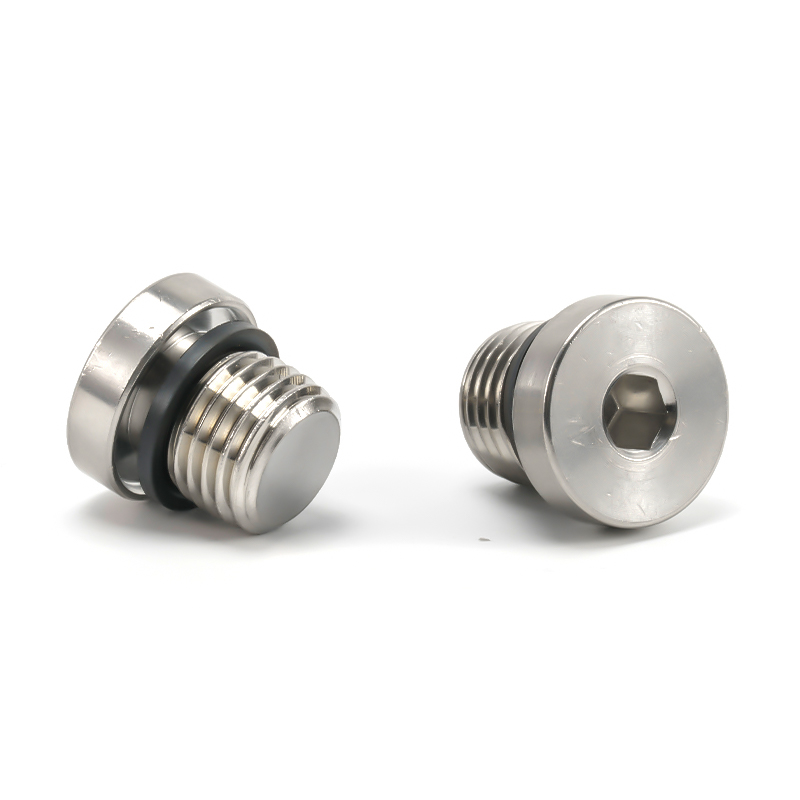
303 / 304 / 316 Stainless Steel Oil Plug
Understanding the Function of a Stainless Steel Oil Plug
An oil plug is a threaded closure used to seal an opening in a housing, tank, gearbox, engine component, hydraulic system, or other mechanical assembly. The plug may be removed during filling, draining, inspection, cleaning, or maintenance. When installed, it must form a stable barrier against fluid leakage and prevent external contaminants from entering the equipment.
In many systems, the oil plug is exposed to more than lubricating oil. It may contact cleaning agents, coolants, hydraulic fluids, fuel residues, saltwater, process chemicals, or high-temperature media. The external environment may also include humidity, condensation, road salt, marine spray, vibration, and repeated thermal cycling. These conditions make the plug material and sealing design important to the reliability of the entire assembly.
A high-quality stainless steel oil plug normally performs several functions at the same time:
First, it closes the threaded opening securely and maintains the intended pressure boundary. Second, it resists corrosion caused by moisture, chemicals, acids, alkalis, salt, or process residues. Third, it tolerates repeated installation and removal without premature thread deterioration. Fourth, it remains dimensionally stable across the expected operating temperature range. Fifth, it contributes to clean and hygienic equipment design where product contamination must be minimized.
Compared with ordinary carbon steel plugs, stainless steel alternatives provide better resistance to oxidation and environmental attack. Compared with less suitable plated materials, stainless steel can offer more consistent long-term protection because its corrosion resistance is inherent in the material rather than dependent only on a surface coating. This can be particularly valuable where abrasion, cleaning, or repeated handling could damage a coating.
Material Options: 303, 304, and 316 Stainless Steel
303 Stainless Steel Oil Plugs
303 stainless steel is commonly selected when machining efficiency is a significant consideration. Its composition is designed to improve machinability, allowing threaded parts and detailed features to be produced efficiently. This makes it suitable for oil plugs requiring accurate external threads, internal drive features, shoulders, grooves, or other machined geometries.
303 stainless steel provides useful resistance to atmospheric corrosion and general industrial environments. It is often appropriate for machinery, general engineering equipment, automotive assemblies, and applications where the plug is not continuously exposed to severe chloride or chemical attack. Its machinability can support economical production and stable dimensional control for medium- and large-volume orders.
When selecting 303 stainless steel, the application environment should be evaluated carefully. It is not normally the first choice for continuous exposure to seawater, concentrated chlorides, or extremely aggressive chemical media. In those environments, 304 or 316 stainless steel may provide a more suitable balance of corrosion resistance and service life.
304 Stainless Steel Oil Plugs
304 stainless steel is one of the most widely used stainless steel grades for general corrosion-resistant components. It provides a strong combination of corrosion resistance, mechanical performance, availability, and cost effectiveness. For this reason, 304 oil plugs are suitable for a broad range of industrial, food-processing, pharmaceutical, automotive, and equipment-manufacturing applications.
304 stainless steel performs well in humid environments and offers good resistance to many common chemicals and cleaning conditions. It is also widely accepted in applications requiring a clean, non-corrosive surface. Its balanced properties make it a practical standard choice when the equipment operates in a moderately corrosive environment but does not require the enhanced chloride resistance associated with 316 stainless steel.
Typical applications include gear housings, pumps, tanks, processing machinery, hydraulic equipment, food-production machinery, and general industrial enclosures. Where the plug is exposed to routine washing, condensation, lubricants, and moderate chemical contact, 304 stainless steel can provide reliable performance without the additional material cost of a more specialized grade.
316 Stainless Steel Oil Plugs
316 stainless steel is intended for more demanding environments. Its alloy composition provides improved resistance to pitting and crevice corrosion, particularly in the presence of chlorides and marine conditions. This makes 316 stainless steel oil plugs suitable for seawater exposure, coastal installations, marine equipment, chemical-processing systems, pharmaceutical equipment, oil drilling applications, and other severe service environments.
The higher corrosion resistance of 316 stainless steel can help preserve thread integrity and sealing performance over a longer operating period. It is especially valuable when replacing a corroded plug would be difficult, costly, or unsafe. In critical systems, the additional material investment may be justified by reduced maintenance, lower replacement frequency, and improved equipment availability.
316 stainless steel is also suitable where cleaning chemicals, salt deposits, high humidity, or process fluids create a greater risk of corrosion. Although no material is universally resistant to every chemical, 316 is often the preferred option when a project specification calls for superior resistance to aggressive environments.
Comparison of the Three Stainless Steel Grades
| Material | Primary Advantage | Recommended Environment | Typical Application Position |
|---|---|---|---|
| 303 stainless steel | Good machinability and reliable general corrosion resistance | General industrial and moderately corrosive environments | Cost-effective machined oil plug production |
| 304 stainless steel | Balanced corrosion resistance, strength, availability, and value | Industrial, food, pharmaceutical, automotive, and humid environments | General-purpose stainless steel oil plug |
| 316 stainless steel | Enhanced resistance to chlorides, seawater, and aggressive media | Marine, chemical, pharmaceutical, oil, and severe service environments | Higher-performance corrosion-resistant oil plug |
The correct grade depends on the actual service conditions. Factors include contact with seawater or chlorides, chemical concentration, operating temperature, pressure, cleaning method, installation frequency, expected service life, and the consequences of leakage. Choosing the lowest-cost material without considering these conditions can increase the total cost of ownership. Conversely, selecting 316 stainless steel for every general application may increase purchasing cost without providing a proportional benefit.
A professional supplier can help match the material to the working environment and the required performance. The decision should also consider the material of the mating housing, the sealing method, thread standard, dimensions, and any industry-specific requirements.
Key Performance Advantages
Excellent Corrosion Resistance
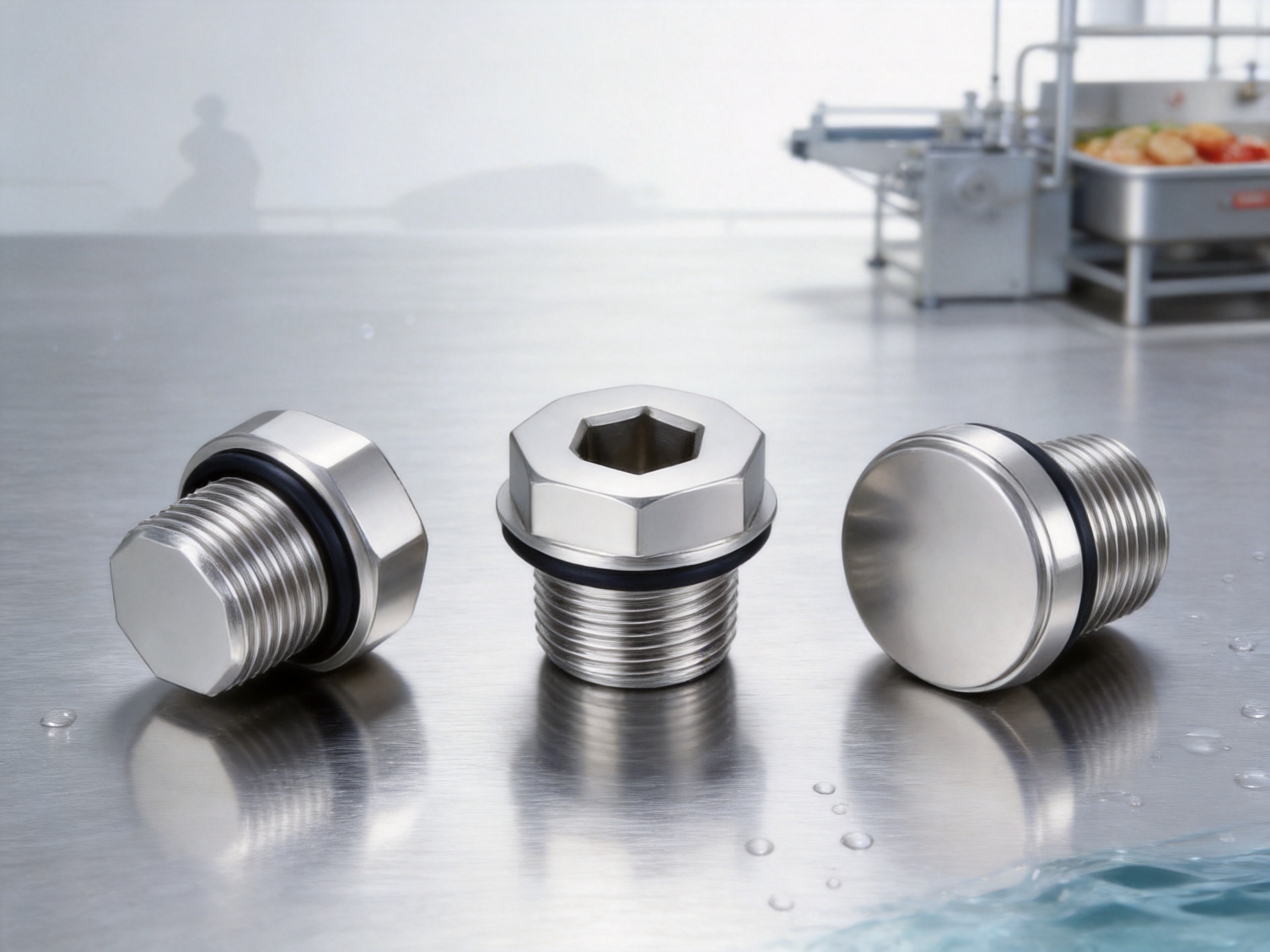
The main advantage of stainless steel oil plugs is their ability to resist corrosion in demanding conditions. 304 and 316 stainless steel are particularly suitable for equipment that encounters moisture, cleaning agents, process liquids, or outdoor exposure. 316 stainless steel provides an additional level of protection for applications involving seawater, chlorides, and aggressive industrial atmospheres.
Corrosion resistance is important not only for appearance. Corrosion can reduce thread accuracy, weaken the plug, damage the mating housing, create leakage paths, and make removal difficult during maintenance. By maintaining a sound surface and stable thread profile, a corrosion-resistant oil plug can help preserve the function of the complete assembly.
Reliable Sealing
Precision manufacturing supports dependable sealing. Accurate thread dimensions allow the plug to engage correctly with the mating component and distribute installation forces more evenly. A properly manufactured plug can work with a gasket, sealing washer, O-ring, tapered thread, or other sealing arrangement according to the design of the equipment.
Reliable sealing reduces the risk of oil leakage, fluid loss, air ingress, and contamination. In hydraulic or high-pressure systems, sealing performance is directly related to operational safety. In food, pharmaceutical, and chemical equipment, it also helps prevent process contamination and supports hygienic maintenance.
The oil plug itself should not be considered separately from the sealing method. A suitable material, accurate thread, correctly selected gasket, clean mating surface, and appropriate tightening procedure must work together. If any of these elements is unsuitable, the performance of the final connection may be reduced.
High-Temperature Performance
Stainless steel oil plugs maintain structural stability across a wide range of operating conditions. This makes them suitable for machinery exposed to elevated temperatures, thermal cycling, and heat generated by engines, transmissions, pumps, compressors, or processing equipment.
Temperature resistance is affected by the stainless steel grade, plug geometry, sealing material, installation torque, and surrounding component. The plug may remain structurally stable while a gasket or elastomer seal reaches its temperature limit. Therefore, the complete sealing system should be evaluated when the equipment operates at high temperature.
Long-Term Reliability
Wear, chemical attack, vibration, and repeated maintenance can gradually reduce the performance of a low-quality plug. Stainless steel oil plugs are designed to support longer service life by resisting oxidation, mechanical deterioration, and environmental damage. A durable plug is less likely to require frequent replacement and can reduce the risk of maintenance-related damage to the housing.
Long-term reliability is especially important in equipment that is difficult to access. Marine systems, industrial plants, drilling equipment, rail vehicles, and production lines may require substantial time and cost to service. A durable oil plug helps support predictable maintenance planning.
Wide Industrial Applicability
303, 304, and 316 stainless steel oil plugs can be adapted to many types of equipment. They are suitable for applications involving lubricants, hydraulic oils, process fluids, and other liquids that must be retained inside a sealed assembly. Their material options allow users to balance machinability, corrosion resistance, service life, and budget.
The same product category can support different industries while allowing customization of dimensions, thread type, drive configuration, sealing arrangement, and surface finish. This flexibility is valuable for original equipment manufacturers, maintenance departments, engineering contractors, and distributors.
Applications in Demanding Industries
Chemical Processing
Chemical-processing equipment may be exposed to acids, alkalis, solvents, salts, cleaning agents, and process residues. The correct stainless steel oil plug can help protect threaded openings in pumps, gearboxes, tanks, mixers, and other equipment. 316 stainless steel is often considered when chloride exposure or aggressive media increases corrosion risk.
In chemical applications, material compatibility must be checked against the exact process fluid, concentration, temperature, and exposure time. A general statement of corrosion resistance is not a substitute for application-specific evaluation. However, the availability of 304 and 316 options gives engineers a practical starting point for selecting a suitable material.
Food and Beverage Equipment
Food-processing machinery requires cleanable, corrosion-resistant components. Oil plugs used in gear housings, processing systems, pumps, and support equipment must resist frequent washing and exposure to food residues or cleaning chemicals. Stainless steel provides a smooth, durable surface that is well suited to hygiene-focused equipment design.
304 stainless steel is widely used for general food-processing applications, while 316 stainless steel may be selected for more aggressive cleaning conditions, salt exposure, or specialized processing environments. The final design should also consider surface finish, crevice formation, seal material, and cleanability.
Pharmaceutical Manufacturing
Pharmaceutical equipment places high demands on material cleanliness, corrosion resistance, process integrity, and repeatable maintenance. Stainless steel oil plugs can be used in supporting machinery, fluid systems, gear housings, and other assemblies where reliable closure and resistance to cleaning agents are required.
A properly selected plug helps reduce the possibility of corrosion products or loose surface material entering the surrounding system. For controlled manufacturing environments, purchasing specifications may include traceability, inspection documentation, dimensional records, and material certificates.
Marine Equipment and Ships
Marine environments combine humidity, saltwater, spray, condensation, vibration, and difficult maintenance access. These conditions are particularly challenging for ordinary steel components. 316 stainless steel oil plugs are well suited to many marine applications because of their enhanced resistance to chloride-related corrosion.
Possible uses include marine engines, gear systems, pumps, winches, hydraulic equipment, deck machinery, and service systems. The plug material should be considered together with galvanic compatibility, the surrounding housing material, sealing method, and the possibility of trapped seawater in crevices.
Oil Drilling and Energy Equipment
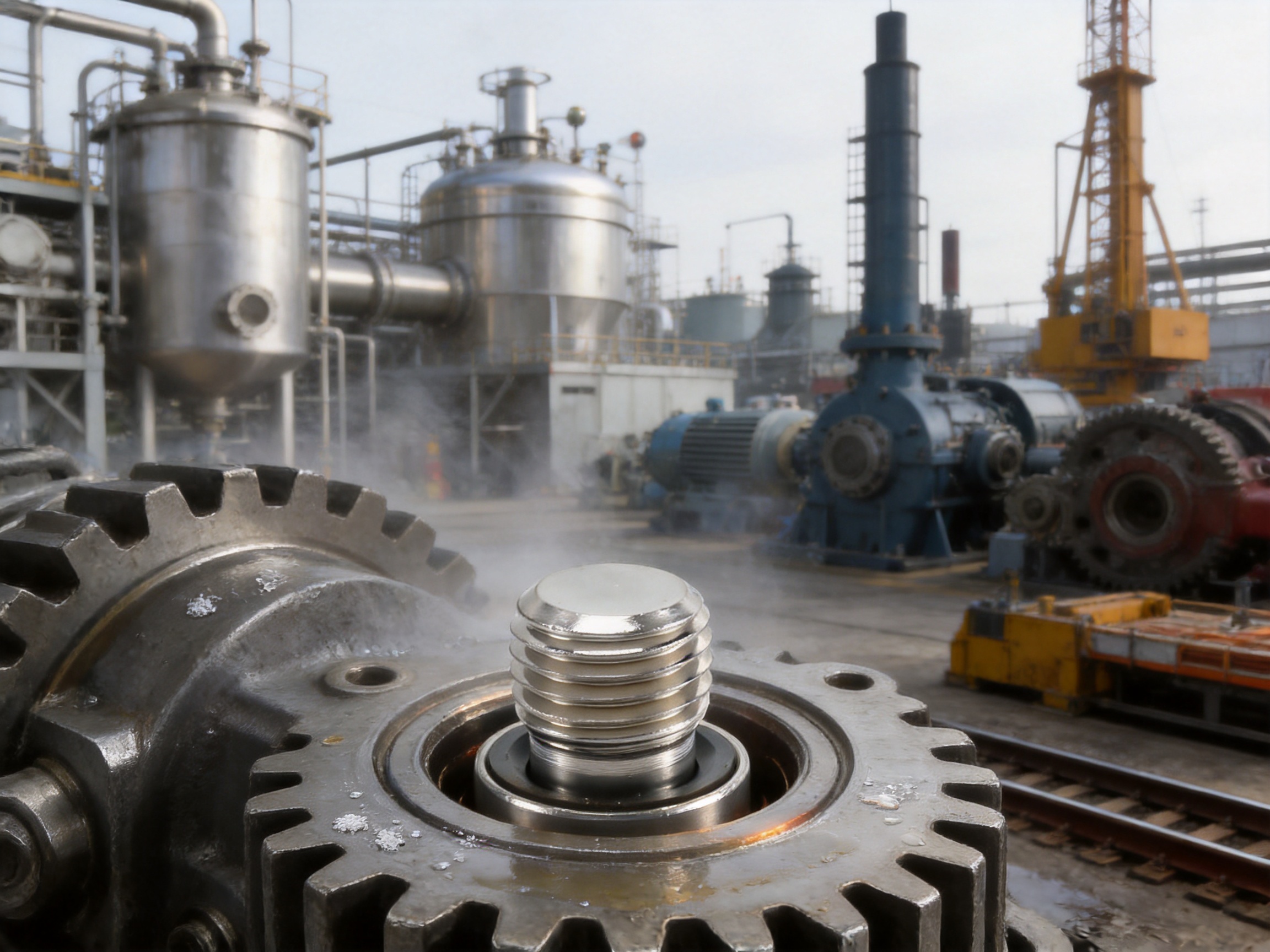
Oil drilling and energy equipment may operate under high loads, vibration, pressure, temperature, and exposure to corrosive fluids. Threaded plugs used in these systems must maintain their structural integrity and sealing performance during demanding service conditions.
Stainless steel oil plugs can support inspection, drainage, filling, and maintenance functions in pumps, gear systems, hydraulic assemblies, and other equipment. The exact product specification should be confirmed according to pressure requirements, fluid compatibility, temperature, thread standard, and relevant industry procedures.
Automotive, Aerospace, and Rail Applications
Automotive engines, transmissions, and vehicle systems depend on secure threaded closures for lubricants and other fluids. Oil plugs must tolerate vibration, thermal cycling, repeated maintenance, and contact with oils or cleaning materials. Stainless steel options can provide durable thread engagement and corrosion resistance in passenger and commercial vehicles.
Aerospace and rail applications place additional emphasis on consistency, traceability, weight considerations, inspection, and reliable supply. In such sectors, a component supplier must be capable of maintaining repeatable production and supporting documentation requirements. The oil plug may be a small component, but its quality can affect the reliability of a larger critical assembly.
Manufacturing Process and Engineering Capability
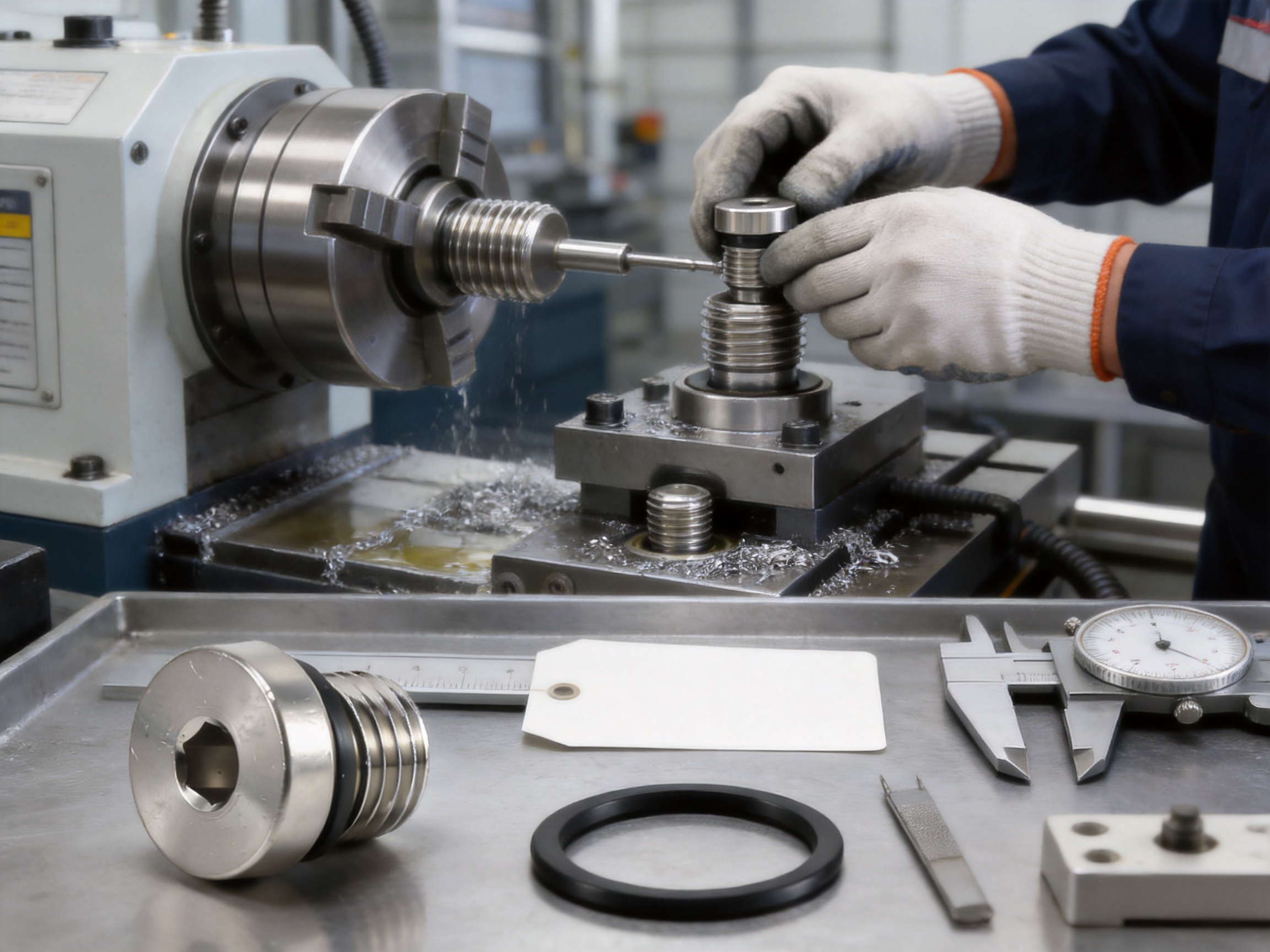
Product performance depends on more than the nominal stainless steel grade. Manufacturing control determines whether the finished plug consistently meets its intended dimensions and functional requirements. A reliable production process normally includes material preparation, machining, thread formation, deburring, cleaning, inspection, and controlled packaging.
Material Preparation
Production begins with the selection and preparation of suitable stainless steel raw material. Material identification is important because 303, 304, and 316 stainless steel have different performance characteristics. Controlled purchasing and material verification help ensure that the selected alloy corresponds to the order specification.
For customers requiring formal documentation, material certificates and traceability records can support quality assurance. Traceability is especially useful for automotive, aerospace, pharmaceutical, chemical, and other regulated or high-consequence applications.
Precision Machining
Oil plugs commonly require accurate external threads, internal drive features, sealing faces, shoulders, grooves, and controlled overall dimensions. Modern machining equipment and suitable cutting processes help produce these features consistently. 303 stainless steel is particularly convenient for efficient machining, while 304 and 316 stainless steel require process control appropriate to their work-hardening and cutting characteristics.
Machining parameters, tooling condition, workholding, coolant management, and inspection frequency all influence final quality. Stable production reduces dimensional variation and helps ensure that plugs fit the intended mating components without excessive looseness or difficult installation.
Thread Quality
Thread quality affects both installation and sealing. The thread must correspond to the required standard, pitch, diameter, tolerance, and engagement length. Damaged, incomplete, oversized, or undersized threads can cause cross-threading, uneven tightening, leakage, or permanent damage to the housing.
Quality control may include visual examination, dimensional measurement, thread gauges, functional fitting, and inspection of the sealing face. For customized products, the supplier should confirm the thread specification before production. Common requirements may differ by market, equipment design, and customer standard.
Deburring and Surface Treatment
Sharp burrs can interfere with installation, damage seals, trap contaminants, or create handling hazards. Deburring and edge treatment are therefore important steps in the production of an oil plug. The sealing surface should be clean and sufficiently smooth for the intended gasket or sealing method.
Stainless steel oil plugs may also receive cleaning or passivation-related treatment according to the product specification and application. The purpose is to support a clean surface and preserve the corrosion-resistant behavior of the material. The appropriate treatment depends on the grade, customer requirements, and intended industry.
Inspection and Quality Management
Inspection should cover the characteristics that influence functional performance. These may include material identification, dimensions, thread accuracy, sealing-face condition, surface quality, hardness where specified, and overall appearance. Inspection records can provide evidence of consistency and support customer quality systems.
Dongtai Jinzhize Metal Products Co., Ltd. operates a 10,000-square-meter owned manufacturing plant with hundreds of machine tools and automated production systems. The company has developed an experienced design, development, and production team, supported by a quality management system and an after-sales service mechanism. These capabilities are valuable when customers require stable supply, repeatable dimensions, customized designs, or coordinated threaded connection products.
Advantages Over Ordinary or Lower-Specification Alternatives
Stainless steel oil plugs can provide several advantages over ordinary carbon steel, low-grade plated steel, or inconsistent aftermarket alternatives. The first is corrosion resistance. A corroded plug may become difficult to remove, while corrosion in the threaded housing can compromise future maintenance. Stainless steel reduces this risk in many environments.
The second advantage is service stability. When the plug retains its dimensions and surface condition, the sealing system is more likely to remain dependable. This is particularly important where the equipment experiences vibration, temperature changes, or repeated servicing.
The third advantage is material selection flexibility. Users can choose 303 for machining efficiency, 304 for balanced general performance, or 316 for more aggressive environments. This allows the product to be matched to the actual application rather than forcing every customer into one standard material.
The fourth advantage is suitability for hygienic industries. Stainless steel surfaces are widely used in food, pharmaceutical, and chemical environments because they support clean equipment design and resist many common cleaning conditions.
The fifth advantage is integration with a broader threaded product range. A supplier that also produces wire thread inserts, self-tapping inserts, key-locking inserts, threaded adapters, taps, and installation tools can help address the complete threaded connection rather than supplying an isolated plug. This can simplify sourcing, improve dimensional coordination, and support repair or redesign projects.
Customization and Sourcing Support
Different equipment designs require different oil plug configurations. A customer may need a specific thread standard, diameter, pitch, length, drive style, head form, sealing face, gasket arrangement, or surface finish. Custom production can be useful when standard catalog dimensions do not fit the housing or when an existing plug must be replaced without redesigning the equipment.
Before requesting a quotation, customers should prepare as much technical information as possible. Useful details include the stainless steel grade, thread standard, nominal size, pitch, plug length, sealing method, operating temperature, working pressure, process fluid, installation frequency, and required quantity.
Drawings, samples, inspection requirements, packaging instructions, and traceability expectations should also be communicated. Clear technical information reduces the chance of incorrect interpretation and helps the supplier recommend an appropriate production method.
For original equipment manufacturers, cooperation during design development can improve manufacturability. The supplier may be able to suggest changes to thread length, drive geometry, corner radii, sealing-face design, or material selection. These changes can improve production efficiency and reduce the risk of installation problems.
Installation and Maintenance Recommendations
Before installation, inspect the plug, mating thread, and sealing surface. Remove dirt, chips, old sealant, corrosion products, and other contamination. The mating hole should be clean and free from damage. If the housing thread is worn or stripped, installing a new oil plug alone may not solve the problem; a threaded insert or other repair solution may be required.
Confirm that the plug has the correct thread size and pitch. Never force a plug into a mismatched thread. Cross-threading can permanently damage both the plug and the housing. Start the plug by hand whenever possible, ensuring that it turns smoothly before applying a wrench.
Use the specified gasket, sealing washer, O-ring, thread sealant, or other sealing method. The sealing component must be compatible with the fluid and operating temperature. Excessive sealant may enter the equipment and contaminate the fluid system, while insufficient or incompatible sealing material may result in leakage.
Tighten the plug according to the equipment or engineering specification. Excessive torque can distort the sealing surface, damage the thread, or make later removal difficult. Insufficient torque can prevent proper sealing. Where a torque value is specified, a calibrated tool should be used.
During maintenance, inspect the plug for thread damage, pitting, deformation, or unusual wear. Replace the gasket or sealing element when recommended. If the plug shows significant corrosion or mechanical damage, replacement is generally preferable to continued use.
Quality, Supply, and Manufacturing Strength
A dependable oil plug supplier must provide more than a single finished part. Customers also need consistent production, responsive technical communication, repeatable delivery, and after-sales support. These capabilities become increasingly important when oil plugs are used in high-volume equipment or critical assemblies.
Dongtai Jinzhize Metal Products Co., Ltd. was established in 2015 and operates from its own 10,000-square-meter manufacturing facility. Its production base includes hundreds of machine tools and automated production systems. This infrastructure supports both standard and customized threaded connection products.
The company’s product portfolio covers helical wire inserts, self-tapping inserts, key-locking inserts, threaded adapters, oil plugs, installation taps, and related tools. This broad scope allows the manufacturer to understand the interaction between threaded holes, repair inserts, fasteners, plugs, and installation tooling.
Its products are used in automotive applications such as engines and transmissions for passenger and commercial vehicles, as well as in aerospace and rail vehicle manufacturing. These sectors require stable product quality, dependable dimensional control, and reliable supply coordination.
In 2024, the company achieved an annual output value of 153 million RMB. This result indicates the company’s capability to support large-scale and stable production. For customers, production capacity can be important when moving from prototype quantities to regular manufacturing orders.
The company emphasizes consistency, traceability, and service support. Its stated manufacturing mission is to provide reliable threaded connection and fastening products for critical assemblies while helping customers improve assembly consistency and reduce procurement and usage risks. These principles are directly relevant to stainless steel oil plugs, where a small dimensional or material error can affect the performance of a larger system.
How to Select the Appropriate Grade
Select 303 stainless steel when machining efficiency, general corrosion resistance, and cost control are important, and when the plug will not be continuously exposed to severe chloride or marine conditions. It is a practical option for many general industrial assemblies.
Select 304 stainless steel when a balanced combination of corrosion resistance, mechanical performance, hygiene, availability, and value is required. It is often the most versatile choice for industrial, food-processing, pharmaceutical, automotive, and humid environments.
Select 316 stainless steel when the plug will be exposed to seawater, salt spray, chlorides, aggressive cleaning agents, chemical media, or other conditions where enhanced corrosion resistance is important. It is also suitable when maintenance access is difficult or when the cost of leakage and replacement is high.
In every case, the selection should be validated against the actual fluid, temperature, pressure, installation method, and surrounding materials. The appropriate grade is the one that provides sufficient performance for the complete service environment, not simply the one with the highest nominal specification.
Frequently Asked Questions
What is the main purpose of a stainless steel oil plug?
A stainless steel oil plug closes a threaded opening and helps retain oil, hydraulic fluid, lubricant, or another process liquid. It also helps prevent external contamination from entering the equipment. Its performance depends on the plug material, thread accuracy, sealing method, mating housing, and installation procedure.
What is the difference between 303, 304, and 316 stainless steel oil plugs?
303 stainless steel is generally selected for improved machinability and general industrial use. 304 stainless steel provides balanced corrosion resistance and is widely used in industrial, food, pharmaceutical, and automotive equipment. 316 stainless steel offers enhanced resistance to chloride, seawater, and more aggressive environments.
Which grade is best for marine applications?
316 stainless steel is usually the preferred option for marine applications because it provides better resistance to chloride-related corrosion than 303 or 304 stainless steel. The complete design should still consider galvanic compatibility, crevices, sealing materials, and the actual exposure conditions.
Are 304 stainless steel oil plugs suitable for food-processing equipment?
304 stainless steel is widely used in food-processing equipment because it offers good corrosion resistance and supports clean equipment design. The application should also consider surface condition, cleaning chemicals, seal materials, hygiene requirements, and any applicable customer or industry specifications.
Can these oil plugs be customized?
Customization may be available for dimensions, thread standards, plug length, drive configuration, sealing features, surface requirements, material grade, packaging, and inspection documentation. Customers should provide a drawing, sample, or detailed technical specification for evaluation.
How can leakage be prevented during installation?
Use the correct thread size, clean the mating surfaces, inspect the plug and housing, install the specified gasket or sealing element, and apply the recommended tightening torque. Avoid cross-threading and excessive torque. If the housing thread is damaged, repair it before installing a replacement plug.
Can a stainless steel oil plug be used at high temperature?
Stainless steel generally provides good structural stability at elevated temperatures, but the complete assembly must be evaluated. The sealing washer, gasket, O-ring, thread sealant, fluid, and surrounding housing may have different temperature limits.
Why is thread accuracy important?
Accurate threads support smooth installation, correct engagement, even load distribution, and reliable sealing. Poor thread quality can cause cross-threading, leakage, loose installation, difficult removal, or damage to the mating housing.
What information should be included in an inquiry?
An inquiry should include the required material grade, thread standard, nominal size, pitch, length, sealing method, application environment, operating temperature, working pressure, estimated quantity, drawings or samples, and inspection or packaging requirements.
Can the supplier provide other threaded connection products?
The manufacturer also produces helical wire inserts, self-tapping inserts, key-locking inserts, threaded adapters, installation taps, and related tools. This product range can support complete threaded repair, reinforcement, conversion, and fastening requirements.
Conclusion
303, 304, and 316 stainless steel oil plugs provide reliable closure and corrosion-resistant performance for a wide range of industrial and mechanical applications. Their advantages include resistance to oxidation, stable performance at elevated temperatures, dependable sealing when correctly installed, long-term durability, and suitability for demanding industries.
303 stainless steel is a practical choice where machinability and general corrosion resistance are important. 304 stainless steel offers a versatile balance for many industrial, food, pharmaceutical, automotive, and equipment applications. 316 stainless steel is the preferred option for more aggressive environments involving seawater, chlorides, chemicals, or severe cleaning conditions.
Product quality depends on accurate material selection, controlled machining, precise thread production, effective deburring, appropriate surface treatment, and systematic inspection. With a 10,000-square-meter manufacturing plant, hundreds of machine tools, automated production systems, experienced technical personnel, and a broad threaded product portfolio, Dongtai Jinzhize Metal Products Co., Ltd. is positioned to support both standard and customized oil plug requirements.
For buyers, the best result comes from evaluating the complete application rather than selecting a plug by size alone. Material grade, thread specification, sealing method, temperature, pressure, fluid compatibility, installation frequency, and maintenance access should all be considered. When these factors are properly matched, a stainless steel oil plug can contribute to safer operation, reduced leakage risk, longer service intervals, and more reliable equipment performance.
References
1. ASTM International, standard specifications and technical information for austenitic stainless steels.
2. ASM International, materials guidance for stainless steel corrosion resistance and engineering applications.
3. International Organization for Standardization, technical principles for metric threads, tolerances, and threaded connections.
4. American Society of Mechanical Engineers, engineering guidance for pressure-containing components and mechanical fastening practices.
5. Food and Drug Administration, general principles concerning materials used in food-processing environments.
6. International Organization for Standardization, quality management principles for manufacturing and traceability.
7. Manufacturer-provided product information for 303, 304, and 316 stainless steel oil plugs and related threaded connection products.