Français
 Español
 Deutsch


Content
- 1 Understanding the Slotted Internal-External Thread Conversion Nut
- 2 How the Product Solves Thread Compatibility Problems
- 3 Key Product Advantages
- 4 Comparison with Conventional Thread Adapters and Competing Solutions
- 5 Manufacturing Process and Quality Control
- 6 Manufacturing Strengths of Dongtai Jinzhize Metal Products Co., Ltd.
- 7 Applications Across Major Industries
- 8 Design Considerations for Selecting the Correct Product
- 9 Recommended Installation Procedure
- 10 Why Consistent Manufacturing Matters
- 11 Packaging, Supply, and Customer Support
- 12 Custom Manufacturing Options
- 13 Quality and Performance Benefits for Buyers
- 14 Q&A: Frequently Asked Questions
- 14.1 What is a slotted internal-external thread conversion nut?
- 14.2 How is it different from a standard threaded bushing?
- 14.3 Can the internal and external threads have different sizes?
- 14.4 What materials are available?
- 14.5 Is the product suitable for high-vibration applications?
- 14.6 Can the surface treatment be customized?
- 14.7 How should the adapter be installed?
- 14.8 Can it be removed for maintenance?
- 14.9 What information is needed for a quotation?
- 14.10 Are custom sizes available?
- 14.11 What industries use these products?
- 14.12 Why is supplier manufacturing capability important for this product?
- 15 Conclusion
- 16 References
- 17 Product: Slotted Internal-external Thread Conversion Nut
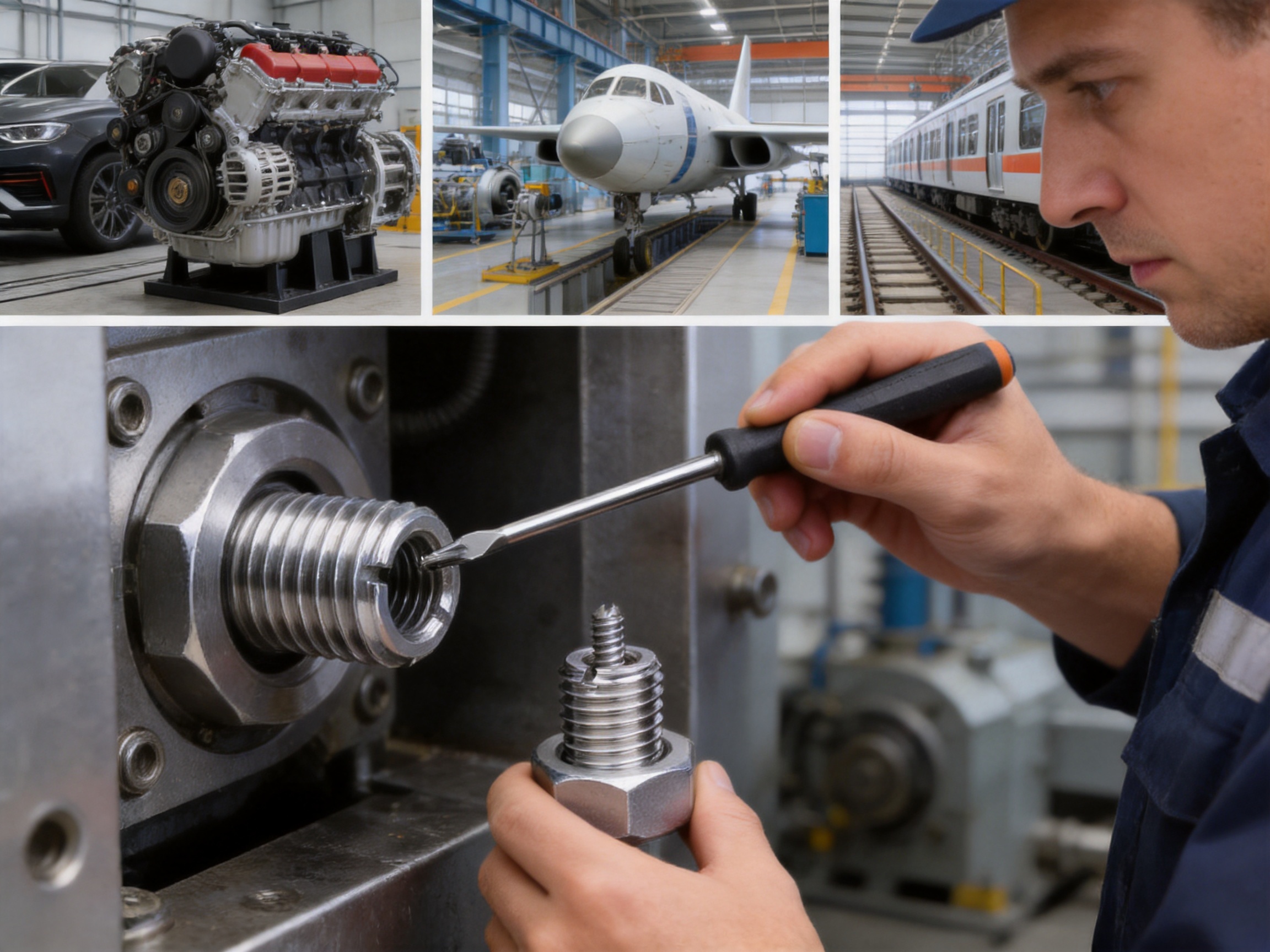
Threaded connections are among the most widely used fastening methods in mechanical equipment, vehicles, structural assemblies, and precision systems. They provide a practical combination of clamping force, serviceability, dimensional control, and manufacturing flexibility. However, threaded connections can become difficult to manage when a design must join components with different thread sizes, thread standards, or thread directions. Replacing an entire component to solve a thread mismatch is often expensive and disruptive. A slotted internal-external thread conversion nut offers a more efficient alternative by combining an external male thread and an internal female thread in one compact component.
This product is designed to adapt one threaded connection to another while maintaining a stable mechanical interface. Its slotted structure allows installation and removal with a flathead screwdriver, eliminating the need for specialized external gripping features in many applications. The result is a versatile connector that can simplify assembly, support maintenance, and reduce the amount of redesign required when existing thread dimensions do not match.
Manufactured by Dongtai Jinzhize Metal Products Co., Ltd., the slotted internal-external thread conversion nut is part of a broader range of threaded connection and fastening products. The company specializes in helical wire inserts, self-tapping inserts, key-locking inserts, threaded adapters, oil plugs, installation taps, and related tools for automotive, aerospace, rail, industrial, and mechanical applications. Its manufacturing capabilities, quality systems, and experience in critical threaded assemblies support the production of conversion nuts intended for dependable use in demanding environments.
Understanding the Slotted Internal-External Thread Conversion Nut
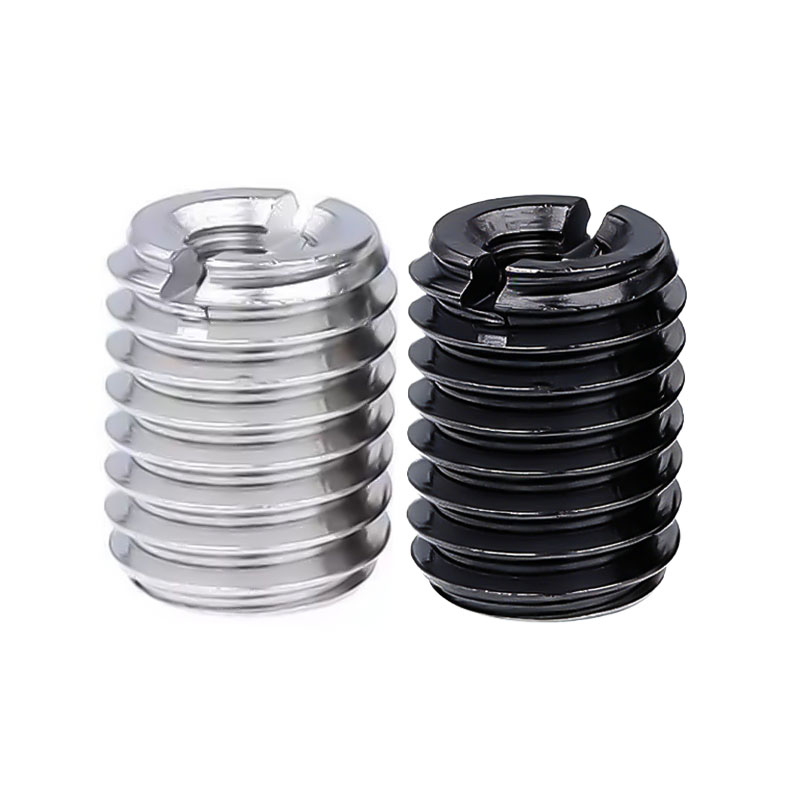
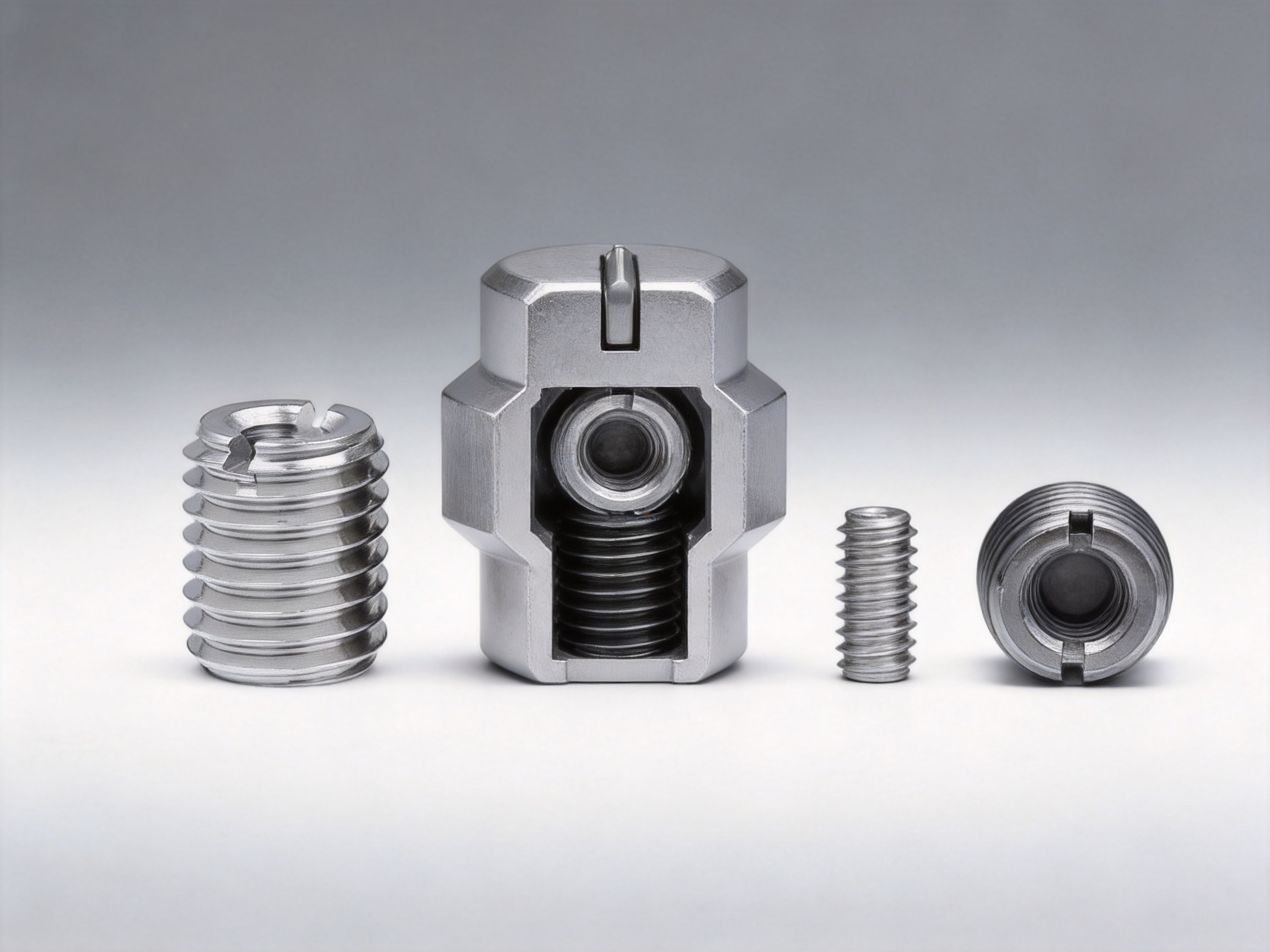
A slotted internal-external thread conversion nut is a threaded adapter with two functional thread surfaces. The external surface contains a male thread that engages with a tapped hole or a female-threaded component. The internal surface contains a female thread that accepts a screw, stud, bolt, or other male-threaded component. Because the two thread systems can have different nominal sizes, pitches, or standards, the component can serve as a transition between otherwise incompatible threaded parts.
For example, a machine designer may need to install a smaller screw into a housing originally designed for a larger thread. Instead of modifying the housing or producing a special screw, the designer can use a conversion nut with an external thread matched to the housing and an internal thread matched to the screw. This approach can shorten development time, reduce tooling changes, and make spare-part management easier.
The slot is generally positioned on the upper face or another accessible surface of the adapter. A flathead screwdriver can engage with the slot to rotate the component during installation or removal. This design is especially useful when the outer diameter is small, when there is limited clearance around the adapter, or when traditional wrench flats would increase the overall size of the part.
Although the product is compact, its performance depends on careful control of several factors. These include the accuracy of both thread systems, the concentricity between the internal and external threads, the strength and hardness of the selected material, the quality of the slot, the surface treatment, and the consistency of the finished dimensions. A conversion nut that does not meet these requirements may produce poor engagement, uneven loading, installation damage, or premature loosening.
How the Product Solves Thread Compatibility Problems
Thread incompatibility can arise for many reasons. An assembly may combine components made to different national or international standards. A replacement part may be available only with a different thread size. A compact component may require a smaller internal screw while the surrounding housing must retain a larger external connection. In older equipment, original thread specifications may no longer match current production components.
The slotted internal-external thread conversion nut addresses these problems without requiring a complete change to the surrounding assembly. Its external thread can be selected to fit the existing tapped hole or threaded body, while its internal thread provides the required connection for a new fastener. This makes the product valuable for both original equipment manufacturing and aftermarket repair.
In design engineering, the adapter can also help manufacturers standardize their fastener inventory. Instead of stocking many unique components, a company may use a controlled selection of conversion nuts to connect common fasteners to specialized housings. This can simplify procurement, reduce storage requirements, and improve maintenance planning.
The product is also useful during product upgrades. If a new generation of equipment requires a different screw size or fastening standard, engineers may be able to retain the original housing and introduce a conversion nut. This may reduce the need for expensive casting, machining, or tooling modifications. In some cases, the adapter permits a gradual transition from one fastener system to another while keeping existing parts in service.
Key Product Advantages
Dual-Thread Function in a Compact Component
The most important advantage is the integration of external and internal threads into one part. A conventional nut, spacer, and threaded sleeve may require several components to accomplish the same connection. The conversion nut consolidates these functions, reducing assembly complexity and minimizing the number of interfaces that could loosen or become misaligned.
A compact dual-thread component is particularly valuable where installation space is limited. Automotive assemblies, engine compartments, transmission systems, electronic housings, and precision machinery often have restricted access. The adapter can provide thread conversion without requiring a large bracket, an oversized coupling, or a custom-machined intermediate part.
Convenient Slotted Installation
The slot supports fast manual installation and removal with a flathead screwdriver. This is a practical advantage in service environments where operators may need to replace a part quickly or work in confined locations. The slot also avoids the need to access the complete circumference of the component with a wrench.
Compared with smooth adapters that require pliers or improvised tools, the slotted design provides a defined driving interface. This can reduce surface damage and improve control during installation. When the correct screwdriver size and torque procedure are used, the slot helps installers apply rotational force in a controlled manner.
Support for Maintenance and Replacement
Thread conversion nuts can extend the service life of equipment by allowing replacement fasteners or updated components to be installed in existing assemblies. If an original screw becomes unavailable, the adapter may make it possible to use a readily available alternative. This reduces downtime and helps maintenance departments respond more quickly to field repairs.
The removable design is also useful in equipment that undergoes frequent inspection, adjustment, or component replacement. Rather than permanently modifying a housing, technicians can remove the adapter and restore the original configuration when required.
High-Strength Steel Construction
The product is manufactured from premium steel selected for mechanical stability and durability. Steel provides the strength needed to resist thread deformation, installation stress, vibration, and repeated loading. Material selection can be adjusted according to the application, required hardness, corrosion conditions, and compatibility with mating components.
High-quality steel is particularly important because the adapter contains two thread systems in a relatively small cross-section. The material must maintain sufficient load-bearing capacity around both the internal and external threads. It must also tolerate tightening forces without excessive galling, cracking, or permanent deformation.
Corrosion-Resistant Surface Treatment
Surface treatment improves resistance to humidity, oxidation, handling, and other environmental factors. A suitable finish can help preserve the dimensional quality of the threads and protect the adapter during storage and transportation. This is important for industrial equipment, vehicles, construction machinery, and other products exposed to moisture or changing temperatures.
The appropriate treatment depends on the application and customer requirements. Factors may include salt exposure, contact with oils or fluids, operating temperature, required appearance, and compatibility with the mating material. Effective process control is necessary to prevent excessive coating thickness from interfering with thread fit.
Wide Thread Compatibility
The product can be manufactured in different thread combinations to accommodate diverse connection requirements. Depending on the design, this may include different nominal diameters, pitches, thread standards, and thread directions. Such flexibility allows the adapter to serve as a practical component in both standardized and customized assemblies.
Thread compatibility must always be confirmed through technical drawings, samples, or engineering specifications. Nominal size alone is not sufficient because two threads with similar diameters may have different pitches, profiles, or standards. Jinzhize can support customers in defining the required internal and external thread combination before production.
Slotted Internal-external Thread Conversion Nut
Comparison with Conventional Thread Adapters and Competing Solutions
Several types of products can be used to resolve a thread mismatch, including ordinary bushings, welded threaded sleeves, custom-machined couplers, oversized nuts, and thread repair inserts. Each solution has a place, but the slotted internal-external thread conversion nut offers a balanced combination of compactness, removability, and installation efficiency.
| Solution | Main Characteristics | Typical Limitations | Advantages of the Slotted Conversion Nut |
|---|---|---|---|
| Conventional threaded bushing | Provides a basic internal and external thread connection | May require external flats, special tooling, or additional locking measures | Integrated slot supports simple installation and removal in restricted spaces |
| Custom-machined adapter | Can be designed for unusual sizes or geometries | Often has longer lead times and higher unit costs | Standardized production options can reduce cost and simplify replenishment |
| Welded threaded sleeve | Creates a permanent connection to a structure | Requires welding, heat control, surface finishing, and possible rework | Mechanical installation avoids welding and permits later removal |
| Oversized nut and secondary fastener | Uses multiple parts to create a transition | Requires more assembly space and may introduce additional interfaces | Combines two thread functions in one compact component |
| Thread repair insert | Restores a damaged internal thread | May not provide the desired external thread conversion | Designed specifically to connect different internal and external thread systems |
Compared with a plain threaded bushing, the slotted version offers a more accessible driving method. A bushing without a slot may need a spanner, a pin wrench, a hexagonal feature, or a special installation tool. In a compact assembly, these tools may be difficult to position. The slot provides a simple interface that many maintenance teams already understand.
Compared with a custom-machined adapter, a manufactured conversion nut can offer more predictable procurement and repeatability when the required size falls within an established product range. Standardized manufacturing processes help control thread accuracy, material consistency, and surface quality. For custom specifications, the same production experience can be applied to develop a tailored part.
Compared with a welded sleeve, the mechanical adapter does not introduce welding heat into the base material. This is important for treated alloys, thin walls, precision housings, and assemblies containing heat-sensitive components. The removable connection also supports future maintenance and avoids permanent modification.
Compared with a multi-part solution, the conversion nut reduces the number of components handled during assembly. Fewer parts can mean fewer opportunities for incorrect orientation, lost hardware, cross-threading, or inconsistent tightening. The compact design may also reduce the overall envelope of the connection.
Manufacturing Process and Quality Control
Engineering Review and Specification Confirmation
Production begins with a clear understanding of the required application. The engineering review normally considers the external thread, internal thread, pitch, thread tolerance, thread direction, length, outer diameter, slot dimensions, material, surface treatment, and expected loading conditions. Customers may provide drawings, samples, or equipment specifications for evaluation.
This stage is important because a thread conversion part must fit two mating systems simultaneously. The external thread must engage correctly with the receiving component, while the internal thread must accept the selected screw or stud. The relationship between the two threads also affects wall thickness and strength. Engineering review helps identify potential interference, insufficient material, or installation limitations before production begins.
For high-performance applications, additional requirements may include traceability, inspection records, hardness control, salt-spray performance, cleanliness, special packaging, or batch identification. Defining these requirements early helps align production and inspection procedures with the customer's quality system.
Material Preparation
Steel material is prepared according to the specified grade and mechanical requirements. Incoming material may be checked for dimensional consistency, surface condition, identification, and relevant documentation. Proper material control supports stable machining and helps ensure that finished parts meet the required strength and durability expectations.
Material selection must balance machinability and performance. A material that is too soft may be easy to machine but may not provide sufficient resistance to thread wear or deformation. A material that is excessively hard may increase tool wear and complicate machining. The selected grade should be appropriate for the intended service conditions and finishing process.
Precision Turning and Forming
The basic body of the conversion nut is produced through controlled machining and forming operations. Modern machine tools can establish the outside diameter, internal bore, shoulder features, end faces, and other dimensional characteristics. Stable fixturing is essential because the part must maintain concentricity between the two threaded surfaces.
Automated production systems can improve repeatability by controlling tool movement, cutting conditions, and part positioning. Experienced operators and process engineers monitor the equipment and adjust parameters when necessary. The goal is to achieve consistent dimensions from the first piece in a batch through the final piece.
External and Internal Thread Production
The two thread systems are produced using suitable cutting, forming, or tapping processes. The choice depends on the thread type, material, quantity, dimensional requirements, and production efficiency. Internal threads may be created with precision taps or other specialized tools, while external threads may be cut or formed on the outer surface.
Thread production requires attention to pitch diameter, major and minor diameters, flank form, lead, runout, and surface condition. Even a small deviation can affect assembly torque, engagement length, or load distribution. The manufacturing process must also prevent burrs at thread starts and exits, since burrs can obstruct assembly or damage the mating fastener.
Slot Machining
The screwdriver slot is machined to a controlled width, depth, and position. The slot must be deep enough to accept the intended tool but not so deep that it weakens the upper section of the adapter. Its edges should be sufficiently clean and stable to transmit installation torque without excessive deformation.
Slot dimensions may be adapted to the product size and expected installation force. For small components, dimensional accuracy is particularly important because the available driving area is limited. Consistent slot quality also contributes to a better user experience during maintenance and reduces the risk of screwdriver slippage.
Deburring and Cleaning
After machining, parts undergo deburring to remove sharp edges and loose fragments. This step is essential for safe handling and reliable assembly. Deburring must be controlled carefully so that it does not alter critical thread dimensions or reduce the effective engagement area.
Cleaning removes machining residues, chips, oil, and contaminants. A clean product is easier to inspect, package, and install. For automotive and aerospace-related applications, cleanliness may be subject to additional requirements depending on the assembly environment.
Surface Treatment
Surface treatment is selected according to the required corrosion resistance and operating environment. The treatment process must provide consistent coverage while preserving the functional dimensions of both threads. Process controls may include bath condition, treatment time, temperature, rinsing, drying, and post-treatment inspection.
Because the adapter is a precision threaded part, excessive coating buildup can affect fit and installation torque. For this reason, surface treatment is considered together with the thread tolerance rather than as an isolated finishing operation. Appropriate masking, process control, and inspection help preserve the intended connection performance.
Inspection and Testing
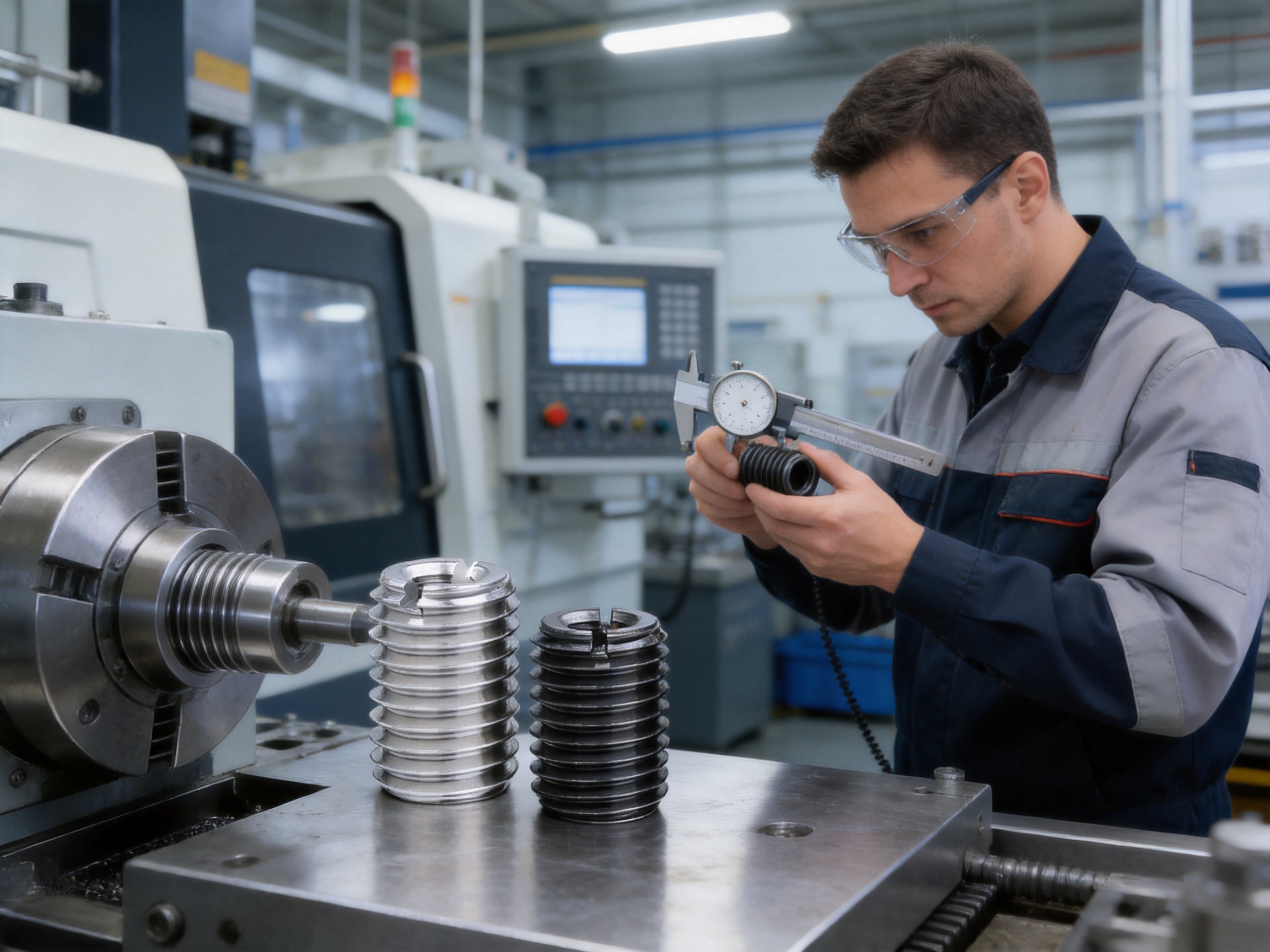
Inspection may include dimensional measurement, thread gauging, visual examination, slot verification, surface inspection, and material or hardness checks where required. Go and no-go gauges can verify whether the internal and external threads fall within the specified acceptance range. More detailed measurement equipment can be used for critical dimensions and first-article validation.
Sampling plans and inspection frequency may vary according to the product specification and customer quality requirements. For important assemblies, traceability can connect the finished batch with material records, process information, inspection results, and packaging identification. This helps customers investigate issues and maintain confidence in the supply chain.
Quality control is most effective when it is integrated throughout production. Checking only the final product may identify defects late, after material and machining resources have already been consumed. In-process monitoring allows potential problems to be corrected earlier and supports more stable production performance.
Manufacturing Strengths of Dongtai Jinzhize Metal Products Co., Ltd.
Dongtai Jinzhize Metal Products Co., Ltd. was established in 2015 and operates from an owned manufacturing plant of approximately 10,000 square meters. The facility includes hundreds of machine tools and automated production systems that support the manufacture of threaded connection products. This combination of production space, equipment, and specialized experience enables the company to serve both standard and customized requirements.
The company's product range includes helical wire inserts, self-tapping inserts, key-locking inserts, threaded adapters, oil plugs, installation taps, and related tools. This broad portfolio is valuable because many customers need more than one type of threaded component. A supplier familiar with several insert and fastening technologies can better understand how a conversion nut must interact with neighboring parts.
Jinzhize maintains teams for design, development, and production. These functions work together to review drawings, solve manufacturing challenges, improve tooling, and support product consistency. For a product involving two thread systems and a precision slot, coordination between design and manufacturing is especially important.
The company also emphasizes a rigorous quality management system and a comprehensive after-sales service mechanism. Quality management includes process control, inspection, production documentation, and customer communication. After-sales support helps customers address installation questions, product selection concerns, and potential changes in application requirements.
In 2024, the company achieved an annual output value of 153 million RMB. This production scale indicates experience in organized manufacturing and stable supply for customers requiring repeated deliveries. Capacity is particularly important for automotive, aerospace, and industrial customers that must maintain production schedules and avoid shortages of critical small components.
The company's products are used in automotive engines and transmissions, passenger and commercial vehicles, aerospace manufacturing, and rail vehicle applications. These sectors require consistent threaded connections because fastener-related problems can affect assembly efficiency, maintenance, and product reliability. Experience in such markets supports a disciplined approach to material control, dimensional accuracy, and traceability.
Applications Across Major Industries
Automotive Manufacturing
Automotive assemblies frequently combine castings, machined housings, stamped parts, brackets, sensors, covers, and precision components. These parts may use different fastener sizes depending on available space, load requirements, supplier standards, or production history. A thread conversion nut can connect a smaller component to a larger housing without redesigning the entire assembly.
Potential applications include engine accessories, transmission housings, sensor brackets, mounting points, service covers, and interior or exterior mechanical components. The slotted installation feature can be useful where access is restricted by adjacent components. Corrosion-resistant finishing is also valuable in vehicles exposed to humidity, road salt, oils, temperature changes, and vibration.
Automotive production often requires consistent cycle times and repeatable assembly procedures. A conversion nut with a defined screwdriver slot can support a clear installation method. For automated or semi-automated assembly, the design may also be reviewed for feeding, orientation, and tool compatibility.
Aerospace and Defense
Aerospace and defense equipment may include assemblies with strict weight, space, inspection, and traceability requirements. Thread conversion components can help engineers accommodate different fastener systems during equipment upgrades, repair, or integration of specialized subsystems.
In these applications, product selection must be based on detailed engineering approval. Material, surface treatment, locking requirements, operating temperature, vibration, and environmental exposure may all require special consideration. The value of a qualified manufacturing partner lies not only in machining the part but also in documenting the process and maintaining consistent production control.
The compact form of the adapter can help reduce the need for bulky transition hardware. Its removable design may also support maintenance activities when equipment must be disassembled in confined locations. Any aerospace or defense use should follow the customer's specifications, qualification procedures, and approved material and process requirements.
Industrial Machinery
Industrial machinery often remains in service for many years, during which designs, suppliers, and replacement parts may change. Thread conversion nuts can help maintenance teams adapt newer fasteners to existing equipment. They can also support modifications made during machine upgrades or production-line changes.
Applications may include machine guards, fixtures, actuators, hydraulic or pneumatic equipment, tooling systems, inspection devices, and mechanical housings. The adapter's high-strength construction and corrosion-resistant finish help it withstand repeated service and industrial environmental conditions.
Construction and Building Equipment
Construction equipment and building systems require durable connections that can tolerate vibration, dust, outdoor exposure, and repeated maintenance. Thread conversion nuts may be used in machinery frames, access panels, equipment brackets, modular structures, and serviceable mechanical joints.
The slotted design is useful where a maintenance worker must remove or replace a component using basic hand tools. The adapter can also support repair work when a damaged or obsolete thread must be connected to a currently available fastener.
Rail Vehicles
Rail vehicles contain numerous mechanical, electrical, and structural subsystems that must remain serviceable over long operating lives. Thread standards may vary among equipment suppliers, and replacement parts may be introduced during refurbishment. A controlled thread conversion solution can make these changes easier to manage.
Rail applications may involve vibration, humidity, temperature variation, and long maintenance intervals. The material, finish, locking method, and inspection requirements should therefore be matched to the specific assembly. Jinzhize's experience with threaded components for rail-related manufacturing provides a relevant foundation for these requirements.
Repair and Aftermarket Service
Repair shops and maintenance teams often need to solve thread mismatches without replacing a complete housing or structure. A conversion nut can be a practical option when the existing external thread or tapped hole remains serviceable but the replacement component uses another thread size.
Before installation, technicians should inspect the receiving thread, clean the area, verify thread compatibility, and confirm that the adapter length and engagement are appropriate. If the connection is subject to vibration, the assembly should include a suitable locking method or retention procedure specified by the equipment manufacturer.
Design Considerations for Selecting the Correct Product
Thread Standard and Size
The first selection factor is the exact specification of both threads. The external thread and internal thread should be identified separately. Important details include nominal diameter, pitch, thread angle, tolerance class, right-hand or left-hand direction, and applicable standard.
Using a similar-looking thread can lead to partial engagement, excessive installation torque, or damage to the mating components. Customers should provide complete drawings or samples when the thread standard is uncertain. Technical review before production can prevent costly assembly problems.
Engagement Length
The engagement length must be sufficient to transfer the expected load without stripping or excessive stress. The correct length depends on the material strength, thread diameter, loading direction, vibration, and mating component. A longer adapter is not always better because it may interfere with internal features or reduce available clearance.
Wall Thickness and Load Capacity
The material between the internal and external threads must retain enough thickness to resist expansion, cracking, or deformation. This is particularly important when the difference between the two thread sizes is small. Engineering evaluation should consider the minimum wall thickness and the expected tightening torque.
Installation Access
The slot must be accessible to the intended screwdriver or installation blade. Designers should consider surrounding walls, adjacent components, insertion depth, and the direction from which the tool will approach. If the slot cannot be reached, another driving feature or installation method may be required.
Corrosion and Environmental Exposure
The chosen surface treatment should reflect the actual environment. Indoor machinery, outdoor construction equipment, vehicles exposed to road salt, and high-humidity industrial systems may require different levels of protection. Contact with dissimilar metals should also be reviewed because galvanic corrosion can affect long-term performance.
Locking and Vibration Control
The conversion nut itself may need a locking solution if it is installed in a high-vibration assembly. Possible methods include controlled installation torque, thread-locking compounds compatible with the materials and service temperature, mechanical retention, or a design feature specified by the customer. The appropriate approach must not compromise future serviceability unless permanent retention is intended.
Recommended Installation Procedure
Before installation, inspect the conversion nut and the receiving component. Confirm that the internal and external threads match the approved drawing or bill of materials. Check that the threads are clean and free from chips, rust, excessive coating, or other contamination.
Align the adapter carefully with the receiving thread. Begin turning it by hand or with a suitable screwdriver using light pressure. The adapter should start smoothly. If resistance occurs immediately, stop and verify alignment rather than forcing the part. Cross-threading can damage both the adapter and the base component.
Continue turning the adapter until the specified seating position or installation depth is reached. Use the screwdriver slot to apply controlled torque. Avoid using an oversized tool or applying excessive force that may deform the slot. If a torque value is specified, use a suitable calibrated procedure or installation tool.
After installing the adapter, insert the mating screw or stud into the internal thread. Again, begin by hand when practical and confirm smooth engagement. Tighten the mating fastener according to the assembly specification. The final inspection should confirm that the adapter is seated, the screw has adequate engagement, and no visible damage or interference is present.
For maintenance removal, clean the area first and select a screwdriver that fully fits the slot. Apply steady rotational force rather than sudden impact. If the adapter is seized, use an approved release method that will not damage the surrounding component or compromise safety.
Why Consistent Manufacturing Matters
A thread conversion nut is a small component, but its influence on assembly quality can be significant. Inconsistent thread dimensions may produce variable installation torque from one batch to another. A poor slot can make installation difficult. Inadequate surface treatment can cause corrosion that affects removability. Insufficient material control can lead to premature deformation under load.
Consistent manufacturing reduces these risks by establishing repeatable processes for material preparation, machining, thread production, finishing, inspection, and packaging. It also makes the product easier for customers to qualify and integrate into their own quality systems.
For volume customers, repeatability supports stable assembly parameters. Production engineers can set tools and torque procedures with greater confidence when incoming parts have predictable dimensions. Maintenance teams can also rely on replacement components that perform similarly to the original batch.
Traceability adds another layer of control. When batches are identified and production information is maintained, potential issues can be investigated more efficiently. This is valuable in industries where documentation, corrective action, and long-term supplier accountability are important.
Packaging, Supply, and Customer Support
Proper packaging protects the threads and slot during transportation. Small threaded components should be separated or packed in a way that reduces collision, abrasion, contamination, and mixing of similar sizes. Clear labeling can identify thread combinations, quantities, batch information, and customer part numbers.
Supply reliability is also important because conversion nuts are often used as supporting components in larger assemblies. A shortage of a small adapter can interrupt an entire production line or delay a repair. Jinzhize's production scale and organized manufacturing facility support stable repeat orders and planned supply programs.
Customer support begins with product selection. Engineering personnel can review drawings, thread combinations, material choices, surface treatments, and expected applications. If a standard part does not meet the requirement, the company can evaluate customized dimensions or production arrangements.
After delivery, support may include installation guidance, dimensional clarification, packaging adjustments, and feedback on field performance. A long-term supplier relationship can help customers improve standardization across multiple projects and reduce repeated technical evaluation.
Custom Manufacturing Options
Different applications may require special external and internal thread combinations, nonstandard lengths, modified slot dimensions, alternative materials, or customer-specific finishes. Custom production begins with a technical review to determine whether the requested design can be manufactured reliably and economically.
Customers should provide as much information as possible, including two-dimensional drawings, three-dimensional models, target quantities, application environment, assembly method, expected loads, and inspection requirements. Samples may also be useful when an existing part must be reproduced or improved.
Customization should preserve the fundamental strengths of the product: accurate threads, adequate wall thickness, a usable slot, stable material properties, and suitable corrosion protection. The objective is not simply to produce a dimensionally different part but to create a reliable adapter that performs correctly in the intended assembly.
Quality and Performance Benefits for Buyers
For purchasing departments, the slotted internal-external thread conversion nut can offer benefits beyond its unit price. Consolidating two connection functions into one component may reduce part counts and simplify supplier management. A dependable manufacturing source can also reduce the risks associated with inconsistent substitute products.
For production departments, the slotted design can simplify installation and help reduce assembly delays. For maintenance departments, the removable adapter can improve repair flexibility. For engineering departments, it can provide a practical way to manage legacy threads, design revisions, and mixed fastener standards.
For quality departments, a product supported by controlled manufacturing, inspection procedures, and traceability is easier to evaluate. Documentation can be aligned with customer requirements, and any product changes can be reviewed through a structured communication process.
These combined benefits explain why a carefully manufactured conversion nut can provide greater value than a low-cost but inconsistent alternative. The best product is not merely one that fits during initial assembly; it should remain reliable through service, maintenance, replacement, and future procurement cycles.
Q&A: Frequently Asked Questions
What is a slotted internal-external thread conversion nut?
It is a compact threaded adapter with an external male thread and an internal female thread. The two thread systems can be different sizes or standards, allowing the component to connect otherwise incompatible threaded parts. A slot allows installation and removal with a flathead screwdriver.
How is it different from a standard threaded bushing?
Both products may contain internal and external threads, but the slotted version includes a defined screwdriver interface. This can make installation and removal easier in restricted spaces where wrench flats or specialized tools are inconvenient.
Can the internal and external threads have different sizes?
Yes. Thread conversion is the primary purpose of the product. The external thread may match a larger tapped hole while the internal thread accepts a smaller screw, or the relationship may be configured according to the application. The exact combination must be confirmed through engineering specifications.
What materials are available?
The product is primarily manufactured from high-strength steel. The appropriate material grade depends on load, hardness, machinability, corrosion conditions, temperature, and customer requirements. Material selection should be confirmed before production.
Is the product suitable for high-vibration applications?
It can be used in vibration-prone equipment when the design, material, thread engagement, installation torque, and locking method are properly selected. The adapter should not be treated as a universal vibration-proof component; the complete joint must be evaluated according to the application.
Can the surface treatment be customized?
Surface treatment can be discussed according to corrosion exposure, appearance, temperature, mating materials, and dimensional requirements. Any coating or finish must be controlled so that it does not interfere with thread fit or installation torque.
How should the adapter be installed?
Verify the thread specifications, clean the mating surfaces, align the adapter carefully, and start installation without forcing it. Use a properly fitting flathead screwdriver in the slot and apply the specified torque. Then install the mating screw or stud according to the assembly instructions.
Can it be removed for maintenance?
Yes. The slot is intended to support removal with a flathead screwdriver. Removal should be performed with a correctly sized tool and controlled force. If corrosion or locking compound is present, use an approved method suitable for the surrounding assembly.
What information is needed for a quotation?
Useful information includes the external thread specification, internal thread specification, thread direction, overall length, outside diameter, slot dimensions, material, surface treatment, quantity, packaging requirements, and application environment. Drawings or samples can help reduce technical uncertainty.
Are custom sizes available?
Custom sizes and configurations can be evaluated. The feasibility depends on the required dimensions, thread combination, production quantity, material, tooling, inspection requirements, and delivery schedule. A technical review should be completed before final confirmation.
What industries use these products?
Typical industries include automotive manufacturing, aerospace, defense, rail vehicles, industrial machinery, construction equipment, building systems, and aftermarket repair. The product is suitable for many applications where two threaded systems must be connected in a compact and serviceable way.
Why is supplier manufacturing capability important for this product?
The adapter has two functional thread systems and a precision slot, so small inconsistencies can affect fit and service performance. A supplier with controlled equipment, experienced personnel, inspection procedures, and traceability can provide more consistent products than an uncontrolled machining source.
Conclusion
The slotted internal-external thread conversion nut is a practical solution for adapting different thread sizes, standards, and connection requirements. Its dual-thread construction reduces the need for multiple components, while the screwdriver slot supports convenient installation and removal in compact assemblies. High-strength steel provides mechanical stability, and corrosion-resistant surface treatment helps protect the product in demanding environments.
Its value is especially clear in automotive, aerospace, rail, industrial machinery, construction, and repair applications where space, serviceability, and supply reliability matter. Compared with welded sleeves, improvised adapters, multi-part assemblies, and inconsistent low-cost alternatives, the product offers a balanced combination of compact design, removability, thread compatibility, and manufacturing repeatability.
Dongtai Jinzhize Metal Products Co., Ltd. supports this product with specialized experience in threaded connection products, an owned 10,000-square-meter manufacturing facility, hundreds of machine tools, automated production systems, engineering personnel, quality management practices, and after-sales service. These capabilities allow the company to provide both standard products and customized solutions for customers requiring dependable threaded connections.
Successful application depends on correct thread identification, suitable material and surface treatment, adequate engagement length, controlled installation, and evaluation of the complete joint. When these factors are properly managed, the slotted internal-external thread conversion nut can improve assembly flexibility, simplify maintenance, reduce redesign costs, and support reliable long-term equipment performance.
References
1. ISO 68-1, ISO General Purpose Metric Screw Threads—Basic Profile.
2. ISO 965, ISO General Purpose Metric Screw Threads—Tolerances.
3. ASME B1.1, Unified Inch Screw Threads—UN and UNR Thread Form.
4. ASME B1.13M, Metric Screw Threads: M Profile.
5. ISO 898-1, Mechanical Properties of Fasteners Made of Carbon Steel and Alloy Steel.
6. ISO 4042, Fasteners—Electroplated Coatings.
7. VDI 2230, Systematic Calculation of High-Duty Bolted Joints.
8. ASM Handbook, Volume 16, Machining and Surface Finishing.
9. SME Tool and Manufacturing Engineers Handbook, Threading and Precision Machining Sections.
10. Manufacturer technical information for threaded connection products, inserts, adapters, installation tools, and fastening components.