Français
 Español
 Deutsch


Content
- 1 Introduction
- 2 What Is a Straight Thread Tap?
- 3 Key Advantages of Straight Thread Taps
- 4 Comparison with Other Tap Designs
- 5 Recommended Applications
- 6 Material and Process Compatibility
- 7 Operating Guidelines
- 8 Quality Characteristics of a Reliable Straight Thread Tap
- 9 Manufacturing Strengths Behind the Product
- 10 Manufacturing Process for Straight Thread Taps
- 11 Quality Management and Supply Reliability
- 12 Selection Guide for Buyers
- 13 Common Problems and Preventive Measures
- 14 Why Straight Thread Taps Remain Important
- 15 Customer Service and Customization Support
- 16 Practical Checklist for Users
- 17 Questions and Answers
- 17.1 What is a straight thread tap mainly used for?
- 17.2 Can a straight thread tap be used by hand?
- 17.3 Can it also be used in a machine?
- 17.4 Which materials are most suitable?
- 17.5 Is a straight thread tap suitable for deep blind holes?
- 17.6 What causes a tap to break?
- 17.7 How can thread quality be improved?
- 17.8 Why choose a specialized threaded connection manufacturer?
- 17.9 Can straight thread taps be customized?
- 17.10 What information should be provided when requesting a quotation?
- 17.11 How should taps be stored?
- 18 Conclusion
- 19 References
- 20 Product: Straight Thread Tap

Introduction
Internal threading is a fundamental operation in mechanical manufacturing, equipment maintenance, component repair, and assembly production. The quality of the internal thread directly affects fastening strength, dimensional accuracy, assembly efficiency, and the service life of the finished component. For shallow holes, small-diameter applications, and workpieces made from relatively soft metals, the straight thread tap remains one of the most practical and dependable cutting tools available.
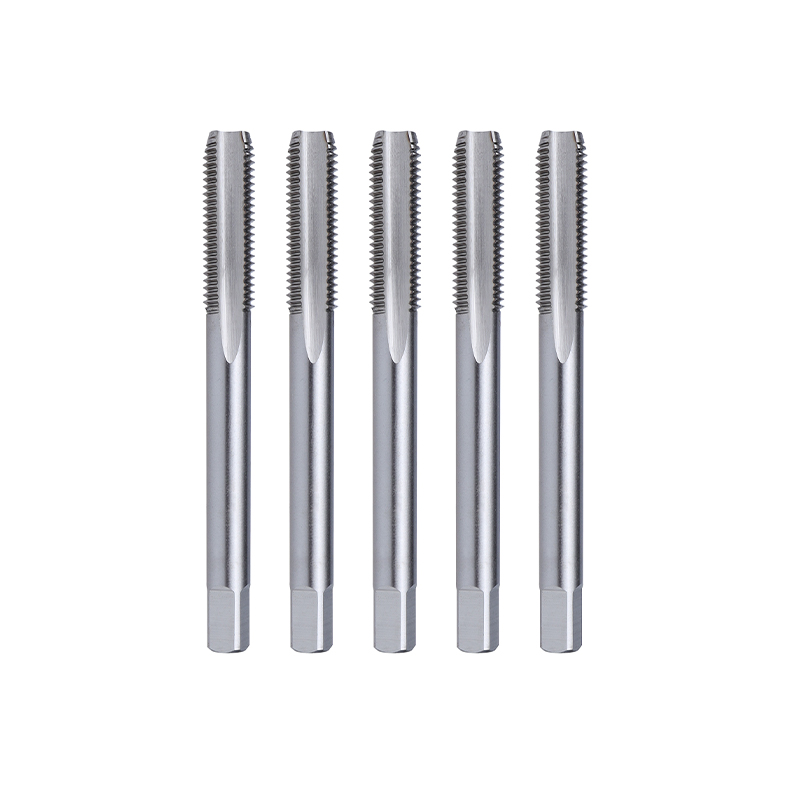
A straight thread tap, also known as a straight flute tap, is designed with parallel flutes that extend along the tool body. These flutes form cutting edges that remove material as the tap advances into a pre-drilled hole. The tool’s simple and proven geometry makes it suitable for general-purpose internal thread machining, particularly in aluminum, copper, and other soft or easily machinable materials.
Although modern production environments also use spiral flute taps, spiral point taps, forming taps, and specialized high-performance tools, straight thread taps continue to offer important advantages. They are straightforward to use, adaptable to manual or machine operation, economical for small and medium batch production, and well suited to maintenance and thread repair. Their stable cutting behavior is especially valuable where production flexibility and ease of control are more important than extremely high-speed machining.
This article examines the construction, operating characteristics, application range, selection factors, quality considerations, and manufacturing strengths associated with straight thread taps. It also explains how a specialized threaded connection manufacturer supports reliable tool production through controlled processes, inspection systems, production capacity, and application-oriented service.
Straight Thread Tap
What Is a Straight Thread Tap?
A straight thread tap is an internal thread cutting tool used to create or restore threaded holes. Its flutes run parallel to the longitudinal axis of the tap rather than following a spiral path. Each flute provides a cutting edge and a channel through which chips can move during the tapping operation.
The basic working principle is simple. A hole is first drilled to an appropriate tapping diameter. The straight thread tap is then aligned with the hole and rotated while applying controlled axial pressure. The cutting edges progressively remove material from the hole wall and form the required internal thread profile. Depending on the tap design and the application, the tool may be used by hand with a tap wrench or mounted in a machine tool, drill press, machining center, or other suitable equipment.
Straight flute geometry is especially effective when the material produces manageable chips. Aluminum, copper, brass, magnesium alloys, plastics, and other relatively soft materials can often be tapped effectively with this tool type when the correct cutting conditions are used. The straight flutes provide a direct and familiar cutting action, making the tool easy to understand and operate in both production and maintenance environments.
Common applications include general thread machining, thread repair, equipment servicing, fabrication, prototype production, and the preparation of threaded holes for bolts, screws, studs, threaded adapters, and other fastening components.
Basic Construction
A straight thread tap normally includes a shank, a driving section, a threaded cutting portion, flutes, a chamfer, and a tip or end section. The shank is held by a tap wrench, collet, chuck, or tapping unit. The driving section transmits torque from the tool holder to the cutting portion. The threaded section contains the cutting geometry that produces the internal thread.
The chamfer is the tapered portion at the leading end of the tool. It helps introduce the tap gradually into the hole and distributes the cutting load over multiple thread teeth. Different chamfer lengths can be used for different applications. A longer chamfer generally provides a smoother entry and lower cutting load per tooth, while a shorter chamfer allows more complete threading closer to the bottom of a blind hole.
The flutes are the longitudinal grooves that separate the cutting lands. They create chip spaces, provide access for coolant or cutting lubricant, and influence the tool’s rigidity and cutting performance. Because the flutes are straight, the design is comparatively simple and can provide consistent, uniform cutting in suitable materials.
Key Advantages of Straight Thread Taps
1. Simple and Stable Cutting Geometry
The parallel flute design provides a familiar and stable cutting action. Compared with more complex flute profiles, a straight flute configuration is easier to manufacture, inspect, use, and maintain. This simplicity contributes to predictable results in general-purpose thread machining.
For operators working with standard materials and shallow holes, the tool provides a practical balance between cutting performance and operating convenience. When the tap is properly aligned and lubricated, the cutting edges engage the workpiece progressively and produce a consistent thread profile.
2. Suitable for Soft Metals
Straight thread taps are particularly suitable for soft materials such as aluminum and copper. These materials are widely used in automotive components, electrical housings, equipment frames, heat-transfer products, and general fabrication. The tap geometry can produce clean internal threads when the correct hole diameter, cutting speed, lubrication, and chip removal method are selected.
Soft metals can sometimes generate long, ductile chips. For this reason, operators must select an appropriate tap design and avoid excessive feed or speed. In shallow holes, the straight flute tap can provide effective chip control when the operator periodically reverses the tool or uses a suitable machine tapping cycle.
3. Convenient Manual and Machine Use
One of the most useful features of a straight thread tap is its flexibility. The tool can be used manually with a tap wrench during maintenance, repair, and small-batch production. It can also be installed in a machine tool for repeatable production operations.
Manual tapping is common when a damaged thread must be restored in an existing assembly or when the workpiece cannot easily be moved to a dedicated production line. Machine tapping is advantageous when multiple components require the same thread size and consistent positioning. This dual capability makes straight thread taps suitable for workshops with changing production requirements.
4. Effective for Shallow Holes and Small Diameters
Shallow holes and small-diameter threads require a tool that can be controlled accurately without creating unnecessary complexity. Straight thread taps are well suited to these conditions. Their compact geometry allows operators to work in many conventional setups, while their direct cutting action makes it easier to monitor torque and alignment.
In maintenance work, a small internal thread may be located in a bracket, housing, cover, fixture, or connection point. A straight thread tap can often restore the thread without requiring specialized equipment. This is especially valuable when minimizing machine downtime is a priority.
5. Cost-Effective General-Purpose Performance
Compared with more specialized tapping tools, straight thread taps are often economical for standard internal threading work. Their simple construction supports efficient production, and their wide application range reduces the need to maintain a large inventory of highly specialized tools.
For small and medium batch production, the tool can provide an attractive balance of purchase cost, operational flexibility, and acceptable service life. In many workshops, a carefully selected range of straight thread taps can cover a substantial proportion of routine internal thread requirements.
6. Practical Thread Repair Capability
Thread repair is an important application. Threads may become worn, cross-threaded, contaminated, or damaged during disassembly and reassembly. A straight thread tap can be used to clean, restore, or re-form the original internal thread when sufficient material remains in the hole.
During repair work, the operator should first remove debris, verify the original thread size and pitch, confirm that the hole is suitable for tapping, and carefully align the tool with the existing axis. Controlled rotation and periodic reversal can help remove chips and reduce the risk of tool damage.
Comparison with Other Tap Designs
No single tap design is ideal for every material, hole depth, production speed, or chip type. Straight thread taps are best understood as dependable general-purpose tools for appropriate applications rather than universal substitutes for every specialized design.
| Tap Type | Typical Strength | Common Application | Consideration |
|---|---|---|---|
| Straight flute tap | Simple, versatile, and economical | Shallow holes, soft metals, repair, manual or machine tapping | Requires suitable chip control in deeper holes |
| Spiral flute tap | Improved chip evacuation from blind holes | Deeper blind holes and materials producing difficult chips | Usually more specialized and sensitive to operating conditions |
| Spiral point tap | Pushes chips forward through a through-hole | High-efficiency tapping of through-holes | Less suitable when chips must not accumulate ahead of the tool |
| Forming tap | Produces threads without conventional chip cutting | Ductile materials with suitable forming characteristics | Requires precise hole sizing and higher forming torque |
| Hand tap set | Progressive entry and easy manual control | Maintenance, repair, and low-volume work | Manual operation is slower than production machine tapping |
The principal advantage of the straight thread tap over more specialized competitors is application flexibility. It can be used in conventional workshop environments without requiring a highly customized process. It is also easier for operators to understand and troubleshoot. When the material, hole depth, and production volume are within its intended range, it can provide reliable performance without the additional cost or setup requirements associated with advanced tap geometries.
Recommended Applications
General Mechanical Manufacturing
Straight thread taps are widely used in general mechanical manufacturing for creating threaded holes in brackets, housings, covers, mounting plates, fixtures, and support components. They are useful in operations where the thread size is standard and the workpiece material is relatively soft or easily machinable.
In a mixed-production workshop, the ability to use the same tool category across several product types can simplify inventory planning and operator training. The tool may be used in a drill press, tapping machine, machining center, or manual workstation, provided that the machine and tool holder are suitable.
Automotive Components
Automotive manufacturing involves numerous threaded connections in engines, transmissions, chassis components, brackets, covers, and auxiliary systems. Straight thread taps can be used for suitable aluminum and copper-alloy components, particularly where holes are shallow and the production process does not require a specialized high-speed tapping solution.
In automotive maintenance, the tool is also useful for restoring internal threads during service operations. Repair workshops often need tools that can be applied quickly and accurately without extensive setup. A dependable straight thread tap can support this requirement when the thread has not been damaged beyond practical repair.
Aerospace and Rail Manufacturing
Aerospace and rail components require controlled manufacturing processes, traceability, and careful inspection. Straight thread taps may be used for suitable non-ferrous components, fixtures, maintenance tooling, and selected assembly features. The exact application must be evaluated according to material, thread specification, safety classification, and process documentation.
In critical industries, tool quality is only one part of the overall requirement. The production system must also support consistent dimensions, batch identification, inspection records, and controlled handling. A supplier with experience in threaded connection products can help customers establish a more reliable procurement and application process.
Maintenance and Repair
Maintenance departments value straight thread taps because they are accessible, versatile, and easy to operate. A damaged hole can sometimes be cleaned and restored without replacing the entire component. This may reduce downtime, lower repair costs, and extend the useful life of equipment.
For repair work, operators should avoid forcing the tap through damaged material. If the tap encounters abnormal resistance, the operation should stop so that the hole, alignment, thread specification, and material condition can be checked. A tap is a precision cutting tool, not a replacement for correcting severe structural damage.
Material and Process Compatibility
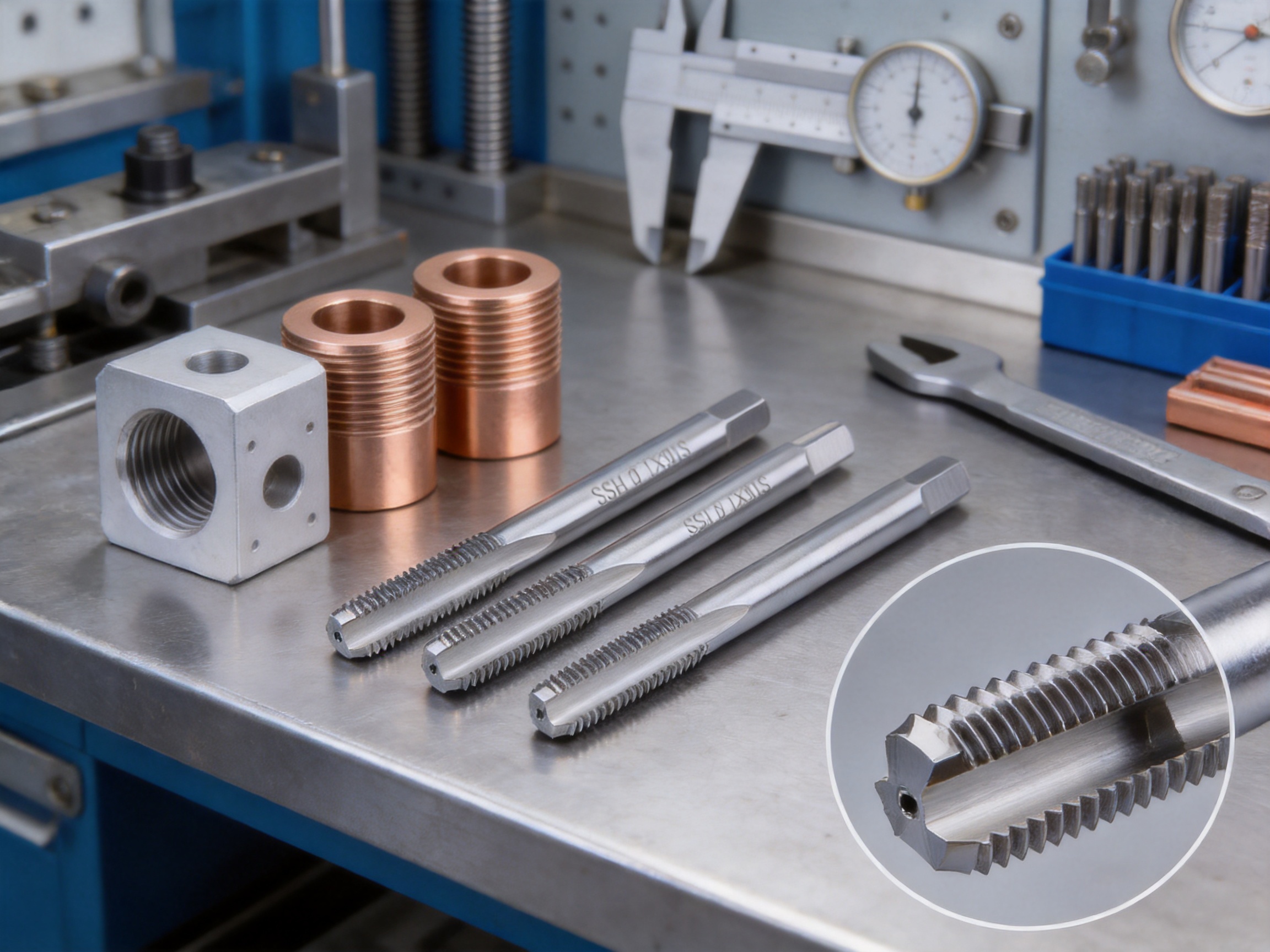
The performance of a straight thread tap depends on the relationship between tool geometry and workpiece material. Aluminum and copper are principal target materials because they are relatively soft and can be cut effectively with appropriate edge preparation and lubrication.
Brass and certain bronze alloys may also be suitable, although the specific alloy composition can affect chip formation and cutting torque. Plastics and other non-metallic materials require special consideration because they may deform, melt, crack, or produce different thread profiles under excessive heat or pressure.
Harder steels, stainless steels, heat-treated materials, and difficult-to-machine alloys may require dedicated tap geometries, coatings, cutting conditions, or coolant systems. A straight flute tap may still be used in selected cases, but it should not be assumed that the same conditions used for aluminum will work effectively in a harder material.
Hole Preparation
Correct hole preparation is essential. The drilled hole must have the proper diameter for the desired thread. If the hole is too small, cutting torque increases and the tap may break. If the hole is too large, the resulting thread may have insufficient engagement and reduced load-carrying capability.
The hole should also be properly aligned with the intended thread axis. Misalignment can cause uneven cutting, poor thread quality, excessive tool wear, and possible breakage. A small countersink or chamfer at the entrance can help guide the tap and reduce damage to the first thread.
Lubrication
Suitable cutting lubricant can reduce friction, lower heat generation, improve surface finish, and assist chip movement. The lubricant should be compatible with both the tool and the workpiece material. Aluminum and copper may require different lubrication approaches depending on the alloy, tapping speed, hole size, and production environment.
In manual operations, insufficient lubrication is a common cause of poor performance. However, excessive lubricant does not compensate for incorrect alignment, an undersized hole, or excessive torque. Lubrication should be part of a complete process that includes correct tool selection and controlled operation.
Operating Guidelines
Manual Tapping
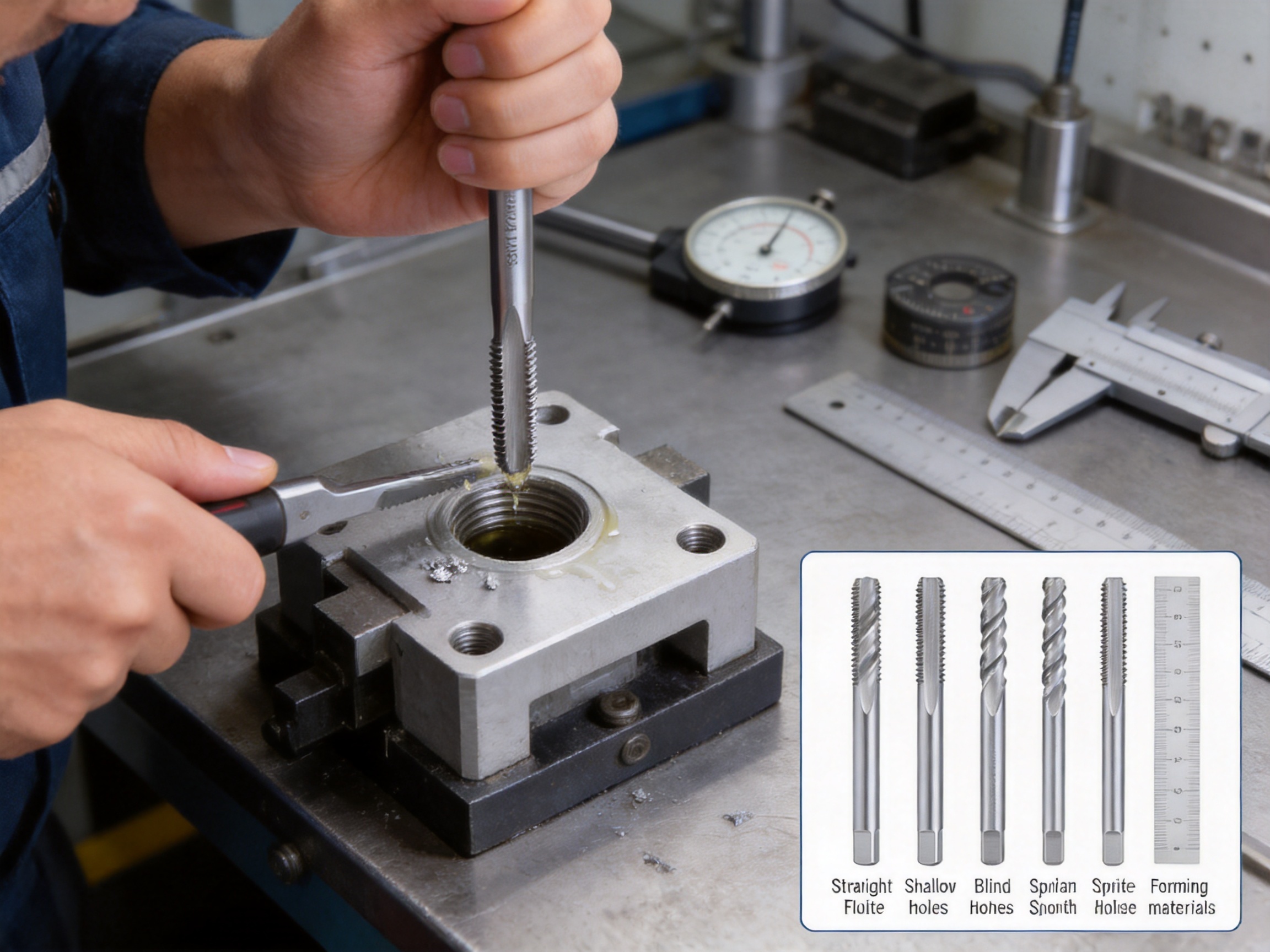
For manual tapping, the workpiece should be securely clamped and the hole positioned so that the operator can maintain a straight axis. The tap wrench should apply balanced force rather than uneven side pressure. The tool should enter the hole gradually and remain aligned with the centerline.
After several cutting turns, the operator may reverse the tap slightly to help break or release chips, depending on the material and hole condition. Excessive force should be avoided. If resistance rises suddenly, the operator should withdraw the tap carefully, clean the hole, inspect the tool, and identify the cause before continuing.
Machine Tapping
Machine tapping requires synchronization between rotational speed and axial feed. The feed should correspond to the thread pitch so that the tap is neither forced into the workpiece nor pulled away from the intended thread path. The workholding system must prevent movement or vibration.
Rigid tapping, floating holders, or other appropriate systems may be selected according to the machine configuration. The tool holder should provide secure torque transmission while minimizing runout. Excessive runout can lead to uneven loading and premature tool failure.
Through-Hole and Blind-Hole Considerations
Straight thread taps are generally more convenient in shallow holes and through-holes where chips have a clear path for removal. Blind holes require additional attention because chips may accumulate at the bottom. The operator must verify that the tap has sufficient flute space and that the tool does not bottom out before the required thread depth is achieved.
When a deep blind hole or difficult chip-forming material is involved, a spiral flute tap or another specialized design may offer better performance. Choosing a tool outside its intended application can result in thread defects, excessive torque, and breakage.
Quality Characteristics of a Reliable Straight Thread Tap
Dimensional Accuracy
A quality tap must maintain accurate basic dimensions, thread profile, pitch, diameter, flute geometry, and shank configuration. Even small deviations can affect thread fit, assembly torque, and fastening performance. Consistent dimensions are especially important when the tap is used in a production line where components from different batches must remain interchangeable.
Sharp and Uniform Cutting Edges
The cutting edges should be evenly formed and free from damage, burrs, or irregularities. Uniform edges help distribute the cutting load across the tool. Uneven edge preparation can cause localized wear, poor surface finish, or variation in thread form.
Surface Finish and Protection
A suitable surface finish can reduce friction and help resist wear during use. Depending on the intended application, taps may be supplied with different surface treatments or coatings. The correct choice depends on the workpiece material, cutting conditions, and required service life.
Storage and handling are also important. Taps should be protected from impact, moisture, contamination, and contact with other tools that could damage the cutting edges. Proper packaging helps preserve tool condition from final inspection through delivery and use.
Traceability
For industrial customers, traceability supports quality management and process control. Product identification may include size, specification, batch information, production date, inspection status, or packaging data. Traceability allows manufacturers and users to investigate performance concerns and maintain consistent procurement records.
Manufacturing Strengths Behind the Product
The reliability of a straight thread tap depends not only on its design but also on the manufacturing system used to produce it. A specialized manufacturer of threaded connection products can integrate tool development, machining, heat treatment, finishing, inspection, packaging, and customer service within a coordinated production structure.
Dongtai Jinzhize Metal Products Co., Ltd. is a specialized manufacturer of threaded connection products serving automotive, aerospace, rail vehicle, and general industrial applications. Its product range includes helical wire inserts, self-tapping inserts, key-locking inserts, threaded adapters, oil plugs, installation taps, and related tools. This product diversity provides practical experience in the broader field of internal and external threaded connections.
Because straight thread taps are used together with threaded inserts, adapters, and other fastening components, a supplier with knowledge of multiple threaded products can better understand the relationship between tool geometry, hole preparation, thread engagement, and final assembly performance.
Integrated Production Capability
The company was established in 2015 and operates from an owned manufacturing plant covering approximately 10,000 square meters. The facility is equipped with hundreds of machine tools and automated production systems. This combination of equipment and manufacturing space supports organized production across multiple product categories.
An integrated production environment can improve communication between engineering, production, quality control, and logistics teams. It also helps reduce dependence on disconnected external processes, which may otherwise create variation in dimensions, surface condition, delivery schedules, or batch records.
For customers purchasing straight thread taps and related threaded connection products, integrated manufacturing can simplify supplier management. Instead of coordinating several sources for inserts, installation tools, taps, and related fastening components, customers may obtain a more complete solution from one experienced manufacturer.
Engineering and Product Development
Reliable tooling begins with a clear understanding of application requirements. Thread size, pitch, material, hole depth, production volume, machine type, and expected service life all affect the appropriate tool design. An experienced engineering team can evaluate these factors and recommend a suitable configuration rather than treating every application as identical.
Product development may involve reviewing flute dimensions, chamfer form, cutting edge preparation, shank design, material selection, heat treatment, surface finishing, and packaging. Each stage contributes to the final performance of the tap.
Application-oriented development is particularly valuable when customers require customized specifications, non-standard thread sizes, special shank forms, particular packaging, or matched tools for a threaded insert system. A manufacturer familiar with both standard and customized products can help reduce development time and improve compatibility.
Manufacturing Process for Straight Thread Taps
Material Preparation
The manufacturing process begins with suitable raw material preparation. The material must provide the required combination of hardness, toughness, dimensional stability, and resistance to cutting-edge wear. The selected material and condition should match the intended application and production requirements.
Incoming material control is important because variations in composition, diameter, straightness, or surface condition can influence later machining and heat treatment. Organized material identification supports traceability throughout the production process.
Precision Forming and Machining
The blank is formed and machined to create the shank, driving section, threaded body, and basic tool profile. The process must maintain concentricity between the shank and cutting section. Poor concentricity can increase runout and cause uneven cutting during operation.
Flute machining is a critical stage. The flute width, depth, spacing, and position determine the relationship between cutting edge strength and chip space. Consistent flute geometry helps ensure that each cutting edge contributes evenly to the cutting operation.
Thread Profile Production
The thread profile must be produced with controlled pitch, angle, crest, root, and diameter characteristics. The tool’s own thread geometry directly influences the internal thread created in the workpiece. Precision grinding or other controlled finishing operations may be used to achieve the required profile.
Special attention is needed at the chamfer because the chamfer determines how the cutting load is introduced. A well-controlled chamfer promotes smoother entry, while an unsuitable chamfer may create excessive torque or incomplete thread formation.
Heat Treatment and Hardness Control
Heat treatment can improve hardness, wear resistance, and structural stability. The process must be carefully controlled because excessive hardness may reduce toughness, while insufficient hardness may lead to rapid wear. Distortion must also be minimized so that the finished tool remains within dimensional requirements.
After heat treatment, the tool may undergo straightening, cleaning, surface preparation, and precision finishing. The sequence depends on the tool material, design, and production route.
Grinding and Edge Finishing
Grinding and edge finishing establish the final cutting geometry and surface condition. These operations must be controlled to avoid burns, micro-cracks, excessive edge rounding, or inconsistent flute surfaces. Proper edge preparation can improve cutting smoothness and reduce the likelihood of chipping.
Inspection personnel may examine the tool using dimensional instruments, gauges, optical equipment, and visual checks. The goal is to confirm that the cutting edges, thread profile, chamfer, shank, and surface finish meet the required specification.
Cleaning, Inspection, and Packaging
Before packaging, the finished taps should be cleaned to remove grinding residue, oil contamination, and loose particles. Final inspection verifies appearance, dimensions, identification, and packaging requirements.
Protective packaging helps prevent edge damage during handling and transportation. Product labels should provide sufficient information for warehouse control and customer identification. For industrial orders, batch separation and documentation can support incoming inspection and traceability.
Quality Management and Supply Reliability
For industrial customers, quality is not limited to the performance of an individual tool. It also includes delivery consistency, communication, documentation, product identification, packaging integrity, and after-sales support.
Dongtai Jinzhize Metal Products Co., Ltd. operates with a quality management system intended to support consistent production and reliable customer service. Its manufacturing structure combines experienced personnel, automated production systems, inspection activities, and after-sales support.
The company reports an annual output value of 153 million RMB in 2024. This production scale indicates established market activity and the ability to support larger and more stable supply requirements. Capacity is particularly important for customers in the automotive, aerospace, rail, and industrial sectors, where unexpected shortages can interrupt production schedules.
Stable supply does not mean that every application should use the same product. Instead, it means that the supplier can maintain consistent production after the specification has been confirmed. For straight thread taps, this may include maintaining consistent size, pitch, flute geometry, hardness, surface condition, packaging, and batch identification.
Advantages Over Less Specialized Suppliers
A general tool reseller may provide individual taps, but a specialized threaded connection manufacturer can offer broader technical coordination. The supplier may understand how tapping tools interact with self-tapping inserts, wire thread inserts, key-locking inserts, threaded adapters, oil plugs, and installation tools.
This broader knowledge can be useful when the customer is developing a complete fastening system rather than purchasing a single cutting tool. For example, the correct tap for an insert installation application may depend on the insert type, installation method, finished internal thread, parent material, and required assembly strength.
Another advantage is the ability to discuss standard and customized requirements directly with engineering and production teams. This may shorten the communication chain and reduce errors caused by translating technical information through several unrelated suppliers.
Selection Guide for Buyers
Confirm the Thread Specification
Before ordering, the buyer should confirm the thread standard, nominal diameter, pitch, tolerance, thread direction, and required thread depth. Metric, unified, pipe, and other thread systems may require different tools. The tap should match the required internal thread rather than being selected only by approximate diameter.
Identify the Workpiece Material
The material should be clearly identified, including alloy information when available. Aluminum, copper, brass, steel, stainless steel, and engineered plastics may require different tool configurations and cutting conditions.
Evaluate Hole Type and Depth
Determine whether the hole is through or blind, and identify the usable depth. A straight thread tap is generally most suitable for shallow holes and applications where chip evacuation can be controlled. Deeper blind holes may require a different design or a special process.
Choose Manual or Machine Operation
Manual use may require a suitable tap wrench and a tool configuration that supports progressive control. Machine use requires consideration of spindle speed, feed synchronization, holder type, coolant, and workholding. The supplier should be informed of the intended operation so that the tool can be matched appropriately.
Consider Quantity and Delivery Requirements
Small-batch customers may prioritize flexibility, economical quantities, and rapid communication. Large production customers may require scheduled deliveries, batch consistency, documentation, and product continuity. A manufacturer with established production capacity can support both requirements more effectively when the specification and forecast are clearly communicated.
Common Problems and Preventive Measures
Tap Breakage
Tap breakage may result from an undersized hole, misalignment, excessive torque, insufficient lubrication, chip accumulation, or tool wear. Prevention begins with correct hole preparation and careful alignment. The operator should never continue applying force when the tap encounters abnormal resistance.
Incomplete Thread Formation
Incomplete threads may be caused by insufficient tapping depth, an incorrect chamfer configuration, an unsuitable tool, or premature withdrawal. The hole depth and required full-thread length should be considered during tool selection.
Oversized or Loose Threads
Loose threads may result from an oversized pre-drilled hole, worn cutting edges, inaccurate tap dimensions, excessive runout, or unsuitable cutting conditions. Inspection with appropriate thread gauges can help identify whether the issue originates from the tool or the preceding drilling operation.
Rough Thread Surface
A rough thread surface may be caused by inadequate lubrication, unstable workholding, excessive speed, damaged cutting edges, or poor chip control. The operator should inspect both the tool and the process rather than assuming that the tap alone is responsible.
Chipped Cutting Edges
Edge chipping may occur when the tool is forced into a hard inclusion, misaligned hole, excessively hard material, or bottomed-out blind hole. Proper material identification, controlled entry, and sufficient clearance are important preventive measures.
Why Straight Thread Taps Remain Important
Manufacturing technology continues to develop, but basic tools remain valuable when they solve common problems efficiently. Straight thread taps are not designed to replace every specialized tapping solution. Their value comes from their dependable performance in a broad range of conventional applications.
They are easy to integrate into manual workstations, maintenance departments, repair operations, and small production lines. They are also familiar to operators and generally straightforward to inspect. When used in the correct materials and hole conditions, they can provide clean internal threads with reasonable tool life and controlled operating cost.
Their simple geometry also supports practical sourcing. Customers can often standardize commonly used sizes, reduce tool variety, and maintain an organized inventory. For manufacturers working with aluminum, copper, and similar materials, straight thread taps can remain an important part of the everyday tooling system.
Customer Service and Customization Support
A dependable supplier should provide more than a product catalog. Customers may need help confirming thread specifications, choosing a tool for a particular material, selecting a chamfer length, evaluating manual or machine use, or coordinating a tap with an insert or threaded connection product.
Jinzhize provides threaded connection and fastening products for global customers and maintains an experienced team for design, development, and production. This structure allows the company to discuss both standard products and application-specific requirements.
Customization may involve non-standard dimensions, special packaging, private labeling, matched tooling, production scheduling, or technical documentation. Any customized request should be confirmed through drawings, specifications, samples, or written technical information before production begins.
After-sales support is also important. If a customer encounters tool wear, inconsistent threads, breakage, or assembly difficulties, the supplier should be able to review the application conditions. Useful information may include workpiece material, hole diameter, thread specification, machine type, cutting speed, feed, lubricant, tool usage quantity, and photographs of the tool or finished thread.
Practical Checklist for Users
Confirm the internal thread size, pitch, standard, and direction before selecting the tap.
Verify the workpiece material and determine whether it is suitable for a straight flute tool.
Drill the hole to the correct tapping diameter and ensure that it is properly aligned.
Use a suitable chamfer or entrance preparation where appropriate.
Secure the workpiece firmly to prevent vibration and movement.
Apply compatible cutting lubricant according to the material and operating method.
Maintain controlled speed and feed during machine tapping.
Use balanced force and frequent chip-breaking action during manual tapping.
Confirm that a blind hole is deep enough for the required full thread and tap clearance.
Inspect the tool regularly for wear, chipping, contamination, and dimensional damage.
Store taps in protective packaging and prevent cutting edges from contacting other tools.
Record product identification and batch information when traceability is required.
Questions and Answers
What is a straight thread tap mainly used for?
A straight thread tap is mainly used to produce internal threads in pre-drilled holes. It is especially suitable for shallow holes, small to medium production batches, maintenance operations, thread repair, and relatively soft materials such as aluminum and copper.
Can a straight thread tap be used by hand?
Yes. Straight thread taps can be used manually with an appropriate tap wrench. Manual use is common in repair work, maintenance, prototyping, and low-volume production. The operator must maintain alignment and control torque carefully.
Can it also be used in a machine?
Yes. The tap may be used in a suitable tapping machine, drill press, machining center, or other machine tool. Machine tapping requires correct synchronization between spindle rotation and axial feed, as well as proper workholding and tool holding.
Which materials are most suitable?
Aluminum, copper, brass, and other relatively soft or easily machinable materials are common applications. The exact suitability depends on the alloy, hole depth, thread size, cutting conditions, and tool configuration.
Is a straight thread tap suitable for deep blind holes?
It may be suitable for some shallow or moderately deep applications, but deep blind holes require careful evaluation. Chip accumulation and bottom clearance can create problems. A spiral flute tap or another specialized tool may be more appropriate for difficult deep-hole conditions.
What causes a tap to break?
Common causes include an undersized hole, poor alignment, excessive torque, insufficient lubrication, chip accumulation, excessive speed, tool wear, unsuitable material, and bottoming in a blind hole. Correct process control can significantly reduce the risk of breakage.
How can thread quality be improved?
Use the correct tap specification, prepare the hole accurately, maintain alignment, apply suitable lubrication, control speed and feed, and inspect the tool regularly. The workpiece should also be held securely to prevent vibration.
Why choose a specialized threaded connection manufacturer?
A specialized manufacturer can provide broader technical knowledge across taps, threaded inserts, adapters, oil plugs, and related fastening products. This can simplify product matching, customization, quality communication, and supply management.
Can straight thread taps be customized?
Customization may be possible depending on the required size, thread form, shank, chamfer, material, surface treatment, packaging, and order quantity. Drawings and application details should be reviewed before production confirmation.
What information should be provided when requesting a quotation?
Useful information includes thread standard, diameter, pitch, tolerance, material, hole type, hole depth, intended application, manual or machine use, required quantity, packaging requirements, and delivery expectations.
How should taps be stored?
Taps should be stored in a clean, dry environment with protective packaging. Cutting edges should be separated from other tools to prevent impact damage. Product identification and batch information should remain visible for inventory control.
Conclusion
Straight thread taps remain a practical and reliable choice for general internal thread machining. Their parallel flute design provides uniform cutting, convenient operation, and broad applicability in shallow holes, small-diameter threads, maintenance work, and small to medium batch production. They are especially effective in aluminum, copper, and other soft materials when the hole preparation, lubrication, alignment, and cutting conditions are properly controlled.
Their advantages over more specialized competitors include simplicity, economical use, flexible manual or machine operation, straightforward troubleshooting, and suitability for common workshop conditions. At the same time, responsible tool selection requires recognizing their limits. Deep blind holes, difficult materials, demanding high-speed production, and challenging chip conditions may require spiral flute, spiral point, forming, or other specialized tap designs.
Product performance is closely connected to manufacturing quality. Consistent material control, accurate flute and thread production, heat treatment, edge finishing, inspection, protective packaging, and traceability all contribute to a dependable straight thread tap. A supplier with experience in threaded inserts, adapters, installation tools, oil plugs, and other fastening products can provide additional value by supporting complete threaded connection requirements.
With an established manufacturing facility, extensive equipment, automated production systems, engineering capability, quality management practices, and after-sales support, Dongtai Jinzhize Metal Products Co., Ltd. is positioned to serve customers seeking stable threaded connection and fastening products. For users who need reliable straight thread taps for soft metals, shallow holes, general machining, or thread repair, careful specification and cooperation with an experienced manufacturer can improve assembly consistency, reduce tool-related risks, and support long-term production efficiency.
References
1. General principles of metal cutting and internal thread machining, technical manufacturing references.
2. Standard practices for tap selection, hole preparation, thread inspection, and cutting lubricant application.
3. Industrial guidance on aluminum and copper alloy machining operations.
4. Technical references for manual tapping, machine tapping, chip control, and tool maintenance.
5. Quality management principles for precision tools and threaded connection components.
6. Product and manufacturing information supplied by Dongtai Jinzhize Metal Products Co., Ltd.