Français
 Español
 Deutsch


Content
- 1 What Is a Wire Thread Insert Installation Tool?
- 2 Why Installation Accuracy Matters
- 3 Core Advantages of a Professional Wire Insert Installer
- 4 Applications in Automotive Manufacturing and Repair
- 5 Aerospace and Rail Vehicle Applications
- 6 Use in Machinery and Precision Equipment
- 7 Manufacturing Process Behind a Reliable Installation Tool
- 8 Quality Management and Manufacturing Strengths
- 9 Advantages Over General-Purpose and Low-Quality Tools
- 10 Recommended Installation Procedure
- 11 Selection Guide for Purchasing Departments and Engineers
- 12 Maintenance and Service Life
- 13 Why a Complete Threaded Connection Supplier Matters
- 14 Frequently Asked Questions
- 14.1 What is the main purpose of a wire thread insert installation tool?
- 14.2 Can a standard screwdriver be used instead?
- 14.3 What insert sizes are supported?
- 14.4 What materials are used to manufacture the tool?
- 14.5 Can the tool be used for field repairs?
- 14.6 How can an operator prevent cross-threading during installation?
- 14.7 Why is installation depth important?
- 14.8 What industries use wire insert installation tools?
- 14.9 Does the supplier provide more than installation tools?
- 14.10 How should a tool be stored after use?
- 15 Conclusion
- 16 References
- 17 Product: Wire Thread Insert Installation Tool
Wire thread insert installation tools are essential devices for installing helical wire inserts into prepared threaded holes. They are designed to guide, drive, and position an insert accurately so that the finished connection achieves the required strength, alignment, and service performance. Although the tool is compact, its influence on the quality of a threaded assembly is significant. An incorrectly installed wire insert can create uneven loading, poor engagement, installation damage, or premature connection failure. A correctly installed insert, by contrast, can restore worn threads, reinforce weak materials, improve fastener life, and support dependable service in demanding equipment.
Modern industries increasingly use wire thread inserts in aluminum alloys, magnesium alloys, cast iron, plastics, composite materials, and other substrates that require additional thread strength or repair capability. These inserts are widely applied in automotive engines and transmissions, aerospace structures, rail vehicles, industrial equipment, electronic devices, precision instruments, and general machinery. However, the insert can only deliver its full performance when it is installed with a suitable tool and the correct procedure.
A high-quality wire thread insert installation tool combines a precision guiding structure, smooth transmission, compatible drive components, durable materials, and an ergonomic operating form. These characteristics allow operators to control the installation process while reducing the risk of deformation or misalignment. The tool must also accommodate different insert dimensions and support a broad range of application requirements. For this reason, professional manufacturers develop installation tools as part of a complete threaded connection product system rather than treating them as simple accessories.
Dongtai Jinzhize Metal Products Co., Ltd. manufactures wire thread inserts, self-tapping inserts, key-locking inserts, threaded adapters, oil plugs, installation taps, and related installation tools. Its product portfolio supports complete threaded connection and fastening applications, from hole preparation and insert installation to repair, reinforcement, and final assembly. The company serves customers in automotive, aerospace, rail vehicle, machinery, and precision manufacturing markets.
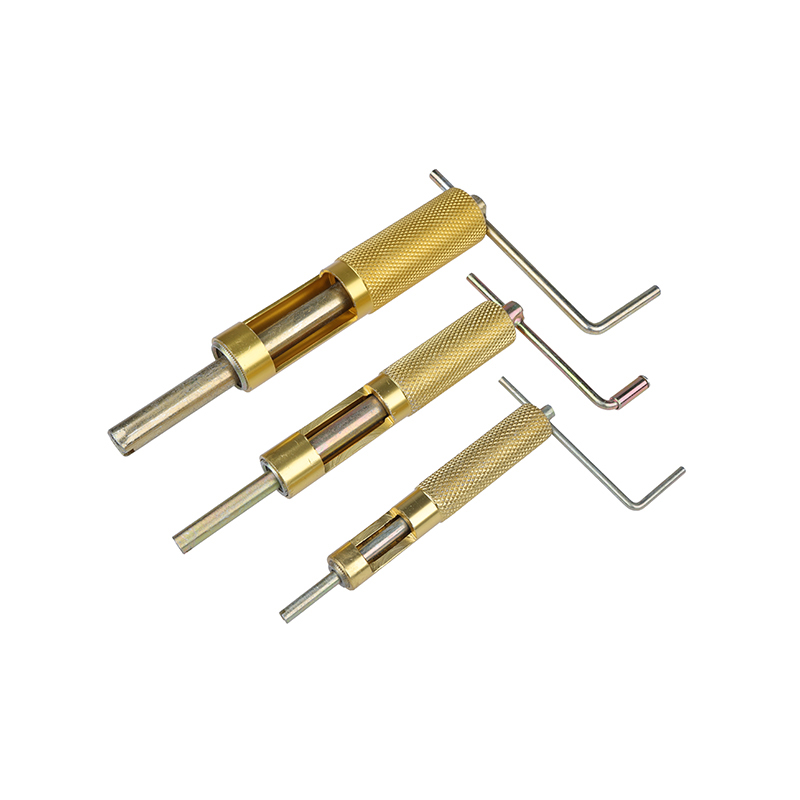
Wire Thread Insert Installation Tool
What Is a Wire Thread Insert Installation Tool?
A wire thread insert installation tool is a specialized driver used to screw a helical wire insert into a pre-tapped hole. The insert is generally formed from precision wire with a diamond-shaped or similar cross-section. When installed, it creates an internal thread for a fastener while its external thread engages with the prepared base hole. The tool transfers rotational force to the insert and guides it into the hole at a controlled position.
The basic operating principle is straightforward. First, the base material is drilled and tapped to the specified size. The wire insert is then placed on the installation tool, normally engaging the insert driving tang or another designated driving feature. The tool is aligned with the hole, and the operator rotates or drives it so that the insert advances into the prepared thread. After the insert reaches the correct depth, the tool is removed. Depending on the insert design, the driving tang may then be removed with a separate tang-break tool.
Despite this simple sequence, accurate installation requires careful control. The tool must keep the insert coaxial with the base hole. It must provide enough driving force to advance the insert without overstressing the wire. It should prevent the insert from jumping, twisting, collapsing, or binding. It must also allow the operator to recognize the correct installation depth. These requirements explain why a dedicated installation tool is more reliable than improvised methods such as using a standard bolt, screwdriver, or pliers.
Professional installation tools are manufactured in different forms to match the insert size, thread specification, production volume, and operating environment. Manual drivers are suitable for repair work, maintenance, small batches, and locations where pneumatic or electric equipment is unavailable. Machine-assisted tools can improve speed and consistency in higher-volume production. Regardless of the operating method, the most important functions remain precise guidance, dependable transmission, insert protection, and compatibility with the selected wire insert.
Why Installation Accuracy Matters
A wire thread insert is a precision component. Its internal thread must remain correctly positioned in relation to the base hole, and its coils must be evenly seated along the prepared thread. If the installation tool is not properly aligned, the first coil may enter incorrectly or the insert may begin to cross-thread. This can lead to local deformation, excessive insertion resistance, uneven coil spacing, and a finished internal thread that does not accept the mating fastener smoothly.
Alignment is especially important in soft or lightweight base materials. Aluminum and magnesium alloys are frequently selected for their low weight, but they can be more vulnerable to thread damage than hardened steel. A wire insert helps distribute load over a larger effective area, but the advantage can be reduced if the insert is installed at an angle or if the base thread is damaged during installation. A precision driver helps protect both the insert and the parent material.
Installation depth is another critical factor. If an insert is positioned too close to the surface, the fastener may not engage the full intended length, and the top coil can be exposed to excessive stress. If it is installed too deeply, the fastener may not reach the insert effectively or the assembly may lose usable thread engagement. A suitable installation tool supports repeatable positioning and helps operators follow the specified depth requirements.
Accurate installation also improves inspection and traceability. When the tool provides consistent driving behavior, quality personnel can establish repeatable process parameters. This makes it easier to identify abnormal resistance, insert damage, incomplete installation, or other defects. In demanding production environments, consistency is often as important as the nominal strength of the insert itself.
Core Advantages of a Professional Wire Insert Installer
High Installation Accuracy
The primary advantage of a professional wire insert installer is its precision guiding structure. The tool is designed to hold the insert in a stable position while it enters the prepared hole. This reduces radial movement and helps maintain alignment between the insert axis and the base-hole axis. Better alignment minimizes the possibility of cross-threading and supports uniform coil seating.
Compared with general-purpose drivers, a dedicated insert installation tool is engineered around the geometry of the wire insert. Its contact surfaces and driving features are shaped to engage the insert safely. This reduces slippage and lowers the chance that rotational force will be transferred unevenly to one section of the insert. The result is a more controlled installation process and a more reliable finished connection.
Smooth and Efficient Transmission
A good tool must transmit rotational force smoothly. Irregular or jerky transmission can cause the insert to stop, jump, or deform. Smooth transmission allows the insert to advance gradually through the prepared thread, reducing operator effort and making installation easier to control.
Efficient force transfer is particularly valuable in production assembly. When each insert can be installed quickly and consistently, the total assembly cycle becomes shorter. Reduced installation time can improve labor productivity while also reducing fatigue for operators who perform repetitive work. In maintenance environments, a smooth tool can shorten equipment downtime and help technicians restore worn threaded holes more efficiently.
Protection for the Insert and Base Material
The working surfaces of a quality tool are designed to reduce damage to the insert. Anti-slip features help maintain engagement between the tool and the driving section of the insert. This is important because uncontrolled slippage can flatten, scratch, or distort the wire. Once the insert has been damaged, it may not provide the expected internal thread quality.
Protection also extends to the base material. A properly guided tool reduces the possibility of scraping the surface around the hole or forcing the insert into an incorrect path. This is useful for finished components where cosmetic damage, burr formation, or surface deformation could affect assembly or appearance.
Multi-Size Compatibility
Threaded connection manufacturers and maintenance departments often work with several insert sizes. A versatile installation system that supports mainstream sizes from M3 to M24 can reduce the need for unrelated tools and simplify purchasing, storage, and operator training. Different sizes may be supplied as individual tools or as part of an installation kit.
Size compatibility should not mean that one tool is forced to serve every application. Each tool should still match the specific insert diameter, pitch, length, and thread standard. A professional product range provides the appropriate size-specific components while maintaining common operating principles across the range. This makes it easier for users to select the correct tool without sacrificing installation quality.
Durable Alloy Steel Construction
Wire insert installation tools are exposed to repeated torque, friction, and contact stress. High-hardness alloy steel is therefore commonly used for important working components. Properly selected and treated alloy steel can resist wear, impact, and deformation during extended use.
Durability offers more than a longer service life. A tool that retains its dimensional accuracy over time supports more stable installation results. If the driving feature wears excessively, it may no longer hold the insert securely. If the guiding section becomes distorted, alignment can suffer. A wear-resistant construction helps preserve the original performance of the tool over repeated cycles.
Compact and Portable Design
Maintenance teams often need to install inserts away from a central production line. A compact and lightweight tool can be carried to repair areas, service workshops, vehicle assembly stations, or field locations. Portability is valuable when a component cannot easily be removed from the machine or transported to a dedicated repair facility.
Compact tools also occupy less storage space. An organized installation kit can include drivers, taps, gauges, tang-break tools, and other accessories in a practical case or organized workstation arrangement. This supports faster tool identification and reduces the likelihood of using an incorrect component.
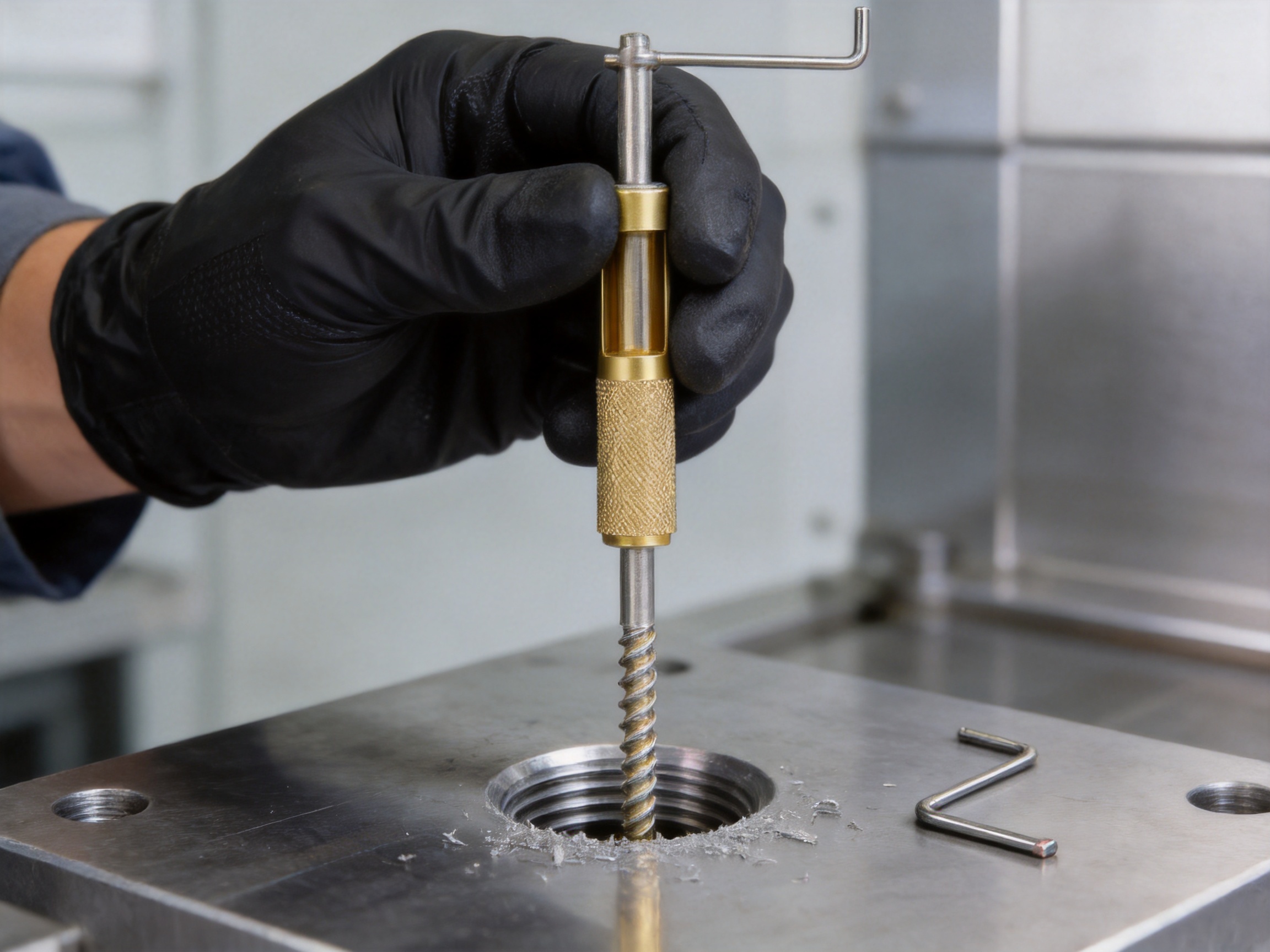
Applications in Automotive Manufacturing and Repair
Automotive manufacturing uses threaded connections throughout engines, transmissions, chassis systems, braking systems, body structures, and interior components. Many vehicle parts are made from lightweight alloys to reduce total vehicle mass and improve efficiency. These materials may require thread reinforcement when fasteners are repeatedly installed and removed or when the connection must withstand vibration and thermal cycling.
Wire thread inserts can provide a durable internal thread in an aluminum engine component. During assembly, a professional installation tool helps ensure that each insert reaches the correct depth and remains properly aligned. This is important for cylinder heads, intake components, transmission housings, pump bodies, and other parts where accurate fastener positioning affects sealing, clamping force, or component alignment.
In vehicle repair, damaged threads can create costly delays. Replacing an entire housing or structural part may be unnecessary when the original hole can be restored with a wire insert. A technician can prepare the worn hole, install the replacement insert, and return the component to service. The portability and ease of use of a suitable installer make this repair approach practical in maintenance workshops.
Automotive production also benefits from process consistency. Large-scale assembly requires predictable cycle times and repeatable results. Installation tools with smooth transmission and controlled guidance can help reduce variation between operators and workstations. When combined with correct tapping, cleaning, inspection, and torque procedures, the tool becomes part of a controlled threaded connection process.
Aerospace and Rail Vehicle Applications
Aerospace assemblies place strong demands on weight control, reliability, and traceable manufacturing. Threaded holes may be located in lightweight alloys, structural panels, engine-related components, equipment housings, and interior systems. A reinforced thread can help support reliable fastening while avoiding the need for a heavier or larger base component.
In aerospace work, the installation method must be carefully matched to engineering documentation. Insert size, material, length, locking characteristics, installation depth, and inspection requirements are normally specified by the design or production authority. The installation tool must support the specified insert and must not introduce damage that could compromise the connection.
Rail vehicles also contain extensive threaded assemblies exposed to vibration, temperature changes, and long service intervals. Wire inserts can be used in equipment mounting points, vehicle interiors, bogie-related components, electrical enclosures, and maintenance repairs. A robust installation tool helps technicians restore damaged connections while reducing vehicle downtime.
For these industries, the advantage of a specialized manufacturer is not limited to the tool itself. A supplier with experience in threaded connection products can better understand the relationship between the installation tool, the wire insert, the preparation tap, the base material, and the final fastener. This broader product knowledge supports more consistent technical recommendations and reduces the risk of selecting incompatible components.
Use in Machinery and Precision Equipment
Machinery manufacturers use wire inserts where a strong, replaceable, or wear-resistant thread is required. They may be installed in machine frames, tooling plates, fixtures, gear housings, pump bodies, automation equipment, and inspection instruments. In some applications, the insert protects the base material from repeated fastener removal and replacement.
Precision instruments often require careful handling because the threaded holes may be small and located near sensitive surfaces. Installation accuracy is essential in these cases. A compact driver with stable guidance helps the operator work in restricted spaces while maintaining control of the insert.
Industrial equipment maintenance creates another important application. Thread damage can occur through over-torquing, corrosion, cross-threading, impact, or repeated assembly. Instead of discarding an expensive component, maintenance personnel can use a repair procedure based on a wire thread insert. The installation tool enables a new internal thread to be placed in the prepared hole, restoring the function of the original fastening point.
The use of a dedicated installation tool also helps standardize maintenance work across different technicians and locations. If a company maintains several plants or service centers, common tools and procedures can make repair quality more predictable. This can support inventory control, training, and service documentation.
Manufacturing Process Behind a Reliable Installation Tool
Product Design and Engineering
The manufacturing process begins with product design. Engineers consider insert geometry, thread size, pitch, installation force, working clearance, operator access, and expected service life. The tool must be capable of engaging the insert without interfering with the base component. Dimensional tolerances are established for guiding areas, driving sections, shafts, handles, and connecting parts.
Design work may include analysis of torque transmission and contact stress. The driving feature must withstand repeated load without rounding or deforming. The guiding section must be sufficiently rigid to maintain alignment. The overall tool must remain convenient to operate without becoming unnecessarily heavy or difficult to position.
Manufacturers with experience across a complete threaded product range can design the tool in relation to the insert, installation tap, and finished connection. This reduces compatibility problems and makes it easier to develop size-specific tools with consistent operating characteristics.
Material Selection
High-hardness alloy steel is suitable for many installation tool components because it provides a balance of strength, toughness, wear resistance, and machinability. The exact material selection depends on the part function and expected loading. Components that transmit torque may require high strength, while guide elements may require strong wear resistance and stable dimensional behavior.
Material quality is important because internal defects, inconsistent hardness, or unsuitable heat-treatment response can reduce tool reliability. Reputable manufacturers establish material purchasing requirements and inspect incoming materials before production. Material records can support traceability and help maintain consistent performance between batches.
Precision Machining
After material preparation, components are machined to the required geometry. Turning, milling, drilling, grinding, thread processing, and other operations may be used depending on the tool design. Precision machining is necessary for the tool to fit the insert correctly and maintain coaxiality during operation.
Automated production systems and modern machine tools can improve repeatability. Computer-controlled equipment helps maintain programmed dimensions and reduces variation between individual parts. However, automation must be supported by suitable process planning, tool management, fixture control, and inspection. Advanced equipment alone does not guarantee a reliable product; the entire process must be managed systematically.
Heat Treatment and Surface Control
Heat treatment can improve hardness, strength, and wear resistance in suitable alloy steel components. The treatment must be controlled carefully because excessive hardness may reduce toughness, while insufficient hardness can lead to premature wear. After heat treatment, components may require grinding or finishing to restore critical dimensions.
Surface finishing influences friction, corrosion resistance, and contact behavior. A smooth and properly finished driving area can engage the insert more consistently. Surface treatment may also help protect the tool during storage and use, depending on the product specification and application environment.
Assembly and Functional Testing
Individual components are assembled according to controlled procedures. The assembled tool is checked for movement, fit, driving engagement, and overall function. Test installation may be performed with representative wire inserts and prepared holes to verify that the tool produces the expected result.
Functional testing can identify problems that dimensional inspection alone may not reveal. For example, a component may meet its nominal dimensions but still exhibit excessive play, poor engagement, or uneven force transfer when assembled. Testing under realistic conditions provides additional confidence in the finished tool.
Final Inspection and Packaging
Final inspection may include dimensional checks, visual examination, surface assessment, hardness verification, and functional testing. The inspection scope depends on the product specification and customer requirements. Tools intended for critical applications may require stronger documentation and more detailed records.
Packaging should protect precision working surfaces from impact, contamination, and corrosion. Clear labeling helps users identify the correct size and specification. For multi-size kits, organized packaging reduces the risk of mixing components and supports efficient workshop use.
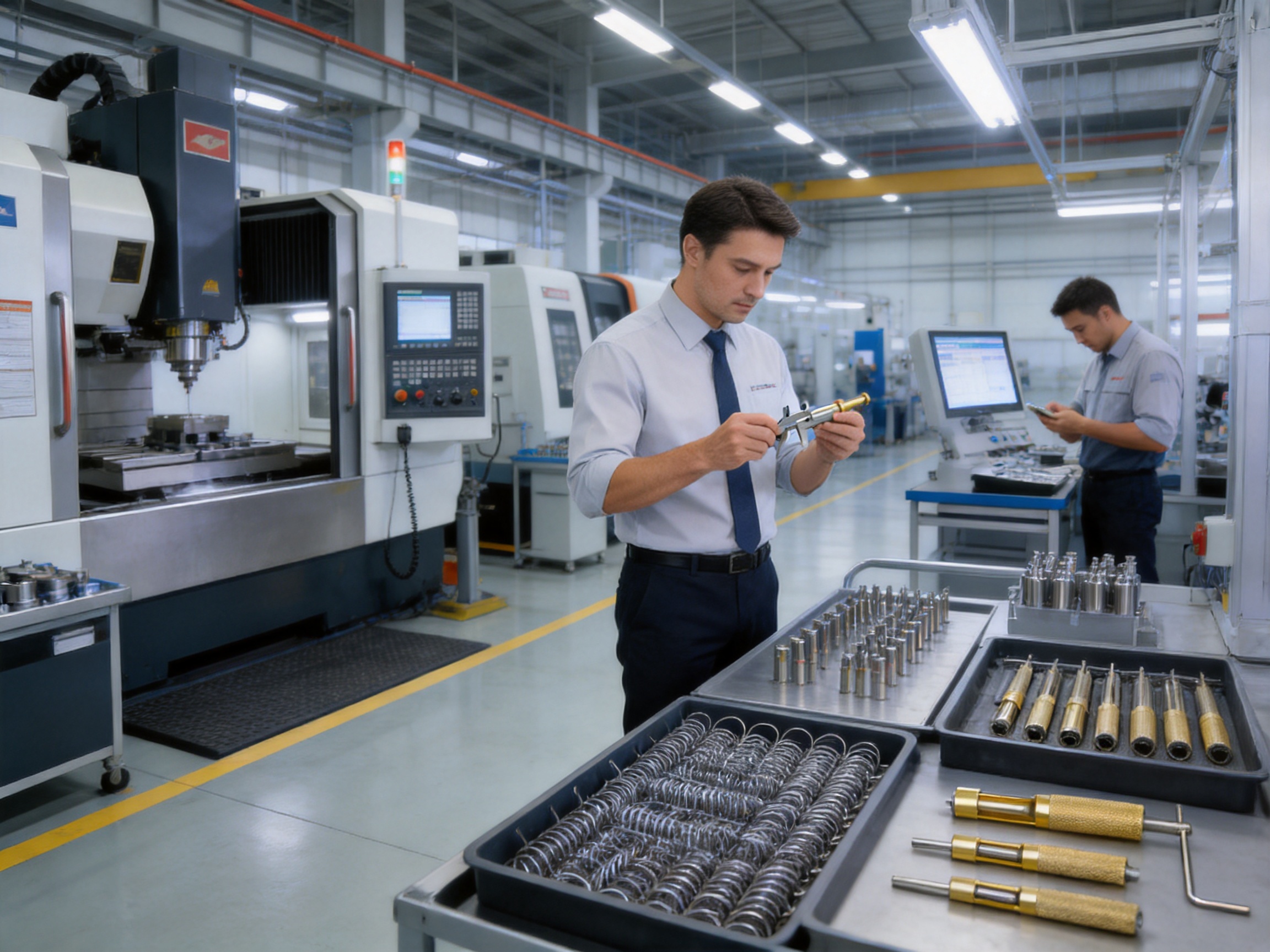
Quality Management and Manufacturing Strengths
Dongtai Jinzhize Metal Products Co., Ltd. operates a 10,000-square-meter owned manufacturing plant with hundreds of machine tools and automated production systems. This production foundation supports stable capacity for threaded connection products and related tools. An owned facility also allows the company to coordinate design, machining, inspection, warehousing, and shipment more directly.
Established in 2015, the company has developed an experienced team for product design, development, and production. Experience is particularly valuable in threaded connection manufacturing because many products depend on close relationships between thread form, material behavior, dimensional tolerance, installation method, and service conditions.
A rigorous quality management system supports the manufacturing process. Quality control should begin with incoming material inspection and continue through machining, heat treatment, surface finishing, assembly, testing, and final shipment. Process records and inspection results help manufacturers identify variation and support product traceability.
The company’s product range includes helical wire inserts, self-tapping inserts, key-locking inserts, threaded adapters, oil plugs, installation taps, and related tools. This broad range gives customers access to complementary threaded connection products from one specialized source. It also enables the manufacturer to understand the complete connection system rather than focusing on one isolated component.
In 2024, the company achieved an annual output value of 153 million RMB. This indicates established production capability and a substantial supply foundation. For international customers, manufacturing scale can be important because it supports stable delivery, capacity planning, and continuity of supply for recurring programs.
Advantages Over General-Purpose and Low-Quality Tools
Some users attempt to install wire inserts with improvised tools or generic drivers. These methods may appear economical, but they can create hidden costs. Slippage, misalignment, insert deformation, inconsistent depth, and damaged threads may lead to rework or component rejection. In critical assemblies, a poor installation can result in field failure or expensive corrective action.
A professional wire insert installer offers controlled engagement. Its driving feature is designed for the insert rather than for a conventional fastener head. This improves the transfer of force and reduces the chance of damaging the insert. Its guide structure also makes it easier to keep the tool centered during operation.
Low-quality tools may have inconsistent dimensions, weak materials, poor heat treatment, or inadequate surface finishing. These problems can cause early wear and unstable installation performance. A manufacturer with controlled production processes can provide more reliable dimensional consistency and better service life.
Another advantage is product support. A specialized supplier can help customers choose a suitable tool for a particular insert size, base material, installation depth, and production method. The supplier may also provide complementary taps, removal tools, or complete installation kits. This reduces the uncertainty that can arise when components are purchased separately from unrelated sources.
Professional manufacturing also supports customization. Customers may require special lengths, handle forms, drive interfaces, packaging, labeling, or tool combinations. A factory with in-house design and production capabilities can evaluate such requirements more efficiently than a distributor with limited technical control.
Recommended Installation Procedure
1. Confirm the Specification
Before beginning work, confirm the insert internal thread, external thread, length, material, and locking or free-running design. Select the corresponding tap and installation tool. The tool size must match the insert specification; an incorrect size can cause poor engagement or damage.
2. Prepare the Damaged or New Hole
If the original thread is damaged, remove burrs and prepare the hole according to the repair specification. For a new installation, drill the base material to the required diameter. The hole must be sufficiently deep to accommodate the complete insert and the specified installation depth.
3. Tap the Hole
Use the correct STI or insert-compatible tap to create the external thread for the wire insert. Keep the tap aligned with the original hole axis. Apply appropriate cutting lubrication when required by the base material and production procedure. Remove chips thoroughly after tapping.
4. Inspect and Clean
Check the tapped hole for burrs, contamination, damaged thread sections, and adequate depth. Cleaning is important because chips or debris can interfere with insert seating. In precision or critical assemblies, use the specified gauges or inspection tools to verify the prepared hole.
5. Load the Insert onto the Tool
Engage the driving tang or designated insert feature with the installation tool. Ensure that the insert is seated correctly and does not wobble. Do not force an insert onto a tool that does not match its size or design.
6. Install the Insert
Position the tool perpendicular to the surface and begin rotation carefully. Allow the insert to follow the prepared thread without excessive downward force. Maintain steady alignment and use a controlled speed. If resistance becomes abnormal, stop and inspect the hole, tap, insert, and tool rather than forcing the operation.
7. Check the Depth
Continue installation until the insert reaches the specified position. The top coil should normally be located below the surface by the amount required by the relevant specification. Avoid driving the insert too deeply or leaving it proud of the surface.
8. Remove the Tool and Complete the Assembly
Withdraw the installation tool carefully. If the insert includes a driving tang that must be removed, use the appropriate tang-break tool. Inspect the finished insert and test the mating fastener by hand before applying final tightening torque.
Selection Guide for Purchasing Departments and Engineers
| Selection Factor | What to Confirm | Why It Matters |
|---|---|---|
| Insert Size | Internal thread, external thread, pitch, and length | Ensures that the driver engages the insert correctly |
| Operating Method | Manual, machine-assisted, pneumatic, or electric use | Determines the required tool interface and transmission design |
| Base Material | Aluminum, steel, cast iron, plastic, composite, or other substrate | Influences tapping, installation force, and inspection requirements |
| Installation Volume | Repair work, small batch, or continuous production | Helps determine durability, speed, and kit configuration |
| Installation Depth | Required distance below or relative to the surface | Supports correct fastener engagement and connection strength |
| Environmental Conditions | Workshop, field service, clean assembly area, or demanding production site | Influences portability, protection, and maintenance needs |
| Quality Documentation | Material records, inspection reports, traceability, and packaging labels | Supports controlled purchasing and critical application compliance |
| Supplier Capability | Design support, complete product range, capacity, and after-sales service | Reduces sourcing risk and improves long-term supply stability |
Maintenance and Service Life
Proper maintenance helps preserve the accuracy of a wire insert installation tool. After use, remove chips, dust, lubricant residue, and other contaminants from the driving and guiding areas. Store the tool in a dry and protected location. Precision components should not be left loose in a container where their working surfaces can strike other tools.
Inspect the tool regularly for rounded driving features, excessive play, bent components, surface cracking, corrosion, or other visible damage. If the tool no longer holds the insert securely or the guide does not remain aligned, it should be repaired or replaced. Continuing to use a worn tool can cause inconsistent installation and may damage expensive components.
Lubrication requirements depend on the tool design. If lubrication is recommended, use the specified product and avoid applying excessive amounts that could attract contamination. Follow the manufacturer’s instructions for cleaning, storage, and service intervals.
Service life is affected by insert size, operating torque, installation frequency, operator technique, material cleanliness, and environmental conditions. A durable alloy steel construction provides a strong foundation, but correct use remains essential. Operators should not use the tool as a lever, hammer, pry bar, or general-purpose driver unless the product is specifically designed for those functions.
Why a Complete Threaded Connection Supplier Matters
Installing a wire insert is only one stage of the threaded connection process. The final result depends on the quality and compatibility of the drill, tap, insert, installation tool, tang-break tool, fastener, and inspection method. Buying these components from a knowledgeable supplier can simplify technical coordination.
A complete supplier can help match the installation tool to the insert and tap. It can also support customers who need self-tapping inserts, key-locking inserts, threaded adapters, oil plugs, or other fastening products for different sections of the same project. This reduces the number of suppliers involved and can improve consistency in packaging, documentation, and delivery.
Jinzhize focuses on threaded connection and fastening products for global markets. Its customer support structure includes design and development experience, production capability, quality management, and after-sales service. The company’s mission is to provide stable and reliable products for critical assemblies while helping customers improve assembly consistency and reduce procurement and usage risks.
For distributors, original equipment manufacturers, maintenance companies, and engineering contractors, supplier reliability can be as important as unit price. A stable factory partner can support repeat orders, product customization, technical communication, and long-term supply planning. These strengths are particularly valuable for customers whose products require consistent threaded connection performance across multiple production years.
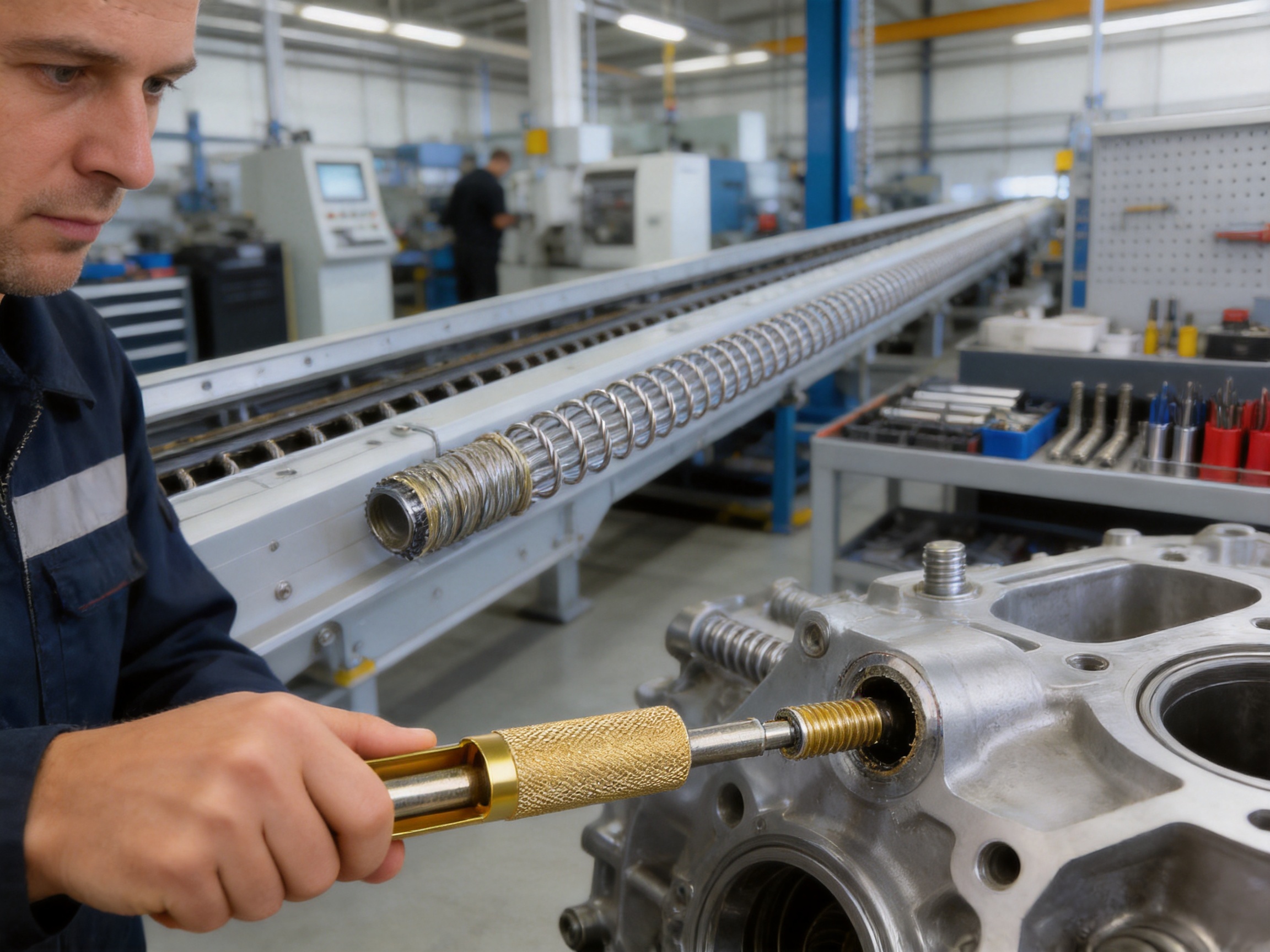
Frequently Asked Questions
What is the main purpose of a wire thread insert installation tool?
The main purpose is to guide and drive a helical wire insert into a correctly tapped base hole. It transfers rotational force to the insert while helping maintain alignment, control installation depth, and reduce the risk of insert or thread damage.
Can a standard screwdriver be used instead?
A standard screwdriver is generally not recommended because it may not engage the insert correctly or keep it aligned with the hole. Improvised tools can cause slippage, deformation, uneven installation, and damage to the base thread. A dedicated installer is designed for the insert geometry and provides more consistent results.
What insert sizes are supported?
The product range supports mainstream insert sizes from M3 to M24. The exact tool must still be selected according to the insert’s internal thread, external thread, pitch, length, and design.
What materials are used to manufacture the tool?
The tool is made from high-hardness alloy steel or other suitable engineering materials according to the component function. Alloy steel provides resistance to wear, impact, and repeated torque while helping the tool retain dimensional accuracy.
Can the tool be used for field repairs?
Yes. Its compact and portable form makes it suitable for workshops, maintenance departments, and on-site repair work. Field technicians should still use the correct tap, insert, cleaning procedure, depth control, and inspection method for the application.
How can an operator prevent cross-threading during installation?
The operator should confirm that the hole is correctly drilled and tapped, remove all chips and burrs, place the insert correctly on the tool, keep the tool perpendicular to the surface, and begin rotation with steady pressure. If unusual resistance occurs, the operation should stop for inspection rather than continuing by force.
Why is installation depth important?
Correct depth ensures that the fastener engages the intended length of internal thread and that the insert does not interfere with the component surface. An insert installed too high or too low may reduce connection performance or create assembly problems.
What industries use wire insert installation tools?
Common industries include automotive manufacturing and repair, aerospace, rail vehicles, machinery, industrial equipment maintenance, electronic equipment, precision instruments, and general engineering.
Does the supplier provide more than installation tools?
Yes. Dongtai Jinzhize Metal Products Co., Ltd. also produces helical wire inserts, self-tapping inserts, key-locking inserts, threaded adapters, oil plugs, installation taps, and related threaded connection products.
How should a tool be stored after use?
Clean the working surfaces, remove chips and residue, inspect for damage, and store the tool in a dry, protected location. Avoid loose storage with heavy components that could strike or deform the guide and driving sections.
Conclusion
A wire thread insert installation tool is a small but essential component in a reliable threaded connection system. Its precision guiding structure, smooth transmission, anti-slip contact, multi-size availability, durable alloy steel construction, and portable design help operators install inserts accurately and efficiently. These advantages are especially important in automotive, aerospace, rail vehicle, machinery, precision instrument, and industrial maintenance applications.
The quality of the tool depends on more than its external appearance. Material selection, precision machining, heat treatment, surface finishing, assembly, functional testing, and final inspection all contribute to reliable performance. A manufacturer with integrated production resources and experience across threaded connection products can provide stronger technical coordination and more stable supply than a general-purpose tool source.
With an owned 10,000-square-meter plant, hundreds of machine tools, automated production systems, experienced engineering personnel, and a broad product portfolio, Dongtai Jinzhize Metal Products Co., Ltd. is positioned to support customers seeking dependable wire insert installation tools and related fastening products. Its focus on traceability, consistent quality, production capability, and service support makes it a suitable partner for both standard purchasing and customized threaded connection requirements.
For users, the best results come from treating the installation tool as part of a complete process. Selecting the correct insert, preparing the hole accurately, using the matching tap, maintaining alignment, controlling installation depth, and inspecting the finished connection are all necessary steps. When these practices are combined with a properly manufactured installation tool, wire thread inserts can provide strong, durable, and repeatable threaded connections throughout the service life of the equipment.
References
1. General engineering practices for helical wire thread insert installation and repair.
2. Technical guidance for tapped-hole preparation, thread inspection, and insert installation depth control.
3. Engineering principles of threaded fastener load distribution and thread reinforcement.
4. Manufacturing references for alloy steel selection, heat treatment, precision machining, and dimensional inspection.
5. Quality management practices for automotive, aerospace, rail vehicle, and industrial component manufacturing.
6. Product and manufacturing information supplied by Dongtai Jinzhize Metal Products Co., Ltd.