Français
 Español
 Deutsch


Content
- 1 Understanding the Function of a Carbon Steel Oil Plug
- 2 Why Carbon Steel Is Suitable for Oil Plugs
- 3 Key Product Advantages
- 4 Applications in the Automotive Industry
- 5 Applications in Machinery and Industrial Systems
- 6 Applications in Rail, Aerospace-Support, and Specialized Equipment
- 7 Manufacturing Process for Carbon Steel Oil Plugs
- 8 Advanced Manufacturing Strengths
- 9 Comparison with Alternative Oil Plug Materials
- 10 Why Manufacturing Quality Matters More Than Basic Geometry
- 11 Selection Guide for Buyers and Engineers
- 12 Installation and Maintenance Recommendations
- 13 Customization and Technical Cooperation
- 14 Purchasing Advantages of a Specialized Manufacturer
- 15 Sustainability and Resource Efficiency
- 16 Quality Assurance Priorities
- 17 Frequently Asked Questions
- 17.1 What is a carbon steel oil plug used for?
- 17.2 Why choose carbon steel instead of a lower-strength material?
- 17.3 Does carbon steel resist corrosion?
- 17.4 Can the oil plug be customized?
- 17.5 How should the correct oil plug size be selected?
- 17.6 Can the plug be used in a high-pressure system?
- 17.7 How can leakage be prevented after installation?
- 17.8 Are oil plugs suitable for repeated removal?
- 17.9 What quality documents can be requested?
- 17.10 What industries can use these oil plugs?
- 17.11 Why work with a manufacturer that also produces threaded inserts and tools?
- 18 Conclusion
- 19 References
- 20 Product: Carbon Steel Oil Plug
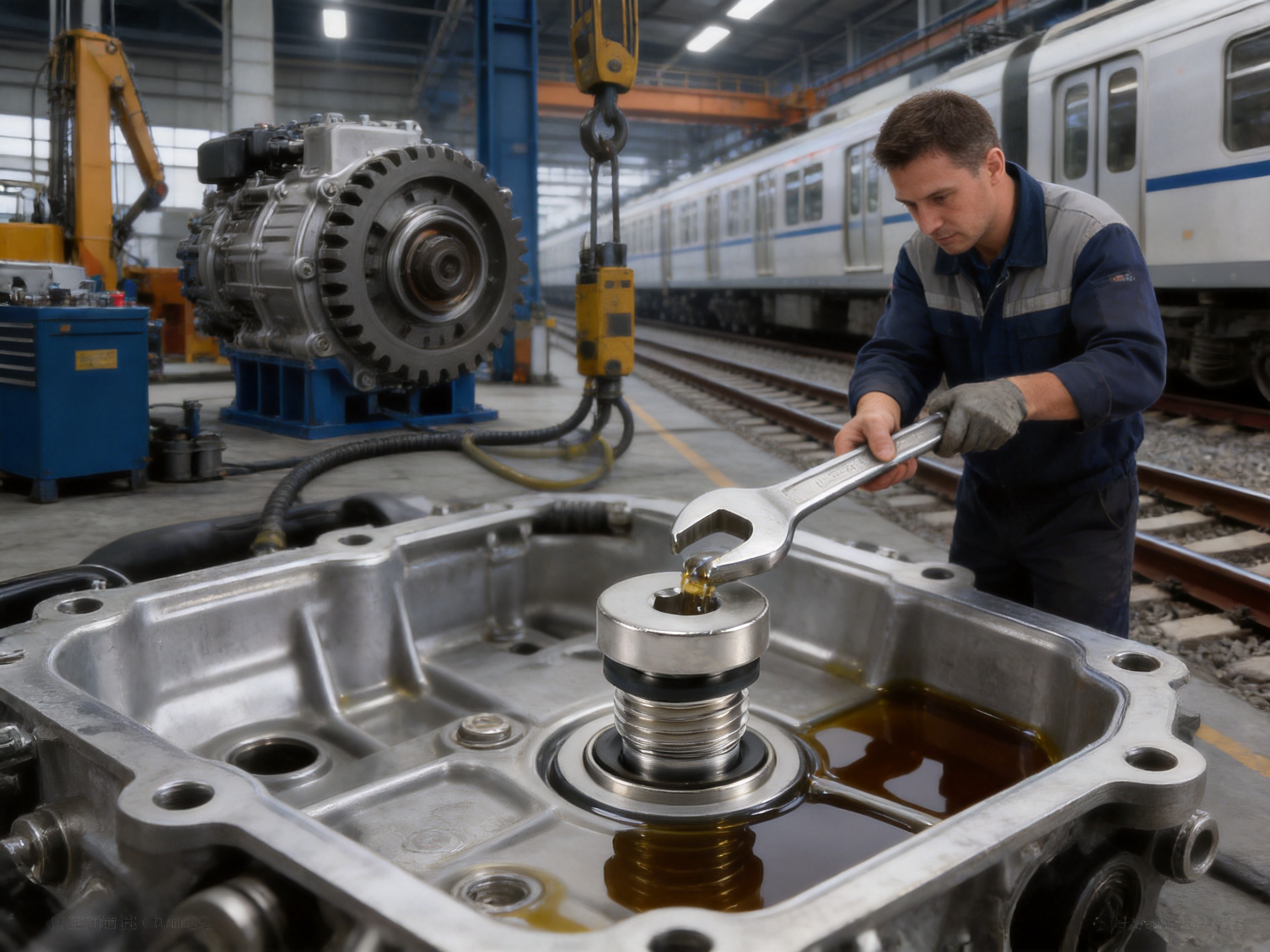
Carbon steel oil plugs are essential sealing components used to close threaded openings in engines, transmissions, machinery housings, hydraulic systems, gearboxes, oil circuits, and other equipment that contains lubricants or pressurized fluids. Although an oil plug is relatively small compared with the complete assembly in which it is installed, its performance has a direct influence on equipment reliability, maintenance safety, operating cleanliness, and service life.
A properly engineered carbon steel oil plug provides a dependable barrier against oil leakage, fluid ingress, dust contamination, and pressure loss. It also allows technicians to access an oil reservoir, drain passage, inspection point, or service opening when required. This combination of sealing performance and serviceability makes the oil plug a practical solution for automotive, machinery, industrial, rail vehicle, aerospace-support, and general engineering applications.
Modern equipment manufacturers require more than a basic threaded closure. They need stable dimensions, consistent thread quality, suitable mechanical strength, corrosion protection, reliable sealing, and predictable installation performance. A high-quality carbon steel oil plug must therefore be produced through controlled material selection, precision machining, surface treatment, inspection, packaging, and traceability procedures.
Dongtai Jinzhize Metal Products Co., Ltd. specializes in threaded connection and fastening products, including carbon steel oil plugs, helical wire inserts, self-tapping inserts, key-locking inserts, threaded adapters, installation taps, and related tools. With an owned manufacturing facility, automated production systems, extensive machining equipment, and an experienced technical team, the company supplies threaded products for demanding automotive, aerospace, rail vehicle, and industrial applications.
Understanding the Function of a Carbon Steel Oil Plug
An oil plug is installed in a threaded port to close an opening through which oil or another working fluid could escape. In many applications, the plug is removed during filling, draining, inspection, repair, or scheduled maintenance. Once tightened, it must maintain a stable seal despite vibration, temperature changes, pressure fluctuations, and contact with lubricating oils or other chemicals.
The plug normally works through a combination of threaded engagement and sealing contact. The thread provides axial retention and allows the component to be tightened into a threaded hole. Depending on the design, the sealing function may be created by a head or shoulder contacting a machined surface, a gasket or sealing washer, a tapered thread, an O-ring arrangement, or a specially formed sealing face.
The performance of an oil plug is affected by multiple factors. These include the plug material, thread accuracy, surface finish, sealing geometry, installation torque, mating-hole condition, operating pressure, working temperature, and fluid compatibility. A suitable product must be selected according to the complete operating environment rather than by size alone.
Carbon steel is widely used for oil plugs because it offers a practical balance of strength, machinability, availability, cost, and dimensional stability. When combined with an appropriate surface treatment, carbon steel can resist common environmental and service-related corrosion while maintaining the mechanical properties needed for secure installation.
Why Carbon Steel Is Suitable for Oil Plugs
Carbon steel has a long history in mechanical fastening and sealing applications. Its material structure provides good tensile strength, hardness potential, and resistance to deformation under normal tightening and service conditions. These characteristics are valuable when an oil plug must remain firmly seated in a threaded port over an extended operating period.
One major benefit is mechanical strength. During installation, the plug is exposed to tightening torque, friction, and localized contact pressure. In service, it may experience internal fluid pressure, vibration, thermal cycling, and impact from nearby components. Carbon steel provides a strong foundation for the plug body and threaded section, reducing the risk of stripping, cracking, or permanent deformation when the product is correctly designed and installed.
Another benefit is machining efficiency. Carbon steel can be turned, threaded, chamfered, faced, and formed using established production methods. This allows manufacturers to produce stable dimensions and repeatable thread profiles across large production batches. Efficient machinability also supports custom sizes, special thread forms, modified sealing faces, and application-specific configurations.
Carbon steel is also cost-effective for large-scale industrial use. Compared with certain high-alloy or specialty materials, it can provide the required performance at a competitive total cost. This is particularly important for automotive and machinery manufacturers that may purchase oil plugs in high volumes and require stable supply over long production cycles.
Surface treatment further improves the service value of carbon steel. A suitable treatment helps protect the material from corrosion caused by oils, moisture, gases, handling, storage conditions, and the external atmosphere. The exact treatment should be selected according to the application, required appearance, environmental exposure, and compatibility with the working fluid.
Key Product Advantages
High Mechanical Strength
The carbon steel construction gives the oil plug a strong and stable body. This is important for applications where the plug must withstand tightening forces and pressure without distortion. A strong plug can maintain its geometry and sealing contact more reliably than a poorly selected or inadequately processed material.
High mechanical strength is especially valuable in engine blocks, transmission housings, hydraulic equipment, and industrial oil circuits. These assemblies may operate under continuous vibration and repeated temperature changes. The oil plug must remain securely engaged while the surrounding housing expands and contracts.
Reliable Pressure Resistance
A properly manufactured carbon steel oil plug is designed to resist internal pressure and prevent leakage from the sealed port. The pressure resistance of the final assembly depends on the plug design, thread engagement, sealing method, mating material, and installation conditions. Nevertheless, stable material properties and accurate machining provide the foundation for dependable performance.
Compared with lightweight materials that may be more vulnerable to thread damage or deformation, carbon steel offers a robust option for demanding mechanical environments. It is suitable for sealing locations where fluid pressure, vibration, or repeated servicing could challenge the integrity of the connection.
Strong Sealing Performance
Leak prevention is the primary purpose of an oil plug. A reliable product must form consistent contact with the mating surface or sealing element. The sealing face should be accurately formed and free from defects that could create a leakage path.
Jinzhize oil plugs are manufactured with sealing performance in mind. The design can incorporate an appropriate sealing surface or related sealing arrangement according to the customer’s requirements. Consistent thread geometry helps the plug seat correctly, while controlled surface quality supports uniform contact during tightening.
Strong sealing performance protects not only the fluid inside the equipment but also the surrounding components. Oil leakage can create safety hazards, contaminate nearby parts, increase maintenance requirements, and reduce the effective lubricant level. Preventing fluid ingress is equally important because water, dust, and other contaminants can degrade oil quality and accelerate component wear.
Corrosion Protection
Carbon steel requires protection when exposed to moisture, industrial atmospheres, oils, gases, or handling conditions. Surface treatment helps reduce the risk of rust and corrosion during transportation, storage, installation, and service.
A corrosion-resistant surface supports long-term thread function and helps the plug remain removable during future maintenance. Corrosion on the thread or sealing face may increase installation friction, alter torque behavior, damage the mating thread, or make removal difficult. By treating the surface appropriately, manufacturers can improve both initial performance and serviceability.
Multiple Sizes and Configurations
Oil plugs are used in many different equipment designs, so one standard dimension cannot meet every requirement. Different applications may require different nominal diameters, thread pitches, lengths, head shapes, sealing faces, wrenching features, or surface treatments.
Multiple size options allow the product to be matched to existing ports and equipment layouts. Custom manufacturing can also support special thread standards, non-standard lengths, modified head dimensions, or customer-specific packaging. This flexibility is valuable for original equipment manufacturers, repair organizations, distributors, and engineering contractors.
Simple Installation and Maintenance
The threaded structure allows straightforward installation using a suitable wrench or tool. The plug can be tightened into the port, checked for seating, and removed when draining or servicing is required. A practical oil plug design should provide sufficient wrench access and predictable tightening behavior.
Simple installation reduces assembly time and supports efficient maintenance. It also reduces the risk of incorrect installation when the plug dimensions, thread specification, sealing method, and recommended torque are clearly defined.
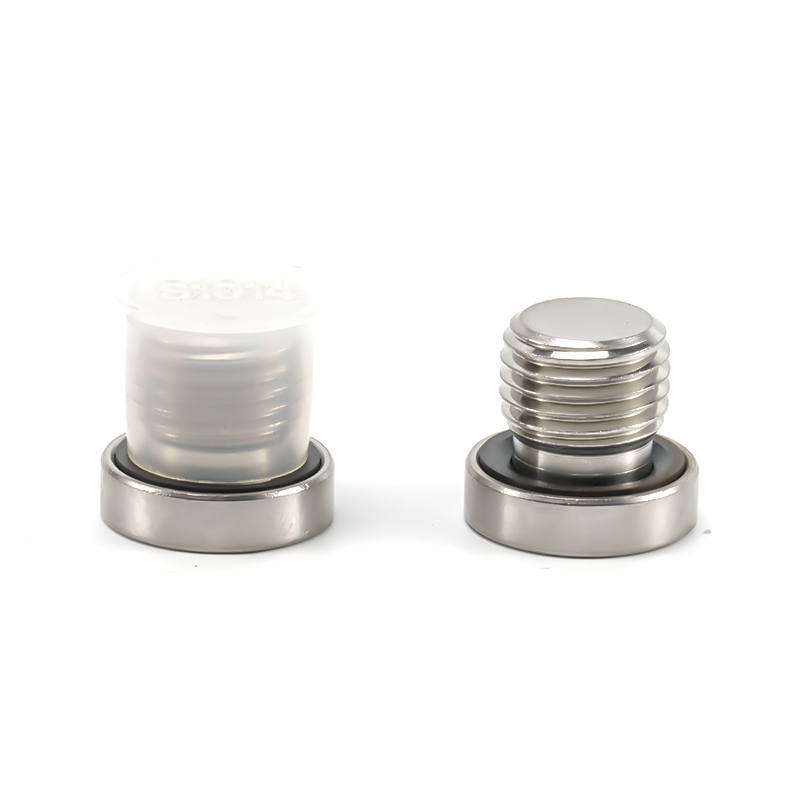
Carbon Steel Oil Plug
Applications in the Automotive Industry
Automotive systems contain many fluid circuits and enclosed housings that require secure access points. Carbon steel oil plugs are commonly used in engines, transmissions, differentials, gearboxes, oil pans, steering systems, and other mechanical assemblies.
Engine Applications
Engine oil must remain inside the lubrication system and must be protected from contamination. Oil plugs may be installed in drain ports, inspection openings, oil galleries, or other threaded passages. The plug must tolerate heat, vibration, contact with engine oil, and repeated service operations.
During routine maintenance, a drain plug is removed to allow used oil to leave the engine. The plug is then reinstalled after draining. Thread accuracy and sealing-face quality are critical because repeated removal and installation can gradually expose the connection to wear or damage.
Transmission and Gearbox Applications
Transmission and gearbox lubricants reduce friction and protect gears, bearings, shafts, and synchronizing components. An oil plug used in these assemblies must maintain a stable seal while exposed to gear oil, vibration, and temperature variations.
Some transmission housings include separate filling, draining, and level-checking ports. Each port may require a different plug size or sealing arrangement. A manufacturer capable of producing multiple specifications can help customers standardize their procurement while satisfying different design requirements.
Commercial and Passenger Vehicles
Passenger vehicles, commercial trucks, buses, and specialty vehicles operate under different load and maintenance conditions. Commercial vehicles may accumulate longer operating hours, heavier loads, and more severe vibration than passenger vehicles. The oil plug must therefore be selected according to the equipment’s operating environment.
A dependable plug contributes to cleaner maintenance areas, reduced fluid loss, and improved protection of the surrounding chassis and drivetrain components. For vehicle manufacturers and service networks, consistent batch quality is also important because the same component may be used across multiple production lines or service locations.
Applications in Machinery and Industrial Systems
Industrial machinery often includes hydraulic tanks, gear reducers, pumps, compressors, machine tools, agricultural equipment, construction equipment, and automated production systems. These machines rely on lubricants and hydraulic fluids to transfer power, reduce friction, cool moving components, and prevent premature wear.
Oil plugs are used to close unused ports, drain reservoirs, seal inspection openings, and provide access for periodic maintenance. In many machines, the plug is located in a confined or exposed position, so its size, head design, and installation method must be compatible with the available clearance.
Hydraulic and Lubrication Systems
Hydraulic systems operate under pressure and depend on clean, stable fluid. A damaged or poorly sealed plug can allow fluid loss or permit contamination to enter the system. Carbon steel provides the mechanical strength required for many hydraulic and lubrication applications, while surface treatment supports durability in industrial environments.
Before selecting a plug for a pressurized system, engineers should confirm the pressure rating of the complete connection, including the plug, mating thread, housing material, sealing element, and installation procedure. The plug should not be considered separately from the port design.
Gear Reducers and Industrial Drives
Gear reducers often use oil plugs for filling, draining, and level inspection. These plugs may remain in service for long periods and may be exposed to gear oil, heat, vibration, and external dust. Reliable thread engagement and sealing help maintain the correct lubricant level and protect the internal gear set.
Construction and Agricultural Equipment
Construction and agricultural machinery may operate in mud, dust, rain, temperature extremes, and high-vibration environments. Oil plugs used in these machines must be able to resist external contamination and remain serviceable during field maintenance.
A robust carbon steel plug with suitable corrosion protection can be a practical choice for equipment that requires mechanical durability and cost control. Proper surface treatment and packaging are particularly important when components may be stored or transported before installation.
Applications in Rail, Aerospace-Support, and Specialized Equipment
Threaded connection products are also used in rail vehicle manufacturing, aerospace-related equipment, ground-support systems, and specialized industrial assemblies. These sectors often place strong emphasis on traceability, consistency, documentation, and supply reliability.
For such applications, the oil plug must be evaluated not only for its basic sealing function but also for material documentation, dimensional inspection, surface condition, batch identification, and quality records. The specific requirements depend on the customer’s design standards and applicable industry procedures.
Jinzhize has experience supplying threaded connection products for automotive, aerospace, and rail vehicle manufacturing environments. Its product portfolio allows customers to source oil plugs together with inserts, threaded adapters, taps, and installation tools from a specialized manufacturer rather than coordinating multiple unrelated suppliers.
Manufacturing Process for Carbon Steel Oil Plugs
The performance of an oil plug begins with disciplined manufacturing. Every stage, from raw material preparation to final packaging, can influence the quality of the finished part. A controlled process helps reduce variation and supports stable performance across repeated production batches.
Material Selection and Incoming Inspection
The first stage is the selection of carbon steel appropriate for the required strength, machinability, surface treatment, and service conditions. Material procurement should be controlled through defined specifications and supplier management procedures.
Incoming inspection may include verification of material documentation, dimensions, appearance, and other required characteristics. The objective is to ensure that the raw material is suitable before it enters production. Controlled material identification also supports traceability throughout the manufacturing process.
Blank Preparation
Carbon steel blanks are prepared according to the plug’s design and production method. The blank must provide sufficient allowance for turning, facing, threading, chamfering, and forming of the sealing features.
Stable blank preparation helps reduce machining variation and improves material utilization. For large-volume orders, repeatable preparation is especially important because it supports consistent cycle times and predictable output.
Precision Turning and Forming
Turning operations create the external diameter, head, shoulder, sealing face, and other rotational features. The machine settings must be controlled to achieve the specified dimensions and surface quality.
The sealing face deserves particular attention. Unevenness, burrs, scratches, or incorrect geometry may reduce the effectiveness of the seal. Controlled machining and appropriate tool management help produce a clean and consistent contact surface.
Thread Machining
Thread machining creates the connection between the plug and the mating port. Thread form, pitch, major diameter, minor diameter, flank condition, and effective engagement length all influence installation and sealing performance.
Depending on the design, the thread may be produced by cutting, rolling, or another suitable process. The selected process should be appropriate for the carbon steel grade, product geometry, required accuracy, and production volume.
Thread inspection is essential. Gauges and measuring equipment can verify whether the thread conforms to the required specification. A thread that is too tight may increase installation torque or cause assembly problems, while a thread that is too loose may reduce engagement and affect sealing reliability.
Deburring and Cleaning
After machining, burrs and chips must be removed from the thread, sealing face, wrenching surfaces, and internal transitions. Deburring improves handling safety and reduces the possibility of particles entering the equipment.
Cleaning removes machining residues, metal particles, and contaminants that could interfere with surface treatment or final assembly. Clean components also provide a better basis for visual inspection and packaging.
Surface Treatment
Surface treatment is selected according to the customer’s requirements and the expected service environment. Its purpose may include improving corrosion resistance, maintaining appearance, supporting storage stability, or controlling friction during installation.
The treatment must be uniform and compatible with the plug’s dimensional tolerances. Excessive coating thickness on the thread can affect fit, while insufficient coverage may leave areas vulnerable to corrosion. For this reason, surface treatment should be controlled as part of the complete production process rather than treated as an isolated finishing step.
Final Inspection
Final inspection may include dimensional checks, thread gauging, appearance inspection, sealing-face verification, surface-treatment assessment, and packaging review. The inspection scope should be established according to the product specification and customer quality requirements.
Inspection records support traceability and help identify production trends. If a deviation is discovered, documented process information allows the manufacturer to investigate the cause and implement corrective action.
Packaging and Shipment
Proper packaging protects the oil plugs from impact, moisture, contamination, and mixing during storage and transportation. Packaging labels should identify the product specification, quantity, batch information, and other required details.
For international supply, packaging must also support efficient loading and safe handling. Well-organized packaging reduces counting errors and makes it easier for customers to move the parts into their warehouse or production line.
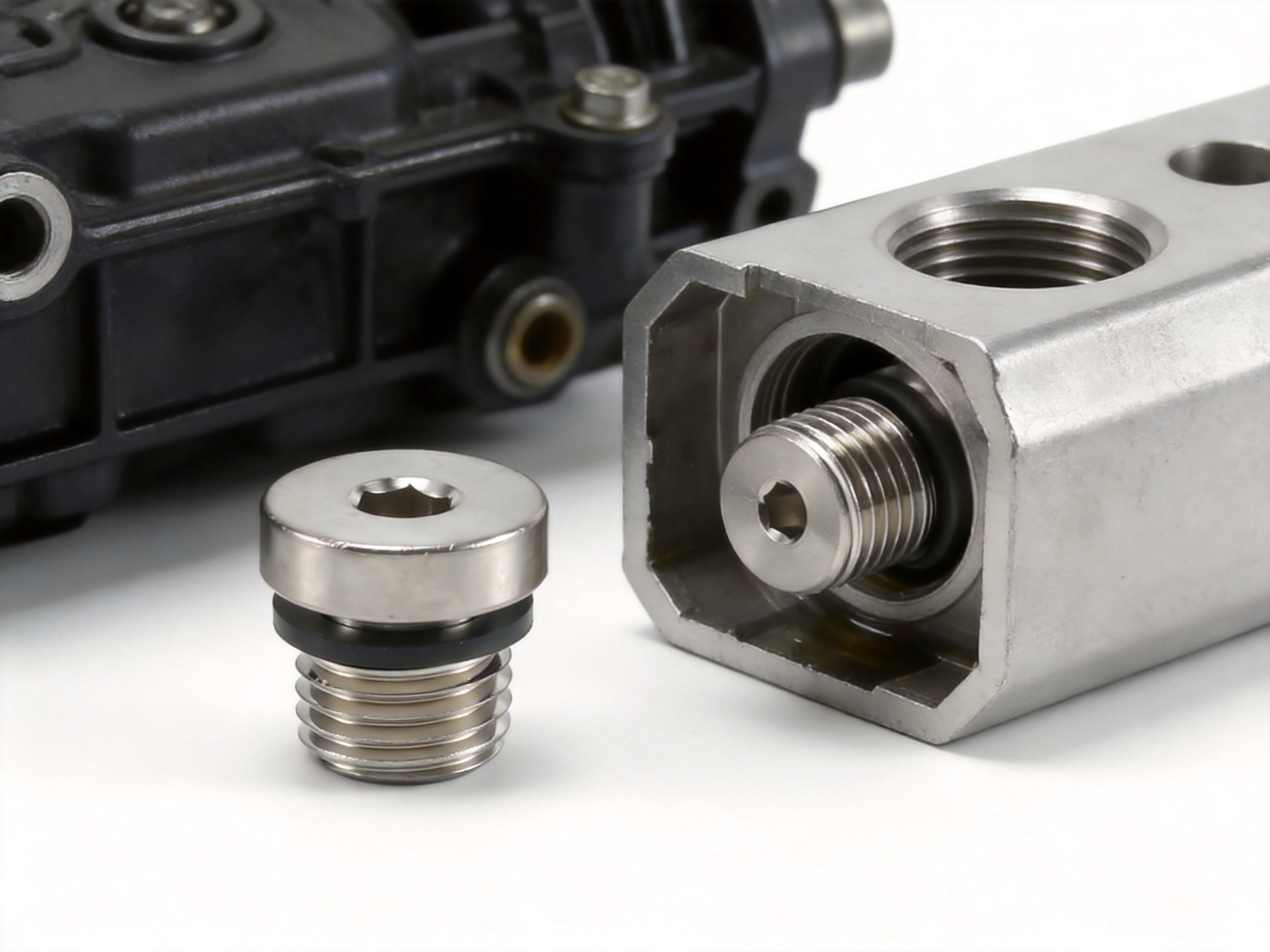
Advanced Manufacturing Strengths
Dongtai Jinzhize Metal Products Co., Ltd. operates an owned manufacturing plant covering approximately 10,000 square meters. The facility is equipped with hundreds of machine tools and automated production systems. This combination of production capacity and process control enables the company to support both standard and customized threaded connection products.
The company was established in 2015 and has developed an experienced team for design, development, manufacturing, quality management, and customer service. Its manufacturing structure is intended to support stable supply rather than one-time production only. This is important for customers that require repeat orders, replacement parts, or long-term program support.
Integrated Product Capability
Oil plugs are often used together with other threaded products. A customer may also need thread inserts, self-tapping inserts, key-locking inserts, threaded adapters, installation taps, or special tools. A manufacturer with an integrated product portfolio can help coordinate thread specifications and technical requirements across related components.
This capability can reduce communication complexity and improve compatibility. For example, the same engineering team can review the relationship between a plug, its mating thread, an insert, and the installation tool. This is useful when a customer is developing a new assembly or repairing a damaged threaded hole.
Automated and Repeatable Production
Automated equipment and organized production lines can improve repeatability, productivity, and process consistency. Automation is especially beneficial for components produced in large quantities because it helps reduce manual variation and supports stable cycle times.
Automation does not replace technical expertise. Instead, it works together with experienced engineers and quality personnel who define process parameters, inspect results, maintain equipment, and respond to production data. The combination of equipment capability and human oversight is essential for reliable output.
Quality Management and Traceability
Threaded components used in critical assemblies require consistent quality. Jinzhize emphasizes a rigorous quality management system and a traceable production approach. Traceability helps connect finished products with production batches, inspection information, material records, and shipment details.
For customers, traceability improves confidence in procurement and simplifies the investigation of any future quality question. It also supports controlled inventory management and repeat ordering.
Large-Scale Supply Capability
In 2024, the company achieved an annual output value of 153 million RMB. This indicates an established production organization and the ability to manage substantial order volumes. For customers in automotive, industrial, and transportation sectors, supplier capacity is important because component shortages can interrupt assembly or maintenance schedules.
Large-scale supply capability should be supported by practical production planning, raw material control, equipment maintenance, inspection capacity, and customer communication. A manufacturer that can coordinate these areas is better positioned to provide stable delivery over the long term.
Comparison with Alternative Oil Plug Materials
Oil plugs may be produced from carbon steel, stainless steel, aluminum alloys, brass, or other materials. The best selection depends on the service environment, mechanical requirements, corrosion exposure, weight restrictions, cost target, and compatibility with the surrounding housing.
| Evaluation Factor | Carbon Steel Oil Plug | Stainless Steel Oil Plug | Aluminum Alloy Oil Plug | Brass Oil Plug |
|---|---|---|---|---|
| Mechanical strength | High and suitable for many demanding applications | High, depending on grade and treatment | Moderate, with low weight | Moderate and suitable for selected systems |
| Machinability | Good and suitable for efficient production | Can require more demanding machining | Generally good | Generally good |
| Cost efficiency | Strong balance of performance and cost | Usually higher material cost | Competitive where weight reduction is important | Often higher than carbon steel |
| Corrosion protection | Requires suitable surface treatment | Inherently strong in many environments | Good in selected environments but application dependent | Good in selected environments |
| Weight | Higher than aluminum | Higher than aluminum | Low | Moderate to high |
| Typical value | Robust, economical, and widely adaptable | Preferred for demanding corrosion conditions | Preferred where low weight is a priority | Used for specific fluid and compatibility needs |
Carbon steel is often selected when the application requires strong mechanical performance, reliable thread engagement, reasonable cost, and broad manufacturing flexibility. Stainless steel may be more appropriate in severe corrosion environments, while aluminum may be selected for weight-sensitive designs. The material decision should be based on engineering requirements rather than price alone.
Why Manufacturing Quality Matters More Than Basic Geometry
Two oil plugs may appear identical in a catalog yet perform differently in service. Small differences in thread accuracy, sealing-face flatness, surface roughness, heat treatment, coating consistency, or cleanliness can affect assembly quality and leakage resistance.
A plug with an incorrect thread profile may initially seem acceptable but create excessive friction, incomplete engagement, or premature wear. A sealing face with machining marks may provide an inconsistent contact path. A coating that is too thick may alter the fit, while inadequate corrosion protection may reduce service life.
For these reasons, customers should evaluate the manufacturer’s process capability, inspection system, material control, and delivery consistency. Product selection should include technical review of the complete application, not only a comparison of unit prices.
Selection Guide for Buyers and Engineers
Confirm the Thread Specification
The first requirement is identifying the correct thread standard, nominal size, pitch, tolerance, and engagement length. The plug thread must match the mating port. If the port contains a thread insert, the plug must be compatible with the insert’s internal thread specification.
Evaluate Pressure and Temperature
Determine the maximum operating pressure, pressure fluctuations, temperature range, and exposure to thermal cycling. The complete connection must be evaluated, including the plug, housing, thread, and sealing method.
Identify the Working Fluid
Oil type, hydraulic fluid, fuel, gas, cleaning chemicals, and other fluids may interact differently with materials and surface treatments. Fluid compatibility should be reviewed before finalizing the plug specification.
Review Installation Conditions
Consider the available wrench clearance, installation direction, required torque, access for maintenance, and frequency of removal. A plug used for routine draining may require a different head or sealing arrangement from a plug installed permanently in a protected internal passage.
Specify Surface Treatment
Surface treatment should be selected according to humidity, salt exposure, chemical contact, storage duration, appearance requirements, and compatibility with the mating components. The customer should communicate any restrictions on coatings or treatment substances.
Define Quality and Documentation Requirements
For general machinery, standard inspection documentation may be sufficient. For automotive, rail, aerospace-support, or other controlled applications, customers may require material certificates, dimensional reports, batch traceability, special inspection records, or defined packaging procedures.
Plan for Volume and Delivery
Procurement planning should consider annual demand, forecast changes, minimum order quantities, safety stock, packaging units, and delivery schedules. A manufacturer with substantial equipment capacity and organized production planning can be a valuable partner for recurring programs.

Installation and Maintenance Recommendations
Before installation, inspect the plug and mating port for damage, contamination, burrs, or corrosion. The port should be clean and the thread should be free from chips or foreign material. Any sealing washer, gasket, or O-ring should be checked for correct size and condition.
Install the plug by hand for the initial turns whenever possible. It should engage smoothly without cross-threading. If abnormal resistance occurs at the beginning of engagement, stop and inspect the thread alignment rather than forcing the plug into position.
Tighten the plug using the recommended torque for the specific design and sealing method. Excessive torque can damage the thread, distort the sealing face, or crack the surrounding housing. Insufficient torque may result in leakage or loosening under vibration.
After installation, inspect the area for signs of leakage during initial operation. A follow-up inspection may be useful after the equipment reaches operating temperature and pressure. If leakage is detected, the cause should be investigated rather than solved simply by applying excessive tightening force.
During removal, use the correct tool and avoid damaging the wrenching feature. If the plug is corroded or stuck, appropriate maintenance procedures should be followed. Reusing a gasket or sealing washer may not be advisable, particularly where the component has been compressed, damaged, or exposed to high temperature.
Customization and Technical Cooperation
Many industrial customers need more than a standard catalog item. They may require a special thread, modified length, different head form, customized sealing geometry, particular surface treatment, special packaging, or a private-label supply arrangement. Customization should begin with clear technical information and a review of the complete assembly.
Useful information includes drawings, thread standards, material requirements, operating pressure, temperature, fluid type, installation torque, expected annual quantity, inspection requirements, and packaging preferences. Samples or existing parts can also help the manufacturer understand the application.
Jinzhize supports design, development, and production through an experienced technical team. Its broader range of threaded connection products can be useful when an oil plug is part of a larger repair or assembly program. Technical cooperation at the early stage can help identify potential fit, sealing, or installation issues before mass production begins.
Purchasing Advantages of a Specialized Manufacturer
Working with a specialized threaded-product manufacturer can provide several advantages over purchasing generic components from an unrelated supplier. The manufacturer is more likely to understand thread standards, insert compatibility, sealing geometry, machining controls, and the practical requirements of installation.
A specialized supplier can also support product continuity. If a customer needs the same plug specification over multiple years, stable tooling, documented processes, and controlled production records help reduce variation between batches.
Another advantage is coordinated sourcing. Customers that require oil plugs, threaded inserts, adapter nuts, taps, or installation tools may simplify procurement by working with one technically capable supplier. This can reduce administrative work and improve communication between product specifications.
Supplier reliability also includes after-sales support. When a customer encounters a thread-fit question, leakage concern, packaging issue, or future customization requirement, responsive technical communication helps resolve the matter efficiently.
Sustainability and Resource Efficiency
Carbon steel is a widely recyclable engineering material. Responsible production includes efficient material utilization, control of machining waste, appropriate recycling of metal chips, and reduction of unnecessary packaging. Efficient processes can lower the material and energy intensity of each finished component.
Durable oil plugs also support sustainability by helping equipment operate with fewer leaks and fewer premature component replacements. A stable seal can reduce lubricant loss, prevent contamination-related maintenance, and extend the service life of the equipment in which the plug is installed.
Long-term sustainability depends on the complete product life cycle. This includes material selection, manufacturing, transportation, installation, maintenance, removal, and recycling. A well-designed and properly manufactured oil plug contributes value at each stage by providing a durable, serviceable, and economically practical sealing solution.
Quality Assurance Priorities
Quality assurance for carbon steel oil plugs should address both product characteristics and process stability. Important priorities include correct raw material, accurate dimensions, reliable thread geometry, clean sealing surfaces, consistent surface treatment, suitable packaging, and complete traceability.
Quality control should be applied at multiple stages rather than only at the end of production. Process checks during machining can identify tool wear or dimensional drift before a large quantity is produced. Thread gauges and measuring instruments can verify conformity. Final inspection can confirm appearance, cleanliness, packaging, and identification.
Continuous improvement is also important. Production data, customer feedback, nonconformance records, and equipment maintenance information can be reviewed to reduce recurring issues. A mature quality system uses these inputs to improve both product design and manufacturing procedures.
Frequently Asked Questions
What is a carbon steel oil plug used for?
A carbon steel oil plug is used to close a threaded opening and prevent oil, lubricant, hydraulic fluid, gas, or other media from leaking out or entering the equipment. It is commonly used in engines, transmissions, gearboxes, machinery housings, hydraulic systems, and industrial oil circuits.
Why choose carbon steel instead of a lower-strength material?
Carbon steel provides strong mechanical performance, good resistance to installation forces, reliable thread engagement, and competitive cost. It is suitable for many applications where the plug must withstand pressure, vibration, and repeated maintenance operations.
Does carbon steel resist corrosion?
Carbon steel can be protected through suitable surface treatment. The treatment should be selected according to the operating environment, fluid exposure, humidity, storage conditions, and customer requirements. Proper treatment helps protect the plug during storage and service.
Can the oil plug be customized?
Yes. Customization may include thread standard, diameter, length, head shape, sealing face, surface treatment, packaging, and inspection documentation. Customers should provide drawings or detailed technical requirements for evaluation.
How should the correct oil plug size be selected?
The correct product should match the mating thread standard, nominal size, pitch, tolerance, engagement length, sealing method, pressure, temperature, and fluid conditions. The available installation space and maintenance requirements should also be considered.
Can the plug be used in a high-pressure system?
A carbon steel oil plug may be suitable for high-pressure applications when the complete connection is properly designed and rated. The plug, mating thread, housing, sealing element, and installation torque must all be evaluated together. Application-specific technical confirmation is recommended.
How can leakage be prevented after installation?
Use a clean and undamaged mating port, confirm the correct thread, install the required sealing element, and apply the specified tightening torque. Avoid cross-threading and excessive tightening. If leakage occurs, inspect the thread, sealing face, gasket, and housing for damage.
Are oil plugs suitable for repeated removal?
Many oil plugs are designed for routine service removal, such as draining engine or gearbox oil. However, repeated service should be carried out with the correct tool and torque. Sealing washers or other compressible sealing elements may need replacement after removal.
What quality documents can be requested?
Depending on the application, customers may request material information, dimensional inspection records, thread inspection results, batch identification, surface-treatment records, packaging details, or other agreed documentation. Requirements should be confirmed before production.
What industries can use these oil plugs?
Typical industries include automotive, commercial vehicles, machinery manufacturing, industrial equipment, hydraulic systems, rail vehicles, aerospace-support equipment, agricultural machinery, construction equipment, and general engineering.
Why work with a manufacturer that also produces threaded inserts and tools?
An integrated supplier can better understand the relationship between oil plugs, threaded holes, inserts, adapters, taps, and installation tools. This may simplify technical communication, improve compatibility, and reduce the number of separate suppliers involved in a threaded connection project.
Conclusion
Carbon steel oil plugs provide a practical and reliable method for sealing threaded openings in automotive, machinery, industrial, transportation, and specialized equipment. Their advantages include high mechanical strength, pressure resistance, machinability, cost efficiency, flexible sizing, and compatibility with protective surface treatments.
The performance of an oil plug depends on much more than its basic shape. Material control, precision machining, thread accuracy, sealing-face quality, deburring, cleaning, surface treatment, inspection, packaging, and traceability all contribute to the final result. Selecting a specialized manufacturer helps ensure that these factors are managed as part of one coordinated process.
Dongtai Jinzhize Metal Products Co., Ltd. combines an owned manufacturing facility, hundreds of machine tools, automated production systems, experienced technical personnel, quality management procedures, and a broad threaded-product portfolio. This production strength enables the company to support standard carbon steel oil plugs as well as customized threaded connection requirements for global customers.
For buyers and engineers, the best approach is to evaluate the complete application: thread specification, pressure, temperature, working fluid, installation method, corrosion environment, maintenance frequency, quality documentation, and expected order volume. When these factors are properly defined, a carbon steel oil plug can provide stable sealing performance, efficient maintenance, and dependable long-term value.
References
1. General principles of mechanical thread design and threaded fastening.
2. Standard practices for carbon steel material selection and machining.
3. Engineering guidance for threaded ports, sealing faces, gaskets, and fluid containment.
4. Quality management principles for industrial component manufacturing and traceability.
5. Automotive maintenance practices for engine, transmission, gearbox, and lubrication systems.
6. Industrial guidelines for corrosion protection, surface treatment, storage, and packaging of steel components.
7. Manufacturer-provided technical information for carbon steel oil plugs and related threaded connection products.