

 Français
 Español
 Deutsch

Content
- 1 What Is a Key-Locking Insert?
- 2 How the Key-Locking Mechanism Works
- 3 Product Construction and Material Selection
- 4 Advantages Compared with Conventional Thread Repair Methods
- 5 Common Metric Specifications
- 6 Common American Standard Specifications
- 7 Applications in Automotive and Transportation
- 8 Applications in Aerospace and High-Performance Equipment
- 9 Applications in Molds, Machinery, Electronics, and Medical Equipment
- 10 Manufacturing Strengths of Dongtai Jinzhize Metal Products Co., Ltd.
- 11 Typical Manufacturing Process
- 12 Installation Considerations
- 13 Quality and Performance Factors to Evaluate
- 14 Why a Specialized Manufacturer Can Be a Better Partner
- 15 Custom Supply and Engineering Support
- 16 Economic Benefits of Thread Reinforcement
- 17 Preventing Common Installation Problems
- 18 Frequently Asked Questions
- 18.1 What is the primary purpose of a key-locking insert?
- 18.2 How is a key-locking insert different from a wire thread insert?
- 18.3 Can a key-locking insert repair a stripped aluminum thread?
- 18.4 Are these inserts suitable for frequent disassembly?
- 18.5 Do key-locking inserts eliminate the need for correct bolt torque?
- 18.6 Are metric and American Standard versions available?
- 18.7 Which material should be selected?
- 18.8 Can the insert be customized?
- 18.9 What tools are needed for installation?
- 18.10 How should customers verify compatibility?
- 19 Conclusion
- 20 References
- 21 Product: Key-locking Insert
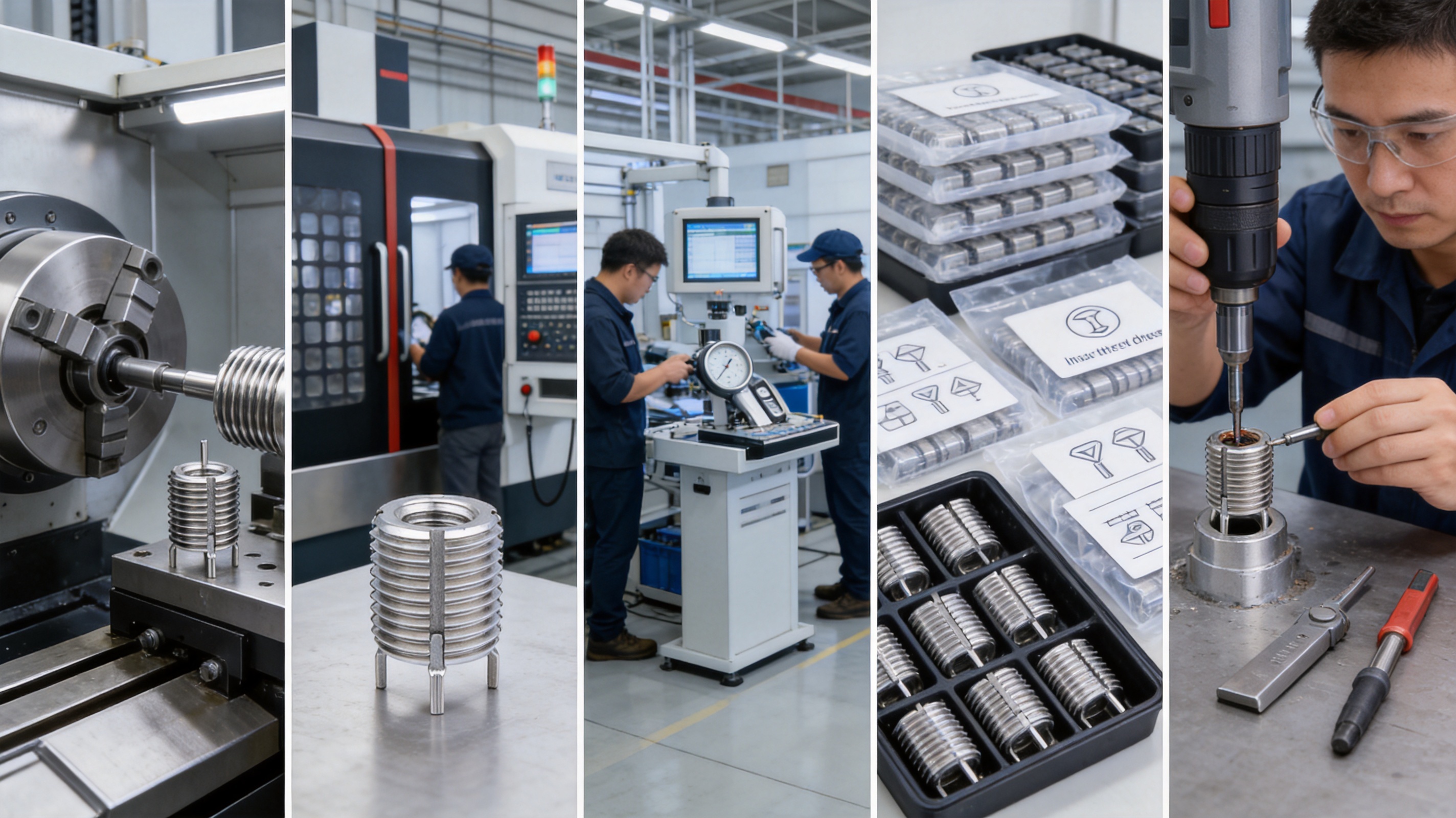
Key-locking inserts are engineered thread reinforcement components used to create strong, durable, and reusable internal threads in materials that may otherwise be too soft, too weak, or too vulnerable to thread damage. They are especially valuable in aluminum alloys, magnesium alloys, cast iron, plastics, composite materials, and other substrates where repeated tightening, vibration, impact, or high assembly loads can cause conventional tapped threads to wear or pull out.
A key-locking insert combines the benefits of a precision internal thread with a mechanically locking external design. The insert is installed into a prepared threaded hole, and one or more locking keys are driven into the surrounding parent material. This creates a positive mechanical lock that helps prevent rotation, loosening, and migration during service. Unlike solutions that rely only on friction or adhesive retention, the key-locking mechanism provides a direct structural connection between the insert and the host component.
For manufacturers of engines, transmissions, industrial equipment, molds, aircraft structures, rail vehicles, electronic assemblies, and medical equipment, this type of insert can provide a practical way to repair damaged threads, strengthen new threaded holes, and improve the reliability of frequently serviced connections.
What Is a Key-Locking Insert?
A key-locking insert is generally manufactured as a precision-machined cylindrical sleeve with an internal thread, an external thread, and one or more locking keys or tabs. The internal thread receives the required bolt, screw, or stud. The external thread engages with a larger tapped hole in the parent material. After the insert is positioned at the specified depth, a dedicated installation tool drives the keys outward or into the surrounding material.
The external thread and the keys perform different functions. The external thread establishes the installation position and provides radial contact with the parent material. The keys provide positive anti-rotation and anti-pullout resistance. Together, these features create a reinforced threaded connection that is suitable for demanding mechanical conditions.
Depending on the design, key-locking inserts may be supplied in different lengths, thread classes, materials, and configurations. Common versions include metric models and American Standard models using UNC or UNF internal and external thread combinations. Micro, light, and heavy categories are often used to distinguish different size ranges or external thread proportions.
The design is particularly useful where the assembly must withstand frequent disassembly. A conventional thread cut directly into aluminum or another low-strength material can become enlarged after repeated maintenance cycles. A key-locking insert transfers the load into a stronger steel component while protecting the softer parent material from direct thread wear.
How the Key-Locking Mechanism Works
Installation begins with preparing the host component. If the original hole is damaged, the damaged thread is removed or enlarged according to the installation specification. A suitable drill creates the required hole diameter, and a special tap forms the external thread required by the insert. The hole must be cleaned carefully so that chips, oil, and debris do not interfere with insertion.
The insert is then mounted on an installation mandrel or equivalent tool. The tool engages with the internal thread or another designed driving feature and guides the insert into the prepared hole. The insert is installed to the specified depth, normally with attention to the position of the top surface relative to the component surface.
After the insert is seated, the keys are driven into the parent material using a key-setting punch or another appropriate installation tool. The keys deform or penetrate the surrounding material, creating a mechanical lock. The result is an insert that resists rotation when the internal fastener is tightened or removed.
This installation principle provides several important advantages:
• The insert is held by both an external threaded connection and positive locking keys.
• The locking mechanism is not dependent solely on friction, prevailing torque, or chemical bonding.
• The reinforced internal thread can withstand repeated fastening cycles more effectively than many soft-material base threads.
• The insert can be used for thread repair as well as original equipment production.
• The system is compatible with a broad range of metric and American Standard thread sizes.
Product Construction and Material Selection
Key-locking inserts are typically produced from precision-machined stainless steel or carbon steel. Material selection depends on the operating environment, required load capacity, corrosion conditions, temperature, mating fastener material, and customer application requirements.
Stainless Steel Versions
Stainless steel inserts are suitable for applications where corrosion resistance, dimensional stability, and long service life are important. They are commonly considered for automotive systems exposed to moisture, aerospace components, outdoor machinery, medical equipment, electronic assemblies, and industrial environments where maintenance access may be limited.
A stainless steel construction can also be useful where the insert must remain stable through repeated installation and removal. Its strength and resistance to environmental degradation help maintain the integrity of the internal thread during the service life of the component.
Carbon Steel Versions
Carbon steel inserts are often selected when high mechanical strength and cost efficiency are primary considerations. They can provide strong resistance to thread deformation and may be appropriate for heavy-duty machinery, molds, fixtures, engine components, transmissions, and other applications with high mechanical loading.
Surface treatment and protective finishing may be specified according to the application. Customers should confirm the required coating, hardness, corrosion protection, and compatibility with the host component before placing an order.
Precision-Machined Geometry
The performance of a key-locking insert depends on more than nominal thread size. The internal thread, external thread, key position, body diameter, length, chamfer, and end geometry must all be controlled. A small error in external thread form can affect installation torque and engagement. A dimensional error in the key location can reduce locking performance or create installation interference.
Precision machining therefore plays a central role in the manufacturing process. Controlled turning, threading, grooving, key preparation, deburring, inspection, and final sorting are required to produce inserts that install consistently and perform reliably in series production.
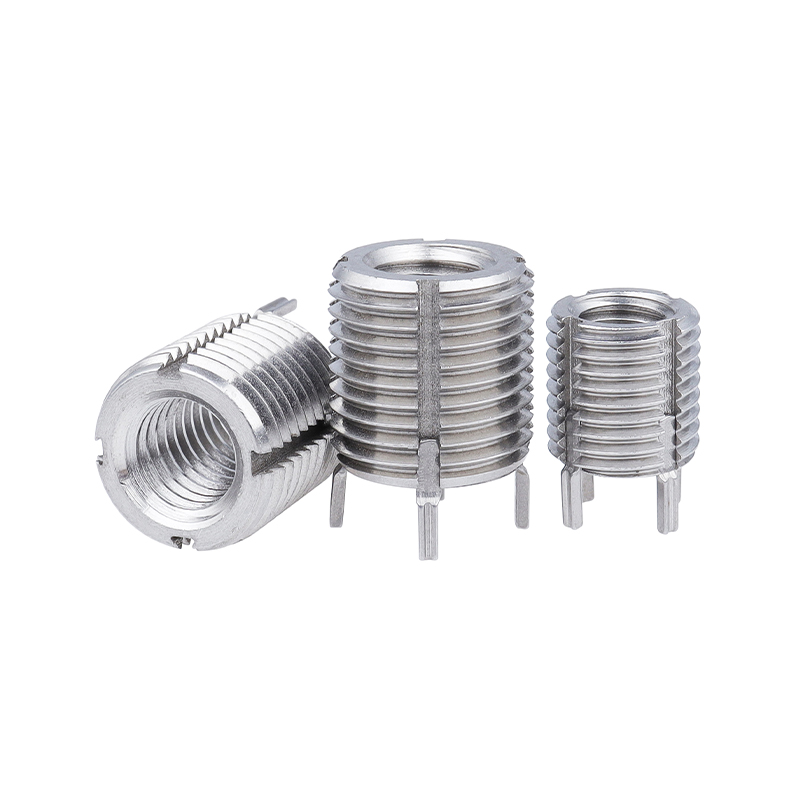
Key-locking Insert
Advantages Compared with Conventional Thread Repair Methods
Positive Mechanical Locking
One of the most important advantages of a key-locking insert is its positive mechanical retention. Adhesive-only thread repair systems can be affected by surface cleanliness, curing conditions, temperature, chemical exposure, and assembly timing. A friction-fit insert may depend heavily on interference dimensions and material properties. A key-locking insert adds a physical locking feature that directly engages the parent material.
This mechanical engagement helps reduce the risk of insert rotation under repeated torque, vibration, or thermal cycling. It is particularly valuable in assemblies where loosening could cause a loss of function, secondary damage, or an expensive maintenance event.
High Load-Carrying Capability
The insert distributes bolt load over a larger and stronger threaded surface than a damaged or weak base thread. The external thread transfers the load into the host component, while the steel insert provides a durable internal thread for the fastener. This arrangement can improve resistance to stripping, pullout, and thread deformation.
Actual load capacity depends on insert size, length, material, host material, engagement depth, bolt grade, installation quality, and service conditions. Nevertheless, the reinforced construction is well suited to heavy-load applications when the system is correctly designed and installed.
Improved Resistance to Vibration
Vibration is a common cause of threaded connection failure. When a conventional insert is retained only by friction, repeated movement may gradually loosen it. The keys in a key-locking insert resist rotational movement and help maintain a stable position in the component.
This makes the product suitable for engines, transmissions, rail vehicles, industrial machinery, vehicle chassis systems, and other equipment exposed to dynamic loads. The insert does not eliminate the need for correct bolt tightening, preload control, or overall joint design, but it provides an important additional layer of mechanical security.
Reliable Repeated Disassembly
Many service components must be opened and reassembled numerous times. Examples include engine covers, gearbox housings, inspection panels, tooling fixtures, and maintenance access points. Directly tapped threads in aluminum or plastic may deteriorate after repeated use. A key-locking insert creates a more durable internal thread that can be serviced repeatedly.
Because the insert remains locked in the host material, the maintenance technician can remove the fastener without normally removing the insert. This supports more consistent repair procedures and helps reduce the risk of enlarging or damaging the original component.
Effective Thread Repair
A key-locking insert can restore a damaged threaded hole without replacing an entire housing, bracket, cover, or machine component. This can reduce repair time, material consumption, and downtime. In automotive and industrial maintenance, thread repair is often significantly less expensive than replacing a large cast or machined assembly.
The method is also useful when a design change requires a stronger thread than the original component provides. Instead of redesigning the entire part, the manufacturer may incorporate a reinforced insert into selected high-load fastening points.
Wide Thread Compatibility
The product range includes common metric specifications as well as American Standard UNC and UNF configurations. This enables manufacturers and repair organizations to select inserts for equipment designed under different international standards.
Metric models may be used in applications ranging from micro-size M2 threads to larger heavy-duty M12 configurations. American Standard versions include small 2-56 and 4-40 models, intermediate 1/4, 5/16, 3/8, and 7/16 sizes, and larger 1/2-inch configurations. Availability, exact thread class, length, and material should be confirmed for each project.
Common Metric Specifications
The following table presents representative metric specifications supplied for micro, light, and heavy categories. The drill values are nominal reference values from the product data and should be confirmed against the applicable installation standard, material condition, and production drawing before machining the host component.
| Category | Model | Internal Thread | External Thread | Length | Drill Reference |
|---|---|---|---|---|---|
| Micro | M2 | M2 × 1.4 | M4 × 0.7 | 3 | 3.4 |
| Micro | M2.5 | M2.5 × 0.45 | M4.5 × 0.75 | 3.8 | 3.9 |
| Micro | M3 | M3 × 0.5 | M5 × 0.8 | 4.2 | 4.4 |
| Micro | M4 | M4 × 0.7 | M6 × 0.75 | 5.2 | 5.5 |
| Light | M5 | M5 × 0.8 | M8 × 1.25 | 8 | 6.9 |
| Light | M6 | M6 × 1 | M10 × 1.25 | 10 | 8.8 |
| Light | M8 | M8 × 1.25 | M12 × 1.25 | 12 | 10.8 |
| Light | M10 | M10 × 1.5 | M14 × 1.5 | 14 | 12.8 |
| Light | M12 | M12 × 1.75 | M16 × 1.5 | 16 | 14.8 |
| Heavy | M4 | M4 × 0.7 | M8 × 1.25 | 8 | 6.9 |
| Heavy | M5 | M5 × 0.8 | M10 × 1.25 | 10 | 8.8 |
| Heavy | M6 | M6 × 1 | M12 × 1.25 | 12 | 10.8 |
| Heavy | M8 | M8 × 1.25 | M14 × 1.5 | 14 | 12.8 |
| Heavy | M10 | M10 × 1.5 | M16 × 1.5 | 16 | 14.8 |
| Heavy | M12 | M12 × 1.75 | M18 × 1.5 | 18 | 16.8 |
Terminology in supplier specifications may vary. In particular, “model,” “internal thread,” “external thread,” “total length,” and “drill” should be interpreted together with the applicable drawing. For production use, the customer should verify thread pitch, tolerance class, insert length, key geometry, recommended hole preparation, and installation tooling.
Common American Standard Specifications
Key-locking inserts are also available in American Standard thread configurations. UNC coarse threads are commonly selected where greater thread depth and general-purpose fastening are required, while UNF fine threads may be selected where a finer adjustment or higher tensile engagement is desired.
| Category | Model | Internal Thread | External Thread | Total Length | Drill Reference |
|---|---|---|---|---|---|
| Micro | 2-56 | 2-56 | 8-32 | 0.12 | 0.134 |
| Micro | 4-40 | 4-40 | 10-32 | 0.17 | 0.161 |
| Micro | 6-32 | 6-32 | 12-28 | 0.17 | 0.187 |
| Micro | 8-32 | 8-32 | 1/4-28 | 0.22 | 0.228 |
| Light | 10-32 or 10-24 | 10-32 or 10-24 | 5/16-18 | 0.31 | 0.272 |
| Light | 1/4-20 or 1/4-28 | 1/4-20 or 1/4-28 | 3/8-16 | 0.37 | 0.332 |
| Light | 5/16-18 or 5/16-24 | 5/16-18 or 5/16-24 | 7/16-14 | 0.43 | 0.397 |
| Light | 3/8-16 or 3/8-24 | 3/8-16 or 3/8-24 | 1/2-13 | 0.50 | 0.453 |
| Light | 7/16-20 or 7/16-14 | 7/16-20 or 7/16-14 | 9/16-12 | 0.56 | 0.516 |
| Light | 1/2-13 or 1/2-20 | 1/2-13 or 1/2-20 | 5/8-11 | 0.62 | 0.578 |
| Heavy | 8-32 | 8-32 | 5/16-18 | 0.31 | 0.272 |
| Heavy | 10-32 or 10-24 | 10-32 or 10-24 | 3/8-16 | 0.31 | 0.332 |
| Heavy | 1/4-20 or 1/4-28 | 1/4-20 or 1/4-28 | 7/16-14 | 0.37 | 0.397 |
| Heavy | 5/16-24 or 5/16-18 | 5/16-24 or 5/16-18 | 1/2-13 | 0.43 | 0.453 |
| Heavy | 3/8-16 or 3/8-24 | 3/8-16 or 3/8-24 | 9/16-12 | 0.50 | 0.516 |
| Heavy | 1/2-13 or 1/2-20 | 1/2-13 or 1/2-20 | 3/4-16 | 0.62 | 0.70 |
American Standard dimensions shown in the product information are presented in inch-based values. Customers should confirm whether a supplied value refers to inches, a fractional dimension, or a nominal installation reference. Final production drawings and approved samples should control the manufacturing and installation process.
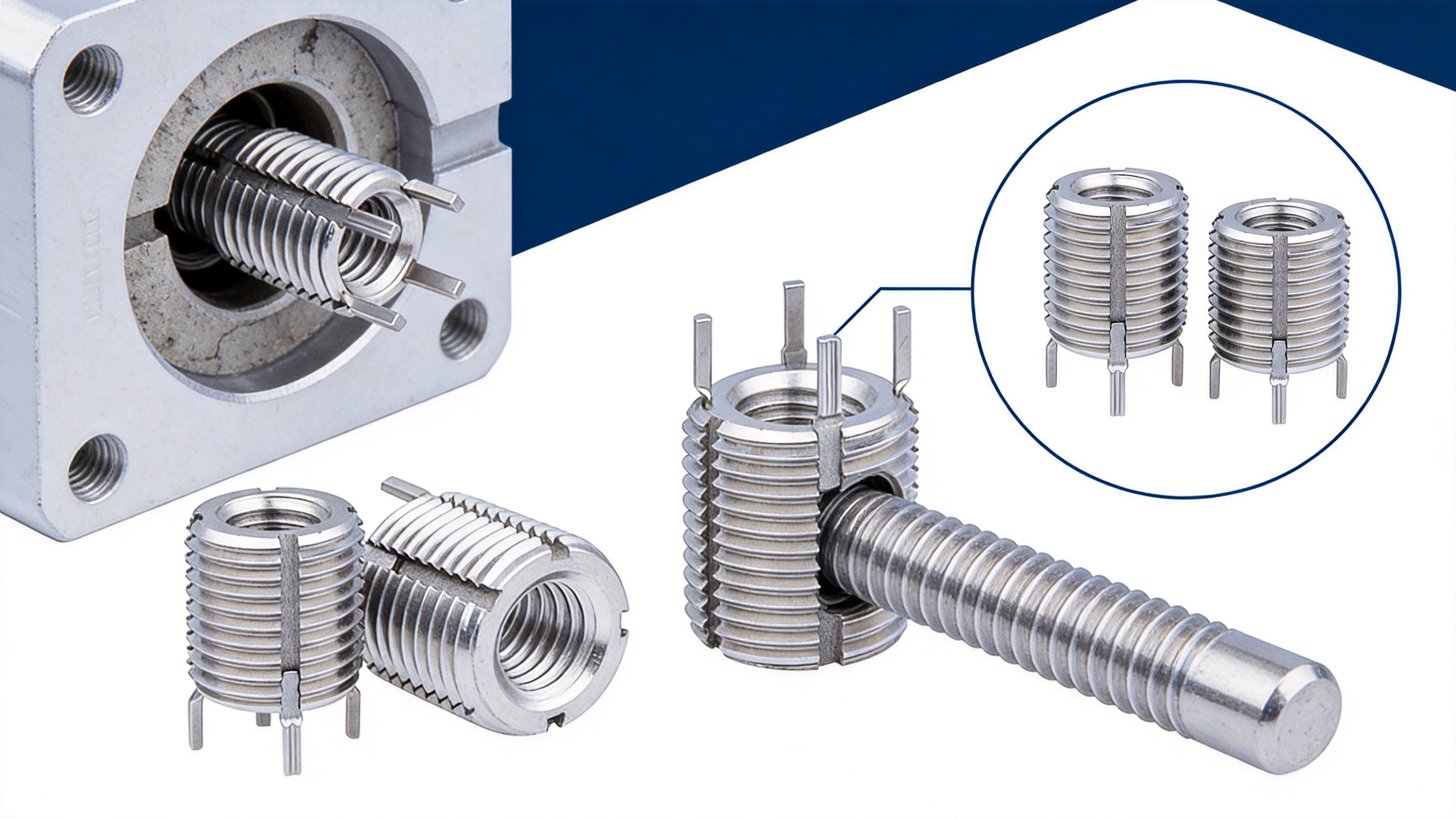
Applications in Automotive and Transportation
Automotive components frequently combine lightweight materials with high mechanical loads. Aluminum engine housings, transmission cases, valve bodies, brackets, and covers can require repeated fastener removal during assembly, inspection, repair, and service. A reinforced internal thread can extend the useful life of these components and reduce thread-related maintenance failures.
In engines and transmissions, key-locking inserts may be considered for fastening points exposed to heat, vibration, oil, and repeated torque cycles. Their positive locking keys help stabilize the insert, while the steel internal thread provides a durable interface for the fastener.
Commercial vehicles and rail vehicles have additional requirements related to long service intervals, vibration, environmental exposure, and maintenance efficiency. A reliable thread reinforcement system can support consistent assembly across large production volumes and simplify the repair of damaged threaded holes in the field.
For automotive production, repeatability is as important as individual product strength. Inserts must arrive with consistent dimensions, thread quality, and key geometry so that automated or semi-automated installation equipment can operate without frequent adjustment. This is where controlled manufacturing and batch traceability become valuable advantages.
Applications in Aerospace and High-Performance Equipment
Aerospace structures and equipment require careful control of weight, strength, maintainability, and reliability. Lightweight alloys are widely used, but their direct threads may not provide the desired durability for all fastening points. Key-locking inserts can reinforce selected locations while allowing the surrounding component to retain a lightweight design.
They may be used in structural panels, equipment housings, access covers, brackets, actuator systems, and other assemblies where a secure threaded connection is needed. The appropriate material, coating, thread class, installation method, and inspection requirements must be selected according to the customer’s engineering standards.
The positive locking feature is especially relevant in applications where vibration or repeated service activity could cause an insert to rotate. However, aerospace users should evaluate the product through their own qualification, validation, and approval procedures. A general-purpose product description should not replace application-specific testing or customer-controlled technical requirements.
Applications in Molds, Machinery, Electronics, and Medical Equipment
Mold-making operations often involve repeated assembly, alignment, adjustment, and disassembly. A key-locking insert can provide a durable thread in mold bases, plates, fixtures, and auxiliary components. Its use may reduce the need to replace an entire mold section when a threaded hole becomes worn.
Industrial machinery can benefit from reinforced threads at guards, housings, mounting points, adjustment mechanisms, and inspection covers. Where machinery experiences shock or vibration, the mechanical locking keys can help maintain the insert position during service.
In electronics and precision equipment, a small insert can provide a strong thread in a relatively thin or soft housing. Micro-size models such as M2, M2.5, M3, 2-56, 4-40, and 6-32 may be considered for compact assemblies, provided the surrounding wall thickness and installation clearance are sufficient.
Medical equipment manufacturers may use thread reinforcement in frames, housings, fixtures, and serviceable assemblies. Material compatibility, cleanliness, corrosion resistance, sterilization conditions, and applicable regulatory requirements should be reviewed before selecting an insert for a medical product.
Manufacturing Strengths of Dongtai Jinzhize Metal Products Co., Ltd.
Dongtai Jinzhize Metal Products Co., Ltd. is a specialized manufacturer of threaded connection and fastening products. Its product range includes key-locking inserts, helical wire inserts, self-tapping inserts, threaded adapters, oil plugs, installation taps, and related tools.
Established in 2015, the company operates an owned manufacturing plant covering approximately 10,000 square meters. The facility is equipped with hundreds of machine tools and automated production systems. This combination of owned production space, extensive equipment, and dedicated manufacturing personnel supports stable production for both standard items and customer-specific requirements.
The company serves automotive and aerospace-related markets, as well as rail vehicle manufacturing, machinery, molds, electronics, and other industrial applications. In 2024, the company reported an annual output value of 153 million RMB, demonstrating its ability to support large-scale and continuous supply.
Integrated Production Capability
An integrated production base can provide better control over key manufacturing stages. Instead of depending entirely on multiple outside suppliers, a manufacturer with internal machining and automated production resources can coordinate material preparation, forming, thread machining, key processing, inspection, packaging, and delivery more efficiently.
This approach can shorten communication paths and improve the handling of technical changes. When a customer requires a different thread combination, length, surface treatment, packaging method, or inspection report, an integrated team can evaluate the requirement across engineering, production, and quality functions.
Automated and Semi-Automated Processing
Automation can improve repeatability in high-volume insert production. CNC equipment and automated systems help maintain consistent machining parameters, reduce manual variation, and support more efficient batch manufacturing. Automation is particularly beneficial for small components, where dimensional differences may be difficult to identify visually but can affect installation behavior.
Automation does not eliminate the need for skilled operators and inspectors. Instead, it combines programmed process control with human oversight. Operators manage equipment, tooling, process conditions, and changeovers, while quality personnel verify that the finished products meet the applicable requirements.
Design and Development Experience
Key-locking insert performance depends on the relationship between product geometry and installation conditions. The manufacturer’s design and development team can support the selection of external thread size, internal thread specification, length, locking key arrangement, material, and tooling requirements.
This technical experience is useful when customers need a product for a nonstandard hole, a limited installation depth, a thin-wall component, a special material, or a high-cycle maintenance application. Engineering support can also help identify potential interference between the insert, the host component, and the mating fastener.
Quality Management and Traceability
A rigorous quality management system supports consistent product output by defining process controls, inspection methods, handling requirements, and corrective action procedures. Traceability is particularly important for critical threaded connections because it allows production batches, materials, inspection records, and customer shipments to be reviewed when necessary.
Jinzhize emphasizes consistent and traceable products together with after-sales service support. For customers in automotive, aerospace, and other demanding sectors, this focus can simplify supplier evaluation and support long-term purchasing programs.
Typical Manufacturing Process
The exact process depends on the insert design, material, dimensions, and order requirements. A typical production sequence may include the following stages.
1. Material Preparation
Suitable stainless steel or carbon steel material is selected according to the approved product specification. Material condition, size, and surface quality are reviewed before machining. Proper material preparation is essential because variation in raw material can affect dimensional stability and thread quality.
2. CNC Turning and Body Formation
The basic cylindrical body is produced by precision turning or an equivalent machining operation. The external diameter, end faces, chamfers, and overall length are formed during this stage. For small inserts, stable workholding and tool control are important because the components may have limited gripping surfaces.
3. External Thread Machining
The external thread is machined to match the prepared hole in the host component. Thread pitch, major diameter, minor diameter, flank form, and effective engagement are controlled according to the applicable drawing or standard. The external thread must provide reliable installation without excessive interference or insufficient engagement.
4. Internal Thread Machining
The internal thread is created to receive the mating screw, bolt, or stud. Thread class and fit are important because the fastener must assemble smoothly while maintaining the intended load transfer. Internal thread inspection may include gauging, visual examination, and dimensional verification.
5. Key Formation and Preparation
The key or tab features are prepared in the specified location and configuration. These features must have the correct dimensions and alignment so they can be driven into the host material during installation. Burrs, sharp unintended edges, or deformation in the key area can interfere with installation and therefore require control.
6. Deburring and Cleaning
Machining can leave small burrs or chips that affect fit and function. Deburring removes unwanted material from the internal thread, external thread, ends, and key area. Cleaning removes machining residue and prepares the insert for inspection and packaging.
7. Inspection and Sorting
Finished products are checked against the applicable requirements. Inspection may cover thread dimensions, overall length, outer diameter, key position, surface condition, material identification, and appearance. Sorting helps prevent mixed sizes or nonconforming components from entering the shipping process.
8. Packaging and Shipment
Small threaded inserts must be packaged to prevent mixing, corrosion, impact damage, and contamination. Labels should identify the model, thread specification, quantity, batch information, and any customer-specific requirements. Proper packaging is especially important for multi-size orders and automated assembly environments.
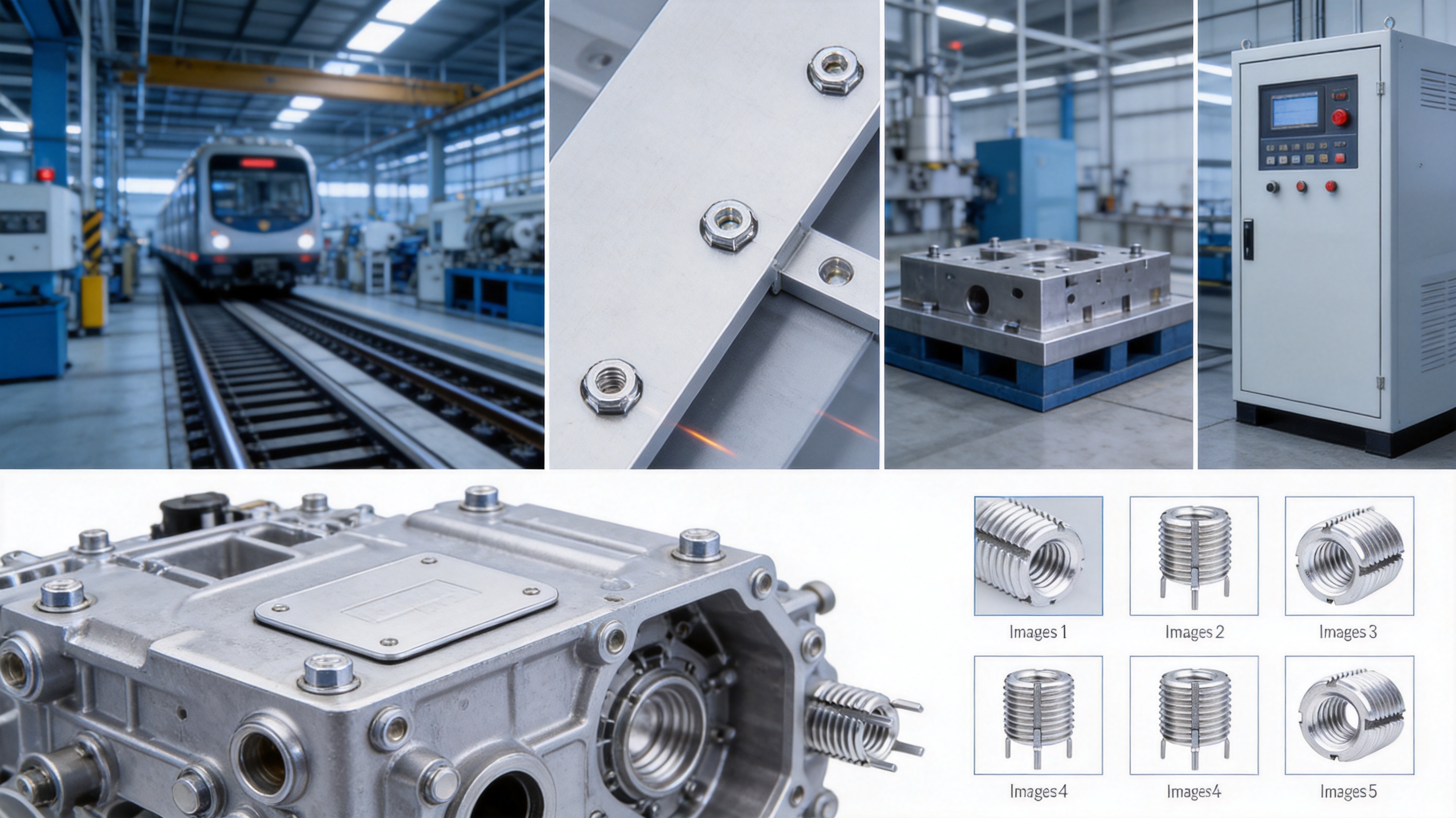
Installation Considerations
Correct installation is essential to achieving the intended performance of a key-locking insert. Even a precisely manufactured insert may not function properly if the host hole is incorrectly drilled, tapped, cleaned, or aligned.
Hole Preparation
The hole must be prepared using the recommended drill size and external thread tap. The drill should be appropriate for the host material and should produce a straight, accurately located hole. The tapping operation must provide sufficient thread depth and engagement for the insert.
When repairing a damaged hole, all loose or deformed material should be removed. The repair area must have enough surrounding material to support the new external thread and the locking keys. If the component wall is too thin, the keys may not engage properly or may break through the opposite side.
Cleaning
Chips, oil, dust, paint, and other contaminants should be removed before inserting the component. Contamination can prevent the insert from reaching the correct depth or can interfere with key setting. Cleaning methods should be compatible with the host material and the application.
Insertion Depth
The insert should be installed to the specified depth. If it is too high, the mating fastener or assembly may interfere with the insert end. If it is too deep, the fastener may not achieve full thread engagement or may contact the bottom of a blind hole. The installation procedure should account for the insert length, hole depth, countersink, and component geometry.
Key Setting
The keys must be driven using the correct installation tool and method. Improvised tools may damage the insert, distort the internal thread, or fail to engage the keys completely. After setting, the assembler should verify that the insert is secure and that no key or fragment obstructs the internal thread.
Fastener Assembly
The mating fastener should match the specified internal thread. It should be clean, undamaged, and suitable for the application. Tightening torque should be determined from the complete joint design rather than from the insert alone. Factors such as bolt grade, lubrication, coating, joint stiffness, preload, and host material all affect the final torque requirement.
Quality and Performance Factors to Evaluate
When comparing key-locking insert suppliers, buyers should evaluate more than unit price. A reliable supplier should be able to discuss material options, thread standards, dimensional control, installation tools, batch consistency, packaging, and technical support.
| Evaluation Area | Important Questions | Why It Matters |
|---|---|---|
| Material | Is the insert made from the required stainless steel or carbon steel grade? | Material affects strength, corrosion resistance, temperature performance, and compatibility. |
| Thread Accuracy | Are internal and external threads manufactured to the required class and fit? | Accurate threads support smooth installation and reliable load transfer. |
| Key Geometry | Are key location, height, width, and form controlled? | Correct key geometry is necessary for positive mechanical locking. |
| Dimensional Stability | Are length, diameter, and chamfer dimensions consistent between batches? | Consistency reduces assembly variation and tooling adjustments. |
| Inspection | Are products inspected and sorted before shipment? | Inspection reduces the risk of mixed sizes and nonconforming parts. |
| Traceability | Can the supplier identify production batches and inspection records? | Traceability supports quality investigations and controlled supply. |
| Tooling | Are installation taps, mandrels, punches, or related tools available? | Matched tools help ensure correct installation performance. |
| Technical Service | Can the supplier support custom sizes and application questions? | Engineering support is valuable for unusual materials or restricted spaces. |
Why a Specialized Manufacturer Can Be a Better Partner
A specialized threaded-connection manufacturer understands that inserts are part of a complete fastening system. The product must work together with the prepared hole, installation tap, setting tool, fastener, host material, and assembly process. This system-level perspective can be more valuable than purchasing a component based only on nominal dimensions.
Jinzhize’s focus on threaded connection products allows it to develop experience across several related categories. Customers seeking key-locking inserts may also require self-tapping inserts, wire thread inserts, threaded adapters, oil plugs, taps, or installation tools. Coordinating these products through one specialized supplier can simplify procurement and technical communication.
The company’s manufacturing scale supports both standard product supply and larger customer programs. Its owned facility, extensive machine-tool base, automated production systems, and experienced design and manufacturing team provide a foundation for stable output. The company’s stated emphasis on traceability and after-sales service further supports customers that require ongoing technical and supply assistance.
Custom Supply and Engineering Support
Standard sizes are suitable for many applications, but some assemblies require a customized solution. Common customization requests may involve a special internal thread, nonstandard external thread, modified length, different key arrangement, special material, surface treatment, reduced head height, or packaging format for automated assembly.
Before requesting a quotation, customers should provide as much technical information as possible. Useful information includes the internal thread specification, external thread requirement, host material, available wall thickness, hole depth, insert length, operating temperature, exposure to moisture or chemicals, expected tightening torque, service frequency, and annual quantity.
Drawings, samples, photographs, and installation details can help the engineering team evaluate the application. A technical review may identify potential issues such as inadequate wall thickness, insufficient hole depth, interference with adjacent features, unsuitable thread engagement, or an incorrect installation tool.
For high-volume production, customers may also request first-article samples, inspection reports, packaging trials, and batch approval procedures. These steps help confirm that the insert is compatible with the customer’s production line before full-scale supply begins.
Economic Benefits of Thread Reinforcement
The value of a key-locking insert is not limited to its purchase price. By extending the service life of a threaded hole, the insert may reduce component replacement, repair labor, production downtime, and warranty exposure. In a large assembly, preventing one recurring thread failure can justify the use of reinforced inserts at critical fastening points.
Thread repair can also preserve expensive castings, machined housings, molds, and structural parts. Instead of scrapping a component because of one damaged hole, a repair technician can restore the connection using a controlled insert installation process.
For original equipment manufacturers, incorporating inserts during initial production may allow the use of lightweight or economical base materials while maintaining durable fastening locations. This can support design flexibility without requiring a complete change to the component architecture.
Preventing Common Installation Problems
Several common problems can be prevented through proper process control. Selecting the wrong drill size may leave insufficient material for external thread engagement or may create excessive interference. Using the wrong tap can result in an incompatible external thread. Installing the insert at an incorrect depth can affect fastener engagement and component clearance.
Failure to clean the hole can leave chips beneath the insert or prevent the keys from setting correctly. Using excessive force during insertion can damage the external thread, while insufficient force during key setting can leave the insert inadequately locked. An incorrect fastener may damage the internal thread or produce unreliable tightening torque.
For these reasons, assembly personnel should use approved tools and documented work instructions. Pilot installations, sample inspections, and periodic checks can help verify that the process remains stable over time.
Frequently Asked Questions
What is the primary purpose of a key-locking insert?
Its primary purpose is to reinforce or repair an internal thread while preventing the insert from rotating or moving in the host component. The internal thread receives the fastener, the external thread engages the prepared hole, and the keys provide positive mechanical locking.
How is a key-locking insert different from a wire thread insert?
A wire thread insert is formed from helically wound wire and is retained through its geometry and friction within the tapped hole. A key-locking insert is a solid machined component with an external thread and locking keys that are driven into the parent material. The two products serve related but different applications and should be selected according to load, vibration, space, installation, and service requirements.
Can a key-locking insert repair a stripped aluminum thread?
Yes, it is commonly used for repairing stripped or damaged threads in aluminum and other softer materials. The damaged hole must be prepared to the correct diameter and external thread specification, and enough surrounding material must remain for reliable key engagement.
Are these inserts suitable for frequent disassembly?
They are well suited to applications involving repeated fastener removal because the reinforced internal thread is more durable than many threads cut directly into soft materials. The keys help keep the insert in position during fastener removal and installation.
Do key-locking inserts eliminate the need for correct bolt torque?
No. The insert improves thread retention and resistance to rotation, but the complete joint must still be designed and tightened correctly. Bolt grade, lubrication, preload, joint stiffness, host material, and operating conditions all influence the required tightening procedure.
Are metric and American Standard versions available?
Yes. The product information includes common metric models from micro to heavy categories and American Standard UNC or UNF configurations ranging from small machine screw sizes to larger 1/2-inch models.
Which material should be selected?
Stainless steel may be preferred for corrosion resistance and demanding environmental conditions, while carbon steel may be selected for high strength and cost efficiency. The final choice should consider load, temperature, corrosion, mating materials, coatings, and customer specifications.
Can the insert be customized?
Custom options may be available for thread combinations, length, material, surface treatment, key configuration, and packaging. Customers should provide a drawing or complete technical requirement for evaluation.
What tools are needed for installation?
A typical installation requires a suitable drill, an external thread tap, an insertion mandrel or driver, and a key-setting punch. The exact tools depend on the insert model and host component.
How should customers verify compatibility?
Customers should confirm the internal thread, external thread, length, drill size, host material, wall thickness, hole depth, installation method, and operating conditions. Sample testing is recommended for critical applications before full production release.
Conclusion
Key-locking inserts provide a strong and practical solution for reinforced threaded connections. Their combination of precision internal and external threads with mechanically driven locking keys gives them important advantages in vibration resistance, repeated disassembly, thread repair, and high-load fastening applications.
They are suitable for a wide range of industries, including automotive, aerospace, rail transportation, mold making, machinery, electronics, and medical equipment. Metric and American Standard options allow the product to support international equipment designs, while micro, light, and heavy categories provide flexibility for different load and space requirements.
Product performance depends on the complete system: accurate insert geometry, suitable material, correct hole preparation, appropriate installation tooling, and controlled assembly procedures. A specialized manufacturer with integrated production capability, automated equipment, design experience, quality management, and traceability can help customers achieve more consistent results.
Dongtai Jinzhize Metal Products Co., Ltd. combines a dedicated threaded-connection product range with an owned 10,000-square-meter manufacturing facility, extensive machine-tool resources, automated production systems, and experience serving automotive, aerospace, rail, and industrial customers. Its focus on reliable, traceable products and technical service makes it a suitable source for standard and customized key-locking insert requirements.
References
1. Product specification information for metric key-locking inserts, including internal threads, external threads, lengths, and drill references.
2. Product specification information for American Standard UNC and UNF key-locking inserts.
3. General principles of mechanical thread reinforcement, insert installation, and positive-locking fastener design.
4. Manufacturing and company information supplied by Dongtai Jinzhize Metal Products Co., Ltd.
5. General engineering practices for threaded joint design, bolt preload, vibration resistance, and thread repair.



