

 Français
 Español
 Deutsch

Content
- 1 What Is a Hexagon Socket Screw Plug?
- 2 Why the Product Is Important in Industrial Systems
- 3 Key Design Advantages
- 4 Comparison With Alternative Closure Methods
- 5 Applications of the Hexagon Socket Screw Plug
- 6 Manufacturing Process and Quality Considerations
- 7 Why Choose an Experienced Threaded-Product Manufacturer?
- 8 Customization Capabilities
- 9 Installation Best Practices
- 10 Maintenance and Removal
- 11 Procurement and Technical Selection Guide
- 12 Advantages for Global Buyers
- 13 Q&A: Hexagon Socket Screw Plug
- 13.1 What is the primary function of a Hexagon Socket Screw Plug?
- 13.2 Is the product suitable for pressure testing?
- 13.3 What is the benefit of the reinforced T-shaped design?
- 13.4 Can the plug be used with ANSI, DIN, and JIS flanges?
- 13.5 Which sealing method should be used?
- 13.6 Can the product be customized?
- 13.7 How should the plug be installed?
- 13.8 Can the same gasket be reused?
- 13.9 What industries use these plugs?
- 13.10 What information should be provided for a quotation?
- 14 Conclusion
- 15 References
- 16 Product: Hexagon Socket Screw Plug
In industrial piping, equipment maintenance, pressure testing, and fluid-system protection, a plug is much more than a simple closure. It must withstand mechanical loads, maintain a dependable seal, resist deformation, and remain practical to install and remove. These requirements become especially important when a port must be closed repeatedly, when a pipeline is exposed to pressure fluctuations, or when an equipment opening must remain available for future maintenance.
The Hexagon Socket Screw Plug is designed for these demanding conditions. It provides a compact and secure method of closing threaded or flanged openings while allowing installation with a suitable hexagon key or related tool. In configurations incorporating a reinforced T-shaped or flanged structure, the product also offers improved rigidity and a broad sealing interface. This combination makes it suitable for pipeline termination, pressure-testing interfaces, maintenance isolation, and the protection of reserved ports.
Unlike ordinary pipe caps, basic threaded plugs, or welded blind closures, a properly engineered hexagon socket plug can support faster assembly, easier removal, and more consistent maintenance procedures. Its internal drive geometry reduces the need for external access around the plug and allows torque to be transferred through a recessed socket. Where a flanged sealing form is required, the reinforced center and full-face sealing surface help distribute loads more evenly across the gasket and closure assembly.
The product is manufactured by Dongtai Jinzhize Metal Products Co., Ltd., a specialized producer of threaded connection and fastening products for automotive, aerospace, rail vehicle, and other industrial applications. The company combines machining capability, automated production systems, design experience, quality management, and responsive customization to supply stable products for critical assemblies.
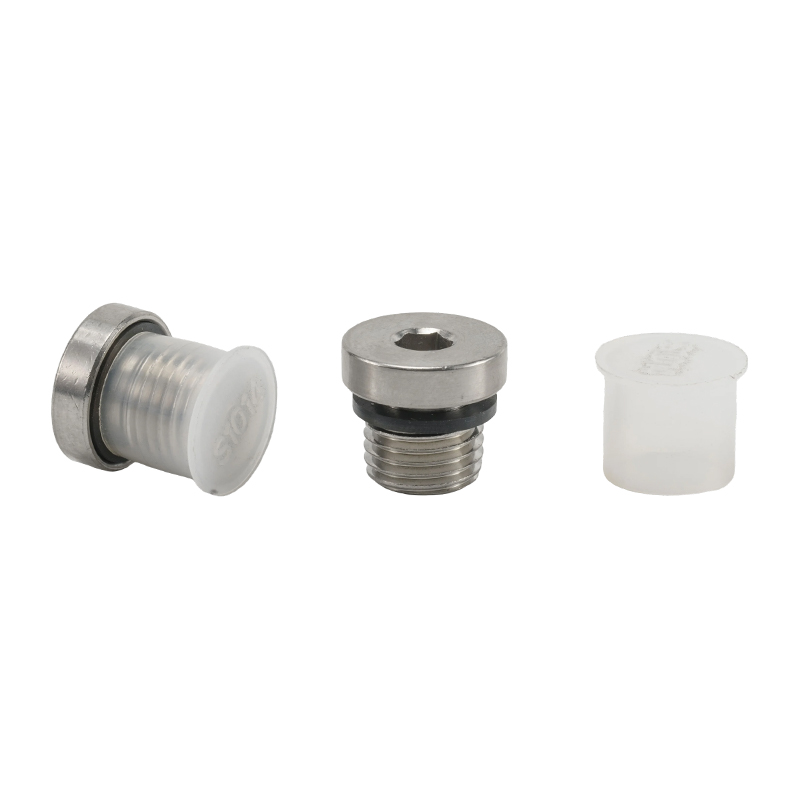
Hexagon Socket Screw Plug
What Is a Hexagon Socket Screw Plug?
A Hexagon Socket Screw Plug is a threaded closure component with a recessed hexagonal drive. The internal socket enables the plug to be tightened or removed using a matching hexagon key, bit, or installation tool. This design is widely valued where the available installation space is limited or where a clean, low-profile outer surface is preferred.
The plug may be used in a threaded hole, an oil passage, a hydraulic port, a gearbox housing, an engine component, or another machined opening. Depending on the application, the sealing function can be achieved through a thread sealant, an O-ring, a gasket, a metal-to-metal interface, or a combination of these methods. The exact sealing arrangement should be selected according to pressure, temperature, fluid compatibility, installation frequency, and the material of the mating component.
The supplied product information also describes a flanged plug, commonly referred to as a T-type plug, with a reinforced center-raised design and a full-face sealing surface. In practical product selection, these descriptions represent related closure requirements: a socket-driven plug may be supplied in a compact threaded form, while a reinforced flanged configuration may be specified where a bolted flange interface and gasketed full-face seal are necessary.
This flexibility allows the same general engineering approach to be applied across different industrial systems. The final geometry can be selected according to the mating port, pressure class, installation method, sealing arrangement, and available access space.
Basic Construction
A typical hexagon socket screw plug consists of several functional areas:
1. The plug body provides the primary structural mass and contains the external thread or flange interface.
2. The hexagon socket provides a recessed drive point for installation and removal.
3. The sealing area interfaces with a gasket, O-ring, sealing washer, thread sealant, or prepared mating surface.
4. The shoulder or flange, where included, controls seating position and distributes compressive force.
5. The reinforced central section, where specified, improves rigidity and helps the plug resist pressure-related deformation.
Although the component may appear simple, each feature affects performance. Thread accuracy influences engagement and load transfer. Socket geometry influences installation reliability. Sealing-face flatness affects leakage risk. Material selection influences strength, corrosion resistance, wear, and compatibility with the operating medium.
Why the Product Is Important in Industrial Systems
Openings are necessary throughout industrial equipment. They provide access for machining, inspection, fluid filling, draining, pressure measurement, testing, and future expansion. However, every unused or temporarily opened port creates a potential leakage path. A suitable plug must close that port without damaging the mating threads, obstructing future maintenance, or creating an unnecessary installation burden.
In an automotive transmission, for example, a plug may close an oil passage or service opening. In an engine component, it may protect an internal fluid channel. In aerospace-related assemblies, the closure must be consistent and traceable because small sealing failures can affect system reliability. In rail equipment and industrial machinery, plugs may be used to isolate sections of a fluid or pneumatic circuit during service.
The Hexagon Socket Screw Plug addresses these needs through a compact form and a controlled installation method. A recessed drive does not require a protruding external head, which can be advantageous where adjacent components, protective covers, or moving parts limit clearance. The absence of a large external gripping surface also creates a cleaner profile and can reduce the chance of accidental interference.
For flanged applications, the T-shaped reinforced design provides an additional structural benefit. The raised central section helps resist deformation under pressure and can improve the stability of the sealing assembly. The full-face sealing surface works with a suitable flange gasket to create more uniform compression across the interface.
Key Design Advantages
Recessed Hexagon Drive
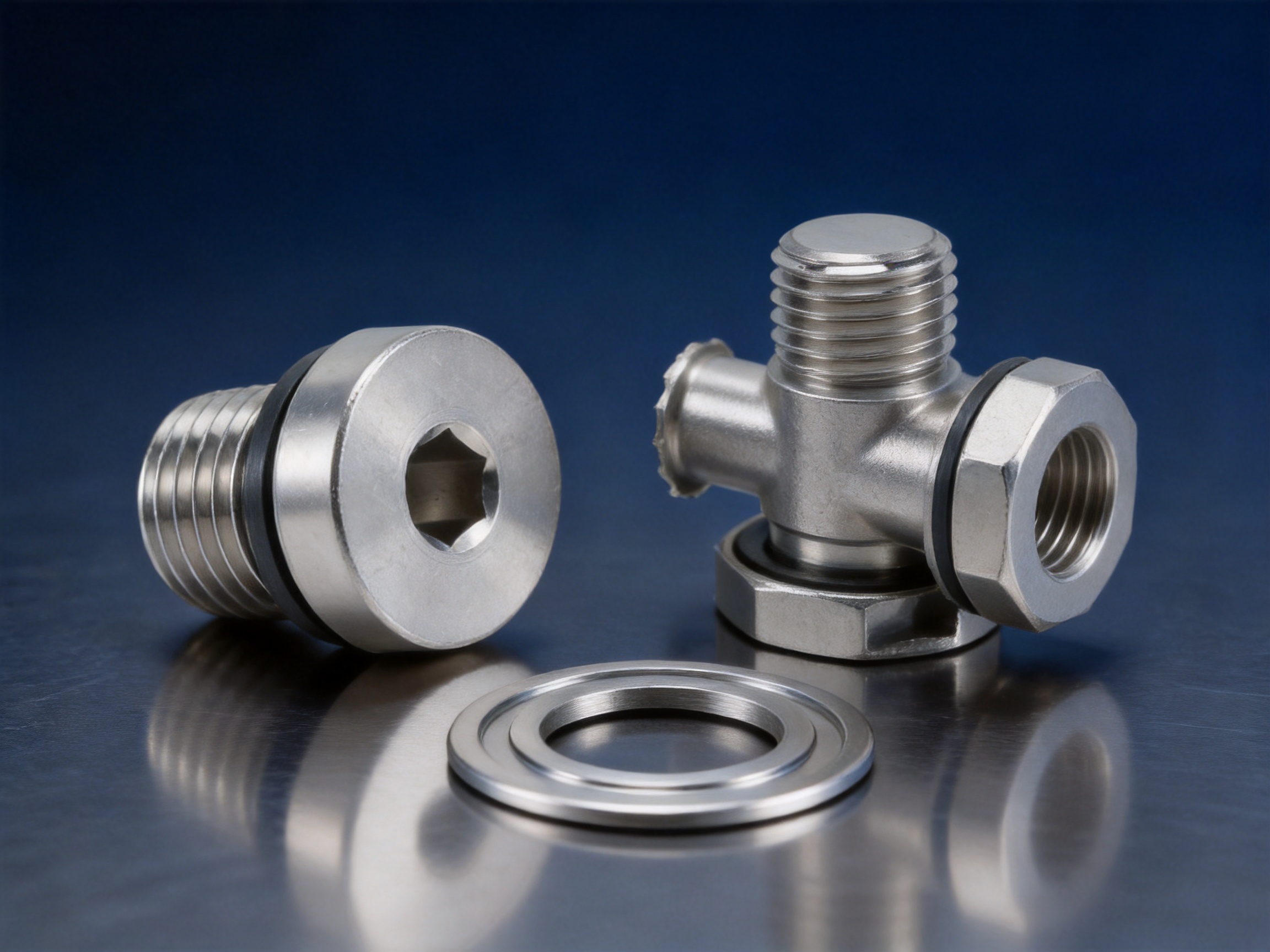
The internal hexagon socket is one of the product’s most practical features. It allows torque to be applied from above or through a narrow access area without requiring a wrench to grip the outside diameter. This can simplify assembly in compact engine compartments, gearbox housings, manifolds, hydraulic blocks, and other restricted spaces.
A recessed drive also protects the engagement area from many forms of accidental impact. Because the driving feature is located inside the plug, the external profile can remain compact. When the correct tool is used and the socket is manufactured accurately, installation torque can be applied in a controlled manner, helping reduce inconsistent tightening.
For repeated maintenance, the socket provides a repeatable method of removal. This is particularly useful when a closure is opened for inspection, draining, pressure testing, or component replacement. The installer does not need to improvise with pliers or other tools that could damage the plug or the surrounding equipment.
Improved Structural Rigidity
In a reinforced T-shaped or flanged configuration, the center-raised structure increases the overall stiffness of the closure. A more rigid body is better able to maintain its shape when exposed to internal pressure, external loading, bolt forces, or pressure transients such as water hammer.
Deformation is a major concern in sealing components. If the closure bends excessively, the gasket may be compressed unevenly. Some regions may be over-compressed while other areas lose contact, creating a possible leakage path. By improving rigidity and distributing stress more effectively, the reinforced design supports more stable sealing over the service life of the assembly.
Full-Face Sealing Surface
The full-face sealing surface is designed to work with a suitable flange gasket. A precision-machined face can provide a consistent support area, helping the gasket compress evenly when the plug is bolted to the mating flange. Uniform compression is important because a gasket must maintain contact around the complete sealing perimeter.
Compared with a narrow or poorly controlled contact area, a broad sealing face can simplify gasket selection and reduce sensitivity to localized loading. The correct gasket material and thickness remain essential, but the plug geometry provides a stable foundation for the sealing system.
Compatibility With Common Flange Profiles
The supplied product information states that the flanged plug can be manufactured to match major flange systems such as ANSI, DIN, and JIS profiles. Compatibility includes considerations such as outside dimensions, bolt-hole patterns, sealing-face arrangement, and nominal size. This helps users integrate the plug into existing piping and equipment without redesigning the complete system.
Actual compatibility should always be confirmed against the project drawing, pressure rating, gasket standard, bolt specification, and applicable engineering code. A similar nominal size does not automatically guarantee interchangeability if the bolt circle, hole diameter, facing style, or thickness differs.
Efficient Installation and Removal
A plug that can be installed with a standard internal-drive tool may reduce assembly time, especially where access is limited. Faster installation can lower labor costs and shorten equipment downtime. Removal can also be performed efficiently during maintenance, testing, or system modification.
This advantage is particularly valuable for temporary closures. A port used during hydrostatic testing may need to be sealed securely during the test and opened soon afterward. A removable socket-driven closure is generally more practical than a welded blind, which requires cutting, grinding, inspection, and subsequent repair before the port can be used again.
Comparison With Alternative Closure Methods
Different applications require different closure solutions. The Hexagon Socket Screw Plug is not intended to replace every type of cap, blind, or valve. Its advantage lies in combining a compact profile, controlled installation, repeatable removal, and adaptable sealing geometry.
| Closure method | Typical advantage | Common limitation | Value of a socket plug |
|---|---|---|---|
| Basic pipe cap | Simple and widely available | May require greater external clearance and may not provide a controlled sealing arrangement | Offers a compact drive and more engineered installation interface |
| Welded blind | Can provide a permanent closure | Requires welding, inspection, heat management, and cutting for removal | Provides a removable alternative for maintenance and testing |
| External-head threaded plug | Can be tightened with a conventional wrench | May have a larger external profile and require side access | Uses recessed access for confined spaces |
| Blind flange | Suitable for larger flanged systems | May be heavier and require more installation space | Can provide a compact closure where the application allows |
| Temporary cover | Useful for contamination protection | May not be intended for pressure retention | Can be engineered for pressure isolation when correctly specified |
The correct selection depends on the pressure, temperature, fluid, frequency of removal, port size, available access, and applicable design requirements. In particular, users should not treat a protective shipping cap as a pressure-rated plug unless the manufacturer has confirmed that function.
Applications of the Hexagon Socket Screw Plug
Pipeline Termination
The product can be used to close the end of a process pipeline, utility line, transmission line, or equipment connection. It may serve as a permanent closure or as a temporary termination during construction and commissioning.
For permanent service, the plug and sealing system should be selected according to the operating medium and pressure class. For temporary service, ease of removal becomes more important because the line may later be extended, flushed, inspected, or connected to additional equipment.
Pressure Testing
Hydrostatic and pneumatic testing require reliable isolation points. A test plug must maintain the intended pressure for the duration of the procedure and must be removable afterward without damaging the flange, thread, or surrounding equipment.
A reinforced flanged plug can provide a stable bolted closure for a test interface. The full-face sealing area supports gasket compression, while the rigid center helps resist pressure-related distortion. Test procedures must still include proper hazard controls, pressure ratings, inspection, and controlled depressurization.
Maintenance Isolation
During pump, valve, heat exchanger, engine, transmission, or manifold maintenance, specific sections of a system may need to be isolated. A socket plug can close an opening after a component has been removed or can seal an unused service port during repair.
Because the product is intended for installation and removal with a defined drive tool, maintenance personnel can follow a repeatable procedure. This may help reduce the risk of using unsuitable tools or applying damage to the sealing surface.
Oil and Lubricant Passages
Oil plugs are commonly used in engines, transmissions, gearboxes, hydraulic systems, and industrial equipment. The closure must remain secure despite vibration, thermal cycling, lubricant exposure, and repeated service operations.
For oil applications, material compatibility and sealing method are important. Thread sealants, washers, and elastomeric seals should be selected according to the oil type, temperature range, and service interval. The plug should be tightened to the specified torque without exceeding the capacity of the socket or mating thread.
Future Port Provision
Manufacturers often include ports for future expansion, sensors, drains, instrumentation, or auxiliary equipment. Until the port is needed, it must remain securely sealed and protected from contamination.
A removable plug allows the future connection to be made without destructive removal. This can support modular equipment design and reduce the need for field modifications. It is also useful in systems where the final configuration may change after installation.
Automotive and Transportation Equipment
The company’s products are used in automotive applications, including engine and transmission assemblies for passenger and commercial vehicles. In these environments, threaded closures must be consistent because high production volumes leave little tolerance for variation.
The compact form of a socket plug can be useful in castings and machined housings where external access is limited. Its application may include fluid passages, service ports, test openings, and protective closures. Similar requirements can arise in rail vehicle manufacturing, where equipment must remain dependable under vibration, thermal changes, and regular maintenance.
Aerospace-Related Assemblies
Aerospace manufacturing places strong emphasis on traceability, process control, dimensional consistency, and repeatable assembly. A plug used in an aerospace-related component must be selected and qualified according to the applicable customer requirements and engineering documentation.
The value of an experienced threaded-product manufacturer lies in the ability to maintain controlled production, record process information, and respond to drawing-specific requirements. The component should be evaluated not only as an individual part but also as part of the complete fluid, structural, and maintenance system.
Manufacturing Process and Quality Considerations
The performance of a threaded plug begins with manufacturing consistency. A design that appears correct on a drawing can fail in service if the thread form, socket dimensions, sealing face, material condition, or surface finish is not controlled. For this reason, production should combine suitable equipment, clear process instructions, inspection points, and traceability.
Engineering and Drawing Review
Production begins with a review of the customer drawing, application conditions, and required interface. Important information may include nominal size, thread standard, pitch, tolerance, material, sealing method, flange profile, bolt-hole pattern, surface treatment, packaging, and inspection requirements.
Where the customer has not finalized the design, the manufacturer can assist in evaluating the installation environment. Questions may include whether the plug will be removed frequently, whether it will retain pressure, which gasket will be used, and how much tool access is available.
A careful review helps prevent common problems such as incompatible threads, insufficient socket depth, incorrect flange drilling, unsuitable sealing faces, or inadequate material compatibility.
Material Preparation
Material selection depends on the required strength, corrosion resistance, operating temperature, fluid compatibility, and manufacturing process. The material must be suitable for machining and capable of maintaining dimensional stability during service.
For automotive, aerospace, and industrial applications, material identification and batch control are important. Controlled material preparation supports traceability from incoming stock through machining, inspection, treatment, and shipment.
CNC Machining
Computer numerical control machining supports accurate production of the external profile, thread, shoulder, flange, and internal hexagon socket. The process can be programmed to maintain repeatable dimensions across production batches.
Thread machining requires attention to pitch, major diameter, minor diameter, flank form, lead, and fit. The correct thread gauge or functional mating component should be used during inspection. For the socket, the across-flats dimension, depth, corner condition, and tool engagement must be controlled.
Machining of the sealing surface also requires care. Excessive tool marks, waviness, burrs, or out-of-flatness can interfere with gasket performance. The surface should be processed and inspected according to the selected sealing method.
Automated Production Systems
Dongtai Jinzhize operates a 10,000-square-meter owned manufacturing plant equipped with hundreds of machine tools and automated production systems. This production base supports stable capacity for threaded connection products, including helical wire inserts, self-tapping inserts, key-locking inserts, threaded adapters, oil plugs, installation taps, and related tools.
Automation can improve repeatability by reducing variation in positioning, tool movement, cycle timing, and part handling. It can also support higher output while maintaining consistent process conditions. Automation is most effective when combined with proper tooling maintenance, process monitoring, and inspection.
Deburring and Cleaning
After machining, burrs must be removed from threads, socket edges, flange holes, and sealing surfaces. Burr control is essential because loose particles may contaminate an oil or hydraulic system, while sharp edges can damage a gasket or complicate installation.
Cleaning removes machining residues, chips, oil, and foreign matter. The required cleaning level depends on the application. Components used in critical fluid passages may require more controlled cleaning and packaging than general-purpose closures.
Surface Treatment
Surface treatment may be selected to improve corrosion resistance, appearance, wear performance, or compatibility with the application. The appropriate treatment depends on the base material and customer requirements.
Any coating or treatment applied to a threaded plug must be considered in relation to thread fit and sealing performance. Excessive coating thickness can alter thread engagement, socket dimensions, or gasket seating. Therefore, treated parts should be inspected after processing rather than assumed to retain the same dimensions as untreated parts.
Inspection and Testing
Inspection may include dimensional checks, thread gauging, socket verification, flange measurements, visual examination, surface inspection, and material documentation. For pressure-related applications, additional tests may be required according to the customer’s specification.
Important inspection areas include:
1. External thread or flange dimensions.
2. Internal socket size and depth.
3. Sealing-face flatness and surface condition.
4. Overall height, shoulder position, and concentricity.
5. Bolt-hole pattern and diameter for flanged versions.
6. Burr and contamination control.
7. Material identification and batch traceability.
8. Packaging integrity and product marking where required.
A documented quality management system helps ensure that these checks are not performed inconsistently. It also provides a basis for investigating nonconformities and improving future production.
Why Choose an Experienced Threaded-Product Manufacturer?
A manufacturer specializing in threaded connection products understands that the plug is part of a larger mechanical system. Its performance depends on the interaction between threads, sealing components, installation tools, mating materials, and service conditions.
Dongtai Jinzhize Metal Products Co., Ltd. was established in 2015 and has developed an experienced team for product design, development, and production. Its product range covers multiple categories, including self-tapping thread inserts, internal-external thread conversion nuts, wire thread inserts, three-hole threaded inserts, oil plugs, installation tools, thread taps, and key-locking inserts.
This product breadth is valuable because customers may require more than one component for a single assembly. For example, a project may need a plug, a special thread, an installation tap, and a repair insert. A supplier with knowledge across these categories can better understand the relationship between the parts and help coordinate the required manufacturing details.
The company’s manufacturing facility, machine capacity, and automated systems support both standard production and drawing-based customization. In 2024, the company achieved an annual output value of 153 million RMB, demonstrating its ability to support relatively large and stable supply requirements.
Its stated focus is on consistent, traceable products and reliable service support. For buyers of industrial closures, this means that technical communication, production planning, inspection, packaging, and after-sales response are all relevant parts of supplier selection.
Customization Capabilities
Industrial users often need a plug that differs from a catalog item. Customization may involve thread size, thread standard, overall length, socket dimensions, flange profile, bolt-hole pattern, material, surface treatment, marking, or packaging.
Drawing-based production is particularly useful when the plug must fit an existing casting, manifold, housing, or proprietary flange. The manufacturer can review the drawing and identify the dimensions that are critical to function. This may include the sealing diameter, thread engagement length, shoulder position, and socket access depth.
For larger projects, customers may also request sample approval, first-article inspection, batch reports, special packaging, or production traceability. These requirements should be communicated before quotation so that the manufacturing process and inspection plan can be aligned with the project.
| Customization area | Typical considerations | Application benefit |
|---|---|---|
| Thread | Size, pitch, tolerance, standard, engagement length | Reliable fit with the mating port |
| Drive socket | Across-flats size, depth, tool access, torque requirement | Efficient installation and removal |
| Sealing interface | Gasket, O-ring, washer, thread sealant, face finish | Improved leakage control |
| Flange | Outer diameter, bolt circle, hole count, facing style | Compatibility with existing piping |
| Material | Strength, corrosion resistance, temperature, fluid compatibility | Better service-life performance |
| Surface treatment | Corrosion protection, finish, dimensional effect | Enhanced durability and appearance |
| Marking and packaging | Part number, batch identification, protection requirements | Improved traceability and handling |
Installation Best Practices
Before installation, inspect the plug, mating port, thread, sealing face, gasket, and drive tool. Remove chips, dirt, old sealant, and corrosion from the mating area. The plug should not be forced into a damaged or contaminated thread.
Confirm that the plug and mating component use compatible thread specifications. A plug with a similar nominal diameter but a different pitch or thread form may cross-thread or fail to seat correctly. For flanged versions, verify the flange dimensions and bolt-hole alignment before assembly.
Use the specified seal. A gasket should be clean, undamaged, and appropriate for the pressure, temperature, and fluid. If thread sealant is required, apply it according to the sealant manufacturer’s instructions and avoid contaminating passages or the sealing face.
Engage the plug by hand for the initial turns whenever possible. Hand engagement helps identify cross-threading before torque is applied. The plug should turn smoothly until the sealing element or shoulder begins to seat.
Use a suitable hexagon key, bit, or controlled installation tool. The tool must fully engage the socket to reduce the risk of rounding the internal corners. Apply the specified torque gradually and evenly. Excessive torque can damage the plug, strip the mating thread, distort the sealing surface, or over-compress the gasket.
For a bolted flanged plug, tighten the bolts in a suitable crosswise or star pattern. This helps distribute gasket compression and reduces the chance of uneven seating. The final torque sequence should follow the applicable engineering or equipment specification.
After installation, inspect the joint for visible gaps, displaced gasket material, damaged threads, or contamination. If the system is pressure-tested, increase pressure in a controlled manner and inspect the closure according to the approved test procedure.
Maintenance and Removal
When removing a plug, first confirm that the system has been isolated and fully depressurized. For fluid systems, drain or vent the relevant section as required. Never assume that a closed valve alone eliminates pressure behind a plug.
Clean the socket before inserting the tool. Foreign material at the bottom of the socket can prevent full engagement and increase the risk of tool slippage. Use the correct tool size rather than a nearly matching key.
If the plug is difficult to remove, avoid excessive impact or uncontrolled force. Investigate possible causes such as corrosion, thread damage, sealant hardening, thermal expansion, or pressure trapped behind the closure. The removal method should protect the mating equipment and avoid deforming the sealing face.
After removal, inspect the threads, gasket seat, socket, and surrounding port. A gasket or sealing washer that has been compressed may need replacement before reassembly. Reusable components should only be reused when the relevant specification permits it and the component remains within acceptable condition.
Procurement and Technical Selection Guide
When requesting a quotation, provide as much application information as possible. A complete inquiry allows the manufacturer to recommend a suitable configuration and avoid delays caused by repeated clarification.
Useful information includes the part drawing, nominal size, thread standard, flange standard, operating pressure, test pressure, temperature range, fluid or gas, installation frequency, material requirement, surface treatment, quantity, inspection documentation, and packaging expectations.
Customers should also identify whether the plug is intended for permanent sealing, temporary pressure testing, maintenance isolation, oil service, contamination protection, or future expansion. The same basic geometry may require different materials or sealing arrangements depending on the application.
For automotive and aerospace-related parts, customers may require more detailed documentation. This can include material certificates, dimensional inspection records, batch identification, first-article reports, process records, or customer-specific quality forms. These requirements should be confirmed before production begins.
Advantages for Global Buyers
Global buyers generally evaluate more than unit price. They need reliable quality, predictable lead times, consistent communication, practical customization, and stable after-sales support. A product that is inexpensive but inconsistent can create higher costs through rework, leakage, downtime, and field service.
Jinzhize’s specialization in threaded connection and fastening products provides a focused manufacturing base for customers requiring related components. Its owned production facility and broad equipment resources support repeat orders and development projects. The company’s experience in automotive, aerospace, and rail vehicle applications also reflects an understanding of industries where component consistency is important.
ODM and OEM cooperation can help customers integrate the plug into their own product lines. The manufacturer can work from a customer drawing, an existing sample, or a defined application requirement, subject to technical review. Private labeling, packaging coordination, and production documentation may also be discussed for qualified projects.
The company’s mission is to provide stable and reliable threaded connection and fastening products for critical assemblies. This approach aligns with the needs of buyers who want to reduce procurement and usage risks through consistent parts and clear technical support.

Q&A: Hexagon Socket Screw Plug
What is the primary function of a Hexagon Socket Screw Plug?
Its primary function is to close a threaded or flanged opening while providing a secure seal. The internal hexagon socket allows the component to be installed and removed with a matching tool, making it practical for compact spaces and maintenance applications.
Is the product suitable for pressure testing?
It can be used for pressure-testing interfaces when the selected configuration, material, sealing method, and installation procedure are suitable for the specified test conditions. The user should confirm the pressure rating and follow an approved testing procedure before applying pressure.
What is the benefit of the reinforced T-shaped design?
The reinforced center-raised structure increases rigidity and helps resist deformation from internal pressure, bolt loading, and pressure transients. This supports more stable gasket compression and long-term sealing performance.
Can the plug be used with ANSI, DIN, and JIS flanges?
Flanged versions can be produced to match major flange profiles such as ANSI, DIN, and JIS, subject to drawing and specification confirmation. The bolt-hole pattern, dimensions, facing style, gasket, and pressure class must be checked before ordering.
Which sealing method should be used?
The appropriate method depends on the design and service conditions. Options may include a flange gasket, O-ring, sealing washer, thread sealant, or a prepared metal-to-metal interface. Pressure, temperature, fluid compatibility, and removal frequency should all be considered.
Can the product be customized?
Yes. Customization may include thread dimensions, socket size, length, material, flange geometry, sealing face, surface treatment, marking, and packaging. A drawing or application description helps the manufacturer evaluate the requirements accurately.
How should the plug be installed?
Clean and inspect the mating port, verify thread or flange compatibility, install the specified sealing component, engage the plug carefully, and tighten it with the correct tool and torque. For flanged versions, bolts should normally be tightened in a balanced sequence.
Can the same gasket be reused?
That depends on the gasket type and the applicable equipment specification. Many compressed gaskets and sealing washers are intended for one-time use. Reuse should only be permitted when the manufacturer or engineering standard confirms that the gasket remains suitable.
What industries use these plugs?
Applications include automotive engines and transmissions, aerospace-related assemblies, rail vehicles, process piping, hydraulic equipment, industrial machinery, pumps, valves, heat exchangers, and systems requiring temporary or permanent port closure.
What information should be provided for a quotation?
Provide the drawing or sample, thread or flange standard, dimensions, material, operating and test conditions, sealing method, quantity, surface treatment, inspection documents, packaging requirements, and intended application.
Conclusion
The Hexagon Socket Screw Plug is a practical closure solution for applications that demand secure sealing, compact installation, and convenient maintenance. Its recessed hexagon drive is well suited to restricted spaces, while reinforced and flanged configurations can provide improved rigidity and full-face gasket support.
Compared with basic pipe caps, welded blinds, and external-head plugs, the product offers a useful balance of strength, removability, installation efficiency, and design flexibility. It can serve pipeline termination, pressure testing, maintenance isolation, oil passage closure, and future port protection requirements.
Reliable performance depends on more than the visible shape of the plug. Thread accuracy, socket quality, sealing-face condition, material selection, surface treatment, inspection, installation torque, and maintenance procedure all influence the final result. For this reason, selecting a specialized manufacturer is an important part of the procurement decision.
With an established manufacturing plant, extensive machine resources, automated production systems, threaded-product expertise, and experience serving demanding industries, Dongtai Jinzhize Metal Products Co., Ltd. is positioned to support both standard and customized plug requirements. Its broader portfolio of inserts, threaded adapters, oil plugs, taps, and installation tools also allows customers to obtain coordinated solutions for threaded connection and fastening applications.
References
1. General principles of industrial threaded fastener design, installation, and maintenance.
2. Standard engineering practices for flange dimensions, bolt patterns, gasket seating, and pressure isolation.
3. Manufacturer-provided product information for Hexagon Socket Screw Plug and reinforced flanged plug configurations.
4. Manufacturer-provided company information concerning threaded inserts, oil plugs, installation tools, thread taps, and key-locking inserts.
5. General maintenance practices for pipeline termination, pressure testing, equipment isolation, and service-port protection.



