

 Français
 Español
 Deutsch

Content
- 1 Understanding the Internal-External Thread Conversion Nut
- 2 Key Advantages of the Carbon Steel Design
- 3 Comparison with Alternative Thread Adaptation Methods
- 4 Manufacturing Capabilities Supporting Product Quality
- 5 Application Areas
- 6 Design Considerations for Engineers and Buyers
- 7 Custom Manufacturing and Supply Support
- 8 Installation Recommendations
- 9 Why Partner with an Experienced Threaded Connection Manufacturer
- 10 Procurement Checklist
- 11 Frequently Asked Questions
- 11.1 What is a carbon steel internal-external thread conversion nut?
- 11.2 Can the internal and external threads use different standards?
- 11.3 Is carbon steel suitable for outdoor applications?
- 11.4 Is the adapter suitable for pressure applications?
- 11.5 Can the product be customized?
- 11.6 How does this product compare with a stainless steel adapter?
- 11.7 Can a conversion nut repair a damaged threaded hole?
- 11.8 What information is needed for a quotation?
- 11.9 Are installation tools available?
- 11.10 How can thread damage during installation be prevented?
- 12 Conclusion
- 13 References
- 14 Product: Carbon Steel Internal-external Thread Conversion Nut
Thread compatibility is a fundamental requirement in machinery, automotive assemblies, construction equipment, industrial tooling, and many other engineered systems. When two components use different thread standards, sizes, or connection arrangements, the interface must be adapted without compromising strength, alignment, serviceability, or production efficiency. A carbon steel internal-external thread conversion nut provides a compact and dependable way to solve this challenge.
This component combines an external male thread and an internal female thread in one integrated adapter. The external thread engages with a tapped hole, threaded boss, mounting plate, or other receiving component, while the internal thread accepts a bolt, screw, stud, fitting, or shaft with a different specified thread. In this way, the conversion nut creates a controlled transition between two threaded connection systems.
Manufactured from carbon steel, this internal-external thread conversion nut is designed to balance mechanical performance, durability, and cost efficiency. It is especially suitable for industrial customers requiring stable supply, repeatable dimensions, high-volume production, and broad compatibility with metric, imperial, and unified thread systems. Compared with adapters made from more expensive specialty alloys, carbon steel offers an economical solution for many general industrial and heavy-duty applications.
Dongtai Jinzhize Metal Products Co., Ltd. specializes in threaded connection and fastening products for automotive, aerospace, rail vehicle, machinery, and industrial applications. Its product range includes helical wire inserts, self-tapping thread inserts, key-locking inserts, threaded adapters, oil plugs, installation taps, and related tools. The company’s experience across these product categories supports a practical understanding of thread design, installation, material selection, quality control, and customer-specific production.
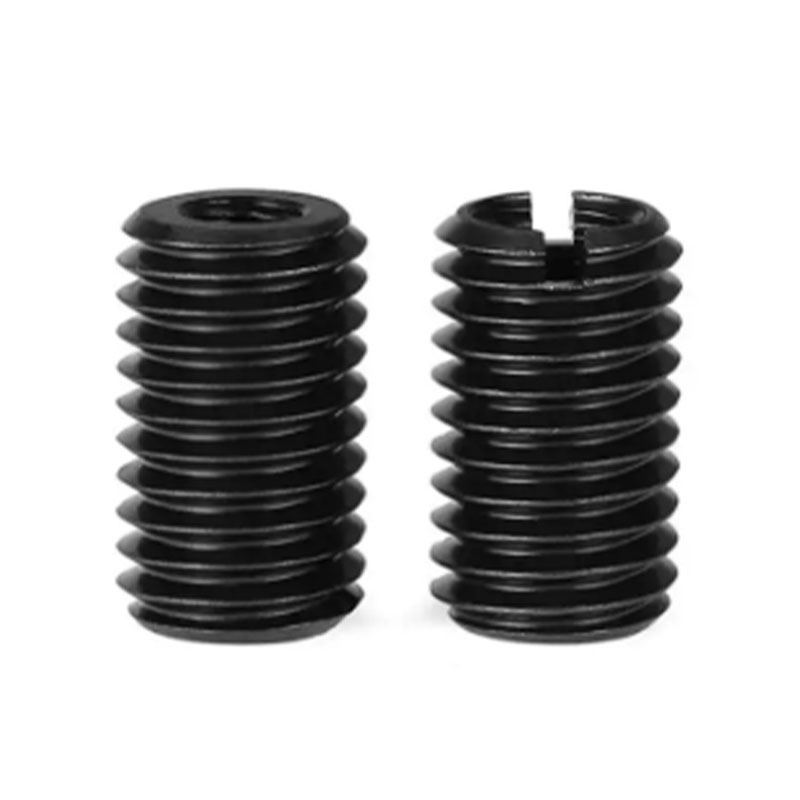
Carbon Steel Internal-external Thread Conversion Nut
Understanding the Internal-External Thread Conversion Nut
An internal-external thread conversion nut is sometimes called a male-to-female thread adapter, double-ended threaded adapter, threaded bushing, reducing adapter, or thread conversion sleeve. Although names may vary between industries and suppliers, the core function remains the same: to connect components that cannot be joined directly because their thread specifications differ.
The outside surface contains a male thread. This thread may be installed into a pre-tapped hole, a threaded body, a metal plate, a housing, or another threaded component. The inside surface contains a female thread that receives a mating fastener or fitting. The two threads can be selected to match different standards or sizes, allowing the adapter to perform the role of a mechanical transition component.
For example, an assembly may have a larger external metric thread while the installed fastener uses a smaller internal imperial thread. In another application, a machine housing may provide an external thread, but the replacement component may be designed around a different unified thread. A suitable conversion nut avoids redesigning the entire assembly and enables the use of available components.
The adapter is also useful when a damaged or unsuitable threaded connection must be restored. If the original threaded hole is worn, oversized, or no longer compatible with the required fastener, a properly designed conversion nut can provide a new internal thread while using the existing or prepared external thread. This can reduce repair time and help extend the service life of expensive equipment.
Typical Functional Structure
The basic structure includes an external threaded section, an internal threaded bore, and a central wall that carries the load between the two interfaces. Depending on the design, the component may also include a flange, shoulder, hexagonal driving section, slot, recess, or other feature that helps installation and positioning.
The external and internal threads may have different nominal diameters, pitches, thread forms, or standards. The design must provide enough wall thickness to maintain strength after the internal thread is machined. It must also allow the adapter to withstand tightening torque, vibration, tensile loading, shear loading, and any environmental forces present in the application.
Thread engagement length is another important design factor. Sufficient engagement improves load distribution and reduces the risk of stripping or loosening. The correct length depends on the materials of the mating parts, the applied load, the thread size, the installation method, and the operating environment.
Why Carbon Steel Is an Effective Material
Carbon steel is widely used for threaded components because it offers a useful combination of strength, machinability, availability, and affordability. It can be formed and machined efficiently, making it well suited to large production runs and repeat orders. Its mechanical properties can also be adjusted through material selection and heat-treatment options where required by the application.
For many industrial assemblies, the performance of carbon steel is more than adequate. It provides a robust base for the external and internal threads, supports reliable tightening, and resists deformation when the adapter is correctly designed and installed. Its wear resistance is also suitable for applications involving repeated assembly, maintenance, or long-term mechanical loading.
Carbon steel is not automatically corrosion-proof. Its resistance to corrosion depends on the grade, surface condition, operating environment, and any protective treatment applied. For applications exposed to moisture, salts, chemicals, or outdoor conditions, customers may specify a plating, coating, oil treatment, painting system, or other corrosion-control measure. Clear material and surface-treatment specifications help ensure that the adapter is matched to its service environment.
Key Advantages of the Carbon Steel Design
The carbon steel internal-external thread conversion nut offers several advantages over less specialized or less suitable alternatives. These benefits are particularly valuable in production environments where thread reliability, cost control, and delivery consistency are equally important.
Strength for Industrial Connection Requirements
A conversion adapter must withstand more than simple static tightening. In real equipment, threaded components may experience vibration, cyclic loading, impact, thermal changes, and fluctuating assembly forces. Carbon steel provides a strong foundation for handling these demands when the material grade, geometry, thread engagement, and installation torque are properly selected.
The integrated design also helps avoid unnecessary joints. Instead of combining several separate fittings or modifying multiple components, one conversion nut creates a direct and compact interface. Fewer parts can mean fewer potential leakage points, fewer alignment problems, and fewer opportunities for incorrect assembly.
Cost Efficiency for High-Volume Production
Material cost is a major consideration in automotive manufacturing, machinery production, construction equipment, and other high-volume industries. Carbon steel is generally more economical than stainless steel, nickel-based alloys, or other premium materials. This makes it an attractive option when the application does not require exceptional chemical resistance or extreme-temperature performance.
Cost efficiency extends beyond raw material price. Carbon steel is widely available, comparatively easy to machine, and compatible with established manufacturing methods. These factors can reduce production time and simplify supply-chain planning. For customers purchasing thousands or millions of components, even a small saving per piece can have a meaningful effect on total procurement cost.
Reliable Wear Resistance
Threads are working surfaces. During installation and removal, the mating thread flanks experience friction and localized contact pressure. In applications involving maintenance, adjustment, or repeated replacement, poor wear resistance can lead to thread damage, increasing downtime and replacement costs.
Carbon steel offers suitable wear performance for many mechanical applications, particularly when the thread surfaces are manufactured accurately and protected against galling, contamination, and improper tightening. Surface treatments can further improve durability or provide additional protection when specified according to the operating environment.
Broad Thread Compatibility
A major advantage of a thread conversion nut is its ability to connect different thread systems. Depending on the design, the product can be manufactured for metric, imperial, unified, or other commonly used thread standards. The external thread and internal thread can be specified independently, subject to practical dimensional and strength limitations.
This broad compatibility is valuable for companies that operate mixed equipment fleets, import machinery from different countries, maintain legacy systems, or integrate components from multiple suppliers. Instead of redesigning a complete assembly to create thread uniformity, engineers can use an adapter to resolve the difference at the connection point.
Compact and Space-Saving Construction
The adapter performs a conversion function in a small, integrated body. This is useful where installation space is limited or where a larger collection of fittings would interfere with nearby parts. A compact adapter can preserve the original layout of a machine while providing the required thread transition.
Its compact form can also simplify inventory management. A manufacturer may stock a range of conversion nuts covering common thread combinations instead of holding many specialized components or custom-machined replacement parts. For planned projects, custom sizes can be produced according to drawings, samples, or technical specifications.
Convenient Maintenance and Repair
Equipment maintenance often requires replacing fasteners, fittings, sensors, studs, or other parts that do not share the original thread standard. An internal-external thread conversion nut can provide a practical repair solution without extensive modification to the host component.
In some cases, the adapter can help restore a damaged threaded location after the hole is prepared to the required size. The repair procedure must be evaluated by a qualified engineer, especially where the connection is safety-critical or exposed to high loads. When correctly specified, the adapter can reduce equipment downtime and avoid the cost of replacing an entire housing or structural part.
Comparison with Alternative Thread Adaptation Methods
Thread conversion can be achieved in several ways, but each method has different effects on cost, strength, installation time, and design flexibility. The carbon steel internal-external thread conversion nut is not intended to replace every possible solution. Its value lies in providing a balanced and dependable option for a broad range of applications.
| Adaptation Method | Main Benefit | Potential Limitation | Suitable Use |
|---|---|---|---|
| Carbon steel internal-external conversion nut | Compact, strong, economical, and available in different thread combinations | Requires correct material and surface treatment for corrosive environments | Machinery, automotive, construction, repair, and general industrial assemblies |
| Stainless steel threaded adapter | Improved corrosion resistance in many environments | Higher material cost and possible machining or galling considerations | Moisture-prone, chemical, food-processing, and outdoor applications |
| Custom-machined replacement part | Can reproduce a highly specific geometry | Higher unit cost and longer production time for small or urgent orders | Specialized low-volume equipment or complex assemblies |
| Thread repair insert | Restores an internal thread while preserving the original component | Usually changes or restores an internal thread rather than creating a male-to-female transition | Damaged tapped holes and lightweight repair operations |
| Multiple loose fittings | May use readily available standard parts | More joints, larger installation envelope, and greater alignment complexity | Temporary arrangements or systems where space is not restricted |
Compared with multiple loose fittings, an integrated conversion nut reduces the number of interfaces in the connection. This can improve alignment and create a cleaner installation. Compared with a fully custom replacement component, it can provide a faster and more economical way to solve a specific thread mismatch. Compared with a premium alloy adapter, carbon steel may deliver better value when extreme corrosion resistance is not the primary requirement.
The correct choice should always consider load, temperature, environment, thread material compatibility, installation frequency, corrosion exposure, and safety requirements. The lowest purchase price is not necessarily the lowest total cost if the part is unsuitable for the operating conditions. Jinzhize can evaluate customer drawings and application requirements to help identify an appropriate specification.
Manufacturing Capabilities Supporting Product Quality
The performance of a thread conversion nut begins with design accuracy and continues through material control, machining, inspection, finishing, packaging, and customer support. A reliable supplier must be able to maintain consistency across each stage, especially when the product is used in repeat production or critical assemblies.
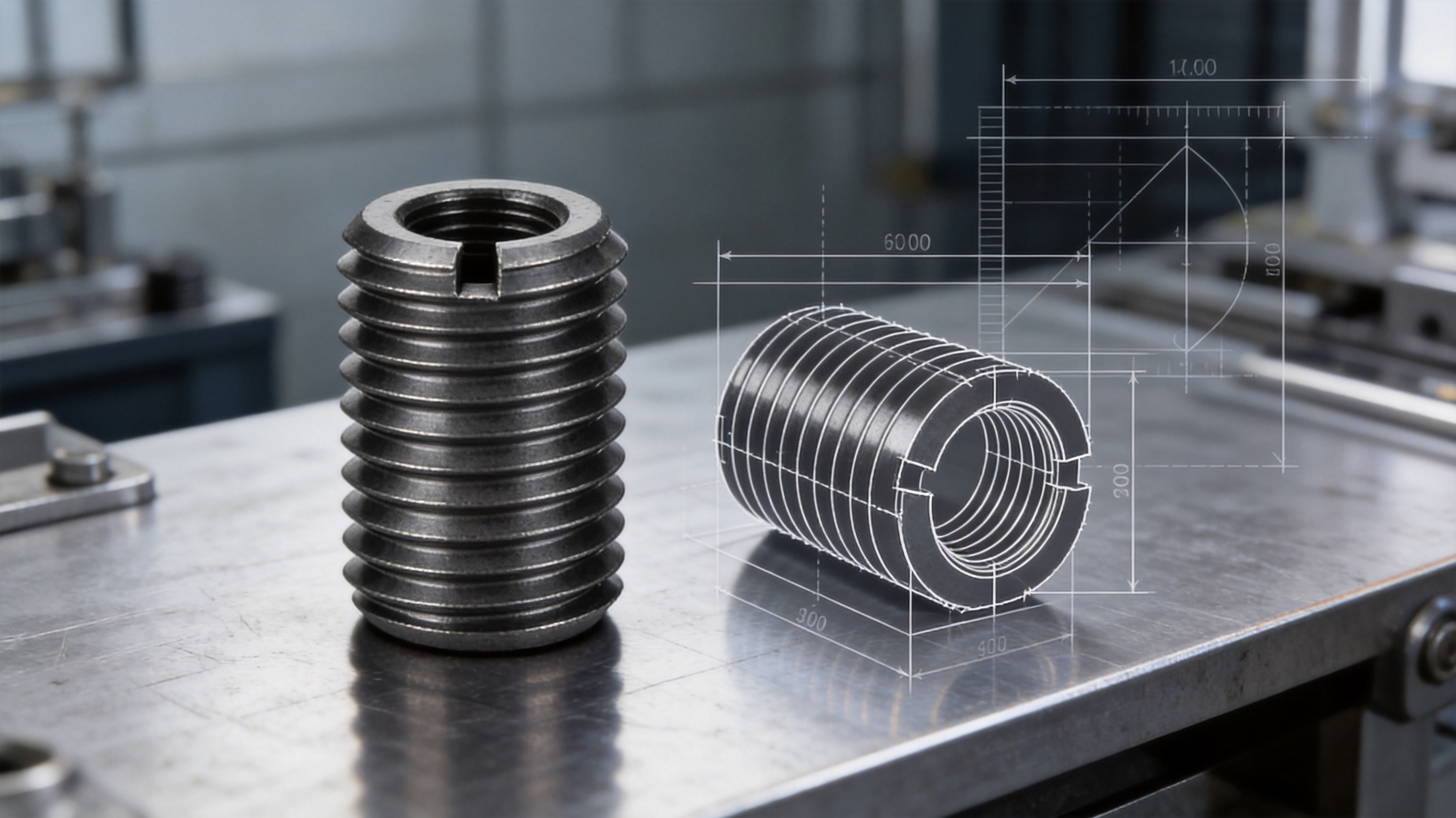
Dongtai Jinzhize Metal Products Co., Ltd. operates an owned manufacturing facility of approximately 10,000 square meters. Established in 2015, the company has developed an experienced team covering product design, process development, production, quality management, and after-sales service. Its production environment includes hundreds of machine tools and automated production systems, supporting stable output and repeatable processing.
Engineering and Specification Review
Before production begins, the thread combination, material, dimensions, tolerances, surface treatment, and application requirements should be reviewed. A proper specification review helps identify potential problems such as insufficient wall thickness, incompatible thread forms, excessive tightening torque, inadequate engagement length, or a surface treatment that could affect thread fit.
Customer drawings, samples, digital models, or written specifications can be used as the basis for development. The external and internal threads must be evaluated together rather than treated as two unrelated features. The adapter must maintain enough material between the two thread surfaces to carry the expected load while remaining practical to manufacture.
For custom products, the engineering team can also review installation tools, gauging requirements, packaging quantities, and compatibility with the customer’s existing assembly process. This approach helps convert a basic component order into a complete thread connection solution.
Material Selection and Traceability
Material selection affects strength, machinability, wear performance, and surface-treatment compatibility. Carbon steel grades should be selected according to the application and customer requirements. For general mechanical uses, a standard carbon steel may provide an efficient balance of performance and cost. More demanding applications may require a specific grade, heat treatment, or mechanical property target.
Material traceability is important for industrial customers. Records connecting incoming material to production batches can support quality investigations, repeat ordering, and internal compliance procedures. Jinzhize emphasizes consistent and traceable products as part of its manufacturing and service approach.
Traceability can include batch identification, production records, inspection results, and packing information. The exact documentation package depends on the order, industry, and customer quality requirements. Clear records help customers manage incoming inspection and maintain confidence in long-term supply.
Precision Thread Machining
Thread quality is central to the function of the adapter. The thread profile, pitch, major diameter, minor diameter, flank condition, concentricity, and engagement length all influence assembly performance. Inaccurate threads can cause excessive play, difficult installation, uneven loading, premature wear, or failure to achieve the required clamping force.
Modern machine tools and automated production systems support repeatable turning, drilling, tapping, threading, chamfering, and related operations. Process controls help maintain consistency from one batch to the next. Depending on the design, the internal and external threads can be produced using appropriate cutting or forming methods selected for the material and required tolerance.
Chamfers and lead-in features are also important. A suitable entry chamfer helps the mating component start smoothly and reduces the risk of cross-threading. Internal burrs must be controlled because they can interfere with fastener insertion, reduce effective engagement, or create loose particles in sensitive assemblies.
Process Control and Inspection
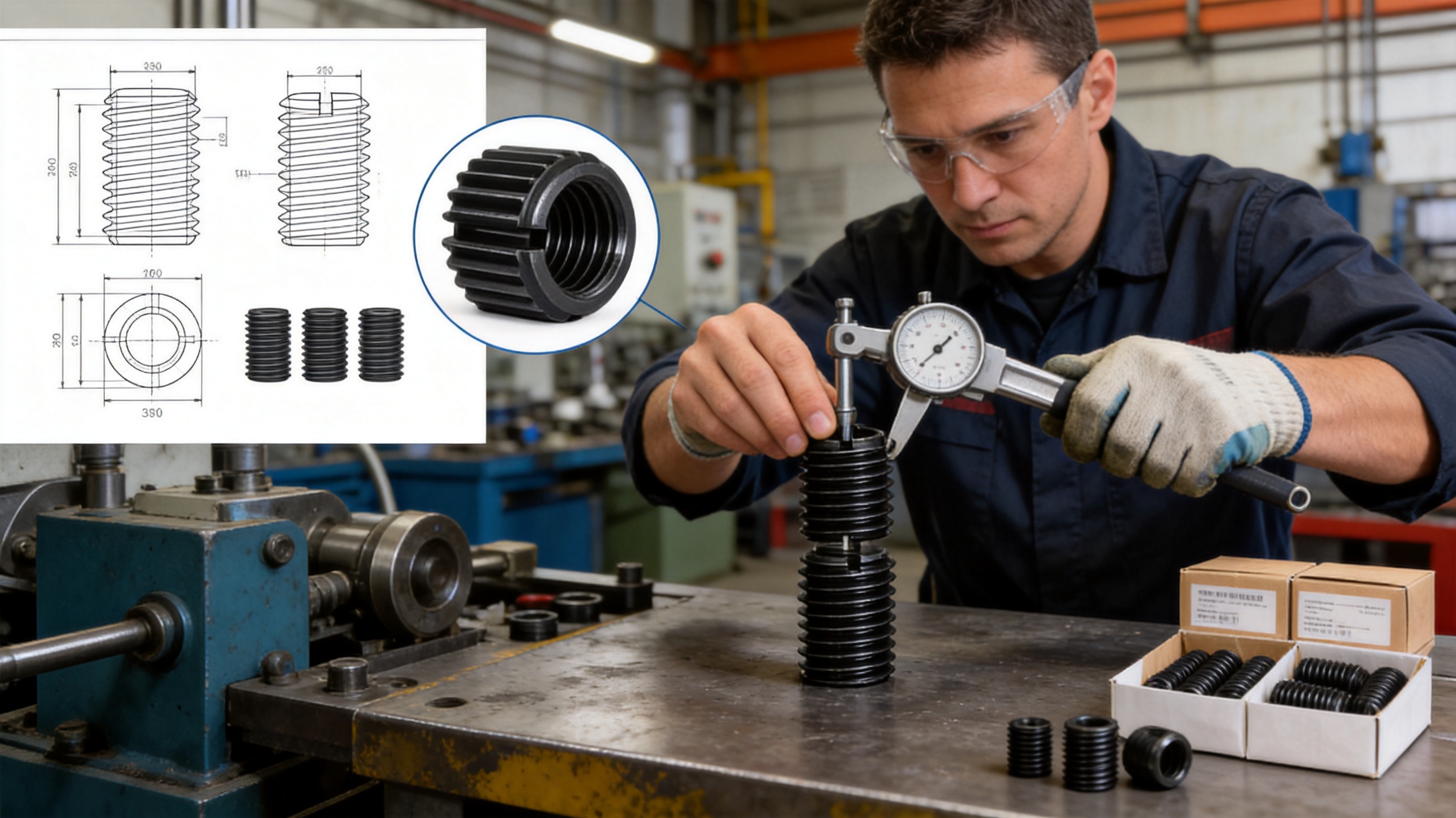
Quality inspection should cover both dimensional and functional characteristics. Visual inspection can identify surface defects, burrs, scratches, incomplete threads, and coating irregularities. Dimensional inspection verifies lengths, diameters, shoulders, flats, and other critical features.
Thread gauges provide a practical way to confirm that the internal and external threads conform to the specified standard. Go and no-go gauging can help distinguish acceptable threads from those that are undersized, oversized, incomplete, or otherwise outside the required limits. Additional measuring equipment may be used for critical dimensions and special customer requirements.
Inspection frequency can be adjusted according to product complexity, order volume, application risk, and customer expectations. Automated systems may support production consistency, while experienced inspectors provide judgment for visual conditions, unusual features, and first-article approval.
Surface Treatment and Protection
Carbon steel adapters may be supplied with different surface conditions depending on the intended use. Options can include oil protection, plating, coating, blackening, painting, or other treatments. The selected treatment should match the environmental exposure and the customer’s assembly requirements.
Surface treatment requires attention to thread allowance. A coating that is too thick can alter the effective dimensions of the internal or external thread and make installation difficult. For this reason, thread fit should be considered before treatment, and post-treatment inspection may be required for critical products.
Packaging is also part of product quality. Threaded components should be protected from impact, contamination, moisture, and mixing of different specifications during transportation. Appropriate packaging can help preserve the machined surfaces and make counting, identification, and warehouse handling more efficient.
Application Areas
The carbon steel internal-external thread conversion nut is suitable for a wide range of applications where two thread interfaces must be connected safely and economically.
Machinery Manufacturing
Machine builders frequently combine components from different suppliers. Motors, gearboxes, housings, sensors, shafts, brackets, and fittings may use different thread sizes or standards. A conversion nut can simplify integration and allow a machine builder to use standard components without redesigning every mounting interface.
It can also support modular equipment design. A manufacturer may create a common housing with a standard external or internal thread and then use different adapters for regional or customer-specific components. This improves design flexibility and can reduce the number of unique base components required in production.
Automotive Manufacturing
Automotive systems rely on compact, durable, and repeatable threaded connections. Conversion nuts may be used in fixtures, brackets, engine-related assemblies, transmission equipment, tooling, service equipment, and production-line maintenance. Their compact form is useful where surrounding components leave little room for additional fittings.
Automotive applications often require stable dimensions and consistent batch quality because assembly processes may be automated or semi-automated. A properly controlled adapter can support repeatable torque application and predictable installation behavior. For safety-related or highly loaded vehicle components, the exact specification must be validated by the responsible engineering department.
Construction Equipment
Construction machinery is exposed to vibration, dust, impact, fluctuating loads, and outdoor conditions. Thread conversion adapters can assist with the connection of hydraulic-related accessories, guards, brackets, service fittings, instrumentation, and replacement components, provided the adapter is appropriate for the pressure, load, and environmental requirements.
Because construction equipment is often repaired in the field, compatibility is a practical concern. A conversion nut can help connect replacement parts from different suppliers or adapt older equipment to newer components. Surface protection should be selected carefully for machines exposed to rain, mud, salts, and construction chemicals.
Oil and Gas Equipment
Oil and gas systems require careful control of materials, sealing, pressure capability, and connection integrity. A carbon steel adapter may be suitable for selected non-corrosive or appropriately protected applications, but it must not be used in a pressure-critical or hazardous service without engineering validation.
Where the design is approved for the application, the conversion nut can provide a stable transition between thread standards in extraction equipment, transportation systems, maintenance tools, and supporting machinery. The customer should specify pressure, temperature, media, corrosion exposure, applicable standards, and inspection requirements before ordering.
Aerospace and Rail Vehicle Manufacturing
Aerospace and rail vehicle production frequently involves strict process control, traceability, and weight or space limitations. Threaded adapters may be used in tooling, fixtures, equipment maintenance, test assemblies, and selected production components. Because these industries can involve demanding quality requirements, products must be reviewed against the customer’s approved material, dimensional, documentation, and validation standards.
Jinzhize’s experience in supplying threaded connection products for aerospace and rail vehicle manufacturing provides an understanding of the importance of consistency and documentation. The exact suitability of a carbon steel conversion nut depends on the assembly design and qualification requirements established by the customer.
General Repair and Maintenance
Repair departments often need a practical way to connect a replacement part to an existing machine. Thread standards may differ because of equipment age, imported components, discontinued parts, or previous modifications. A conversion nut can reduce the need for improvised machining and help maintenance teams restore equipment more quickly.
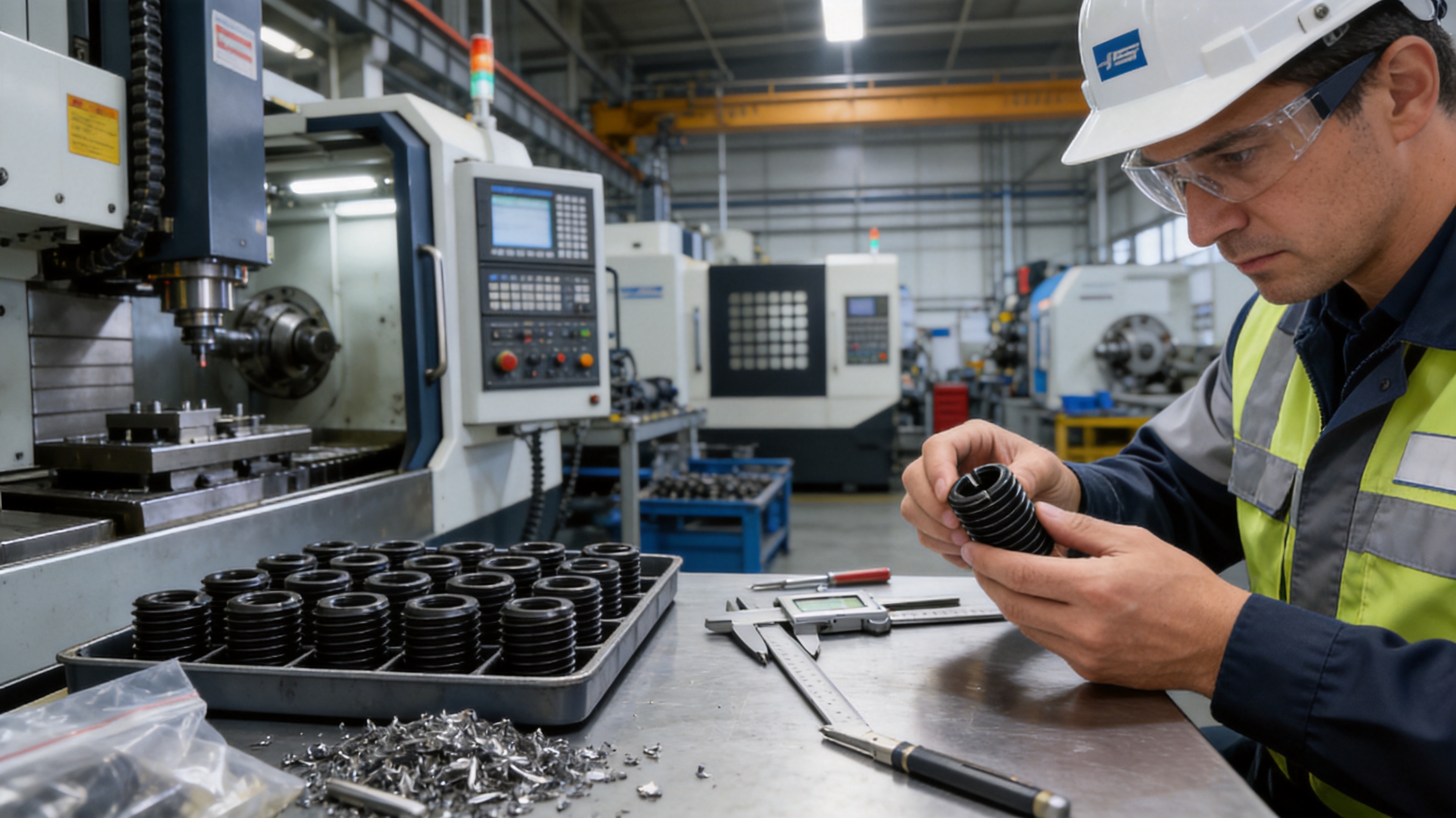
Before installation, technicians should inspect the host threads, confirm the thread direction and size, clean the mating surfaces, and verify that the adapter is not damaged. If the connection carries significant structural or pressure loads, the repair should be reviewed by a qualified professional.
Design Considerations for Engineers and Buyers
Selecting a thread conversion nut should begin with a complete understanding of the connection rather than only the nominal thread sizes. The following factors help ensure that the selected adapter performs as intended.
Thread Standard and Direction
Specify the external and internal thread standards separately. A request for a “metric-to-imperial adapter” may not provide enough information because each side still requires a specific nominal diameter and pitch. The thread form, tolerance class, and direction should also be confirmed.
Most applications use right-hand threads, but left-hand threads may be required for rotating assemblies, special adjustment mechanisms, or safety-related positioning. Mixing thread directions without clear identification can lead to installation errors, so the drawing and packaging should provide unambiguous information.
Load and Engagement
The adapter should be evaluated for tensile, shear, bending, torsional, and vibration loads. The internal thread must have sufficient engagement with the bolt or stud, while the external thread must have adequate engagement with the receiving component. The strength of the weakest mating material may govern the design.
When the receiving component is made from aluminum, plastic, or another relatively soft material, the required engagement length may differ from that used with steel. Engineers should consider thread stripping, local deformation, preload loss, and the effect of repeated installation.
Installation Torque
Excessive torque can damage the adapter or mating threads. Insufficient torque can allow loosening under vibration or cyclic loading. The recommended installation torque should consider thread friction, lubrication, coating, fastener material, and the required clamping force.
Where the adapter includes a driving feature, such as a hexagonal outer section, the installation tool should apply torque without damaging the threads or surrounding components. If the adapter is installed using a threaded tool or special driver, the tool design and removal procedure should be evaluated at the same time as the adapter.
Temperature and Environment
Temperature affects material strength, lubricant behavior, coating performance, and dimensional stability. Carbon steel is suitable for many normal industrial temperature ranges, but extreme-temperature service requires specific review. The surrounding environment may also include water, salt spray, chemicals, dust, fuel, oil, or cleaning agents.
Corrosion protection should be selected based on actual exposure rather than general assumptions. A coating suitable for indoor machinery may not be adequate for marine or heavy outdoor service. If the adapter is used with dissimilar metals, galvanic corrosion should also be considered.
Sealing Requirements
Not every thread is designed to provide a fluid-tight seal. Some threaded connections rely on a gasket, O-ring, sealing washer, tapered thread, thread sealant, or other dedicated sealing method. Buyers should clearly identify whether the conversion nut is intended for mechanical fastening, fluid transfer, pressure containment, or a combination of functions.
For pressure systems, the adapter must be evaluated as part of the complete assembly. Thread engagement alone does not establish a safe pressure rating. The material, wall thickness, thread form, sealing method, temperature, fluid compatibility, and applicable regulations must all be considered.
Custom Manufacturing and Supply Support
Standard thread combinations can satisfy many applications, but industrial customers often require customized dimensions or features. A manufacturer with flexible production capabilities can provide adapters based on drawings, samples, or application data.
Customization may include special external and internal thread combinations, non-standard lengths, reduced or enlarged diameters, shoulders, flanges, drive flats, grooves, holes, slots, special chamfers, or specified surface treatments. Packaging, marking, labeling, and inspection documentation can also be adapted for the customer’s production system.
For high-volume programs, process planning is especially important. The supplier should confirm annual demand, forecast patterns, delivery schedules, batch sizes, quality requirements, and acceptable packaging formats. Stable planning helps maintain material availability and production continuity while reducing the risk of unexpected shortages.
Jinzhize’s manufacturing facility and automated production systems support both standard and customized threaded connection products. Its product portfolio creates an additional advantage for customers seeking a coordinated supplier. A buyer may source conversion nuts together with wire thread inserts, self-tapping inserts, key-locking inserts, oil plugs, taps, and installation tools instead of managing separate suppliers for related components.
This broader product capability can simplify technical communication. Thread specifications, installation methods, inspection expectations, and packaging requirements can be coordinated through one supplier. It may also support a more consistent approach to threaded connection design across different assemblies.
Prototype and First-Article Development
Before full-scale production, a prototype or first-article batch can help confirm the design. The sample should be checked for thread fit, installation method, dimensions, surface condition, and compatibility with the customer’s mating components. If the adapter will be installed using automated equipment, a production-line trial can reveal issues that are not visible during manual inspection.
Feedback from the first-article stage can be used to adjust tolerances, chamfers, driving features, material, or coating. This staged approach helps reduce the risk of large-volume production before the design is fully validated.
Quality Consistency in Repeat Orders
Repeat-order consistency is essential for customers using the adapter in serial production. A part that fits correctly in one batch but varies in another can cause assembly interruptions, increased inspection costs, or field-service problems. Consistent tooling, controlled processes, inspection records, and clear revision management help minimize these risks.
When a drawing or specification changes, the revision should be clearly identified. Customers should also communicate changes in mating components, installation torque, surface treatment, or operating conditions because these changes may affect the suitability of the existing adapter.
Installation Recommendations
Correct installation is necessary to achieve the designed performance of any threaded adapter. The following general practices support reliable assembly, although the customer’s engineering instructions should take priority.
First, verify the part identification and thread specifications. Confirm the external thread, internal thread, pitch, direction, length, and surface treatment. Do not force an adapter into a connection that feels incorrect. A wrong thread can appear to engage for several turns before causing damage.
Next, clean the mating threads. Remove chips, dirt, old sealant, rust, paint, and other contamination. Inspect the host thread for cross-threading, deformation, cracks, or excessive wear. A damaged receiving thread may prevent the adapter from achieving full engagement.
Start the adapter by hand whenever possible. The component should rotate smoothly for the initial turns. If resistance occurs immediately, stop and inspect the alignment. Cross-threading can permanently damage both the adapter and the mating component.
Use the specified tool and torque. Avoid gripping the precision thread surface with pliers or tools that can crush or deform the thread. If thread sealant, lubricant, locking compound, or anti-seize material is required, confirm that it is compatible with the material, coating, temperature, and service environment.
After installation, verify that the adapter is fully seated, correctly oriented, and free from visible damage. If the connection is part of a pressure, structural, rotating, or safety-critical assembly, complete the required inspection, leak test, torque verification, or functional test.
Why Partner with an Experienced Threaded Connection Manufacturer
A threaded adapter may appear simple, but its reliability depends on details that are easy to overlook. The supplier must understand thread standards, machining tolerances, material behavior, surface treatment, inspection, and application conditions. A manufacturer focused on threaded connection products is more likely to identify these details early in the purchasing process.
Dongtai Jinzhize Metal Products Co., Ltd. has concentrated on threaded connection products since its establishment in 2015. Its manufacturing scope includes products used for thread repair, thread conversion, fastening, installation, and sealing-related applications. This specialization supports a focused production and engineering environment rather than treating threaded adapters as an occasional product.
The company operates an owned 10,000-square-meter facility with hundreds of machine tools and automated production systems. This provides a foundation for production capacity, process coordination, and stable supply. Its experienced design, development, and manufacturing team can support product development from initial requirements through production and after-sales service.
Jinzhize reports an annual output value of 153 million RMB in 2024, reflecting substantial production activity and the ability to support large-scale supply. For customers, production scale can be valuable when demand increases, when multiple related products are required, or when stable delivery is essential to a continuous manufacturing program.
The company’s products are used in automotive engines and transmissions, passenger and commercial vehicles, aerospace manufacturing, rail vehicles, machinery, construction, and other industrial fields. These applications require attention to consistency, traceability, and connection reliability. While every product must still be evaluated against its specific use, experience in demanding industries can strengthen the supplier’s ability to manage technical requirements.
Procurement Checklist
When requesting a quotation for a carbon steel internal-external thread conversion nut, buyers should provide as much technical information as possible. A complete inquiry can improve quotation accuracy, reduce clarification time, and prevent incorrect production.
| Information Category | Recommended Details |
|---|---|
| Thread specification | External thread size, pitch, standard, tolerance, and direction |
| Internal thread specification | Internal thread size, pitch, standard, tolerance, and direction |
| Material | Required carbon steel grade or acceptable equivalent |
| Dimensions | Overall length, wall thickness, shoulder, flange, drive feature, and critical diameters |
| Surface treatment | Required coating, plating, oil protection, color, thickness, or corrosion requirement |
| Application | Machinery, automotive, construction, oil and gas, repair, tooling, or other use |
| Operating conditions | Load, vibration, temperature, moisture, chemicals, pressure, and installation frequency |
| Inspection | Thread gauges, dimensional reports, material certificates, first-article inspection, or other documents |
| Commercial requirements | Annual quantity, order quantity, packaging, labeling, delivery schedule, and sample requirements |
Drawings are preferred for customized products because they communicate geometry, tolerances, datums, and surface requirements more accurately than a written description alone. A sample can also be useful when replacing an existing part, but the sample should be accompanied by information about its function and mating components.
Frequently Asked Questions
What is a carbon steel internal-external thread conversion nut?
It is a threaded adapter with a male thread on the outside and a female thread on the inside. It connects two components with different thread sizes or standards. Carbon steel is used as the base material to provide mechanical strength, wear resistance, machinability, and cost efficiency.
Can the internal and external threads use different standards?
Yes. The two thread interfaces can be designed for different standards, such as metric, imperial, or unified threads, provided the dimensions and wall thickness are technically suitable. The exact thread size, pitch, tolerance, and direction must be specified separately for each side.
Is carbon steel suitable for outdoor applications?
Carbon steel can be used outdoors when the material and surface protection are appropriately selected. Bare carbon steel may corrode in moisture, salt, or aggressive environments. A suitable plating, coating, oil treatment, or other corrosion-control method may be required. The final selection should be based on actual exposure conditions.
Is the adapter suitable for pressure applications?
Suitability for pressure service cannot be determined from the material name alone. The complete design must be reviewed, including wall thickness, thread form, sealing method, pressure, temperature, fluid, corrosion conditions, and applicable standards. A pressure-critical application requires engineering approval and appropriate validation.
Can the product be customized?
Customized thread combinations, lengths, diameters, shoulders, drive features, chamfers, surface treatments, packaging, and inspection requirements may be available. Customers should provide a drawing, sample, or detailed technical specification for evaluation.
How does this product compare with a stainless steel adapter?
Carbon steel generally provides a lower-cost solution with good mechanical performance and machinability. Stainless steel may offer better corrosion resistance in certain environments but usually costs more and can require additional attention to machining and galling. The best choice depends on the application rather than material cost alone.
Can a conversion nut repair a damaged threaded hole?
It may be used in selected repair situations after the damaged hole is properly prepared, but this depends on the remaining material, required load, available space, and repair method. Structural, pressure, rotating, and safety-critical repairs should be reviewed by a qualified engineer before installation.
What information is needed for a quotation?
The supplier should receive the external and internal thread specifications, material requirement, dimensions, surface treatment, quantity, application, operating environment, inspection requirements, and delivery expectations. A drawing or sample is especially helpful for non-standard products.
Are installation tools available?
Related installation tools may be available as part of a complete threaded connection solution. The appropriate tool depends on the adapter’s driving feature, installation method, thread size, and production environment. Tool compatibility should be confirmed before ordering.
How can thread damage during installation be prevented?
Clean and inspect both mating threads, confirm the specifications, align the components carefully, start the adapter by hand, and use the correct tool and torque. Do not force a mismatched thread or apply tools directly to precision thread surfaces.
Conclusion
The carbon steel internal-external thread conversion nut is a practical solution for adapting different threaded connection systems. Its integrated male-and-female design provides a compact transition between components, while carbon steel delivers a useful balance of strength, wear resistance, machinability, and cost efficiency.
The product is suitable for machinery manufacturing, automotive production, construction equipment, repair and maintenance, selected oil and gas applications, and other industrial uses. Its broad compatibility with metric, imperial, and unified thread standards helps manufacturers integrate components from different sources and maintain flexibility in design and procurement.
Compared with multiple loose fittings or fully custom replacement parts, a properly specified conversion nut can reduce installation complexity, save space, lower production cost, and simplify inventory. Compared with premium alloy alternatives, carbon steel can provide strong value where extreme corrosion resistance is not required. Surface treatment and material selection should nevertheless be matched carefully to the operating environment.
The reliability of the product depends on more than the raw material. Accurate thread machining, controlled dimensions, suitable wall thickness, effective inspection, traceable production, appropriate surface treatment, and careful packaging all contribute to performance. An experienced manufacturer with dedicated threaded connection capabilities can support these requirements from engineering review through repeat supply.
With an owned manufacturing facility, extensive machine-tool resources, automated production systems, experienced technical personnel, and a broad portfolio of related inserts, adapters, plugs, taps, and installation tools, Dongtai Jinzhize Metal Products Co., Ltd. is positioned to support both standard and customized thread conversion requirements. For buyers seeking a stable, economical, and adaptable connection component, the carbon steel internal-external thread conversion nut offers a dependable foundation for modern industrial fastening systems.
References
1. General principles of mechanical thread design, thread engagement, preload, and fastener installation.
2. International and national standards covering metric, unified, and imperial screw threads.
3. Engineering references on carbon steel selection, machinability, strength, wear behavior, and corrosion protection.
4. Industrial guidelines for threaded connection inspection, go and no-go gauging, dimensional control, and traceability.
5. Manufacturing references concerning turning, tapping, threading, chamfering, surface treatment, and quality management.
6. Application engineering practices for automotive, machinery, construction, rail vehicle, aerospace, and industrial maintenance assemblies.
7. Product and company information supplied by Dongtai Jinzhize Metal Products Co., Ltd.



