

 Français
 Español
 Deutsch

Content
- 1 What Is a Straight Thread Plug?
- 2 Core Product Design and Functional Features
- 3 Performance Advantages Compared with Conventional Plugs
- 4 Applications in Hydraulic and Pneumatic Systems
- 5 Applications in Piping and Process Equipment
- 6 Applications in Equipment Manufacturing
- 7 Maintenance, Repair, and Retrofitting
- 8 Manufacturing Process and Quality Strengths
- 9 Materials, Surface Treatment, and Application Matching
- 10 Installation Guidelines for Reliable Sealing
- 11 How the Product Supports Procurement Efficiency
- 12 Suitability for Automotive, Aerospace, and Rail Applications
- 13 Customization and Technical Cooperation
- 14 Safety and Reliability Considerations
- 15 Why Choose a Specialized Manufacturer?
- 16 Frequently Asked Questions
- 16.1 What is the main purpose of a straight thread plug?
- 16.2 Why is it also called a hex socket plug?
- 16.3 What temperature range is supported?
- 16.4 Can the plug be used in high-pressure systems?
- 16.5 Does the product require liquid sealant?
- 16.6 Can the plug be used with synthetic materials?
- 16.7 Is the plug suitable for hydraulic and pneumatic equipment?
- 16.8 Can it be used as a temporary closure?
- 16.9 What tools are needed for installation?
- 16.10 What information is needed for a custom quotation?
- 16.11 What industries use these plugs?
- 16.12 How does the manufacturer support quality consistency?
- 17 Conclusion
- 18 References
- 19 Product: Straight Thread Plug
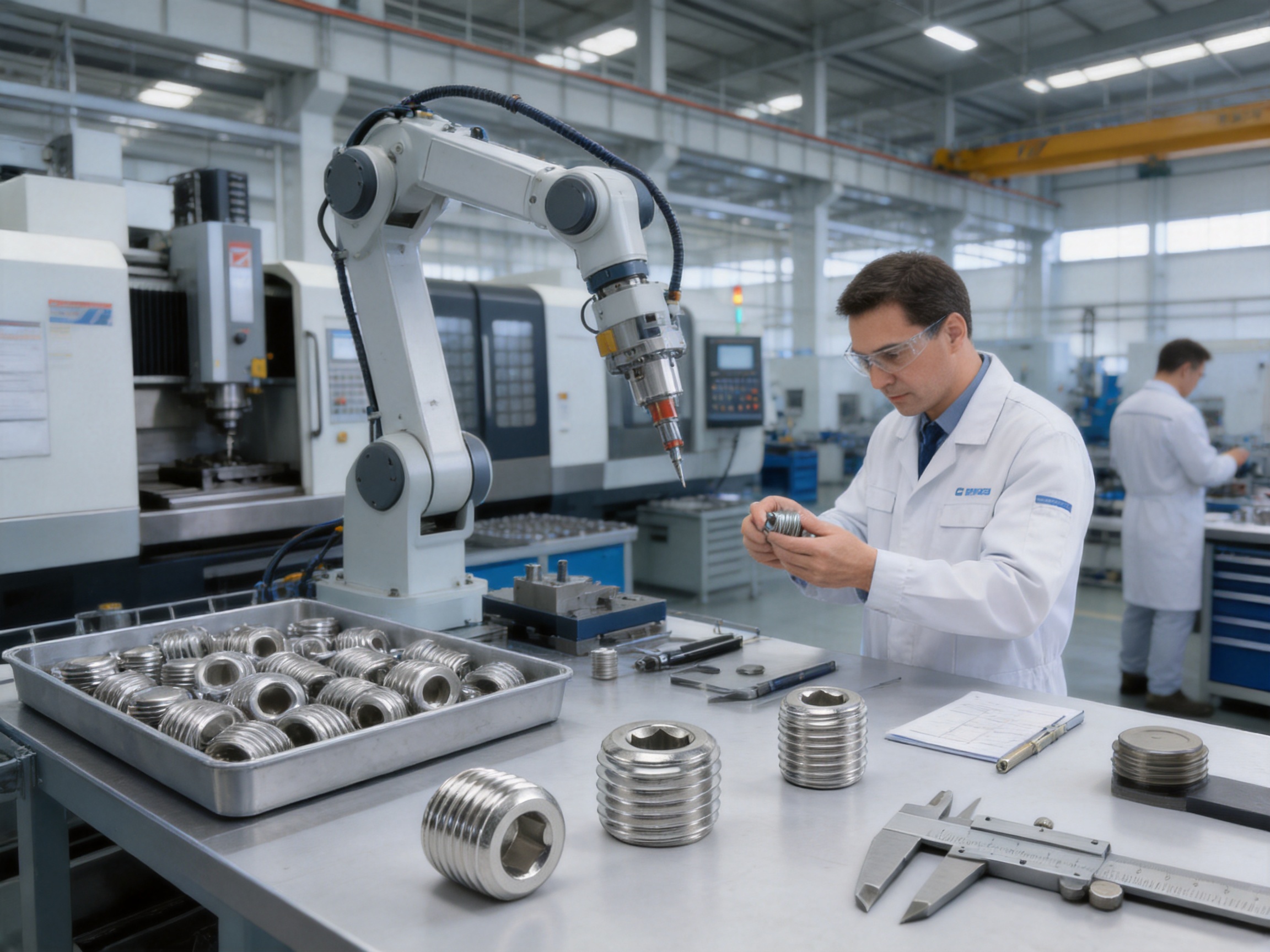
In industrial equipment, a threaded opening may be small, but the consequences of leaving it unsealed can be significant. An unused port can permit hydraulic oil, compressed air, water, dust, cutting fluids, or other contaminants to enter or escape from a system. In a high-pressure application, an improperly selected plug can also create leakage, maintenance problems, corrosion, or unplanned downtime. A straight thread plug, also known as a hex socket plug, provides a practical and dependable method for closing threaded ports in piping, reservoirs, valves, hydraulic assemblies, pneumatic equipment, and general machinery.
The Straight Thread Plug supplied by Dongtai Jinzhize Metal Products Co., Ltd. is designed as a precision-engineered sealing component for industrial use. It combines accurately machined threads, high-strength metal construction, convenient hex-socket installation, and optional sealing features. Its operating temperature range of -40°C to 200°C and sealing pressure capability of up to 10 MPa make it suitable for a broad selection of medium- and high-demand applications.
Unlike basic plugs that are intended only for low-pressure protection or temporary closure, this product is developed to support stable and repeatable sealing performance. It can be installed with standard hex keys or suitable wrenches, reducing the need for specialized equipment. Its compatibility with metal assemblies and various synthetic substrates also helps simplify installation planning for equipment manufacturers, maintenance teams, and system integrators.
This article explains the construction, performance advantages, applications, manufacturing capabilities, quality considerations, and selection factors associated with straight thread plugs. It also shows how a specialized threaded-product manufacturer can support customers seeking consistent supply, traceability, and reliable technical cooperation.
What Is a Straight Thread Plug?
A straight thread plug is a threaded closure component used to seal an internal threaded hole or port. The term “straight thread” indicates that the threads maintain a constant diameter along their length, unlike tapered threads that gradually narrow or expand. The plug is screwed into a matching straight-threaded opening and achieves sealing through an appropriate seating surface, sealant, gasket, O-ring, or other designated sealing method.
The hex socket design places an internal drive recess within the plug. This recess allows the operator to install or remove the part with a standard hex key or compatible driver. Compared with externally headed plugs, a hex socket plug can provide a compact external profile, making it suitable for assemblies where surrounding components, protective covers, or limited access restrict the use of a conventional wrench.
In many industrial systems, threaded ports are included for manufacturing, testing, draining, filling, inspection, pressure measurement, or future expansion. Once the port is no longer required, it must be closed securely. A straight thread plug offers a controlled and organized way to protect the opening while maintaining the ability to remove the closure during service or modification.
These plugs may be used as permanent closures, temporary protective components, or maintenance parts. The correct sealing method depends on the port design, fluid type, pressure, temperature, thread standard, substrate material, and expected service life. For this reason, precision machining and consistent dimensional control are essential.
Core Product Design and Functional Features
Precision-Machined Straight Threads
The thread is the primary mechanical interface between the plug and the host component. Accurate pitch, diameter, profile, and surface finish help the plug engage smoothly and seat consistently. Poorly formed threads can cause cross-threading, excessive installation torque, incomplete engagement, or leakage. Precision machining supports a closer fit and improves the repeatability of installation across production batches.
The straight thread design is especially useful when the mating port has a defined shoulder or sealing face. Rather than relying solely on thread interference, the assembly can be designed around a controlled seating surface. This approach may reduce thread deformation and make the sealing condition easier to manage during production and maintenance.
Hex Socket Installation
The internal hex socket provides a simple and efficient installation interface. Standard tools are widely available, inexpensive, and easy to use in factories, workshops, and field service environments. Operators can install the plug in confined spaces where external flats are not practical.
A hex socket also helps preserve a clean external profile. The plug can sit flush or nearly flush with the surrounding surface, depending on the design and installation depth. This minimizes interference with adjacent components and reduces the possibility of accidental impact during equipment handling.
Sealing Compatibility
The product can be supplied with pre-applied sealants or specialized seating designs according to application requirements. A pre-applied sealant can improve installation efficiency by reducing the number of preparation steps before assembly. A designated seat can provide a predictable point of contact between the plug and the host component, supporting consistent sealing performance when the recommended installation procedure is followed.
Different systems may require different sealing strategies. Some applications use a sealant applied to the thread, while others rely on a gasket, O-ring, metal-to-metal seat, or elastomeric sealing element. The plug must therefore be selected in combination with the port configuration and the working medium. The design flexibility of the straight thread plug allows it to serve multiple equipment and piping requirements rather than being restricted to one narrow use case.
High-Strength Metal Construction
Industrial plugs must resist installation forces, vibration, pressure, thermal cycling, corrosion, and accidental impact. The Straight Thread Plug is manufactured from high-grade metal materials selected for mechanical strength and service durability. Material selection can be coordinated with the customer’s requirements, including the host material, fluid compatibility, environmental exposure, and operating temperature.
A robust metal body helps maintain thread integrity during repeated installation and removal. It also reduces the likelihood of deformation when the plug is tightened with the recommended torque. In demanding environments, the combination of suitable material, controlled heat treatment where applicable, precision machining, and protective surface treatment can contribute to long-term reliability.
Performance Advantages Compared with Conventional Plugs
Broader Operating Temperature Range
The Straight Thread Plug is designed for a temperature range of -40°C to 200°C. This range supports applications exposed to cold storage, outdoor operation, engine compartments, heated machinery, and many industrial process environments. By comparison, standard products with a typical working range of approximately 0°C to 120°C may be less suitable for low-temperature starts or elevated-temperature service.
Temperature capability is not determined by the metal alone. The sealing method, coating, sealant, gasket, O-ring, and host material must also be appropriate for the intended conditions. Nevertheless, a plug designed around a wider temperature range provides greater flexibility when engineers are selecting components for variable or demanding operating environments.
Pressure Resistance up to 10 MPa
With suitable installation and sealing conditions, the plug can withstand sealing pressures of up to 10 MPa. This makes it appropriate for many medium- and high-pressure hydraulic and industrial applications. The stated pressure capability should always be evaluated together with the port design, thread engagement, fluid temperature, material compatibility, and sealing configuration.
For system designers, pressure capability is more than a numerical specification. It represents the ability to maintain a stable closure when the system experiences pressure fluctuations, vibration, and thermal changes. A precision-machined plug with a properly controlled seating arrangement can reduce the risk of leakage associated with inconsistent contact or damaged threads.
Reduced Installation Preparation
Many conventional sealing solutions require lengthy cleaning, application of liquid sealant, curing time, or complex preparation before the equipment can be returned to service. The Straight Thread Plug is intended to simplify this workflow. Depending on the selected configuration, pre-applied sealing features or specialized seating designs can reduce preparation requirements and shorten sealing stabilization time.
Faster installation can improve productivity in both mass production and maintenance operations. In a production line, it may reduce takt time and simplify operator training. In field service, it can reduce equipment downtime and avoid the need to transport heavy or specialized tools to the worksite.
Compatibility with Different Substrates
The plug can be used with metal assemblies and various synthetic substrates when the thread dimensions, strength, and sealing approach are properly matched. This flexibility is valuable for modern equipment, which may combine steel, aluminum alloys, engineering plastics, composite components, and other materials.
When dissimilar materials are joined, engineers must consider thermal expansion, galvanic corrosion, thread strength, deformation, and chemical compatibility. A specialized manufacturer can help customers select a suitable material and finish for the actual assembly rather than treating every application as identical.
Compact Installation in Restricted Spaces
The hex socket format is well suited to compact assemblies. The absence of a large external head can improve clearance around valves, manifolds, housings, covers, and machine structures. It can also create a more orderly external appearance and reduce the chance that the plug will snag on nearby components.
This compact form is particularly useful in hydraulic blocks, transmission housings, engine components, machine tools, and instrumentation assemblies where multiple ports are positioned close together. A suitable hex key can approach the plug axially, allowing installation in locations where side access is limited.
| Performance or Design Factor | Straight Thread Plug Advantage | Typical Customer Benefit |
|---|---|---|
| Operating temperature | Designed for approximately -40°C to 200°C | Greater flexibility in cold and elevated-temperature environments |
| Sealing pressure | Capability of up to 10 MPa under suitable conditions | Suitable for many medium- and high-pressure systems |
| Installation method | Internal hex socket for standard tools | Simple installation with reduced equipment requirements |
| Sealing options | Pre-applied sealants or specialized seating designs | Less preparation and more repeatable assembly |
| Construction | High-grade metal body with corrosion and impact resistance | Longer service life in demanding environments |
| Application range | Hydraulic, pneumatic, piping, machinery, maintenance, and retrofit use | One product family can support multiple equipment needs |
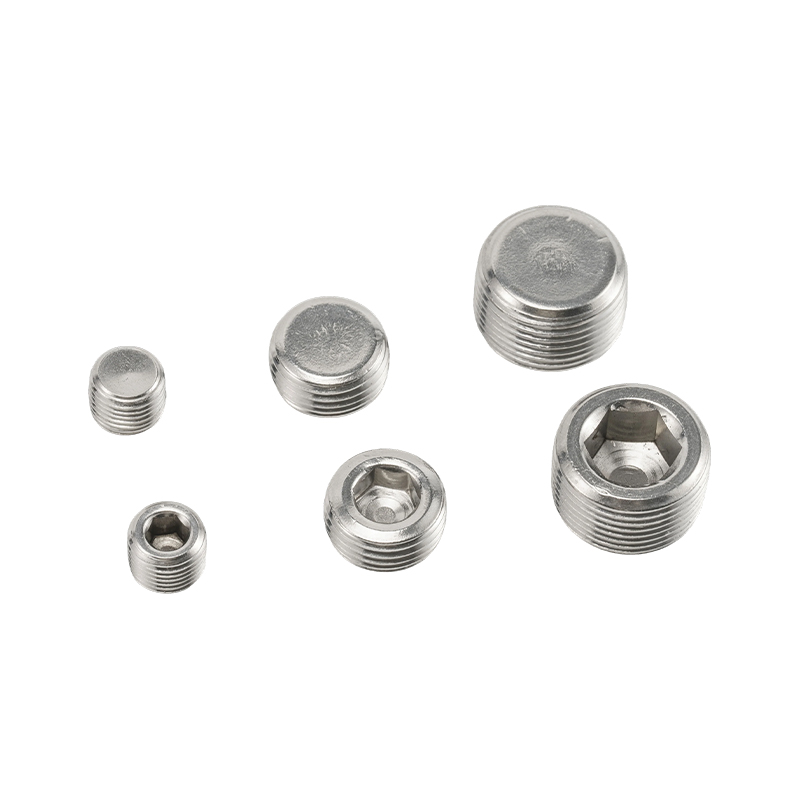
Straight Thread Plug
Applications in Hydraulic and Pneumatic Systems
Hydraulic systems depend on the controlled movement of pressurized fluid. Every unused threaded port represents a possible leakage path or contamination entry point. A straight thread plug can close spare manifold ports, auxiliary outlets, test points, and abandoned connection locations while preserving the option of future access.
In hydraulic equipment, the plug may be exposed to mineral oils, synthetic fluids, pressure pulses, vibration, and elevated temperatures. The thread and sealing elements must therefore be selected to resist fluid interaction and maintain contact under dynamic conditions. A precision plug helps support the integrity of the system without adding unnecessary complexity.
Pneumatic systems have similar requirements, although the working medium is often compressed air or another gas. Even a relatively small leak can reduce efficiency, increase compressor loading, and affect actuator performance. A properly installed straight thread plug helps prevent compressed air loss from redundant ports and supports cleaner, more organized pneumatic assemblies.
Typical applications include hydraulic power units, valve blocks, cylinders, pumps, compressors, air preparation equipment, industrial automation systems, and mobile machinery. The compact hex socket format is useful where multiple ports are arranged in a small manifold or where the plug must remain below a protective cover.
Applications in Piping and Process Equipment
Industrial piping systems frequently include threaded interfaces for future connections, drainage, measurement, flushing, or maintenance. When these interfaces are not in use, they must be closed to prevent leakage and to keep dust, moisture, metal particles, and other contaminants from entering the system.
Straight thread plugs are suitable for closing pre-installed interfaces in pipelines, reservoirs, fittings, and process equipment. Their compact profile can help maintain a smooth equipment layout, while their removable installation allows the port to be reopened when the system is modified.
In low- and medium-temperature piping, the plug may be used with an appropriate thread sealant or gasket. In hotter or more demanding applications, the sealing system must be selected to withstand thermal cycling and the chemical characteristics of the process medium. The plug’s broad temperature design provides a useful starting point for applications that move beyond ordinary workshop conditions.
The plug can also serve as a protective closure during equipment transportation, storage, or assembly. Temporary closure prevents debris from entering open ports before the final connection is made. This is particularly important for precision hydraulic blocks and clean pneumatic systems, where contamination can damage valves or restrict small flow passages.
Applications in Equipment Manufacturing
Machine builders use threaded ports for lubrication, inspection, pressure testing, fluid circulation, cable or sensor integration, and service access. After the design has been finalized, some ports may remain unused or may be required only for a specific model variant. A straight thread plug allows manufacturers to standardize the housing while securely closing ports that are not needed in a particular configuration.
In machine tools, the plug can close redundant threaded holes in hydraulic circuits, lubrication systems, coolant passages, and machine frames. In valves and pumps, it can protect internal passageways or seal auxiliary openings. In industrial equipment, its flush or low-profile design can contribute to a neat appearance and reduce interference with covers, guards, and moving components.
Equipment manufacturers also benefit from consistent installation procedures. A standard hex key, defined tightening method, and documented sealing configuration make it easier to train operators and maintain quality across production stations. When the manufacturer supplies parts with controlled dimensions and traceable batches, the customer can improve assembly consistency and simplify incoming inspection.
Maintenance, Repair, and Retrofitting
Maintenance teams often encounter threaded ports that have become redundant after a component replacement, system redesign, or process change. Leaving the opening exposed can create safety and cleanliness concerns. Installing a straight thread plug provides either a temporary or permanent closure, depending on the maintenance plan.
During repair work, the plug can be used to isolate an unused branch, close a removed instrument port, protect a disconnected line, or seal an opening while equipment is being transported. The internal hex socket enables removal with common tools, which is valuable when service personnel must work quickly or in locations without access to heavy equipment.
For retrofitting, the plug can help engineers adapt existing equipment to new operating requirements. A machine may originally have several connection points, but a revised layout may require only some of them. Closing the remaining ports improves organization and reduces the number of potential leakage points.
Maintenance personnel should inspect the port before installation. Damaged threads, dirt, old sealant, burrs, or corrosion can prevent reliable seating. The plug should not be forced into a damaged opening. Cleaning, thread inspection, correct sealant selection, and appropriate tightening torque are important steps in achieving the intended result.
Manufacturing Process and Quality Strengths
Specialized Threaded-Product Manufacturing
Dongtai Jinzhize Metal Products Co., Ltd. is a specialized manufacturer focused on threaded connection and fastening products. Its product range includes helical wire inserts, self-tapping inserts, key-locking inserts, threaded adapters, oil plugs, installation taps, and related tools. This product concentration gives the company practical experience across thread formation, thread inspection, installation behavior, and application-specific fastening requirements.
Knowledge gained from manufacturing different types of threaded products can support the development of straight thread plugs. For example, understanding thread tolerances, insertion forces, tool engagement, material interaction, and sealing interfaces helps the manufacturer address the complete connection rather than only the visible plug body.
Owned Manufacturing Facility
Established in 2015, the company operates from an owned manufacturing plant covering approximately 10,000 square meters. The facility is equipped with hundreds of machine tools and automated production systems. This infrastructure provides a substantial foundation for machining, forming, finishing, inspection, packaging, and order coordination.
An owned facility can support closer control over production scheduling and process management. It also enables the manufacturer to coordinate multiple operations within one organized system. For customers, this may improve supply stability, shorten communication cycles, and make it easier to address technical changes or production requirements.
Automated and Controlled Production
Automation can improve repeatability in high-volume manufacturing. When machining and handling operations are appropriately controlled, automated systems help reduce variation caused by manual intervention. This is especially important for threaded plugs, where small dimensional differences can affect engagement, tightening torque, seating, and sealing behavior.
Automation does not replace engineering judgment or inspection. Instead, it works together with process planning, tool management, equipment maintenance, and quality control. The manufacturer’s production systems are intended to support stable output while allowing experienced personnel to manage product development, process optimization, and customer-specific requirements.
Design, Development, and Engineering Experience
The company has built an experienced team for design, development, and production. This capability is important when customers require more than a standard catalog component. Thread size, plug length, socket dimensions, material, surface treatment, sealant, packaging, and inspection requirements may all need to be adapted to the customer’s assembly.
Engineering support can also help customers identify potential installation risks. These may include insufficient thread engagement, unsuitable host material, excessive tightening torque, sealant incompatibility, restricted tool access, and thermal expansion differences. Addressing these issues during design review is generally more effective than correcting them after equipment production has begun.
Quality Management and Traceability
A rigorous quality management system is essential for products used in automotive, aerospace, rail, hydraulic, and industrial applications. Quality control should cover incoming materials, machining parameters, thread dimensions, socket geometry, surface condition, sealing features, appearance, packaging, and final release.
Traceability allows a manufacturer and customer to connect finished products with relevant production information. Depending on the customer’s requirements, this may include material records, batch identification, inspection data, production dates, and shipment documentation. Consistent traceability helps reduce procurement risk and supports structured investigation if a field issue occurs.
For a sealing component, quality is not limited to whether the plug can be screwed into a port. The component must also meet the intended dimensions, maintain suitable mechanical integrity, and work with the specified sealing method. A complete quality approach therefore combines dimensional inspection with functional and process controls.
Large-Scale Supply Capability
In 2024, the company achieved an annual output value of approximately 153 million RMB. This figure reflects the company’s ability to support significant production activity and stable supply. For global customers, manufacturing scale can be important when a product is used in ongoing equipment production rather than occasional maintenance.
Supply capability includes more than machine capacity. It also depends on raw-material planning, production scheduling, tooling management, inspection resources, packaging, logistics coordination, and after-sales communication. A manufacturer with an integrated operating structure can help customers maintain continuity as demand changes.
Materials, Surface Treatment, and Application Matching
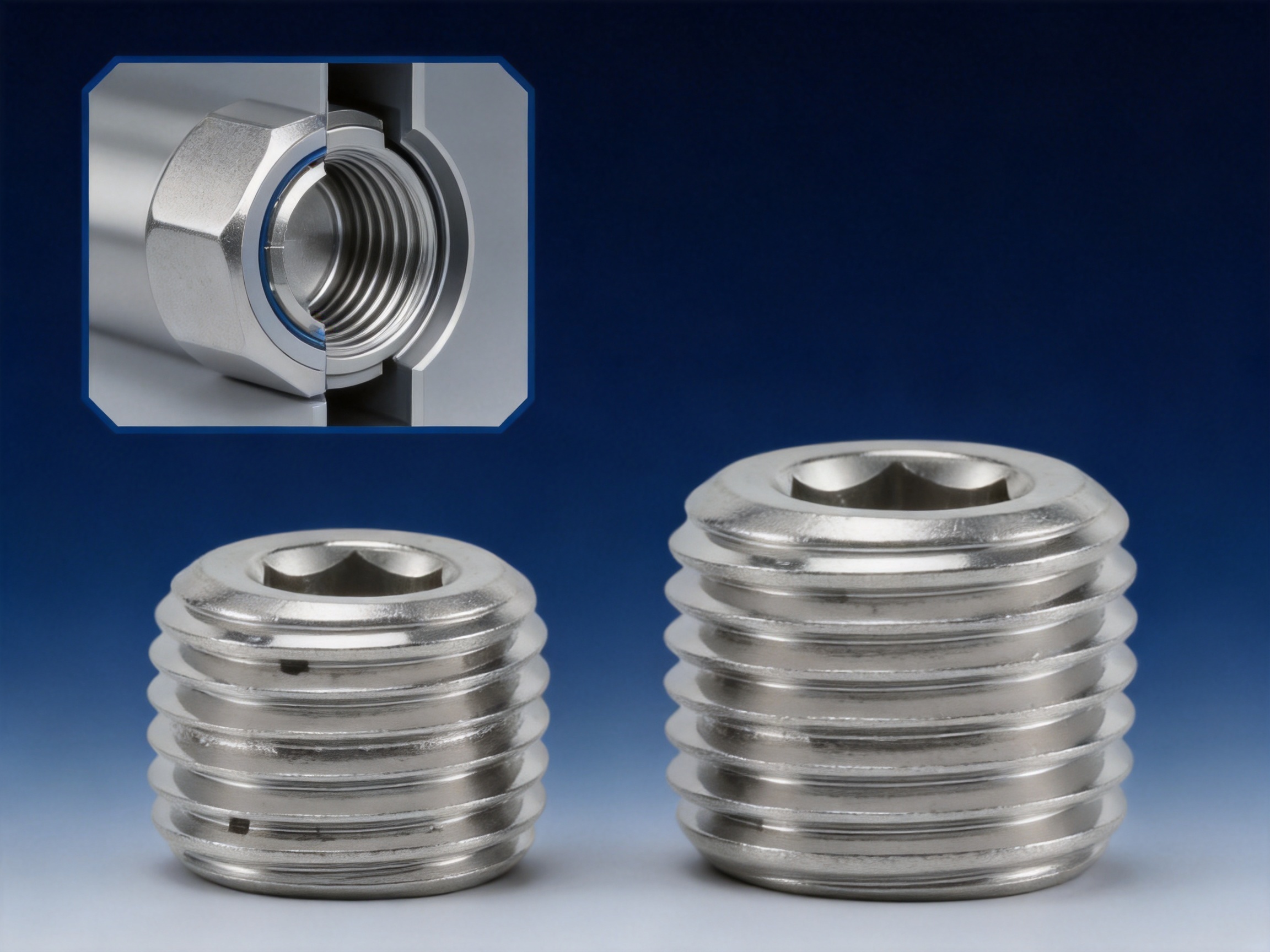
Material selection should be based on the actual service environment. Important factors include pressure, temperature, working fluid, host material, corrosion exposure, vibration, installation frequency, and required service life. High-grade metal construction provides a strong foundation, but the specific alloy and finish should be evaluated for the application.
For general industrial service, a corrosion-resistant material may be appropriate where the plug is exposed to moisture or common industrial fluids. In other cases, a carbon steel or alloy steel construction may provide the required mechanical performance. When the plug is installed in aluminum or another softer material, thread engagement and tightening torque must be managed carefully to avoid damage to the host component.
Surface treatment can improve corrosion resistance, appearance, wear performance, or compatibility with the installation environment. The correct treatment depends on the material and the required service conditions. Customers should specify whether the plug will be exposed to salt spray, condensation, cleaning chemicals, fuels, lubricants, hydraulic fluids, or high-temperature processes.
Sealing materials also require careful matching. A sealant that performs well with water may not be suitable for a particular oil, solvent, fuel, or aggressive chemical. Similarly, an elastomeric seal must be capable of maintaining its properties across the expected temperature range. The plug, sealing element, and host port should be treated as one engineered connection.
Installation Guidelines for Reliable Sealing
Inspect and Prepare the Port
Before installation, inspect the internal thread and sealing face. Remove chips, dust, old sealant, rust, and other contamination. Check for cross-threading, dents, burrs, or other damage. A clean and undamaged port gives the plug the best opportunity to seat correctly.
Confirm Thread Compatibility
The plug must match the port in thread standard, nominal size, pitch, profile, and tolerance. Straight threads should not be confused with tapered threads. The wrong thread type may appear to engage initially but can damage the port or fail to seal. If the thread specification is uncertain, it should be verified before installation.
Use the Correct Sealing Method
If the plug is supplied with a pre-applied sealant or designated seating feature, follow the specified installation procedure. If an additional sealant, gasket, or O-ring is required, verify its compatibility with the pressure, temperature, and working medium. Excessive sealant can enter a fluid passage and create a separate operational problem.
Apply Suitable Tightening Torque
Use a standard hex key, driver, or suitable wrench that fully engages the internal socket. Tighten the plug according to the recommended torque. Over-tightening can damage the socket, stretch or deform the plug, strip the host thread, or compromise the sealing element. Under-tightening can leave the joint vulnerable to leakage or vibration loosening.
Verify the Finished Assembly
After installation, confirm that the plug is seated correctly and that the surrounding surface is free from visible damage. If the equipment permits, perform a pressure or leak test under controlled conditions. The test should reflect the actual application and should be conducted using appropriate safety procedures.
How the Product Supports Procurement Efficiency
Procurement teams often seek components that combine competitive performance, consistent availability, and manageable technical documentation. A straight thread plug can support standardization by replacing several less consistent closure methods, such as improvised caps, unsuitable bolts, or manually adapted fittings.
When plugs are standardized across equipment families, purchasing departments may reduce the number of similar part numbers and simplify inventory management. Maintenance teams can keep a defined range of sizes and installation tools available. Production engineers can establish consistent work instructions, while quality teams can develop repeatable inspection criteria.
Working directly with a specialized manufacturer may also simplify communication about custom sizes, material changes, sealant requirements, packaging, labeling, and batch control. These details can have a meaningful effect on total procurement cost, even when the unit price of the component is only one part of the overall calculation.
The manufacturer’s broader product range can be an additional advantage. Customers purchasing oil plugs may also require installation taps, wire thread inserts, self-tapping inserts, key-locking inserts, or other threaded connection products. A supplier with experience across these categories can help coordinate related components and reduce the need to manage multiple technical sources.
Suitability for Automotive, Aerospace, and Rail Applications
Threaded closures are used throughout vehicles and transportation equipment. In automotive applications, they may close ports in engines, transmissions, hydraulic systems, fuel-related assemblies, cooling circuits, and machined housings. The components may be exposed to vibration, thermal cycling, oil, coolant, cleaning agents, and restricted installation spaces.
Aerospace and rail applications often place strong emphasis on consistency, documentation, and traceability. Although the exact qualification requirements depend on the customer and the application, the manufacturing discipline required for these sectors can help strengthen general industrial production. A controlled process, reliable inspection, and clear batch identification are valuable wherever a threaded closure contributes to equipment safety or reliability.
In critical assemblies, the plug should be considered during the initial design phase. Engineers should define the required thread, material, sealing method, installation access, torque range, inspection method, and replacement procedure. Early specification reduces the likelihood of field modifications that may compromise the port or sealing interface.
Customization and Technical Cooperation
Standard products are suitable for many applications, but some equipment requires a customized solution. Possible customization areas include thread size, thread length, plug height, socket size, material, surface finish, sealing feature, pre-applied sealant, marking, packaging, and inspection documentation.
Customization should begin with a clear application description. Useful information includes the port drawing, thread specification, working pressure, temperature range, fluid type, host material, installation frequency, environmental exposure, and expected annual quantity. Photographs or samples of the existing component can also help clarify access and assembly conditions.
A technically capable manufacturer can review the design and identify practical considerations before sample production. Prototype or trial batches may be used to check fit, installation torque, leakage performance, tool access, and compatibility with the customer’s production process. Feedback from these trials can then be incorporated into final production documentation.
The goal of customization is not simply to create a different shape. It is to ensure that the final component performs reliably within the complete assembly. A plug that fits the thread but interferes with a nearby part, uses an unsuitable sealant, or cannot be removed during maintenance is not an effective solution. Application-focused cooperation helps avoid these problems.
Safety and Reliability Considerations
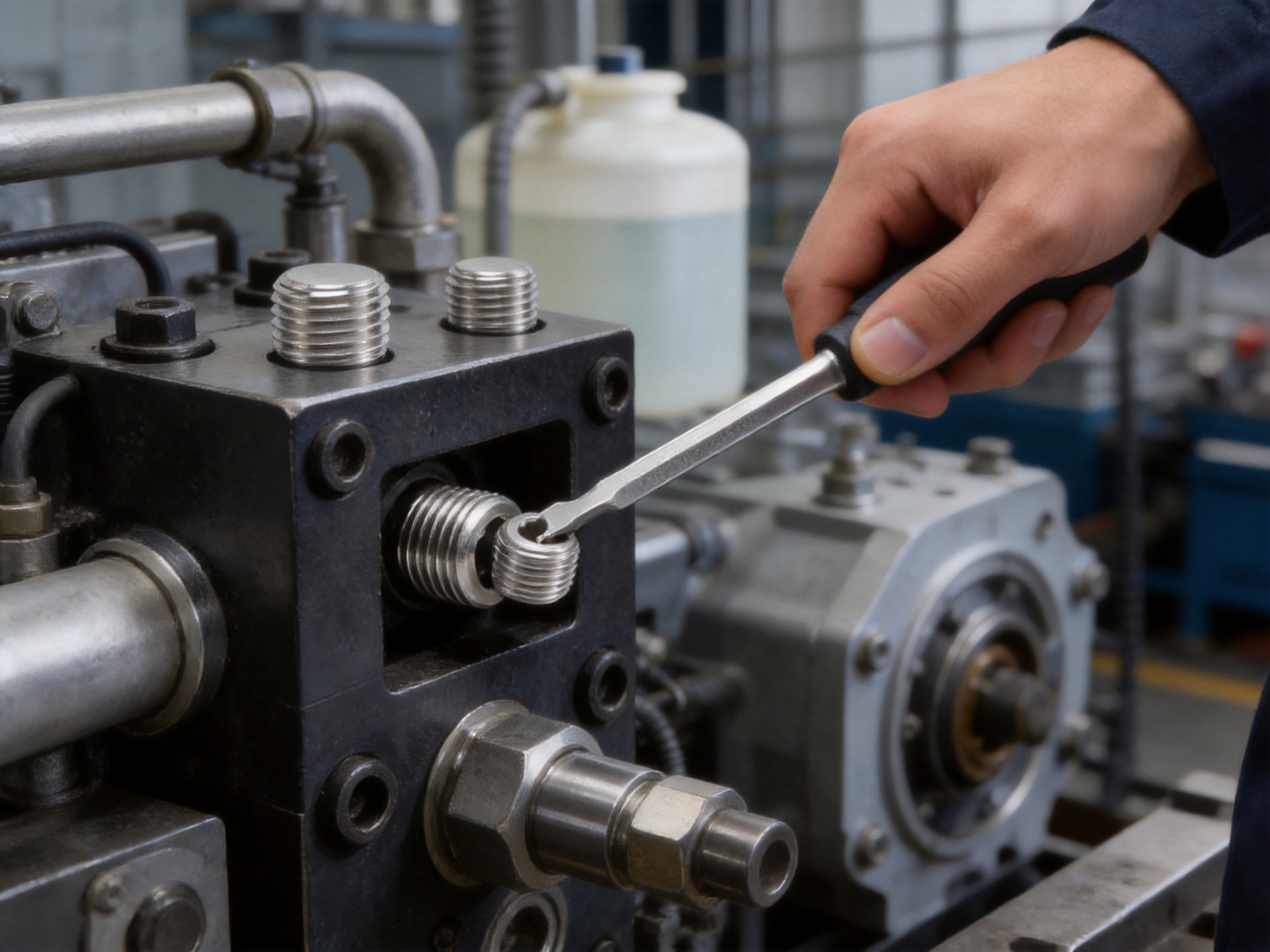
A straight thread plug should be selected and installed by personnel familiar with the equipment and its operating hazards. Pressurized systems must be depressurized and isolated before installation or removal. Hot fluids and surfaces should be allowed to cool to a safe working condition where applicable.
The stated pressure and temperature capabilities are design references and should not be interpreted as universal limits for every configuration. Actual performance depends on the plug material, sealing arrangement, thread engagement, port design, fluid, temperature, installation torque, and system loading. Customers should confirm the complete operating envelope before approving the component for production use.
Regular inspection may be appropriate in applications involving vibration, thermal cycling, corrosive media, or frequent maintenance. Signs of concern include visible leakage, corrosion, damaged socket edges, thread deformation, movement, or deterioration of the sealing element. A plug that has been removed may require replacement of its sealant or sealing element before reinstallation.
Correct tool engagement is also important. A worn or undersized hex key can damage the socket and make future removal difficult. Operators should use a tool that fully engages the recess and should avoid striking the plug or applying uncontrolled force.
Why Choose a Specialized Manufacturer?
A general hardware supplier may offer threaded plugs as a commodity item, but a specialized threaded-product manufacturer can provide deeper knowledge of connection performance. Threaded components interact with the surrounding assembly, and their success depends on more than basic dimensional fit.
Dongtai Jinzhize Metal Products Co., Ltd. focuses on threaded connection products and related installation tools. This specialization supports a product development approach centered on thread accuracy, mechanical engagement, assembly efficiency, and application reliability. Its experience in automotive and aerospace-related manufacturing also reflects an understanding of the consistency expected in demanding industrial sectors.
The company’s owned facility, extensive machine-tool base, automated production systems, engineering team, quality management system, and after-sales service mechanism provide an integrated foundation for customer support. These strengths can be particularly valuable for customers requiring repeat orders, custom specifications, production traceability, or coordinated sourcing of several threaded products.
The company’s stated mission is to provide stable and reliable threaded connection and fastening products for critical assemblies while helping customers improve assembly consistency and reduce procurement and usage risks. This approach places emphasis on long-term cooperation rather than a single shipment. For international customers, responsive communication and dependable after-sales support are important parts of the total supplier relationship.
Frequently Asked Questions
What is the main purpose of a straight thread plug?
A straight thread plug closes an internal threaded port or hole. It helps prevent fluid or gas leakage and keeps contaminants from entering unused openings in hydraulic systems, pneumatic equipment, piping, reservoirs, valves, and machinery.
Why is it also called a hex socket plug?
The plug contains an internal hexagonal recess, or socket. This feature allows installation and removal with a standard hex key or compatible driver, especially in areas where an external wrench cannot easily reach.
What temperature range is supported?
The product is designed for approximately -40°C to 200°C. The complete assembly must still be evaluated because the sealing material, sealant, host material, and working medium also influence actual service performance.
Can the plug be used in high-pressure systems?
With suitable installation and sealing conditions, the plug can withstand sealing pressures of up to 10 MPa. Application approval should consider thread engagement, port design, fluid type, temperature, tightening torque, and the selected sealing configuration.
Does the product require liquid sealant?
Not necessarily. Depending on the selected configuration, the product may be supplied with a pre-applied sealant or specialized seating design. The required method should be confirmed for the specific plug and application.
Can the plug be used with synthetic materials?
It can be compatible with various synthetic substrates when the thread dimensions, material strength, sealing method, and installation torque are properly matched. The host material should be reviewed before final selection.
Is the plug suitable for hydraulic and pneumatic equipment?
Yes. It is designed for sealing spare threaded ports in hydraulic and pneumatic systems, including manifold blocks, valves, pumps, compressors, cylinders, and related equipment.
Can it be used as a temporary closure?
Yes. It can protect an unused or disconnected port during maintenance, transportation, storage, or equipment modification. If the plug is removed and reused, the sealing method should be inspected and renewed when required.
What tools are needed for installation?
A suitable hex key, internal-hex driver, or compatible wrench is normally sufficient. The tool should fully engage the socket and should be used with the recommended tightening torque.
What information is needed for a custom quotation?
Useful information includes the thread standard and size, length, material, surface treatment, sealing method, working pressure, temperature, fluid, host material, annual quantity, packaging requirements, and technical drawings or samples.
What industries use these plugs?
Typical industries include hydraulic and pneumatic equipment, piping engineering, machine tools, valves, pumps, automotive manufacturing, aerospace production, rail vehicles, industrial automation, equipment maintenance, and retrofit engineering.
How does the manufacturer support quality consistency?
The manufacturer operates an owned manufacturing facility with numerous machine tools and automated production systems. Its production activities are supported by experienced design and manufacturing personnel, a quality management system, inspection procedures, traceability practices, and after-sales service.
Conclusion
The Straight Thread Plug is a compact component with an important role in industrial system integrity. By closing unused threaded ports securely, it helps protect equipment from leakage, contamination, pressure loss, and unnecessary exposure. Its precision-machined straight threads, internal hex socket, high-grade metal construction, optional sealing features, and broad temperature capability make it a practical solution for demanding applications.
Compared with conventional plugs designed for narrower conditions, this product offers a wider operating range, sealing pressure capability of up to 10 MPa, easier installation, reduced preparation requirements, and compatibility with a variety of industrial assemblies. It can be used in hydraulic and pneumatic systems, piping, reservoirs, machine tools, valves, automotive equipment, aerospace-related production, rail vehicles, maintenance projects, and retrofit work.
The product’s value is further supported by the manufacturing strengths of Dongtai Jinzhize Metal Products Co., Ltd. Since its establishment in 2015, the company has developed a specialized production base for threaded connection and fastening products. Its owned 10,000-square-meter facility, hundreds of machine tools, automated production systems, experienced engineering team, quality management approach, traceability capability, and after-sales service structure provide a strong foundation for stable supply and technical cooperation.
For customers seeking a reliable threaded closure, the best selection process begins with the complete application. Pressure, temperature, fluid, substrate, thread specification, installation access, sealing method, and maintenance requirements should all be considered. When these factors are properly matched, a straight thread plug can provide efficient installation and dependable service in critical industrial assemblies.
References
1. General principles of industrial threaded connection design and sealing practice.
2. Common engineering guidance for hydraulic and pneumatic port closure components.
3. Manufacturing quality-control principles for precision-machined metal parts.
4. Industrial application practices for thread sealants, seating surfaces, gaskets, and O-rings.
5. Product and company information provided for the Straight Thread Plug and Dongtai Jinzhize Metal Products Co., Ltd.



