Français
 Español
 Deutsch


Content
- 1 Introduction to Three-Hole Thread Inserts
- 2 Product Construction and Operating Principle
- 3 Advantages Compared with Conventional Thread Repair Methods
- 4 307 and 308 Type Selection
- 5 Material Compatibility
- 6 Installation Process and Best Practices
- 7 Applications Across Industrial Sectors
- 8 Manufacturing Strengths and Quality Control
- 9 Surface Protection and Corrosion Considerations
- 10 Comparison with Other Thread Reinforcement Solutions
- 11 How to Specify the Product for Procurement
- 12 Application Validation and Testing
- 13 Q&A: Carbon Steel Three-Hole Thread Inserts
- 13.1 What is a carbon steel three-hole thread insert?
- 13.2 What is the purpose of the three holes?
- 13.3 What is the difference between the 307 and 308 types?
- 13.4 Can the insert be used in aluminum alloy?
- 13.5 Can it be used in cast iron?
- 13.6 Does the insert require a separate anti-rotation key?
- 13.7 What coatings are available?
- 13.8 How should the drilling diameter be selected?
- 13.9 Is this product suitable for repeated assembly and disassembly?
- 13.10 Can the insert repair a stripped thread?
- 13.11 What tools are needed for installation?
- 13.12 Does the manufacturer provide customized solutions?
- 14 Conclusion
- 15 References
- 16 Product: Carbon Steel 3-Hole Thread Insert
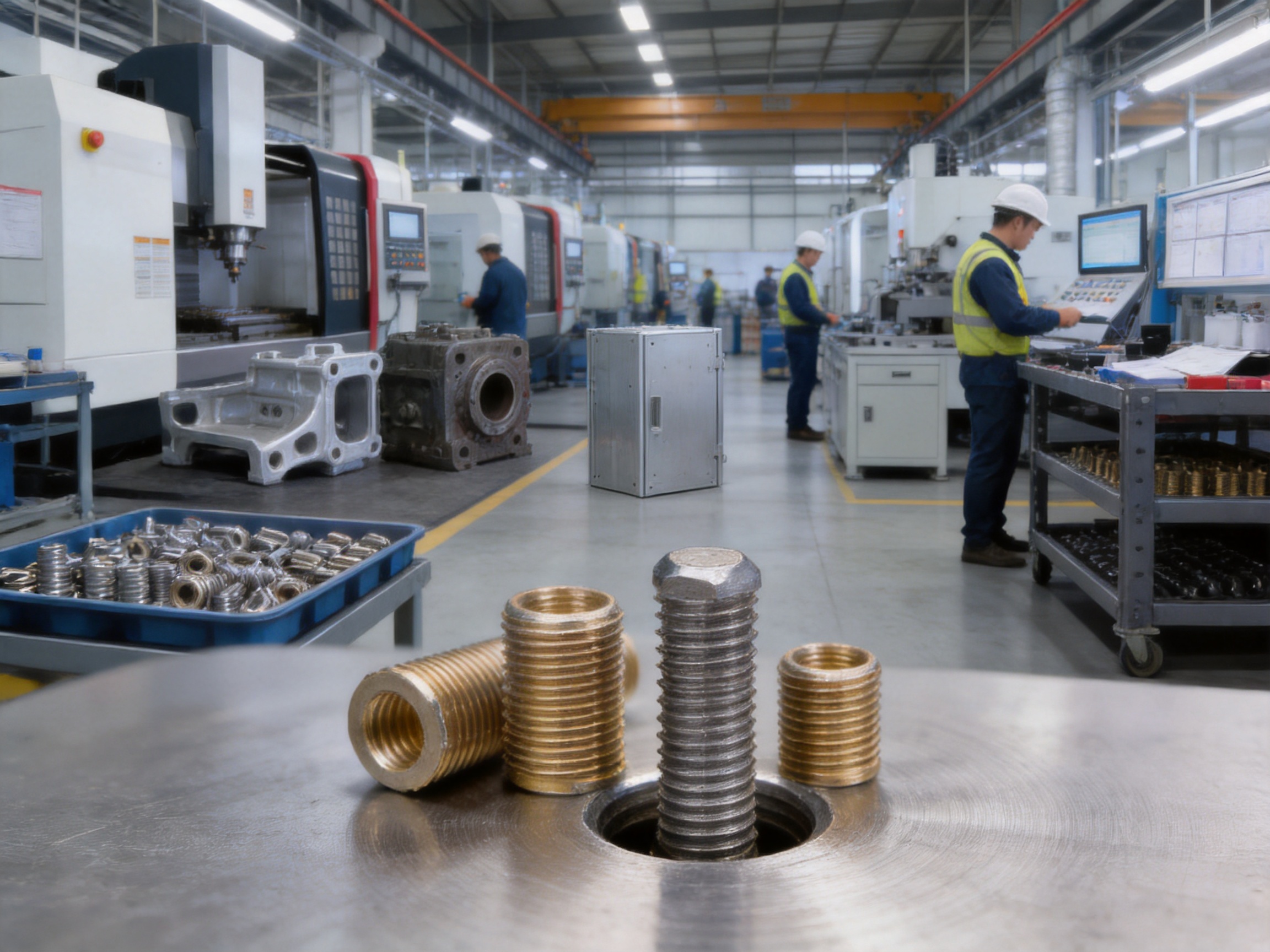
Introduction to Three-Hole Thread Inserts
Threaded connections are essential in machinery, automotive assemblies, sheet-metal structures, industrial furniture, electrical enclosures, and many other products. However, a tapped hole made directly in aluminum, plastic, cast iron, or other relatively soft materials may not provide sufficient thread strength for repeated fastening. Continuous assembly and disassembly, vibration, impact, thermal cycling, and excessive tightening torque can gradually damage the base material. Once the original thread becomes worn or stripped, the entire component may need to be replaced.
A carbon steel three-hole thread insert provides an efficient way to reinforce these weak or damaged threaded locations. This self-tapping insert is designed with three evenly distributed positioning holes and external cutting grooves. During installation, the insert forms a strong external connection with the prepared hole while creating a durable internal thread for a screw or bolt. The three-hole structure allows the surrounding base material to flow or deform into the positioning openings, improving resistance to rotation, loosening, and axial movement.
Compared with a standard smooth-wall self-tapping insert, the three-hole design offers an additional mechanical locking effect. Compared with a conventional wire thread insert, it does not require the same type of tang removal process and can provide a more direct solution when anti-rotation performance is a primary concern. It is particularly suitable for applications in which a reinforced internal thread must remain stable under vibration and repeated service loads.
The product described in this article is manufactured from high-quality carbon steel and is available in 307 and 308 configurations. The 308 type is the reinforced, longer version of the 307 type. Both versions use three self-tapping circular grooves and are available in a range of metric and unified inch sizes. Optional coatings, including zinc and color zinc finishes, can be specified according to the required corrosion-resistance level and operating environment.
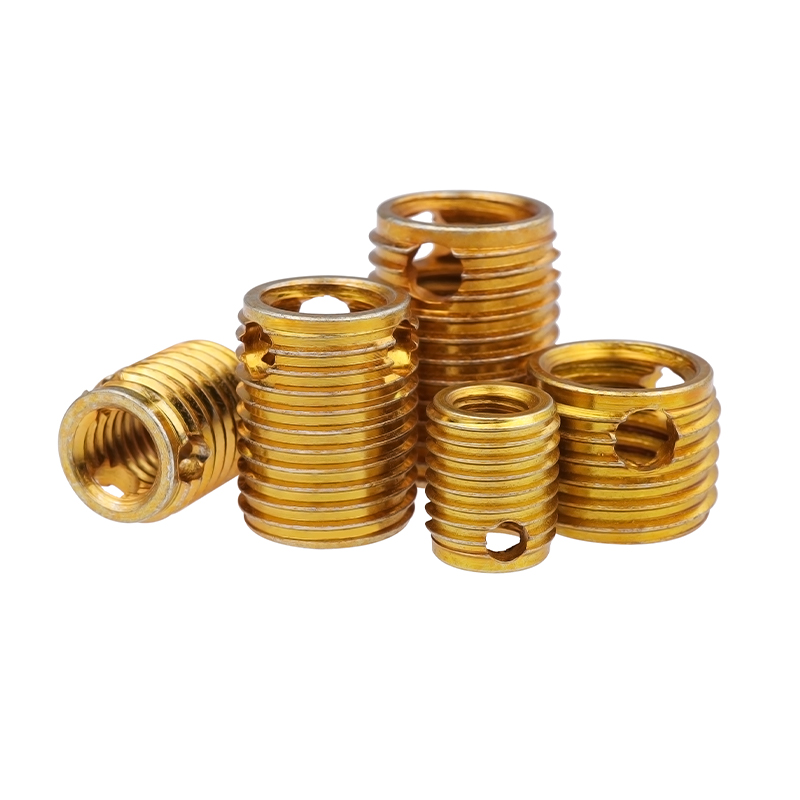
Carbon Steel 3-Hole Thread Insert
Product Construction and Operating Principle
Carbon Steel Body
The insert body is made from carbon steel selected for its mechanical strength, toughness, machinability, and suitability for industrial fastening applications. Carbon steel provides a significantly stronger structural foundation than many soft base materials in which the insert is installed. When the internal thread is loaded, the insert transfers the applied force through its steel body instead of relying entirely on the original aluminum, plastic, or thin-wall material.
The steel construction also supports reliable performance during installation. The external grooves must cut or form a precise path in the prepared hole without excessive deformation of the insert. A properly controlled carbon steel grade can provide a balanced combination of cutting performance, thread strength, impact resistance, and dimensional stability.
Three Positioning Holes
The defining characteristic of this product is the presence of three evenly distributed positioning holes around the insert body. These holes are not merely visual features. They contribute to the mechanical interlocking process between the insert and the parent material.
As the insert is driven into the prepared hole, material from the workpiece can locally deform into the positioning holes. After installation, these areas act as locking points that resist the turning forces generated when a bolt is tightened or removed. They also help limit displacement caused by vibration, alternating loads, and repeated servicing.
Because the holes are distributed around the circumference, the locking action is balanced rather than concentrated at one location. This balanced structure can reduce the likelihood of uneven stress around the insert and provides a practical anti-rotation solution without requiring separate keys, adhesives, or additional locking accessories.
External Self-Tapping Grooves
The outer surface incorporates three self-tapping circular grooves. These grooves enable the insert to engage the prepared hole during installation. Instead of requiring a fully formed external thread in the parent material, the insert cuts or forms its own holding path as it is installed with a suitable tool.
The self-tapping design can simplify production because it reduces the number of preparation steps. In many applications, the operator only needs to produce a correctly sized and sufficiently deep drilled hole before installing the insert. The insert then creates the external engagement while preserving the internal thread required for the final fastener.
Hole preparation remains important. The drilling diameter should be selected according to the base material and the insert size. The provided dimensional data distinguishes recommended drilling ranges for aluminum alloy and cast iron. These values reflect the different forming and cutting behavior of the materials. Aluminum usually requires a slightly smaller or differently controlled preparation than cast iron, and the final selection should be verified through a production trial or engineering specification.
Internal Thread Function
The internal thread is designed to accept a standard metric or Unified fastener corresponding to the selected insert size. After installation, the insert creates a strong steel internal thread in a material that may otherwise be unable to support repeated fastening.
The reinforced internal thread improves load distribution. Instead of allowing the bolt to bear directly against a relatively soft and easily damaged hole wall, the steel insert presents a harder and more stable thread surface. This can increase resistance to stripping, improve consistency of tightening torque, and extend the service life of the assembly.
Advantages Compared with Conventional Thread Repair Methods
Improved Anti-Rotation Performance
A major advantage of the three-hole configuration is its resistance to rotation. A conventional smooth-wall insert depends mainly on friction and interference between the external wall and the parent material. Although this may be adequate for light-duty applications, vibration or repeated torque can eventually cause movement.
The three-hole insert adds mechanical interlocking. When the base material enters the positioning holes, the insert is restrained at several points around its circumference. This structure helps prevent the insert from turning with the bolt during tightening or removal.
This feature is especially valuable in automotive components, machine-tool assemblies, industrial cabinets, and construction equipment parts where vibration is present. It can also reduce the risk that the insert will back out during maintenance, helping preserve the integrity of the repaired or reinforced connection.
Higher Strength than the Original Soft-Material Thread
When a thread is formed directly in aluminum alloy, plastic, or another soft material, the available thread engagement may be unable to withstand high loads. The thread crest can deform, shear, or wear after repeated use. Installing a carbon steel insert changes the load-bearing interface from a soft material to a stronger steel component.
The insert can therefore improve resistance to thread stripping and local deformation. It is suitable for applications where a compact component must support a relatively high clamp load or where the fastener will be removed and reinstalled many times.
The result is not only a stronger thread but also a more consistent connection. Stable internal threads help the fastener engage smoothly and allow tightening procedures to be controlled more reliably.
Simplified Installation
The self-tapping structure can reduce installation complexity compared with solutions that require a separate external thread, locking key, or adhesive. Once the correct hole has been drilled, a dedicated installation tool can be used to position the insert. The three positioning holes provide anti-rotation performance without the need to install extra locking accessories.
This simplified process is useful in both repair operations and high-volume production. It can reduce the number of individual components handled by the operator and help lower the risk of missing a secondary locking part.
Suitable for Repeated Service
Many industrial assemblies require periodic inspection, adjustment, or replacement of bolts. A direct thread in plastic or aluminum may degrade after only a limited number of cycles. The carbon steel insert provides a more durable internal surface and can extend the useful life of the connection.
Its suitability for repeated service makes it useful in access panels, machine covers, equipment frames, industrial racks, and automotive components. Where the surrounding base material remains structurally sound, replacing the insert can be more economical than replacing the complete component.
Cost-Effective Structural Reinforcement
The product combines reinforcement and anti-rotation functionality in one compact part. It does not require a separate external locking ring or anti-rotation plate. For many applications, this can reduce material costs, assembly time, and inventory requirements.
Because it is available in common metric and Unified inch sizes, the insert can be incorporated into different product platforms without creating a completely custom connection system. The availability of 307 and 308 lengths also allows the designer to select a suitable engagement depth based on the thickness and strength of the host material.
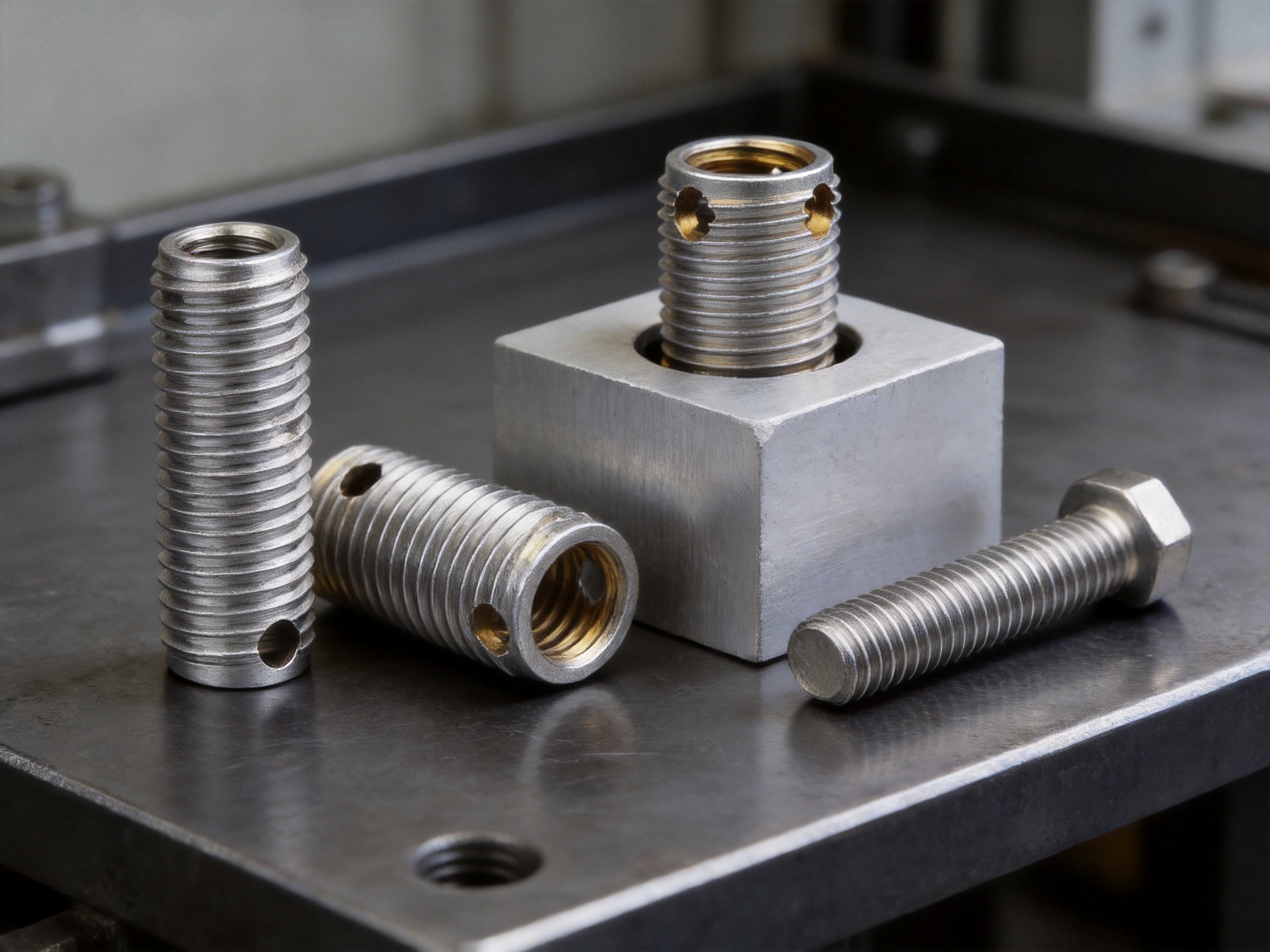
307 and 308 Type Selection
The 307 and 308 versions share the same three-hole self-tapping concept but differ in length. The 308 type is the reinforced, longer version. The additional length provides deeper engagement and may be appropriate when the component has sufficient material thickness or when greater thread engagement is required.
The 307 type is often suitable for standard applications where available wall thickness is limited or where a shorter insert is sufficient. The 308 type may be preferred for heavier loads, deeper installation locations, or assemblies requiring increased contact with the base material.
Selection should consider the host material, component thickness, expected tensile and shear loads, bolt grade, installation depth, and required remaining wall thickness. An insert should not be installed so deeply that it interferes with another component, bottom surface, oil passage, electrical feature, or internal cavity.
| Metric Insert | Unified Inch Equivalent | 307 Length | 308 Length | External Thread | Aluminum Drilling Diameter | Cast Iron Drilling Diameter |
|---|---|---|---|---|---|---|
| M3-0.5 | U#4-40 | 4 mm | 6 mm | M5-0.6 | 4.6–4.7 mm | 4.7–4.8 mm |
| M4-0.7 | U#8-32 | 6 mm | 8 mm | M6.5-0.8 | 6.0–6.1 mm | 6.1–6.2 mm |
| M5-0.8 | U#10-24 | 7 mm | 10 mm | M8-1.0 | 7.4–7.5 mm | 7.6–7.7 mm |
| M6-1.0 | U1/4-20 | 8 mm | 12 mm | M10-1.25 | 9.3–9.4 mm | 9.5–9.6 mm |
| M8-1.25 | U5/16-18 | 9 mm | 14 mm | M12-1.5 | 11.1–11.3 mm | 11.3–11.5 mm |
| M10-1.5 | U3/8-16 | 10 mm | 18 mm | M14-1.5 | 13.1–13.3 mm | 13.3–13.5 mm |
| M12-1.75 | U7/16-14 | 12 mm | 22 mm | M16-1.75 | 15.0–16.2 mm | 15.3–15.5 mm |
| M14-2.0 | U1/2-13 | 14 mm | 24 mm | M18-2.0 | 17.0–17.2 mm | 17.3–17.5 mm |
| M16-2.0 | U5/8-11 | 14 mm | 24 mm | M20-2.0 | 19.0–19.2 mm | 19.3–19.5 mm |
The dimensions above provide a general selection reference. Actual production conditions can affect the ideal drilling size, including material hardness, casting variation, wall thickness, hole depth, lubrication, installation speed, and the required holding torque. For critical assemblies, trial installation and performance testing should be completed before finalizing the production specification.
Material Compatibility
Aluminum Alloy
Aluminum alloy is one of the most common materials for reinforced thread inserts because it combines low weight with relatively good structural performance. However, direct aluminum threads can be vulnerable to stripping, especially when a small fastener is tightened repeatedly or when the connection is exposed to vibration.
The carbon steel insert creates a stronger internal thread while maintaining the weight advantage of the aluminum component. The three-hole locking effect is particularly useful in aluminum housings, brackets, engine-related components, equipment covers, and machine structures.
Cast Iron
Cast iron offers good compressive strength but can be brittle and may have variable local structure. A correctly selected self-tapping insert can reinforce a damaged or newly prepared hole and provide a reliable internal thread for maintenance fasteners.
The reference drilling diameters for cast iron differ from those for aluminum alloy. This difference should be respected because excessive interference can increase installation torque, while an oversized hole may reduce holding strength.
Soft Steel
The product is also suitable for selected soft-steel applications. In thin sheet or lightly loaded steel parts, the insert can provide a more durable internal thread and increase the effective engagement length. The designer should verify that sufficient surrounding material remains after drilling, especially when the hole is close to an edge or another opening.
Plastic and Composite Materials
Thread reinforcement can be valuable in engineering plastics and other soft materials, particularly where fasteners must be serviced. However, plastics vary widely in hardness, creep resistance, temperature stability, and resistance to local deformation. Application testing is recommended to confirm that the material can properly engage with the insert’s external grooves and positioning holes.
In high-temperature plastic applications, the temperature rating of the base material and the effect of thermal expansion should be evaluated. The steel insert may remain dimensionally stable while the surrounding polymer changes, so the complete assembly must be assessed rather than considering the insert alone.
Installation Process and Best Practices
1. Evaluate the Existing Component
Before installation, inspect the component to confirm that there is enough material around the hole. Check the wall thickness, edge distance, hole depth, access direction, and potential interference with internal features. If the original thread is damaged, remove loose debris and determine whether the remaining material can support the selected insert.
2. Select the Insert Size
Choose the internal thread size according to the required bolt or screw. Then select the insert length based on the available material thickness and required engagement. The 307 type is shorter, while the 308 type provides greater length and reinforcement when sufficient installation depth is available.
3. Prepare the Hole
Drill the hole to the recommended diameter for the specific base material. The drilling operation should produce a round, clean, and accurately positioned hole. Avoid excessive taper, burrs, surface damage, or contamination. The minimum drilling depth should be greater than the insert length so that the insert does not bottom out before reaching the desired position.
If the hole is blind, remove chips and confirm the actual usable depth. A compressed-air cleaning operation, brushing process, or suitable industrial cleaning method may be used according to the material and workplace safety requirements.
4. Align the Installation Tool
Use a dedicated installation tool suitable for the selected insert. The tool should hold the insert securely and maintain alignment with the prepared hole. Misalignment can increase installation torque, damage the external grooves, or cause the insert to enter at an angle.
For production work, controlled installation equipment can improve consistency. Torque-controlled or depth-controlled tools may help standardize the process across operators and production batches.
5. Drive the Insert into Position
Apply steady axial pressure while driving the insert into the hole. Avoid sudden impact unless the installation method has been specifically designed for impact use. The insert should enter smoothly and reach the specified depth without excessive force.
The final position should normally place the insert flush with or slightly below the surface, depending on the assembly design. Excessive protrusion can interfere with mating parts, while excessive depth may reduce usable internal thread engagement or create interference inside the component.
6. Inspect the Installed Insert
After installation, inspect the insert for correct depth, alignment, visible damage, and cleanliness. Pass a matching bolt or inspection gauge through the internal thread by hand. The fastener should engage smoothly without abnormal resistance or cross-threading.
Where required, verify installation torque, pull-out resistance, rotational resistance, and final bolt tightening performance. A sample inspection plan should be established for high-volume production or safety-relevant assemblies.
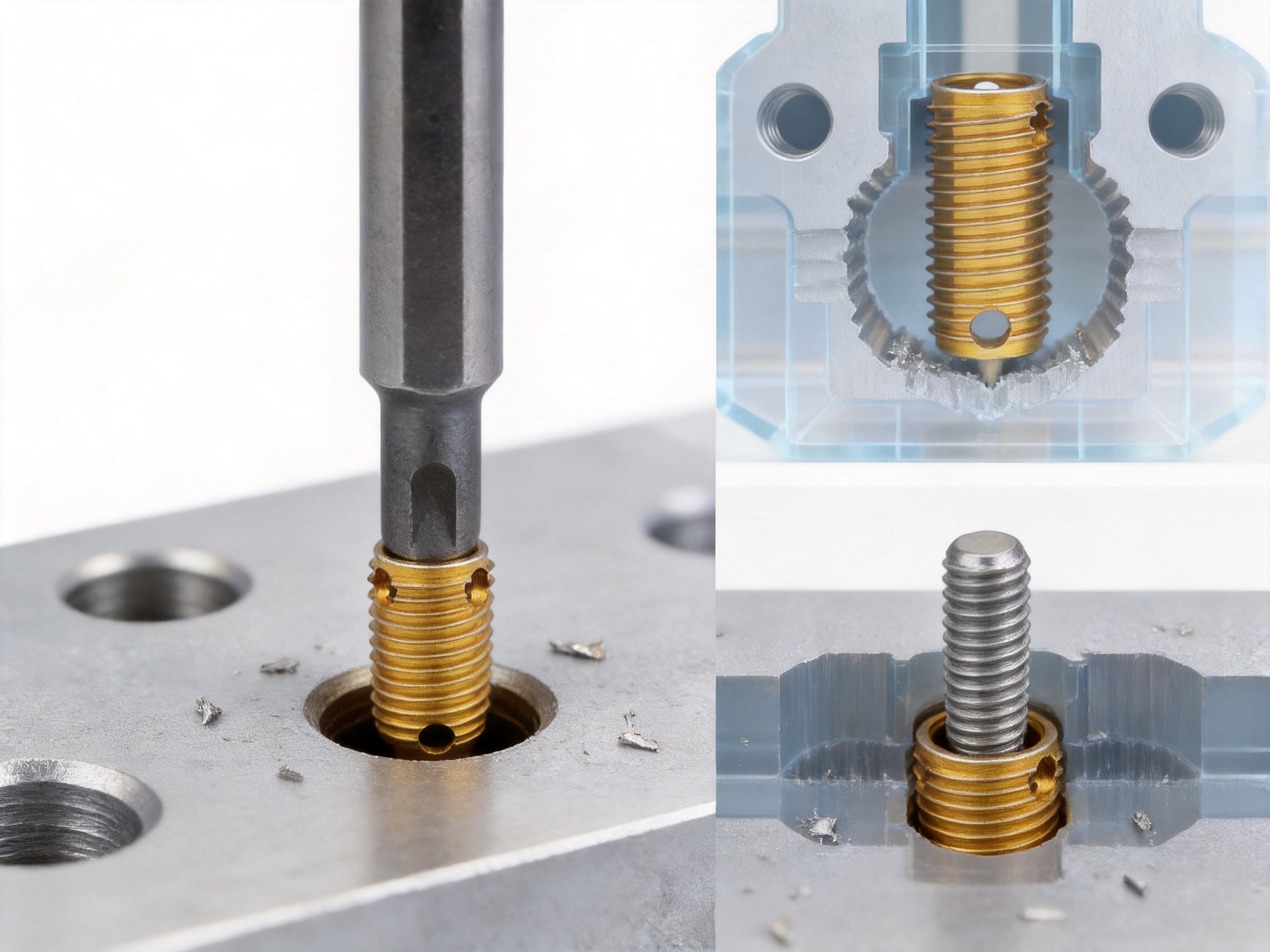
Applications Across Industrial Sectors
General Industrial Equipment
Machine tools, printing equipment, packaging machinery, pumps, compressors, and production-line equipment often use aluminum housings, access covers, brackets, and control cabinets. These parts may need frequent servicing, making reinforced and reusable threads valuable.
The three-hole insert can strengthen fastening points and reduce the risk of an insert rotating during maintenance. Its compact design is suitable for areas where a larger mechanical locking system would not fit.
Sheet-Metal Processing
Electrical enclosures, control cabinets, machine guards, and sheet-metal structures frequently require threaded points in relatively thin material. A self-tapping insert can provide a more reliable internal thread than a directly tapped thin wall.
The insert is also useful for repairing worn holes in cabinets and panels. Its anti-rotation structure helps maintain fastening stability when the panel is subjected to vibration or repeated opening and closing.
Heavy-Duty Furniture and Industrial Racks
Industrial workstations, storage racks, equipment frames, and heavy office furniture may require repeated assembly and disassembly. Direct threads in thin steel, aluminum, or composite panels can deteriorate after multiple service cycles.
A carbon steel insert provides a durable fastening point and can improve the serviceability of the finished product. The 307 and 308 lengths give manufacturers flexibility when working with different panel thicknesses and frame designs.
Automotive Parts
Automotive components are exposed to vibration, shock, thermal changes, and regular maintenance. Thread reinforcement may be required in brackets, interior components, housings, covers, chassis-related parts, and other assemblies made from aluminum alloy or other lightweight materials.
The three-hole anti-rotation design is relevant where the connection may be subjected to repeated torque or dynamic loads. However, each automotive application must be validated according to its specific load, temperature, corrosion, and regulatory requirements.
Construction Machinery Components
Small construction machinery and auxiliary equipment may include structural parts made from cast iron, aluminum alloy, or soft steel. These parts can benefit from a reinforced internal thread when fasteners must carry repeated loads or be removed during field servicing.
The insert can help restore a damaged connection without replacing the complete component, which may reduce equipment downtime and maintenance expense.
Manufacturing Strengths and Quality Control
Specialized Threaded-Connection Production
Dongtai Jinzhize Metal Products Co., Ltd. focuses on threaded connection and fastening products, including helical wire inserts, self-tapping inserts, key-locking inserts, threaded adapters, oil plugs, installation taps, and related tools. This product specialization supports a deeper understanding of thread geometry, material behavior, installation requirements, and application-specific performance.
A manufacturer with a broad threaded-product portfolio can coordinate related products more effectively. For example, insert dimensions can be matched with installation tools and taps, while different reinforcement technologies can be compared according to load, space, material, and service requirements.
Owned Manufacturing Facility
The company operates an owned manufacturing plant with an area of approximately 10,000 square meters. An owned facility can support closer control over production scheduling, process layout, equipment maintenance, inspection activities, and product traceability.
The facility is equipped with hundreds of machine tools and automated production systems. This equipment base supports repeatable machining and allows production capacity to be organized for both standard products and customer-specific requirements.
Automated and Controlled Production
Automation can improve dimensional consistency, reduce variation caused by manual handling, and increase production efficiency. For three-hole inserts, consistent control is important because the external groove geometry, positioning-hole placement, internal thread, length, and surface condition all contribute to performance.
Automated or semi-automated processes can be used for material preparation, forming or machining, thread processing, surface treatment preparation, inspection, and packaging. The specific process route depends on the product size, material grade, production volume, and customer specification.
Process Inspection
Quality control for three-hole inserts should address both dimensional accuracy and functional performance. Typical inspection considerations include:
• Internal thread size, pitch, and gauge acceptance.
• External diameter and self-tapping groove geometry.
• Insert length and end-face condition.
• Position, size, and uniform distribution of the three holes.
• Surface finish, burr control, and cleanliness.
• Coating coverage, adhesion, and appearance when a plated finish is specified.
• Installation torque and holding performance during product validation.
Consistent inspection helps ensure that the insert performs predictably when installed in different production environments. For critical customers, inspection records and batch traceability can also support incoming-quality management and technical audits.
Design and Development Capability
Since its establishment in 2015, Jinzhize has developed a team for product design, development, and manufacturing. This capability is valuable when standard catalog dimensions do not fully meet an application. Customers may require special lengths, thread combinations, surface treatments, packaging formats, or installation tools.
Technical cooperation between the manufacturer and customer can help identify the most suitable insert type before mass production. Important design inputs include the parent material, hole geometry, bolt size, installation method, load direction, service temperature, vibration level, corrosion exposure, and expected maintenance cycles.
Stable Supply and Large-Scale Capacity
The company reported an annual output value of RMB 153 million in 2024. This level of output reflects an established manufacturing and supply capability for customers requiring stable and repeatable deliveries.
Large-scale capacity can be especially important for automotive, aerospace-related, rail, machinery, and industrial customers. Consistent supply reduces the risk of production interruptions and makes it easier to maintain standardized specifications across multiple product lines.
Quality Management and After-Sales Support
A rigorous quality management system helps connect incoming material control, process monitoring, final inspection, packaging, and customer feedback. For fastening products, quality is not limited to visual appearance. Dimensional accuracy and installation behavior directly affect the safety and reliability of the final assembly.
A comprehensive after-sales service mechanism can provide support with product selection, installation questions, sample evaluation, quality feedback, and application improvement. This is particularly useful when customers are replacing a conventional insert or repairing a thread in a new base material.
Surface Protection and Corrosion Considerations
Carbon steel provides excellent strength, but its surface may require protection when exposed to moisture, salts, chemicals, condensation, or outdoor conditions. Zinc, color zinc, and other coating options can be specified according to the application.
The appropriate coating depends on the surrounding material, operating environment, required appearance, contact with other metals, and expected service life. Designers should also consider the possibility of galvanic corrosion when a coated steel insert is installed in aluminum or another dissimilar metal.
Coating thickness and dimensional impact should be controlled because excessive coating can affect the internal thread, external groove engagement, or installation torque. For high-precision applications, the final coated dimensions and gauge requirements should be confirmed before shipment.
In indoor industrial equipment, a standard protective finish may be sufficient. Outdoor machinery, automotive assemblies, coastal installations, and chemically exposed equipment may require a more carefully selected corrosion-protection system. Coating selection should be validated through appropriate environmental testing when the application is critical.
Comparison with Other Thread Reinforcement Solutions
Compared with Direct Tapping
Direct tapping is simple and economical when the parent material is strong enough and the hole has adequate engagement length. However, direct threads in soft materials may strip under high loads or after repeated use. A three-hole insert provides a stronger steel thread and adds anti-rotation performance.
Compared with Smooth Self-Tapping Inserts
A smooth self-tapping insert can be effective where friction and interference are sufficient. The three-hole version offers an additional locking mechanism because the parent material can enter the positioning holes. This can improve resistance to turning and shifting in vibrating assemblies.
Compared with Wire Thread Inserts
Wire thread inserts are lightweight and can provide strong internal threads, especially in aluminum alloys. They are widely used in many industries. However, installation procedures may involve a specialized tap, insertion tool, and, depending on the wire insert design, tang removal or additional operations.
The three-hole self-tapping insert offers a different solution. It has a solid carbon steel body, integrated anti-rotation features, and a self-tapping exterior. It may be preferable where a solid insert body, direct installation method, and positive anti-rotation structure are desired.
Compared with Key-Locking Inserts
Key-locking inserts use external keys that are driven into the parent material after installation. They can provide strong anti-rotation performance but require space for the keys and an additional installation step.
The three-hole insert achieves mechanical locking through its integrated positioning-hole structure. It can therefore simplify assembly where separate keys are undesirable or where the available installation area is limited.
Compared with Adhesive Retention
Thread-locking compounds or retaining adhesives can improve resistance to loosening, but their performance may depend on surface preparation, curing conditions, temperature, chemical exposure, and future disassembly requirements. The three-hole insert uses mechanical interlocking rather than relying exclusively on a chemical bond.
Adhesive may still be considered in special applications, but it should not be assumed that an adhesive can compensate for incorrect drilling, insufficient wall thickness, or poor installation alignment.
How to Specify the Product for Procurement
A clear purchasing specification should identify the internal thread standard, nominal size, insert type, length, base-material application, surface treatment, quantity, packaging requirements, and inspection requirements.
For example, a specification may state that the required product is a 308 type carbon steel three-hole self-tapping insert with a specified metric internal thread, a zinc coating, and inspection according to an agreed dimensional drawing. If the insert will be used in aluminum alloy, the recommended aluminum drilling range should be included in the production documentation.
Customers should also identify whether installation tools are required. A complete supply program may include the insert, compatible installation tools, thread gauges, and technical instructions. Coordinating these items with the same manufacturer can reduce compatibility risks.
For custom applications, customers should provide drawings or samples showing the base material, hole location, wall thickness, required fastener, load conditions, and environmental exposure. These details allow the manufacturer to recommend the appropriate 307 or 308 length and confirm whether a standard product is suitable.
Application Validation and Testing
Before releasing a new insert specification for mass production, validation should be performed in the actual base material or a representative sample. The test should reflect the intended drilling process, installation tool, lubrication condition, and operator or automated equipment.
Potential tests include installation torque, removal torque, rotational resistance, pull-out strength, stripping resistance of the internal thread, repeated fastening cycles, vibration resistance, and environmental exposure. The required test method depends on the final application.
For assemblies exposed to elevated temperatures, test the connection across the expected temperature range. For automotive or outdoor products, include humidity, salt spray, thermal cycling, or chemical exposure where appropriate. The purpose is to evaluate the complete insert-and-base-material system rather than the steel insert alone.
Inspection should also confirm that the final bolt can be installed without cross-threading and that the insert remains correctly positioned after repeated service cycles. Test results should be documented and used to establish installation limits and quality-control criteria.
Q&A: Carbon Steel Three-Hole Thread Inserts
What is a carbon steel three-hole thread insert?
It is a solid carbon steel self-tapping insert with three evenly distributed positioning holes. It reinforces an internal thread in a soft or damaged base material and uses mechanical interlocking to improve resistance to rotation and loosening.
What is the purpose of the three holes?
The three holes allow material from the parent component to deform into the insert body during installation. This creates multiple mechanical locking points that help prevent the insert from turning or shifting under tightening torque, vibration, and repeated service.
What is the difference between the 307 and 308 types?
The primary difference is length. The 308 type is the reinforced, longer version, while the 307 type is shorter. The correct selection depends on the available material thickness, required thread engagement, load, and installation depth.
Can the insert be used in aluminum alloy?
Yes. Aluminum alloy is one of the main applications for this type of thread reinforcement. The steel insert provides a stronger internal thread than a direct aluminum thread. The correct drilling diameter and installation procedure should be used for the specific alloy and component design.
Can it be used in cast iron?
Yes, the product is suitable for selected cast iron applications. Because cast iron and aluminum behave differently during installation, the recommended drilling diameter should be selected according to the material. Trial installation may be required for critical parts.
Does the insert require a separate anti-rotation key?
No separate anti-rotation accessory is normally required. The three-hole structure is designed to provide mechanical interlocking with the surrounding material. A dedicated installation tool is still recommended for correct alignment and positioning.
What coatings are available?
Optional protective finishes include zinc, color zinc, and other coating solutions according to the application. The coating should be selected based on corrosion exposure, appearance, dimensional requirements, and compatibility with the surrounding material.
How should the drilling diameter be selected?
The drilling diameter depends on the insert size and the base material. The reference data provides separate ranges for aluminum alloy and cast iron. Hole quality, wall thickness, material hardness, and the required holding strength should also be considered.
Is this product suitable for repeated assembly and disassembly?
Yes. Its carbon steel internal thread is designed to provide a durable fastening surface for repeated service. The actual number of cycles depends on the fastener grade, tightening torque, load, lubrication, operating environment, and condition of the surrounding component.
Can the insert repair a stripped thread?
It can be used to repair many stripped or damaged threaded holes if enough surrounding material remains. The damaged hole usually needs to be drilled to the specified preparation diameter before the new insert is installed. The component should be inspected to ensure that it is not cracked or structurally compromised.
What tools are needed for installation?
A suitable installation tool is required to hold and drive the insert into the prepared hole. Production applications may also use controlled torque equipment, depth stops, gauges, and inspection tools to improve consistency.
Does the manufacturer provide customized solutions?
Dongtai Jinzhize Metal Products Co., Ltd. supports threaded connection and fastening products for different industrial applications. Customers can discuss dimensions, coatings, packaging, installation tools, and application requirements with the manufacturer when standard products do not fully meet their needs.
Conclusion
The carbon steel three-hole thread insert is a practical solution for creating strong, durable, and anti-rotation internal threads in aluminum alloy, cast iron, soft steel, plastic, and other suitable materials. Its solid carbon steel body improves thread strength, while the three positioning holes create mechanical interlocking with the parent material. The self-tapping external grooves simplify installation and reduce the need for separate anti-rotation accessories.
The product offers clear advantages in applications affected by vibration, repeated fastening, limited wall thickness, or weak base materials. The availability of 307 and 308 types provides flexibility for different engagement depths and load requirements. Metric and Unified inch sizes support use across international product designs.
Manufacturing capability is equally important to product performance. Dongtai Jinzhize Metal Products Co., Ltd. combines specialized threaded-product experience, an owned 10,000-square-meter facility, hundreds of machine tools, automated production systems, product-development capability, quality management, and after-sales support. These strengths help the company provide stable products and coordinated fastening solutions for automotive, aerospace-related, rail, machinery, sheet-metal, furniture, and construction-equipment applications.
For the best result, the insert size, length, drilling diameter, coating, installation tool, and inspection method should be selected according to the complete assembly rather than the insert alone. With correct engineering selection and controlled installation, the three-hole insert can improve connection reliability, extend component service life, and reduce the maintenance and replacement costs associated with damaged direct threads.
References
1. Manufacturer-provided product information for carbon steel 307 and 308 type three-hole self-tapping thread inserts.
2. Manufacturer-provided dimensional reference data for metric and Unified inch thread insert sizes.
3. Manufacturer-provided information regarding carbon steel materials, optional coatings, installation tools, and application sectors.
4. General engineering principles for threaded connections in aluminum alloy, cast iron, soft steel, plastic, and sheet-metal components.
5. General industrial practices for thread repair, insert installation, dimensional inspection, corrosion protection, and fastening-system validation.