

 Français
 Español
 Deutsch

Content
- 1 Understanding the Straight Thread Tap
- 2 Core Product Characteristics
- 3 Why Straight Flute Geometry Still Matters
- 4 Applications in Manufacturing and Repair
- 5 Advantages Over Common Competitor Taps
- 6 Manufacturing Strength Behind the Product
- 7 Process Control and Traceability
- 8 Technical Performance Considerations
- 9 Comparison Table
- 10 Role in Thread Repair and Insert Installation
- 11 Materials and Workpiece Suitability
- 12 Importance of Thread Accuracy
- 13 Manual and Machine Use
- 14 How the Product Supports Lean Procurement
- 15 Quality Management for Demanding Industries
- 16 Practical Selection Guidelines
- 17 Operating Recommendations
- 18 Common Problems and Solutions
- 19 Value for Distributors and Industrial Buyers
- 20 Company Strength and Customer Support
- 21 Q&A Section
- 21.1 What is a straight thread tap used for?
- 21.2 Which materials are most suitable for this tap?
- 21.3 Can the straight thread tap be used manually?
- 21.4 Is this tap suitable for deep holes?
- 21.5 How does it compare with low-cost competitor taps?
- 21.6 Why is the manufacturer’s threaded connection experience important?
- 21.7 Can this tap be used for thread repair?
- 21.8 What should users do to improve tool life?
- 21.9 What industries can benefit from this product?
- 21.10 What makes Dongtai Jinzhize Metal Products Co., Ltd. a reliable supplier?
- 22 Conclusion
- 23 References
- 24 Product: Straight Thread Tap
Internal threads are among the most important details in mechanical assemblies because they determine how components are joined, adjusted, repaired, and maintained. A small error in thread geometry can lead to poor fastener engagement, uneven load distribution, premature wear, or assembly failure. For manufacturers, repair centers, maintenance teams, and tooling distributors, the choice of thread cutting tool is therefore not a minor purchasing decision. It is a decision that affects process reliability, assembly quality, production rhythm, and long-term service performance.
The straight thread tap is a practical and widely used internal thread cutting tool designed for general-purpose thread machining. With its straight flute structure and dependable cutting behavior, it is especially suitable for shallow holes, small-diameter holes, soft metals, maintenance work, and small to medium batch production. It can be used manually or on machines, giving users a flexible tool for both workshop repair and standardized production environments.
In a market where many taps may look similar at first glance, the actual difference is found in steel selection, flute geometry, heat treatment, dimensional control, grinding consistency, surface finish, inspection discipline, and application support. Dongtai Jinzhize Metal Products Co., Ltd. manufactures threaded connection products and related tools for demanding applications, including automotive, aerospace, rail vehicle, maintenance, and industrial assembly sectors. Its straight thread taps are supported by a broader manufacturing foundation that includes helical wire inserts, self-tapping inserts, key locking inserts, threaded adapters, oil plugs, installation taps, and installation tools. This product ecosystem gives the company a deep understanding of how internal threads are created, repaired, reinforced, and used in real assemblies.
Understanding the Straight Thread Tap
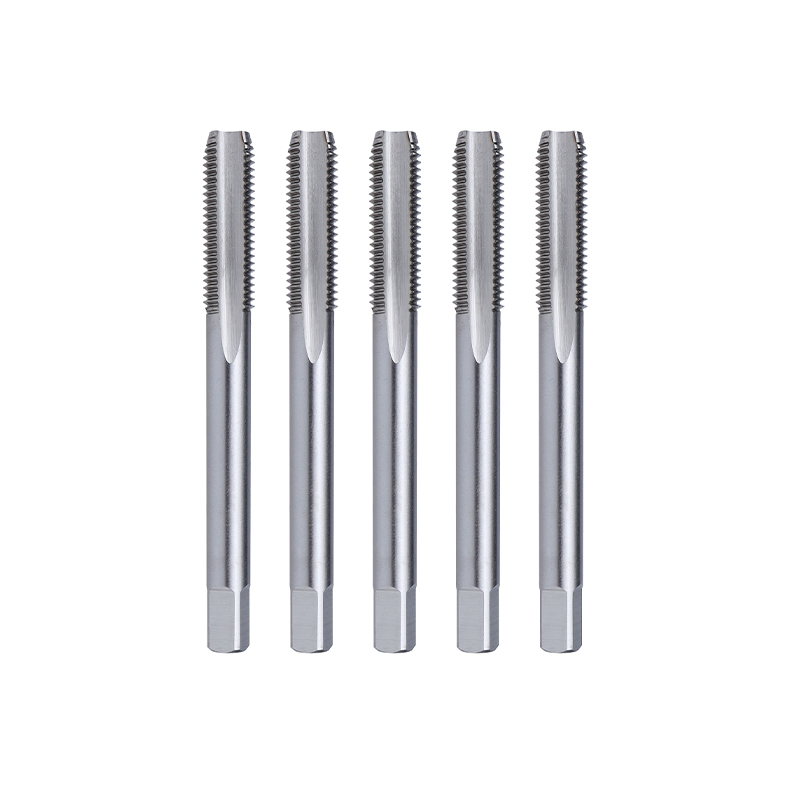
A straight thread tap is a cutting tool used to create internal threads inside a pre-drilled hole. The tool has cutting edges arranged along straight flutes. These flutes create channels that guide chips and cutting fluid while allowing the cutting edges to form the thread profile. The design is simple, stable, and reliable, which is why straight flute taps are often selected for everyday thread machining tasks.
The straight flute geometry provides balanced cutting action. Unlike spiral flute taps, which are designed to pull chips upward from blind holes, or spiral point taps, which push chips forward in through holes, straight flute taps are valued for versatility and ease of use. They are suitable for general operations where hole depth is moderate, chip formation is manageable, and the material is not excessively hard or abrasive.
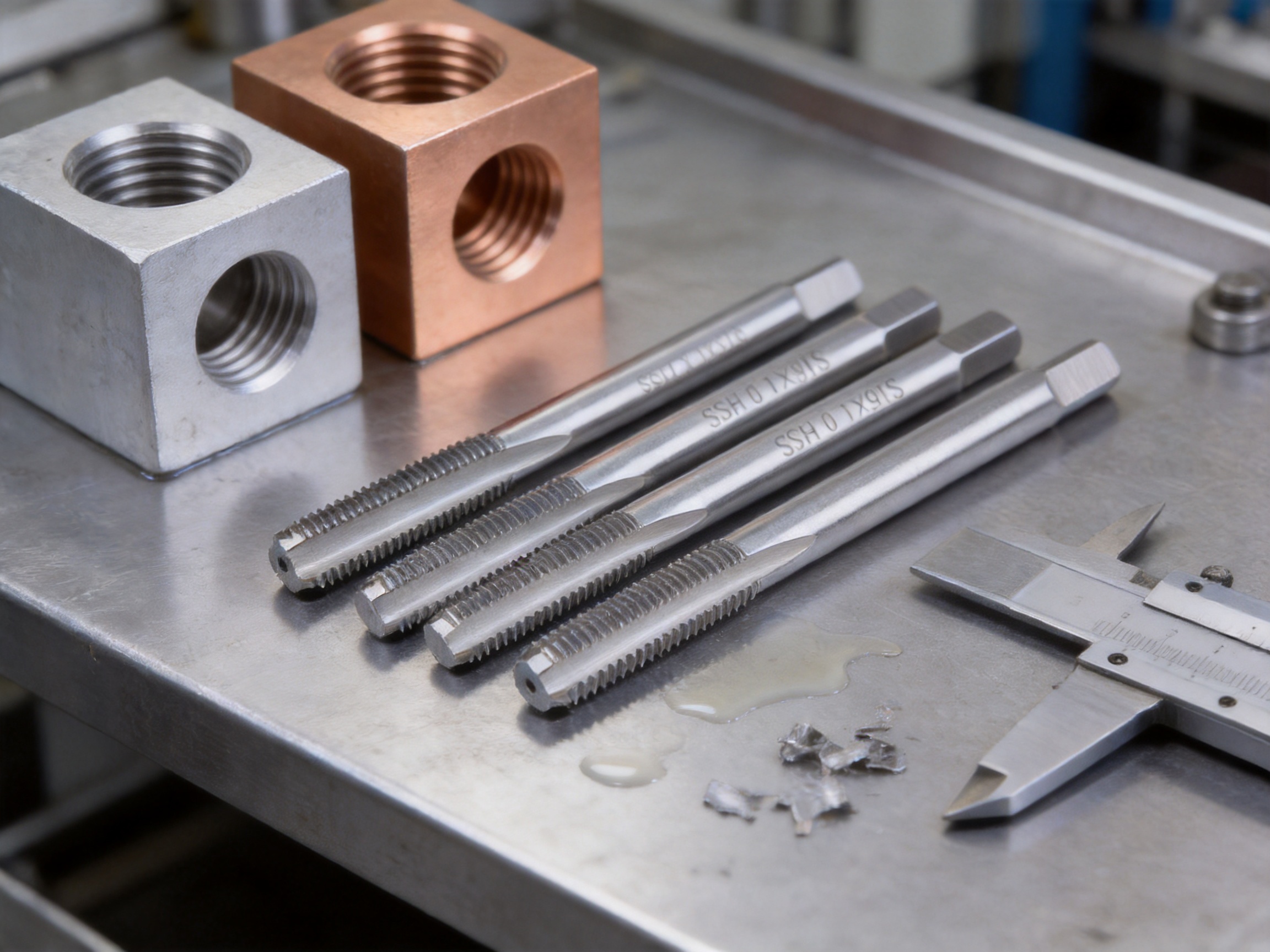
This tap type is particularly effective in soft metals such as aluminum and copper. These materials are common in automotive parts, electrical components, lightweight structures, housings, covers, fixtures, and maintenance applications. When used with proper drilling size, cutting fluid, alignment, and operating speed, a straight thread tap can generate accurate internal threads with smooth engagement and dependable functional performance.
The product is also useful for thread repair. When existing internal threads are damaged by wear, cross-threading, corrosion, or improper assembly, maintenance teams may need to re-cut, clean, or restore the thread. A straight flute tap provides a straightforward solution, especially when access is limited and manual operation is required. For many repair technicians, it remains one of the most familiar and trusted tools in the workshop.
Core Product Characteristics
The strength of a straight thread tap lies in its balance between simplicity, performance, and adaptability. It is not a specialized tool for every extreme condition, but it is one of the most practical tools for a broad range of internal threading tasks.
The first important characteristic is the straight flute design. The parallel grooves run along the length of the cutting section, allowing the tap to cut evenly as it enters the drilled hole. This structure supports predictable operation and makes the tap suitable for manual tapping, bench tapping, repair work, and machine use.
The second characteristic is efficient cutting in soft metals. Aluminum, copper, and similar materials are often easier to machine than hardened steels, but they can still present problems such as built-up edge, thread tearing, and chip clogging if the cutting tool is poorly made. A well-produced straight tap with sharp cutting edges and stable geometry helps reduce these problems, producing cleaner threads and more consistent fit.
The third characteristic is wide applicability. A straight thread tap can be used in mechanical manufacturing, maintenance departments, tool rooms, vehicle repair, equipment servicing, and small part production. Its ability to work in both manual and machine conditions makes it convenient for users who need one practical tool for varied tasks.
The fourth characteristic is moderate strength for light-duty and conventional threads. This is important because product selection should be realistic. Straight thread taps are best for shallow holes, small to medium diameters, and conventional internal threading. They are not the recommended first choice for deep blind holes, extremely heavy-duty threading, or very difficult materials. By clearly defining the proper application range, users can achieve better tool life and avoid misuse.
Why Straight Flute Geometry Still Matters
Modern cutting tool catalogs include many advanced tap designs, yet the straight flute tap remains relevant because not every operation requires complex chip control or specialized geometry. In many real production and maintenance environments, the best tool is the one that delivers stable results with simple handling, predictable cost, and easy operator understanding.
Straight flutes provide a stable and balanced cutting structure. Because the grooves are parallel, cutting forces remain relatively symmetrical around the tool. This is helpful in manual tapping, where alignment and feel matter greatly. Operators can sense resistance, reverse the tap to break chips when needed, and maintain control throughout the operation.
In machine tapping, the same geometry supports general-purpose use. When the hole is shallow and the material is suitable, a straight flute tap can complete threading efficiently without the need for highly specialized tap styles. This helps reduce tool variety in workshops and simplifies inventory management.
The straight flute design is also easy to inspect and maintain. Users can visually check cutting edges, flutes, and chamfer condition. Tool wear, chipping, or material adhesion can be identified quickly. This practical advantage matters in maintenance and repair settings where operators often make decisions directly at the workbench.
Competitor products sometimes emphasize aggressive cutting speed or complex geometry while overlooking the daily realities of ordinary internal threading. A tap that is too specialized may perform well in one condition but poorly in another. The straight thread tap offers a more balanced solution, particularly when produced with accurate dimensions, controlled hardness, and refined edge quality.
Applications in Manufacturing and Repair
Straight thread taps are widely used in mechanical manufacturing. They are suitable for producing internal threads in housings, brackets, covers, plates, fixtures, connection blocks, and general mechanical parts. When the hole is shallow and the thread is not subject to extreme load, this tap style can provide dependable and economical machining.
In automotive maintenance, internal threads often need to be cleaned or restored. Engine covers, transmission housings, accessory brackets, sensor mounting points, and serviceable assemblies may all contain threaded holes that suffer from wear or contamination. A straight thread tap can be used to chase threads, restore engagement, or prepare the hole for further repair operations.
In aerospace and rail vehicle manufacturing, the demand for reliable threaded connections is high. While critical applications may require specialized tooling and strict process qualification, straight taps still play an important role in general tooling, fixtures, inspection equipment, maintenance fixtures, and non-extreme threaded components. The key is to use the tool within its proper application range and under controlled procedures.
In electrical and electronic manufacturing, aluminum and copper components frequently require internal threads. Enclosures, heat sinks, connectors, busbar supports, and mounting plates may all benefit from clean threaded holes. Because these materials are relatively soft, a sharp and well-controlled straight thread tap can create smooth threads with good assembly feel.
In repair workshops, the tool is valued because it does not require complicated equipment. A technician can use a hand tap wrench, cutting fluid, and correct drilling preparation to restore or create threads. This makes the straight thread tap a practical choice for maintenance teams, distributors, and industrial users who need immediate and reliable solutions.
Advantages Over Common Competitor Taps
Many thread taps compete mainly on price, but low initial cost can become expensive when the tool causes poor thread quality, inconsistent dimensions, short service life, or broken taps inside workpieces. A high-quality straight thread tap should be evaluated by total performance, not by purchase price alone.
One advantage of the straight thread tap supplied by Dongtai Jinzhize Metal Products Co., Ltd. is manufacturing consistency. The company operates from an owned 10,000-square-meter manufacturing plant equipped with hundreds of machine tools and automated production systems. This production foundation supports repeatable dimensions, controlled processing, and stable supply capability.
A second advantage is application understanding. Because the company manufactures not only thread taps but also helical wire inserts, self-tapping inserts, key locking inserts, internal-external thread conversion nuts, threaded adapters, oil plugs, and installation tools, it understands the entire threaded connection system. This knowledge helps ensure that taps are not treated as isolated cutting tools but as part of the complete fastening and thread repair process.
A third advantage is suitability for small to medium batch production and repair work. Some competitor taps are optimized for narrow industrial conditions, while others are low-grade general tools with limited reliability. A carefully manufactured straight thread tap offers a practical middle ground: stable enough for production use, simple enough for maintenance use, and economical enough for regular workshop consumption.
A fourth advantage is quality discipline. The company has developed an experienced team for design, development, and production, supported by a rigorous quality management system and after-sales service mechanism. For users, this means more than receiving a physical tool. It means receiving a product backed by process knowledge, inspection routines, and technical support when selection or usage questions arise.
A fifth advantage is supply reliability. In 2024, the company achieved an annual output value of 153 million RMB, demonstrating large-scale and stable supply capability. For distributors and OEM-related customers, supply continuity matters. A tap that performs well but cannot be supplied consistently may still disrupt production. Stable manufacturing capacity reduces procurement risk.
Manufacturing Strength Behind the Product
The performance of a straight thread tap begins long before it reaches the user. It begins with material selection, blank preparation, machining accuracy, flute formation, thread profile grinding, heat treatment, surface finishing, inspection, packaging, and traceability. Each step influences cutting performance and durability.
Dongtai Jinzhize Metal Products Co., Ltd. was established in 2015 and has developed into a specialized manufacturing facility dedicated to threaded connection products for automotive and aerospace sectors. The company’s manufacturing plant covers 10,000 square meters and includes hundreds of machine tools and automated production systems. This scale allows the company to support both standard and customized threading-related products.
Advanced manufacturing is not only about equipment quantity. It is also about process control. A tap must maintain accurate thread geometry along its cutting section. The pitch, diameter, chamfer, cutting edge position, and flute quality must match the intended standard and application. If the thread profile is inaccurate, the internal thread may appear acceptable visually but fail during assembly or under load.
Grinding quality is especially important. Sharp cutting edges reduce torque and improve thread surface finish. Uneven edges can cause tearing in soft materials such as aluminum and copper. Poor flute finish can trap chips or increase friction. Careful grinding and finishing help the tool cut smoothly and reduce the risk of tool breakage.
Heat treatment is another key manufacturing stage. A tap requires hardness for wear resistance but also enough toughness to resist chipping and fracture. Over-hardened tools may become brittle, while under-hardened tools may wear quickly and lose cutting accuracy. Controlled heat treatment supports stable mechanical properties and predictable tool life.
Inspection connects all these processes. Dimensional checks, visual inspection, thread profile verification, and batch control help ensure that customers receive consistent products. For customers in automotive, aerospace, rail vehicle, and industrial sectors, consistency is essential because thread quality affects assembly reliability.
Process Control and Traceability
Thread cutting tools are often small, but their quality impact is large. If a tap fails during production, it can damage the workpiece, stop the machine, require extraction, delay delivery, and increase scrap. If a tap creates incorrect threads, the defect may not be found until assembly, when the cost of correction is much higher. Process control and traceability therefore matter greatly.
Dongtai Jinzhize Metal Products Co., Ltd. emphasizes highly consistent and traceable products. Traceability supports accountability from material sourcing through production and shipment. When customers require stable batches or repeat orders, traceability helps maintain confidence that the next delivery will match previous performance.
In manufacturing, traceability can include batch identification, production records, inspection data, operator responsibility, equipment status, and packaging control. For threaded connection products and tools, this systematic approach helps reduce variation and improves customer confidence.
The company’s quality management system also supports after-sales service. When users need help with tap selection, thread repair, installation tools, or matching taps with inserts, the company can provide more informed guidance because it manufactures a broad range of related products. This is a meaningful advantage over suppliers that only trade generic tools without technical depth.
Technical Performance Considerations
To obtain the best result from a straight thread tap, users should consider several technical factors. The first is hole preparation. The drilled hole must have the correct tap drill diameter. If the hole is too small, cutting torque increases and the tap may break. If the hole is too large, thread engagement may be insufficient. Proper drilling is the foundation of successful tapping.
The second factor is alignment. The tap must enter the hole straight. Misalignment causes uneven cutting, poor thread form, and possible tool breakage. Manual tapping should begin carefully with steady pressure. Machine tapping should use suitable holders, speed, feed, and depth control.
The third factor is lubrication. Cutting fluid reduces friction, helps remove heat, improves thread surface quality, and extends tool life. For aluminum, fluids that reduce built-up edge are helpful. For copper and similar materials, proper lubrication can prevent tearing and improve finish.
The fourth factor is chip control. Straight flute taps do not automatically evacuate chips as effectively as some spiral designs in deep blind holes. For shallow holes and general applications, chip control is manageable. In manual tapping, operators may periodically reverse the tap to break chips. In machine tapping, proper speed, fluid, and hole depth selection are important.
The fifth factor is material compatibility. Straight thread taps are especially suitable for soft metals like aluminum and copper. They can also be used in other suitable materials depending on tool specification, hardness, cutting conditions, and thread size. For heavy loads, deep holes, high-strength alloys, or abrasive materials, users should confirm whether another tap style may be more appropriate.
Comparison Table
| Evaluation Item | High-Quality Straight Thread Tap | Low-Grade General Tap | Highly Specialized Tap |
|---|---|---|---|
| Best Use Case | Shallow holes, soft metals, maintenance, small to medium production | Occasional low-precision work | Specific materials or specific hole types |
| Cutting Stability | Balanced and predictable when used correctly | Often inconsistent due to weak geometry control | Excellent in the intended condition but less flexible |
| Thread Quality | Clean and reliable with proper drilling and lubrication | May create rough, oversized, or uneven threads | Very good in the designed application |
| Operator Flexibility | Suitable for manual and machine use | May be unreliable for repeated use | May require more controlled setup |
| Inventory Efficiency | Good general-purpose value | Low purchase price but higher risk | Useful but may increase tool variety |
| Application Support | Supported by threaded connection product expertise | Often limited | Depends on supplier capability |
Role in Thread Repair and Insert Installation
Thread repair is one of the most important practical applications for straight thread taps. Damaged internal threads can occur for many reasons. Fasteners may be over-tightened. Bolts may be inserted at the wrong angle. Threads may corrode, wear, deform, or become contaminated. In repair operations, replacing the entire component may be costly or impossible, especially for large housings, engine parts, or installed equipment.
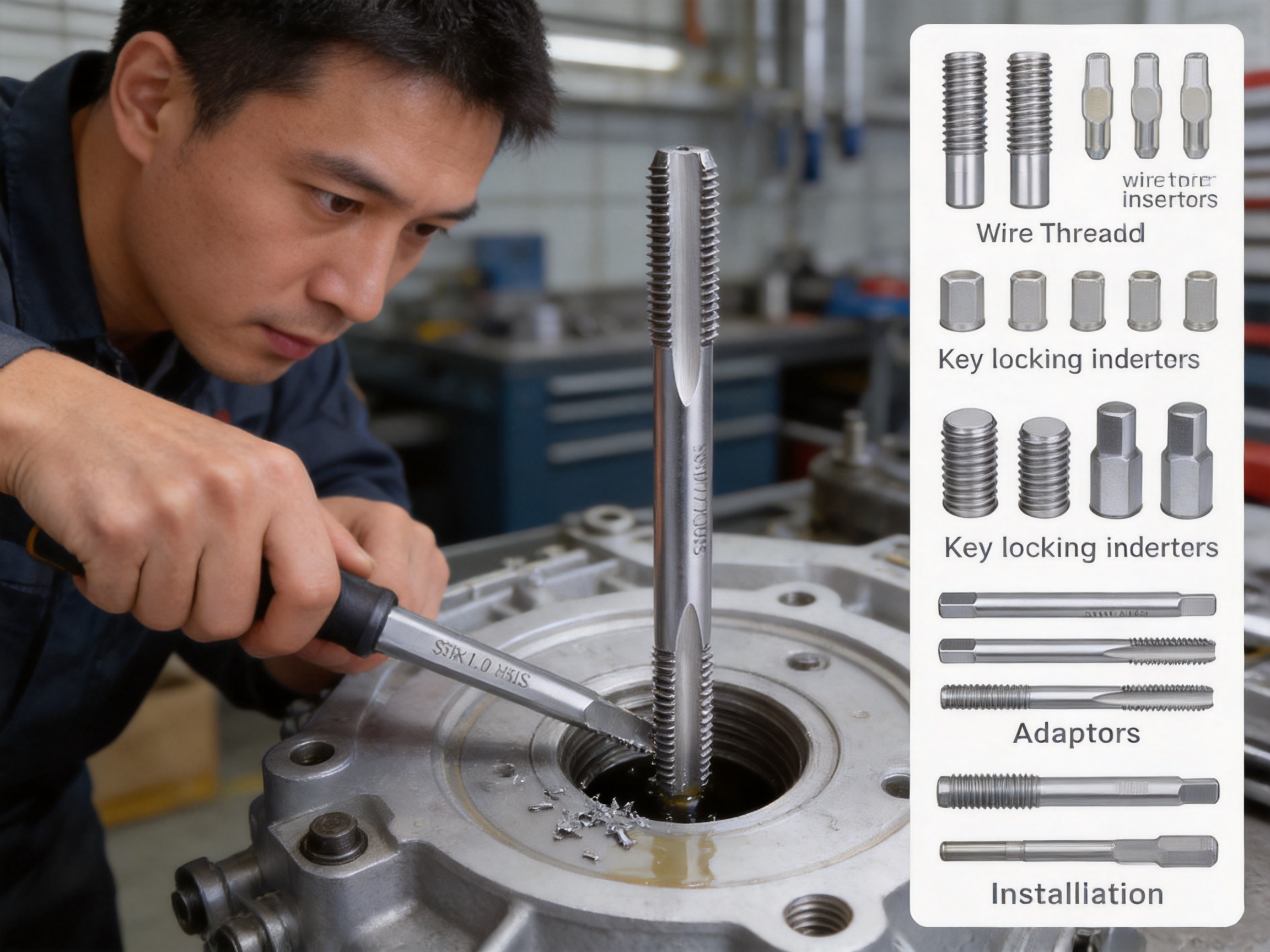
A straight thread tap can clean and restore thread form when damage is minor. It can remove burrs, corrosion, and contamination while re-establishing the thread path. When damage is more severe, the tap may be used as part of a larger repair procedure, such as preparing a hole for a thread insert system.
Dongtai Jinzhize Metal Products Co., Ltd. manufactures a range of threaded repair and fastening products, including wire thread inserts, self-tapping thread inserts, key-locking inserts, internal-external thread conversion nuts, and installation tools. This product range is important because thread repair is rarely solved by one tool alone. Depending on the damage, material, load requirement, and assembly condition, the correct solution may involve re-tapping, installing an insert, reinforcing the thread, or converting thread size.
For example, a worn aluminum thread may be restored by drilling, tapping, and installing a wire thread insert. A stronger repair may require a key-locking insert. A conversion requirement may use an internal-external thread adapter. In all these cases, tap quality affects final thread alignment and insert performance. A poor tap can produce a poor installation, even if the insert itself is well made.
This is why selecting taps from a manufacturer with complete threaded connection expertise is valuable. The supplier understands how the tap interacts with inserts, installation tools, and finished assembly requirements. This reduces the risk of mismatch and helps customers build a more reliable repair or production process.

Materials and Workpiece Suitability
The straight thread tap is especially suitable for soft metals such as aluminum and copper. Aluminum is widely used because of its light weight, corrosion resistance, and machinability. However, aluminum can adhere to cutting edges if the tool is dull or the lubrication is poor. This can produce rough threads, increased torque, or tool seizure. A sharp and accurately made straight tap helps produce cleaner threads and reduces the tendency for material smearing.
Copper is valued for electrical and thermal conductivity, but it can be ductile and sometimes gummy during machining. A tap with poor edge quality may push or tear the material rather than cut it cleanly. Stable flute geometry and controlled cutting edges help improve results.
Brass, bronze, zinc alloys, plastics, and some low-strength steels may also be suitable depending on tap specification and conditions. However, users should avoid assuming that one tool is ideal for every material. Material hardness, abrasiveness, ductility, hole depth, thread size, and production volume all influence tool selection.
For heavy-duty threads, deep holes, hardened steels, or high-volume automatic tapping, specialized taps may be more appropriate. This does not reduce the value of the straight thread tap; rather, it clarifies its best operating zone. A product is most competitive when it is used in the correct application.
Importance of Thread Accuracy
Thread accuracy determines whether a bolt, screw, insert, or fitting engages properly. In many assemblies, the threaded connection must provide repeatable tightening, resist loosening, maintain alignment, and support load transfer. Even in light-duty applications, poor thread accuracy can cause assembly frustration, cross-threading, or early wear.
A straight thread tap must create a thread profile with correct pitch, flank angle, and diameter. The thread must not be too tight or too loose. It must allow smooth fastener engagement while maintaining adequate contact area. This balance depends on both the tap and the process used by the operator.
Competitor products that lack dimensional control may cut threads that vary from piece to piece. Such variation is especially problematic for batch production. One workpiece may assemble smoothly, while another may require excessive torque. Inconsistent internal threads can lead to rework, delays, and quality disputes.
By emphasizing controlled manufacturing and inspection, Dongtai Jinzhize Metal Products Co., Ltd. supports more consistent thread results. This is particularly important for customers who need repeated orders, stable quality, and predictable assembly behavior.
Manual and Machine Use
One reason straight thread taps remain popular is their compatibility with both manual and machine operation. Manual tapping is common in repair, prototyping, low-volume production, fixture modification, and field maintenance. Machine tapping is common in batch production, controlled workshops, and manufacturing lines.
In manual use, the operator typically uses a tap wrench. The hole is drilled to the correct size, chamfered if necessary, and lubricated. The tap is aligned carefully and turned gradually. The operator may reverse slightly after forward turns to break chips. This method gives tactile feedback and allows careful control, especially in delicate or repaired components.
In machine use, the tap is held by a tapping chuck, collet, or other suitable holder. Speed, feed, depth, and reversal are controlled by the machine. Machine tapping can improve efficiency and repeatability, but it also requires correct setup. A misapplied tap can break quickly if speed is too high, the hole is too deep, chips are trapped, or alignment is poor.
A well-made straight thread tap supports both methods because its geometry is stable and understandable. Users do not need specialized training beyond standard tapping practice, making it a practical tool for mixed manufacturing environments.
How the Product Supports Lean Procurement
Modern manufacturers often want to reduce supplier complexity. They prefer suppliers that can provide multiple related products with consistent quality, stable delivery, and technical support. A straight thread tap becomes more valuable when it is part of a complete threaded connection solution.
Dongtai Jinzhize Metal Products Co., Ltd. supplies thread taps as well as self-tapping thread inserts, wire thread inserts, three-hole threaded inserts, oil plugs, installation tools, internal-external thread conversion nuts, and key-locking inserts. This product combination helps customers simplify procurement for thread creation, thread repair, thread reinforcement, and threaded connection maintenance.
For example, a distributor serving industrial maintenance customers may need taps, inserts, and installation tools in matching specifications. A manufacturer producing aluminum housings may need thread taps for initial machining and inserts for reinforced assembly points. A repair facility may need oil plugs, conversion nuts, and thread repair tools. Working with one specialized manufacturer reduces communication complexity and improves technical consistency.
Lean procurement is not only about reducing the number of purchase orders. It is also about reducing uncertainty. When products come from a supplier with manufacturing depth and application knowledge, customers can reduce the risk of mismatched tools, inconsistent batches, and unclear after-sales responsibility.
Quality Management for Demanding Industries
The company’s products are widely used in automotive applications, including engines and transmissions for passenger and commercial vehicles, as well as aerospace and rail vehicle manufacturing. These industries place strong emphasis on consistency, traceability, and reliable performance. Even when a straight thread tap is used for general machining rather than the most critical joint, the same culture of manufacturing discipline benefits the product.
Automotive manufacturing requires stable supply and repeatable quality. Components are produced in batches, and assembly lines depend on predictable fit. Poor threads can cause assembly delays and warranty risks. Aerospace and rail sectors require even stronger attention to documentation, process control, and reliability. A manufacturer serving these sectors must understand the importance of disciplined production.
Dongtai Jinzhize Metal Products Co., Ltd. has built an experienced team for design, development, and production. The company supports its manufacturing with a rigorous quality management system and comprehensive after-sales service mechanism. This combination helps customers receive not only physical parts and tools but also a more reliable supply experience.
Practical Selection Guidelines
Choosing the correct straight thread tap requires attention to thread size, thread standard, workpiece material, hole type, hole depth, production volume, and operation method. Users should first confirm the thread specification required by the drawing or assembly standard. Metric, unified, and other thread systems must not be confused.
The next step is selecting the correct tap drill size. Standard tap drill charts provide guidance, but application conditions may require adjustment. For soft materials, thread engagement requirements and material behavior should be considered. Excessive thread percentage can increase torque unnecessarily, while insufficient engagement may weaken the connection.
Users should then consider whether the hole is through or blind. Straight flute taps can be used in many shallow holes, but chip accumulation must be considered. For deep blind holes, a spiral flute tap may be more suitable. For through holes requiring forward chip evacuation, a spiral point tap may improve efficiency. The straight thread tap is strongest in general shallow-hole and repair conditions.
Production volume also matters. For one-off repair or small batch work, manual tapping may be sufficient. For repeated production, machine tapping may improve consistency. In either case, tool quality, lubrication, and alignment are essential.
Operating Recommendations
Before tapping, ensure that the workpiece is securely held. Movement during tapping can damage the hole or break the tool. Drill the hole to the correct diameter and remove burrs. A slight chamfer at the hole entrance can help the tap start cleanly and reduce edge damage.
Apply suitable cutting fluid. For aluminum, use lubrication that helps prevent adhesion. For copper, choose fluid that supports clean cutting and reduces tearing. For dry or near-dry operations, confirm that the tap and material are suitable for the method.
Start the tap carefully. In manual operation, keep the tap perpendicular to the surface. Use steady pressure at the beginning until the cutting edges engage. Avoid forcing the tap if resistance becomes excessive. Reverse periodically to break chips when necessary.
In machine operation, use appropriate speed and feed. Excessive speed can generate heat and wear. Incorrect feed can damage threads. Ensure that the tapping depth is controlled, especially in blind holes. Use suitable holders that compensate for minor synchronization errors if required.
After tapping, clean the hole. Remove chips and cutting fluid residue if necessary. Check thread quality using appropriate gauges or by controlled fastener engagement. For production work, establish inspection intervals based on tool wear and process stability.
Common Problems and Solutions
If the tap breaks, the cause may be excessive torque, misalignment, incorrect drill size, poor lubrication, chip clogging, or unsuitable material. The solution is to review hole preparation, tool selection, cutting conditions, and operator technique.
If the thread surface is rough, the tap may be worn, the cutting edge may be dull, lubrication may be insufficient, or the material may be adhering to the tool. Using a sharper tap, improving lubrication, and cleaning chips can improve thread finish.
If the thread is oversized or loose, possible causes include incorrect tap specification, misalignment, excessive tool wear, or poor machine control. Inspection of both the tap and the process is necessary.
If the tap is difficult to start, the hole may lack a chamfer, the tap may be misaligned, or the tool may be damaged. Adding a proper chamfer and using careful starting technique can help.
If chips clog the flutes, the hole may be too deep for the selected tap style, the material may produce long chips, or chip-breaking technique may be insufficient. For deeper holes, another tap geometry may be more suitable.
Value for Distributors and Industrial Buyers
Distributors need products that are easy to explain, easy to stock, and reliable for many customers. The straight thread tap fits these needs because it is a widely understood tool used across industries. When supplied by a manufacturer with strong production capability, it can become a dependable part of a distributor’s threading tool offering.
Industrial buyers need stable quality and supply. A low-cost tap that fails unpredictably can create hidden costs far above the purchase price. Tool breakage, scrapped parts, production delays, and customer complaints all damage operational efficiency. A consistent tap from a specialized manufacturer helps reduce these risks.
Dongtai Jinzhize Metal Products Co., Ltd. also provides complementary products, which allows distributors and buyers to source related threading and fastening solutions together. This is particularly useful for customers who handle both new production and repair work.
Company Strength and Customer Support
Dongtai Jinzhize Metal Products Co., Ltd. is located at No. 94, Shiqin Road East, Tangba Village, Shiyan Town, Dongtai City, China. The company focuses on threaded connection and fastening products for global markets. Its mission is to provide stable and reliable threaded connection and fastening products for critical assemblies, helping customers improve assembly consistency and reduce procurement and usage risks.
The company’s vision is to become a trusted manufacturing partner for threaded connection and complementary products worldwide, creating sustainable value through long-term cooperation. This vision aligns well with the needs of customers who require more than one-time product purchases. Long-term cooperation depends on consistency, communication, problem solving, and continuous improvement.
The company’s manufacturing base, experienced team, quality system, product range, and after-sales mechanism all support the straight thread tap. Customers benefit from a supplier that understands both tool production and threaded connection performance in real assemblies.
Q&A Section
What is a straight thread tap used for?
A straight thread tap is used to cut internal threads in a drilled hole. It is suitable for general-purpose thread machining, shallow holes, small-diameter holes, maintenance work, repair tasks, and small to medium batch production.
Which materials are most suitable for this tap?
It is especially suitable for soft metals such as aluminum and copper. It may also be used for other suitable materials depending on thread size, tool specification, lubrication, and cutting conditions.
Can the straight thread tap be used manually?
Yes. One of its major advantages is that it can be used manually with a tap wrench or on machines. This makes it practical for repair workshops, maintenance departments, prototype work, and production environments.
Is this tap suitable for deep holes?
It is best suited for shallow holes and general thread machining. For deep blind holes or heavy chip evacuation requirements, a spiral flute or other specialized tap may be more appropriate.
How does it compare with low-cost competitor taps?
A high-quality straight thread tap offers better dimensional consistency, sharper cutting edges, more stable thread quality, and lower risk of breakage when used correctly. Low-cost taps may appear economical but can increase costs through scrap, rework, and tool failure.
Why is the manufacturer’s threaded connection experience important?
Thread taps are part of a larger fastening system. A manufacturer that also produces thread inserts, conversion nuts, oil plugs, and installation tools understands how internal threads function in real assemblies. This helps improve product matching and application support.
Can this tap be used for thread repair?
Yes. It is useful for cleaning, restoring, or re-cutting damaged internal threads. For severe thread damage, it may be used as part of a repair process involving wire thread inserts, self-tapping inserts, or key-locking inserts.
What should users do to improve tool life?
Users should drill the correct hole size, keep the tap aligned, use suitable cutting fluid, avoid excessive force, break chips when needed, and select the correct tap type for the material and hole depth.
What industries can benefit from this product?
Mechanical manufacturing, automotive maintenance, aerospace support operations, rail vehicle production, electrical manufacturing, equipment repair, fixture making, and general industrial workshops can all benefit from the straight thread tap when it is used in suitable applications.
What makes Dongtai Jinzhize Metal Products Co., Ltd. a reliable supplier?
The company operates a 10,000-square-meter owned manufacturing plant, uses hundreds of machine tools and automated systems, maintains a rigorous quality management system, provides after-sales service, and manufactures a broad range of threaded connection products for demanding industries.
Conclusion
The straight thread tap remains one of the most practical and dependable tools for internal thread machining. Its straight flute design, balanced cutting behavior, suitability for soft metals, and compatibility with both manual and machine use make it valuable for general manufacturing, repair, and maintenance operations.
Its advantages are strongest when the tool is produced with accurate geometry, controlled heat treatment, sharp cutting edges, reliable inspection, and consistent batch management. These factors separate a high-quality tap from low-grade alternatives that may create hidden costs through poor thread quality or tool failure.
Dongtai Jinzhize Metal Products Co., Ltd. strengthens the value of the straight thread tap through its specialized manufacturing background, broad threaded connection product range, experienced technical team, quality management system, and stable supply capacity. The company’s experience with inserts, adapters, oil plugs, installation tools, and related fastening products allows it to support customers with a more complete understanding of threaded assemblies.
For users working with aluminum, copper, shallow holes, repair operations, and small to medium batch production, the straight thread tap offers a reliable balance of simplicity, performance, and cost efficiency. When selected and used correctly, it helps create clean internal threads, improve assembly consistency, reduce repair risk, and support dependable fastening performance across a wide range of industrial applications.
References
1. Smith, G. T. Cutting Tool Technology: Industrial Handbook. Springer, 2008.
2. Davim, J. P. Machining: Fundamentals and Recent Advances. Springer, 2008.
3. Oberg, E., Jones, F. D., Horton, H. L., and Ryffel, H. H. Machinery’s Handbook. Industrial Press.
4. Stephenson, D. A., and Agapiou, J. S. Metal Cutting Theory and Practice. CRC Press.
5. Trent, E. M., and Wright, P. K. Metal Cutting. Butterworth-Heinemann.
6. International Organization for Standardization. ISO Metric Screw Thread Standards and Technical Specifications.
7. Society of Automotive Engineers. Threaded Fastener and Assembly Practice References.



